
Best Low Maintenance Indoor Plants That Clean the Air

Discover the best low-maintenance indoor plants that purify your air & thrive on neglect. Learn how to boost your home’s health (and style!) so you can breathe easy and do less work!
Craving a home that feels both cozy and fresh? Indoor plants are the answer, and they do more than just add a touch of green. They’re natural air purifiers, silently working to filter out common toxins like formaldehyde and benzene while boosting your mood.
I know not everyone has a green thumb or the time for high-maintenance greenery. That’s why this guide is your shortcut to becoming a confident plant parent. I’ve handpicked the best low-maintenance, hard-to-kill plants that thrive on neglect, making it easy to breathe new life and clean air into your space.
Get ready to breathe easy and add a touch of zen to your home with these hard-working, easy-going plants.
(Posts on stacyling.com may contain affiliate links. Click HERE for full disclosure.)
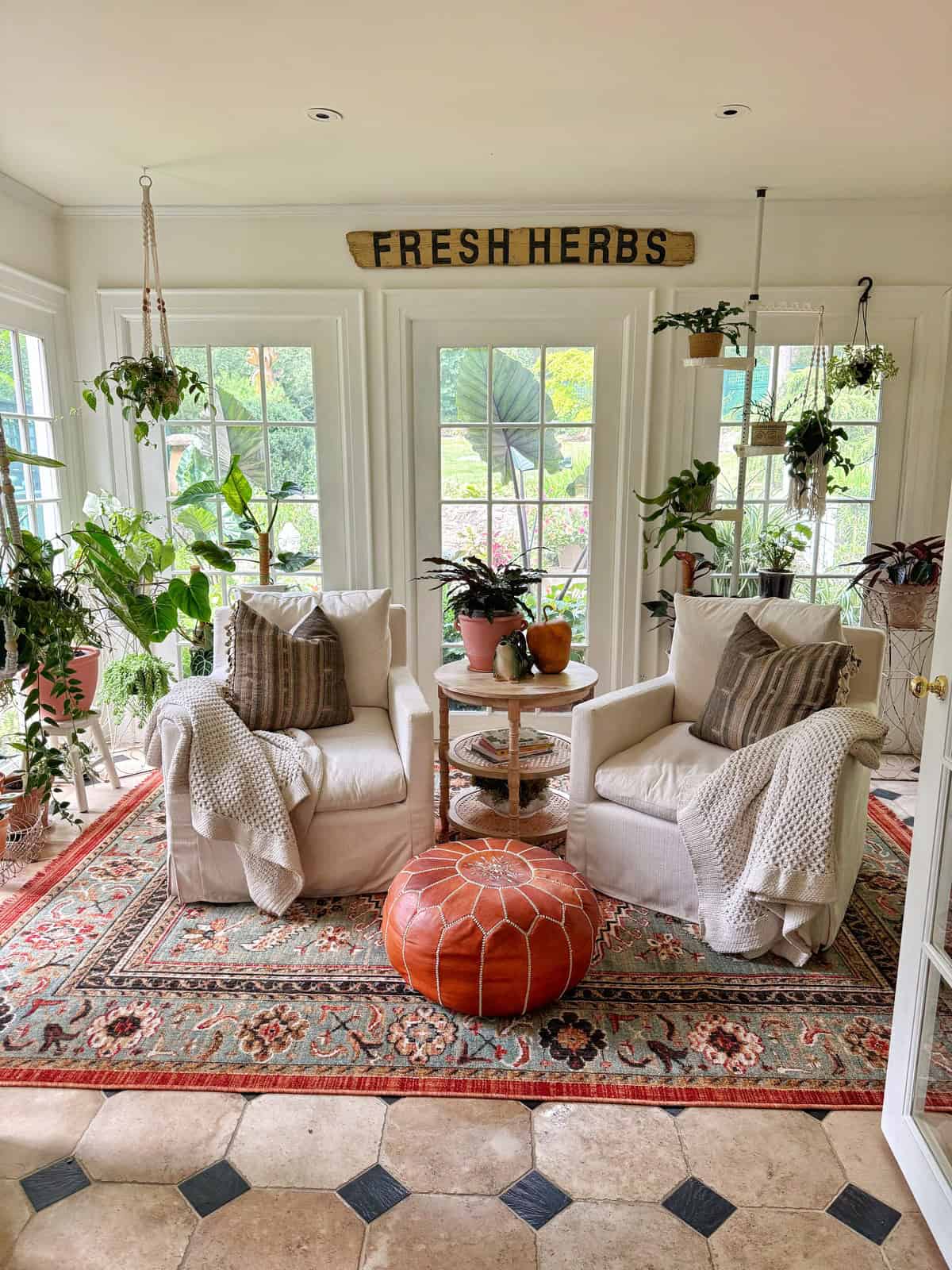
How Do Houseplants Purify the Air?
Houseplants clean the air through a process called photosynthesis. They remove toxins from the air by converting exhaled carbon dioxide into fresh oxygen.
Years ago, NASA researched how houseplants purify the air by diffusing toxic chemicals such as formaldehyde, benzene, and trichloroethylene and filtering the air we breathe. It’s a pretty cool landmark study – you can read it here.
When I first started gardening here in New Jersey almost thirty years ago, I was more of an outdoor gardener than an indoor gardener. Over the years, I’ve been increasingly adding more plants to my home and the result is pretty amazing: we are sick less often.
Now I’m not suggesting or guaranteeing that you’ll never get sick but my family has experienced far fewer colds and viruses through the years since adding more houseplants to our home.

The Benefits of Air-Purifying Houseplants
Adding just a few houseplants can significantly improve the air you breathe at home. Indoor air is often more polluted than outdoor air, filled with common toxins like benzene, formaldehyde, and xylene from everyday items like furniture, paint, and cleaning products. These pollutants can contribute to allergies and other health issues.
Beyond just cleaning the air, these living additions offer a range of other benefits:
- Mental Well-being: Studies have shown that interacting with plants can reduce stress, lower blood pressure, and improve your mood. They add a calming, natural element that can make your home a more peaceful sanctuary.
- Enhanced Aesthetics: Houseplants introduce life, color, and texture to any space, making it feel more vibrant and inviting. They add a touch of nature’s beauty to your decor.
In short, bringing plants into your home is an easy way to not only cleanse your air but also to create a more relaxing and beautiful environment. They certainly make me feel more happy and at peace!
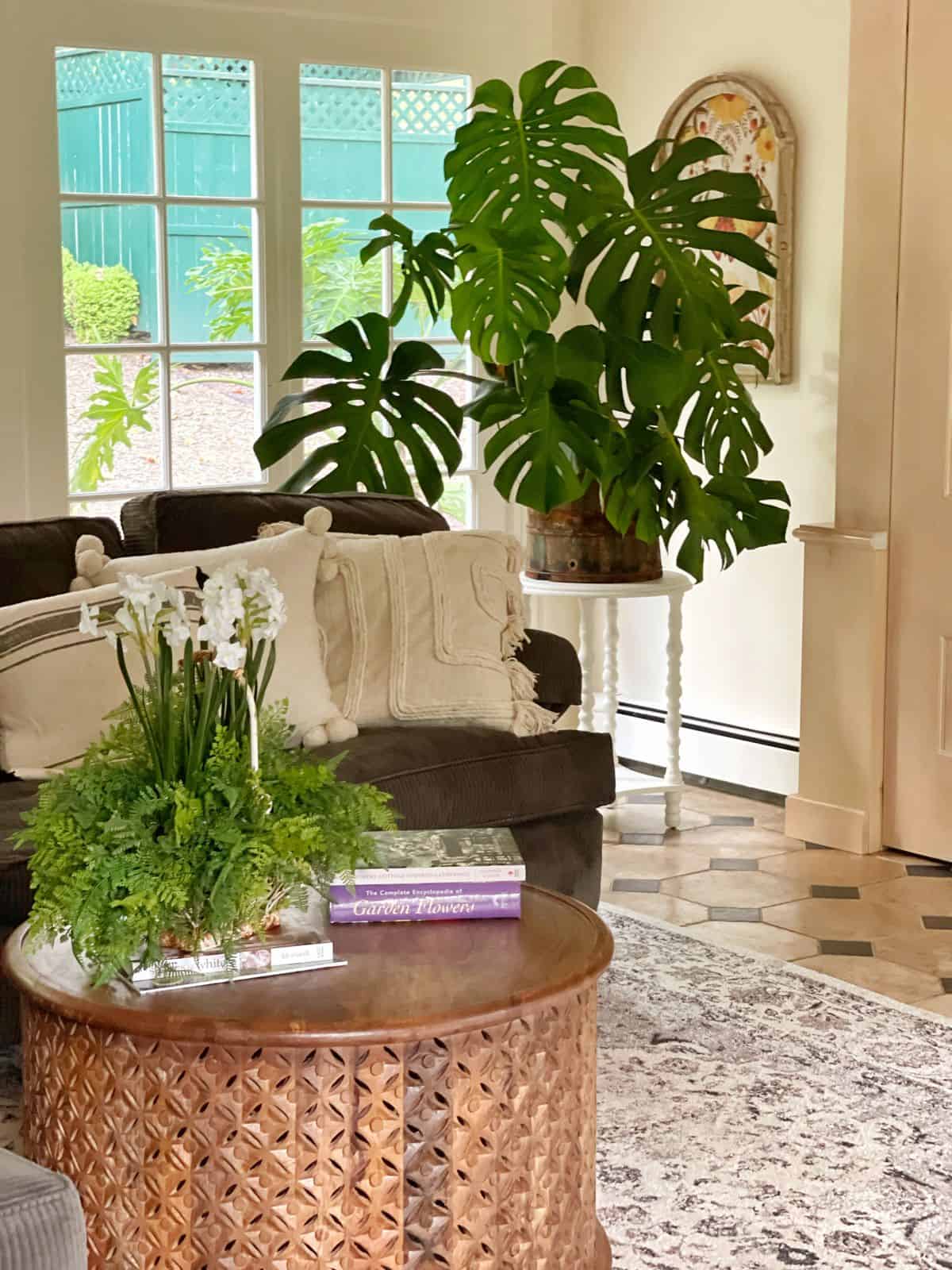
Best Low Maintenance Indoor Plants that Clean the Air
You don’t need to turn your home into a total jungle to reap the benefits of air-purifying plants. While some sources suggest having roughly two plants per 100 square feet for a noticeable effect, even just a few well-placed plants can make a difference in your indoor air quality and overall well-being.
To make it easy, I’ve compiled a list of stunning, hard-to-kill plants that not only add a touch of green to your home but also act as natural air purifiers. They’re perfect for new plant parents and will thrive with minimal fuss. Here are some great starter plants!

Snake Plant (Sansevieria)
This architectural wonder, with its upright, sword-like leaves, is a favorite for new and experienced plant parents alike. As one of the most low-maintenance and hardy succulents you can own, it truly thrives on neglect. It’s no wonder it’s often the first plant recommended to newbie indoor gardeners or busy people.
- Light: Snake Plants are incredibly adaptable. While they tolerate low light, they will grow faster and taller in bright, indirect light. Just place them in a room with at least one window and they will be happy.
- Soil: They prefer a well-draining soil mix to prevent root rot. A standard succulent or cactus potting mix works perfectly.
- Humidity: These plants are not picky about humidity. They can handle the dry air found in most homes, making them a perfect fit for any room.
- Temperature: Snake Plants do well in average indoor temperatures between 65–90°F (18–32°C). Keep them away from cold drafts and temperatures below 50°F (10°C).
- Watering: This is the most crucial part of their care: do not overwater. Allow the soil to dry out completely between waterings. For many indoor environments, this means watering only once a month or even less, especially during the colder months.
- Fertilizing: Fertilizing is not necessary for this plant to thrive. If you wish, you can feed it with a diluted balanced liquid fertilizer once during the spring or summer growing season.
- Common Pest and Disease: The biggest risk for a Snake Plant is root rot from overwatering. Pests are rare, but you may occasionally see mealybugs or spider mites.
- Plant Toxicity to Cats and Dogs: This plant is toxic to cats and dogs if ingested, so it’s best to keep it out of their reach.
- Why We Love It: We love the Snake Plant because it’s a living testament to resilience. It thrives on neglect, making it the perfect choice for busy people who want a beautiful, long-lasting plant. It filters out common household toxins like formaldehyde, benzene, and xylene, and uniquely, it releases oxygen at night, which can help promote better sleep.
- Pruning: Pruning is not required for the plant’s health, but you can remove damaged or older leaves by trimming them at the base of the plant with clean shears.
- Propagating: Propagating a Snake Plant is super simple. You can divide the plant when you repot it, or take a leaf cutting and let it root in water or a pot of soil.
I barely water my snake plants, they can handle any light condition and they just…are.
From my experience, put them in a room with at least one window and don’t over-water them. While they can tolerate low light – that doesn’t mean they’ll thrive. So the more light you give them, the better they’ll do.
With regard to watering, I typically water them maybe once a month with this gentle organic fertilizer. To me, the sansevieria plant is so cool because it can live on very little water and light as well as add lots of drama and life to living spaces.
If you’ve never grown a houseplant before or have a busy schedule, I strongly suggest starting with this one. To learn more about how to grow snake plants, read my post here.

Aloe Vera
Beyond its well-known use as a soothing remedy for sunburns, the Aloe Vera plant is a hardworking succulent and a fantastic air purifier for your home. This plant adds a touch of desert chic to any space and thrives with minimal care, making it an ideal choice for busy plant parents.
- Light: Aloe Vera plants love bright, indirect light. Placing them in a sunny spot, like a north-facing window or a sunroom, is perfect, as direct sun can scorch their leaves.
- Soil: They prefer dry conditions and require a well-draining soil mix, such as a specialized cactus or succulent blend, to prevent their roots from becoming waterlogged.
- Humidity: This desert native is perfectly happy in the low humidity of a typical household environment.
- Temperature: Aloe thrives in average indoor temperatures between 55–80°F (13–27°C). It is not frost-tolerant, so keep it indoors away from cold drafts.
- Watering: Like the Snake Plant, the key to success with Aloe is to avoid overwatering. Allow the soil to completely dry out between waterings. A good rule of thumb is to water them thoroughly but infrequently, perhaps once a month or even less, depending on the season.
- Fertilizing: Aloe Vera does not require much fertilizer. You can feed it a balanced houseplant fertilizer once during the spring and summer, but it is not essential for its survival.
- Common Pest and Disease: The most common issue with Aloe Vera is root rot caused by overwatering. Pests are rare, but watch for mealybugs or scale.
- Plant Toxicity to Cats and Dogs: The gel inside the leaves is generally safe, but the outer latex (the yellow part just under the skin) contains saponins that are mildly toxic to cats and dogs if ingested, causing symptoms like vomiting or diarrhea.
- Why We Love It: We love Aloe Vera for its striking, architectural beauty and its incredible resilience. It’s a natural air purifier, effectively removing toxins like formaldehyde and benzene from the air. Its medicinal properties are a bonus, making it a functional and beautiful addition to any home.
- Pruning: Pruning is not typically necessary. You can remove older or damaged outer leaves by cutting them off at the base with a clean, sharp knife.
- Propagating: Aloe plants make it easy to propagate by naturally producing offsets or “pups” from the base of the mother plant. These can be divided and potted up for new plants to keep or share with friends.
Much like the snake plant, I probably water my aloe plants once a month or a little less.
In my old house, I kept mine in the bay window on the north side. But here, my aloe vera plants reside in the sunroom (also on the north side) and are living their best life!
And I’ve got more than one now because I have to keep dividing them. The mother plant keeps producing babies, so I pot them up and either keep them or give them away.
To learn more about growing an aloe plant, read my post here. If you’ve got aloe vera plants and aren’t sure how to divide them, I shared a post about how to propagate aloe plants here.


Chinese Evergreen (Aglaonema)
The Chinese Evergreen is a fantastic starter plant for beginning gardeners because it is one of the most forgiving and resilient plants you can find. It tolerates low light and drought, making it an excellent choice for those who are still developing their green thumb. With a variety of shades and stunning patterns, it also adds a pop of color and personality to any room.
- Light: This plant thrives in low to medium, indirect light. Direct sunlight can scorch its leaves. A spot in a north-facing bay window or sunroom is an ideal location, allowing it to get just enough light to thrive.
- Soil: Use a well-draining, peat-based potting mix that will retain some moisture. A standard houseplant mix works well.
- Humidity: The Chinese Evergreen loves humidity. While it can adapt to lower humidity, it will flourish in a humid environment like a bathroom. If kept in a drier room, you can mist the leaves occasionally, place it near a humidifier, or group it with other plants to create a more humid microclimate.
- Temperature: This plant prefers warmer temperatures, ideally between 65–80°F (18–27°C). Keep it away from cold drafts and temperatures below 60°F (16°C).
- Watering: Allow the top 2 inches of soil to dry out before watering thoroughly. It can tolerate a bit of drought, so it’s always better to underwater than to overwater. Reduce watering frequency in the winter.
- Fertilizing: You can fertilize every 4-6 weeks during the spring and summer growing season with a balanced liquid houseplant fertilizer diluted to half strength.
- Common Pest and Disease: Chinese Evergreens are quite hardy, but they can be susceptible to mealybugs, scale, and spider mites. Root rot is a common issue if the plant is overwatered.
- Plant Toxicity to Cats and Dogs: This plant is toxic to cats and dogs if ingested. It contains calcium oxalate crystals that can cause oral irritation, pain, swelling of the mouth and tongue, and difficulty swallowing. Keep it out of reach of pets.
- Why We Love It: We love the Chinese Evergreen for its hardiness and versatility. It’s an effective air purifier, tackling common household toxins like formaldehyde, benzene, and xylene, which makes it a great choice for offices or homes with new furniture. Plus, if it’s happy and gets enough light, it may even surprise you with a beautiful, calla lily-like bloom.
- Pruning: Pruning is not a frequent task. Simply remove any yellow or brown leaves as they appear by cutting them at the base of the plant.
- Propagating: You can easily propagate this plant by taking stem cuttings from the main stem and rooting them in water or soil. You can also divide the plant during repotting to create new ones.
The Chinese Evergreen is a great starter plant that I’ve found to be a very forgiving and resilient plant that can take pretty much whatever you throw at it. Also, if it gets enough sunlight, it may produce a bloom. I haven’t seen one yet on mine, but I’ll let you know when it happens!
I have a few different varieties, but I keep them mostly in north side light. To learn more about how to grow a Chinese evergreen, read my comprehensive post here.


Flamingo Lily (Anthurium)
The Flamingo Lily is a gorgeous flowering houseplant that adds a touch of tropical elegance to any room. With its vibrant, heart-shaped flowers and lush green foliage, this plant is a visual treat that can bloom year-round with the right care. While it loves humidity, it’s also surprisingly resilient, making it a great starter plant for new plant parents.
- Light: Anthuriums thrive in bright, indirect sunlight. Direct sun can scorch the leaves and flowers.
- Soil: They need a coarse, well-draining soil mix that retains moisture without staying soggy. A blend of potting mix, perlite, and orchid bark is an excellent choice.
- Humidity: This tropical plant loves high humidity. Placing it in a naturally humid room like a kitchen or bathroom is ideal. If you live in a drier climate, consider misting the leaves or using a humidifier to keep the plant happy.
- Temperature: Flamingo Lilies prefer warm temperatures between 65–80°F (18–27°C). Keep them away from cold drafts or temperatures below 60°F (16°C).
- Watering: It’s crucial not to overwater this plant, as it doesn’t like “wet feet.” Let the top few inches of the soil dry out before you water it again. It’s better to underwater than to overwater.
- Fertilizing: To encourage those beautiful blooms, fertilize every 6-8 weeks during the spring and summer with a balanced, liquid houseplant fertilizer.
- Common Pest and Disease: Anthuriums are generally pest-resistant, but keep an eye out for spider mites, mealybugs, and aphids. Overwatering is the most common cause of problems, leading to root rot.
- Plant Toxicity to Cats and Dogs: All parts of this plant are toxic to cats and dogs. It contains calcium oxalate crystals that can cause oral irritation, swelling of the mouth and throat, and difficulty swallowing.
- Why We Love It: Beyond its elegant appearance and year-round flowers, we love the Flamingo Lily for its air-purifying abilities. It’s highly effective at removing toxins like formaldehyde and ammonia from the air, making it a perfect plant for kitchens and bathrooms. Plus, it’s a testament to resilience—it can handle a little abuse and live to tell about it, making it an excellent choice for a beginner.
- Pruning: You can remove spent flowers by cutting the stem at the base of the plant. Trim away any yellow or browning leaves as they appear.
- Propagating: The easiest way to propagate an Anthurium is by dividing the plant. Gently separate the root ball into sections, making sure each section has a few leaves and a healthy root system, and repot them individually.
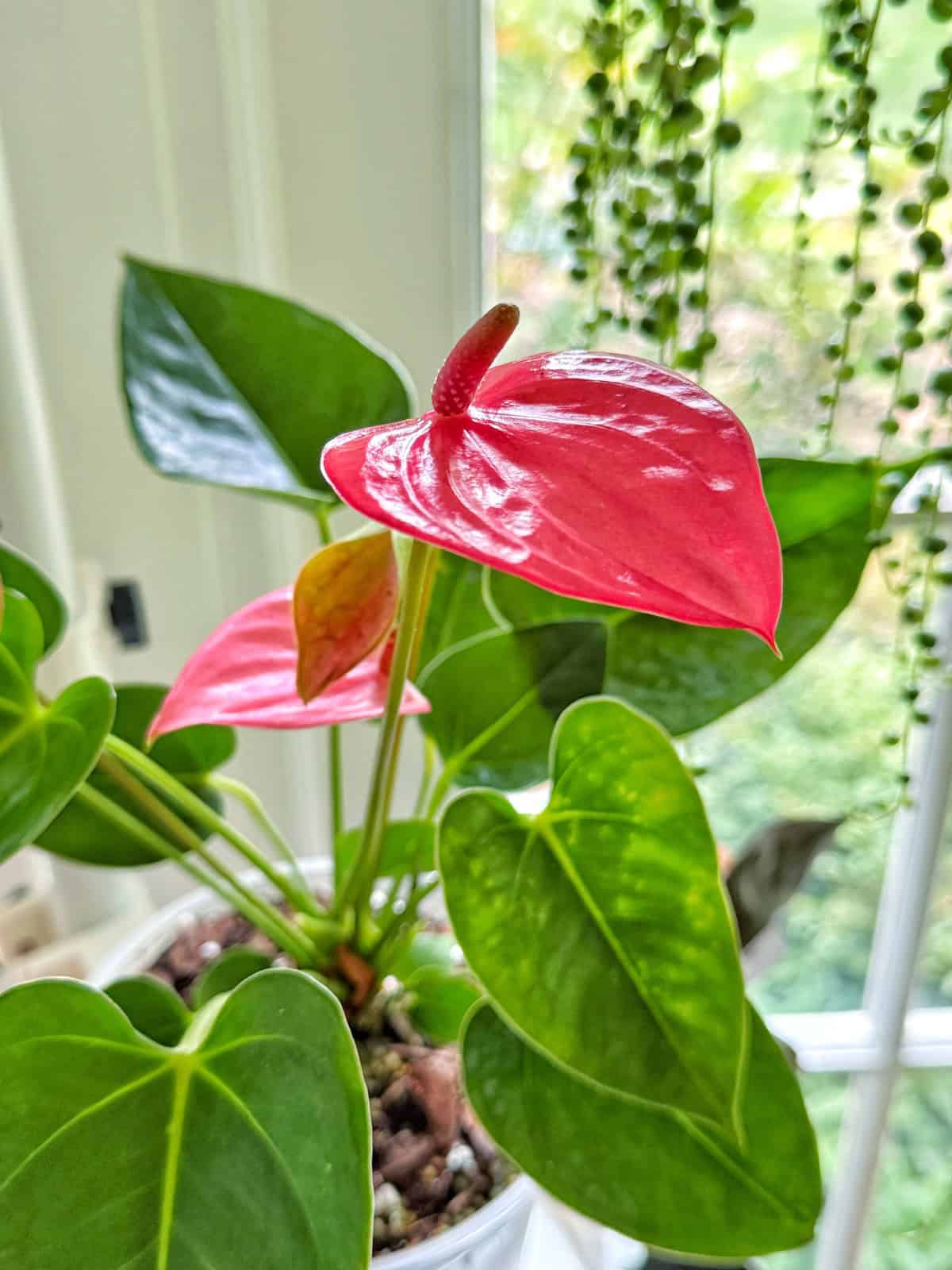
Flamingo lilies are gorgeous flowering houseplants that can bloom year-round but need indirect sunlight, humid temperatures, and water to thrive. Anthuriums do not like wet feet though, so check the soil before watering to be sure it is dry. This is one of those plants you are better off underwatering than overwatering.
It’s a really great starter plant for beginners as it is pretty resilient. We’ve had this plant for 4 years now. And it took a little abuse this summer on the front porch because I had it in these tall boho planters that kept falling over. Every time it would fall, the pot broke. And it sometimes took me a little bit of time to repot it up. It wasn’t happy with me for a little while but it lives to tell about it! And is doing quite well in the sunroom today.
To learn more about how to grow your own Flamingo flower, read this post here.

Peace Lily (Spathiphyllum)
With its glossy green leaves and graceful white blooms, the Peace Lily is a symbol of sympathy and a calming presence in any home. It’s also one of the best low-maintenance indoor plants because it communicates its needs so clearly, its leaves will droop dramatically when it’s thirsty, letting you know it’s time for a drink.
- Light: Peace Lilies grow well in partial sunlight or low, indirect light. They are sensitive to direct sun, which can scorch their leaves. A spot in a north- or east-facing window is ideal.
- Soil: This plant prefers a rich, loose, well-draining potting mix. A standard houseplant mix will work perfectly.
- Humidity: The Peace Lily loves humid environments. You can boost humidity by misting the leaves, placing it near a humidifier, or keeping it in a naturally humid room like a bathroom.
- Temperature: Peace Lilies thrive in warm, consistent temperatures between 65–85°F (18–29°C). Keep them away from cold drafts and vents.
- Watering: This plant’s most notable trait is how it tells you when it’s thirsty. When the leaves begin to droop, it’s a clear sign that it needs water. Water thoroughly and let the topsoil dry out before the next watering. It’s better to underwater than to overwater, as they don’t respond well to “wet feet.”
- Fertilizing: You can feed your Peace Lily every 6–8 weeks during the spring and summer growing season with a balanced liquid houseplant fertilizer.
- Common Pest and Disease: Watch out for common pests like spider mites, mealybugs, and aphids. The most common disease issue is root rot, which is caused by overwatering.
- Plant Toxicity to Cats and Dogs: Peace Lilies are toxic to cats and dogs if ingested. They contain calcium oxalate crystals that can cause oral irritation, swelling of the mouth and tongue, and difficulty swallowing. Keep them out of reach of pets.
- Why We Love It: We love the Peace Lily for its graceful beauty and its remarkable ability to purify the air. It’s effective at filtering out common toxins like formaldehyde, benzene, and trichloroethylene. Its dramatic wilting is a perfect visual cue for watering, making it a wonderful plant for new gardeners to learn from.
- Pruning: You can easily prune this plant by snipping off yellow or brown leaves and spent flowers at their base. You can also trim off any brown tips to keep the foliage looking fresh.
- Propagating: This is one of the easiest plants to propagate. When you repot it, simply divide the root ball into smaller clumps, making sure each new section has a few leaves and roots. Pot them up, and you’ll have new Peace Lilies to share.
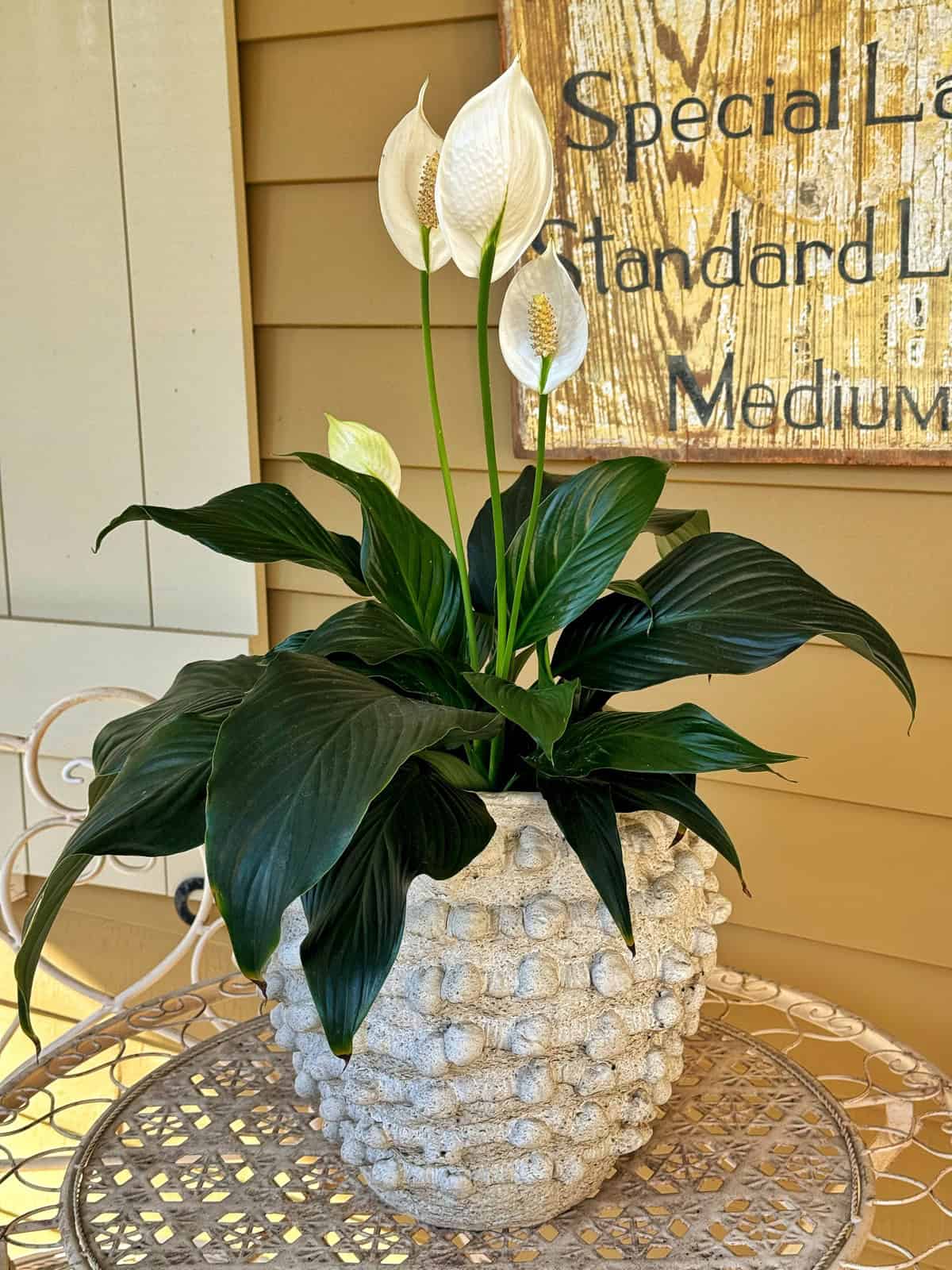
This graceful plant, with its glossy leaves and white flowers that resemble calla lilies, is as calming as its name suggests. It filters formaldehyde, benzene, trichloroethylene, and xylene, making it ideal for bedrooms and living rooms.
To me, it’s one of the best low maintenance indoor plants because it lets you know when it needs watering by drooping its leaves! But don’t stress seeing it do that because it’s just letting you know it’s thirsty! The leaves will perk back up but I recommend paying attention to its watering needs so it’s not constantly going into a state of stress.
Also, be conscious of not overwatering them because they don’t love it. Peace lilies don’t respond well to wet feet so lean more towards underwatering. Check the soil before you water them and really get to know your plant.
To learn more about how to grow peace lily plant, check out my post here.

Spider Plant (Chlorophytum comosum)
The resilient Spider Plant is a classic for a reason. This easy-to-care-for houseplant is known for its graceful, arching leaves and its unique ability to produce adorable “spiderettes”—baby plants that cascade from the main plant. It’s a fantastic choice for any room, as it thrives on bright, indirect sunlight and is a champion air purifier.
- Light: Spider Plants do best in bright, indirect sunlight. They can tolerate lower light conditions, but their growth and coloration will be much better near a sunny window.
- Soil: A standard, well-draining potting mix is all this plant needs.
- Humidity: This is a very forgiving plant when it comes to humidity. It’s happy in a wide range of conditions, including the average humidity of a typical home.
- Temperature: Spider Plants prefer average indoor temperatures between 65–80°F (18–27°C).
- Watering: Water thoroughly and let the top inch or two of soil dry out before watering again. Spider plants appreciate consistent moisture but are prone to root rot if they sit in soggy soil.
- Fertilizing: You can feed your plant with a balanced liquid houseplant fertilizer every 2-3 weeks during the spring and summer growing season.
- Common Pest and Disease: Spider mites, aphids, and mealybugs are the most common pests, but they are relatively rare. Brown leaf tips are a common issue, often caused by fluoride in tap water.
- Plant Toxicity to Cats and Dogs: Spider Plants are non-toxic to cats and dogs, making them a very popular choice for pet owners.
- Why We Love It: We love the Spider Plant for its playful, cascading foliage and its ability to effortlessly produce new baby plants. It is a workhorse when it comes to air purification, effectively removing formaldehyde, xylene, and toluene. The fact that it’s non-toxic to pets is a major bonus.
- Pruning: You don’t need to prune a Spider Plant for it to be healthy. You can simply snip off any yellowing leaves or trim brown tips to keep the plant looking fresh.
- Propagating: Propagating a Spider Plant is incredibly easy. Simply snip a “spiderette” from the main plant and place it in a glass of water. Roots will quickly form, and you’ll have a new plant to pot up or share. The user has a great story about a smaller plant that was a “baby” of a larger one, which shows how simple and successful this process can be.
Spider plants are super easy to grow. I’ve kept mine in several different locations in my homes. But they seem to do best near a sunny window. To learn more about spider plant care, read my post here.

Pothos (Devil’s Ivy)
The Pothos is one of the most popular houseplants in the world for good reason. With its fast-growing, trailing vines and heart-shaped leaves, it’s a perfect plant for adding a touch of jungle vibes to your home, whether from a hanging basket or a high shelf. As a self-proclaimed “plant killer” plant, it’s one of the most forgiving varieties you can own.
- Light: Pothos plants thrive in a wide range of light conditions, but they do best in bright, indirect sunlight. Low light can slow their growth and cause their variegation to fade, while direct sunlight can scorch the leaves.
- Soil: This plant prefers a standard, well-draining potting mix.
- Humidity: Pothos is adaptable and does well in average household humidity. It will also tolerate and appreciate higher humidity, making it a great choice for kitchens and bathrooms.
- Temperature: This plant prefers average indoor temperatures between 65–85°F (18–29°C).
- Watering: Allow the soil to dry out completely before watering again. Pothos will tell you it’s thirsty when its leaves begin to droop slightly.
- Fertilizing: You can feed this plant with a balanced liquid houseplant fertilizer once a month during the spring and summer growing season.
- Common Pest and Disease: Pothos are generally hardy, but they can occasionally attract pests like mealybugs, scale, or spider mites. The most common disease issue is root rot from overwatering.
- Plant Toxicity to Cats and Dogs: Pothos is toxic to cats and dogs if ingested. It contains calcium oxalate crystals that can cause oral irritation, swelling of the mouth and tongue, and difficulty swallowing. Keep it out of reach of pets.
- Why We Love It: We love Pothos for its dramatic, vining growth habit and its incredible resilience. It is an excellent air purifier, effectively removing common toxins like formaldehyde, benzene, and trichloroethylene. Plus, it’s one of the most forgiving plants you can find, making it a nearly foolproof choice for beginners.
- Pruning: Pruning is a great way to control the length of your Pothos and encourage a bushier, fuller plant. Simply snip the vines just after a node (the small bump where a leaf emerges) to encourage new growth.
- Propagating: Propagating Pothos is incredibly simple. Just snip a section of the vine with a few leaves and a node, and place it in a glass of water. Roots will sprout from the node, and you’ll have a new plant in no time.
If you are a self-proclaimed plant killer, try pothos because it’s nearly impossible to kill. To grow more pothos for free, read my post about how to propagate pothos here.

Philodendron
With its glossy, heart-shaped leaves, the Philodendron is a stunning houseplant that comes in a variety of beautiful varieties, from cascading vines to large, upright leaves. It’s an incredibly easy-to-grow plant that adds a tropical vibe to any space and thrives with very little care, making it a perfect choice for beginners.
- Light: Philodendrons need a good amount of bright, indirect sunlight to thrive. Keep them near a bright sunny window, but avoid placing them in direct sun, which can scorch the leaves.
- Soil: Use a rich, loose, and well-draining potting mix.
- Humidity: While they can tolerate average household humidity, these plants thrive in more humid conditions. As you mentioned, they also increase humidity levels and can help reduce the dryness caused by heating systems in the winter.
- Temperature: Philodendrons prefer warm temperatures, ideally between 65–80°F (18–27°C). Keep them away from cold drafts.
- Watering: Water thoroughly but allow the top half of the soil to dry out completely before you water again. As you noted, the frequency will change drastically with the season and location; in winter, you may only need to water once a month, while a plant outdoors in the summer heat might need watering almost daily.
- Fertilizing: You can fertilize monthly during the spring and summer growing season with a balanced liquid houseplant fertilizer.
- Common Pest and Disease: Philodendrons are generally hardy, but they can occasionally attract pests like mealybugs, aphids, or scale. The most common disease issue is root rot from overwatering.
- Plant Toxicity to Cats and Dogs: Philodendrons are toxic to cats and dogs if ingested. They contain calcium oxalate crystals that can cause oral irritation, swelling of the mouth and tongue, and difficulty swallowing.
- Why We Love It: We love the Philodendron for its versatility and how easily it can add a touch of lush, tropical foliage to any room. It’s a workhorse when it comes to air purification, effectively removing formaldehyde, xylene, and toluene. The fact that it requires minimal care while growing exponentially makes it a rewarding plant for any home.
- Pruning: You can prune your Philodendron to maintain its shape or control its size. Simply snip the stem just after a leaf node to encourage new, bushier growth.
- Propagating: Philodendrons are very easy to propagate from stem cuttings. Just snip a section of the vine with a few leaves and a node, and place it in a glass of water. Roots will sprout from the node, and you’ll have a new plant in no time.
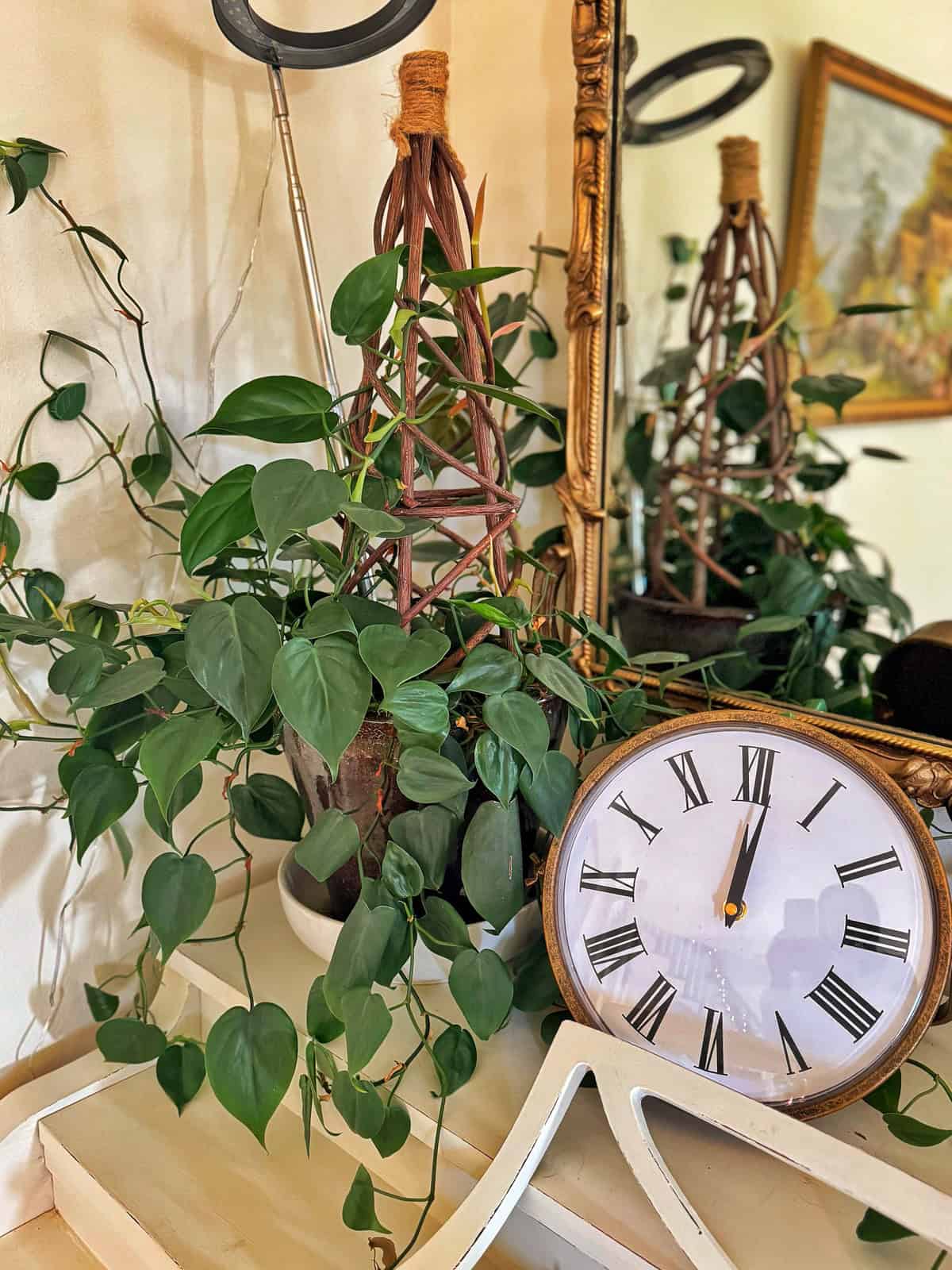
Philodendrons thrive on very little care but they do need a good amount of light, so when indoors keep them near a bright sunny window. I grow quite a few here that I adore and collect because they are super simple to grow!
While these plants are known for their ability to remove toxins from the air, they also increase humidity levels and can help reduce the dryness caused by heating systems in the winter.
For tips on growing the heartleaf philodendron, philodendron birkin, pink princess philodendron, or the split leaf philodendron, check out my posts here.


Monstera Plants
For both new plant parents and home decor enthusiasts, the Monstera is an incredible choice. With their iconic split leaves that develop as they mature, these tropical beauties add a touch of lush drama to any space. They are surprisingly low-maintenance and can grow into a magnificent statement plant, easily becoming a favorite in your home.
- Light: Monsteras need bright, indirect sunlight to thrive. While they can tolerate lower light, too little light can prevent their famous leaf splits from forming. Direct sun will burn their leaves.
- Soil: Use a chunky, well-draining potting mix that allows for good aeration. A mix of potting soil, perlite, and orchid bark is an excellent choice.
- Humidity: Monsteras love high humidity, but they are adaptable and will tolerate average household humidity levels. You can boost their growth by misting the leaves or using a humidifier.
- Temperature: This plant prefers warm temperatures between 65–85°F (18–29°C).
- Watering: Water your Monstera thoroughly and then allow the top 2-3 inches of soil to dry out before watering again. They do not like to sit in soggy soil, so always check before watering.
- Fertilizing: Feed your plant with a balanced liquid houseplant fertilizer once a month during the spring and summer growing season.
- Common Pest and Disease: Watch for common pests like spider mites, mealybugs, and scale. Root rot from overwatering is the most common disease issue.
- Plant Toxicity to Cats and Dogs: All parts of the Monstera plant are toxic to cats and dogs if ingested. They contain calcium oxalate crystals that can cause oral irritation, swelling of the mouth and throat, and difficulty swallowing.
- Why We Love It: We love the Monstera for its stunning, unique foliage and its ability to effortlessly transform a room. It is a powerful air purifier, effectively removing common toxins like formaldehyde, benzene, and trichloroethylene. It’s a low-maintenance plant that gives you big rewards in both beauty and air quality.
- Pruning: You can prune a Monstera to control its size or to remove damaged or yellowing leaves. Simply cut the stem just below a leaf node with clean shears.
- Propagating: Propagating a Monstera is easy. Take a stem cutting that has at least one node and an aerial root, and place it in water or moist soil. The cutting will quickly develop a new root system, giving you a new plant to grow.
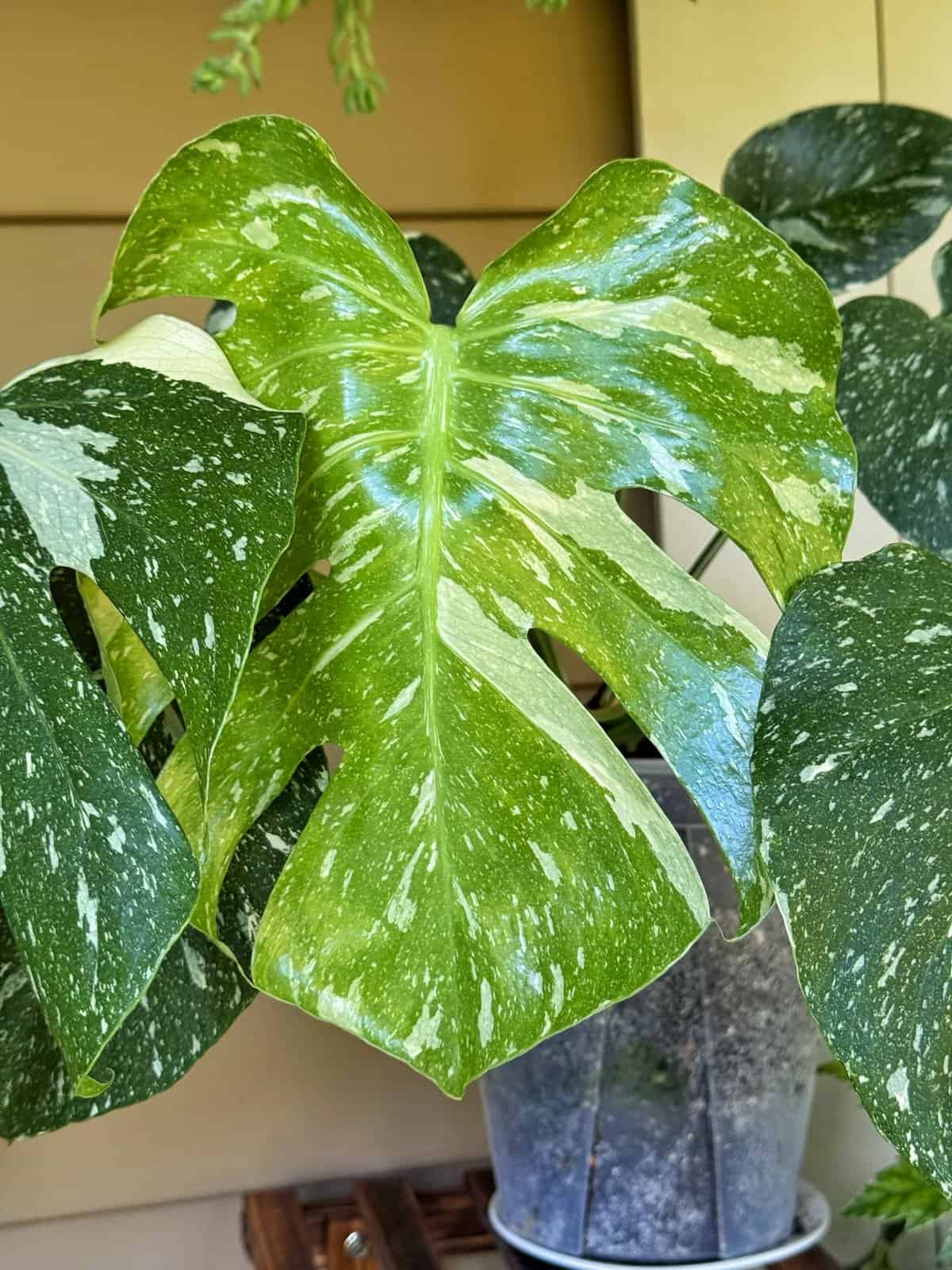
Monstera plants are high on my list of plants to grow for newbie gardeners and home decor enthusiasts. These tropical beauties, with their iconic split leaves, add a touch of drama to any space.
With lots of different varieties available, you can grow so many beautiful options that make an incredible statement in your home. The foliage is incredibly beautiful and they boost our moods to boot.
I grow both Monstera deliciosa, Monstera Burle Marx Flame, Thai Constellation and adansonii. To learn more about growing them, check out these posts!

Pilea Peperomioides (Money Plant)
If you’re looking for an easy-care plant with a unique look, the Money Plant is a perfect choice. Inspired by a segment from Martha Stewart, this adorable little plant, with its round, coin-shaped leaves, is perfect for desktops or windowsills. It’s an ideal plant to start with because it not only cleans the air but also propagates with incredible ease.
- Light: Pilea thrives in bright, indirect sunlight. Direct sun can burn its leaves, while too little light will cause it to stretch out and lose its compact shape.
- Soil: Use a well-draining potting mix. Pilea prefers soil that is airy and doesn’t retain too much water.
- Humidity: It tolerates average household humidity but will appreciate a bit of extra moisture.
- Temperature: This plant prefers temperatures between 65–75°F (18–24°C).
- Watering: Water your Pilea thoroughly but only when the soil is dry to the touch. It will let you know it’s thirsty by slightly drooping its leaves.
- Fertilizing: During the growing season (spring and summer), you can feed it every 2-3 weeks with a balanced liquid houseplant fertilizer.
- Common Pest and Disease: Pilea is generally hardy, but watch for mealybugs, aphids, or fungus gnats. Overwatering is the main threat, leading to root rot.
- Plant Toxicity to Cats and Dogs: Pilea Peperomioides is non-toxic to cats and dogs, making it a safe choice for pet owners.
- Why We Love It: We love the Pilea for its charming, unique appearance and how easily it produces “babies,” allowing you to effortlessly grow more plants for free. It’s an effective air purifier, filtering out toxins like formaldehyde and toluene. The fact that you can start with one plant and create a collection to keep and share is a rewarding experience.
- Pruning: Pruning is generally not necessary, as the plant grows in a naturally appealing shape. You can simply remove any yellow or damaged leaves at the base.
- Propagating: This plant is one of the easiest to propagate. The mother plant naturally produces small plantlets, or “pups,” that sprout from the soil. Once a pup has a few leaves and is a couple of inches tall, you can gently separate it from the main plant and repot it in its own container.
And let me tell you how much I LOVE growing pilea peperomioides. I started with one plant that I probably paid a few dollars for and now have four separate plants from that first plant. The mother plant continues to produce baby plants too. So once a year, I divide them off and repot them in new terracotta pots.
But because I have so many now, I can’t keep them all. I’ve kept a few to decorate my home and purify the air. And the rest I gift away to family and friends. To learn more about how to grow your own money plant, check out this post here.

Best Low Maintenance Indoor Plants That Clean the Air FAQs
Are air-purifying plants safe for pets?
Every houseplant is different so it’s really important to know what you are growing before you bring them home to live with your furry friends. Some air-purifying plants are toxic to pets if ingested, so it is important to choose plants that are safe for pets. Some safe options include snake plants, spider plants, and peace lilies.
Can air-purifying plants replace an air purifier?
I am not really sure whether or not they can replace them or not. Not all plants clean all toxins out of the air, whereas I suppose air purifiers remove more. Thus, houseplants alone, may be not the best at totally purifying the air. That said, I don’t have an air purifier in my home and care for a jungle of plants instead!
Where should I place my air-purifying plants?
Place your air-purifying plants in areas where you spend the most time, such as your bedroom, living room, or home office. You can also place them near sources of pollution, such as your fireplace or kitchen. Just make sure the plants you have can handle the light conditions in those living spaces or they may not thrive.
How often should I repot my air-purifying plants?
You should repot your air-purifying plants every two or three years. Because nutrients wash out of the soil everytime we water, it is a good idea to freshen up that soil. When you repot them, you can either go one pot size up or repot them in the same container. Keep in mind when you pot plants up a size, they tend to grow larger.
Can I fertilize my air-purifying plants?
Yes, you should fertilize your air-purifying plants once a month during the growing season. Use a balanced fertilizer that is diluted to half-strength. But if you want an easier approach to fertilizing, go with a slow-release fertilizer so there are less applications and it’s set and forget.


Air-Purifying Plants: Wrapping It Up
Keep in mind that all plants have different light and water requirements, so it’s important to research the specific needs of the plants you choose to ensure they thrive in your home environment.
For more information about houseplants that clean the air, check out this post from the University of Florida Cooperative Extension.
Are you new to growing indoor plants or have you been growing them for a while? If so, what do you like to grow? Let’s chat more about it in the comments below.
To drill down on houseplant care basics and grow an indoor garden that thrives, please read my articles:
- Houseplant Care 101
- From Shop to Home: How to Acclimate Your Tropical Plants
- How to Water Indoor Plants Like a Pro
- How to Revive Houseplants You Thought Were Goners
- Is Your Houseplant Getting Enough Light? Here’s How to Tell.
Thanks for stopping by the blog today!
Enjoy your day! xoxo


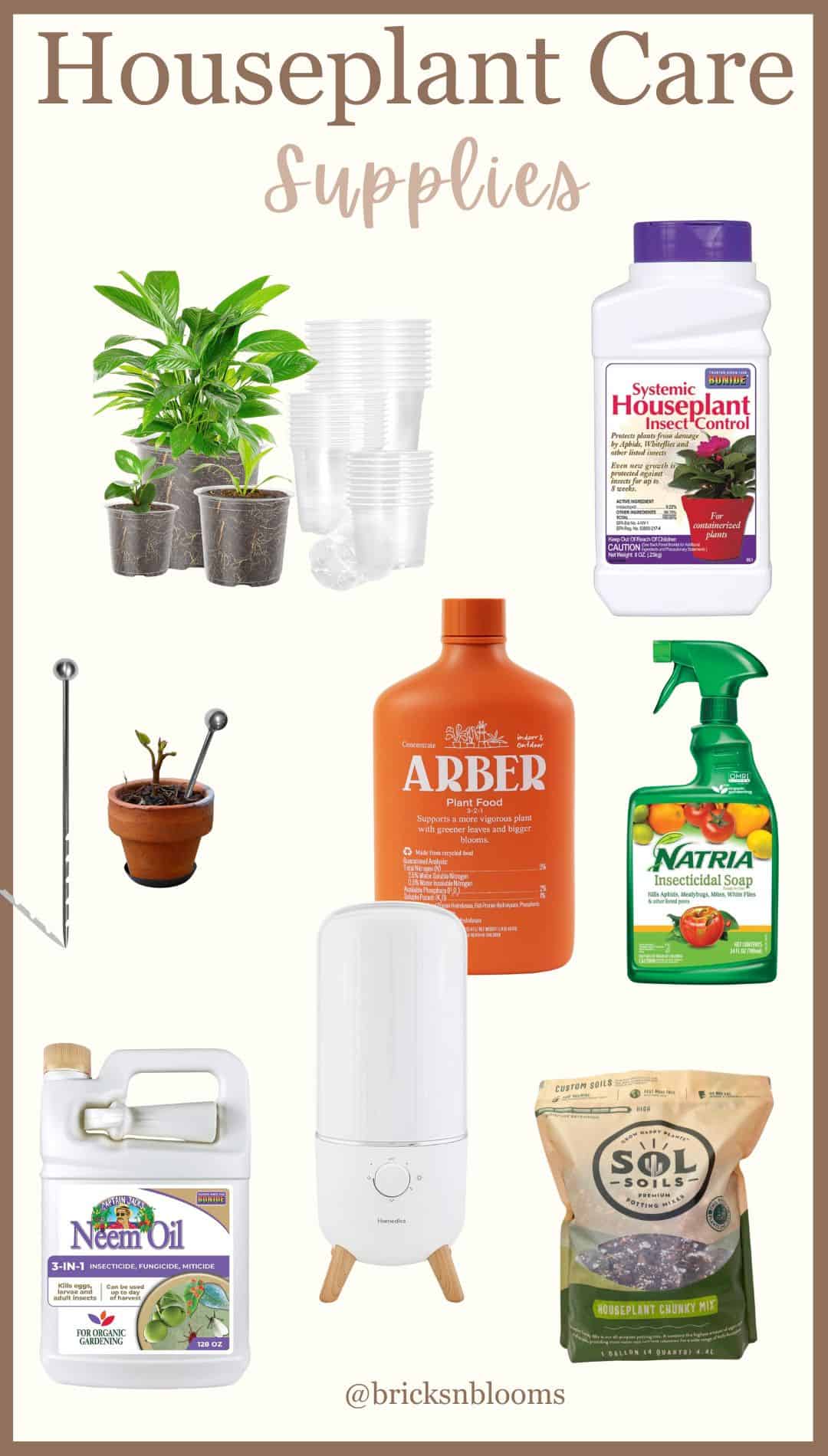
Shop the Post
Snag the supplies I regularly use on all my houseplants here.


Originally Published . Last Updated .

Great post Stacy! I have most of these in my home. I don’t know what I would do without my houseplants 🙂
Thank you Jennifer! Me too! I love having them! xoxo
Thanks for this post! glad to know we have some of these plants already. During these times, it may just be important for our home when we are climate controlled or in polluted areas.
Absolutely Linda! I couldn’t agree more! Houseplants look pretty and clean the air – it’s a win-win! xoxo
Great round up of house plants! Love all your tips.
Thanks so much Marie! Happy Sunday! xoxo
What a fantastic, informative post. Thank you.
Thank you SO much Carol! xoxo
This is so great – wonderful information!
I really appreciate that! Thank you Darla!!!
I love this! Thanks for all the names. I’ll know exactly what to look for!!
Thank you so much Sharon!!! I’m so glad! xoxo
Chinese Evergreen and Philodendron are my favs!
I pinned this for later reference, thanks!
I’m so happy to hear that! I just picked up the chinese evergreen and love the foliage!!! Thank you for pinning!!! xoxo
I love your site. I am so happy I found it. We recently moved to a new home with a lot of natural light and I’m excited to add some plants. I never thought about them improving the quality of the air. I am part of KariAnne’s Mastermind group and that is how I found you.
I am so happy to hear that!!! It’s so nice to meet you through her! I will check out your blog too! xoxoxo
These are such great tips Stacy! I might even try to raise a sweet little indoor plant or two!
Outside plants I can do and they thrive. Inside not so much. lol I love the Chinese evergreen! What a pretty plant! I typically don’t have any live plants in my home. You have given such great information. It makes me want to give this black thumb another go.
You totally got this!!! Indoors I stick with easy care plants that are resilient. Try starting with snake plant – they are super easy and you can’t kill them if you tried!