
Why Seedlings Germinate But Don’t Grow

Seedlings sprouted but stalled? Learn why seedlings germinate but don’t grow, what each symptom means, and what to fix next time.
You did the hard part.
Your seeds germinated.
Green shoots popped through the soil, and everything looked promising. Then growth slowed. Or stopped. Or the seedlings stretched, stalled, or never really became anything at all.
If your seedlings germinated but are not growing, this is not a germination problem. Something happened after those first leaves appeared, and the cause is usually visible once you know what to look for.
I have been starting seeds for many years using several different methods, including indoor seed starting under lights, winter sowing outdoors, and direct sowing in the garden. I still experiment, adjust, and refine each season. Most of the systems I use now exist because I have already worked through these exact problems.
Let’s walk through the most common reasons seedlings germinate but do not grow, what each one looks like, and how to tell which issue you are dealing with.
(Posts on stacyling.com may contain affiliate links. Click HERE for full disclosure.)
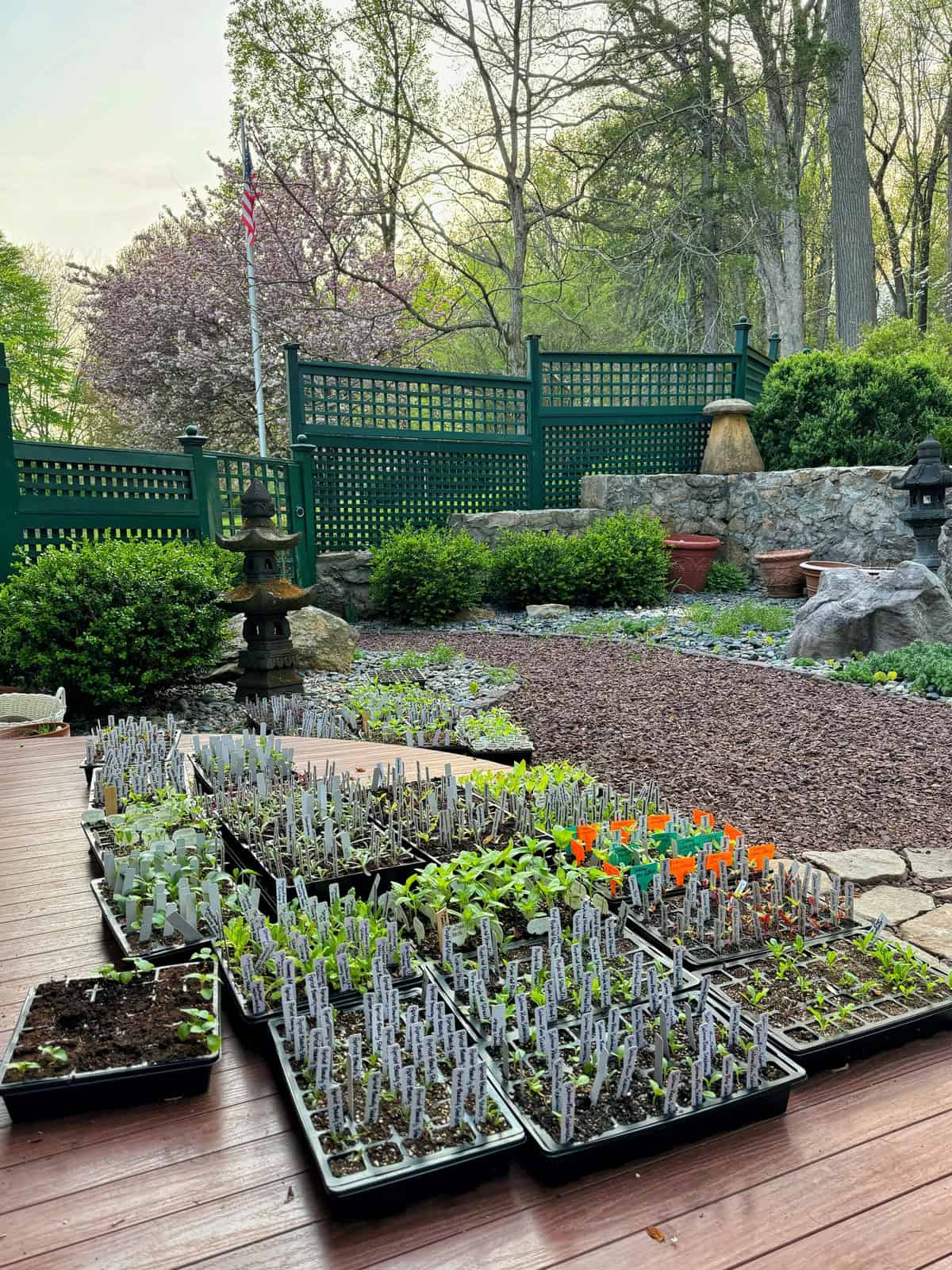
Your Seeds Germinated, So This Is Not a Germination Problem
Once a seed sprouts, it has successfully completed germination. That matters, because it rules out issues like old seed, improper planting depth, or poor seed viability.
If your seeds never sprouted at all, that is a different situation entirely, and I cover that separately in Why Flower Seeds Fail to Germinate.
This post focuses on what happens after germination, when seedlings should begin steady growth but instead struggle or stall.
Dampening Off: Seedlings Collapsed at the Soil Line
If your seedlings looked fine one day and then suddenly fell over at the base, this is almost always damping off.
What this usually means
Damping off is caused by soil-borne fungi that attack seedlings right at the soil line. The stem becomes weak, thin, and unable to support the plant. Once this happens, the seedling cannot recover.
This issue is most common when:
- soil stays consistently wet
- air circulation is poor
- seedlings are overcrowded
- conditions are cool and stagnant
Why it happens early
Damping off strikes young seedlings before they have developed strong stems or root systems. It is not something you caused in a single day. It develops when conditions stay unfavorable for too long.
Can you fix it
Unfortunately, no. Seedlings affected by damping off cannot be saved. The solution is prevention rather than rescue.
Even though I personally have not dealt with damping off in my own seed starting, it is common enough that it deserves attention here. Good airflow (keep an oscillating fan going), appropriate watering, and clean seed-starting practices dramatically reduce the risk.
I talk more about preventing early seed-starting issues like this in Common Seed Starting Mistakes and in my main indoor seed-starting guide How to Start Seeds Indoors Without a Greenhouse.
Root Problems That Slow or Stop Growth
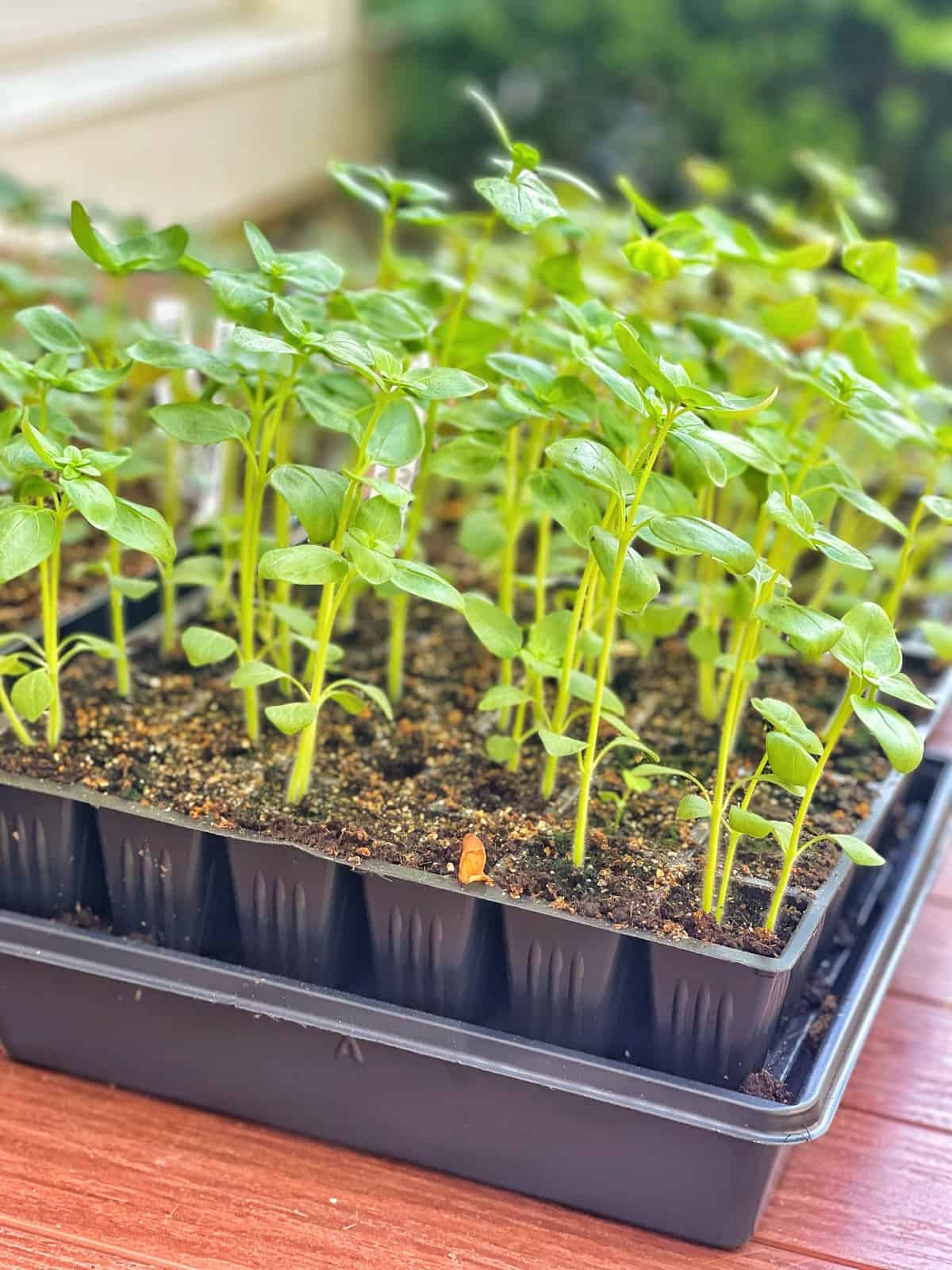
Sometimes seedlings do not collapse or stretch. They just sit there. Growth is slow, leaves may look pale, and nothing seems to improve even though the plant is still alive.
What this usually means
This often points to a root health issue rather than a visible problem above the soil. When soil stays consistently wet or drainage is poor, roots can struggle to get enough oxygen. Healthy root growth slows, and the plant cannot support new leaf development.
This does not always look dramatic. Seedlings may remain upright and green but make very little progress.
Why it affects growth
Roots drive everything above the soil. When roots are stressed, compacted, or waterlogged, nutrient uptake slows and growth stalls. Unlike damping off, seedlings do not suddenly fail. They simply never gain momentum.
This is one reason container choice, soil structure, and watering habits matter early. I touch on these issues more broadly in Common Seed Starting Mistakes, especially when it comes to watering and drainage.

Soil Temperature Stress After Germination
Seedlings can also stall when the soil temperature is too cool, even if air temperatures seem comfortable.
What this usually means
After germination, seedlings rely on warm enough soil to support active root growth. When containers sit on cold surfaces or in cool rooms, root activity slows down. Leaves may appear lighter green, growth feels sluggish, and plants seem stuck at the same size for days or weeks.
This is different from germination temperature issues. The seed sprouted successfully, but conditions afterward are limiting growth.
Why this is easy to miss
Many gardeners focus on air temperature and light while overlooking the temperature at the root zone. Cool soil can quietly slow everything down without causing obvious damage.
This is especially common early in the season when seed trays are placed near windows, on basement floors, or in unheated spaces.
Thinking through timing and environment ahead of time helps prevent this, which is something I factor in my overall approach outlined in How to Start Seeds Indoors Without a Greenhouse.
Seedlings Are Leggy: Tall, Thin, and Falling Over
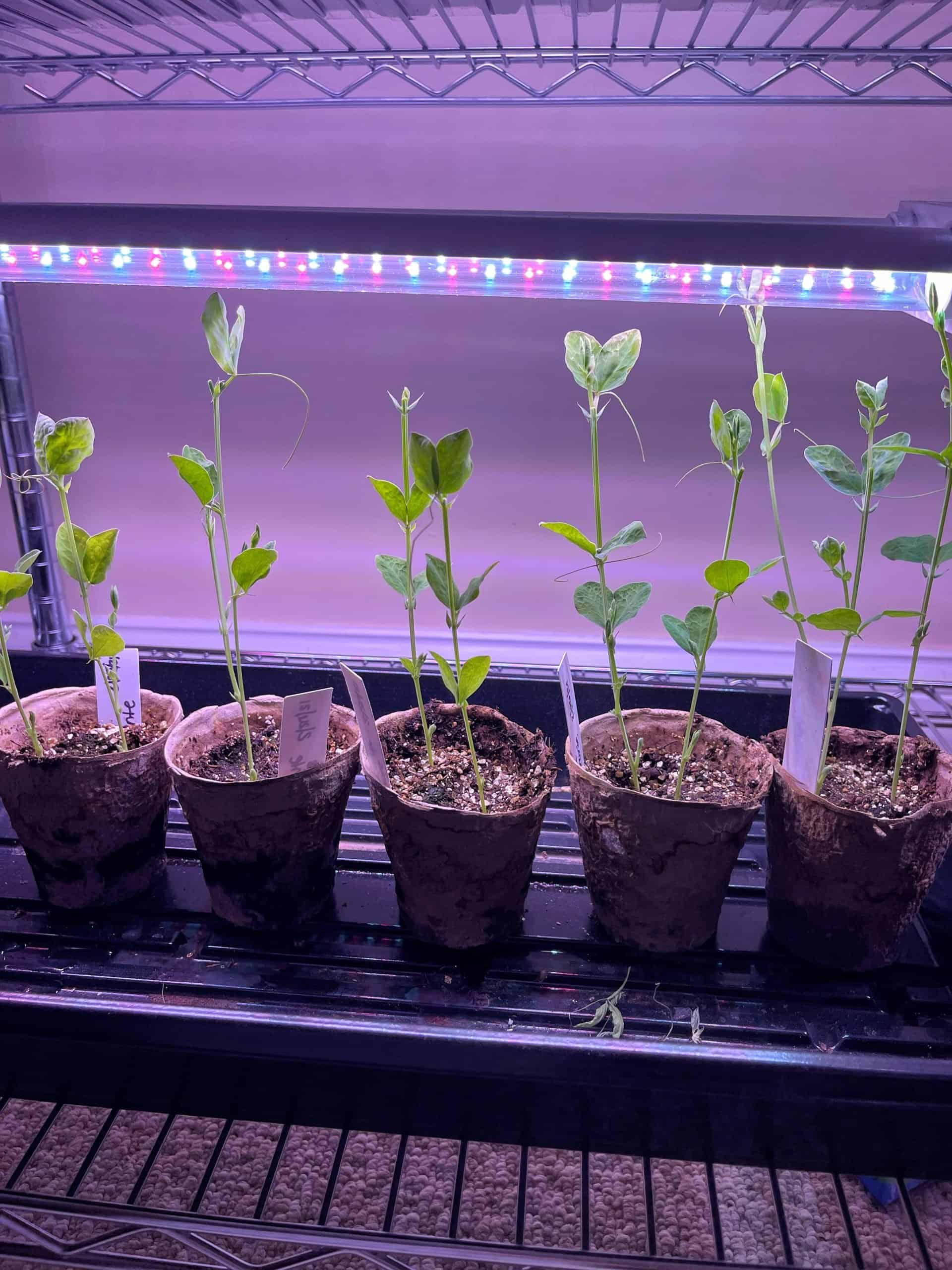
If your seedlings are stretching upward, leaning, or flopping over, they are leggy. This is one of the most common post-germination problems.
What this usually means
Leggy seedlings are not receiving enough light, or the light source is too far away. When light is weak or distant, seedlings stretch in search of it, producing long, fragile stems instead of sturdy growth.
This happens frequently when seeds are started near windows or when grow lights are mounted too high above the plants.
Why it stops healthy growth
Leggy seedlings put energy into stem length rather than root development and leaf strength. Even if they survive, they often struggle long term.
This is one reason I no longer rely on window light, use grow lights, and why light placement matters more than many gardeners realize. I cover light requirements in more detail in How to Start Seeds Indoors: What You Need.

Seedlings Germinated but Stayed Tiny
This is one of the most confusing situations for gardeners.
- The seedlings are alive.
- They are not collapsing.
- They are not stretching.
- They just are not growing.
What this usually means
This often points to early stress that limits development, especially during the first few weeks after germination. Common causes include cool soil temperatures, inconsistent light intensity, or stress very early in the seedling stage.
Some crops are naturally slow growing, but there is a difference between slow and stalled.
An example from my own experience
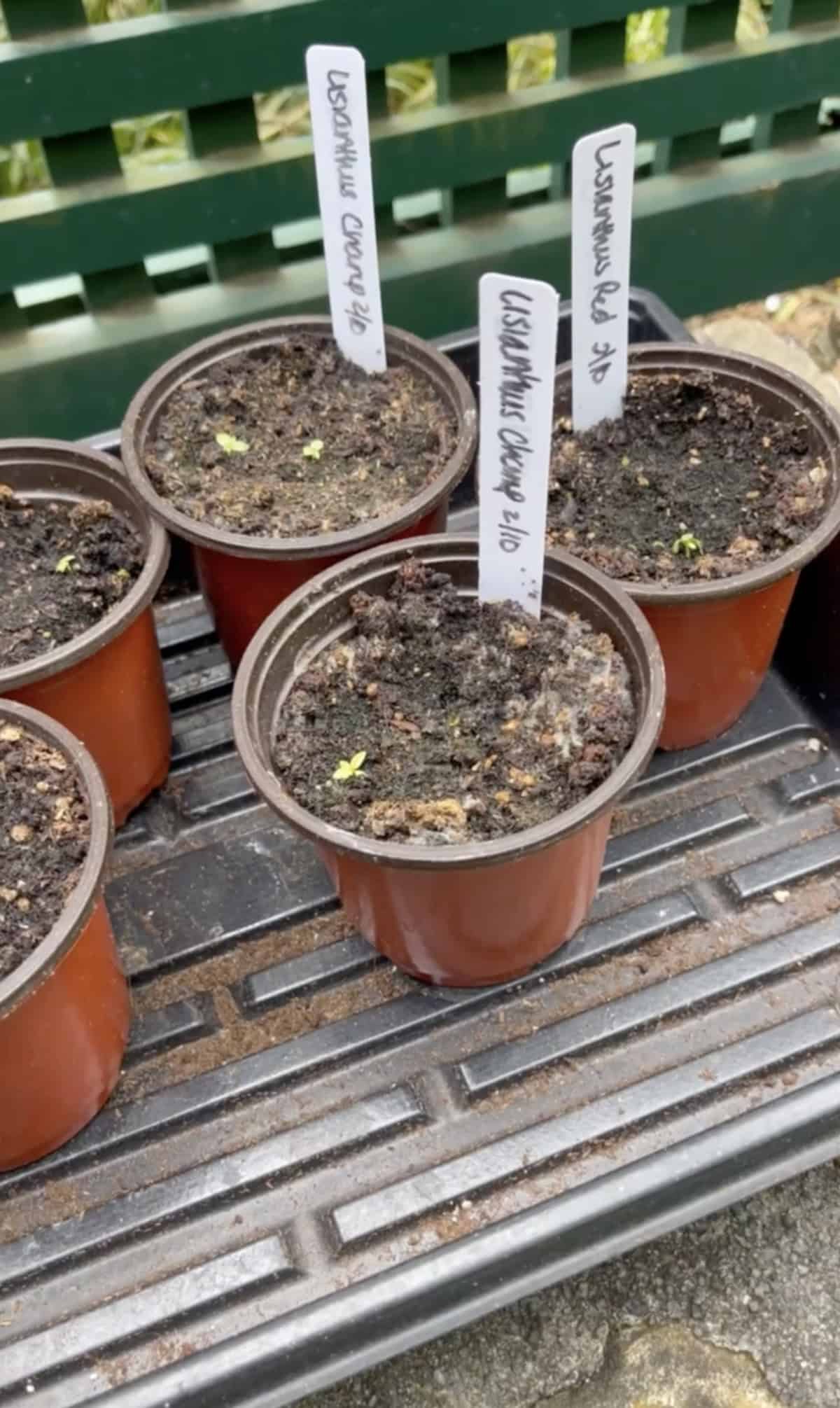
This is exactly what happened when I tried starting lisianthus from seed. The seeds germinated successfully, and I knew ahead of time they were slow growing. But even after weeks and then months, including past my last frost date, the seedlings never really developed.
This is a known issue with lisianthus. Under less-than-ideal early conditions, seedlings can enter a stalled growth phase that they may never recover from, even when conditions improve later.
That experience helped me realize something important. Not every crop is a good fit for indoor seed starting at home, especially when space under lights is limited. Indoor seed starting space is premium real estate, and I am much more selective now about what earns a spot there.
Seedlings Stopped Growing After the First True Leaves
Sometimes seedlings start out strong, form their first true leaves, and then pause.
What this usually means
This type of stall is often related to root conditions or environmental stress rather than light alone.
Common contributors include soil staying too wet, cold root zones, or roots struggling in compacted or poorly draining containers. Growth may slow dramatically without obvious signs of rot or disease.
This is one reason I emphasize paying attention to early conditions and planning, which I talk more about in Seed Starting Planning.
When the Problem Is Not You, It Is the Crop
This is an important diagnosis many gardeners miss.
Some plants are simply not well suited to home indoor seed starting. They may require long indoor timelines, extremely consistent conditions, or greenhouse-level control to thrive.
Lisianthus is a classic example. It is commonly started by professional growers in controlled environments, and while it can be started at home, it is not forgiving.
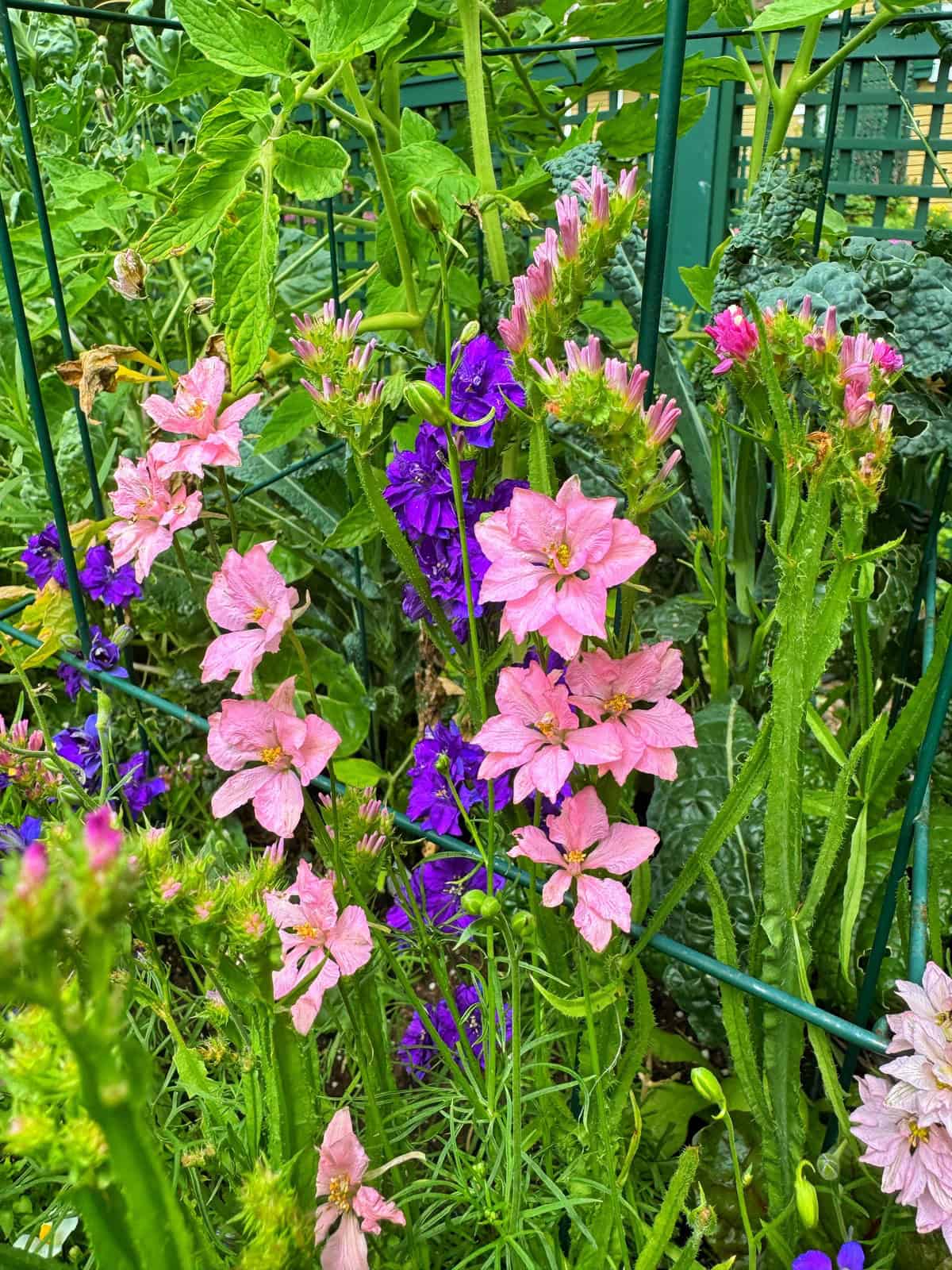
Recognizing when a crop is not a good match for your setup is not failure. It is experience. As another example, I learned that both sweet peas and larkspur grow stronger and healthier using the winter sowing method vs. starting the seeds indoors under grow lights.
This is also why I use multiple seed-starting methods rather than forcing everything into one system. Indoor seed starting, winter sowing, and direct sowing all have strengths. I rely heavily on winter sowing for certain crops, which I explain in How to Winter Sow Seeds Outdoors in 9 Easy Steps.
Can You Fix Stalled Seedlings or Is It Better to Start Over?
This is usually the question gardeners are afraid to ask.
The honest answer is that not all stalled seedlings can be fixed. Leggy seedlings may recover if corrected early. Seedlings that stall due to early stress or crop limitations often do not.
Starting over is sometimes the most efficient and least frustrating option. It frees up space, time, and energy for seedlings that will actually thrive. But that may not always be feasible.
Knowing when to restart is part of developing confidence as a gardener.

How I Avoid Problems After Germination Now
I avoid most of these problems today not by fixing seedlings after the fact, but by preventing stress early on.
- I am more selective about what I start indoors.
- I pay close attention to light placement and intensity. This means, I check every day to ensure they don’t need to be adjusted or rotated.
- And I plan seed starting timelines realistically.
I walk through my full indoor approach in How to Start Seeds Indoors Without a Greenhouse, and I also share common pitfalls to avoid in Common Seed Starting Mistakes.
The goal is not to start more seeds. It is to grow stronger ones.
Thank you for visiting the blog today!
Enjoy your day! xo

Originally Published .
