
Monstera Deliciosa Plant Care for Beginners: A Simple Guide

Monstera plant care made easy! This beginner’s guide covers light, water, soil, and more. Grow healthy, happy Monstera plants with these simple tips.
Think you have a black thumb? Think again!
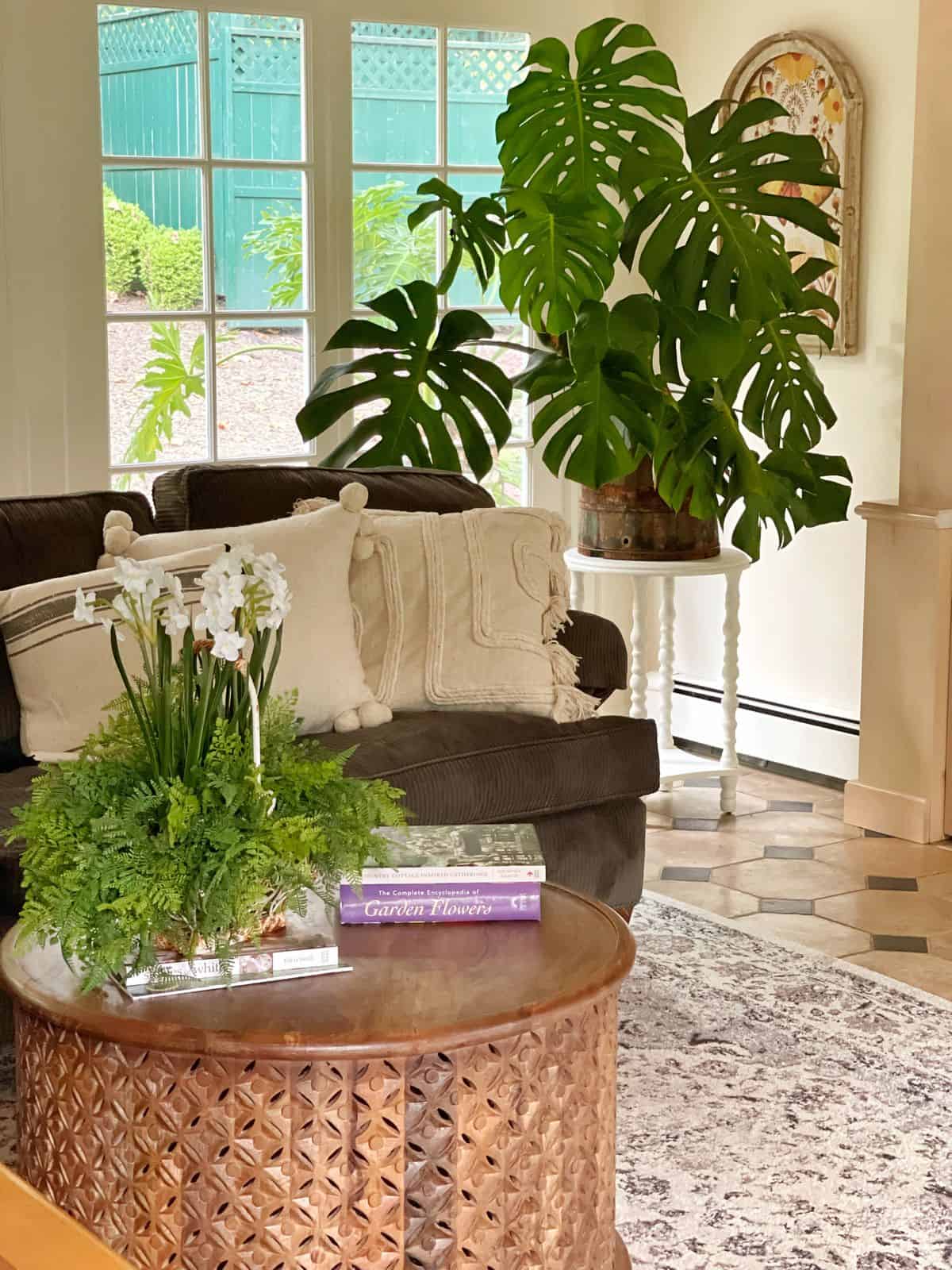
The magnificent Monstera deliciosa, with its iconic split leaves and commanding presence, is one of the easiest and most rewarding houseplants you can grow. This beautiful “Swiss cheese plant” adds instant life and a touch of the tropics to any home, making it a must-have statement piece for any aspiring indoor gardener.
Hi, I’m Stacy Ling, a trained Master Gardener in USDA Zone 6b, New Jersey. I love sharing beginner-friendly tips to help your Monstera plant and all your other houseplants thrive.
If you’re busy, new to plants, or just looking for a forgiving plant that truly thrives, the Monstera is the answer. With just a few basic tips, you’ll be well on your way to growing a lush, vibrant plant.
(Posts on stacyling.com may contain affiliate links. Click HERE for full disclosure.)
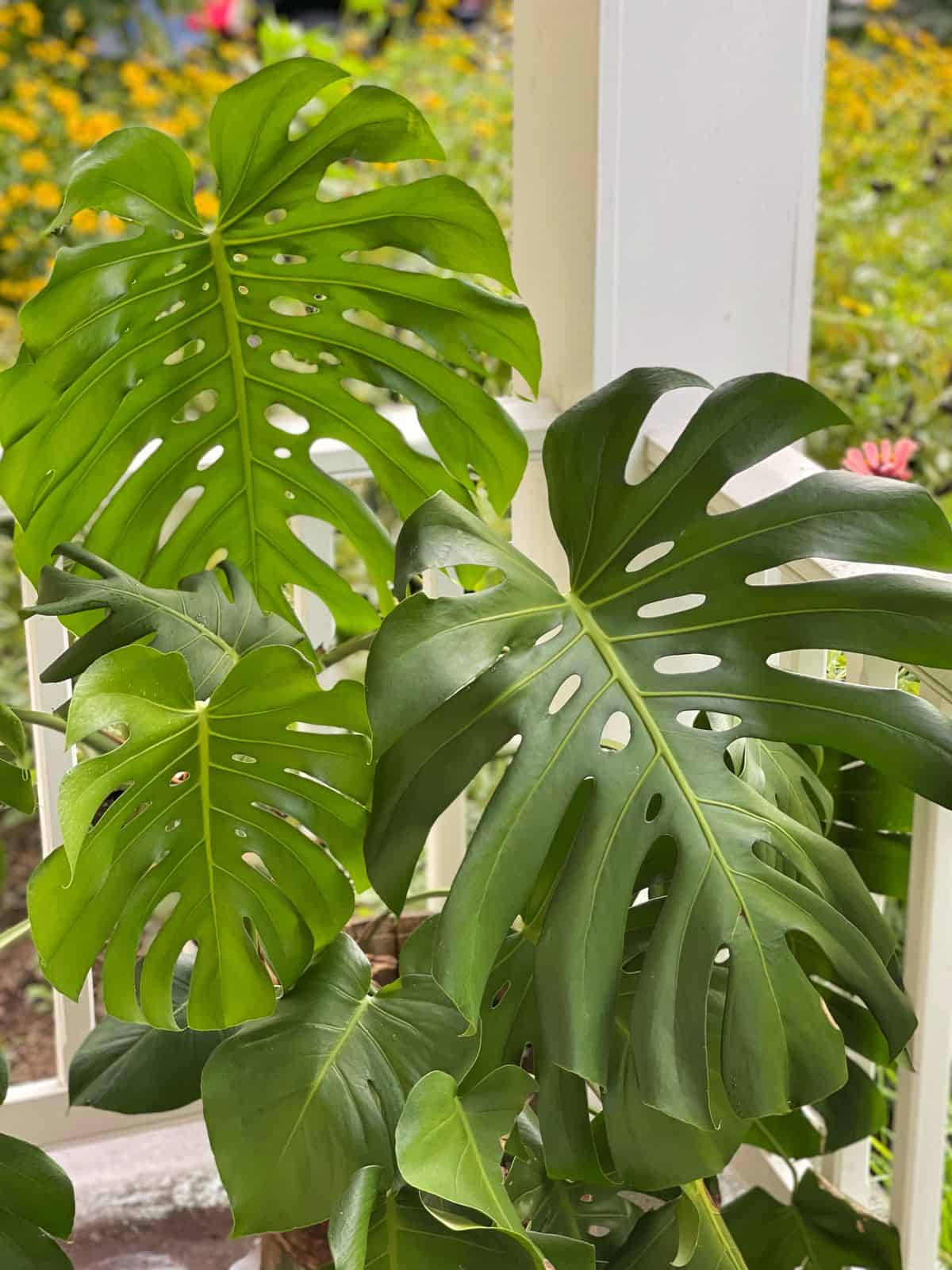
Meet Monstera Deliciosa
Hailing from the rainforests of Central and South America, the Monstera deliciosa (aka Swiss cheese plant) is a climbing vine that’s hardy in zones 10-11 and can reach impressive heights. Its signature split leaves and holes (called fenestrations) help it maximize the sunlight it catches on the rainforest floor.
Growing Monstera Deliciosa
Quick tips for the best care.
- Light: Provide bright, indirect light. Avoid direct afternoon sun, which can scorch the leaves. East- or west-facing windows are often ideal.
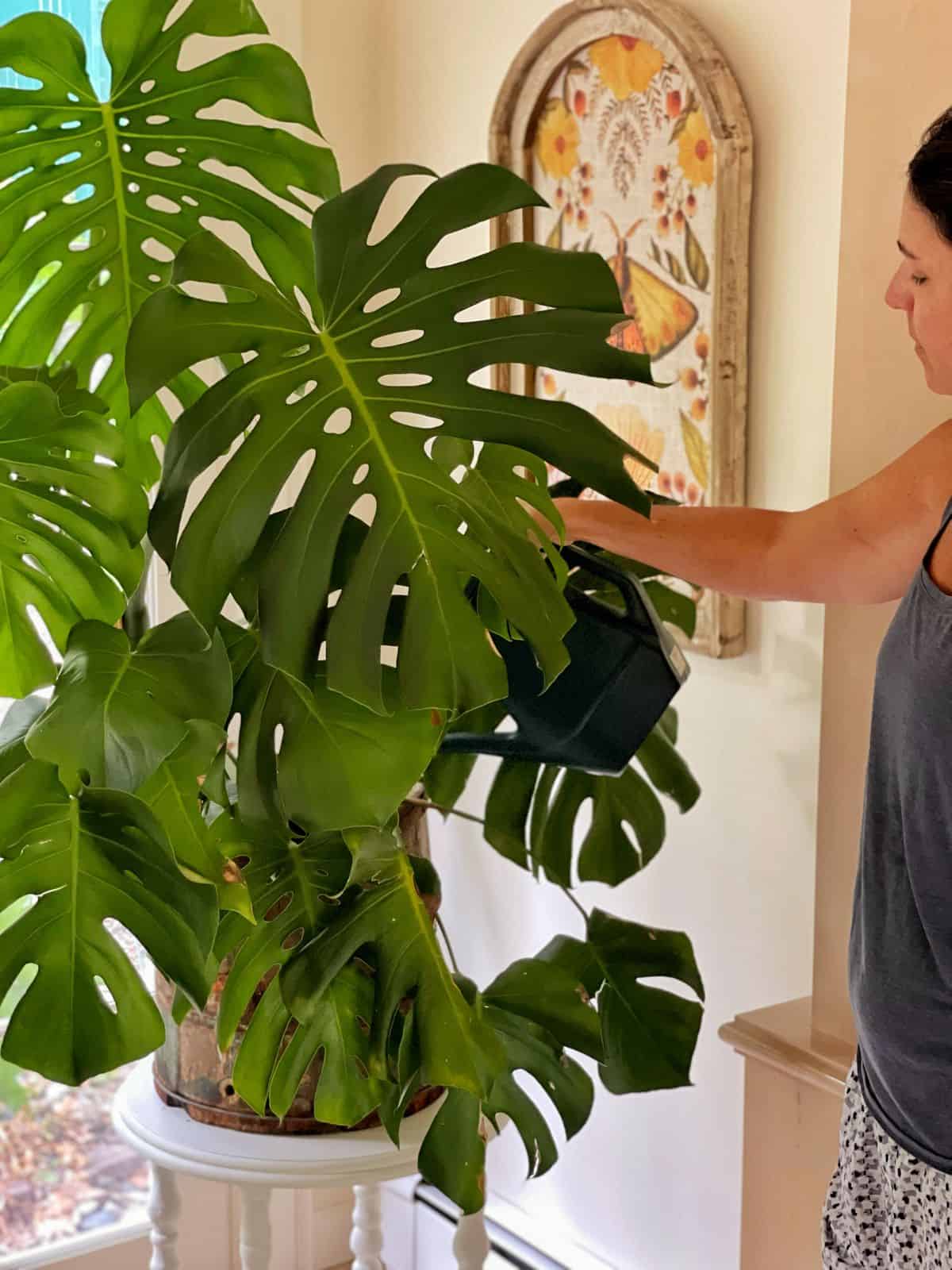
- Watering: Water when the top 1–2 inches of soil feel dry to the touch. Water thoroughly, and always let the excess drain out.
- Humidity: This tropical plant loves humidity! Use a pebble tray or a humidifier, especially in dry winter months.
- Soil: Use a well-draining, airy potting mix. A blend with orchid bark, perlite, and peat moss works perfectly to prevent soggy roots.
- Temperature: Keep temperatures consistent between 65–85°F (18–29°C). Avoid placing it near cold drafts or heating vents.
- Fertilizing: Feed every 2–4 weeks during the spring and summer growing season with a diluted liquid houseplant fertilizer. Stop feeding in fall and winter.
- Pruning: to manage size, remove yellow or damaged leaves, or encourage a fuller shape. You can easily propagate the cuttings!
- Common Issues: Yellowing leaves and droopiness usually mean overwatering (the biggest killer!). Dusty leaves indicate the need for a quick wipe down.

5 Reasons You Should Grow a Monstera Plant
Here are five great reasons why the Monstera deliciosa is the perfect plant for your home, even if you’re a total beginner:
- They Boost Our Moods: Caring for plants is a huge stress reliever, and the lush, green foliage of the Monstera brings a special sense of calm. Watching your plant grow and thrive is truly therapeutic, making them ideal for improving concentration and just making you feel good.
- Monstera Plant Care is Easy: They are the ultimate low-maintenance houseplant. Seriously, they’re practically impossible to kill! Monsteras are incredibly resilient and can handle a bit of forgetfulness.
- They Create Amazing Home Decor: Monsteras make a huge statement in any room. Those large, dramatic leaves with their unique splits and holes instantly bring a cool, tropical vibe to your space. Whether you’re filling an empty corner or decorating a shelf, a living Monstera brings a vibrant energy that fake plants just can’t match.
- Propagation is Simple: Want to get more plants for free? Monsteras are super easy to propagate! You can create new plants from stem cuttings to keep or share. The simplest method is to take a cutting with a node and root it in water or soil. It’s a fun, rewarding way to grow your collection.
- They Help Purify the Air We Breathe: Choosing a real Monstera means choosing cleaner air. These plants actively work to remove toxins from your indoor environment. With their large leaves, they are efficient natural air purifiers, contributing to a healthier feel in your home.
Monstera Deliciosa: The Literal Champion of Resilience
I have to admit, I really tested the resiliency of my Monstera deliciosa when we moved a few years ago. During the chaos of packing and preparing for our move in late 2021, I had to move my Monstera to our dark, finished basement to keep it out of the way while we were showing the house. Terrible, I know, but something had to give! The plant received very little light and no water for about two months, from October through early December.
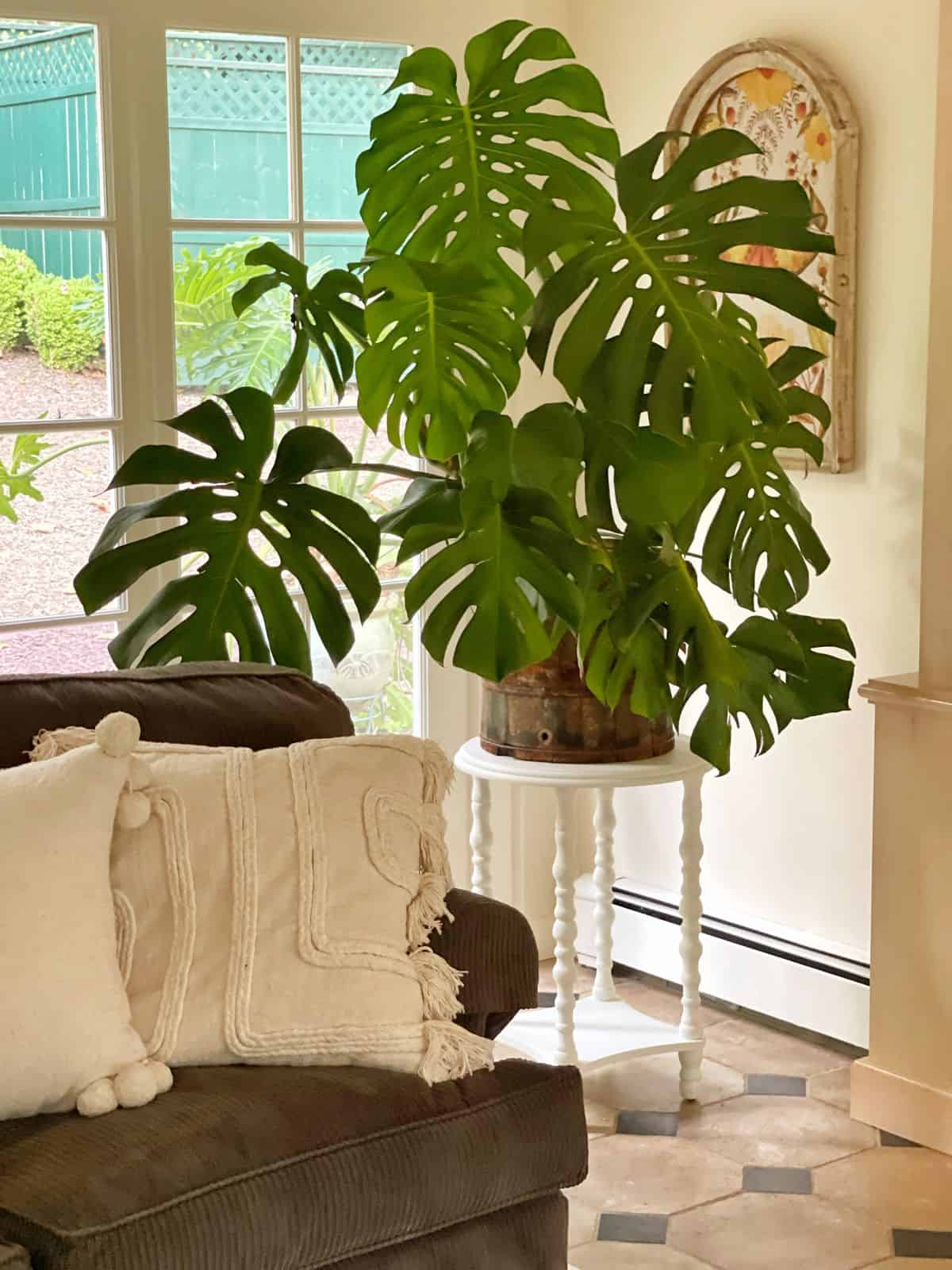
It looked a little sad when we finally arrived at our new home, but I was amazed it was still alive! I watered it well and moved it to a bright sunroom, where it quickly bounced back and thrived.
The point of this story is simple: Monstera plants are incredibly resilient and can handle almost whatever life throws at them. If you get busy, go on vacation, or simply forget about it for a bit, your Monstera will likely still be there, patiently waiting for a little love and attention.

Monstera Plant Care
As far as houseplants go, the monstera plant could not be easier to grow.
Monstera Deliciosa Light Requirements
Monsteras crave bright, indirect sunlight. Think about their growing conditions in the rainforest with dappled sunlight filtering through a canopy of trees. Granted, we can’t offer rainforest conditions, but east-facing windows are ideal. But if I’m being totally honest here, I have grown mine in a north and west side windows and it is equally as happy.
Too little light can lead to leggy growth and fewer fenestrations, while too much light can cause leaf burn. Pay attention to your Monstera’s leaves: lighter green foliage indicates more light is needed while yellowing leaves suggest too much direct sun.
Soil
Well-draining soil is key. A mix that’s light and airy will prevent the roots from becoming waterlogged. Look for a potting mix that contains ingredients like organic potting soil, orchid bark, peat moss, and perlite to ensure proper drainage. I make my own blend using these ingredients and my monstera deliciosa seems to love it.

Temperature
As a tropical plant, Monsteras prefer warmer temperatures. Maintain consistent indoor temperatures between 65-75°F (18-24°C). Typical household temperatures are usually pretty perfect, but avoid placing your plant near drafty windows or air conditioning vents.
Humidity
Monsteras thrive in humid environments. If your home is dry, especially during the winter months, you can increase humidity by using a humidifier, misting the leaves regularly, grouping plants together to create a microclimate, or placing the pot on a tray of pebbles filled with water.
Monstera Watering Tips
When watering your monstera deliciosa, finding the perfect balance is the key to their happiness. Aim to keep the soil evenly moist, but never soggy. Allow the top inch of soil to dry slightly between waterings.
Instead of setting up a weekly watering schedule, check your soil for how much moisture it is retaining. But don’t just check the surface of the soil to determine dryness. Stick your finger about an inch or two down into the soil and if it’s dry, then it’s OK to water. If you prefer to use a moisture meter to check for soil dryness, they work really well too.
Overwatering is a common monstera plant killer, leading to root rot and drooping leaves. In the winter, reduce watering frequency as the plant goes into a semi-dormant state. (To learn more about learning how and when to water your houseplants, read this article that I wrote about keeping your houseplants alive)
From my experience growing monstera deliciosa, just giving them bright, indirect light and checking the soil moisture before watering will drive their care.

Fertilization
Feed your Monstera plant with a balanced fertilizer during the growing season (spring and summer) to encourage lush foliage. A diluted liquid fertilizer applied monthly or a slow-release fertilizer applied every few months is ideal. Always follow the label directions for whatever product you use to avoid over-fertilizing, which can lead to leaf burn and salt buildup in the soil.
I used to use a slow-release fertilizer where I would feed my monstera plants a few times a year starting in late winter to help them out of dormancy, then again in late spring to encourage new growth, and in late August to feed them before they go into winter dormancy in late fall.
But I’ve since changed my tactic and the result has been stellar! Recently, I started using this organic liquid fertilizer all year round instead and found my plant was much happier during the winter months.

Supporting/Staking
Monsteras are natural climbers. As your plant grows, provide it with support to prevent it from becoming leggy. A moss pole is a great option, allowing your Monstera to climb and display its impressive foliage.
You can use a coconut coir pole or a true moss pole where the aerial roots will take hold. If you use the latter, it’s super important to keep that moss pole watered so the roots don’t dry out!
I’ve also seen people use wood stakes and other types of support too. But the whole ideas is – this plant loves to climb. So give it a structure to climb will encourage more growth and larger foliage. I mean how cool is that?
Monstera Plant Care: Bonus Tips
- Use a moss pole or trellis to encourage your Monstera to climb, mimicking its natural habit.
- Regularly wipe down the leaves with a damp cloth to remove dust and encourage photosynthesis.
- Don’t be afraid to prune your Monstera to control its size and shape.
Seasonal Care
Depending on the variety, they can grow large enough to cozy up dark, dull corners in an indoor living space. But the best part? You can bring these easy-care plants outdoors when the weather stays above freezing where they will grow and thrive before you bring them back indoors for winter.
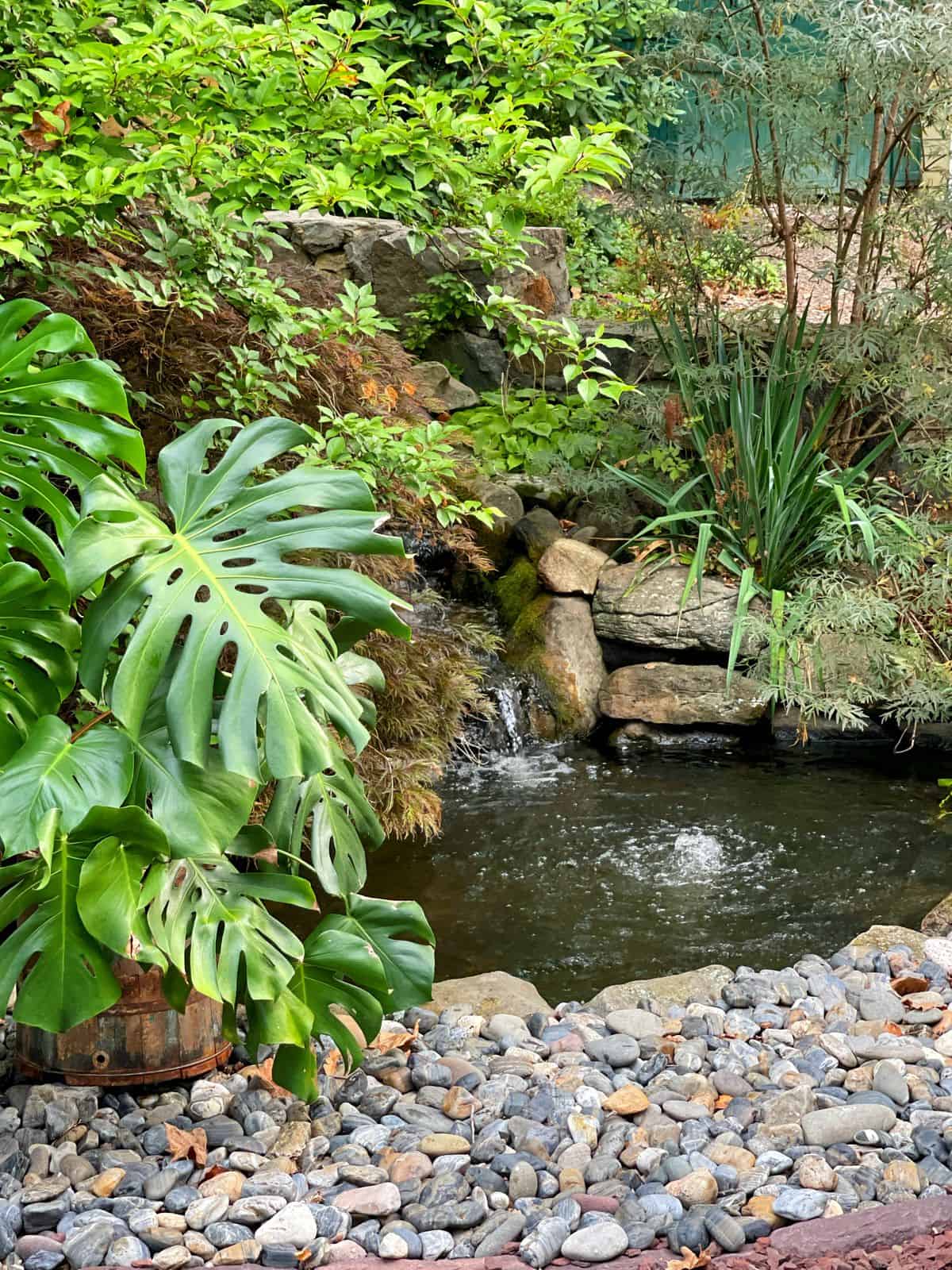
This is an ideal way to get the best of both worlds enjoying them both indoors and out. I bring my monstera plants outdoors to summer in my New Jersey zone 6b climate, and they love that heat and humidity.
Because these are tropical plants, it’s important to make sure the nighttime temps are right when moving the monstera deliciosa outdoors and back in. I wait until they are consistently in the 60’s to bring them out and then move them back inside when temps start dipping below 60.
Common Monstera Plant Problems
Mealybugs, spider mites, and thrips are the most common Monstera plant pests. Look for their telltale signs: mealybugs appear as fuzzy white cottony masses, spider mites leave behind fine webbing, and thrips cause tiny brown speckles on leaves. Depending on the problem you identify, you can treat infestations promptly with insecticidal soap or neem oil spray.
Root rot, caused by overwatering, is the most common Monstera disease. Symptoms include yellowing leaves, stunted growth, and a foul odor from the soil. If you suspect root rot, repot your Monstera into fresh, well-draining soil and adjust your watering habits.
How to Propagate a Monstera Plant
Whether you propagate a monstera for yourself or give it away to others, propagation is easy to do. While there are a few ways to propagate monstera plants, it’s easiest to take cuttings. But they can also be propagated by air layering and division too.
How to Propagate a Monstera Plant With a Cutting
The best time to propagate a monstera by taking a cut is during spring or summer when the plant is actively growing. Look for a young healthy leaf with a node to find the best cut. Monstera plant propagation in water is very similar to propagating pothos in water, except it takes a little longer to root.
Supplies Needed to Propagate a Monstera Plant in Water
You don’t need much to multiply your monstera plants and this process could not be easier to do. The key is using sharp pruners to make the best cuts.
- sharp pruners
- Deliciosa plant
- vase of clean water

Directions for Monstera Propagation
- Find a young healthy leaf and a node.
- With clean pruners, cut a section off the monstera with the node. (Feel free to do this when you want to control the size of the monstera. Instead of tossing the cuts in the compost pile, you can propagate them.)
- If propagating a monstera deliciosa or similar, drop the fresh cut in a tall clear glass of clean water with some rooting hormone and move it to a bright, indirect spot in your home. If propagating monstera adanosii or similar, the vase can be smaller.
- Change the water once a week or less to keep it clean.
- Within a few months, you’ll see roots will form. Wait until roots are roughly 1-2″ long before planting.
Propagating Monstera Plant in Soil
But, you can also take that cutting and plant it directly in soil if you want to skip propagating in water.
- Instead of dropping it in water, make a hole in the soil, dip the fresh cut in rooting hormone then gently put in the hole and cover with soil. (You can also do this without dipping it in rooting hormone first, but I prefer using it before planting).
- Move the container to a location with bright, indirect light.
- Make sure the soil stays evenly moist.
- To keep cuttings healthy and encourage root growth, mix rooting hormone with the water when hydrating it.
So which is the better method?
I prefer propagating in water because to me, it’s easier and I can see the root growth. But try it both ways to see what method you prefer.
How to Divide Monstera Plant
Much like you would divide a perennial, monsteras can be divided the same way if you notice the plant has sections. Simply pull the plant from its current container and carefully split apart the plant. Repot each in clean containers with fresh potting soil, fertilize, and keep in a location with bright, indirect sunlight. I recently divided my monstera deliciosa plant and now I have 2 full plants.
Beyond the Classic: Other Monstera Varieties to Explore
While the Monstera deliciosa is the icon that started the trend, the genus includes many other fascinating varieties that have become extremely popular with houseplant collectors. Exploring these varieties is a perfect way to expand your plant knowledge and collection!
If you’re looking for something unique, here are a few other Monsteras to keep an eye out for:
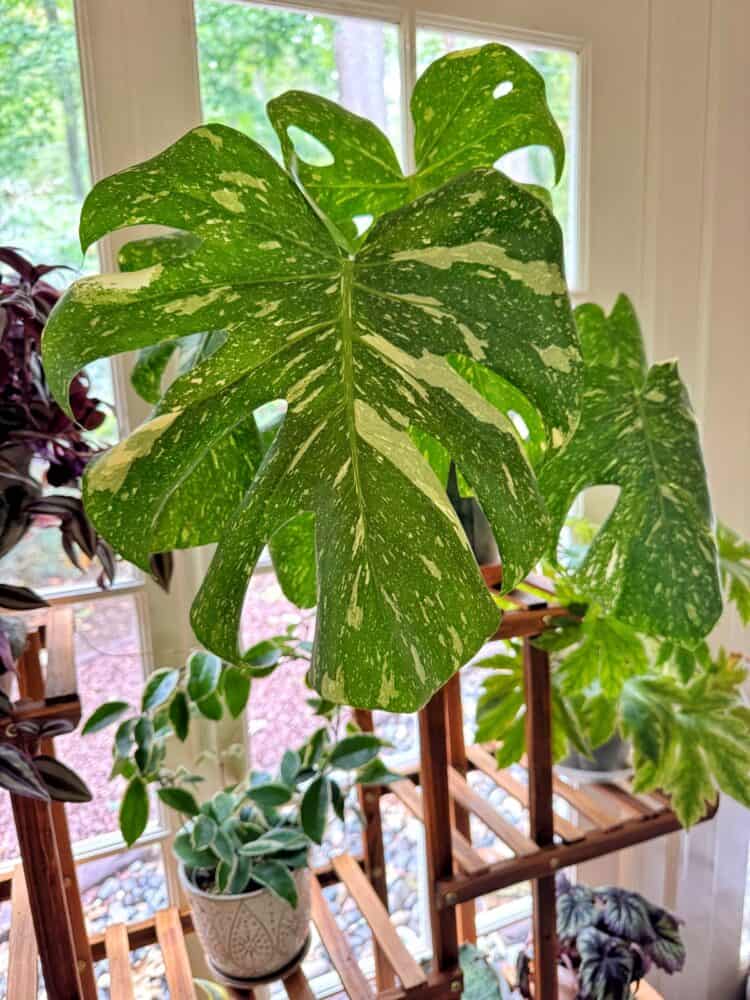
- Monstera Thai Constellation: This is one of the most sought-after variegated varieties. Its dark green leaves are dusted with creamy-white specks and splashes, resembling a starry night sky. (If you want to learn more about this stunning plant, check out my post on the Thai Constellation!) I purchased mine when it was very young with just a few leaves and it is doing amazing with gorgeous foliage and lots of fenestrations now.
- Monstera Adansonii (Swiss Cheese Vine): Known for its smaller, heart-shaped leaves covered entirely in fenestrations (holes). This vining plant is perfect for hanging baskets or climbing small trellises. I grew one for many years, but overwatered it and it met its demise.
- Monstera Pinnatipartita: This variety features leaves that fully split all the way to the midrib, giving them a dramatic, almost palm-like appearance as they mature.
- Monstera Burle Marx Flame: This rare and exciting variety is named for its dramatically lobed leaves that look almost like a stylized flame or skeleton. It’s a true statement piece for collectors! I just snagged one a few months ago – it doesn’t have the fenestrations yet but it is growing!

Ready to Grow Your Own Monstera Plant?
With so many benefits and such easy care, Monsteras are the perfect choice for beginner plant parents and busy individuals alike. So why not add one to your home and experience the joy of growing your own tropical oasis.
Are you growing a monstera plant or have any tips you’d like to share? I would love to hear about it in the comments below…let’s chat!
For more information about how to grow monstera deliciosa, please see this article from the University of Connecticut Cooperative Extension.
To drill down on houseplant care basics and grow an indoor garden that thrives, please read my articles:
- Houseplant Care 101
- From Shop to Home: How to Acclimate Your Tropical Plants
- How to Water Indoor Plants Like a Pro
- How to Revive Houseplants You Thought Were Goners
- Is Your Houseplant Getting Enough Light? Here’s How to Tell.
Thank you so much for following along.
Enjoy a beautiful day! xo


Where to Buy Monsteras and Other Easy Care Houseplants


Originally Published . Last Updated .

What a beautiful plant. I need to get one.
You’d love this one. Super easy to grow and is so pretty to look at! The foliage is amazing!
Your Monstera looks so good by the pond! It’s so big and healthy.
thank you it doubled in size since bringing it outside this year. I’ve got to divide it before it comes back in!