
Early Spring Flowers to Brighten Your Garden After Winter

Chase away the winter blues with easy-to-grow early spring flowers. A mix of bulbs, perennials, and cool-season annuals for a vibrant early garden.
If you’re anything like me, the moment spring arrives, you’re itching for a colorful garden. The good news? A vibrant early spring garden is completely within reach with a little planning.
Anyone can create a beautiful spring display, no matter their gardening experience. It’s all about choosing the right mix of plants that bloom early and thrive in cool conditions.
This post focuses on early spring flowers, including bulbs, cool-season annuals, and a few reliable early-blooming perennials—perfect for adding pops of color to everything from large garden beds to containers and borders.
If you’re looking for flowers that return year after year, be sure to check out my complete guide to early spring perennials. Otherwise, let’s explore some easy-care flowers that bring your garden to life after winter.
(Posts on stacyling.com may contain affiliate links. Click HERE for full disclosure.)

Early Spring Flowers: Easy Bulbs For Gorgeous Blooms
For a burst of color that’s guaranteed to chase away the winter blues, bulbs are your best bet. They’re some of the earliest bloomers, and because they’re planted in fall, you can enjoy a vibrant spring display with minimal effort.
With so many beautiful early spring bulbs to choose from, it’s important to select varieties that thrive in your climate.
For the earliest blooms, consider snowdrops and glory-of-the-snow. These tough little bulbs often emerge before the snow melts! Depending on the temperature, you might see them peeking through the ground as early as February or March.
Here are some other fantastic early spring bulbs:

When Should I Plant Bulbs for Early Spring Flowers?
The best time to plant bulbs for early spring flowers is in the fall. However, the exact timing depends largely on your climate zone. A good rule of thumb is to plant once soil temperatures drop below 60°F, but about 6 to 8 weeks before the ground freezes.
If you live in USDA Hardiness Zones 4 or 5, bulbs are typically planted from September through early October. For Zones 6 and 7 (where I garden), October through early November is usually ideal. In warmer Zones 8 and 9, bulbs are often planted in November through early December.
Keep in mind that weather patterns vary from year to year, so these timeframes are best used as guidelines rather than exact dates. In my zone 6b garden, I usually plant bulbs in October, but I’ve planted as late as early December after a move left me with no choice. Those bulbs still came up and bloomed beautifully.
The key is making sure bulbs receive a long enough winter chill to trigger flowering in spring.

Early Spring Flowers: Perennial Plants That Return Year After Year
While many perennials begin blooming after early spring bulbs, a few start early enough to help extend the season as bulbs flower and fade. These plants provide reliable color each spring and pair beautifully with bulbs in garden beds and borders.
Perennials can be planted anytime the ground can be worked, but spring and fall are generally the best times for planting.
Some early spring blooming perennials include:
- Hellebores
- Dicentra
- Forget-Me-Nots
- Virginia Bluebells
- Brunnera
- Creeping Phlox
- Dianthus
If you’re looking for a complete list of perennials that bloom in early spring and return year after year, see my full guide to early spring perennials here.

Cool-Season Annuals for Early Spring Color
I tend to buy my early spring blooming annuals from my local garden nursery each year. I often receive comments from readers wondering how I have flowers blooming so early, and the answer is simple: these plants are cool-season annuals.
Cool-season annuals tolerate lower temperatures much better than summer flowers, making them perfect for early spring planting. Garden centers typically start stocking them in late winter, so you can get a jump on the growing season well before the risk of frost has completely passed.
That said, if a sudden deep freeze is in the forecast, it’s a good idea to protect tender plants with a frost blanket or even an old sheet. In my zone 6b garden, this isn’t common, but it does happen occasionally, so it’s always smart to be prepared.
Here are a few early blooming annuals you can plant while temperatures are still a bit chilly:
- Pansies
- Ranunculas
- Sweet Alyssum
- Sweet Peas
- Violas

Early Spring Flowers That Bloom First
Crocus
Crocuses are tiny treasures that burst into bloom with the earliest signs of spring.. These vibrant flowers are more than just beautiful – they’re incredibly easy to care for, making them perfect for gardeners of all skill levels.
Plant their corms in the fall, and come springtime, they’ll reward you with cheerful blooms in shades of purple, yellow, orange, and white, often pushing through even a light dusting of snow. And the best part?
Once nestled in, these low-maintenance charmers will return year after year without fail to brighten up your early spring garden.
- Hardiness Zone: 3-8
- Light: Full sun to partial shade
- Plant Type: Bulb (Corm)
- Height/Width: 3-6 inches tall, 2-4 inches wide

Daffodils (Narcissus)
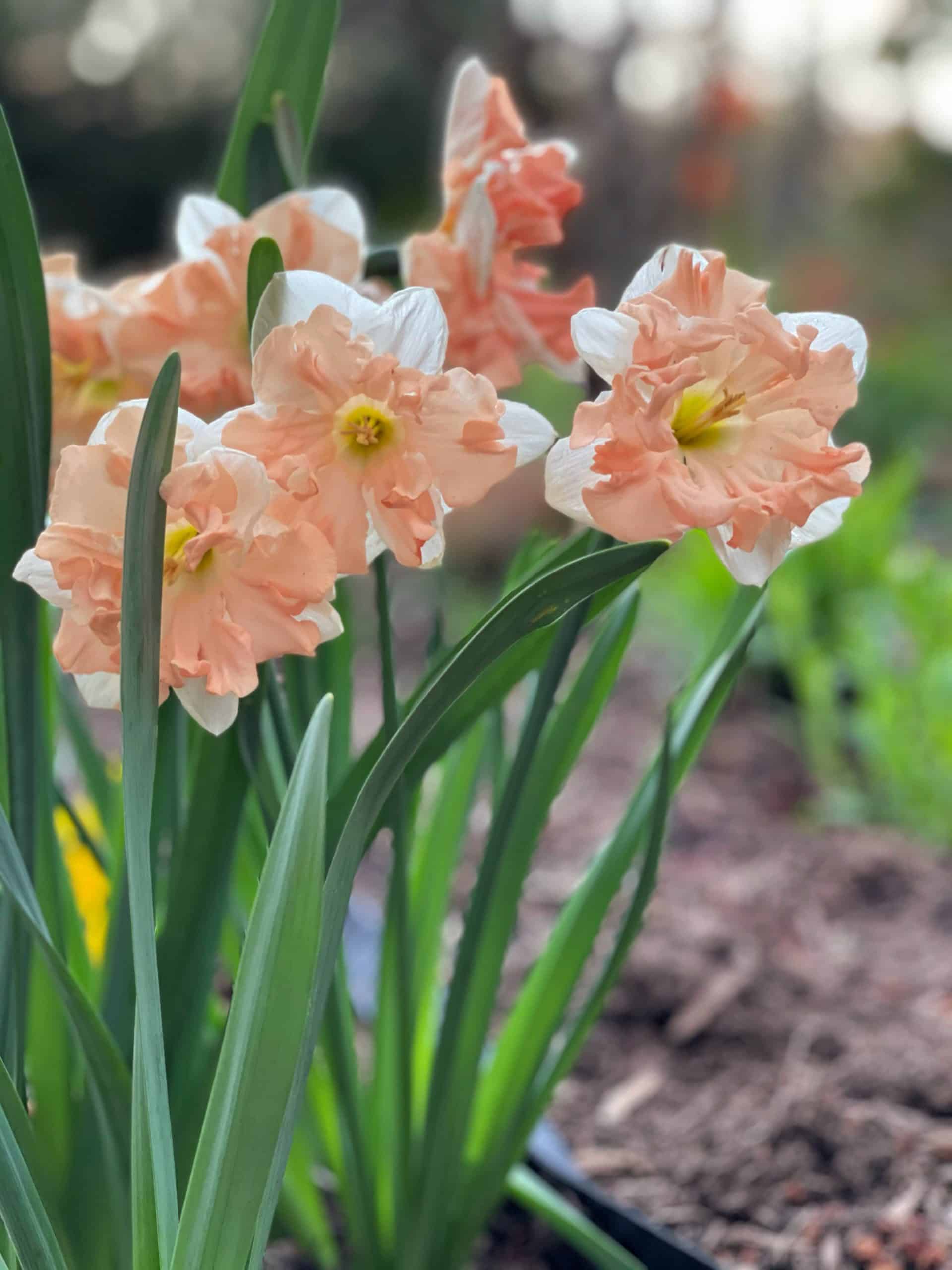
There’s nothing quite like the early blooms of daffodils—am I right? Daffodils, also known as Narcissus, are easy-to-grow, deer-resistant spring flowers that come in a wide range of colors and forms.
Plant daffodil bulbs in fall alongside other spring-blooming bulbs, and you’ll be rewarded with cheerful blooms early in the growing season. From classic whites and yellows to softer shades of peach and pink, daffodils add bright, welcome color to the spring garden.
When we moved here, I had no idea there were thousands of daffodils planted throughout the property. Seeing them all bloom in spring was absolutely glorious and really showed the impact these flowers can have when planted en masse.
- Hardiness Zone: 3-9
- Light: Full sun to partial shade
- Plant Type: Bulb
- Height/Width: Varies greatly by variety, 6-24 inches tall, 4-12 inches wide


Tulips
Where do I even start with tulips? These gorgeous, bright flowers are classic early spring bloomers and one of the most recognizable signs that spring has arrived. Like daffodils, tulip bulbs are planted in fall and reward you with a stunning display of color early in the growing season.
Tulips can be planted directly in the garden or grown in containers, and there’s an incredible range of varieties to choose from. They’re among the easiest spring bulbs to grow and add an instant burst of color to beds, borders, and pots.
As much as I love them, tulips are not deer resistant, and some varieties don’t return as reliably as other spring-flowering bulbs. I still grow them every year, but I spray them regularly with deer repellent from the moment they break through the soil.
Over the years, I’ve planted many different types, but I’m especially fond of peony-shaped tulips—they remind me of peonies long before peony season begins. Because some varieties don’t perennialize well, I often replant every few years to keep the display full. And let me tell you, the show is worth it. They’re beautiful in bloom and just as lovely as the petals begin to fall.
- Hardiness Zone: 3-8
- Light: Full sun
- Plant Type: Bulb
- Height/Width: Varies by variety, 6-30 inches tall, 4-10 inches wide
To learn more about how I grow and care for my tulips to keep the deer from eating them, please visit: How to Grow Tulips


Hyacinths
Hyacinths are bold, fragrant spring flowers that add a big splash of color to the early spring garden. They come in a wide range of shades, from soft whites, creams, yellows, and pinks to deeper hues like cobalt blue and rich purple.
A few years ago, I planted hyacinth bulbs for the first time. Until then, I had only grown them as nursery plants already in bloom. That first experience taught me an important lesson—wear gardening gloves when handling hyacinth bulbs.
Some people, myself included, experience a skin reaction when handling hyacinth bulbs. While not everyone is sensitive, contact can cause uncomfortable itching for those who are. Interestingly, I don’t have this reaction with tulips, daffodils, crocus, or alliums, but hyacinths are known to be one of the most irritating spring bulbs.
If you’re planting hyacinths for the first time, gloves are a simple precaution that can save a lot of discomfort.
- Hardiness Zone: 4-8
- Light: Full sun to partial shade
- Plant Type: Bulb
- Height/Width: 6-12 inches tall, 4-6 inches wide


Alliums
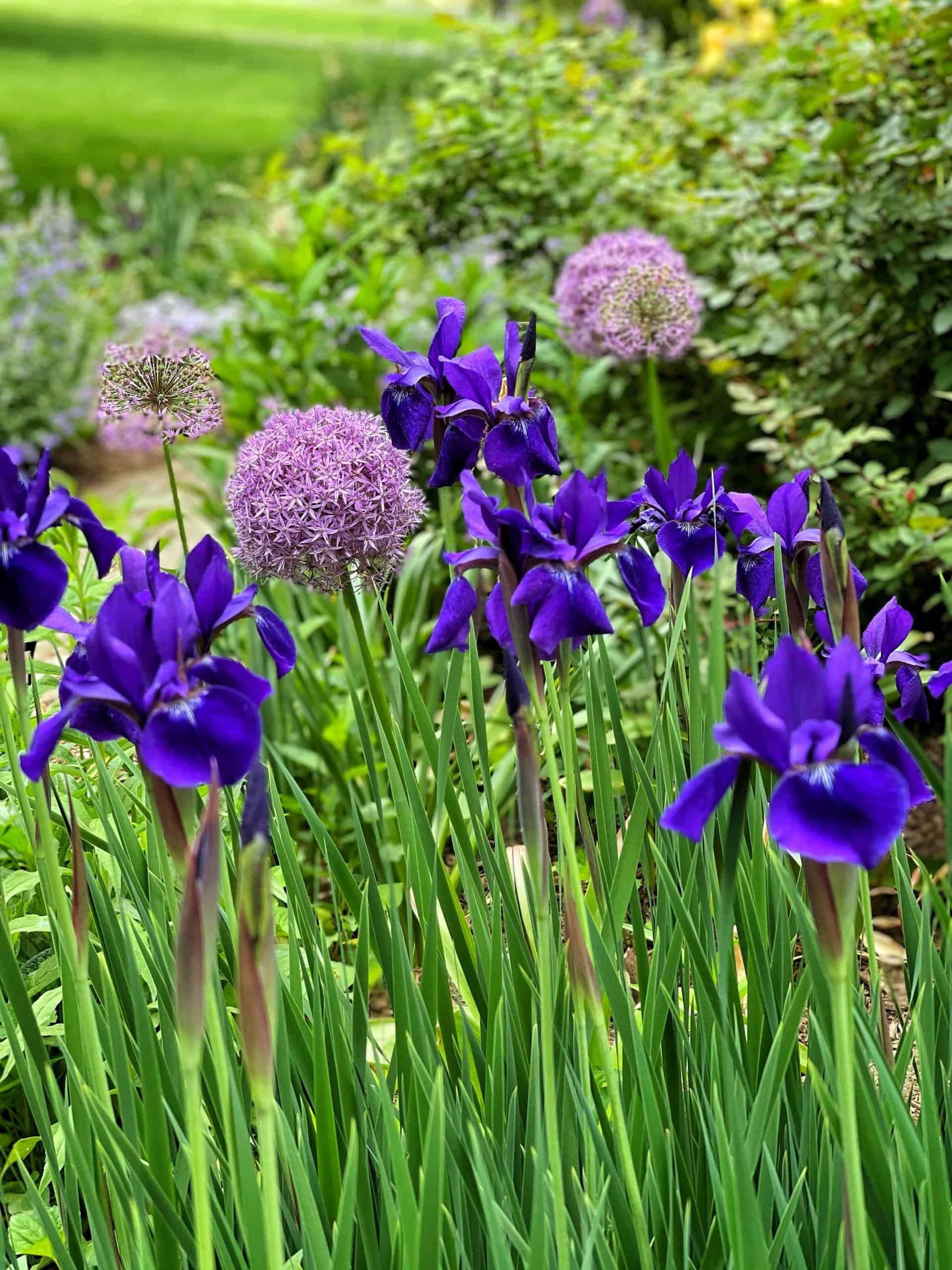
If you haven’t grown alliums yet, you should! These striking spring bulbs are planted in fall and produce bold, architectural blooms that add serious impact to the early spring garden.
Alliums thrive in full sun and typically bloom for two to four weeks, providing long-lasting color and structure just as the garden is waking up. When planted en masse, they make an unforgettable statement and pair beautifully with spring bulbs and emerging perennials.
One of the best things about alliums is that they’re deer resistant. I’m especially fond of ‘Globemaster’ allium and have it planted throughout my gardens. The large, spherical blooms look incredible when grouped together and truly steal the show each spring.
- Hardiness Zone: Varies by species, generally 4-9
- Light: Full sun
- Plant Type: Bulb
- Height/Width: Varies greatly, 12-60 inches tall, 6-12 inches wide


Pansies
Pansies are cool-season annuals that thrive in colder conditions and are commonly available in garden centers in both spring and fall. I prefer planting them in fall because, in my zone 6b garden, they overwinter well and bounce back in spring—giving me two seasons of color instead of just one.
These cheerful flowers don’t tolerate summer heat very well. When planted in spring, pansies usually fade once temperatures rise. While you can try to extend their season, they won’t last long in hot weather. I often dig mine up and move them to a shadier spot to help slow down the heat stress.
If you’d like to learn more about growing and caring for pansies, you can check out my full guide here → How to Grow Pansies.
- Hardiness Zone: (Treat as annuals, but can overwinter in mild climates)
- Light: Full sun to partial shade
- Plant Type: Cool-season annual
- Height/Width: 6-9 inches tall, 9-12 inches wide

Sweet Alyssum
Sweet alyssum is a charming, low-growing flower that adds soft color and a light, honey-scented fragrance to the early spring garden. Its delicate blooms spread easily, forming a carpet of flowers that works beautifully along garden edges and in containers.
Because sweet alyssum thrives in cool weather, it’s an excellent choice for early spring planting. It produces masses of tiny flowers in shades of white, pink, purple, and even apricot, bringing both color and fragrance to beds, borders, hanging baskets, and window boxes.
Sweet alyssum is easy to grow, attracts pollinators, and gently fills in gaps around larger plants making it a versatile addition to any early spring display.
- Hardiness Zone: (Usually grown as an annual, but can overwinter in mild climates)
- Light: Full sun to partial shade
- Plant Type: Cool-season annual
- Height/Width: 4-10 inches tall, 6-12 inches wide

Forget-Me-Nots (Myosotis)
Forget-me-nots are one of my favorite easy-care spring flowers. They produce clouds of tiny blue or soft purple blooms and create a compact, billowy effect that fills in garden beds beautifully.
If you’re planting forget-me-nots for the first time, you have a couple of options. Seeds can be sown directly in the garden in spring or summer for blooms the following year. You can also start seeds indoors about 8–10 weeks before your last frost to enjoy flowers the same spring.
Once established, forget-me-nots are very reliable perennials and readily self-seed. Some gardeners feel they spread a bit too enthusiastically, but I don’t mind their naturalizing habit because they’re easy to dig up, move, or thin as needed.
- Hardiness Zone: 3-8
- Light: Full sun to partial shade
- Plant Type: Perennial
- Height/Width: 6-12 inches tall, 12-18 inches wide
- Description: (Mention their self-seeding tendency)

Hellebores (Lenten Rose)
Hellebores are easy-to-grow perennials and true must-haves for early spring color. While their blooms resemble roses, hellebores get their common name, Lenten rose, from their bloom time, which often coincides with the season of Lent.
These dependable plants flower in late winter to very early spring and have an impressively long bloom period. Their nodding flowers appear in shades of white, pink, and purple and are paired with attractive, leathery evergreen foliage that looks good year-round.
Hellebores thrive in partial shade to shadier locations and prefer moist, well-drained, loamy soil. Once established, they are low-maintenance, long-lived perennials that quietly steal the show at a time when little else is blooming.
- Hardiness Zone: 4–9
- Light: Partial shade to shade
- Plant Type: Perennial
- Height/Width: 12–18 inches tall, 12–18 inches wide
To learn more about how I grow lenten rose, please visit: How to Grow Hellebores

Creeping Phlox
Have you ever grown creeping phlox before? It’s a reliable, easy-care perennial that stays evergreen year-round and bursts into bloom in early spring. Deer generally leave it alone, though I have seen rabbits nibble on mine from time to time.
One of the things I love most about creeping phlox is how versatile it is in the landscape. It looks beautiful cascading over stone walls, spilling along the front of garden borders, or softening hard edges. One year, one of my plants even grew into the shape of a heart—which made me love it even more.
Creeping phlox blooms in shades of blue, pink, and white and is best planted in spring or fall for early spring color. It’s also easy to propagate through division, which I usually do in early spring or late fall. If you’d like to learn more about dividing plants, you can read my full guide here → How to Divide Perennials
- Hardiness Zone: 3-9
- Light: Full sun to partial shade
- Plant Type: Perennial
- Height/Width: 4-6 inches tall, 12-24 inches wide


Companion Planting Spring Bulbs and Spring Perennials
If you want a spring garden that stays attractive as the season progresses, one of the best techniques is to plant early spring bulbs alongside spring-blooming perennials. This pairing extends seasonal interest and helps disguise bulb foliage as it naturally dies back.
When bulbs are in bloom, most perennials are still dormant or just beginning to emerge. As the bulbs finish flowering, the perennials start actively growing, eventually filling in and helping to cover the fading bulb foliage. This creates a smoother transition from early to late spring color.
Planting perennials just in front of bulbs has another practical benefit—it helps you remember where bulbs are planted so you don’t accidentally disturb them while gardening later in the season.
When companion planting bulbs and perennials, timing and scale matter. Choose perennials that begin active growth as bulb foliage starts to yellow, and match plant size appropriately. Taller perennials work best with taller bulbs like daffodils, while lower-growing plants pair well with smaller bulbs.
Here are a few perennials that look especially beautiful when planted with early spring bulbs:


Troubleshooting Early Spring Flowers: Why Aren’t My Spring Bulbs Blooming?
If you planted spring bulbs like daffodils in fall and they failed to bloom, don’t worry—you’re not alone. There are several common reasons bulbs don’t flower as expected, even if they looked healthy when planted.
Some of the most common causes include:
- Insufficient sunlight: Many spring bulbs need full sun to bloom well. Too much shade can reduce flowering.
- Bulbs planted too shallow or too deep: Incorrect planting depth can affect bloom performance.
- Lack of winter chill: Bulbs need a cold period to trigger flowering, especially in warmer climates.
- Foliage removed too early: Cutting or tying back leaves before they die back naturally can prevent bulbs from storing energy for next year.
- Overcrowding: Bulbs that haven’t been divided in years may compete for nutrients and stop blooming.
In most cases, adjusting planting location, improving care, or simply giving bulbs time to recover will help restore blooms in future seasons. For more information about fixing bulbs that didn’t bloom, please read: How to Fix Spring Bulbs That Fail To Bloom

Final Thoughts About Early Spring Flowers That Will Brighten Your Garden
Early spring flowers are one of the most rewarding parts of the gardening season. After a long winter, seeing the first blooms emerge—whether from bulbs, perennials, or cool-season annuals—brings instant color and a sense of renewal to the garden.
These are some of my personal favorite early spring flowers, all of which I grow and rely on year after year. They’re easy to care for, bloom reliably in cool conditions, and work beautifully in garden beds, borders, and containers. Whether you’re an experienced gardener or just getting started, incorporating a mix of early bloomers makes it much easier to enjoy a vibrant spring display.
If you’re interested in plants that return year after year, be sure to check out my complete guide to early spring perennials. And if you’re planning ahead, pairing bulbs with perennials is a great way to keep your garden looking full as the season progresses.
Above all, don’t be afraid to experiment. Gardening is about learning what works in your space and discovering which plants bring you the most joy. Get your hands dirty, try something new, and enjoy every early bloom along the way.
Happy gardening!
What early spring flowers are on your list? Did I miss any? Let’s chat about it more in the comments below!
Thank you so much for following along.
Enjoy a beautiful day! xo





Originally Published . Last Updated .

Stacy- Your Garden is gorgeous and so inspiring! You’re motivating me to get to work in my own!!
Thank you so much Maureen!!! I am so happy you stopped by to visit! I hope you do – I would love to see and share some plants with you! xo