
The Best Christmas Plants and Flowers I Grow Every Winter

A look at the holiday plants I bring indoors each winter, which ones are easy, which ones I treat as seasonal, and where I use faux instead.
Nothing brightens a winter home quite like Christmas flowers. Bold red amaryllis, fragrant paperwhites, a Christmas cactus loaded with blooms. They bring color and life indoors right when the garden outside goes to sleep.
My home is filled with houseplants these days, so what I bring in for the holidays changes from year to year depending on what I’m in the mood to enjoy. But a few Christmas plants always make the list.
After almost 30 years of gardening in Zone 6b New Jersey, here are the Christmas plants and flowers I actually grow, how I care for them, and which ones give you the most blooms for the least effort.
(Posts on stacyling.com may contain affiliate links. Click HERE for full disclosure.)

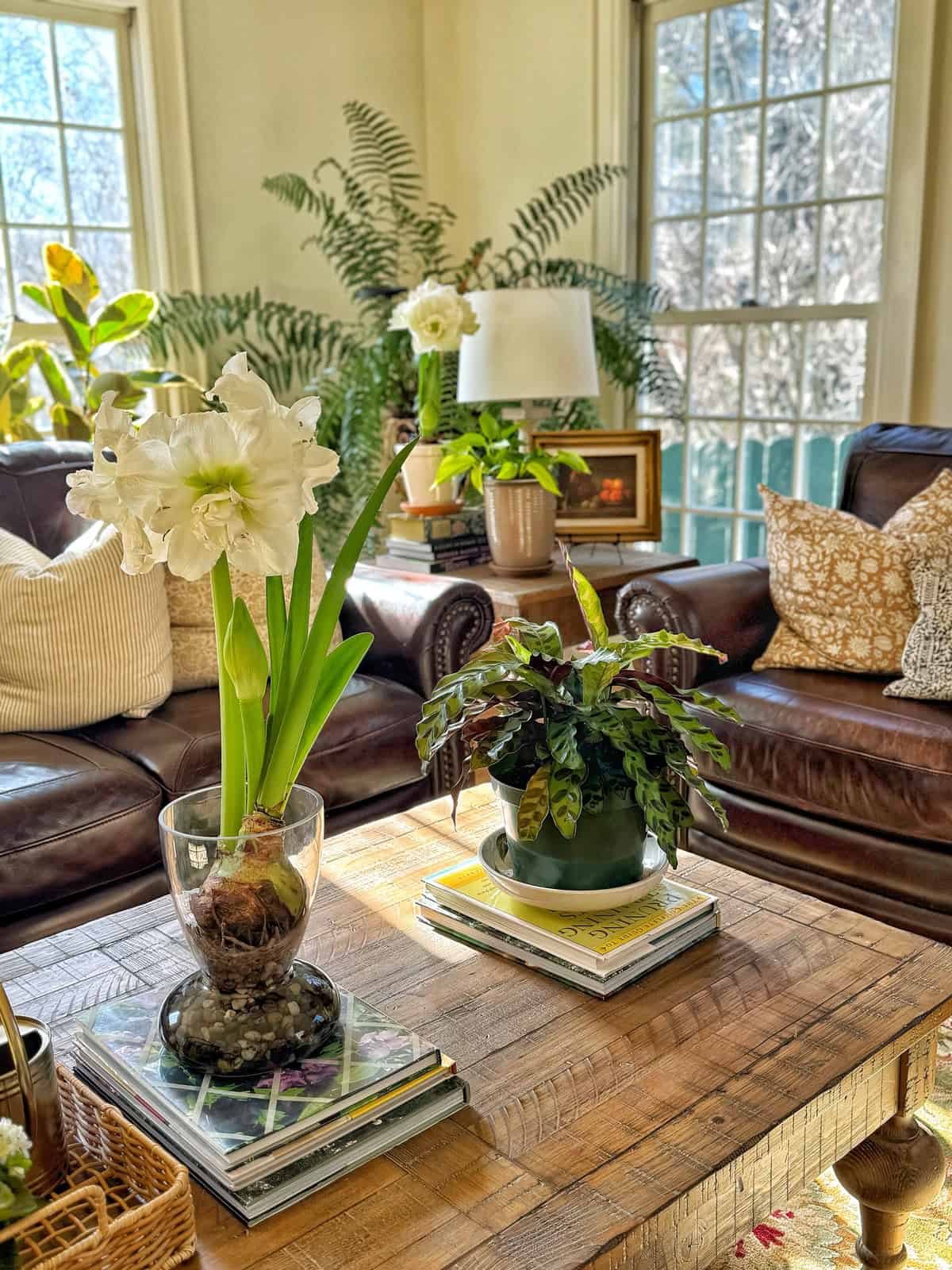
Amaryllis: The Easiest Christmas Flower I Grow
Amaryllis are one of my winter favorites. They’re extremely easy, and anyone can grow them.
I plan my red and white amaryllis around the holidays and shades of pink for later in the winter. I always try to mix in a few new varieties with some old favorites, and buying several varieties is how I stagger the blooms through March and April. I usually order mine from White Flower Farm.
The biggest mistake people make is too much water. I very rarely water my amaryllis once they’re planted, and that’s a big reason they do so well.
They also make one of my favorite hostess gifts because they’re easy to care for and really brighten up the cold winter months. I walk through everything in my amaryllis care guide.
Paperwhites: Plant Once and Enjoy
Paperwhites are another easy one. They don’t need a cold period like tulips and daffodils, so you just plant them, water them and wait about 4 to 6 weeks for fragrant blooms.
I don’t stagger my plantings because I don’t have time for it. Instead, I plant them once and enjoy them. I usually start mine in late fall so I get flowers after the holidays, when I need the blooms most.
My favorite trick? If they start falling over, a little diluted vodka keeps them shorter and sturdier. Here’s how I grow paperwhites indoors.

Christmas Cactus: The Plant That Keeps on Giving
I bought my Christmas cactus at the grocery store for about $5 almost 20 years ago, and it’s still growing and blooming today.
It spends the colder months in my sunroom, where it gets northern and western light, and summers outside on a protected spot on the back porch. Interestingly, my plant blooms several times a year, and often starts flowering after I move it outdoors.
Despite the name, it isn’t a desert cactus. It’s a rainforest plant from Brazil that grows on trees in the wild, which is why it likes more moisture than you’d expect from a cactus.
It’s a tough, adaptable plant and one I recommend to anyone still building their confidence with houseplants. Here’s how I care for my Christmas cactus.

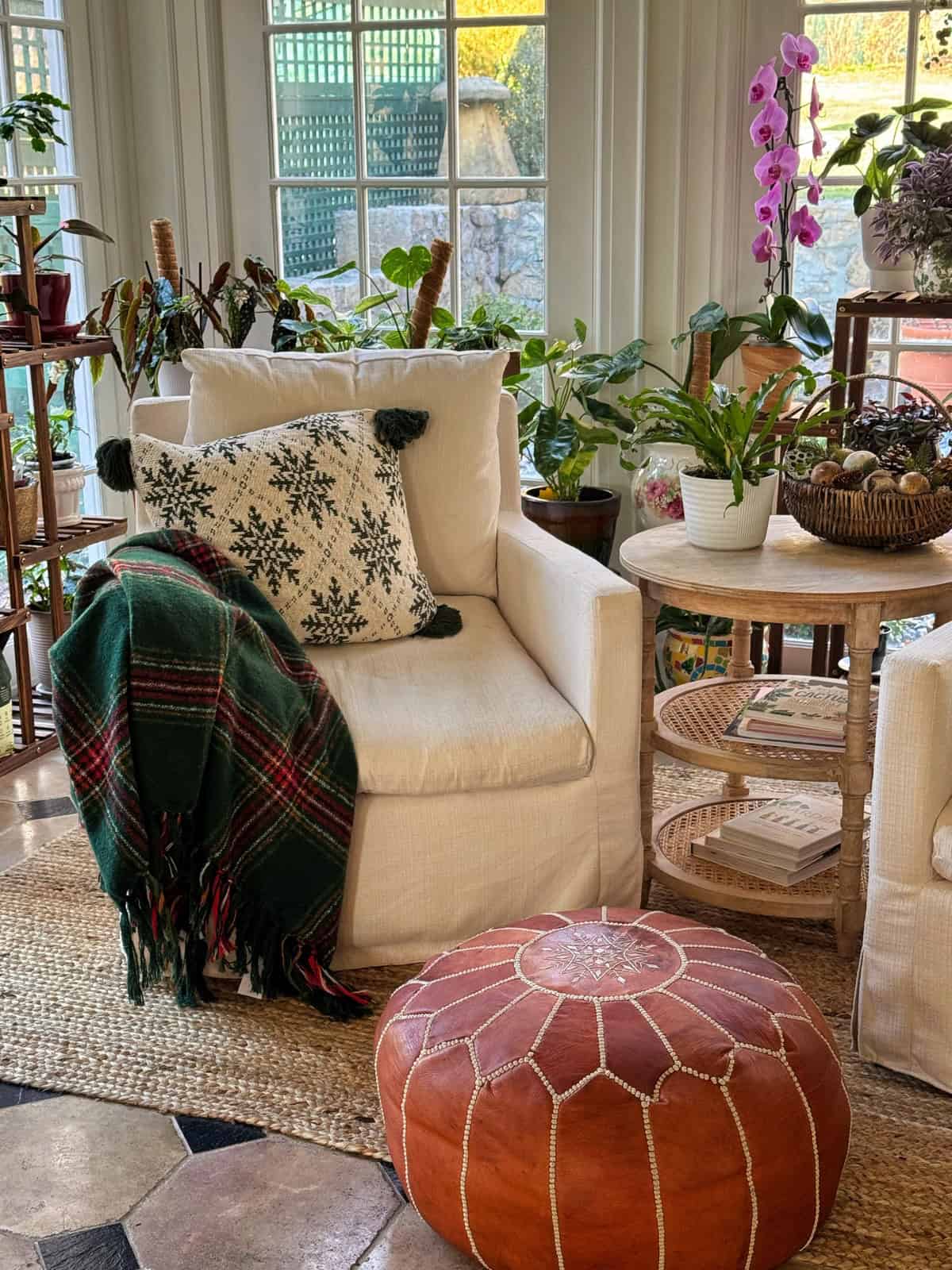
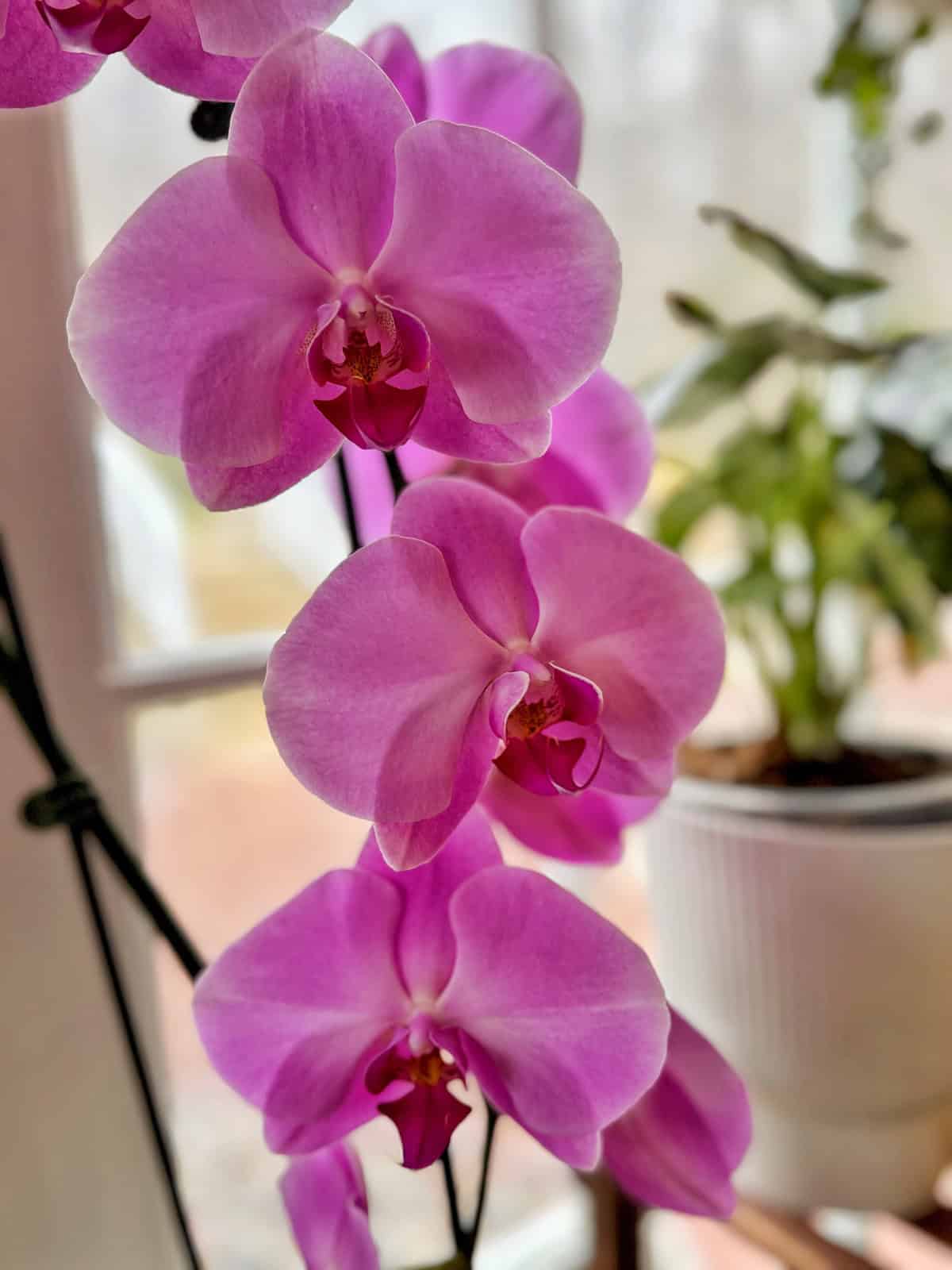
Orchids: Houseplants I Keep and Rebloom
Orchids are a different story. I don’t treat them like a seasonal plant at all. They’re houseplants that I keep year-round and encourage to rebloom over time.
I keep mine in clear plastic pots tucked inside decorative pots, so I can lift them out and check the roots without ever disturbing the plant. I can’t stress enough how important good air circulation is for orchids, and I repot mine with fresh orchid potting mix every year or two.
When an orchid finishes flowering, I remove the whole flower stalk. Then I give it high light and feed it with an organic fertilizer to encourage it to bloom again.
If you’re new to orchids, start with my orchid care for beginners guide, and here’s exactly how I water my orchids.
Poinsettias: Enjoy Them for the Season
I still bring a few poinsettias home every holiday season, but they’re fussy enough that I treat them like a brief annual instead of trying to maintain them all year round. This means I enjoy them through the holidays, and when they’re done, they go in the compost.
To keep them looking their best through the season:
- Give them bright, indirect light from a south, east, or west window.
- Water when the top inch of soil feels dry, and never let them sit in water.
- Remove the foil or poke holes in it so water can drain.
- Keep them around 65 to 70°F and above 50°F.
- Keep them out of reach of pets, since they’re mildly toxic to cats and dogs.
With good care, they hold their color for about 6 to 8 weeks. For more, here’s how I care for poinsettias.


Christmas Plants That Depend on the Year
Some years I try something different, which makes it fun.
Jasmine
Last year it was jasmine. I chose it for the fragrance, and I got it from White Flower Farm because it came in that gorgeous basket. It didn’t last long, so I enjoyed it the same way as a poinsettia: beautiful for the season, then let it go.

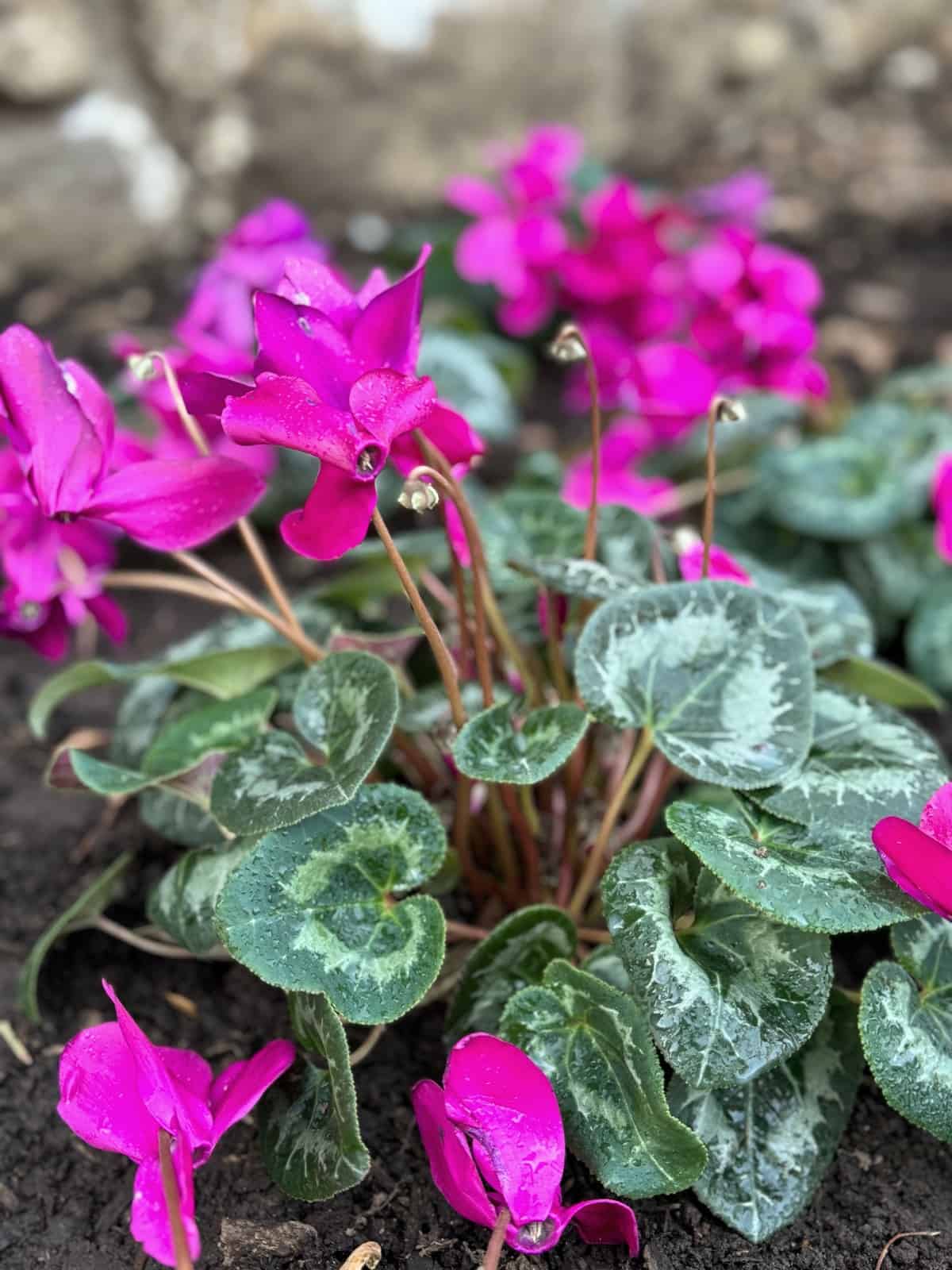
Cyclamen
I’ve also grown cyclamen indoors after receiving one as a gift. When it finished blooming, I wasn’t sure it would survive in my climate, but I planted it outside to see. It didn’t make it. That’s because the cyclamen sold as holiday gifts are florist’s cyclamen (Cyclamen persicum), which are only hardy in zones 9 to 11.
If you’d love cyclamen in a Zone 6b garden, look for hardy species like Cyclamen coum or Cyclamen hederifolium. Indoors, florist’s cyclamen like bright, indirect light, a cooler room, and soil that stays evenly moist but not soggy. They’re toxic to cats and dogs, so keep them out of reach.
Norfolk Island Pine: A Living Christmas Tree
Norfolk Island pines are a holiday favorite because they look like little Christmas trees, and you can decorate them with mini lights and ornaments. I grew one years ago in my old home. These days, I use faux Norfolk pines that I can tuck away when the season is over, since I already have so many houseplants.
But if you’d like a living Christmas tree that becomes a houseplant after the holidays, it’s a great choice. Despite the name, it isn’t a true pine. It’s a tropical tree that’s only hardy outdoors in zones 10 and 11, so here in New Jersey it’s grown indoors.
To keep one healthy:
- Give it bright light. A couple of hours of direct sun keeps it looking its best.
- Raise the humidity to around 50 percent with a humidifier or pebble tray, especially when the heat is running in winter.
- Water when the top inch of soil feels dry, and don’t let it sit in water.
- Take the decorations off soon after the holidays so they don’t damage the branches.
Dry air, too little light, or soil that dries out too much can brown the tips and make the lower branches drop.
Hellebores: The Christmas Rose That Blooms Later
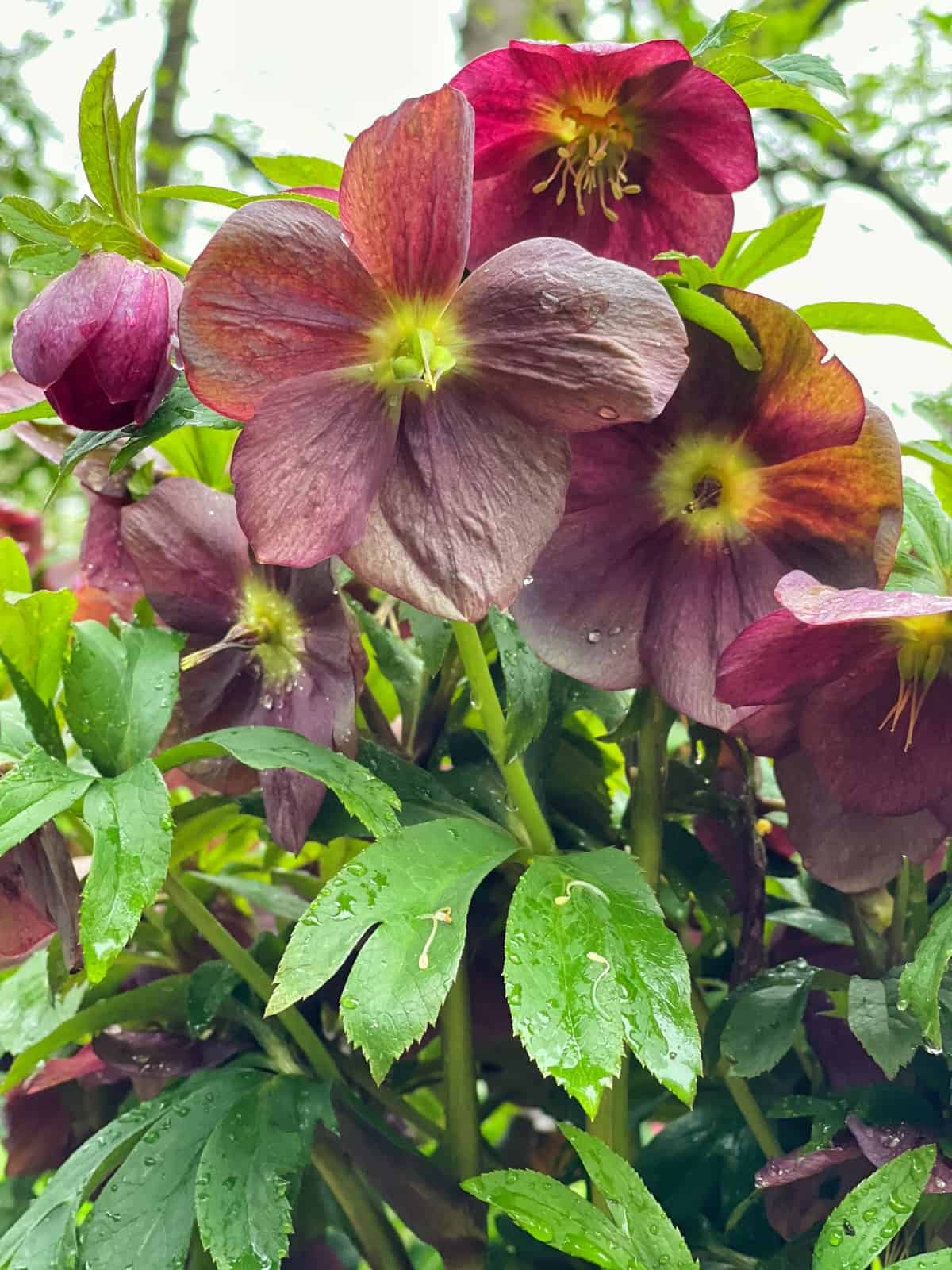
Not every holiday flower has to come inside. Hellebores are often called Christmas roses, but here in Zone 6b New Jersey, mine don’t bloom at Christmas. They usually start blooming around late February, when almost nothing else is.
I didn’t fully appreciate hellebores early in my gardening years, but they’ve become one of the most dependable plants in my landscape. And if you have deer problems like I do here in New Jersey, they’re a great deer-resistant option.
Here’s how I grow hellebores and how I design a shade garden around them.
When I Use Faux Instead
As much as I love live plants, there’s a place for faux at Christmas too. For centerpieces and decor that need to last all season, I use high-quality faux. I’ve used real-touch faux poinsettias in centerpieces because I wanted a set-and-forget centerpiece for the season.
Faux also works in spots where live plants just won’t, like a fireplace mantel that gets too hot or a high shelf you don’t want to climb up to water.
The key is choosing faux that actually looks real. Look for “real touch” stems with natural color variation and a matte finish, and skip anything shiny or plastic-looking. Then fluff and bend the stems, use a pretty vessel, and tuck faux in near your live plants so it blends right in. I share all my tricks in 9 sneaky ways to make faux flowers look real.
And if you want a centerpiece you can set out once and switch up through the holidays, here’s how I styled a vintage toolbox winter centerpiece with faux greens.

Traditional Christmas Flowers and What They Mean
If you’re wondering about the classics:
- Poinsettia: A Mexican legend tells of a young girl who had no gift for the Christ child, so she brought weeds from the roadside that turned into brilliant red poinsettias at the altar.
- Holly: A symbol of hope and goodwill, used in wreaths and garlands. The berries are toxic if eaten.
- Mistletoe: Hung in doorways to encourage a kiss. The berries are toxic too.
- Christmas rose: A hellebore that stands for hope. Despite the name, in colder zones like mine it blooms closer to late February.
- Cyclamen: Heart-shaped leaves and pink, red or white blooms, often given as a holiday gift.


Want to Grow More Flowering Plants Indoors?
There are so many easy, low-maintenance flowering plants to grow indoors in winter! I share how I grow amaryllis, paperwhites and more of my favorite flowering houseplants in my book, Filling Your Home with Life.
For a long time, growing plants indoors felt like a completely different story than gardening outside. I wasn’t bad at houseplants. I just needed to understand how growing indoors was different. If you know how good it feels to grow something outside, you can learn to do it inside, too.

So, Which Christmas Plants Should You Grow?
For me, amaryllis, paperwhites, my Christmas cactus and my orchids are absolutely worth it. They’re easy, and they give me blooms when I need them most. Poinsettias and plants like jasmine I enjoy for the season and let go. And for anything that needs to look perfect all season long, I’m happy to use faux.
My garden needs to fit my life, and so do my holiday plants.
What’s your favorite Christmas plant or flower? I’d love to hear about it in the comments below.
Thank you for visiting the blog today!
Enjoy your day! xo

Originally Published .
