
How I Design a Layered Shade Garden Around Hellebores (Zone 6)

Learn how I layer shrubs, perennials, and grasses around hellebores to create a cohesive, four-season shade garden in Zone 6.
Designing a layered shade garden around hellebores takes more than adding a few companion plants. While hellebores are prized for their late winter and early spring blooms, they can look isolated without the right structure, bloom succession, and foliage contrast. If you’re new to growing them, I share care tips, varieties, and planting advice in my complete guide to growing hellebores.
One of the most common mistakes I see is planting hellebores alone or surrounding them with plants that bloom at the same time and then disappear. The result is a garden that shines briefly in early spring and feels flat the rest of the season. Shade gardens require a different approach than sunny borders. They rely on evergreen structure, layered heights, and strong foliage to stay interesting. I explain that broader framework in my guide to designing a shade garden that never looks empty.
After nearly 30 years of gardening in mostly full sun, moving to a property with mature trees completely changed how I design. Over time, I’ve learned that hellebores work best as part of a layered system — anchored by shrubs, supported by perennials and grasses, and designed for interest well beyond spring. In this post, I’ll show you exactly how I build that structure in my Zone 6 shade garden.
(Posts on stacyling.com may contain affiliate links. Click HERE for full disclosure.)

What to Plant With Hellebores (Watch the Shade Garden Design Video)
If you’d like to see how I actually layer these plants in my own garden, I walk through the design approach in this video. I’ll show you what I plant with hellebores and how I combine early bloomers, foliage plants, and shrubs so a shade garden looks full and interesting from late winter through fall.
In this video you’ll see:
• Companion plants that bloom alongside hellebores
• How to layer foliage plants so the garden stays full through summer
• Shrubs and small trees that add structure and fall color
• The simple layering formula I use for shade borders

My Design Philosophy for Shade Gardens
Many of the same principles I use in perennial garden design apply in shade — repetition, layering, and seasonal interest. But in shade, foliage and evergreen structure carry far more weight than constant bloom.
When designing around hellebores, I focus on:
- Building a woody backbone first
- Layering plants from tall to low
- Planning overlapping bloom cycles
- Using foliage contrast intentionally
- Ensuring something looks strong in every season
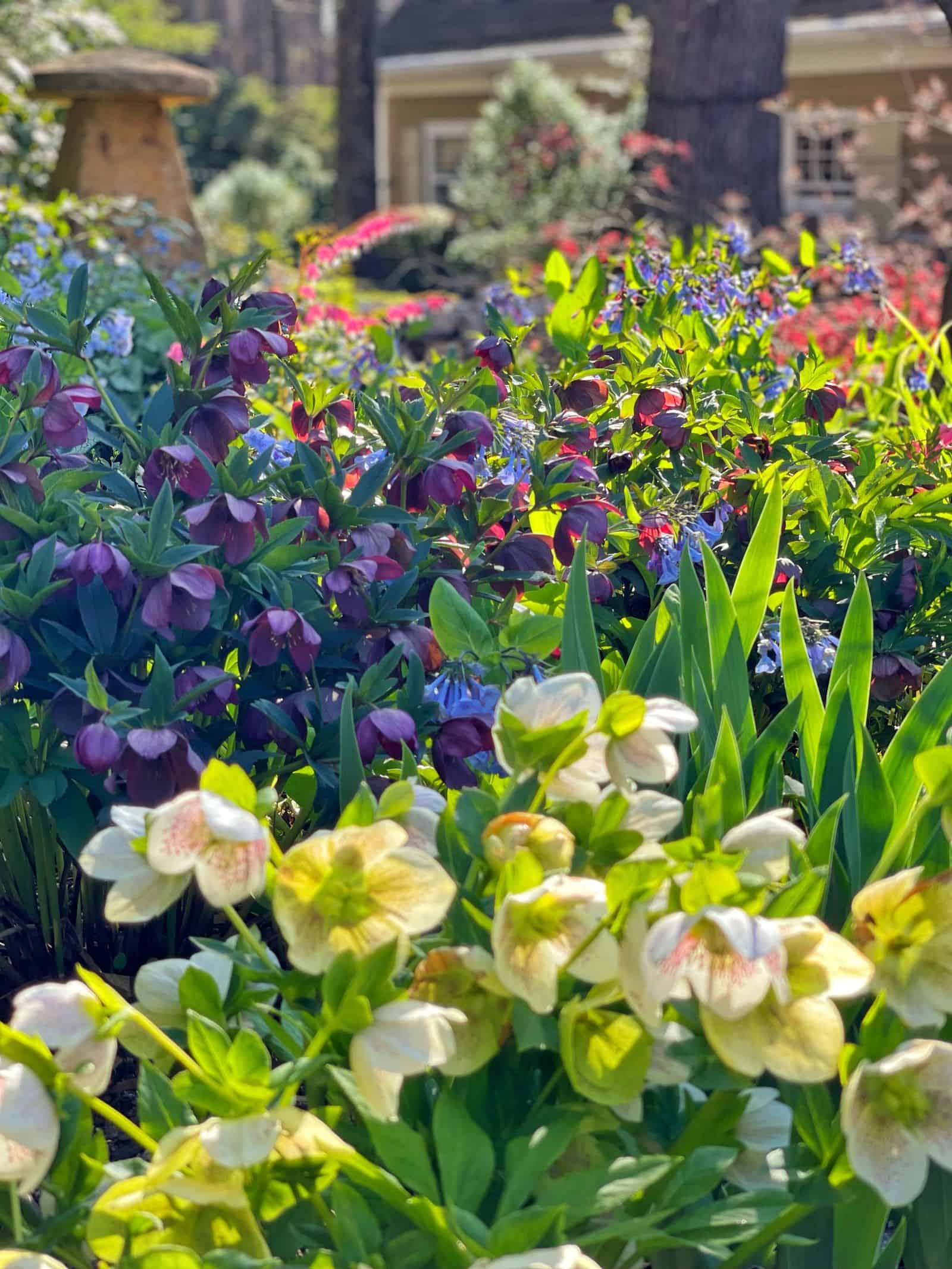
Hellebores are not the backbone of the garden — they are the bridge between shrubs and ground-level texture.
Step 1: Build the Backbone With Shrubs
Evergreen Structure
Rhododendrons
Bloom Time: Mid to late spring
Foliage: Large, glossy evergreen leaves
Mature Size: Often 4–8 feet tall and wide
Rhododendrons provide the solid green backdrop that makes hellebore blooms shine in late winter. Their broad leaves create scale contrast against hellebores’ smaller, leathery foliage. When they bloom in spring, they extend the floral display upward, adding depth to the border.
Even when not in flower, they hold the garden visually through summer and winter. In shade, that evergreen mass is invaluable.

Mountain Laurel
Bloom Time: Late spring to early summer
Foliage: Dense evergreen leaves
Mature Size: 5–10 feet tall
Mountain laurel adds structure with slightly finer foliage than rhododendrons. Its intricate late-spring blooms create a second wave of interest after hellebores begin to fade.
The evergreen foliage ensures the border never feels bare, even in winter.

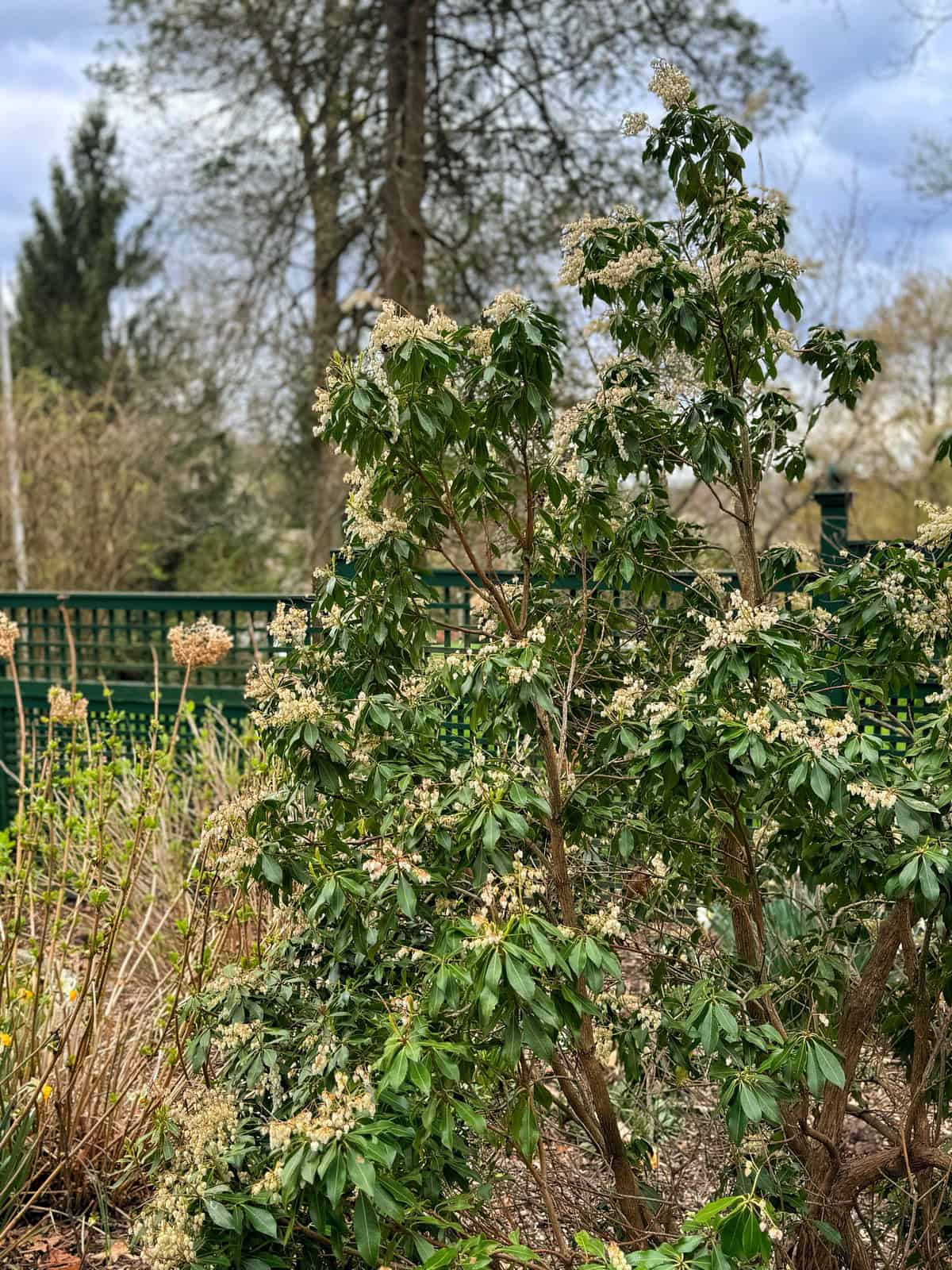
Pieris Japonica
Bloom Time: Late winter to early spring
Foliage: Evergreen; often bronze or red new growth
Mature Size: 4–8 feet tall
Pieris often overlaps with hellebores in bloom time, which creates layered early-season interest at multiple heights. The dangling flower clusters offer a softer texture that complements hellebore blooms beautifully.
The colorful spring growth adds interest even after flowering ends.
Seasonal Shrubs
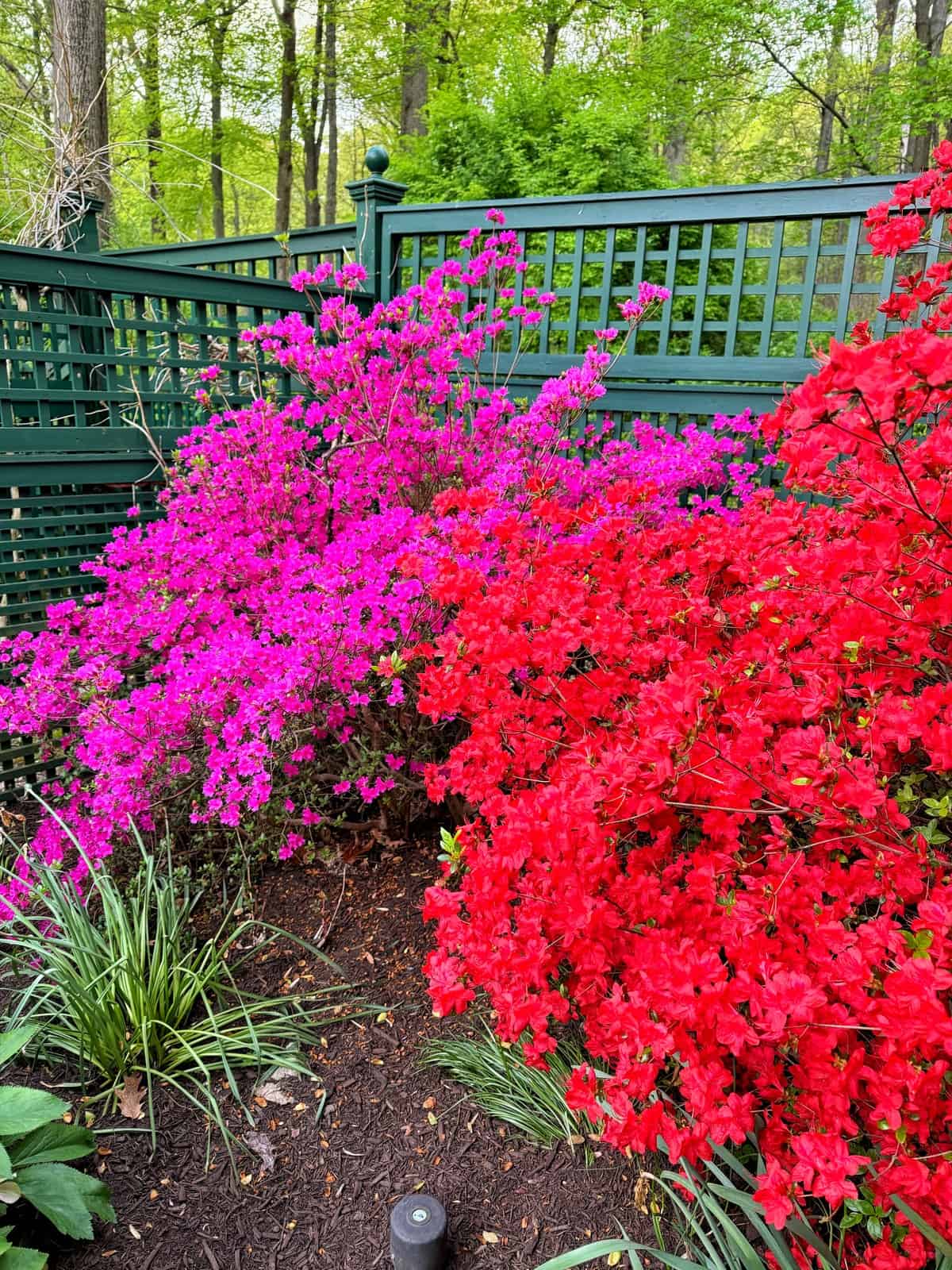
Azaleas
Bloom Time: Mid-spring
Foliage: Deciduous or evergreen
Mature Size: 3–6 feet
Azaleas provide a vibrant flush of color shortly after hellebores bloom. They bridge the quiet late-winter tones into fuller spring energy.
After flowering, they maintain structure, and some varieties offer subtle fall color.

Bottlebrush Buckeye
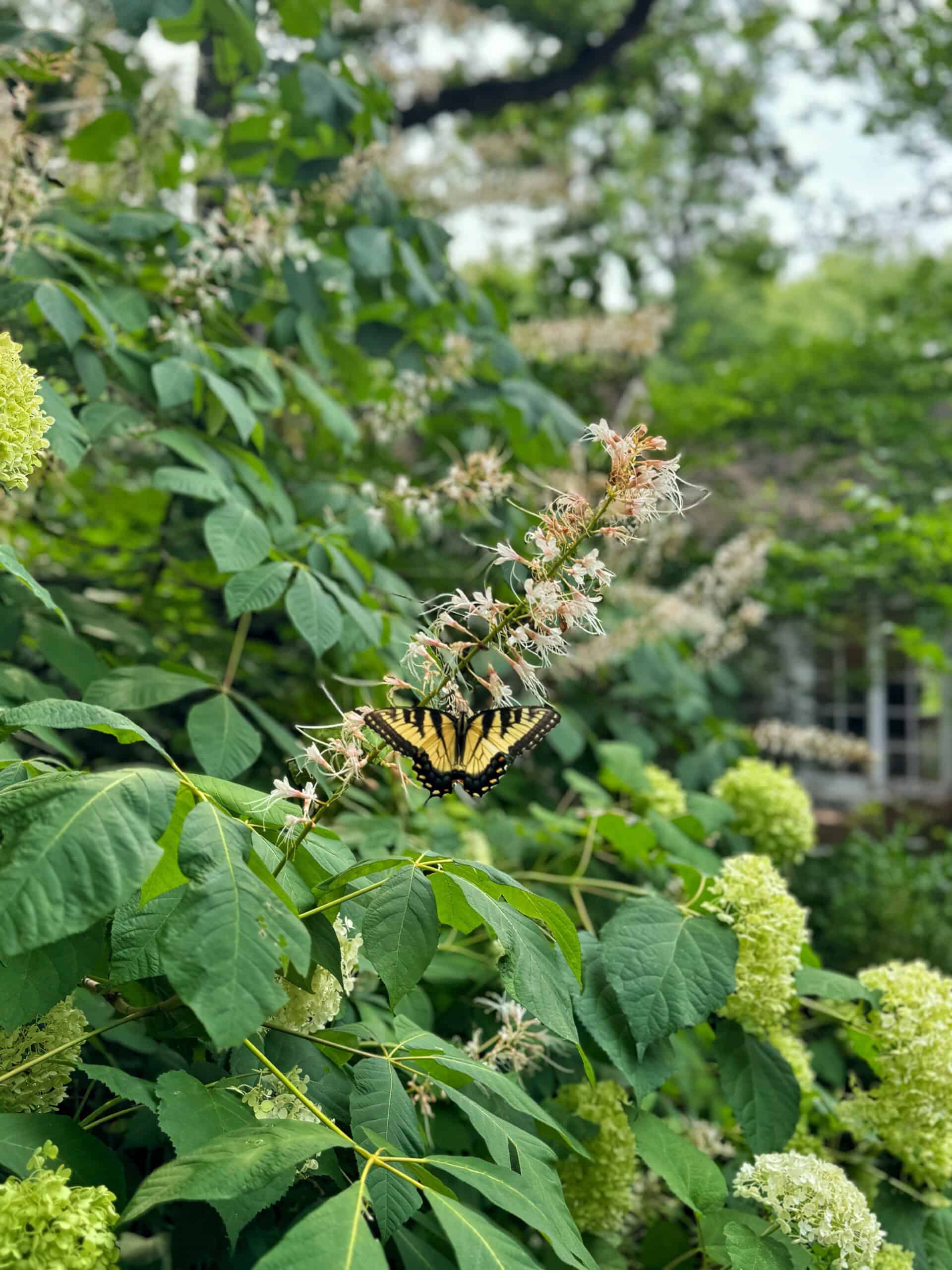
Bloom Time: Early to mid-summer
Foliage: Large, bold leaves
Mature Size: 6–12 feet
By summer, bottlebrush buckeye sends up dramatic white flower spikes that butterflies adore. The bold foliage creates strong contrast behind hellebores and perennials.
In fall, the foliage turns a warm yellow, extending the garden’s seasonal show.
Hydrangeas
Bloom Time: Summer into early fall
Foliage: Large, textured leaves
Mature Size: 3–6+ feet
Hydrangeas carry the garden through summer when spring bloomers have faded. Their large flower heads balance the lower-growing hellebores and companions.
Many varieties offer subtle fall color, and dried blooms add winter structure if left standing.

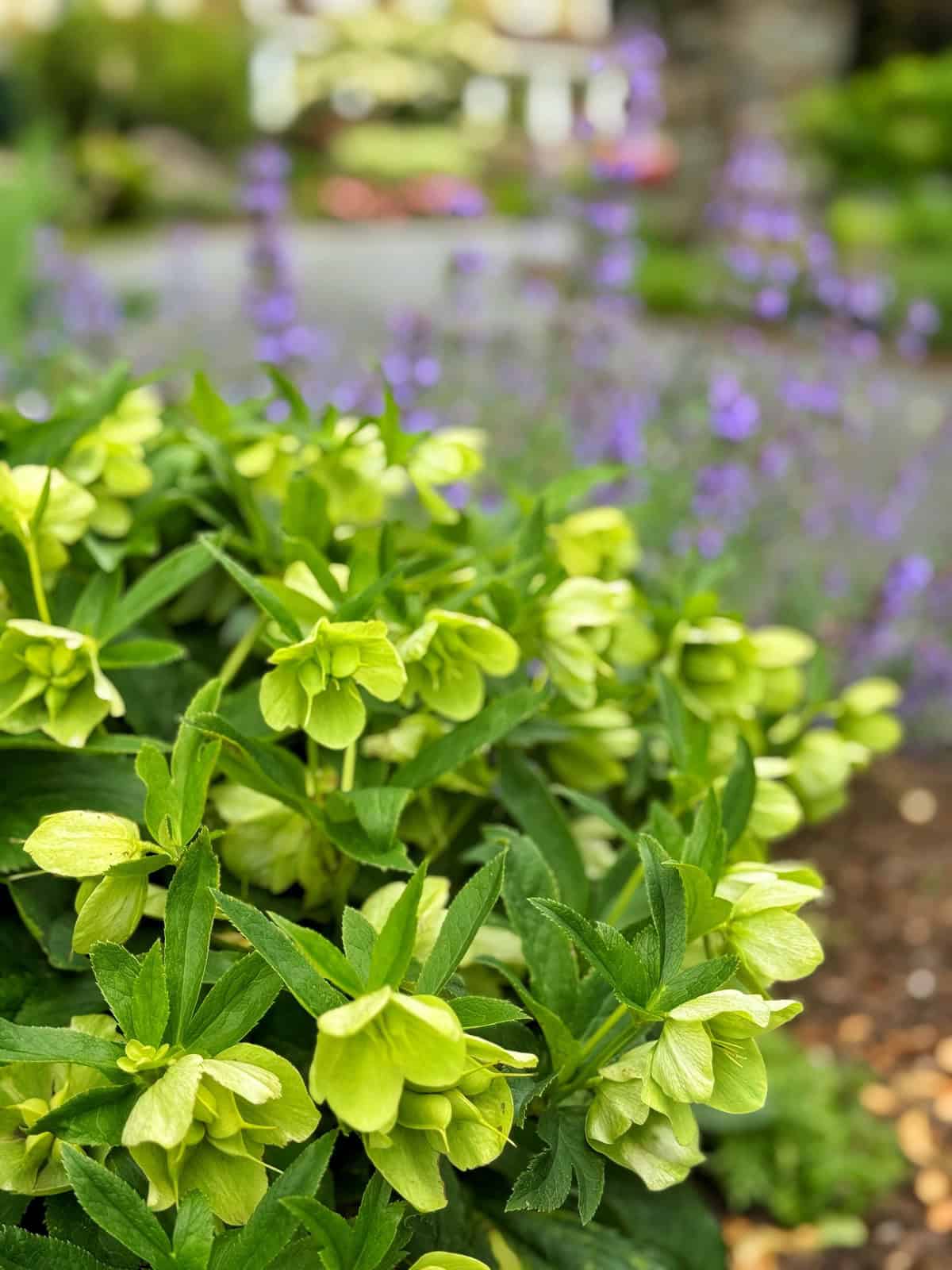
Step 2: Hellebores as the Evergreen Anchor
Bloom Time: Late winter to early spring
Foliage: Evergreen, leathery leaves
Mature Size: 12–18 inches tall
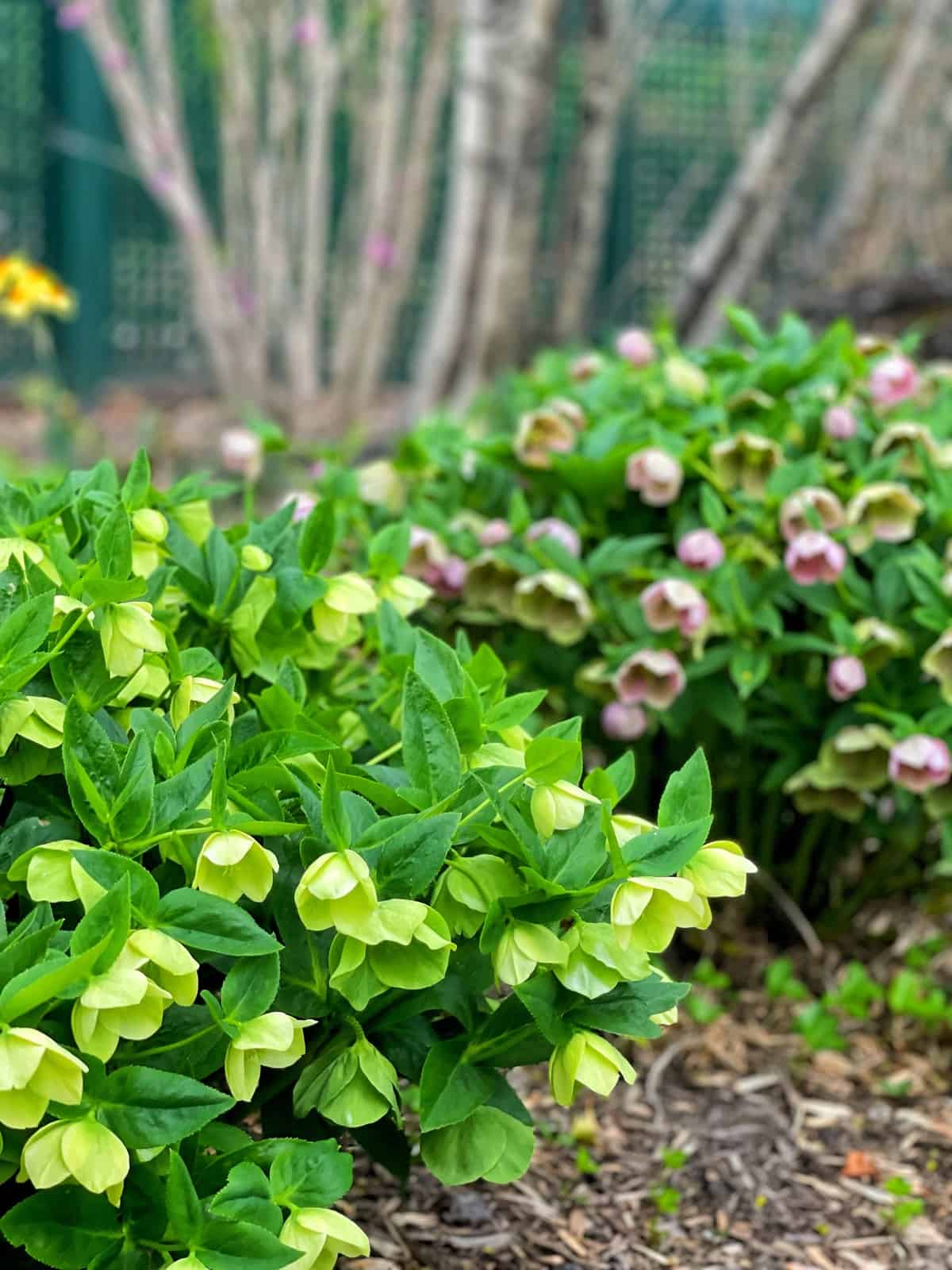
Hellebores bloom when little else is happening, making them the first real color in the shade garden. Their evergreen foliage remains attractive long after flowering ends.
I plant them in small drifts rather than single specimens so they feel integrated into the surrounding layers.
To learn more about how I grow them, please visit my complete guide to growing hellebores here.
Step 3: Early Spring Companions
For more reliable bloomers, I share a broader list of perennial flowers for shade here. But these are the ones I rely on specifically around hellebores for succession and texture.
Brunnera
Bloom Time: Early to mid-spring
Foliage: Heart-shaped leaves; many varieties have silver overlay
Mature Size: 12–18 inches tall and wide
Why I Pair It With Hellebores:
Brunnera blooms just as hellebores begin to wind down, creating a seamless transition in early spring. The airy sprays of tiny blue flowers float above the foliage, adding lightness at ground level. When planted beside hellebores, the heart-shaped leaves soften the heavier, leathery texture of hellebore foliage.
How It Performs in My Shade Garden:
Even after blooming, brunnera earns its space. The foliage remains attractive well into summer, especially the silver-leafed varieties that brighten darker corners. It fills in around hellebore clumps beautifully without competing for attention.
To learn more about how I grow brunnera in my shade garden, please visit my complete guide to growing brunnera here.

Virginia Bluebells
Bloom Time: Early to mid-spring
Foliage: Soft green, smooth leaves
Mature Size: 12–24 inches tall
Why I Use It Around Hellebores:
Virginia bluebells create those soft drifts of pastel color that feel effortless in spring. Their nodding blue-pink blooms weave between hellebore mounds and add movement at a slightly taller height.
Important Seasonal Behavior:
Bluebells are ephemeral — they go dormant shortly after blooming. That means I never plant them alone. I intentionally surround them with hostas or heuchera that emerge later and cover the fading foliage. When layered correctly, you never notice the transition.

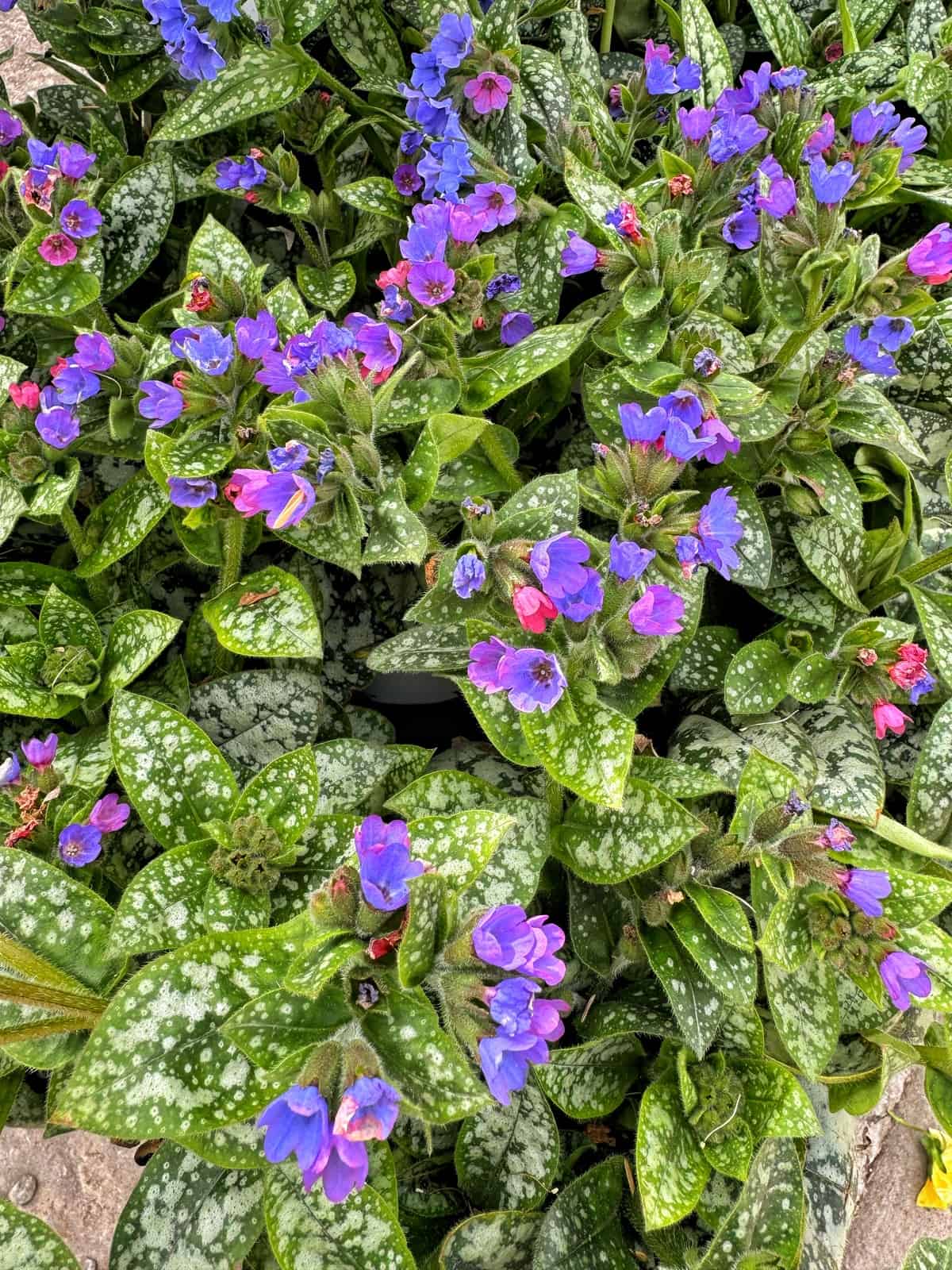
Lungwort (Pulmonaria)
Bloom Time: Early spring
Foliage: Speckled or silver-mottled leaves
Mature Size: 10–12 inches tall
Why It Works So Well Near Hellebores:
Lungwort often blooms at the same time as hellebores, creating overlapping color at slightly different heights. The spotted foliage adds brightness even before flowers open.
How It Performs Long-Term:
In my garden, lungwort remains attractive well after flowering. The foliage forms a low mound that helps anchor the front of hellebore drifts. It’s one of those plants that quietly supports the design without demanding attention.
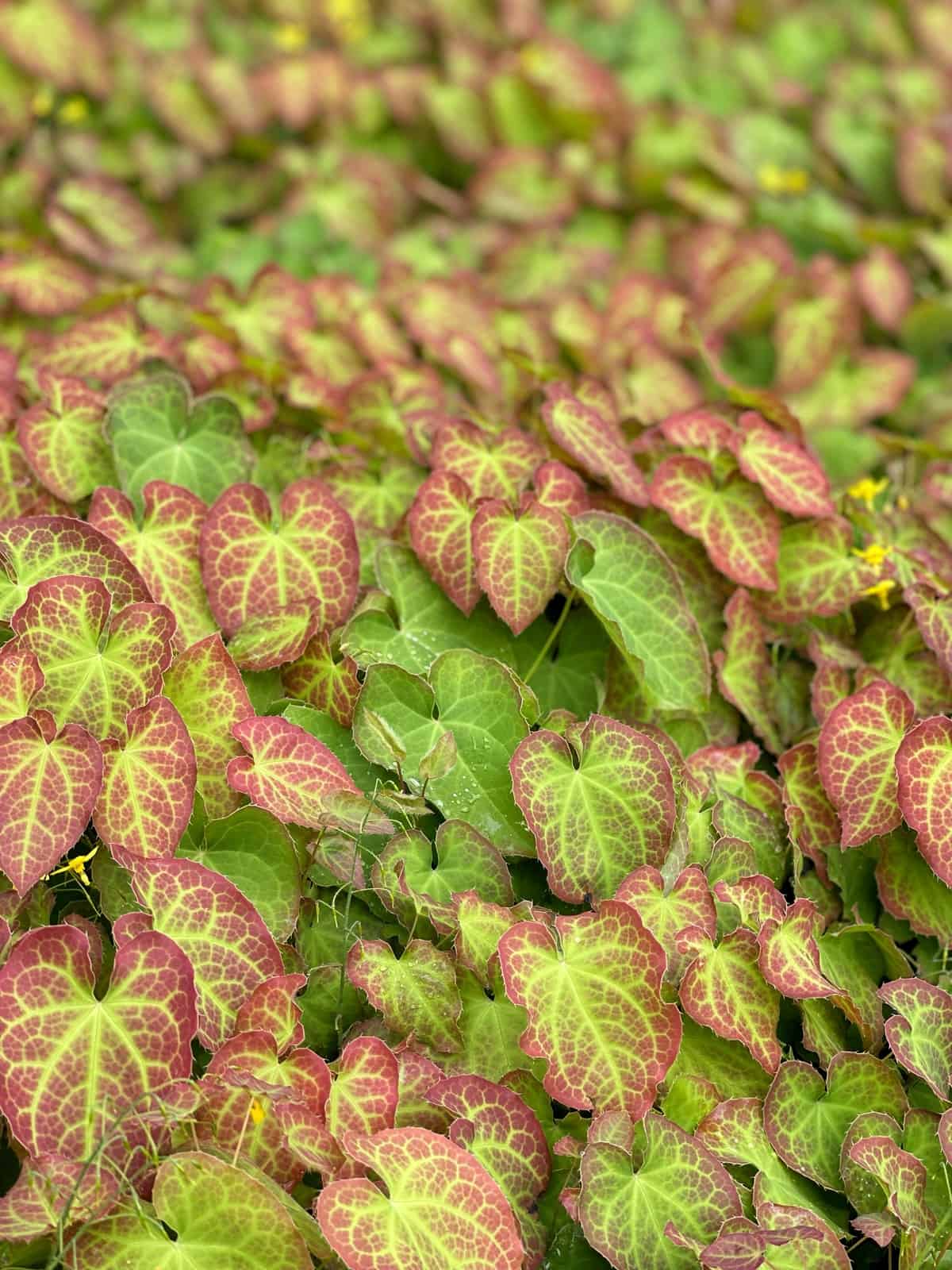
Epimedium
Bloom Time: Mid-spring
Foliage: Delicate, often semi-evergreen
Mature Size: 8–18 inches tall
Why I Include It in This Layer:
Epimedium adds refinement. Its small, airy flowers float above the foliage, offering subtle detail rather than bold color. When planted near hellebores, it softens transitions between larger leaves and groundcovers.
Seasonal Role:
Many varieties maintain attractive foliage well into fall. In early spring, I trim back old leaves so the new growth and flowers can shine.
Epimedium is one of my favorite groundcovers here in the gardens. If you’d like to see what other types of groundcovers flower in the shade, please visit my guide on groundcovers that bloom.
Bleeding Hearts
Bloom Time: Mid to late spring
Foliage: Soft, fern-like texture
Mature Size: 24–36 inches tall
Why It Belongs in the Mid-Layer:
Bleeding hearts rise just behind hellebores, adding vertical movement and romantic spring color. Their arching stems contrast beautifully with the more upright habit of hellebore blooms.
Seasonal Consideration:
Some varieties go dormant in summer heat. I plan ahead by placing ferns or hostas nearby to fill the space once foliage fades. In shade design, succession planning like this is essential.
To learn more about how I grow dicentra in my shade garden, please visit this complete guide to growing bleeding hearts here.

Step 4: Texture and Summer Strength
Once spring blooms fade, foliage carries the garden.
Hostas
Bloom Time: Summer (secondary interest)
Foliage: Broad, architectural leaves in shades of green, blue, and variegated patterns
Mature Size: 12 inches to 3+ feet depending on variety
Why I Plant Them Near Hellebores:
Hostas emerge just as early ephemerals begin to decline. Their bold leaves provide strong contrast against hellebore foliage and help conceal fading spring plants.
How They Perform in Shade:
Hostas reliably fill space and create a grounded base layer. Even though they flower, I grow them primarily for foliage mass and structure.
To learn more about how I grow hostas in the shade, please visit my complete guide to growing hostas here.

Heuchera
Bloom Time: Late spring to early summer
Foliage: Mounded leaves in shades of burgundy, caramel, lime, and green
Mature Size: 12–18 inches tall
Why It’s So Useful in This Design:
Heuchera adds foliage color variation that lasts nearly all season. When planted beside hellebores, the contrasting leaf tones prevent the planting from feeling monochromatic.
Long-Term Role:
Even when not blooming, heuchera provides low structure and color that bridges spring into summer.
To learn more about how I care for coral bells, please visit my complete guide to growing heuchera in your shade garden.

Astilbes
Bloom Time: Early to mid-summer
Foliage: Fern-like and finely textured
Mature Size: 18–36 inches tall
Why I Layer Them In:
Astilbe plumes rise above surrounding foliage just as the garden transitions fully into summer. Their airy blooms contrast beautifully with bold hosta leaves and the dense form of hellebores.
Performance Notes:
They appreciate consistent moisture in shade. When happy, they provide weeks of color and texture during a quieter floral period.

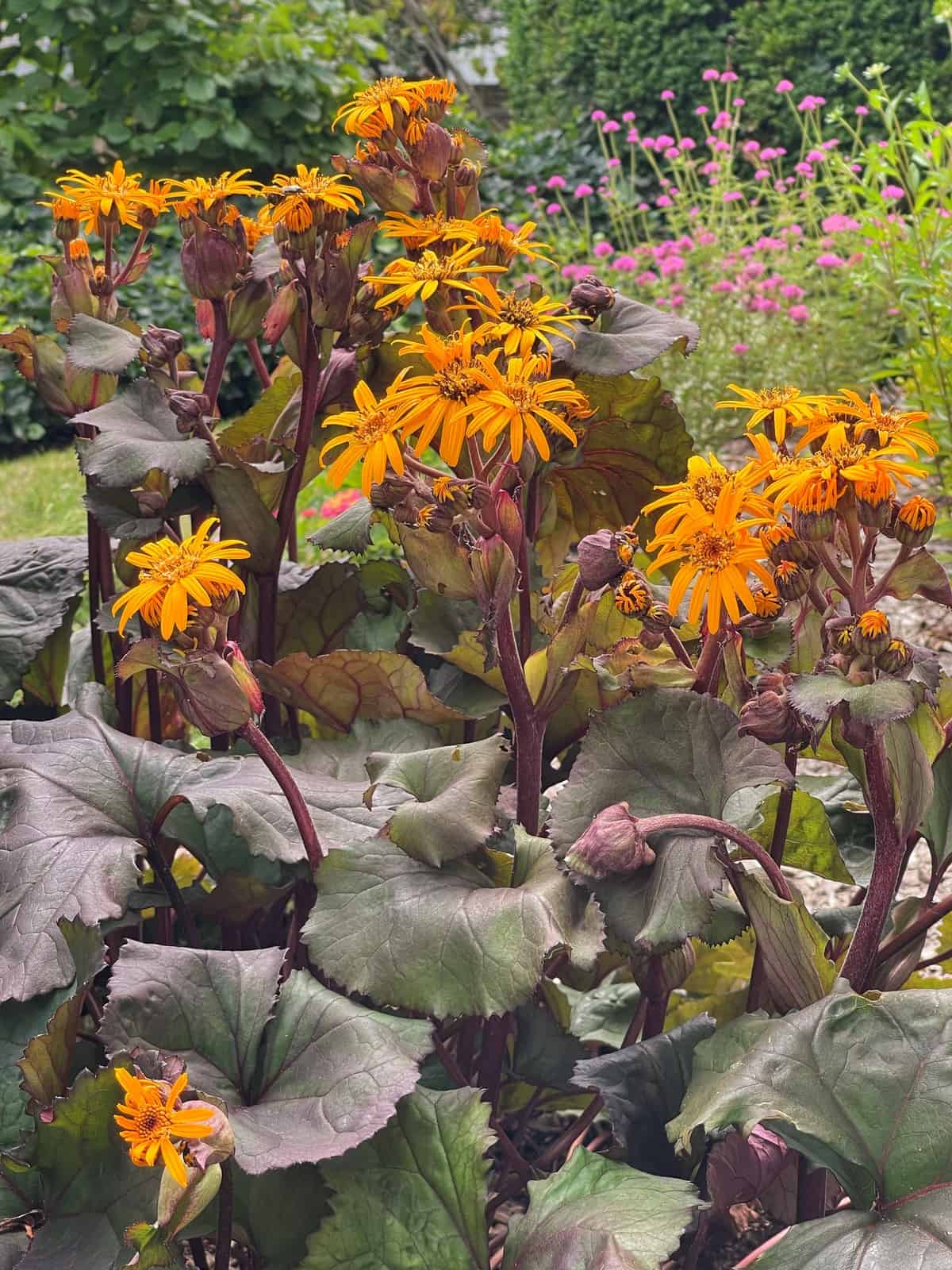
Ligularia
Bloom Time: Mid-summer
Foliage: Large, dramatic leaves
Mature Size: 2–4 feet tall
Why It Adds Drama:
Ligularia’s bold foliage creates instant impact in deeper shade areas. The oversized leaves contrast strongly with the finer textures of ferns and astilbe.
Seasonal Role:
It shines in cooler, moist conditions and adds height in mid-summer when many spring bloomers are finished.
Ferns
Primary Interest: Foliage from spring through fall
Texture: Soft, feathery fronds
Mature Size: Varies by variety
Why Ferns Changed My Perspective on Shade:
In my former sunny garden, I didn’t rely on ferns much. Here, I can’t imagine designing without them. They weave between shrubs and perennials, softening edges and creating movement.
Design Role:
Ferns act as connectors — filling small gaps, transitioning between plant heights, and maintaining elegance without adding visual heaviness.

Hakone Grass (Hakonechloa)
Seasonal Interest: Spring through fall
Foliage: Cascading, often chartreuse or golden
Mature Size: 12–18 inches tall, spreading gently
Why It’s Essential for Movement:
Hakone grass introduces a flowing element that many shade gardens lack. Its arching habit contrasts beautifully with the more upright forms of hellebores and hostas.
How It Performs:
The bright foliage lights up darker corners and maintains interest well into fall before fading back for winter.


Step 5: Intentional Annual Fillers
Even in established beds, small openings appear after spring ephemerals retreat.
Impatiens
Bloom Time: Late spring through frost
Foliage: Glossy green leaves
Mature Size: 6–12 inches tall
Why I Use Them:
Impatiens provide steady, reliable color in deeper shade areas where other bloomers slow down. They tuck easily into small gaps between perennials.
Design Role:
They maintain visual continuity through the heat of summer without overpowering the planting.

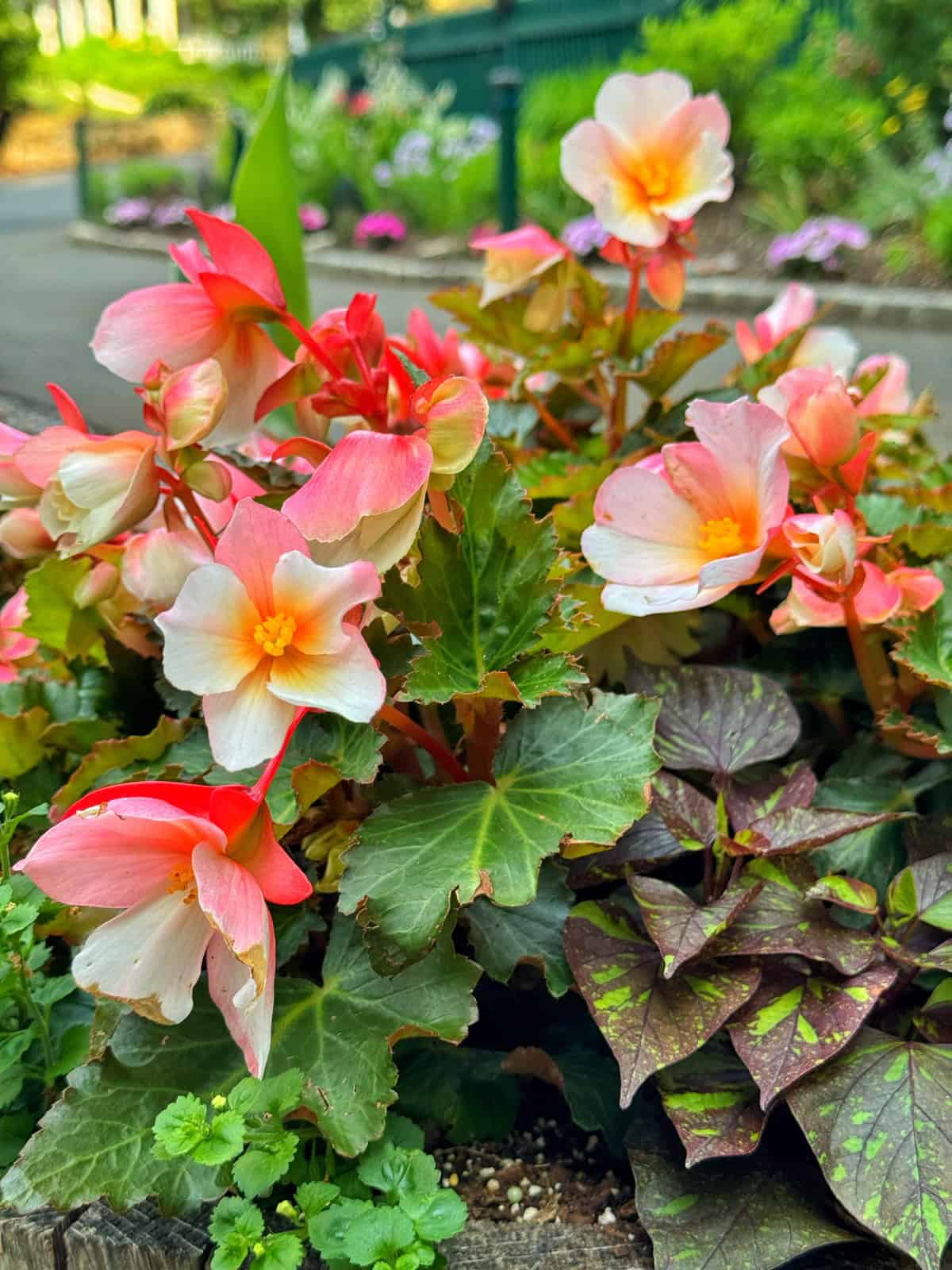
Begonias
Bloom Time: Late spring through frost
Foliage: Often waxy, sometimes bronze-toned
Mature Size: 8–18 inches tall
Why They’re Useful:
Begonias tolerate shade and humidity well. Their flowers last for months, and the foliage adds subtle texture.
Performance:
They’re dependable and low-maintenance, making them ideal seasonal fillers.
If you garden on a budget and want to save your begonias for next year, please visit my complete guide to overwintering begonias indoors.
Coleus
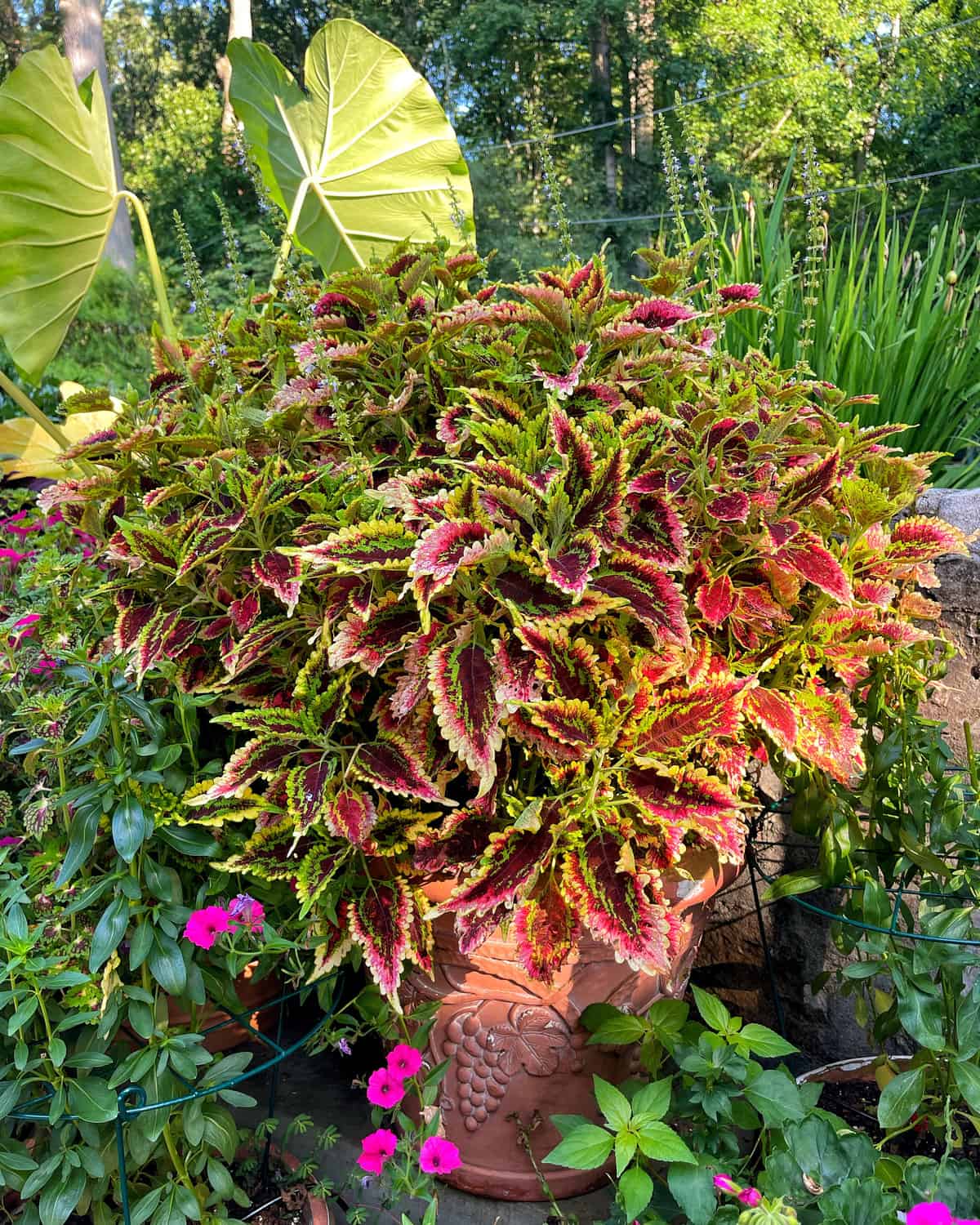
Primary Interest: Foliage
Foliage: Bold patterns in burgundy, lime, chartreuse, and deep purple
Mature Size: 12–24 inches tall
Why I Include It:
Coleus adds foliage-driven color that holds all season long. When bloom cycles dip in mid-summer, coleus keeps the planting vibrant.
Design Benefit:
It complements heuchera and hakone grass by introducing additional color contrast at ground level.
Extending the Season With Spring Bulbs
One of the simplest ways I prevent gaps in my shade garden is by tucking spring-flowering bulbs between hellebores and perennials. Bulbs emerge early — often before many perennials break ground — which adds color and structure at a time when the garden can still feel sparse.
Because hellebores hold evergreen foliage, they provide the perfect backdrop for early bulbs. As bulb foliage begins to fade, emerging perennials help disguise it naturally.
Here are the bulbs I rely on most:
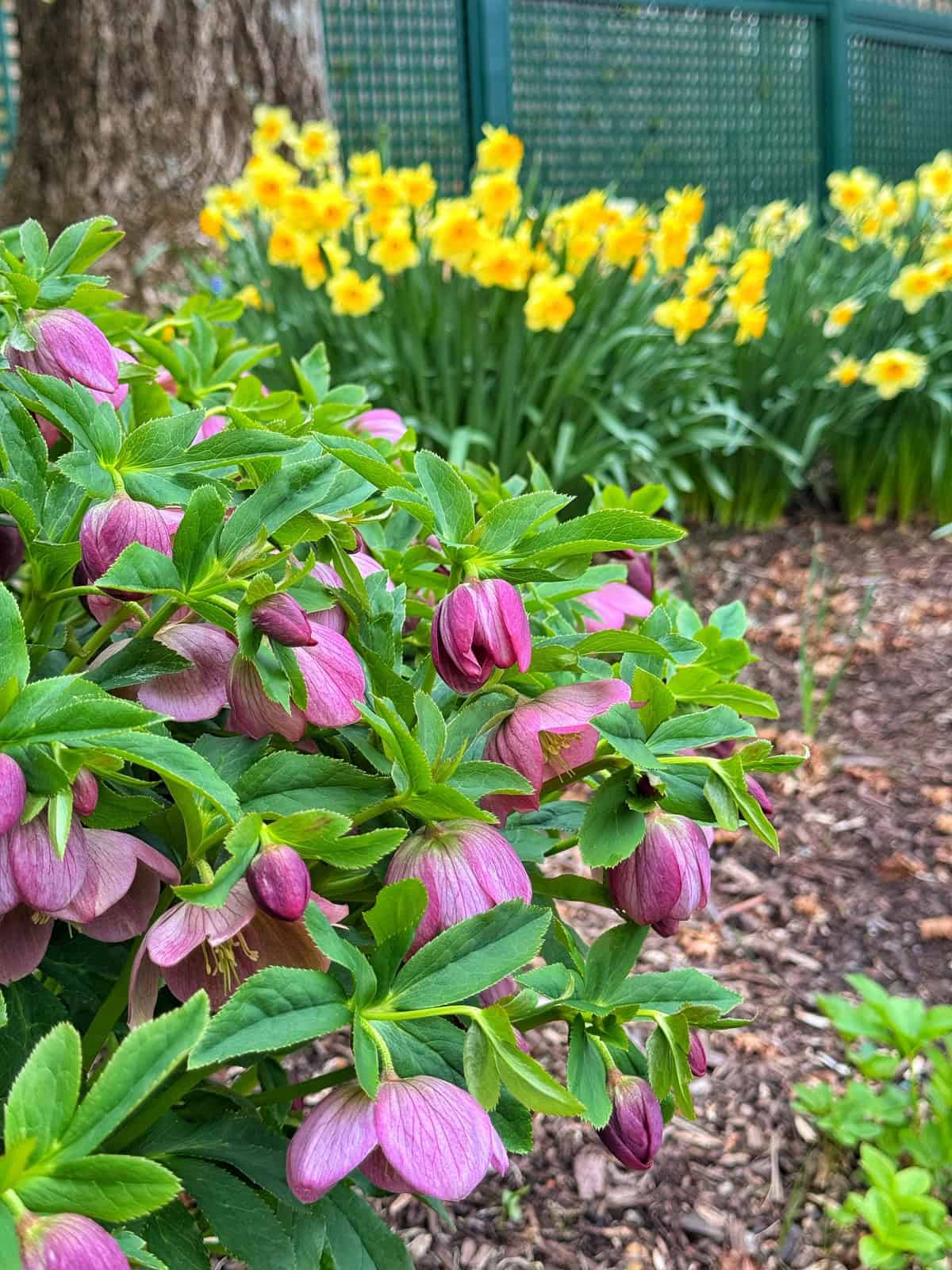
Daffodils
Bloom Time: Early to mid-spring
Foliage: Upright, strap-like leaves
Height: 10–20 inches
Why They Work Around Hellebores:
Daffodils bloom just after hellebores begin flowering, creating a layered early-spring display. Their vertical form contrasts beautifully with the rounded habit of hellebore clumps.
Design Advantage:
They’re deer resistant and reliable year after year. As their foliage yellows, hostas and other late-emerging perennials fill in around them.
To learn more about how I grow daffodils in my gardens, please visit the complete guide to growing daffodils here.
Tulips
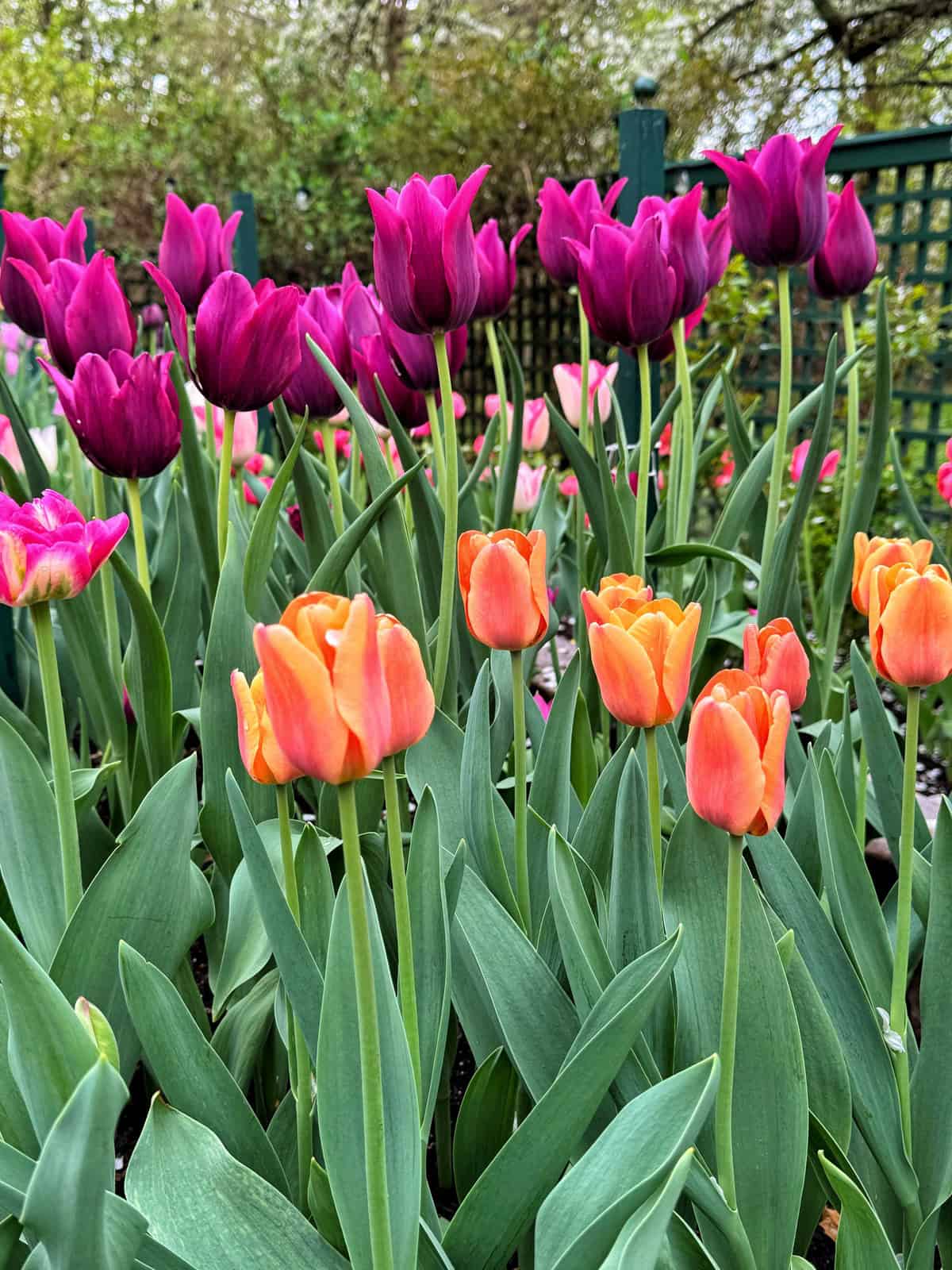
Bloom Time: Mid-spring
Foliage: Narrow, upright leaves
Height: 10–24 inches depending on variety
Why I Use Them Strategically:
Tulips provide bold color contrast against hellebores’ more muted tones. I use them intentionally in small groupings rather than large blocks to create focal points within the border.
Important Note:
In heavier shade, tulips may not perennialize as strongly, so I treat them as seasonal highlights rather than permanent fixtures. Look for earlier blooming varieties so they flower before towering trees fully leaf out.
To learn more about how I grow tulips in my gardens, please visit my complete guide to growing tulips.
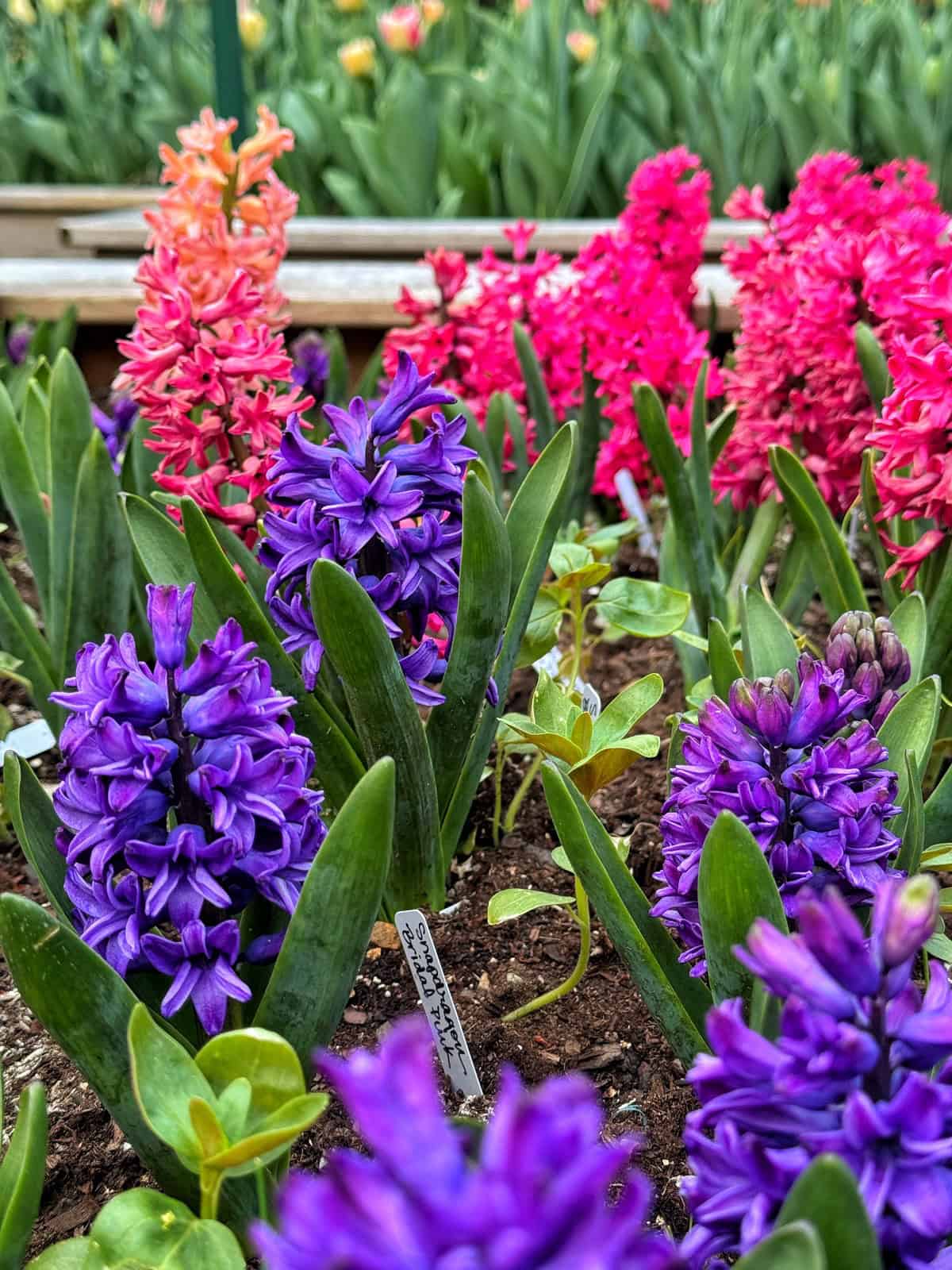
Hyacinths
Bloom Time: Early to mid-spring
Foliage: Thick, upright leaves
Height: 6–12 inches
Why They Add Early Impact:
Hyacinths bloom low to the ground, making them ideal for planting near the front of hellebore drifts. Their dense flower spikes add texture at a time when much of the garden is still emerging.
Seasonal Role:
Their early bloom helps bridge the gap between late winter and peak spring.
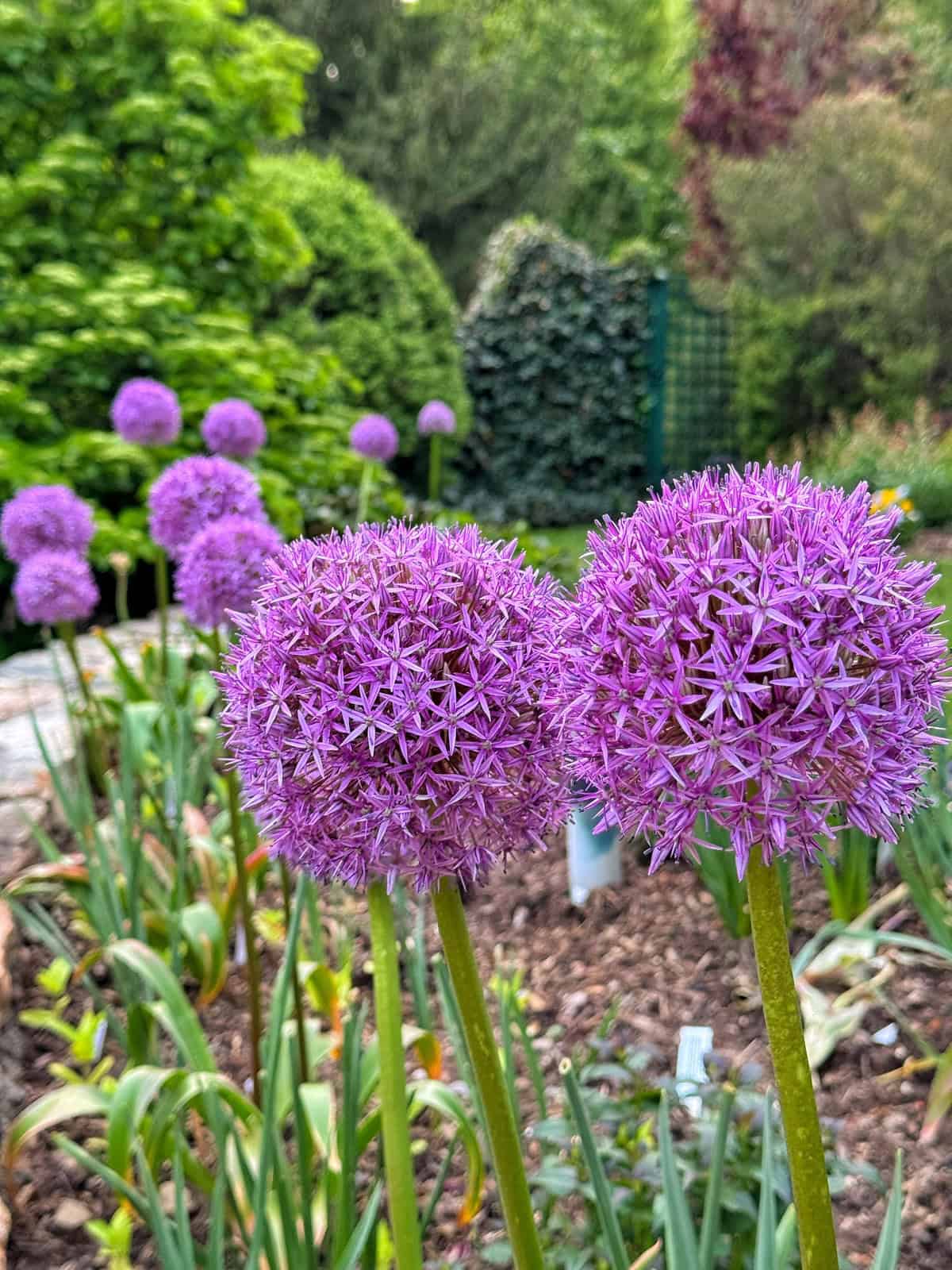
Alliums
Bloom Time: Late spring to early summer
Foliage: Strap-like leaves (often fading by bloom time)
Height: 18–36 inches depending on variety
Why They Extend the Transition:
Alliums bloom later than daffodils and tulips, which extends the bulb season into early summer. Their spherical flower heads rise above hellebores and companion perennials, adding architectural interest.
Design Tip:
Because allium foliage can decline early, I plant them among hostas, heuchera, and ferns so fading leaves are concealed naturally.
Why Bulbs Work So Well in a Layered Shade Garden
Bulbs are temporary but powerful. They:
- Fill early-season gaps
- Add vertical variation
- Create succession between hellebores and late-spring perennials
- Require little maintenance once established
When layered thoughtfully, bulbs ensure your shade garden never feels empty — even before most perennials fully emerge.
How I Layer These Plants in My Shade Garden Beds
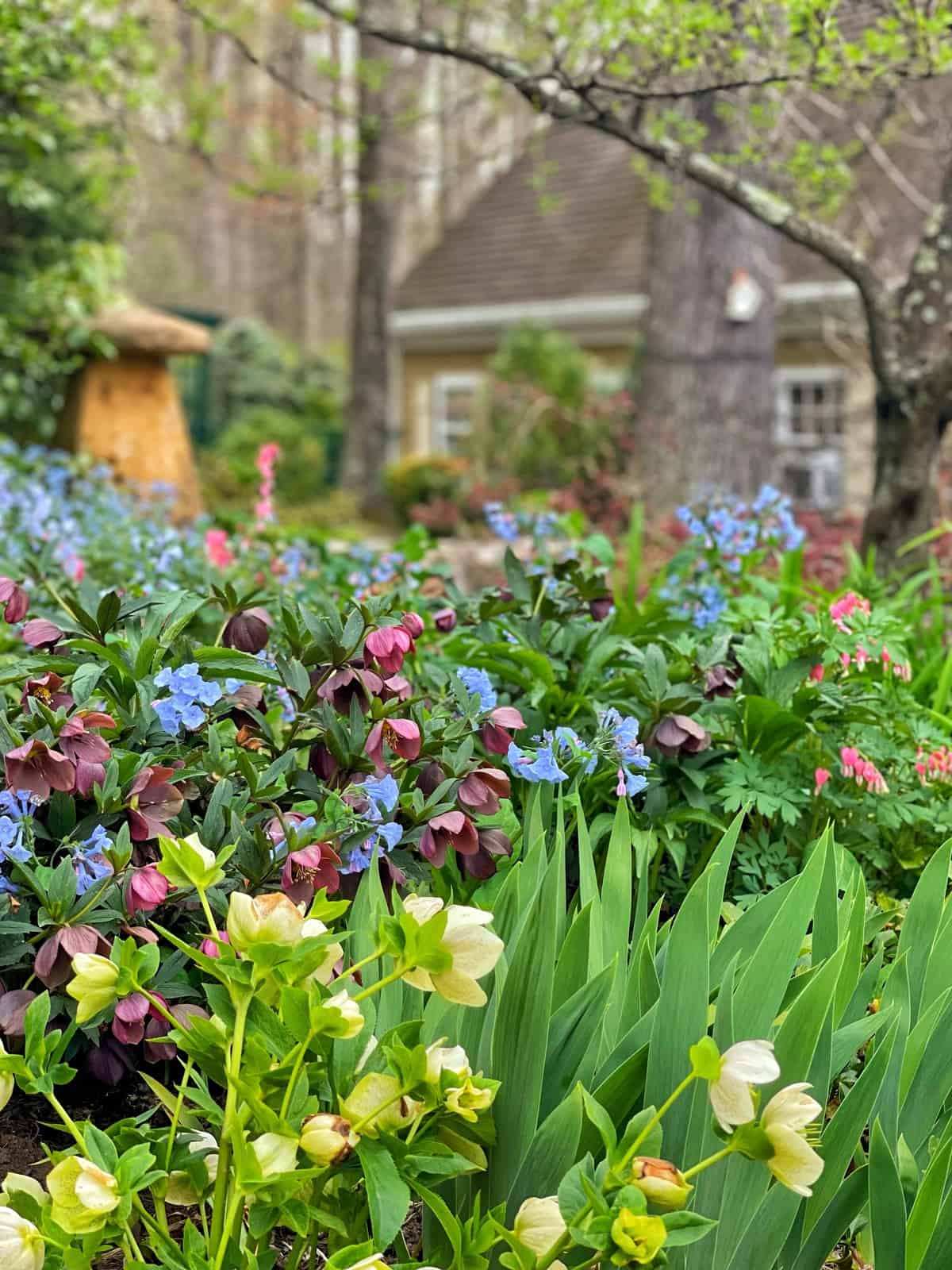
Plant lists are helpful — but design happens in layers. When I build a shade bed around hellebores, I think in vertical and seasonal layers at the same time.
The Back Layer: Evergreen and Structural Shrubs
At the back of the border, I rely on rhododendrons, mountain laurel, pieris, hydrangeas, and bottlebrush buckeye to create height and permanence.
In late winter, this evergreen backdrop makes hellebore blooms stand out instead of blending into bare ground. During the summer, hydrangeas and bottlebrush buckeye carry the space when spring perennials are finished. In fall, buckeye foliage and certain hydrangeas bring warm tones that prevent the garden from fading quietly.
Even in winter, the evergreen shrubs hold the shape of the bed. Without this layer, everything else feels temporary.
The Middle Layer: Hellebores in Drifts
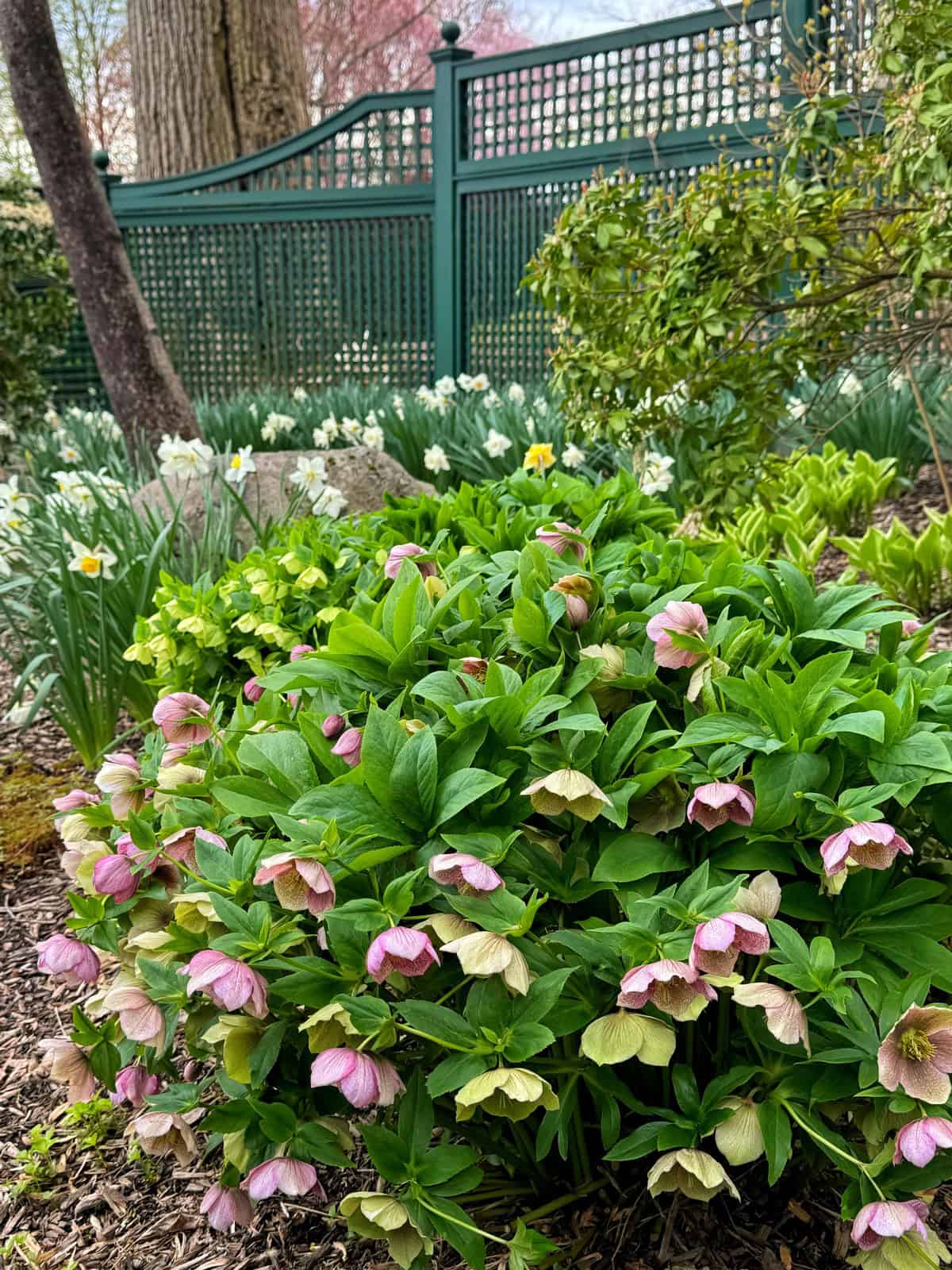
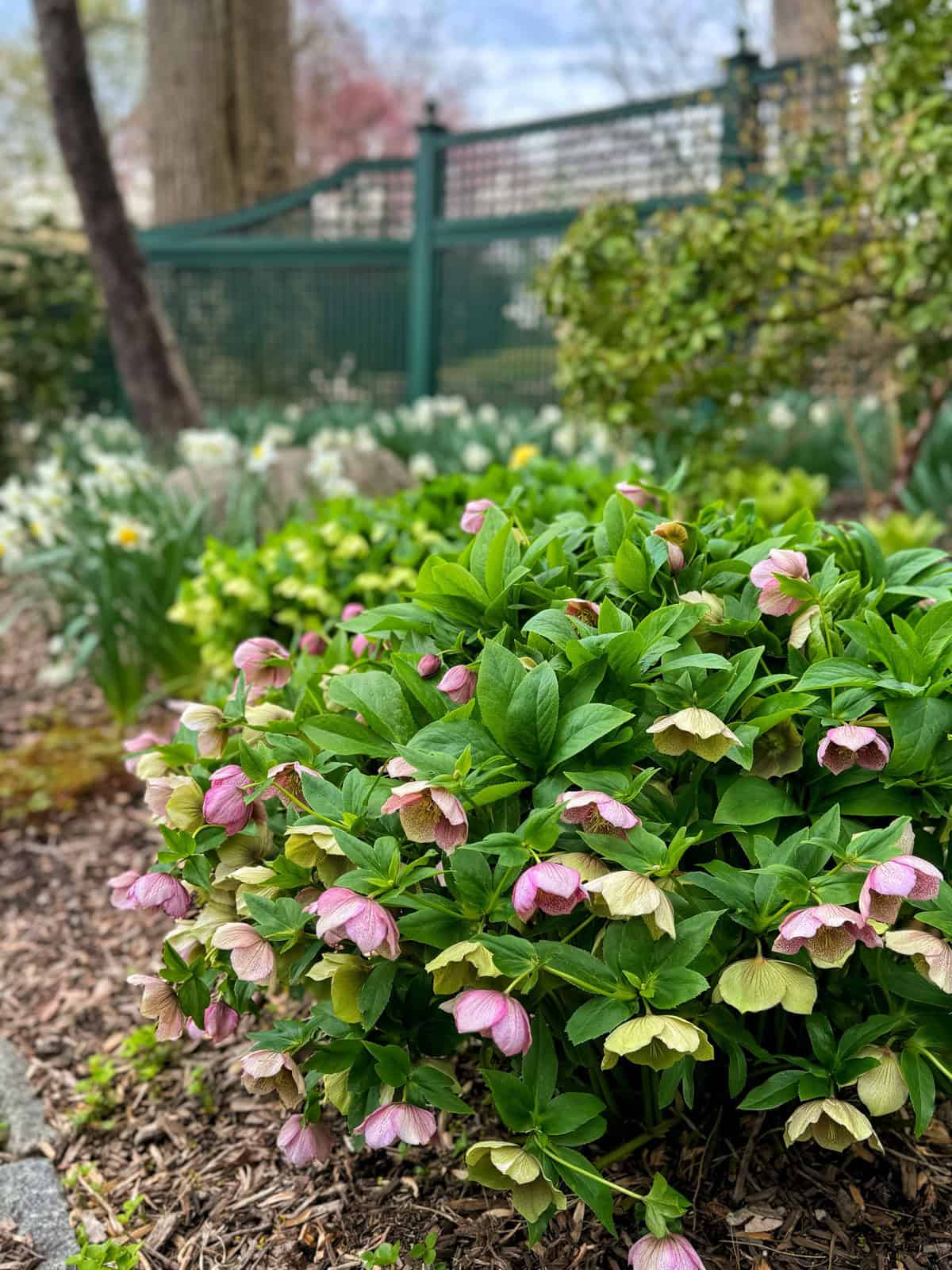
In front of the shrubs, I plant hellebores in small drifts rather than single specimens.
Grouped this way, they create a unified mass of late-winter blooms instead of scattered dots of color. As their flowers age and turn muted shades, the evergreen foliage remains as a steady mid-layer anchor.
By the time spring companions emerge, hellebores have already established the foundation of the planting.
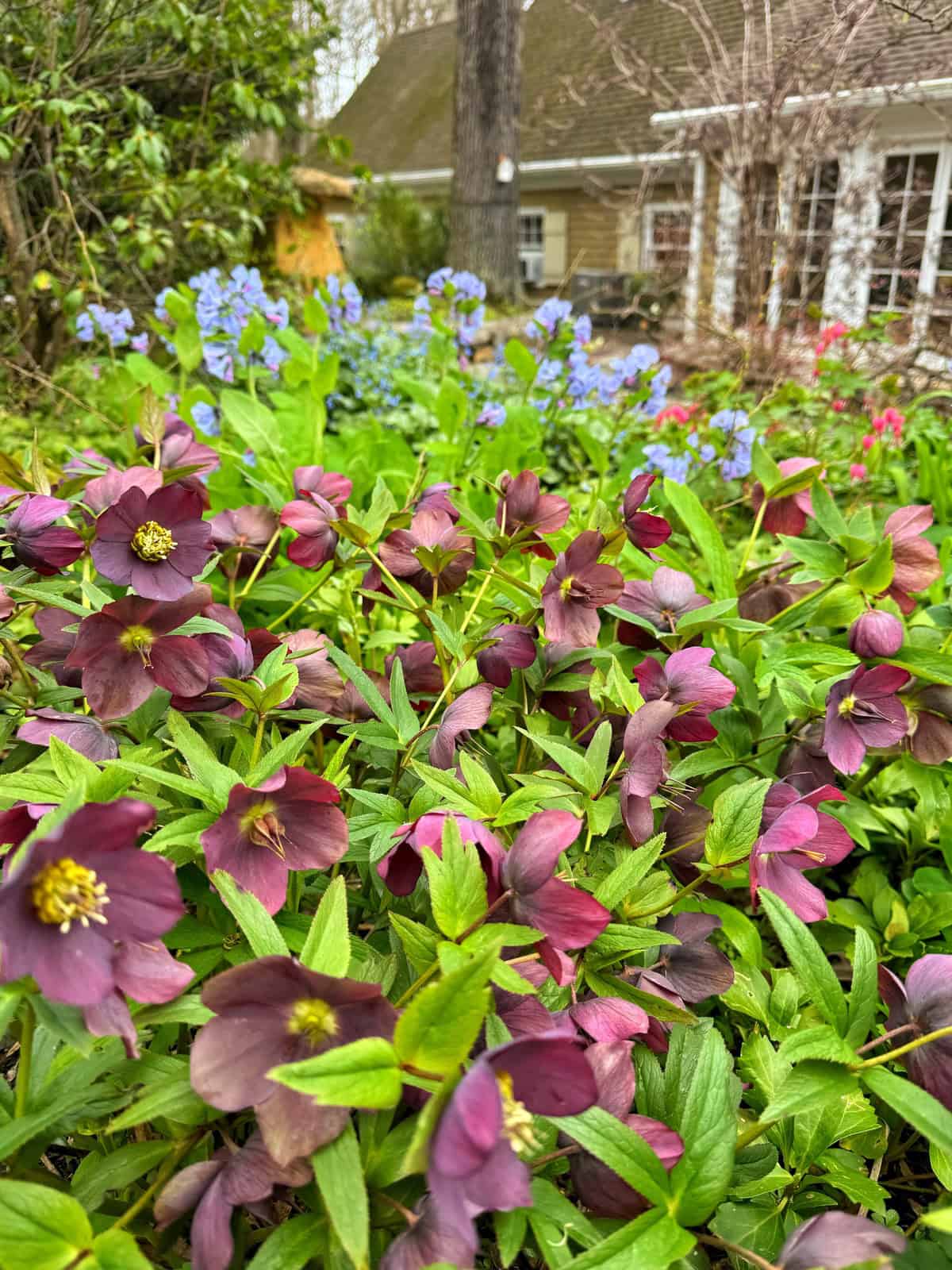
The Transitional Layer: Spring Companions
Around and slightly in front of the hellebores, I layer early bloomers like brunnera, lungwort, epimedium, and Virginia bluebells.
These plants overlap in bloom time but vary in height and texture. Bluebells weave upward through hellebore clumps. Lungwort hugs the ground with patterned foliage. Bleeding hearts rise slightly behind, adding soft vertical movement.
I also tuck spring bulbs like daffodils, tulips, and hyacinths into this same layer. Bulbs emerge even earlier — often before many perennials have fully broken ground — which helps bridge the space between late-winter hellebore blooms and peak spring growth. Their upright foliage and flowers add another dimension of height and structure during this transition.
Because some spring companions and bulbs go dormant after flowering, I intentionally place later-emerging foliage plants nearby. Hostas, heuchera, ferns, and hakone grass fill in seamlessly as ephemerals fade and bulb foliage declines.
The goal is that no empty pockets are visible at any point in the season — each layer hands the garden off to the next.
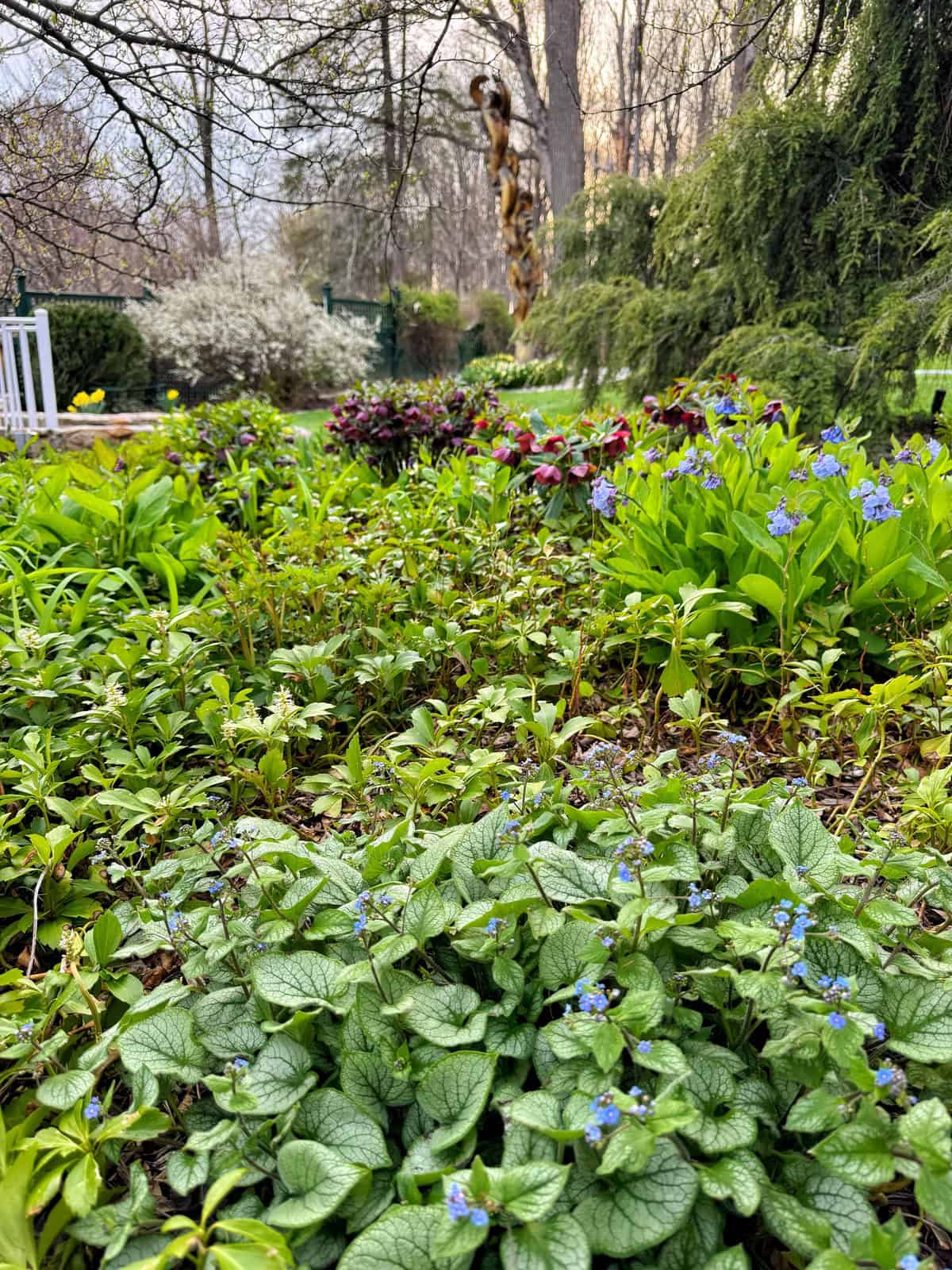
The Front and Weaving Layer: Texture and Movement
Closer to the edge of the bed, I rely heavily on texture:
- Ferns soften transitions.
- Hakone grass adds movement.
- Heuchera provides foliage color.
- Hostas anchor the front edge.
This layer carries the garden visually from late spring through fall.
By summer, the planting shifts from bloom-driven to foliage-driven — and that transition feels intentional, not like something is missing.

Seasonal Flow: How the Garden Changes
Late Winter:
Hellebores bloom against evergreen shrubs.
Early Spring:
Brunnera, lungwort, and bluebells join in.
Mid-Spring:
Azaleas and mountain laurel take over while bleeding hearts rise.
Summer:
Hydrangeas and bottlebrush buckeye bloom; hostas, ferns, and grasses dominate the foliage.
Fall:
Buckeye foliage turns golden. Hydrangeas fade softly. Evergreen shrubs maintain structure.
Each layer hands the garden off to the next. That continuity is what makes shade design feel cohesive.
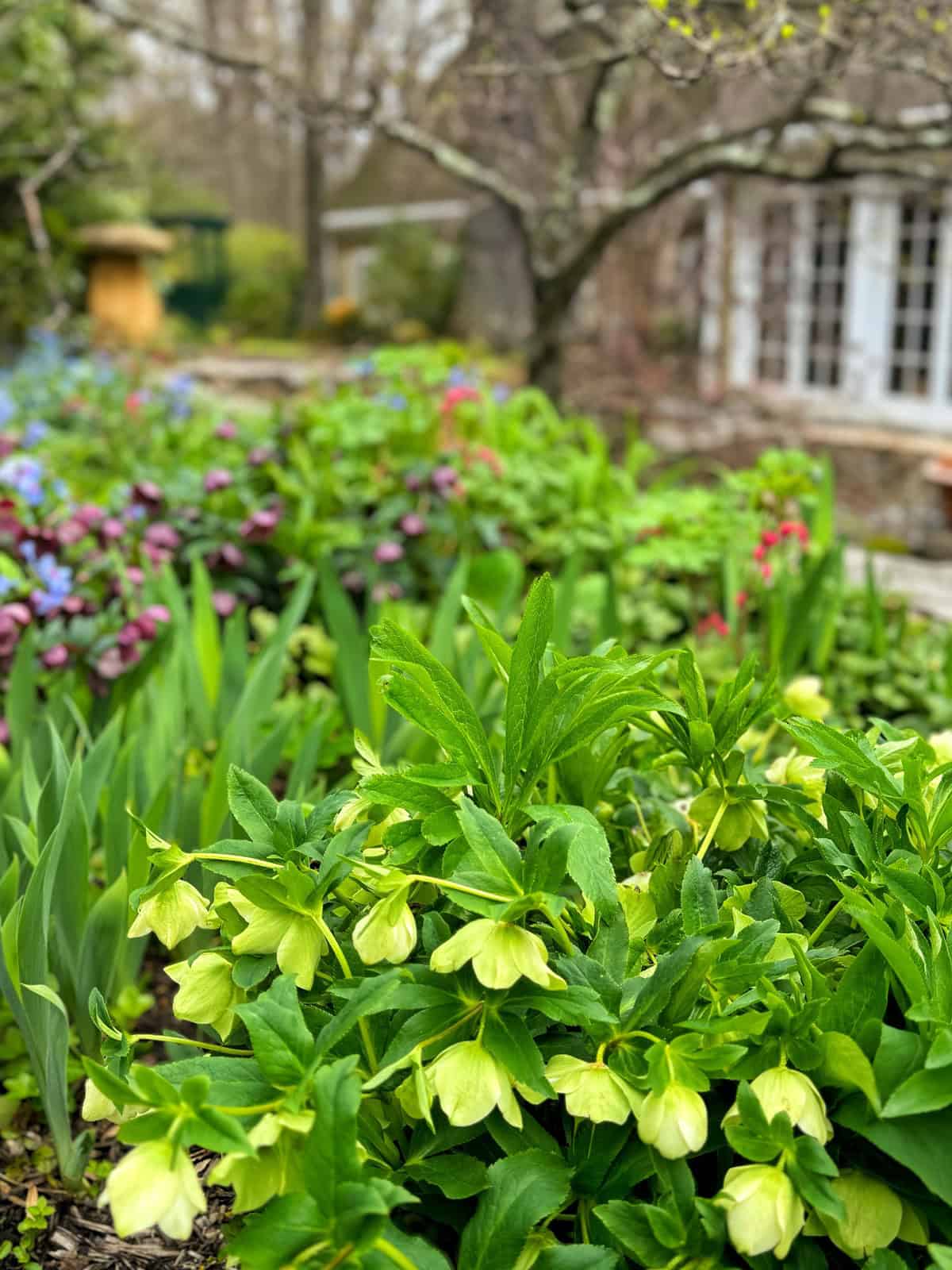
Common Mistakes When Designing Around Hellebores
Over the years — especially transitioning from sun gardening — I’ve learned that shade beds fail for predictable reasons.
Planting Hellebores Alone
They’re beautiful, but without shrubs or layered companions, they look isolated.
Ignoring Evergreen Structure
If nothing holds the space in winter, the entire bed collapses visually once perennials fade.
Overcrowding Spring Bloomers
Planting too many plants that bloom at the same time creates a short, intense show — followed by emptiness.
Succession matters more than volume.
Forgetting Dormancy Cycles
Virginia bluebells and certain bleeding hearts disappear in summer. Without planning for that, gaps form.
Layering later-emerging foliage solves this.
Designing Only for Spring
Shade gardens can be stunning in fall if shrubs and foliage are chosen intentionally. Bottlebrush buckeye and hydrangeas prove that shade doesn’t have to fade after June.

My Simple Shade Garden Layering Formula
If you prefer a clear framework, here’s how I think about it:
Backbone: Evergreen and flowering shrubs
Anchor Layer: Hellebores planted in drifts
Spring Layer: Early companions with overlapping bloom
Foliage Layer: Hostas, ferns, heuchera, ligularia
Movement: Hakone grass
Seasonal Fillers: Impatiens, begonias, coleus
When each layer supports the one in front of it, the garden feels intentional.
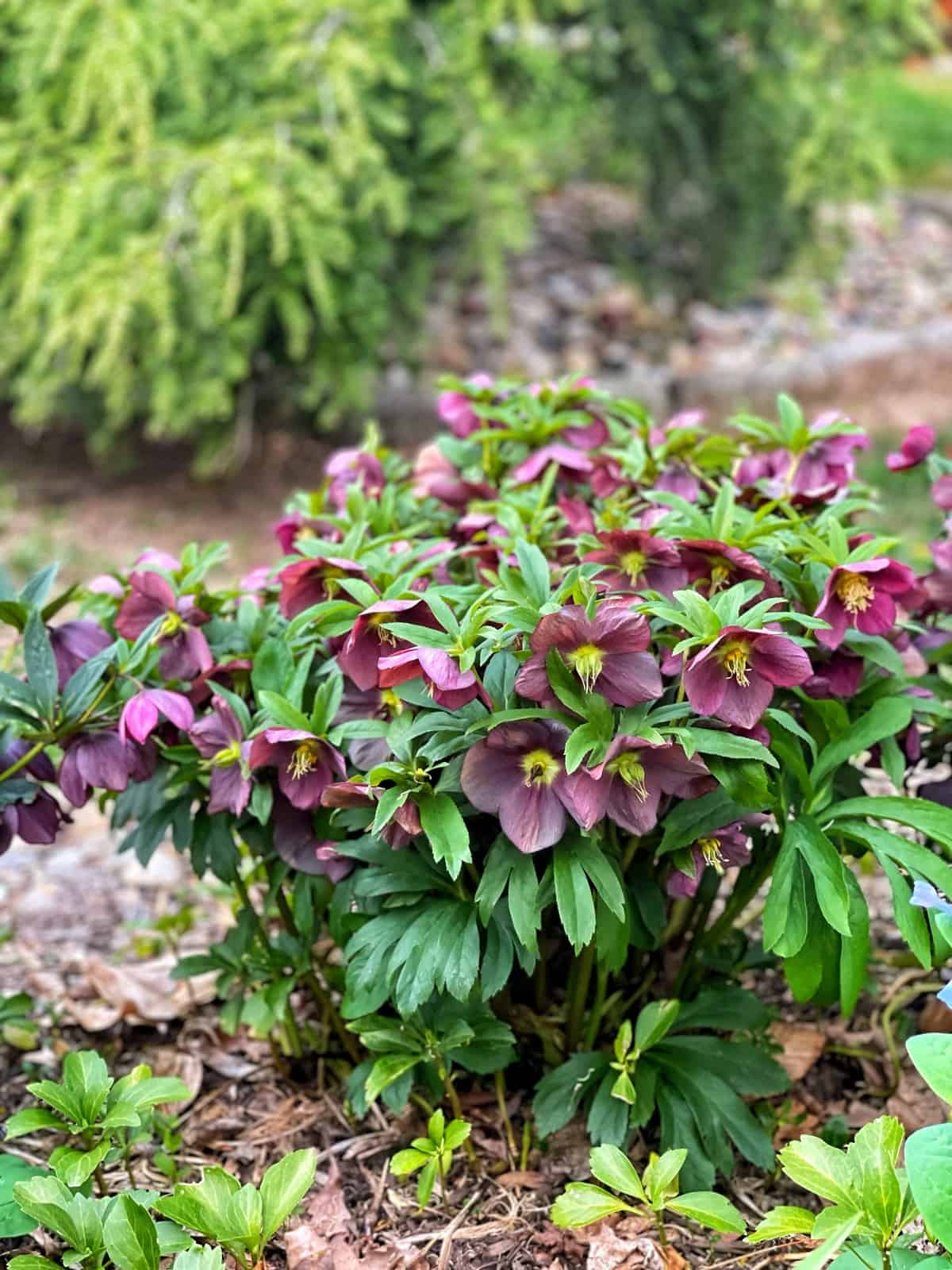
Frequently Asked Questions About Designing Around Hellebores
What grows well with hellebores?
Plants that share similar moisture and light conditions — including brunnera, lungwort, ferns, hostas, and shade-loving shrubs — pair especially well because they overlap in season and complement hellebore foliage.
Do hellebores prefer full shade?
They perform best in partial to dappled shade, especially with protection from harsh afternoon sun. In deeper shade, they may bloom slightly less but still maintain attractive foliage. That said, I’ve got a few planted in part-sun that do pretty well in my zone 6b garden.
What shrubs grow well with hellebores?
Evergreen shrubs like rhododendrons, mountain laurel, and pieris provide excellent structure. Hydrangeas and bottlebrush buckeye extend seasonal interest.
How do you keep shade gardens interesting after spring?
Foliage becomes the focus. Layering bold leaves, soft textures, grasses, and shrubs with fall color ensures the garden remains dynamic long after early blooms fade.
Designing a Shade Garden That’s Layered and Easy to Maintain
If you enjoy designing with structure and seasonality in mind, many of the layering principles I shared here — starting with shrubs, building around anchor plants like hellebores, and filling in with reliable perennials — are part of the same practical approach I use throughout my garden.
In The Bricks ’n Blooms Guide to a Beautiful and Easy-Care Flower Garden, I share how I design beds that feel full and cohesive without becoming overwhelming to maintain. While the book covers a wide range of plants and garden conditions, it includes the same foundational ideas you see in this shade garden — choosing dependable plants, layering for long-term structure, and combining varieties that support one another through the seasons.
If you’re looking to move beyond individual plant choices and build gardens that feel intentional year after year, it offers a deeper look at the mindset and methods behind how I design.
Final Thoughts: Why Layering Makes All the Difference in a Shade Garden
After more than two decades of gardening primarily in full sun, I never expected shade design to become one of my favorite creative challenges. But moving to a property with mature trees completely shifted how I see plant combinations. Shade does not rely on constant color the way sunny borders often do. It relies on structure, foliage, and thoughtful layering. I share that broader framework in my guide to designing a shade garden that never looks empty.
Hellebores taught me that lesson quickly.
On their own, they’re beautiful. But when anchored by evergreen shrubs, surrounded by spring companions, and supported by texture-rich foliage plants, they become part of something much more dynamic. Instead of a short early-spring moment, the garden transitions naturally from late winter blooms to layered spring color, lush summer texture, and even meaningful fall interest.
If you’re just starting with hellebores, be sure to read my complete guide to growing hellebores so you understand how to help them thrive. And if you’re planning a larger bed, my perennial garden design guide walks through the foundational layering principles that apply in both sun and shade.
For even more plant ideas, you can explore my full list of perennial flowers for shade to expand beyond the combinations I shared here.
At the end of the day, a beautiful shade garden isn’t about finding the perfect companion plant. It’s about building layers that support one another season after season. When you focus on structure first and let hellebores anchor the design, the result feels intentional, cohesive, and far more interesting than a simple collection of plants.
Shade isn’t limiting — it’s layered. And once you start designing that way, everything changes.
Thank you for visiting the blog today!
Enjoy your day! xo

Originally Published . Last Updated .

Stunning design ! Thank you💐
Thank you mabel!
This is an awesome video. I have an an area that I am working on and this will be so helpful. Plan to follow you on your blog…
I am really thrilled that you found it all helpful Lucretia!!! It’s so nice to meet you! Let me know how it goes – I’d love to hear!