
Perennial Garden Design: A Guide to Continuous Bloom

Learn how to design a perennial garden that blooms from spring through fall. Simple tips for structure, layering, color, and low-maintenance beauty.
Designing a perennial garden is one of the most rewarding parts of gardening. Perennials come back every year, evolve over time, and create a space that gets better with age. I have spent almost thirty years growing, designing, and renovating mixed perennial borders in two very different Zone 6B gardens.
Over the years I have experimented with countless combinations of foliage textures, bloom colors, seasonal layers, leaf shapes, and plant heights. I have learned what works by watching how gardens shift and change on their own from year to year, often becoming more beautiful without me lifting a finger.
If you are still learning the difference between perennials and annuals or want help choosing what to plant where, you may find this helpful: Perennials vs Annuals: What Should You Plant?
A well-designed perennial garden should feel full, balanced, and alive from early spring through fall. Here is the design approach I use in my own gardens.
(Posts on stacyling.com may contain affiliate links. Click HERE for full disclosure.)

Start With Structure
Every successful perennial garden begins with structure. Before choosing flowers, think about what will serve as the backbone of the space. This includes shrubs, small trees, evergreens, and sometimes ornamental grasses. These anchor points give the garden presence in all seasons, especially when perennials are not blooming.
Structural plants create rhythm and break up long borders so the garden feels grounded. With just a few well-placed shrubs or evergreens, the entire design becomes more cohesive and intentional.
Think in Layers
Layering is one of the most important principles in perennial garden design. A mixed border looks harmonious because plants are arranged by height and growth habit.
Back layer
This includes tall perennials that provide height and structure. Joe Pye weed, hardy hibiscus, tall phlox, and liatris are excellent choices for the back of a border.
Middle layer
This is the core of the garden and typically where the longest blooming plants live. In my gardens, this layer includes coneflowers, rudbeckia, salvia, sedum, astilbe, coreopsis, and yarrow.
Front layer
This is the finishing touch. Low-growing plants like geranium, nepeta, lamb’s ear, heuchera, and creeping phlox soften pathways and edges.
Layering creates depth, improves flow, and allows you to play with color and texture at every height.

Plan for Bloom Sequence
A perennial garden should not peak only once. Instead, it should progress through the seasons with different plants taking turns as focal points.
And if you’re new to some of the plants mentioned here, I’ve included links to my growing guides throughout the post so you can learn more about each one.
Early spring
Hellebores, brunnera, creeping phlox, lungwort, and columbine begin the show.
Early to midsummer
Peonies, foxgloves, nepeta, salvia, daylilies, and early coneflowers take over.
Midsummer
Coneflowers, rudbeckia, coreopsis, phlox, liatris, yarrow, and shasta daisies carry the heat of the season. If you need a full breakdown of midsummer performers, you may enjoy my Midsummer Perennial Flowers guide.
Late summer into fall
Sedum, asters, Japanese anemones, ornamental grasses, and other dependable late-season perennials extend color well into fall while adding texture, movement, and structure to the garden. Choosing plants that bloom at this time of year is one of the easiest ways to keep borders looking fresh after many summer flowers have faded. If you’re looking for more ideas, check out my guide to The Best Late Summer and Fall Blooming Perennials.
Pro-Tip: In my zone 6b garden, I like to visit (or let’s face it…shop!) my local nurseries frequently to see what’s blooming to keep the color and flowers coming throughout the growing season.
If you garden in a space with mixed light or shade, you may also find this helpful: Perennial Flowers for Shade.

Foliage Is Just as Important as Flowers
Foliage is the backbone of a perennial garden. Flowers come and go, but leaves create consistency and form. A garden with great foliage will look beautiful long before the first flower opens and long after the last one fades.
I always incorporate plants with interesting leaf shapes and colors such as lamb’s ear, sedum, hosta, brunnera, heuchera, and ornamental grasses. Mixing fine and coarse textures makes the garden feel layered and dynamic.
Grouping and Repetition
Repetition makes a perennial garden feel cohesive. Instead of planting one of everything, plant in small drifts of three, five, or seven. Repeating the same plant or color rhythmically throughout a bed helps guide the eye and gives the design structure.
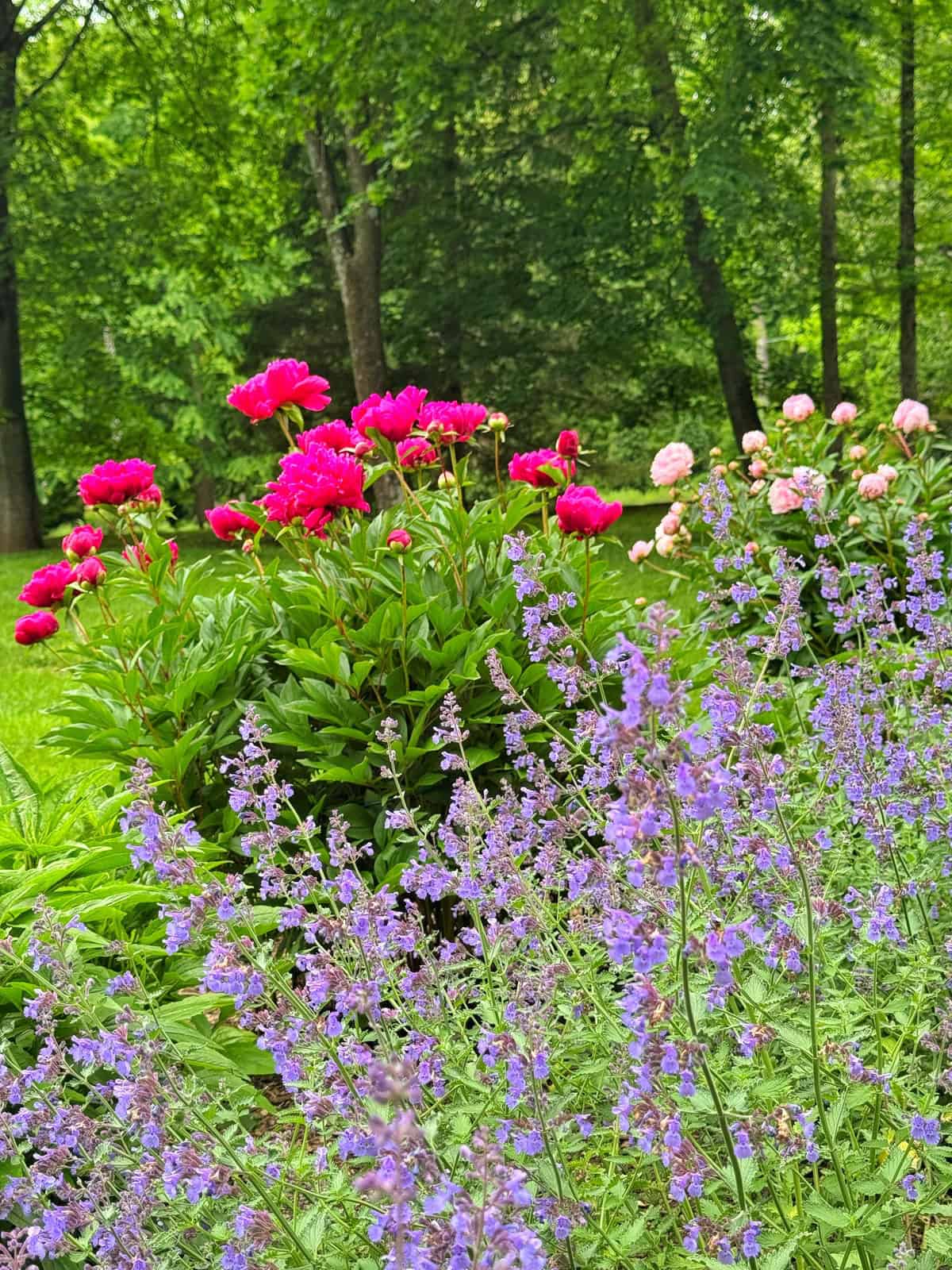
Plants like nepeta, salvia, and sedum repeat especially well and help tie a border together visually.
Consider Wildlife and Growing Conditions
Before planting, think about your garden’s conditions in terms of light, soil, and moisture. Sun exposure determines what will thrive. Soil type affects drainage and nutrient availability. Some perennials, like astilbe, prefer consistent moisture while others, like sedum, thrive in drought conditions.
Wildlife matters too. In my Zone 6B gardens, deer and rabbits influence many of my plant decisions. Plants like echinops, nepeta, salvia, and ornamental grasses tend to be less appealing to wildlife.
How to Refresh or Renovate an Existing Perennial Bed
If you have an older garden bed that looks tired or unbalanced, you do not need to start over. Perennial borders are very forgiving and easy to refresh with simple adjustments.
Divide overgrown plants
Many perennials benefit from division. Splitting them rejuvenates growth and gives you more plants to fill other areas. If you need help dividing plants, you can refer to Dividing Perennials 101.
Remove aggressive spreaders
Certain varieties can take over a border. Removing or relocating them will restore balance. And sometimes, even good plants take over! I recently dug out and relocated about fifteen feet of rudbeckia that completely took over my welcome garden. It was a lot of work but needed to be done to restore the bed.
Add compost or soil amendments
A yearly layer of compost helps maintain soil health and keeps plants vigorous. While you can purchase compost from the nursery, I detail how to make your own compost pile here.
Reevaluate plant placement
Even small shifts in grouping or layering can transform the design. At the end of every growing season, I check on how plants performed and make adjustments to improve next year’s garden.
Plant in drifts
If the bed lacks cohesion, group plants in small masses and repeat those groupings in larger beds. Way back when, I planted smaller groupings and they just don’t have the impact like drifts of 3, 5, 7, or 9.
This section is intentionally kept high level. I will be sharing a full, step-by-step guide soon on how to rehab an overgrown perennial border using the process I follow in my own gardens.

A Real Example From My Garden
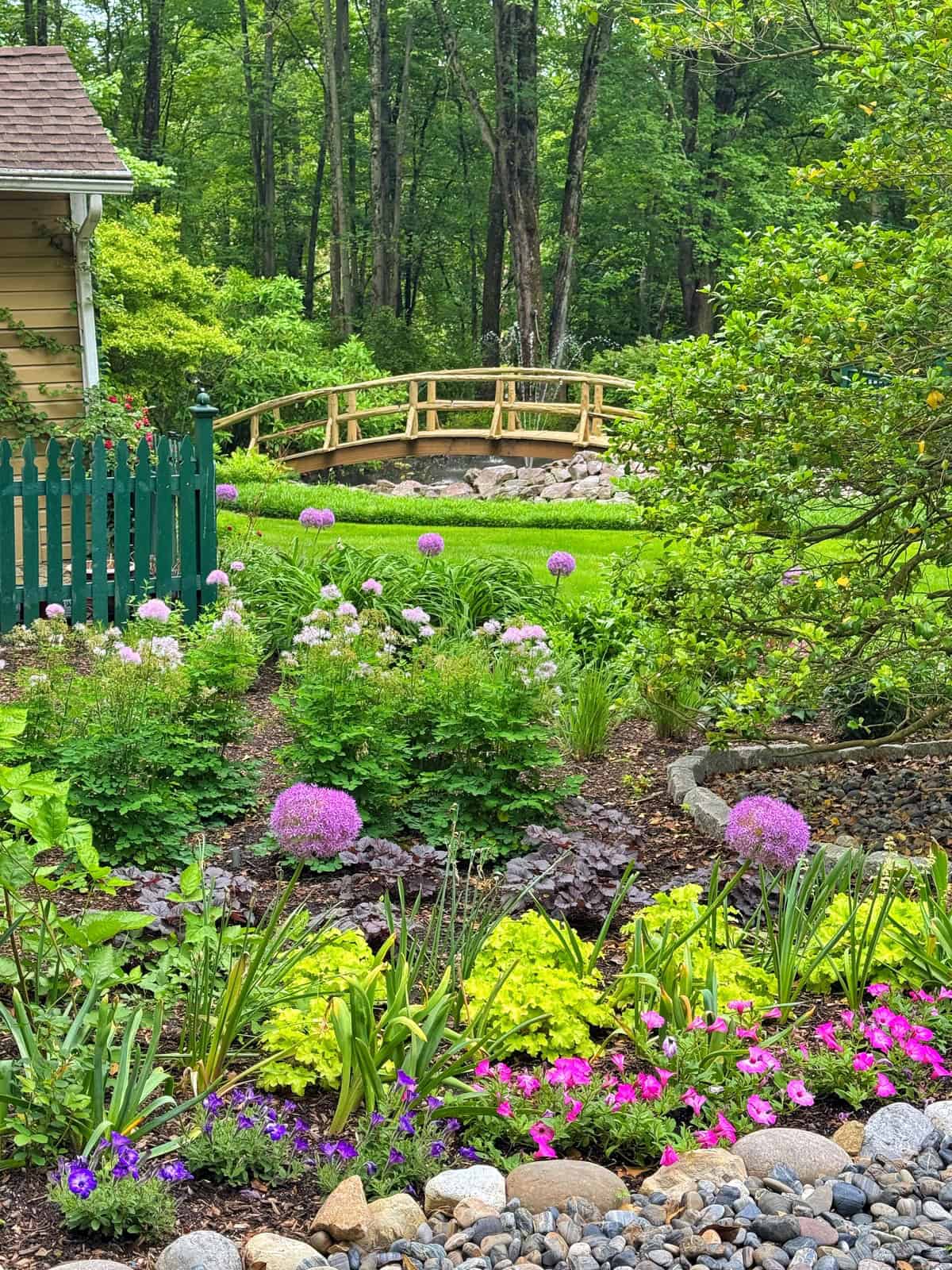
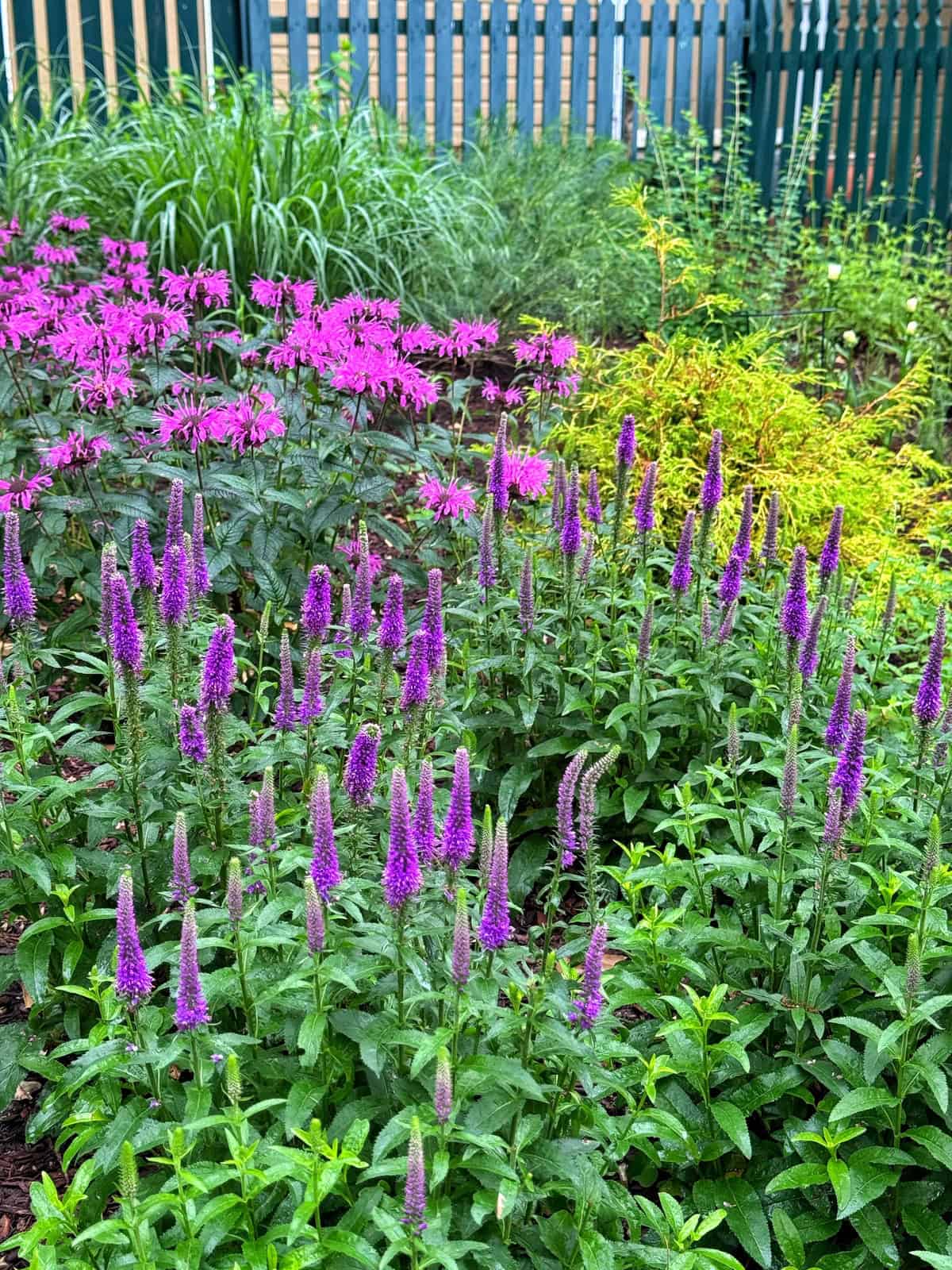
In my current garden, I renovated a large border that lacked structure and seasonal flow. In fact, it had one huge holly tree with yellow berries and liriope. I added a few shrubs and small trees as anchor points, then filled the middle layer of this part shade garden with meadow rue, astilbe, and amsonia, and monarda, salvia, and daylillies in the sunnier section. At the front of the border, I planted nepeta ‘cats pajamas’, geraniums, tiarella, and heucheras to soften the edges.
Because the garden includes plants that bloom from early spring through fall, something is always happening. New layers of color emerge just as others fade, and the foliage keeps the design beautiful even between bloom cycles. This is the kind of border that feels full and lively without a lot of maintenance.
How I Choose Perennials at the Nursery
One of the best tips I can give is to visit your local nurseries often throughout the growing season. I like to go monthly so I can see what is blooming in my area in real time. While there, I also place plants together on the cart to test combinations before I buy them. Seeing how foliage colors and textures play together in person makes design decisions much easier.

Build a Perennial Garden You’ll Love for Years to Come
Designing a perennial garden doesn’t have to feel overwhelming. Once you understand how to layer plants by height, bloom time, and texture, creating a landscape with continuous color becomes much more manageable. That’s exactly the approach I’ve refined over nearly 30 years of gardening, and it’s the foundation of how I design every garden bed.
If you’d like ready-made planting plans, easy-care plant recommendations, and a step-by-step approach to creating beautiful flower gardens, you’ll find all of that in The Bricks ‘n Blooms Guide to a Beautiful and Easy-Care Flower Garden. It’s the book I wish I’d had when I was first learning how to design gardens that look beautiful without requiring constant work.
And if you’ve ever sketched a garden plan on a scrap of paper, forgotten what you planted where, or wished you could remember which combinations worked best, The Bricks ‘n Blooms Beautiful and Easy-Care Flower Garden Planner was created for exactly that. It includes dedicated sections for garden design, bed layouts, plant tracking, and seasonal reviews so your garden can become more beautiful with every passing year instead of starting from scratch each spring.
Final Thoughts About Perennial Garden Design
Designing a perennial garden allows you to express your creativity while building something that becomes richer and more layered every year. After nearly three decades of gardening in two very different Zone 6B properties, I’ve learned that a thoughtfully planned perennial border practically grows itself. Once you have good structure, strong foliage choices, and a solid bloom sequence in place, the garden continues to evolve and improve with very little effort.
My own gardens have taught me that perennial borders are living, shifting spaces. Plants fill in, mingle, and naturalize in the most beautiful ways when the foundation is right. If you take the time to build those foundations now, you’ll enjoy a garden that offers reliable color and texture from early spring through fall for years to come.
If you’d like to explore more perennial gardening ideas, you may find these posts helpful:
- Perennials vs Annuals
- Dividing Perennials 101
- How to Renew an Aging Perennial Border
- Why Perennials Fail to Bloom (and How to Fix It Fast)
- Top Perennials for a Cut Flower Garden
- Best Full Sun Perennials
- Perennial Flowers for Shade
- Midsummer Perennial Flowers
- Best Late Summer and Fall Blooming Perennials
- Low-Maintenance Cottage Garden Ideas
- Cut Flower Gardening for Beginners
Thank you for visiting the blog today!
Enjoy your day! xo

Originally Published . Last Updated .
