
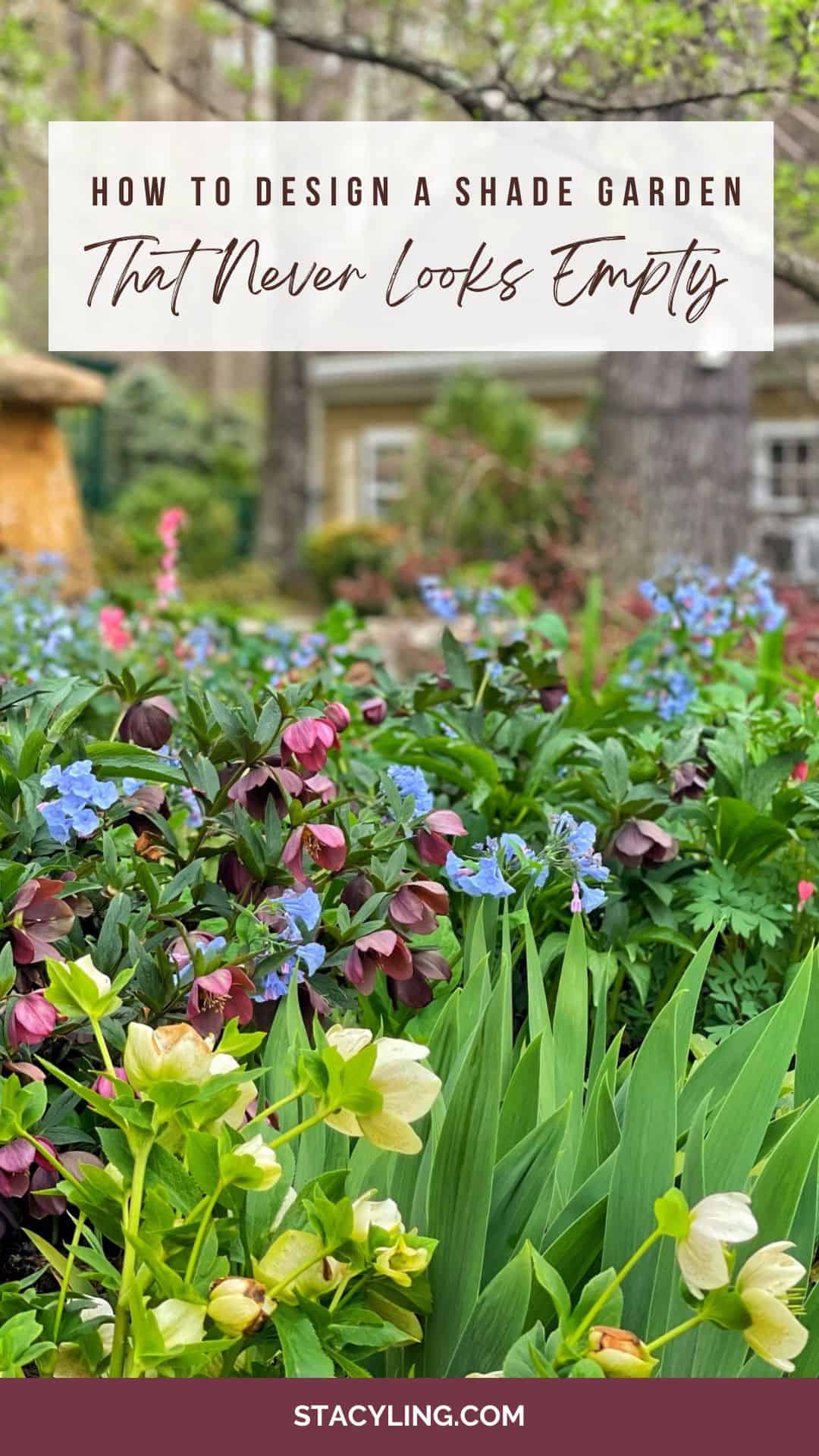
How to Design a Shade Garden That Never Looks Empty

Learn how to design a shade garden with layered planting strategies that ensure year-round interest and no empty gaps.
Designing a shade garden is not just about choosing plants that tolerate low light. It is about arranging them so the space feels full and intentional from early spring through fall. Many shade gardens look sparse not because the plants are wrong, but because they bloom and fade in isolated waves without a plan for what comes next.
After nearly 30 years of gardening, first in predominantly sunny beds and now in a landscape filled with mature trees, I have learned that shade requires a different design mindset. Instead of relying on constant blooms, a successful shade garden depends on structure, foliage contrast, and thoughtful seasonal layering. If you have read my perennial garden design guide, you know that I build every bed in layers. In shade, that principle becomes even more important.
In this post, I will show you how to design a shade garden using seasonal waves, evergreen structure, early bloomers, strong foliage plants, and late-season performers so something is always carrying the show.
(Posts on stacyling.com may contain affiliate links. Click HERE for full disclosure.)
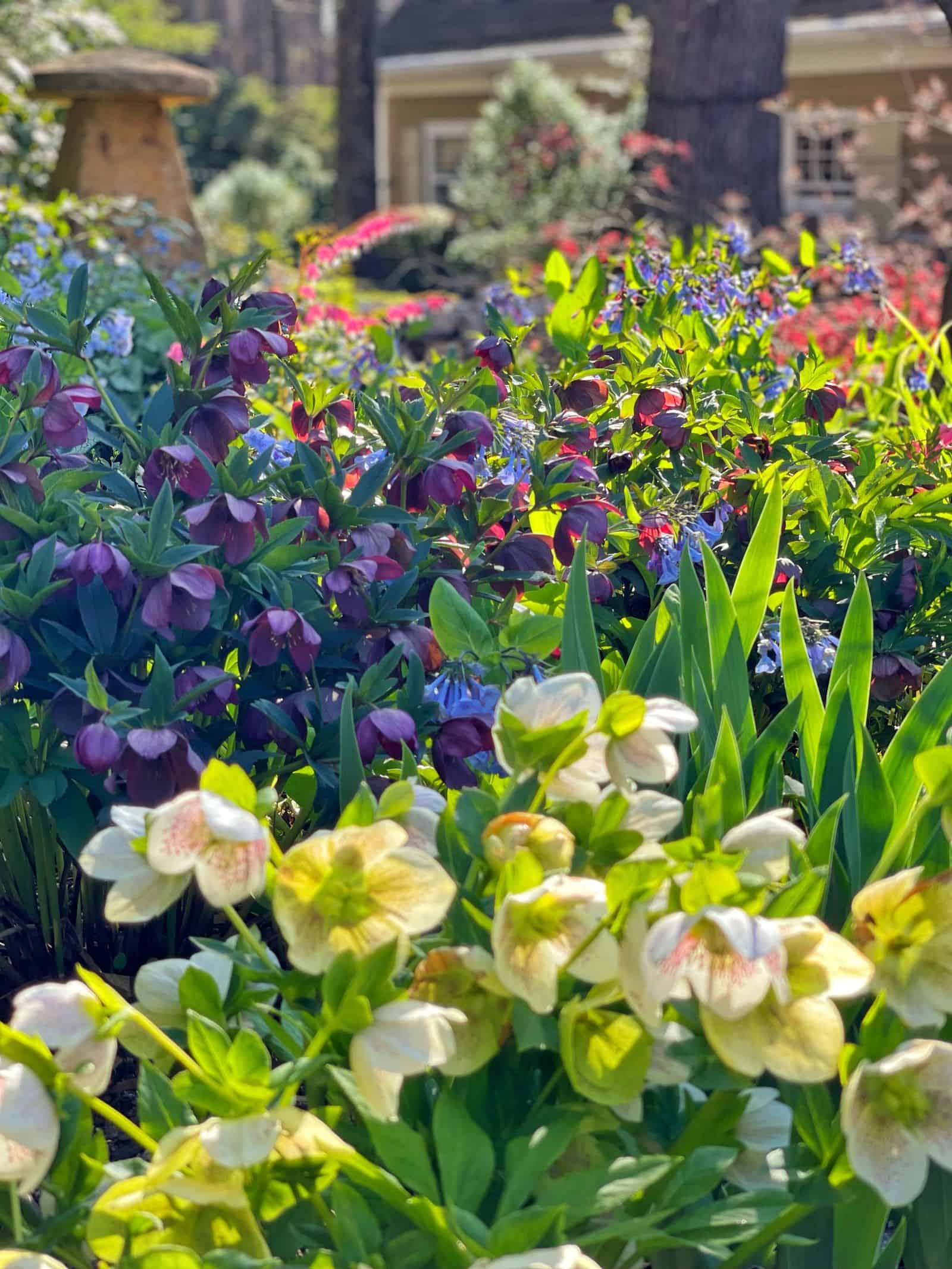
How to Design a Low-Maintenance Shade Garden (Watch the Video)
If you’d like to see how this all comes together in a real garden, I walk through my approach step by step in the video below.
In it, I share how I layer shade plants so something is always emerging, blooming, or filling in throughout the season — from early spring through fall. It’s the same low-maintenance approach I use in my own garden to create spaces that feel full and balanced without constant replanting.
In this video you’ll see:
• How to layer plants for season-long interest
• The role of structure and backbone planting
• How to avoid gaps between bloom times
• The simple design approach I use for low-maintenance shade gardens

If you prefer a written breakdown, keep reading below where I walk through the plants and layering strategy in more detail.
Why Shade Gardens Often Look Empty
Most shade gardens do not look empty because of poor plant choices. They look empty because they were not designed with timing in mind.
Plants grow in cycles. They emerge at different times. They bloom at different times. They fade at different times. If everything in a bed peaks at once, the garden may look beautiful for a few weeks and then noticeably flat for the rest of the season.
This is especially true in shade.
Many gardeners rely heavily on foliage plants such as hostas or ferns without layering in early bloomers. Others plant a burst of spring flowers but forget to plan for what carries the space into summer. The result is a garden that feels unfinished during seasonal transitions.
Shade gardens also suffer when there is no evergreen structure. Without shrubs or plants that hold their form year round, the bed can collapse visually once perennials die back. Even if it looks lush in June, it may feel bare in April or hollow in October.
The real issue is not shade. It is sequencing.
A beautiful shade garden works because different plants take turns carrying the show. Early bulbs and hellebores anchor late winter. Mid spring companions fill in as the garden wakes up. Strong foliage plants provide substance through summer. Late season bloomers and shrubs prevent the space from fading quietly in fall.
When you design with these waves in mind, the garden never feels like it is waiting for something to happen.
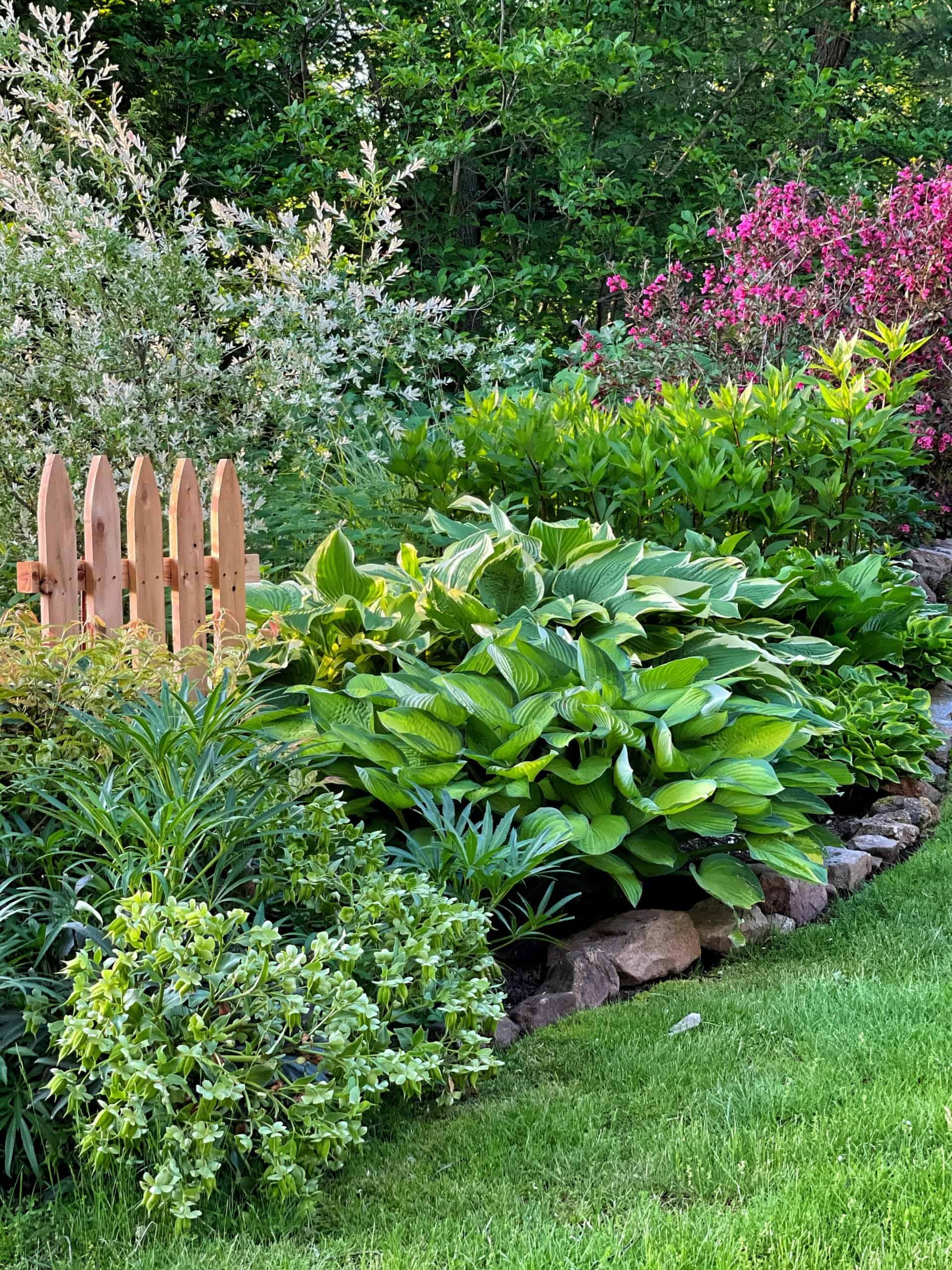
Understanding Plant Waves in a Shade Garden
To design a shade garden that never looks empty, you have to think in waves instead of individual plants.
Every plant in your garden plays a seasonal role. When you understand those roles, you can layer them intentionally so one wave naturally hands the space off to the next.
In my own garden, I think about five primary waves.
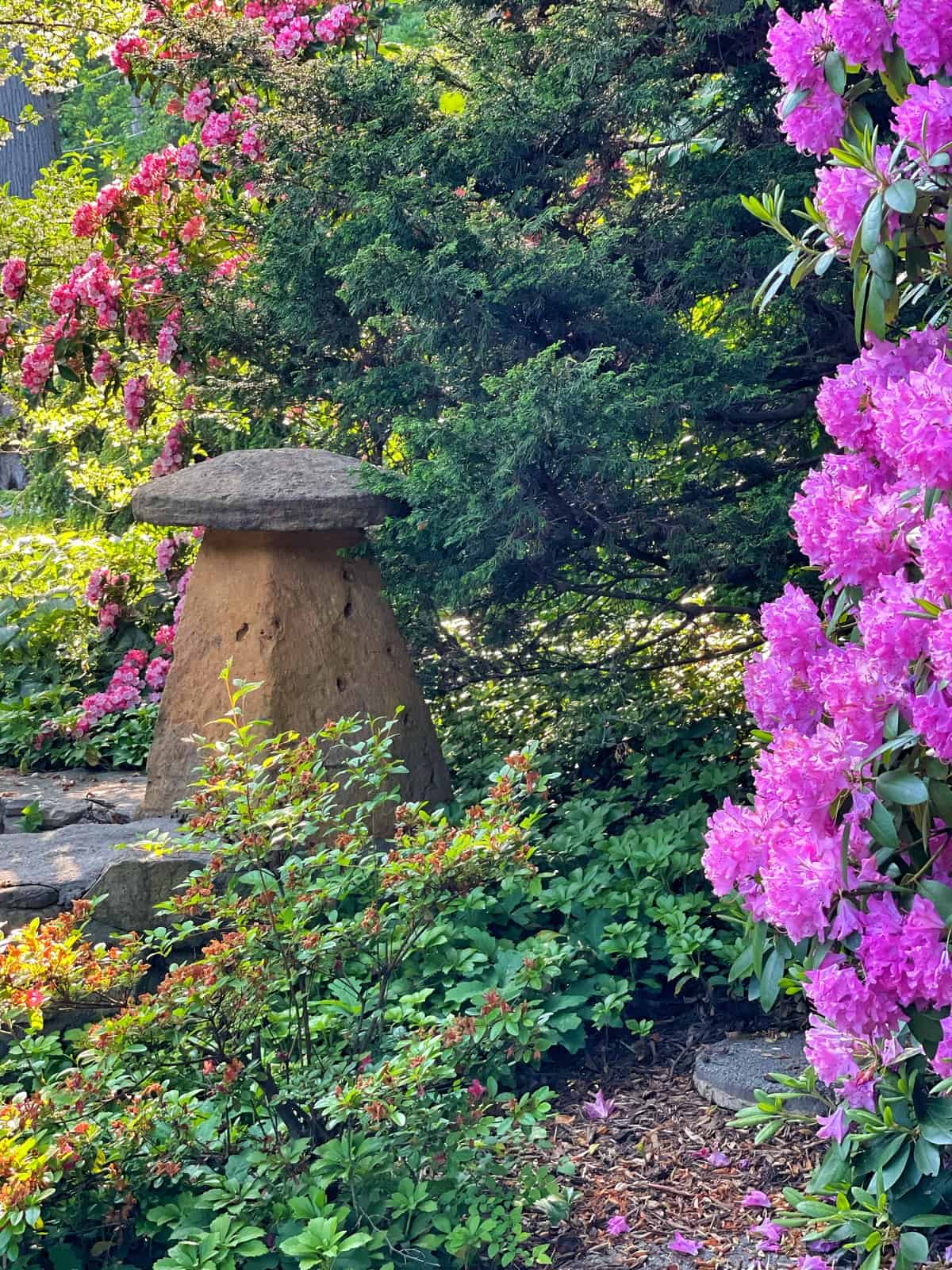
Wave 1: Evergreen Structure
This is the backbone of the bed. Evergreen shrubs and structural plants hold their shape through winter and provide a visual anchor before perennials emerge.
Examples include rhododendrons, mountain laurel, pieris, and certain evergreen ferns.
Without this layer, the garden can feel hollow once herbaceous plants die back. With it, the space maintains presence year round.

Wave 2: Very Early Spring Energy
This wave prevents the late winter gap when most perennials are still underground.
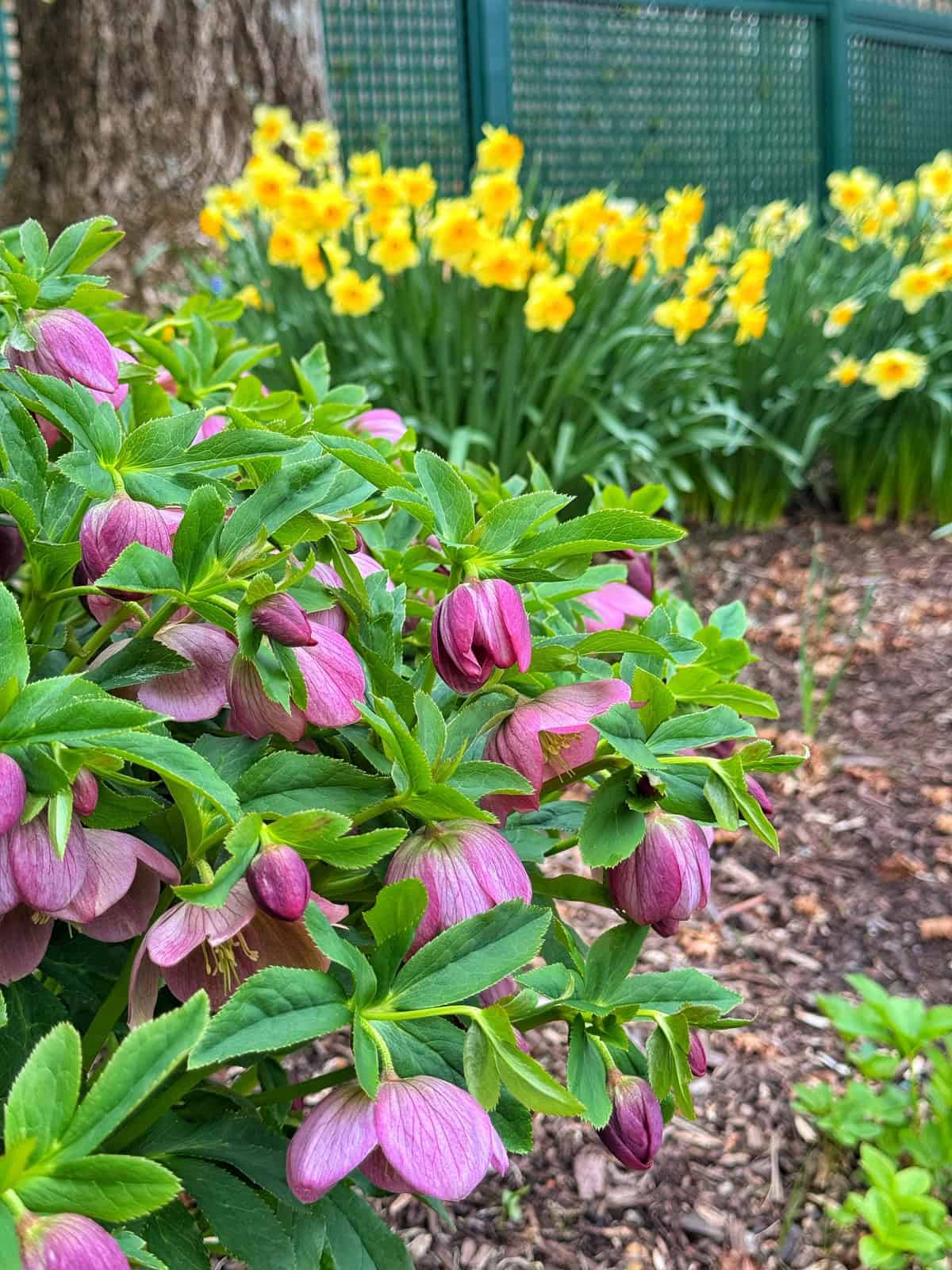
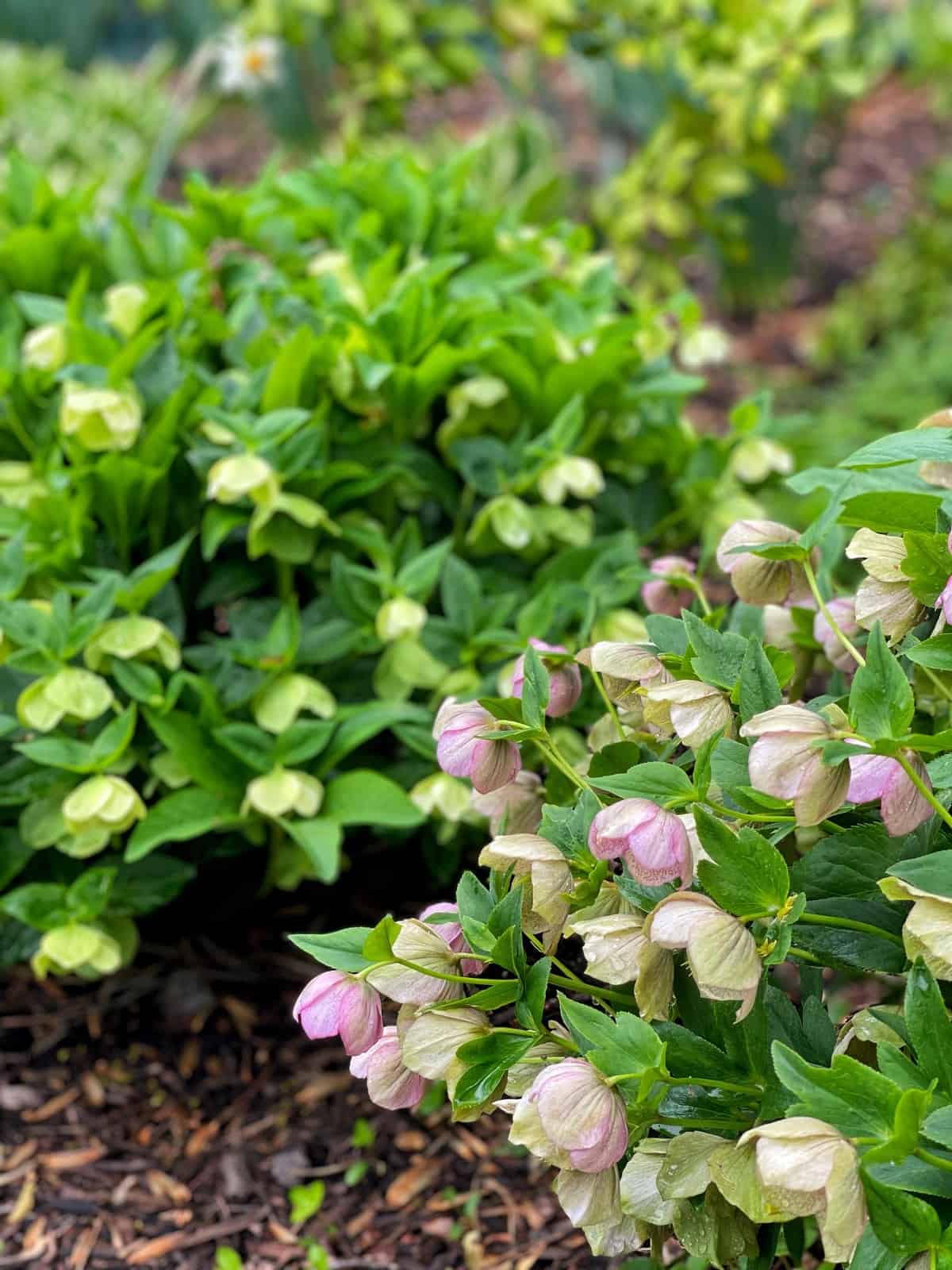
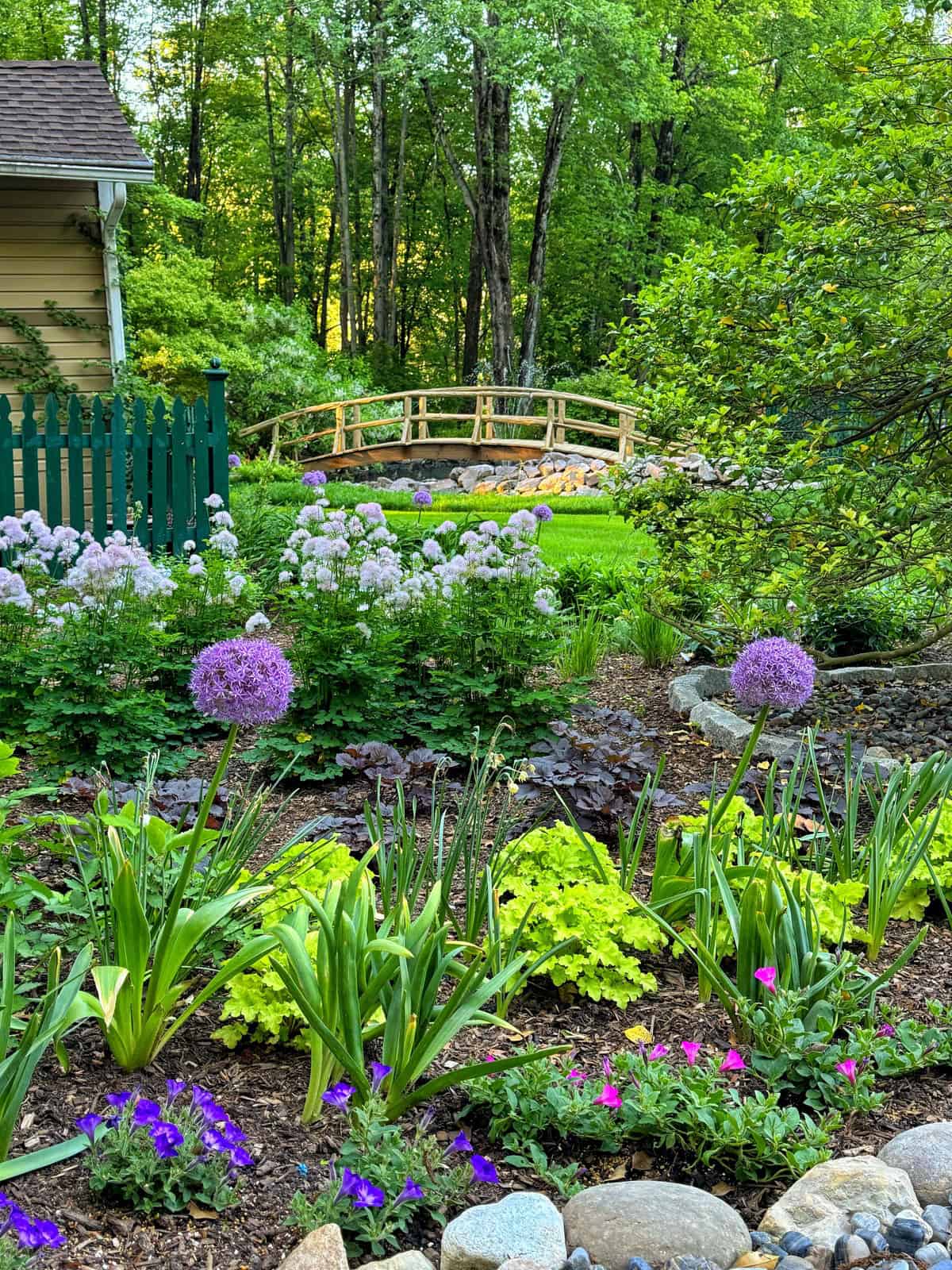
Bulbs such as daffodils, tulips, hyacinths, and alliums emerge early and provide vertical interest before foliage fills in. Snowdrops can play this role as well. Hellebores anchor this wave with blooms that often appear before anything else is awake.
These plants signal that the garden has begun, even if the rest of the bed is still emerging.
Wave 3: Spring Fill and Transition
As early bloomers begin to fade, mid spring companions step in.
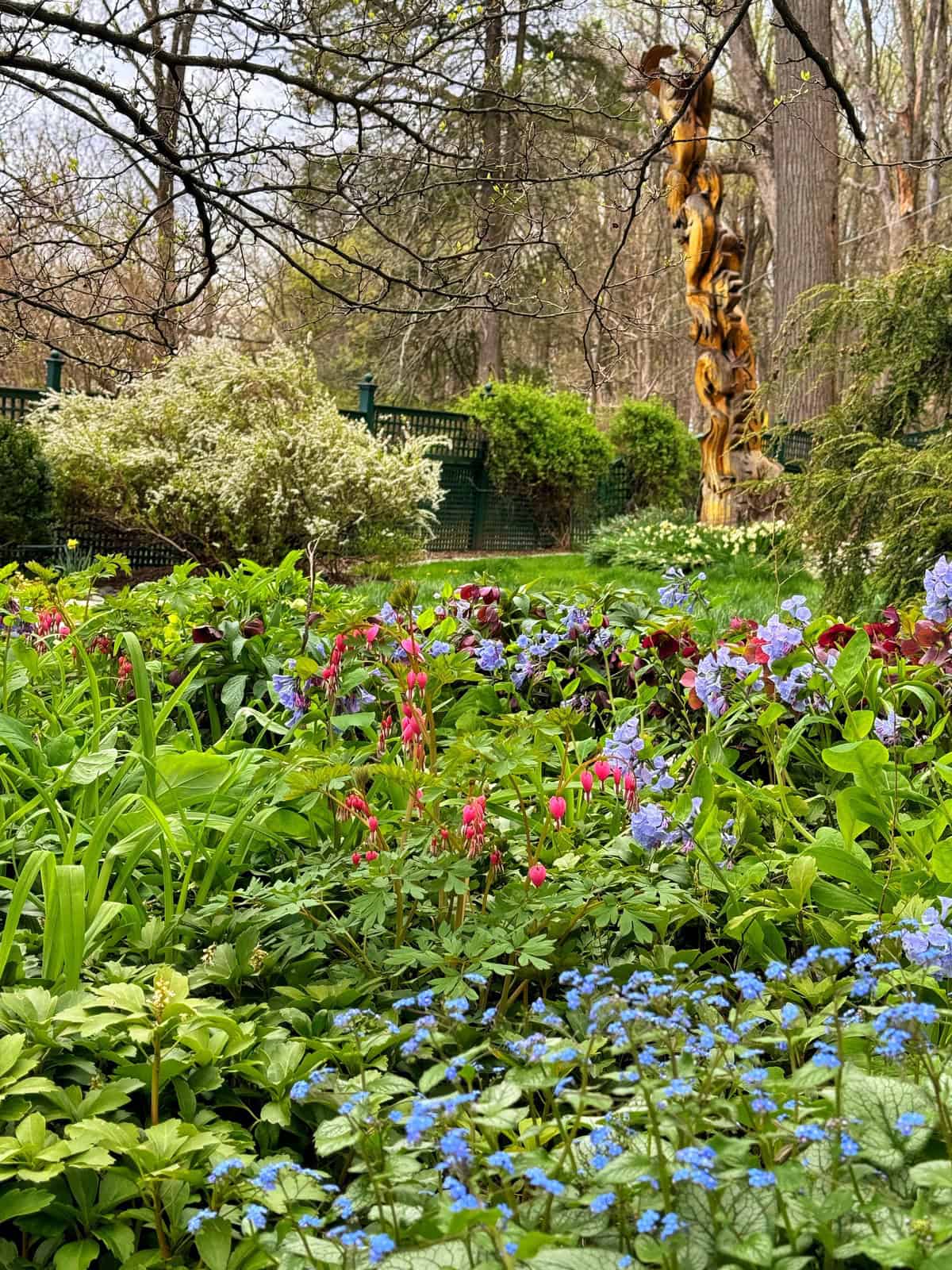
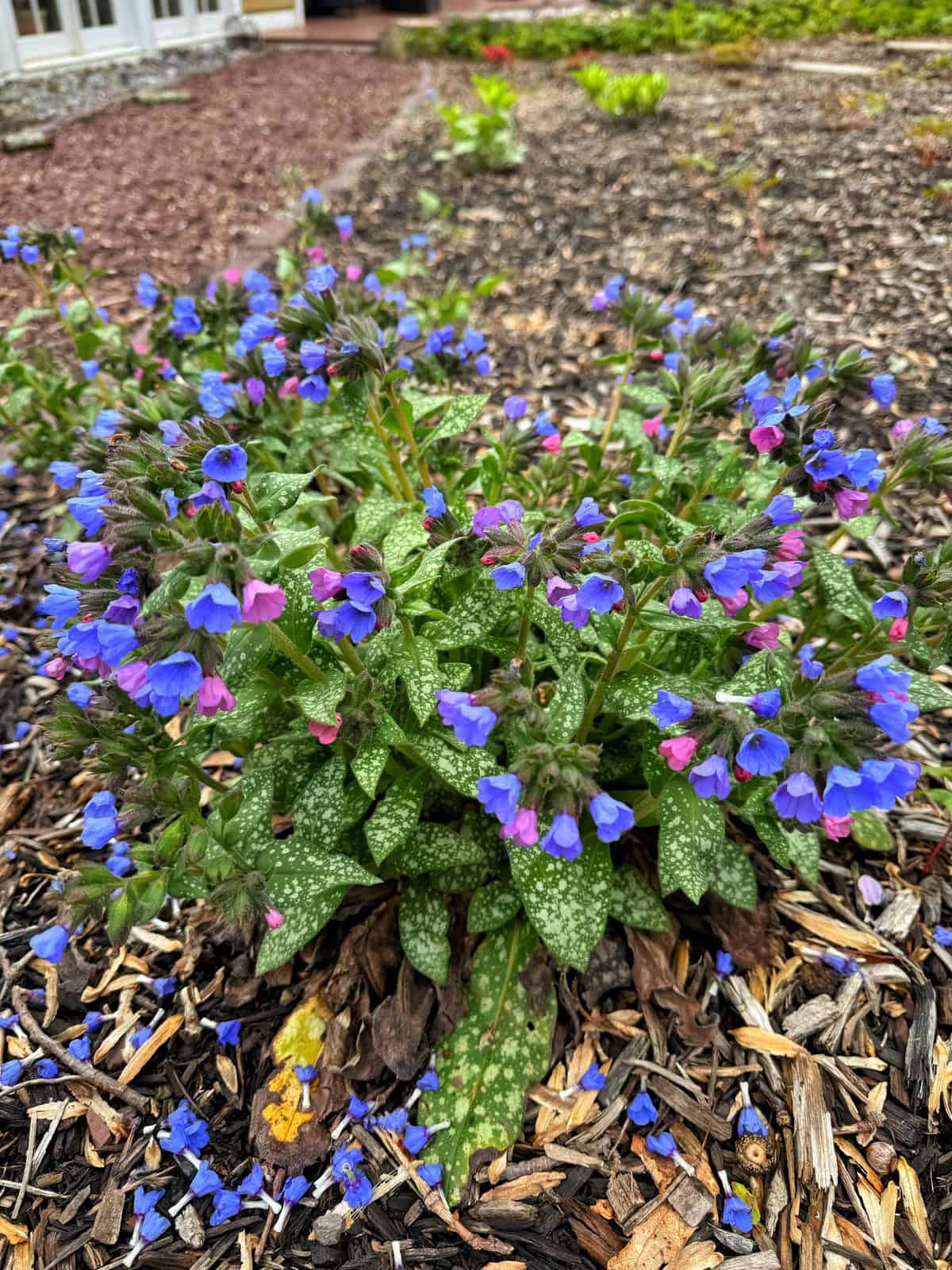
Brunnera, lungwort, Virginia bluebells, epimedium, and bleeding hearts weave between anchor plants and add layered height and texture. Some are ephemeral and retreat later in the season, which is why they must be paired with later emerging foliage plants.
This wave connects early color to fuller spring growth.

Wave 4: Foliage Strength and Summer Structure
Once bloom intensity slows, foliage becomes the primary design element.
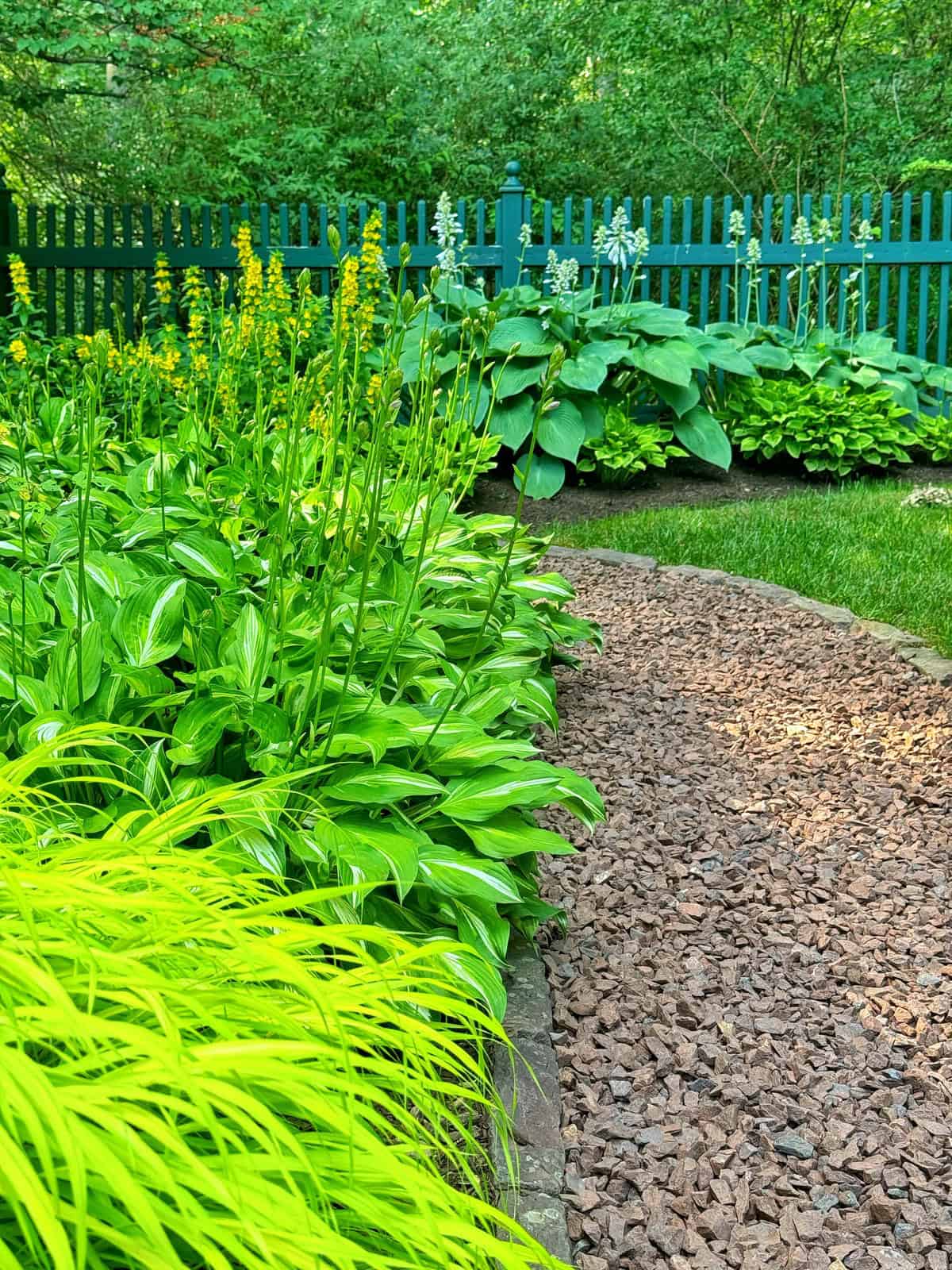
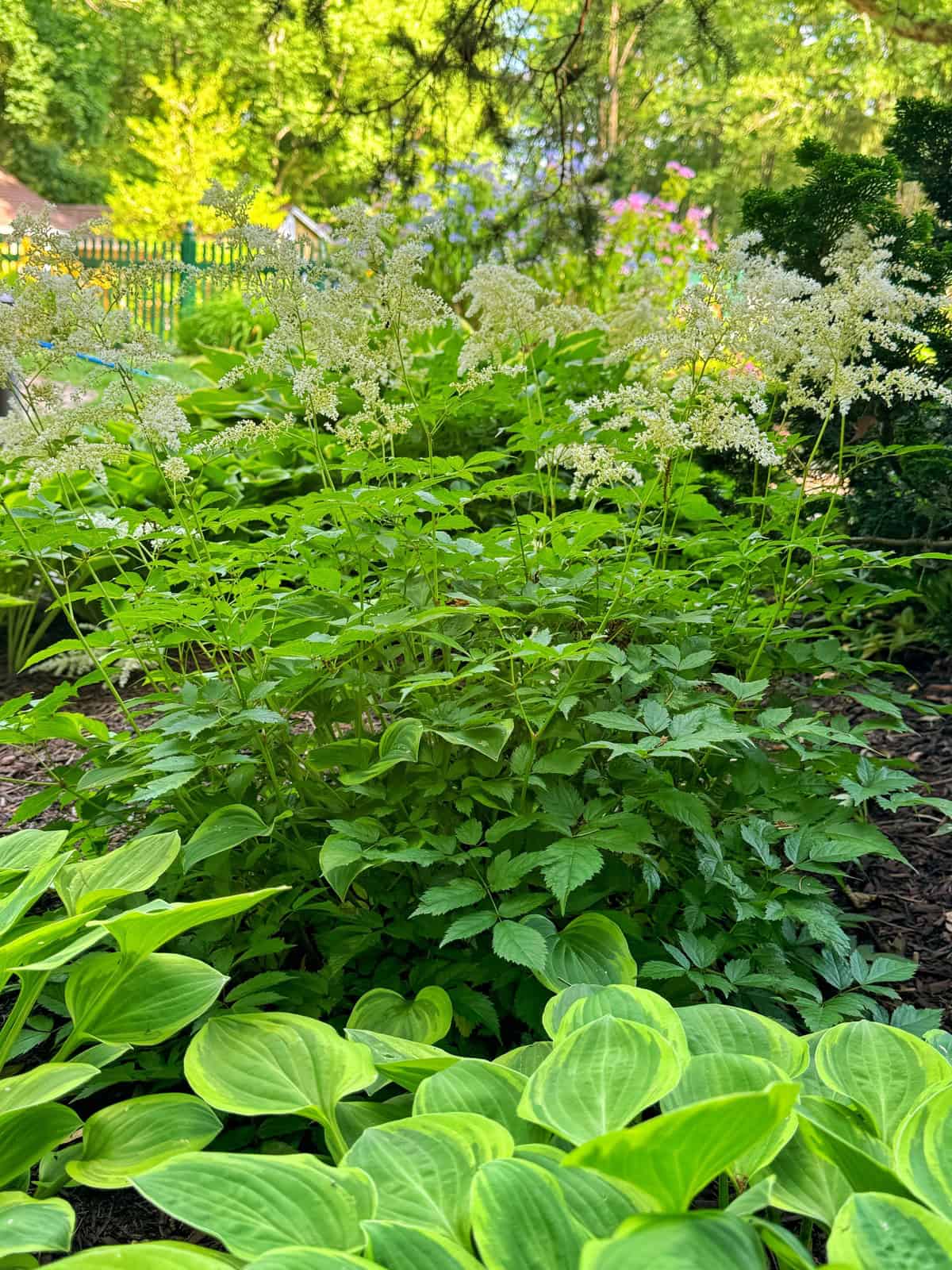
Hostas provide broad leaves and grounding presence. Heuchera adds color contrast at lower levels. Ferns soften edges with airy texture. Ligularia introduces bold foliage and height in deeper shade. Hakone grass adds movement and prevents the bed from feeling static.
This wave is what keeps the garden looking substantial through summer.
Wave 5: Late Season Carry
Many shade gardens peak in spring and then fade. A well designed bed plans for fall.
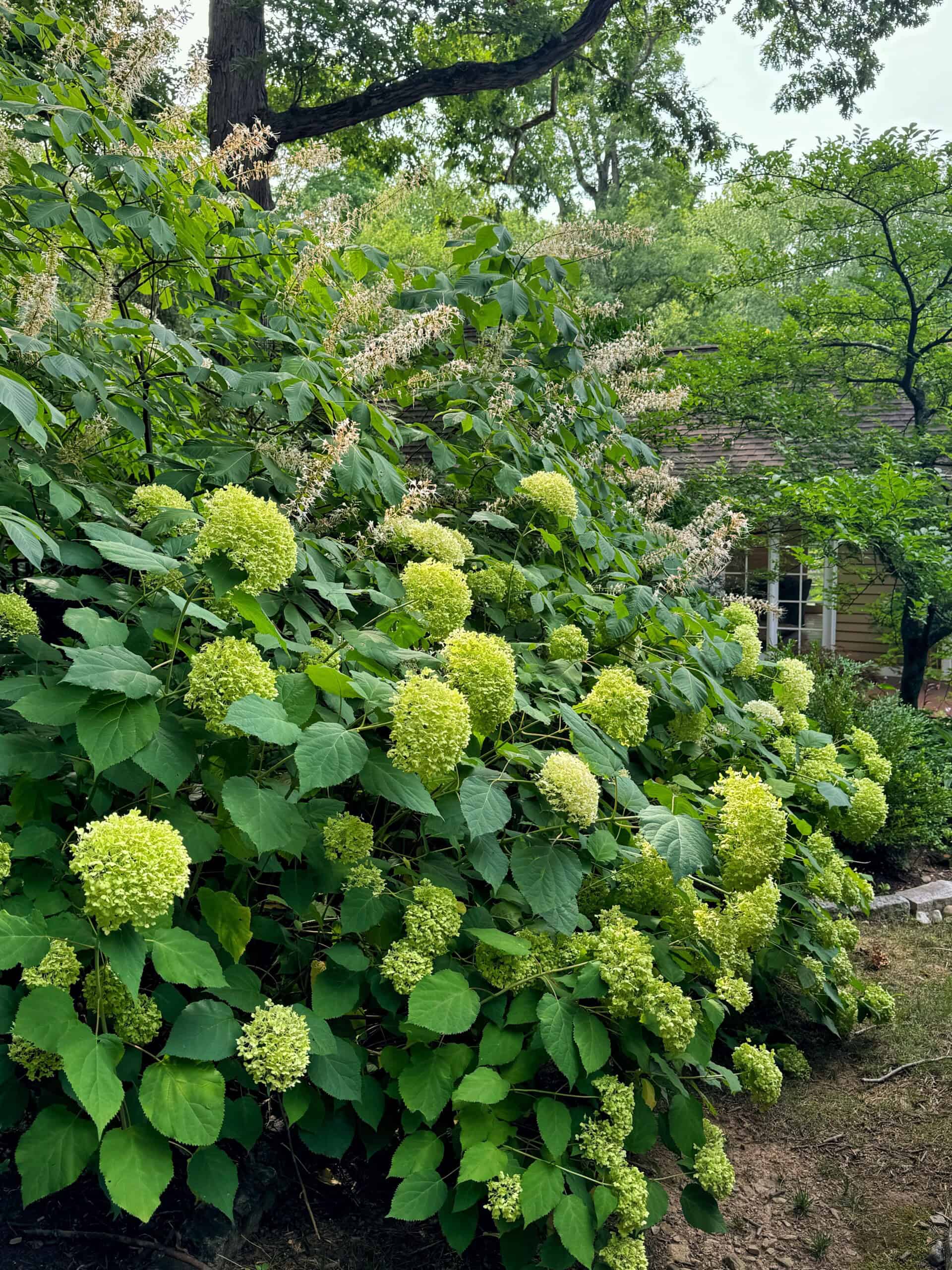
Hydrangeas and bottlebrush buckeye extend bloom and add height. Grasses and shrubs provide texture and seasonal color. Even fading perennial foliage contributes to a softer, layered look rather than a sudden stop.
When each of these waves overlaps slightly with the next, the garden never feels like it is between moments.
How to Layer These Waves in a Real Shade Garden Bed
Understanding plant waves is the first step. Layering them intentionally in a real garden bed is what makes the difference.
When I design a shade border, I build from back to front and from early to late season at the same time.
Start With the Backbone
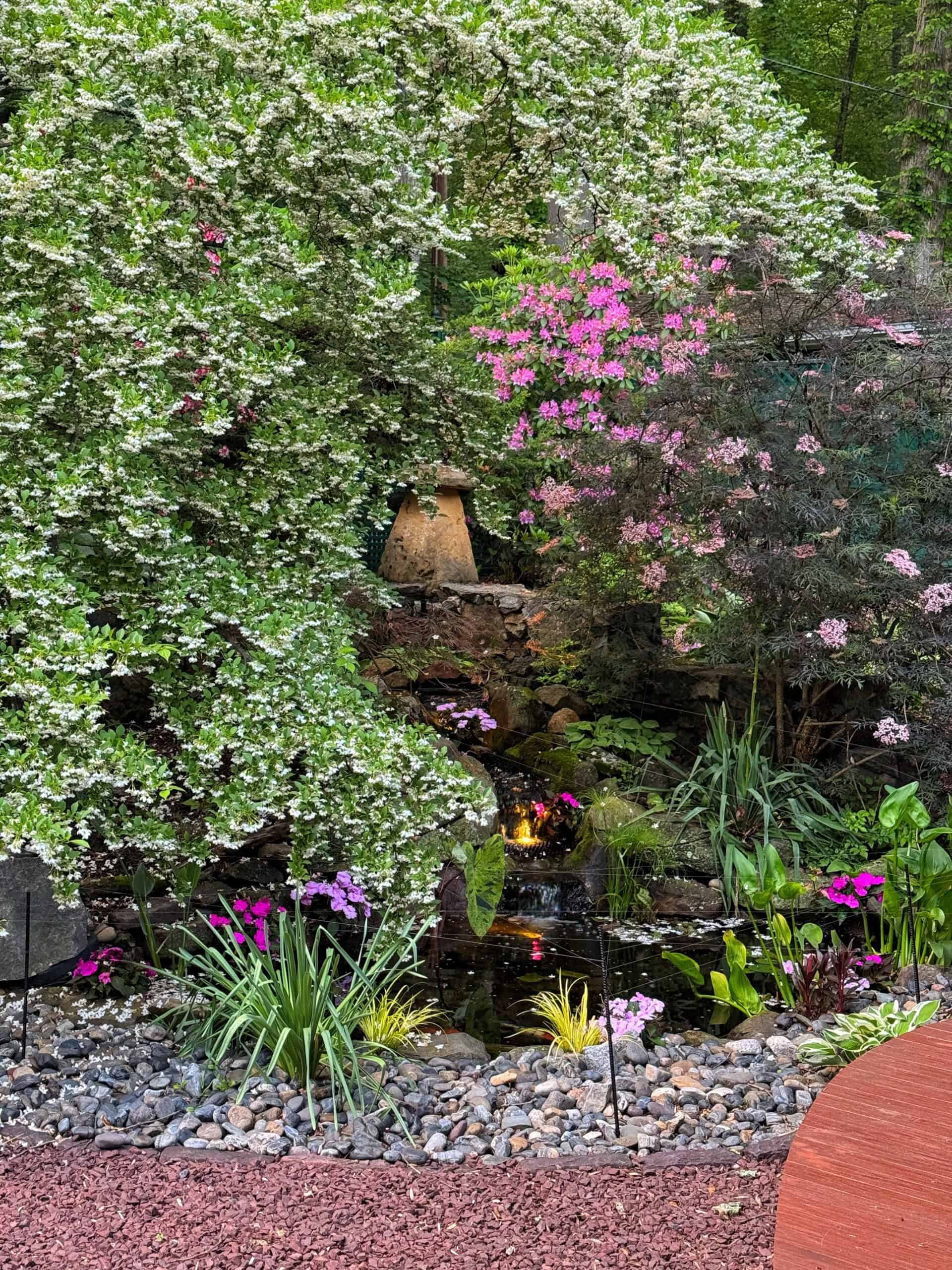
At the back of the bed, I rely on evergreen shrubs and structural anchors. Rhododendrons, mountain laurel, pieris, or other evergreen forms create height and permanence. Even in winter, this layer holds the shape of the garden.
Without this backbone, everything else feels temporary.

Anchor the Early Season
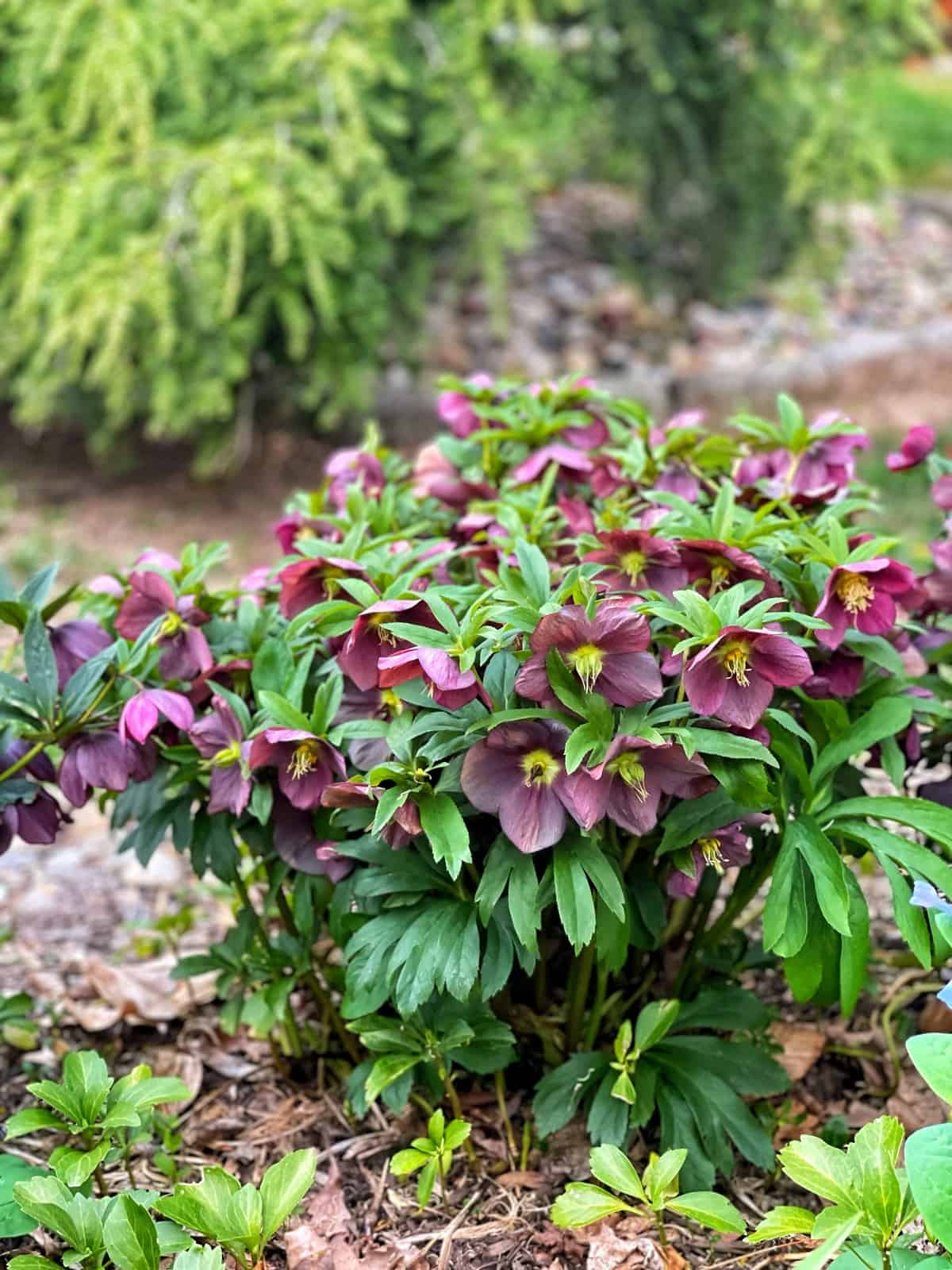
In front of shrubs, I plant early bloomers that wake the garden up. Hellebores and spring bulbs are tucked between shrubs and emerging perennials. Because they bloom before most foliage fills in, they create the first layer of energy.
As bulb foliage begins to fade, surrounding plants naturally conceal it. This is intentional. Early color should not create long term gaps.
Weave in the Spring Transition
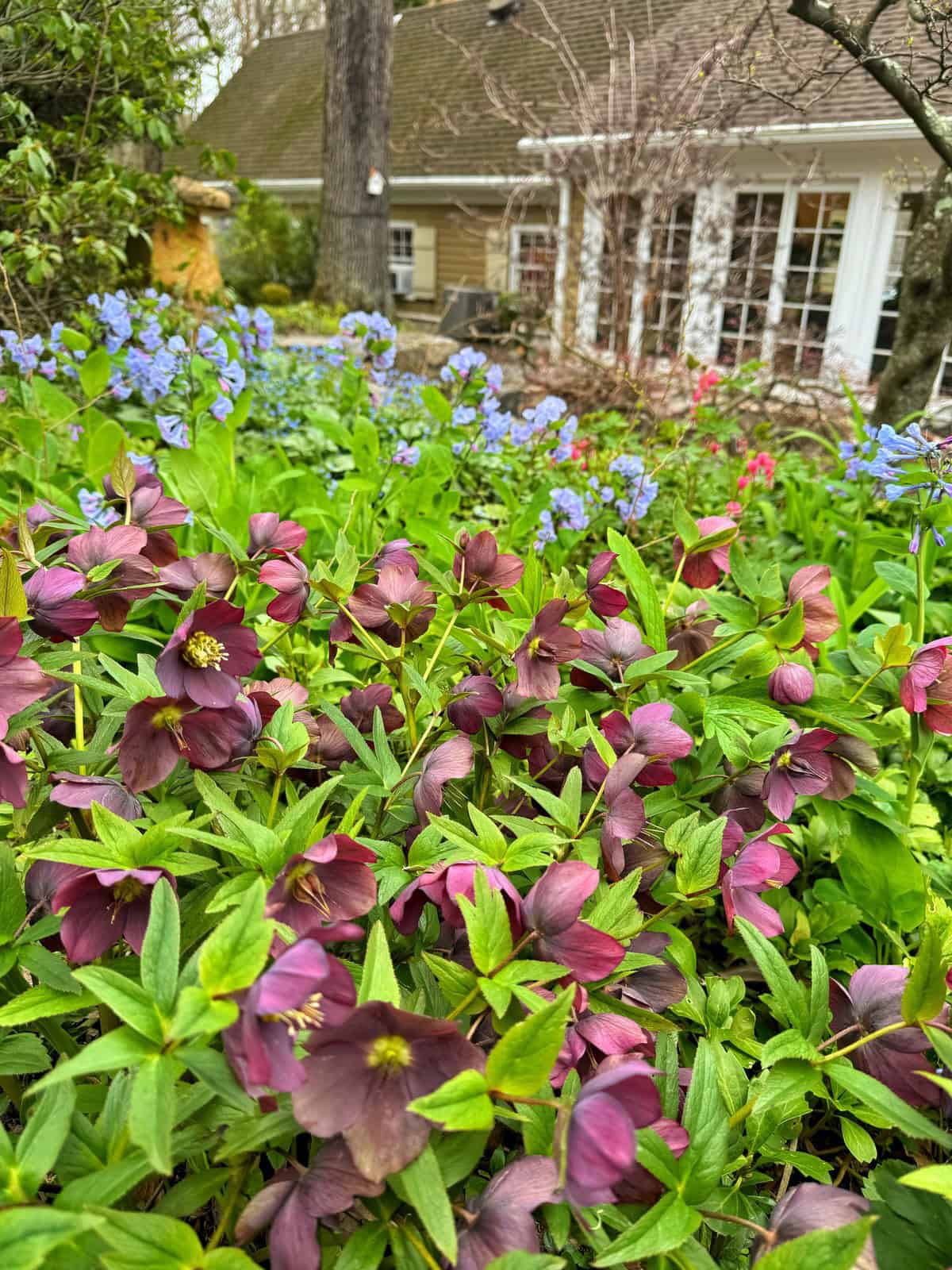
Mid spring plants such as brunnera, lungwort, epimedium, and bleeding hearts fill the space as early blooms decline. These plants vary in height and texture, which prevents the garden from feeling flat.
Some of them retreat later in the season. That is why they are always planted alongside later emerging foliage plants.


Build the Summer Framework
Hostas, ferns, heuchera, ligularia, and hakone grass create the structure that carries the garden through summer. This layer is less about flowers and more about foliage contrast.
Broad leaves sit next to fine textures. Upright forms contrast with cascading grasses. Dark foliage sits beside chartreuse or silver tones.
This is what keeps the bed looking full even when bloom cycles slow down.

Plan for the Late Season
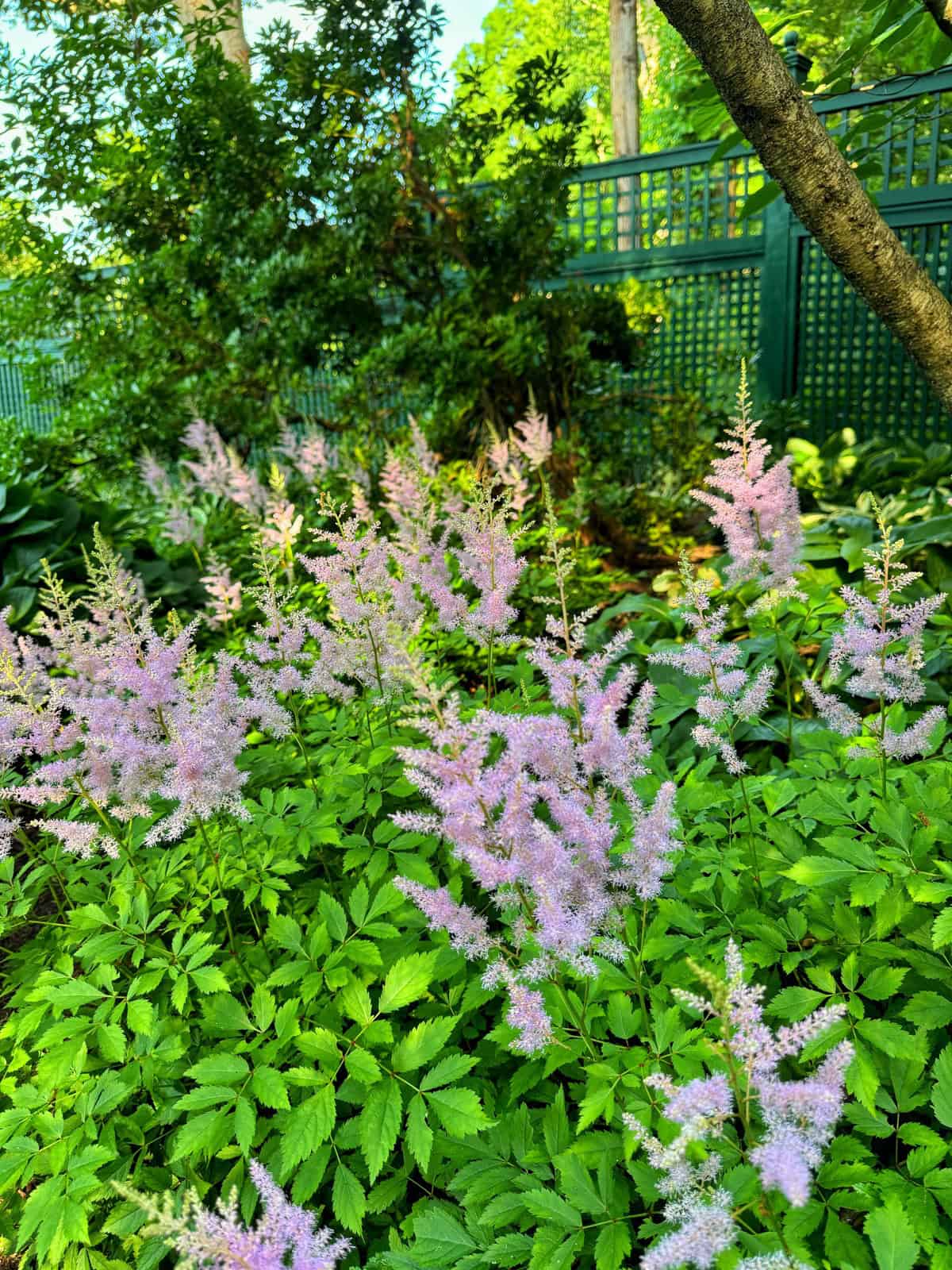
Hydrangeas and bottlebrush buckeye extend visual interest into late summer and fall. Shrubs and grasses add height and movement when many spring perennials are finished.
Because each wave slightly overlaps the next, the garden transitions smoothly instead of stopping abruptly.
Why This Design Lasts Year After Year
Most of the plants in this system are perennials, shrubs, or naturalizing bulbs. They return every year and gradually knit together into a cohesive planting.
You are not replanting the entire bed each spring.
Instead, you are refining and editing. You might divide hostas, thin perennials, or add a few bulbs. The structure remains intact.
If you want additional color in certain pockets, you can tuck in annuals such as begonias or impatiens. They act as seasonal enhancers rather than structural necessities.
The foundation of the garden does the heavy lifting.
When you design in waves using returning plants as your framework, the garden becomes easier to maintain and more beautiful over time.
Common Shade Garden Design Mistakes
After years of gardening in both sunny and shaded landscapes, I have noticed that most shade garden frustrations come down to a few predictable design mistakes.
They are easy to make, especially when you are focused on individual plants instead of the overall rhythm of the bed.
Planting in a Single Bloom Window
One of the most common mistakes is planting too many spring bloomers without planning for what follows.
The garden looks beautiful for a few weeks. Then flowers fade, foliage declines, and the space feels flat. Without later season structure, there is nothing to carry the visual weight of the bed.
A successful shade garden staggers bloom times so that early, mid, and late season plants overlap slightly instead of peaking all at once.
Relying Only on Foliage Plants
Hostas and ferns are staples in shade, but planting them alone can leave early spring feeling empty. Most foliage plants emerge later in the season.
Without bulbs or early bloomers such as hellebores, there is often a visible gap before the garden fills in.
Foliage is essential, but it cannot be the only layer.
Ignoring Evergreen Structure
Many shade beds are built entirely with herbaceous perennials. When those plants die back in fall, the entire border collapses visually.
Evergreen shrubs and structural plants provide year round presence. Even in winter, they maintain form and prevent the bed from looking hollow.
Structure first, flowers second.
Forgetting About Dormancy
Some of the most beautiful spring plants, such as Virginia bluebells and certain bleeding hearts, go dormant in summer.
If they are not paired with later emerging foliage plants, gaps appear.
Layering prevents this. Later plants quietly take over as earlier ones retreat.
Treating Shade as a Limitation
Perhaps the biggest mistake is assuming shade means fewer options.
In reality, shade gardens can be some of the most layered and elegant spaces in the landscape. They simply require a shift in thinking from constant bloom to continuous structure and succession.
When you design in waves, shade becomes an advantage rather than a constraint.

A Simple Framework for Designing a Shade Garden in Waves
If you prefer a straightforward way to apply this approach, here is the framework I use when designing a shade garden that never looks empty.
Think in layers and in seasons at the same time.
Step 1: Establish Permanent Structure
Begin with evergreen shrubs and structural anchors. This layer defines the shape of the bed and provides year round presence.
Without structure, everything else feels temporary.
Step 2: Add Early Season Energy
Layer in bulbs and early bloomers such as hellebores to prevent late winter and early spring gaps.
These plants carry the garden before most perennials emerge.
Step 3: Bridge the Spring Transition
Weave in mid spring companions that overlap bloom time and vary in height and texture.
This prevents a sudden drop after early flowers fade.
Step 4: Build Foliage Strength for Summer
Rely on strong foliage plants such as hostas, ferns, heuchera, ligularia, and ornamental grasses to provide substance through summer.
This layer keeps the garden visually full when bloom cycles slow down.
Step 5: Plan for Late Season Interest
Incorporate shrubs or perennials that extend interest into late summer and fall. Hydrangeas, bottlebrush buckeye, and certain grasses help the garden finish strong instead of fading quietly.
Step 6: Enhance, Do Not Replace
If you want more color intensity, tuck in shade tolerant annuals such as begonias or impatiens.
They should enhance the design, not carry it.
The goal is a returning framework of shrubs, perennials, and bulbs that improves each year with minimal replanting.

When you follow this structure, your shade garden becomes a system rather than a seasonal display.
Each layer overlaps slightly with the next. Each plant has a role. And the garden moves forward without leaving empty spaces behind.
Turning Shade Garden Ideas Into a Real Plan
If you have ever stood in your garden in early spring and thought, I wish this looked more finished, you are not alone. Most shade gardens struggle not because the plants are wrong, but because there was never a clear plan for how each season connects to the next.
That is exactly why I wrote The Bricks ‘n Blooms Guide to a Beautiful and Easy-Care Flower Garden. The ready-made garden plans in the book are built around this kind of layered thinking. I walk through how to choose dependable plants, design in structure, and create beds that look intentional without requiring constant upkeep. It is the book I wish I had when I was trying to figure all of this out on my own. You can grab a copy here.
And once you understand the framework, the real transformation happens when you start tracking what works in your specific garden. Bloom timing, plant performance, what filled in beautifully and what left a gap. That is where The Bricks ‘n Blooms Beautiful and Easy-Care Flower Garden Planner becomes invaluable. It is not just a notebook. It is a system for documenting your garden, refining your designs, and building on what you learn each season instead of starting from scratch every year. You can get a copy here.
The book gives you the knowledge. The planner gives you the system to use that knowledge and improve over time. Together, they help you create a garden that feels more cohesive with each passing year.
Final Thoughts on Designing a Shade Garden That Never Looks Empty
When I first began gardening, most of my beds were in full sun. I relied heavily on flowers to create impact. Moving to a property with mature trees forced me to rethink everything I thought I knew about garden design.
Shade does not reward you for chasing constant bloom. It rewards you for thinking in layers.
Over time, I learned that the most beautiful shade gardens are not built around a single standout plant. They are built around rhythm. Evergreen structure holds the space steady. Early bloomers wake it up. Foliage plants carry it forward. Late season performers prevent it from fading quietly.
Once you begin designing in waves, the pressure to make every plant spectacular disappears. Each plant has a role. Each season overlaps the next. And the garden feels intentional instead of accidental.
If you would like to see how I apply this layered approach around a specific anchor plant, you can explore my guide to shade garden design with hellebores. And if you are building your plant palette, my list of perennial flowers for shade gardens offers dependable options that fit naturally into this wave framework.
Shade is not a limitation. It is an opportunity to design with structure, texture, and timing in mind. When you do, the garden never feels empty. It simply moves from one moment to the next.
Thank you for visiting the blog today!
Enjoy your day! xo

Originally Published . Last Updated .
