
Amaryllis Care: Make Your Holiday Bulb Rebloom

Don’t toss that bulb! Learn the exact steps for amaryllis dormancy care, summer growth, and how to successfully force blooms for the holidays.
Hi! I’m Stacy Ling, a trained master gardener in USDA Zone 6b, New Jersey. With almost thirty years of experience getting my hands dirty, I know a thing or two about keeping houseplants thriving, and the amaryllis is one of my winter favorites.
You see those dramatic, trumpet-shaped blooms? Gosh they’re gorgeous. They’re the true rockstar of the holidays but can flower all winter long if you grow a few bulbs! But the biggest secret about this festive flower isn’t how to get it to bloom once, but how to get it to bloom again—year after year.
Most people toss the bulb after the flowers fade. Don’t! This complete guide will walk you through the essential care steps: from forcing those vibrant holiday blooms, to the summer growth phase, and the crucial dormancy period. Let’s turn your one-season wonder into a reliable, perennial beauty so you don’t need to buy them yearly.
(Posts on stacyling.com may contain affiliate links. Click HERE for full disclosure.)

Amaryllis Care At a Glance: The Quick-Start Guide
Use this chart for quick reference during the active growing season (winter to summer). For detailed steps on dormancy and reblooming, read the sections below.
| Category | Amaryllis Care Requirements |
|---|---|
| Light | Bright, indirect light is best. Move to full sun outdoors in summer. |
| Soil | Well-draining, high-quality potting mix. Keep the top 1/3 of the bulb above the soil line. |
| Temperature | Active Growth: 65-75°F. Forced Dormancy: 45-55°F (critical for reblooming). |
| Watering | Water thoroughly when the top 1-2 inches of soil are dry. Reduce drastically/stop during dormancy. |
| Fertilizing | Feed with a liquid houseplant fertilizer once the leaves emerge, monthly until late summer. |
| Pruning | Cut faded flowers, but leave the green flower stalk until it turns yellow/dies back naturally. |
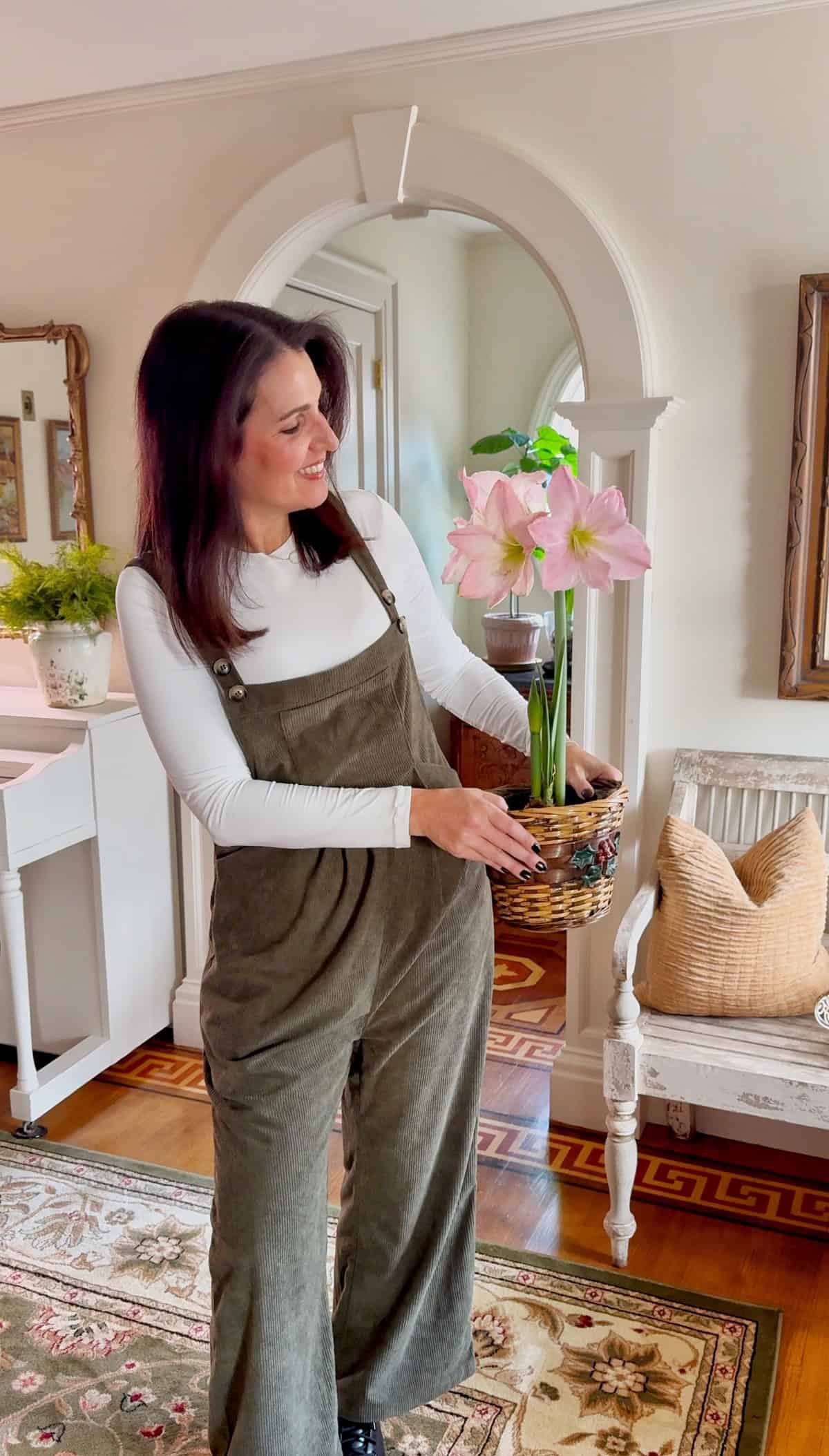
All About Amaryllis Plants
The amaryllis is a tender bulb hardy to USDA zones 7 to 8 or higher that comes from South America. They are huge bulbs that produce gorgeous large trumpet flowers. Amaryllis flowers add lots of bold color indoors and make great gifts for gardeners of any skill. Depending on the variety, the amaryllis bloom can be either individual flowers or double flowering.
And the blooms can be pretty big!
Before you grow: All parts of the Hippeastrum (Amaryllis) plant contain the poisonous alkaloid lycorine. The highest concentration of this toxin is found in the bulb, so please ensure stored or planted bulbs are completely inaccessible to curious pets.

Types of Amaryllis Plants
There are about 90 varieties of amaryllis plants and many different colors available today. The plant we typically call amaryllis today is native to South America and thrives in tropical and subtropical regions.
Amaryllis blooms may be white, red, pink, apricot, and even bicolor, striped flowers. These festive colors are a big part of why these flowers make such great Christmas plants! I plan my red and white amaryllis flowers around the holidays and shades of pink during the winter. There is nothing like seeing those gorgeous blooms when the outdoors are cold and dreary here in NJ!
As an aside, amaryllis bulbs are one of my favorite hostess gifts to give because they’re easy to care for and really brighten up the cold winter months for the recipient.
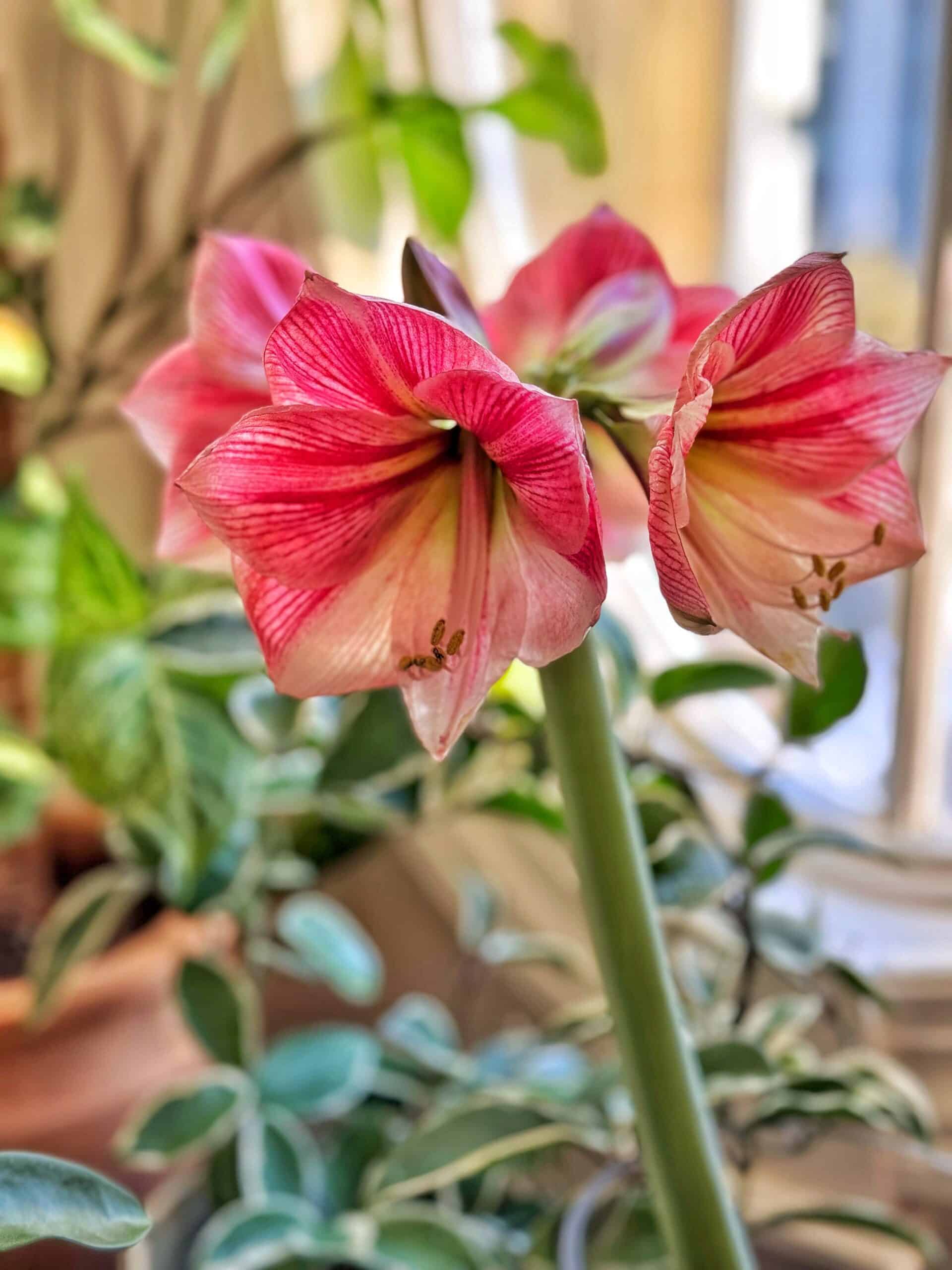
My Amaryllis Varieties for This Year
I always try to mix in a few new varieties with some old favorites. This year, I’m especially excited about:
- Fantasy
- Candy Belle
- Velvet Nymph
- Pinkolo
- Marilyn
- Provence
- Pink Beauty
- Beautiful Emotion
- Polar Belle
- Mandela

Where to Buy Amaryllis
Amaryllis bulbs can be found at your local nursery, big box stores, markets, and online retailers. I love to shop online because there is a greater selection. Some of my favorite online sources include:
How to Select Amaryllis Bulbs
Because they are so easy to grow and produce big, gorgeous blooms, amaryllis are a must-have this winter. Here’s what to look for when purchasing bulbs:
- Select the largest bulbs available because larger bulbs typically produce more flowers.
- Avoid bulbs with signs of mold, decay or injury.
- Bulbs should be firm and dry.
The photo below is an example of a bulb that is free of mold, decay, or bruising. It’s big, beautiful, firm and totally dry.

In the photo below, this bulb is an example of one that I wouldn’t buy. It’s much smaller than the top photo and has some bruising that is questionable.

Supplies Needed to Grow Amaryllis Indoors
You can purchase supplies need to grow amaryllis as a kit or you can piece it together yourself. Here’s what you need to plant amaryllis.
- Amaryllis Bulb
- Nursery pots
- Pre-moistened Sterile Potting Soil. I like to use coconut coir. You could even plant them on pebbles like this in a glass urn.
- Decorative Container, Glass Urn, Basket, or Bowl
- Support Stake (optional but oftentimes needed)
As a general rule, it’s a good idea to use a heavy pot to plant amaryllis because the stalks and flower spike can get top heavy when the amaryllis blooms. Thus, a heavier container will help weigh it down. However, you could also add a support stake to help keep the green stalk sturdy and the blooms upright. (And trust me when I tell you it is much easier to set up your supports before they grow versus after!)

Planting Your Amaryllis Bulb: Getting Started
Once you have your healthy bulb, getting it planted correctly is the first step to enjoying those massive blooms. Caring for amaryllis plants is actually quite simple, provided you start them off right. Here is how to grow these gorgeous colorful flowers indoors.
Choosing the Right Container
Choose a container with a good drainage hole because good drainage prevents root rot, pest, and disease problems. As a general rule, the container’s diameter should be an inch or so wider than the diameter of the bulb (the widest part of the bulb) and about twice as tall as the bulb.
I recommend using a plastic nursery pot that already has drainage holes and then dropping it into a terra cotta or ceramic pot. The extra weight at the base will help keep the tall flower stalks stable, as amaryllis flowers can get pretty top-heavy.
But I’ve also grown them in hurricane glass vase with only pebbles at the base and they’ve done equally well in those too! Could not be easier to grow.
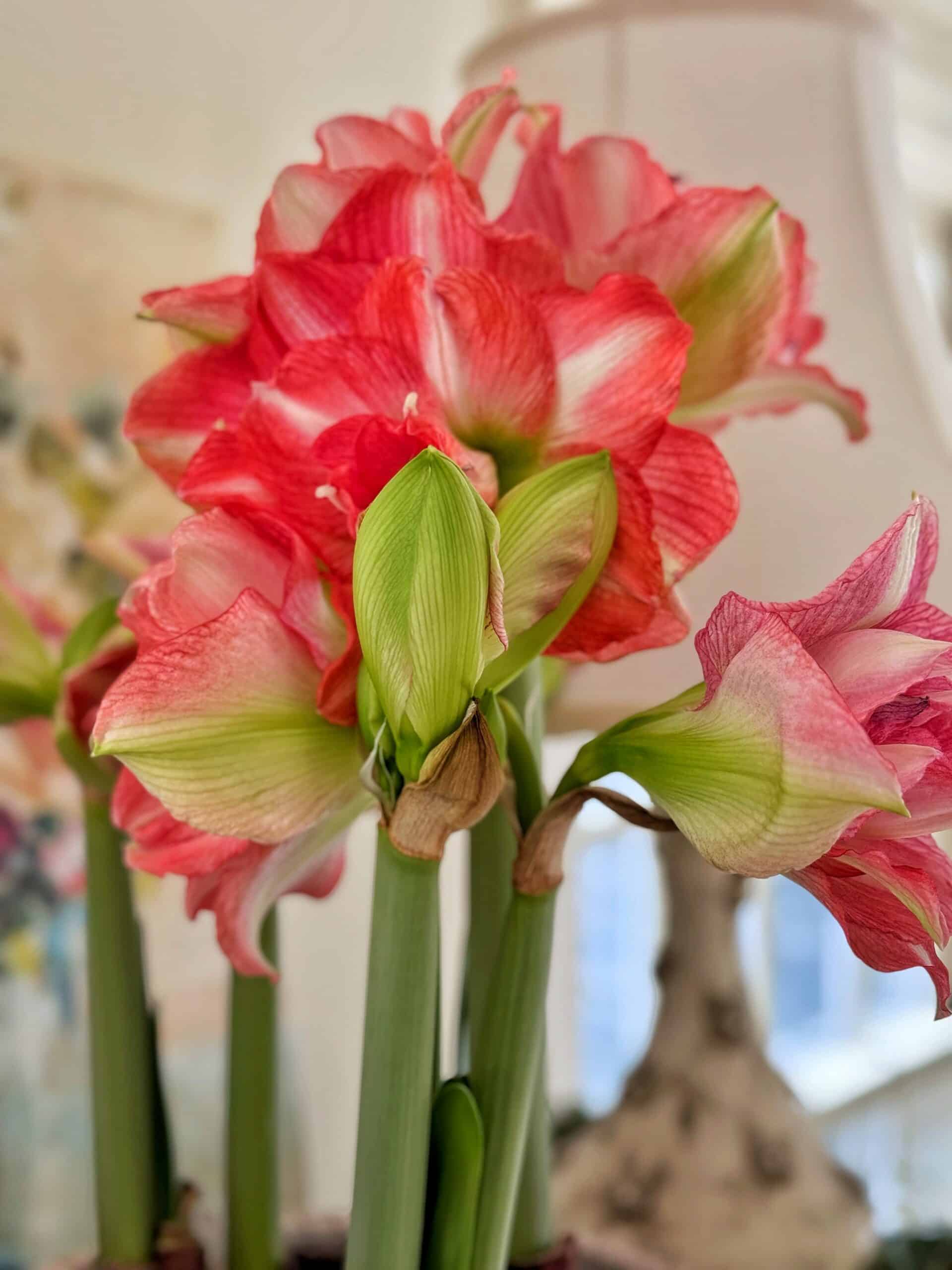
The Planting Process
- Prep the Soil: Before planting, fill the container halfway with sterile, fresh pre-moistened potting soil that is high in organic matter.
- Position the Bulb: Plant the amaryllis bulb pointed end up so the roots sit directly on the soil. The pointed end is the top of the bulb, where growth will emerge.
- Backfill: Backfill with soil until about the top third of the bulb is visible. This is critical for preventing fungal issues like red blotch.
- Finish: Tamp down the potting medium surrounding the bulb and water it once thoroughly. I usually work with pre-moistened soil so I don’t need to water when I’m done planting.
A Note on Staking: Consider adding a stake when the flower stalk begins to grow. This helps support the plant and keeps it stable as the flower spike gets heavy.


Where to Place Your Amaryllis for Best Blooms
Light and Temperature
Move the planter to a location where it will receive indirect, bright light, like a sunny windowsill (east or west-facing works well). Temperature is a key factor: growing them at a higher temperature (over 75°F) can lead to a weaker flower stalk and smaller flowers. Keeping your amaryllis in cooler room temperatures (ideally between 60-70°F) can help your spectacular blooms last much longer.
Watering Needs During Active Growth
Do not overwater! This is the number one cause of bulb failure. As a general rule, water thoroughly until the soil is moist, then allow the top 2 inches of soil to completely dry out before watering again. Make sure the container drains thoroughly, and always dump any water sitting in the bottom saucer. To give you a frame of reference, I very rarely water my newly planted amaryllis bulbs. They are surprisingly low-maintenance in this phase. Less is more with watering amaryllis!

The Secret to Reblooming: Seasonal Amaryllis Care
While many toss their amaryllis bulbs after they are done flowering, it is absolutely possible to keep them for future blooms and save yourself the cost of buying new ones every year. The key is understanding their yearly life cycle.
Phase 1: Post-Bloom Care (Late Winter/Spring)
Amaryllis flowers generally bloom for a couple of weeks. If you move the plant out of direct sunlight and into a cooler location once the flower buds start to show color, you can keep your plant blooming for longer. The really cool thing about amaryllis, though, is that the bulbs themselves can actually last years—even decades!
- Remove Faded Flowers: When the old flowers fade, cut them off to prevent the plant from wasting energy forming seeds. This encourages the bulb to store energy for future blooms next year.
- Wait to Prune the Stalk: Cut the flower stalk back only when it turns yellow. Do not cut it back while still green because the stalk is actively storing energy for future growth and blooms.
- Encourage Leaf Growth: Once the plant is done blooming, immediately place it in the sunniest location possible (full sun is now beneficial) so it can continue to grow its leaves. The leaves are the factory that feeds the bulb!
- Fertilize Regularly: Water and fertilize the plant regularly with an all-purpose houseplant fertilizer, beginning now and continuing monthly through summer.

Phase 2: Summer Growth (Late Spring/Summer)
This phase is the most critical for guaranteeing next year’s bloom, as it is when the bulb rebuilds the energy it needs.
Can Amaryllis be Planted Outside?
Once there is no danger of frost (and your last frost date has passed), amaryllis plants can be moved outside for the summer.
- Acclimation: Start by placing it in shade or indirect light and then gradually move the amaryllis to an area where it will receive full sun for at least 6 hours daily.
- Container vs. Ground: You can grow amaryllis as a container plant on a patio, porch, or deck, or plant the whole pot in the ground. The roots are brittle and very hard to dig back up later, so it’s not recommended to plant amaryllis directly in the ground without its pot.
- Continue Care: Continue to water and fertilize regularly during this time.

Phase 3: Forcing Dormancy and Reblooming (Fall/Early Winter)
It is possible for an amaryllis bulb to bloom year after year! The secret is the mandated, cool rest period (dormancy).
- Restarting the Cycle: To encourage amaryllis rebloom, bring the bulb out of dormancy, repot it with fresh soil, and place it in indirect light. Start watering sparingly. If you’re looking for a Christmas bloom, you’ll want to start this process about 6-8 weeks before you want it to flower (meaning, you bring it out of dormancy in early to mid-November).
- Signal Dormancy (Late Summer/Early Fall): In mid- to late-summer, the amaryllis leaves will naturally start to die back, or you can gently start cutting back water to encourage this.
- Move Indoors: Make sure to bring the potted plant indoors before there’s any risk of frost in the fall.
- Prune Leaves: Once the leaves become dry and shriveled, you can remove them.
- The Cool Rest: Store the potted bulb in a cool, dark, and dry place for at least 8 to 10 weeks (a basement, cool closet, or cellar between 45-55ºF is ideal). Do not water during this entire dormancy period.


Troubleshooting Common Amaryllis Problems
Why Isn’t My Amaryllis Blooming? (No Flower Stalk)
Lack of blooms is quite common. If you’ve been providing the best seasonal care and your bulb is still not flowering, there are usually a few key issues at play:
- Dormancy Failed: The plant was stored away for dormancy too early (before the leaves yellow and die back naturally) or the rest period was too short (less than 8 weeks).
- Not Enough Sun/Food: The plant wasn’t given enough bright light and fertilizer during the crucial summer leaf growth phase to store energy for the bulb.
- Too Much Nitrogen: Planting the bulb in soil with too much nitrogen fertilizer (or too much water) causes the plant to produce lush green leaves at the expense of flowers (the common problem of “all leaves, no bloom”).
- Patience: I’ve also seen some varieties take much longer to flower than others. So be patient.
Soft, Mushy Bulb (Root Rot)
This is the number one cause of death for amaryllis and why I recommend less care is more after planting.
- The Cause: Root rot is a fungal infection caused by overwatering or using a container without adequate drainage. I very rarely water my amaryllis once they are planted, if at all.
- The Symptoms: Leaves may turn yellow and wilt, and the bulb itself will feel soft or mushy.
- The Fix: Immediately stop watering. If the bulb is very soft, you may need to dig it up, cut away all soft tissue, let it dry out for a few days, and repot it in fresh, sterile soil. Prevention is the best cure: always let the soil dry out between waterings!
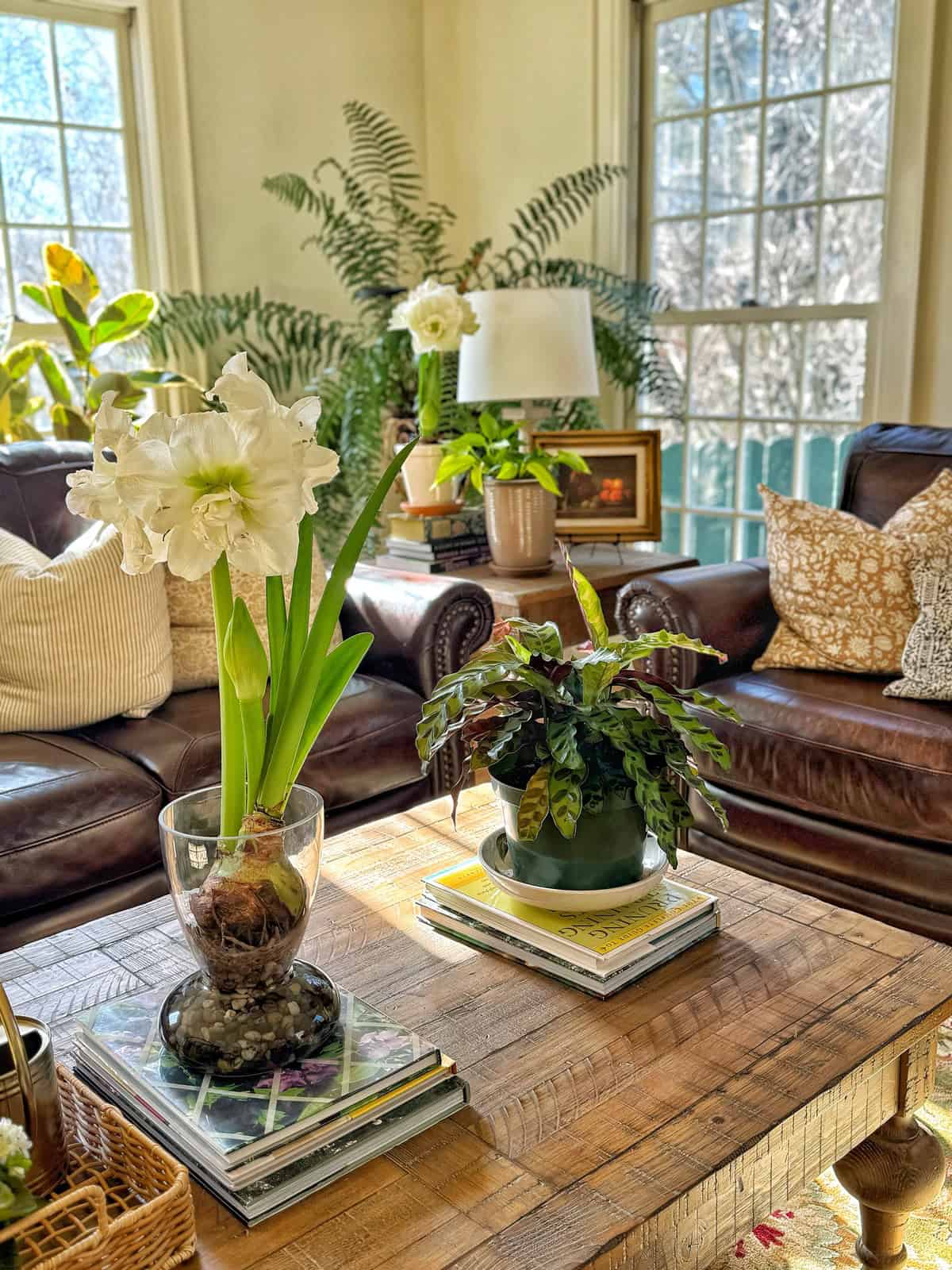
Red Spots on Leaves (Red Blotch Disease)
Red blotch, caused by the fungus Stagonospora curtisii, can cause red spots or elongated lesions on amaryllis leaves and flower stalks. As the disease progresses, leaves may become distorted and infected flower stalks can bend or break. Keep in mind that not every red mark is red blotch. Amaryllis tissue can naturally turn red where it has been injured.
The cause: The fungus can be carried on infected bulbs, which is why it’s important to inspect bulbs before buying or planting them. The disease can also be more problematic when plants are frequently watered or grown under unfavorable conditions.
The prevention and fix:
- Start with healthy bulbs: Avoid bulbs with dark reddish-brown lesions, cankers, soft areas, or obvious rot.
- Keep things clean: Use fresh, sterile potting mix and clean containers, and sanitize tools used on infected plants.
- Water carefully: Avoid overhead watering and overly wet soil, and provide your amaryllis with appropriate light and good growing conditions.
- Discard heavily infected bulbs: Red blotch can be difficult to control, so severely infected bulbs are best discarded.
That said, not every red mark is red blotch. Amaryllis bulbs and leaves can develop red pigmentation in response to minor injury, so a red spot alone doesn’t necessarily mean the plant is diseased.
Pest Problems (The Tiny Invaders)
While amaryllis are generally pest-resistant indoors, they can occasionally suffer from common houseplant pests. This has not happened to me before, but sometimes they can arrive from other plants in your home.
- Spider Mites: These thrive in dry indoor air. Look for tiny yellow stippling on the leaves. Increase humidity and treat with insecticidal soap or neem oil.
- Mealybugs: Look for white, cottony masses where the leaves meet the bulb. Treat by dabbing directly with a cotton swab dipped in rubbing alcohol, or use insecticidal soap.
Learn more about these amaryllis issues from the University of Florida.

Understanding Waxed Amaryllis Bulbs
You’ve probably seen those beautiful, decorative amaryllis bulbs coated in wax. They are incredibly popular gifts because they are crazy simple to grow! Here’s what you need to know:
What are Waxed Amaryllis Bulbs?
A waxed amaryllis bulb is a healthy bulb coated in a thick layer of wax, often decorated or glittered. They are treated to require zero water or soil to bloom. The bulb is essentially relying on the energy stored within the wax-coated shell to push out one or two flower stalks.
Can I Rebloom a Waxed Amaryllis?
Unfortunately, it is extremely difficult to rebloom a waxed bulb.
The wax coating makes it impossible for the bulb to grow new roots or take in the water and fertilizer it needs to build energy after the initial bloom. Most growers consider these a beautiful, one-season novelty and discard them after the flowers fade.
Self-note: If you are determined to try, you must peel off the wax entirely, remove all dried flower stalks and any dead material, and follow the Phase 1: Post-Bloom care steps above.
Why Amaryllis are Given at Christmas
So, how did amaryllis become one of the common plants of Christmas, right up there with the poinsettia? The tradition likely comes down to a combination of symbolism and convenient timing.
- Timely blooms: Amaryllis bulbs can be forced to bloom during winter, making those big, beautiful flowers a natural fit for holiday decorating.
- Victorian symbolism: Amaryllis were associated with strength and determination because of their tall, sturdy stems and were sometimes given to celebrate achievement or success.
Whatever the symbolism, amaryllis remain one of the most popular Christmas flowers and plants to grow, decorate with, and give during the holidays.


Decorating with Amaryllis: Tips and Tricks
Amaryllis are a simple and stunning way to decorate your home during the winter. Here are a few creative ways to display them:
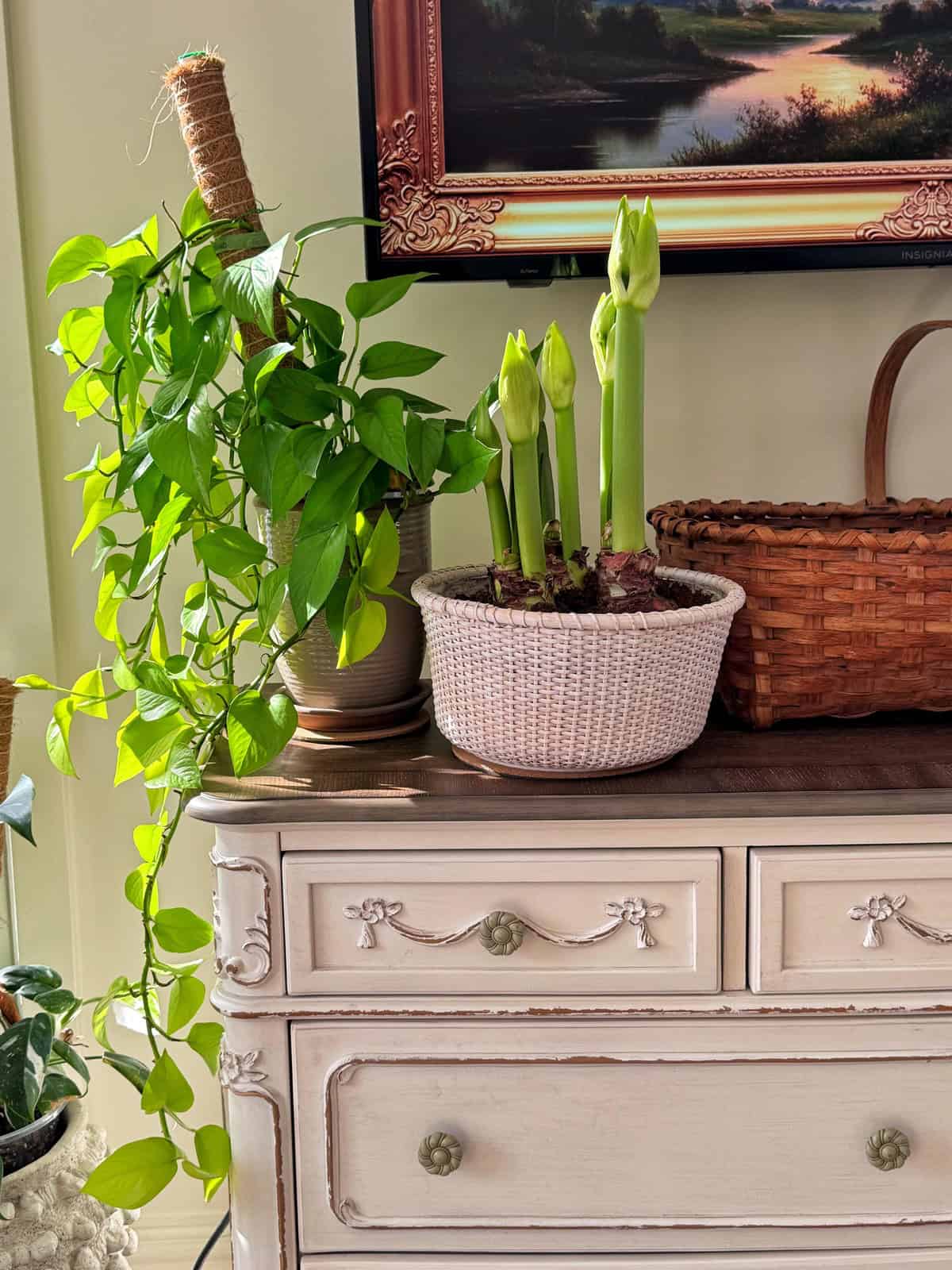
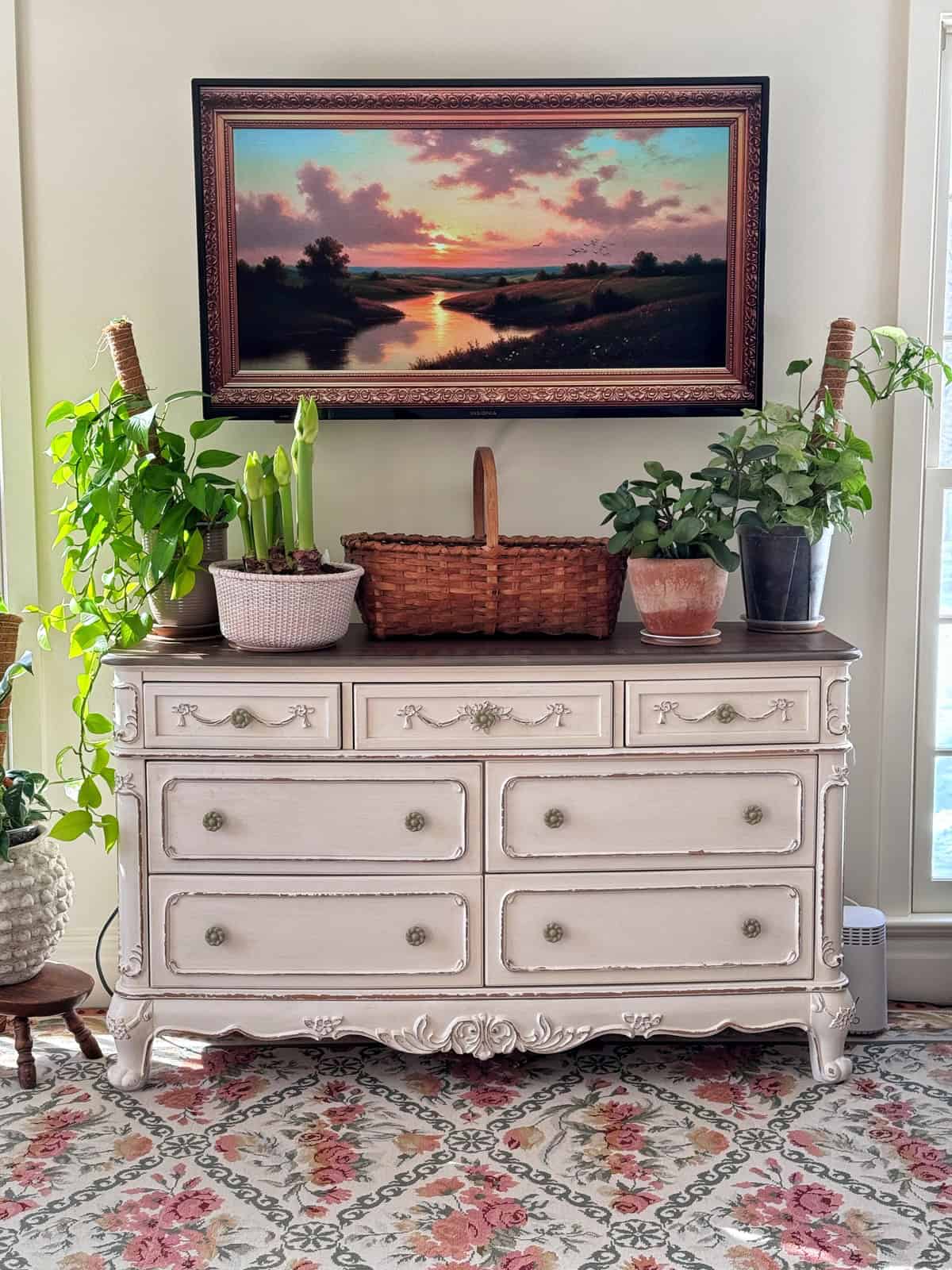
- Group for Impact: Place several single-planted pots together in a decorative, large basket or galvanized bucket. This creates a more dramatic, high-impact display than a single pot.
- Use as Cut Flowers: Amaryllis make incredible, long-lasting cut flowers. Cut the stems at an angle and place them in water. Pro tip: Add a small piece of clear tape around the bottom of the stem to prevent the hollow stalk from curling once submerged in water.
- Add Seasonal Touches: Instead of a plain pot, top-dress the soil with natural elements like preserved moss, pinecones, birch branches, or small pieces of polished river rock to blend it seamlessly into your holiday decor.
- Windowsill Line-up: Line up three to five identical pots in different colors (like red, white, and striped varieties) across a sunny mantle or windowsill for a high-end, cohesive look.
Additional Tips for Fresh Cut Amaryllis Flowers
Here are a few additional tips for decorating with amaryllis because with proper care, your amaryllis can last for several weeks.
- Choose a vase or container that complements the color of your amaryllis.
- Cut the stems of your amaryllis at an angle to help them absorb water more easily.
- When decorating with fresh cut amaryllis, change the water in your amaryllis vase every few days.
- Place your amaryllis in a cool, dark place when they are not on display.


More About Growing Amaryllis Bulbs
I hope this guide inspires you to keep those gorgeous bulbs growing! I love watching those big, dramatic flowers emerge indoors because they bring so much life and color to the house during the coldest, darkest days of winter.
And while I know how to get amaryllis to rebloom, I’ll confess that I don’t save every bulb. Sometimes I can’t resist shopping for a beautiful new variety! But when you have one you really love, it’s absolutely worth keeping. With the right care through summer and a proper dormancy period in fall, that same bulb can reward you with another spectacular show.
Happy growing!
For more information about growing amaryllis, read this article from the Penn State Cooperative Extension.
Have you grown amaryllis before? Did you order any yet for the holidays this year? Tell me about what you ordered or your favorite varieties in the comments below. I’d love to chat more!
Thank you so much for following along.
Enjoy a beautiful day! xo



Originally Published . Last Updated .

I want to grow Beautiful flowers like these please show me how !!!!
Stacy,
Thanks for these tips. I love these blooms in the house for the holidays.
Are they wonderful! THank you Rachel! Happy Thanksgiving!
These are so beautiful! I need one for Christmas.
Oh you def do – you can’t fail with these at all. It’s pretty much set and forget especially if you do the waxed bulbs.
My amaryllis are in the ground. Should I pull them up and plant in pots for the winter. I am in zone 8.
They are tropical plants and can’t survive outside of that type of climate. Depending on the winter you get, it is risky – I would pot them up if you want to keep them.
Stacy, I love amaryllis and get them every year. Then I plant them in my bulb garden but they don’t seem to ever grow or bloom again. Guessing they don’t fare well here. May try to keep them in a pot and see if that works. Great tips.
Thanks so much Mary! I usually just treat them like annuals. I like trying new varieties each year. xo
Yes I have one from last year , after it bloomed I put it in the garage pot an all for the year. I just took it out to my surprise, it bloomed two stocks with 6 beautiful flowers!
I LOVE that Linda! How awesome! I may save mine this year in the garage – I’m trying to organize myself a little better to make room for them.