
The Best Late Summer Flowers for a Colorful Garden

Discover the best late summer flowers, including annuals, perennials, and shrubs, to keep your garden colorful into fall.
By late summer, many gardens begin to lose the vibrant color they had in spring and early summer. But with the right mix of annuals, perennials, and flowering shrubs, your garden can stay colorful, full, and inviting right up until fall. Choosing plants with staggered bloom times is one of the easiest ways to create a landscape that always has something beautiful happening.
After 30 years of gardening in Zone 6B, I’ve found that some of the most rewarding flowers don’t reach their peak until August and September. These dependable bloomers help bridge the gap between summer and autumn while providing valuable nectar for bees, butterflies, and hummingbirds when many earlier flowers have finished.
In this guide, I’m sharing my favorite late summer flowers that keep my gardens looking vibrant as the seasons begin to change. Whether you’re planning ahead for next year or looking for inspiration to extend color in your own landscape, these plants have earned their place in my gardens year after year.
If you’re specifically looking for dependable plants that return every year, don’t miss my guide to The Best Late Summer and Fall Blooming Perennials, where I share the perennial flowers I rely on most for extending the season. And if your goal is to create a landscape with blooms from spring through fall, you’ll also find my Perennial Garden Design guide helpful for planning continuous color throughout the growing season.
(Posts on stacyling.com may contain affiliate links. Click HERE for full disclosure.)

Why Late Summer Flowers Matter
One of the biggest mistakes I see gardeners make is focusing only on what blooms in spring and early summer. By August, many gardens begin to lose their color because the plants that carried the landscape through June and July have finished flowering.
When I design a garden, I always include flowers that peak later in the season. That way, as one group of plants begins to fade, another is just getting started. It’s one of the simplest ways to create a landscape that looks colorful and intentional from spring through the first frost.
I also like to include a mix of annuals, perennials, and flowering shrubs. Annuals provide continuous blooms with regular deadheading, dependable perennials return year after year, and shrubs add structure and long-lasting interest that anchors the entire garden.
The result is a garden that never feels like it’s reached the end of the season.
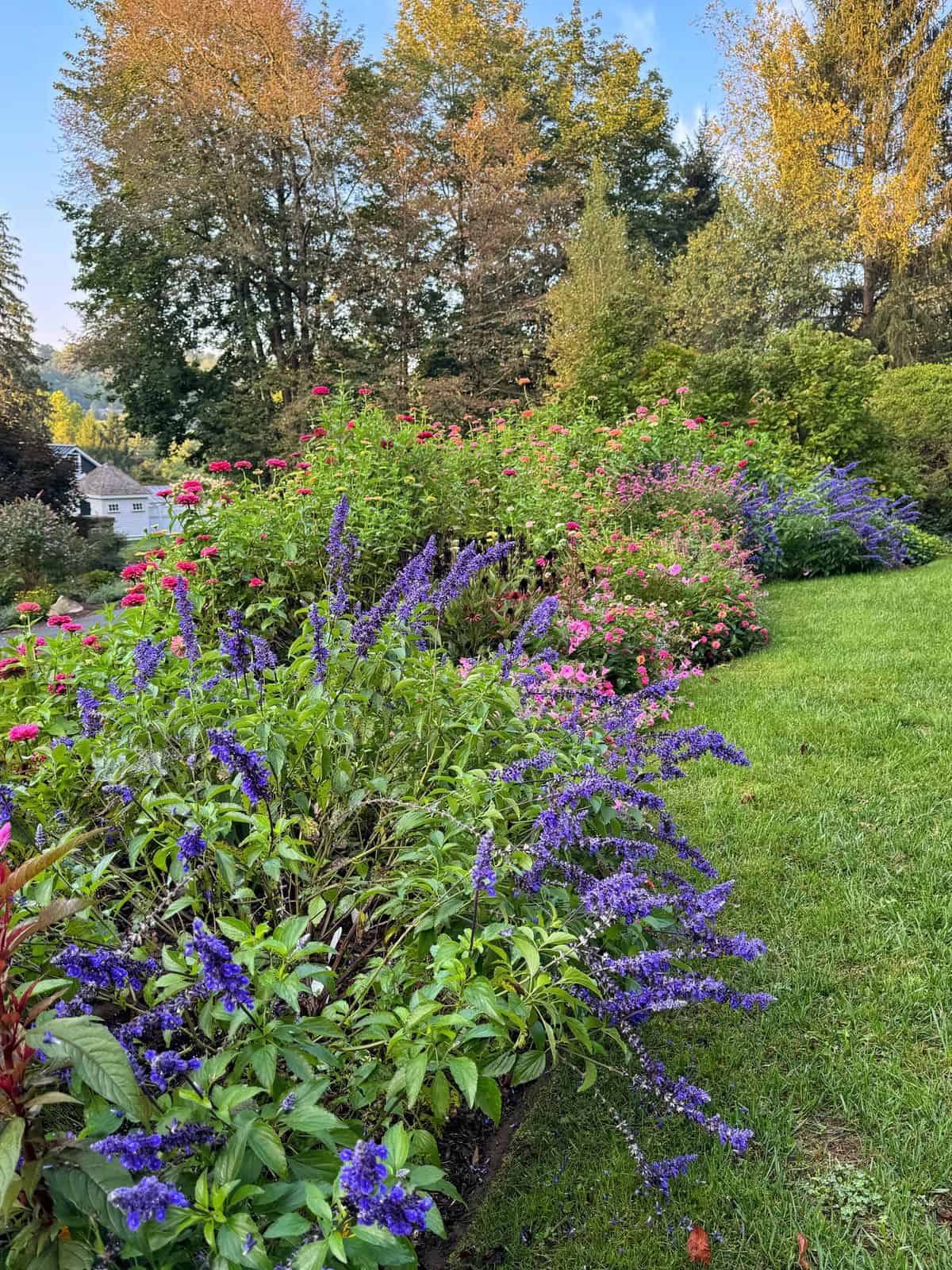
Best Late Summer Annual Flowers
Late-summer annuals are the workhorses of my garden. While many perennials begin slowing down, these flowers keep producing bloom after bloom until frost with very little encouragement beyond regular watering and deadheading. Many of them also make exceptional cut flowers, attract pollinators, and fill gaps left by earlier bloomers, making them invaluable for extending the season.
Zinnias
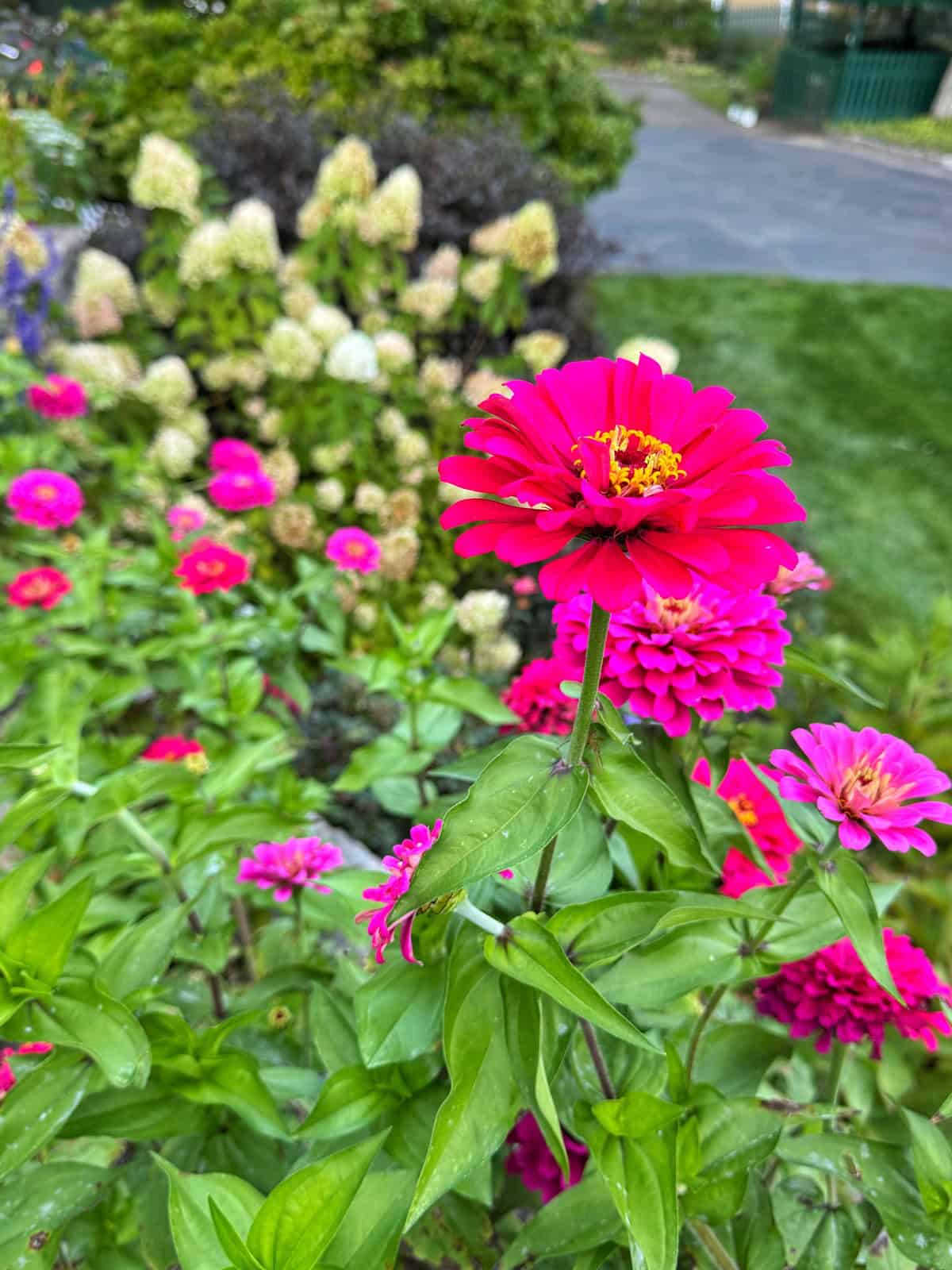
If I had to choose just one annual flower for late summer color, it would be zinnias. They bloom their hearts out from midsummer until frost, attract countless butterflies and bees, and provide armloads of cut flowers for the house. I’ve grown dozens of varieties over the years, and they’re one of the first flowers I recommend to anyone starting a cut flower garden.
What I’ve learned:
- The more you cut them, the more they bloom, so don’t be afraid to harvest bouquets often.
- Good air circulation is essential for reducing powdery mildew, especially during humid summers.
- I grow many of mine from seed and transplant them after my last frost, but they’re also easy to direct sow once the soil warms.
- Supporting taller varieties with grow-through supports or netting keeps stems straight and prevents storm damage.
- Some of my favorite varieties include Benary’s Giant Wine, Queen Lime with Blush, and Uproar Rose for both the garden and bouquets.
To learn more about how I grow zinnias in my gardens, please visit my complete guide to growing zinnias here.


Cosmos
Cosmos add an airy, romantic quality that softens garden beds as summer transitions into fall. Their delicate flowers dance above fine, fern-like foliage, making them one of my favorite flowers for filling empty spaces between larger plants.
What I’ve learned:
- Cosmos actually perform better in average soil than overly rich soil, which can lead to lots of foliage but fewer flowers.
- The more you cut and deadhead, the longer they’ll continue blooming.
- Taller varieties benefit from support before they flop after heavy summer storms.
- They’re excellent cut flowers and blend beautifully with zinnias, dahlias, and strawflowers.
- Once established, they’re surprisingly drought tolerant.
To see how I how grow cosmos here in my zone 6b garden, please visit my complete guide to growing cosmos from seed here.


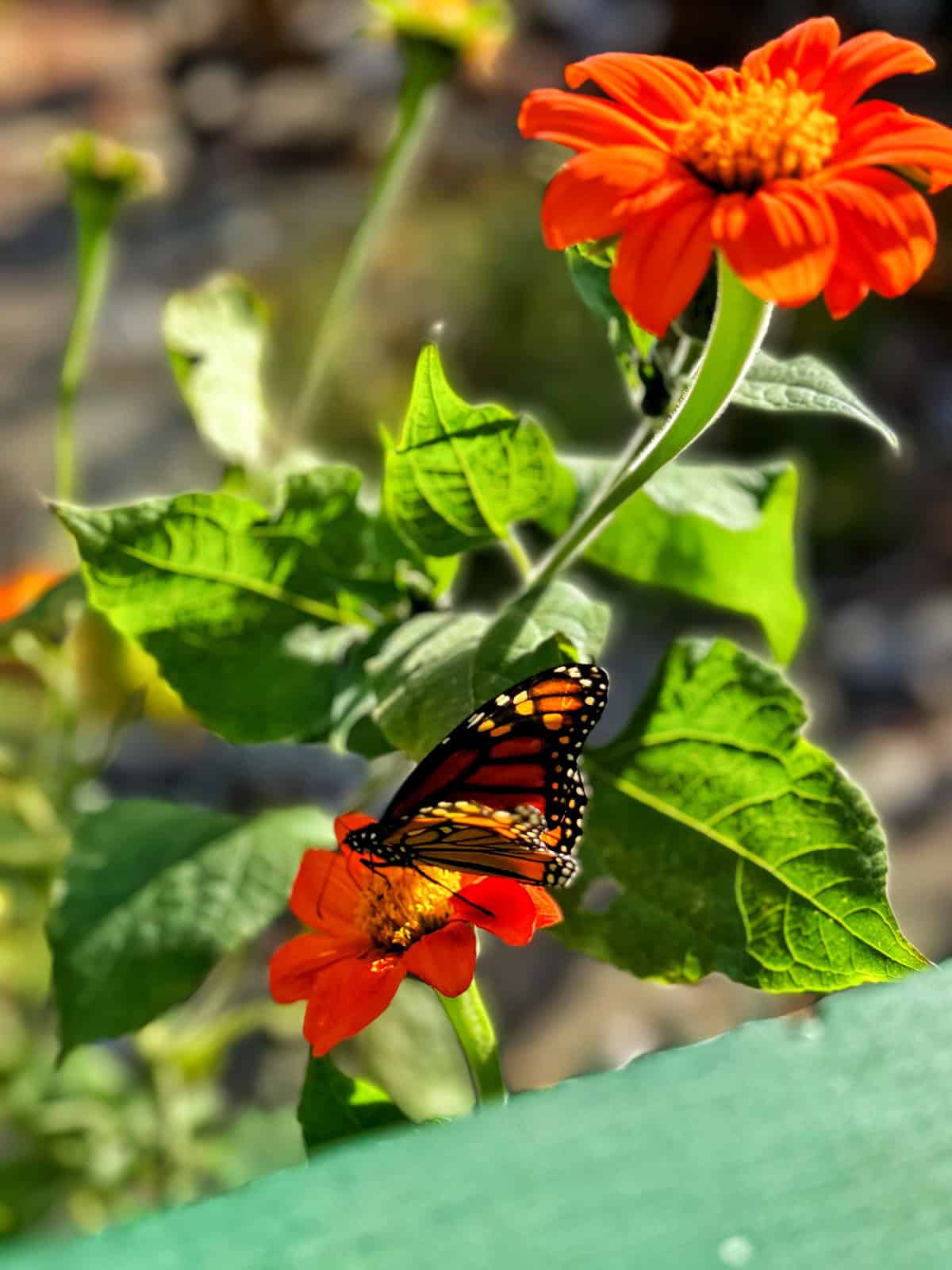
Tithonia (Mexican Sunflower)
Tithonia brings bold orange color and incredible pollinator activity to the late summer garden. Every year I grow it, butterflies and hummingbirds seem to find it almost immediately.
What I’ve learned:
- Give these plants plenty of space because they become much larger than many gardeners expect.
- They thrive in full sun and don’t need rich soil to perform well.
- Taller plants often benefit from staking, particularly in windy locations.
- Their fiery orange blooms create beautiful contrast with purple flowers like Russian sage and agastache.
- They’re one of my favorite annuals for attracting pollinators late in the season.

Sunflowers
Few flowers capture the feeling of late summer quite like sunflowers. Whether you grow towering giants or branching varieties for cutting, they bring height, warmth, and cheerful color to the garden.
What I’ve learned:
- Branching varieties provide many more flowers over a longer period than single-stem types.
- Direct sowing after the soil warms produces the strongest plants.
- Taller varieties often need support in exposed gardens.
- They’re excellent for pollinators while blooming and birds enjoy the seed heads later in the season.
- I love mixing smaller branching sunflowers into my cutting garden for bouquets.
To learn more about how I grow sunflowers, please visit my complete guide to growing sunflowers here.


Celosia
Celosia provides bold color and incredible texture that lasts from midsummer until frost. Whether you’re growing plume, wheat, or crested types, they add something completely different from traditional flowers.
What I’ve learned:
- Celosia thrives during hot, humid weather when many other flowers struggle.
- The blooms last exceptionally well in fresh bouquets and dry beautifully for fall arrangements.
- They prefer full sun and well-drained soil.
- I often let a few flowers go to seed because they’ve reseeded in my garden with surprising success.
- Their unique texture makes bouquets far more interesting.
To learn more about how I grow celosia in my cutting garden, please visit my complete guide to growing celosia.

Strawflowers
Strawflowers are one of the most underrated annuals for late summer. Their papery blooms seem to last forever in the garden and they’re equally beautiful fresh or dried.
What I’ve learned:
- Harvest blooms just before they’re fully open for the longest vase life.
- They’re among the easiest flowers I’ve grown for drying.
- Once established, they tolerate heat and dry conditions very well.
- They continue blooming with regular harvesting and deadheading.
- Their colors stay vibrant even after drying, making them perfect for wreaths and arrangements.
To learn more about how I grow strawflowers, please visit my complete guide to growing strawflowers.

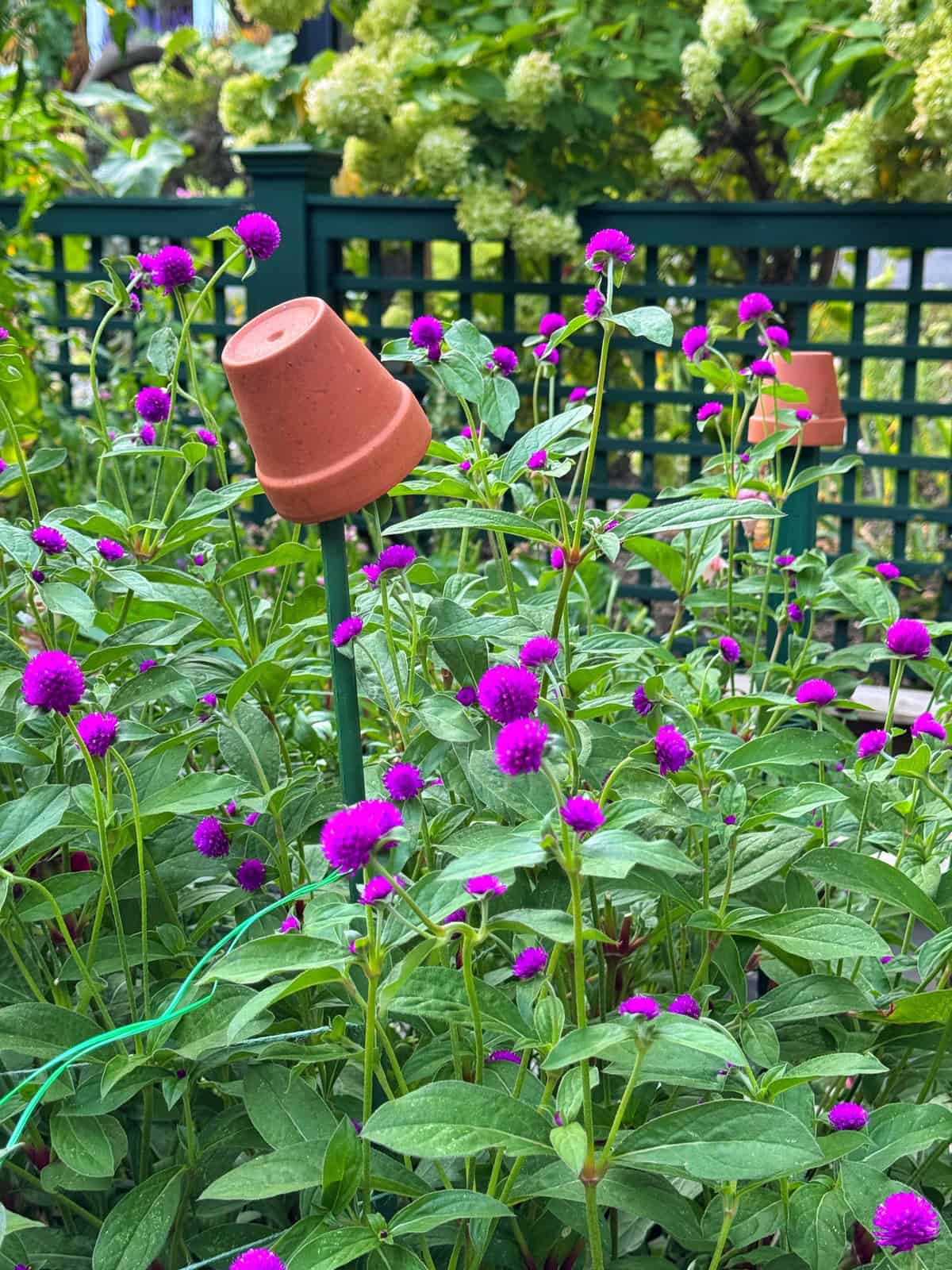
Gomphrena
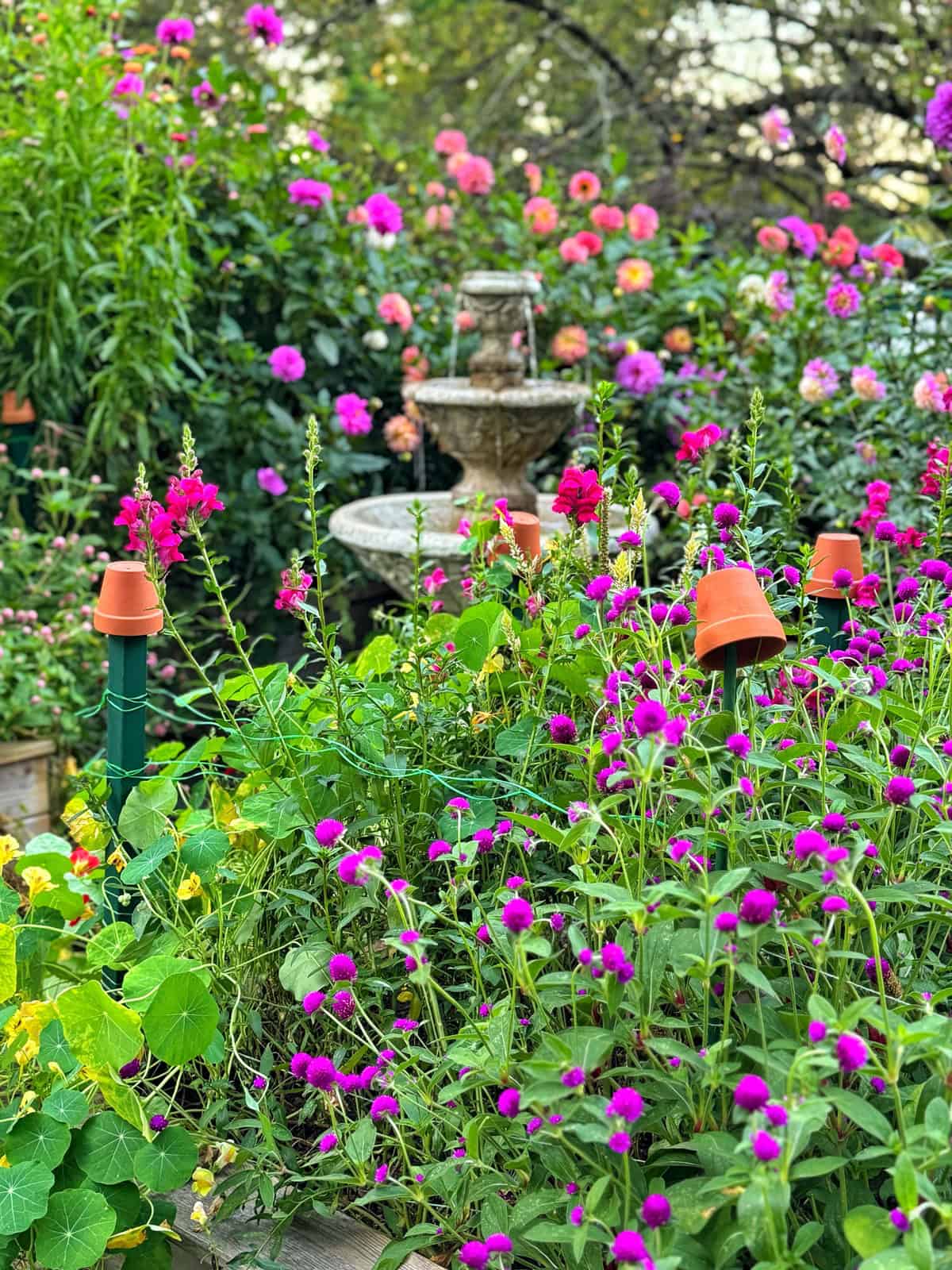
Gomphrena is one of those flowers that quietly earns its place every season. Its clover-like blooms seem to bloom endlessly, tolerate intense summer heat, and attract pollinators throughout late summer.
What I’ve learned:
- It absolutely thrives in hot weather.
- The flowers last an incredibly long time both in the garden and in bouquets.
- They’re one of my favorite flowers to dry because they retain both color and shape.
- I’ve had great success growing Truffula Pink, which has become one of my favorite varieties.
- They pair beautifully with zinnias, celosia, and strawflowers in mixed arrangements.
To learn more about how I grow gomphrena in my cutting garden, please visit my complete guide to growing gomphrena.
Marigolds
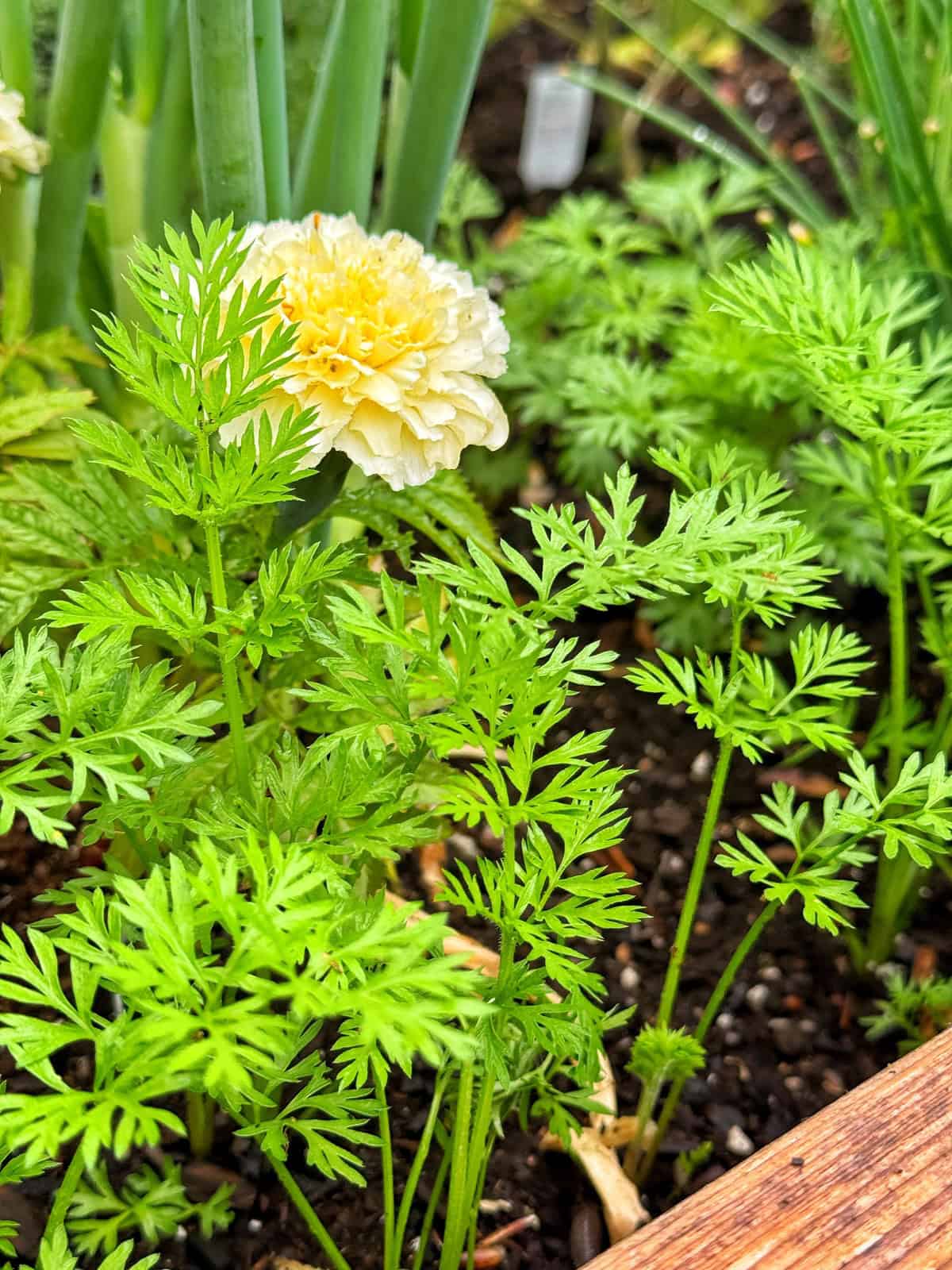
Marigolds are far more versatile than many gardeners realize. Modern varieties offer everything from compact edging plants to taller selections that work beautifully in flower borders and cutting gardens.
What I’ve learned:
- Regular deadheading keeps plants blooming continuously until frost.
- They’re one of the easiest annuals for beginners to grow.
- Their warm gold, orange, and burgundy tones transition beautifully into autumn.
- They attract pollinators while adding dependable color through the hottest part of summer.
- I like weaving them through vegetable gardens and flower borders alike.
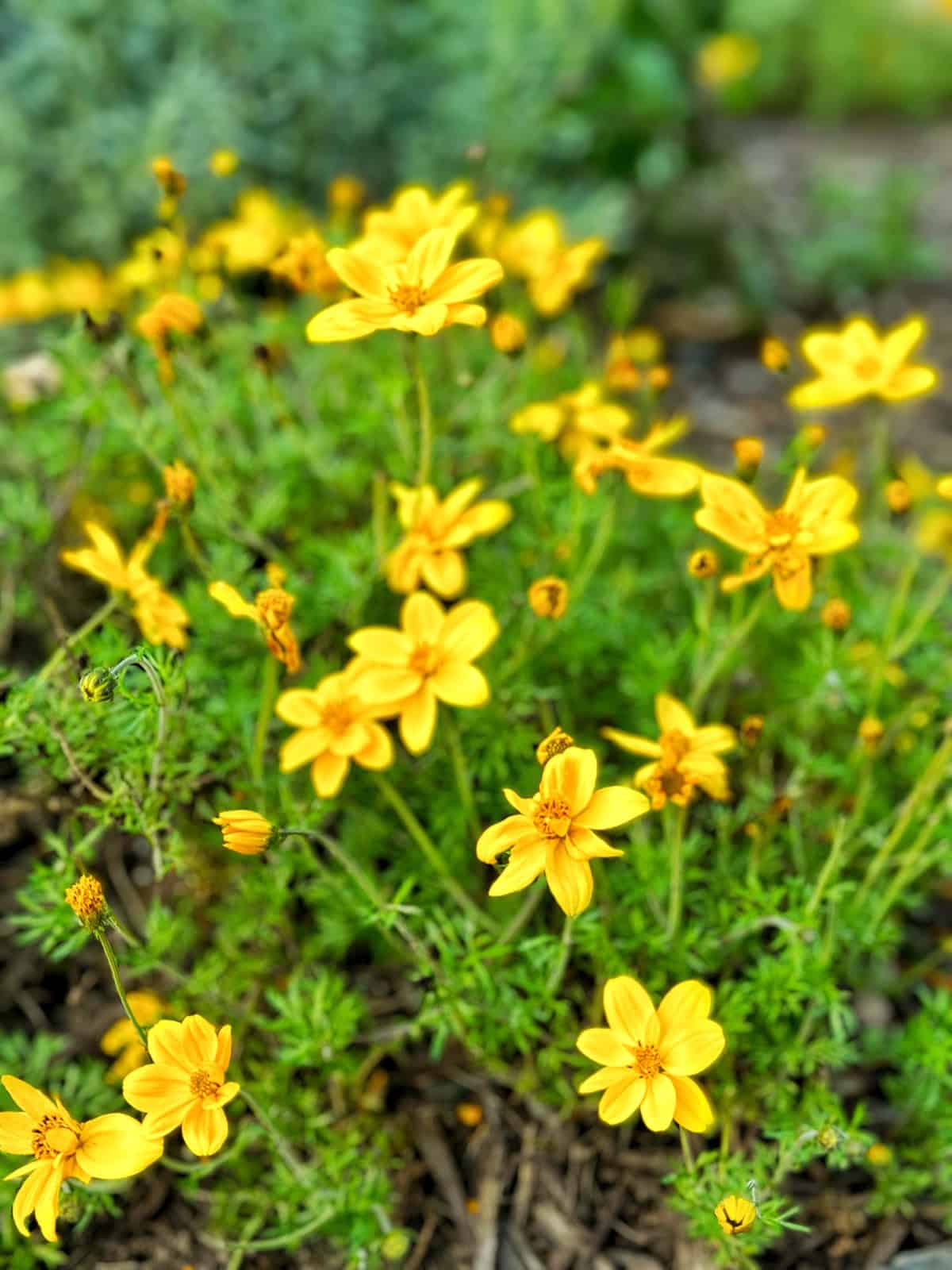
Bidens
Bidens is one of my favorite annuals for containers and hanging baskets because it blooms nonstop with very little effort. Its cheerful yellow flowers brighten up summer arrangements long after many spring annuals have faded.
What I’ve learned:
- It flowers continuously with minimal deadheading.
- Full sun produces the heaviest bloom.
- It handles summer heat exceptionally well.
- I often use it to spill over the edges of containers where it softens the planting.
- It combines beautifully with petunias, calibrachoa, and lantana.
Dahlias
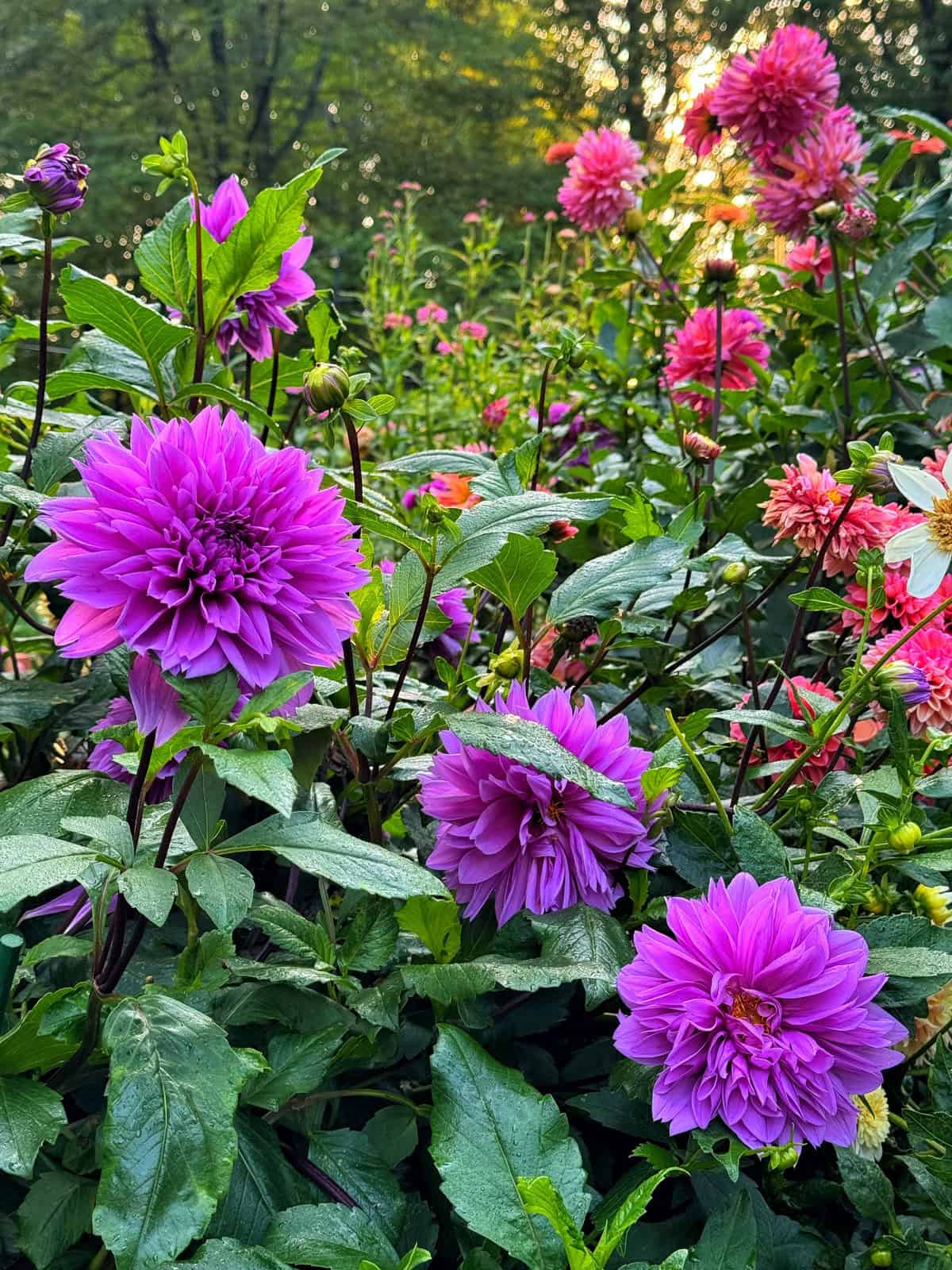
Although dahlias are technically tender perennials in warmer climates, I grow them as annuals here in my Zone 6B New Jersey garden because they won’t survive our winters in the ground. They’re well worth the extra effort, rewarding me with spectacular blooms from midsummer until frost.
What I’ve learned:
- The more you cut them, the more flowers they produce.
- Taller varieties should be supported early to prevent stems from snapping.
- I dig and store the tubers each fall so I can enjoy them again the following year.
- They’re among my favorite flowers for cutting because of their incredible variety of colors, forms, and sizes.
- Some of my favorite varieties include Café au Lait, Thomas Edison, Penhill Watermelon, and Fleurel, all of which have performed beautifully in my garden year after year.
To learn more about how I grow dahlias and my must-grow dahlia varieties, please visit my complete guide to growing dahlias here.
Best Late Summer Perennial Flowers
Perennials are what give my late summer garden its staying power. While annuals provide nonstop blooms, these dependable plants return year after year and provide the structure that carries the garden from late summer into fall. Many of them also support pollinators at a time when nectar sources become more limited.
If you’re looking for a more comprehensive list of dependable plants that bloom from late summer through fall, be sure to check out my guide to The Best Late Summer and Fall Blooming Perennials.
Sedum (Like ‘Autumn Joy’)
If there is one perennial I would never garden without for late-season interest, it’s sedum ‘Autumn Joy.’ It begins adding texture long before it flowers, then transitions through beautiful shades of pink, rose, and burgundy as fall approaches. Even after the blooms fade, the dried seed heads continue adding structure throughout winter.
What I’ve learned:
- One of the easiest perennials I’ve ever grown.
- Thrives in full sun and well-drained soil.
- Requires very little maintenance once established.
- Looks beautiful planted alongside ornamental grasses and asters.
- The seed heads provide winter interest long after flowering has finished.
To learn. more about how I grow sedum autumn joy, please visit my complete guide to growing sedum autumn joy.

Rudbeckia (Black-Eyed Susan)
Few flowers signal the arrival of late summer quite like rudbeckia. Their cheerful golden-yellow blooms brighten the garden for weeks, attract countless pollinators, and blend effortlessly with both cottage and prairie-style plantings. I rely on them every year because they’re incredibly dependable and ask for very little in return.
What I’ve learned:
- Rudbeckia thrives in full sun and adapts well to a wide range of soil conditions.
- Once established, it’s remarkably drought tolerant and one of the easiest perennials I’ve grown.
- The flowers bloom for weeks and pair beautifully with asters, sedum, Russian sage, and ornamental grasses.
- Leaving the seed heads in place after flowering provides winter interest while feeding birds throughout the colder months.
- It’s one of the first perennials I recommend to gardeners who want reliable, low-maintenance color from midsummer into fall.
If you’d like to learn more about growing this garden favorite, check out my complete guide to growing black-eyed Susans (rudbeckia).

Joe Pye Weed
Joe Pye weed is one of my favorite native perennials for adding height, texture, and pollinator activity to the late summer garden. Its large mauve flower clusters become covered with butterflies, bees, and other beneficial insects.
What I’ve learned:
- Give it plenty of room because it becomes much larger than many gardeners expect.
- Performs best in full sun to partial shade.
- Prefers soil that doesn’t dry out completely.
- Makes an outstanding backdrop in larger perennial borders.
- Adds a natural, meadow-like feel to the garden.

Hardy Hibiscus (Rose Mallow)
Hardy hibiscus is one of the true showstoppers of late summer. Every August, the enormous blooms become an instant focal point in my garden, and the attractive foliage provides months of interest even before flowering begins.
What I’ve learned:
- It emerges much later than most perennials, so don’t panic if you don’t see growth early in spring.
- The foliage is almost as ornamental as the flowers.
- Blooms continue well into fall in my Zone 6B garden.
- It performs best with consistent moisture and full sun.
- Deer enjoy it, so I protect mine with repellent during the growing season.


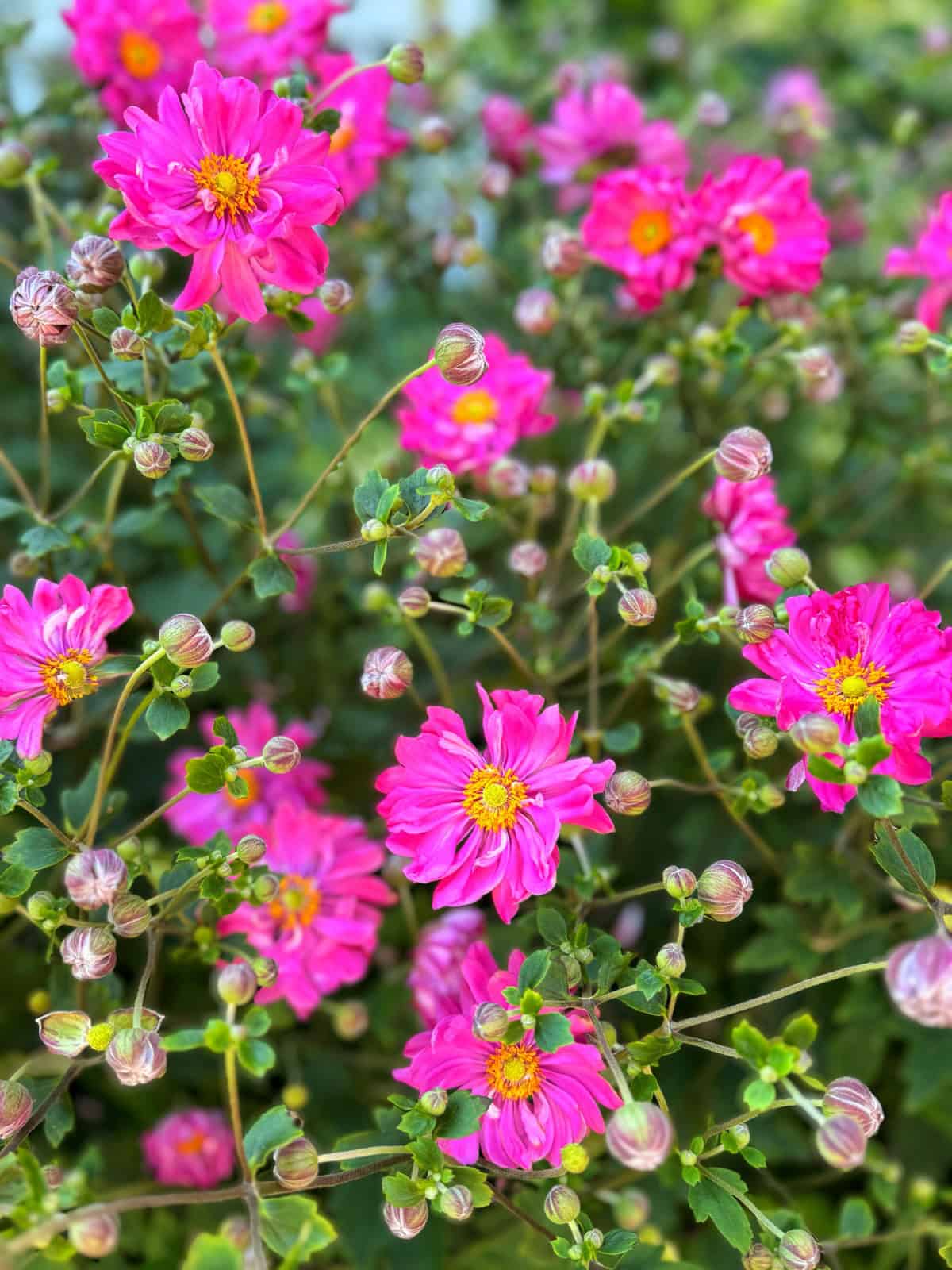
Japanese Anemone
Japanese anemones bring an elegant softness to the late-season garden with graceful stems and delicate blooms that seem to float above the foliage.
What I’ve learned:
- They establish slowly but become incredibly reliable once settled.
- Bloom from late summer into fall.
- Prefer part shade and evenly moist soil.
- They pair beautifully with hostas, ornamental grasses, and asters.
- Their movement in the breeze adds a completely different texture to the garden.
Russian Sage
Russian sage bridges summer and fall beautifully with clouds of lavender-blue flowers and aromatic silvery foliage. It creates a soft, airy effect that complements bolder flowers without overpowering them.
What I’ve learned:
- Performs best in full sun with excellent drainage.
- Extremely drought tolerant once established.
- Pollinators absolutely love it.
- Rarely bothered by deer or rabbits.
- It looks especially beautiful planted with ornamental grasses and warm-colored flowers.

Agastache
Agastache is one of my favorite pollinator plants for late summer because it blooms for such a long time while bringing hummingbirds, bees, and butterflies into the garden almost constantly.
What I’ve learned:
- Thrives in hot, sunny locations.
- Prefers lean, well-drained soil.
- The aromatic foliage helps discourage deer and rabbits.
- Blooms continuously from midsummer well into fall.
- Adds wonderful vertical interest without taking up much space.

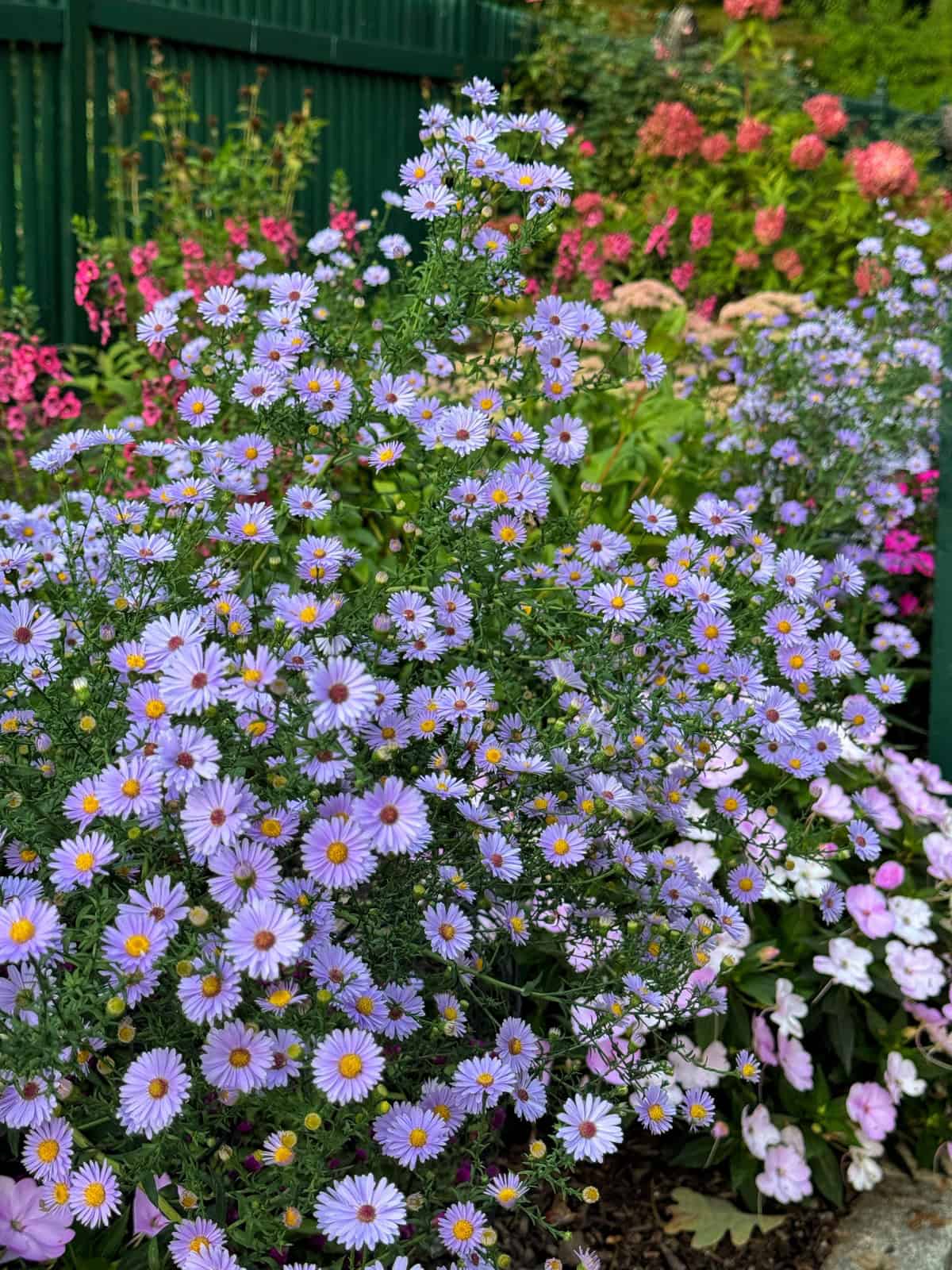
Asters
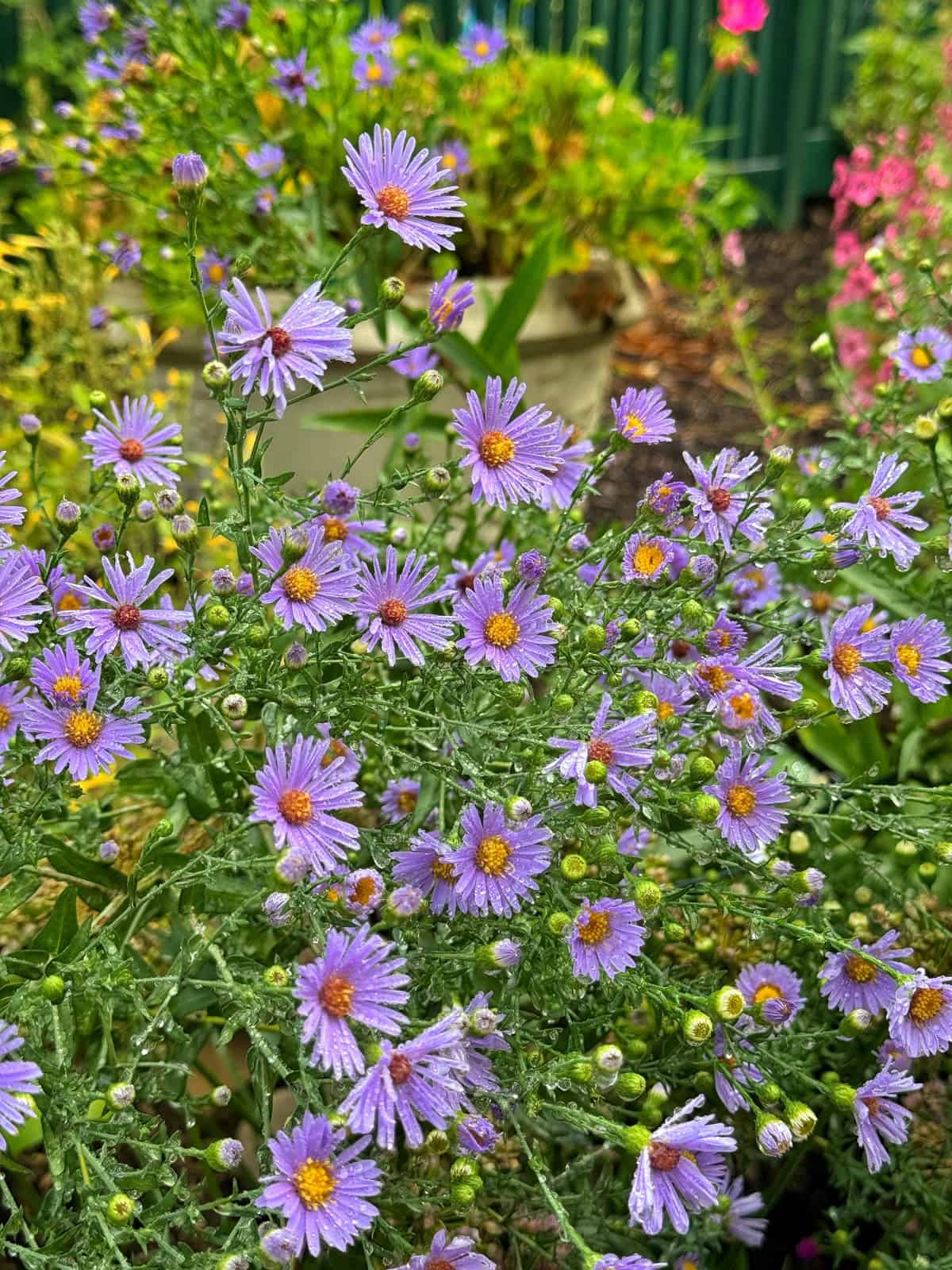
Asters are one of the last flowers to take center stage before the garden settles in for winter. Their cheerful daisy-like blooms appear just as many summer perennials begin fading, bringing fresh color while providing an important late-season food source for bees and butterflies. I rely on asters every year to help bridge the transition from summer into fall.
What I’ve learned:
- Asters bloom from late summer through fall, depending on the variety.
- They perform best in full sun with well-drained soil and good air circulation.
- Pinching stems back in early summer encourages bushier plants and heavier flowering.
- Pollinators absolutely love them when many other nectar sources are disappearing.
- They pair beautifully with sedum, ornamental grasses, Russian sage, and panicle hydrangeas for a classic late-season border.
Best Late Summer Flowering Shrubs
While flowers often get all the attention, flowering shrubs are some of the hardest-working plants in my late summer garden. They provide height, structure, and dependable blooms just when many perennials begin slowing down. Some also extend the season with colorful berries that feed birds and add interest well into fall and winter.
Panicle Hydrangeas
If I had to recommend one flowering shrub for dependable late summer color, it would be panicle hydrangeas. They begin blooming in midsummer and continue putting on a show well into fall as the flowers gradually age from creamy white to shades of blush pink and deep rose. They’re incredibly versatile, easy to grow, and one of the shrubs I rely on most for long-lasting beauty.
What I’ve learned:
- Panicle hydrangeas bloom on new wood, making them among the easiest hydrangeas to prune.
- They perform best in full sun to part shade with well-drained soil.
- The blooms make excellent fresh and dried cut flowers.
- Leaving the flowers on the shrub through winter provides additional seasonal interest.
- They come in a wide range of sizes, making it easy to find one for almost any landscape.
To learn more about the different types of hydrangeas and how I grow them in my gardens, please visit my complete guide to growing hydrangeas here.
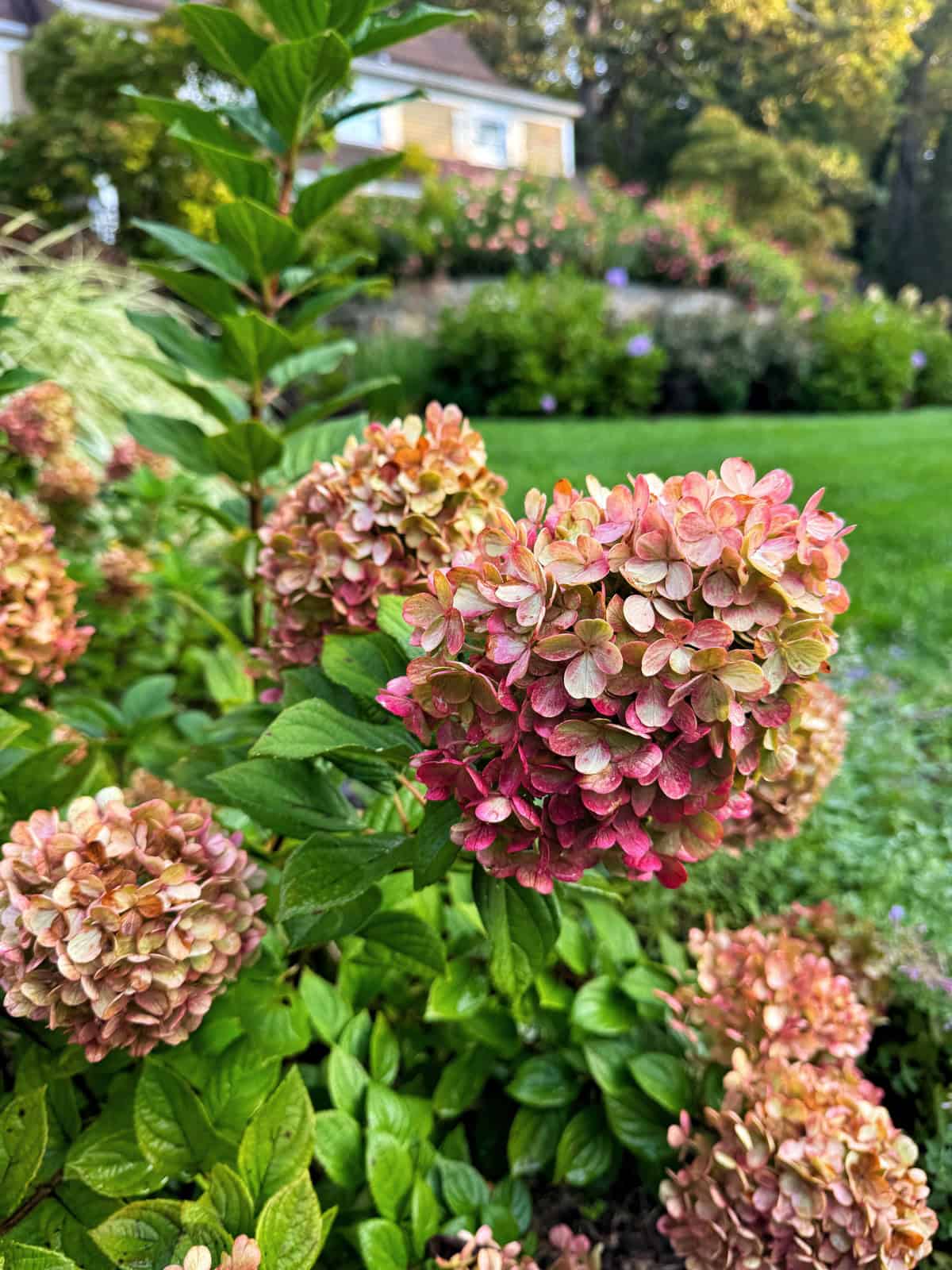
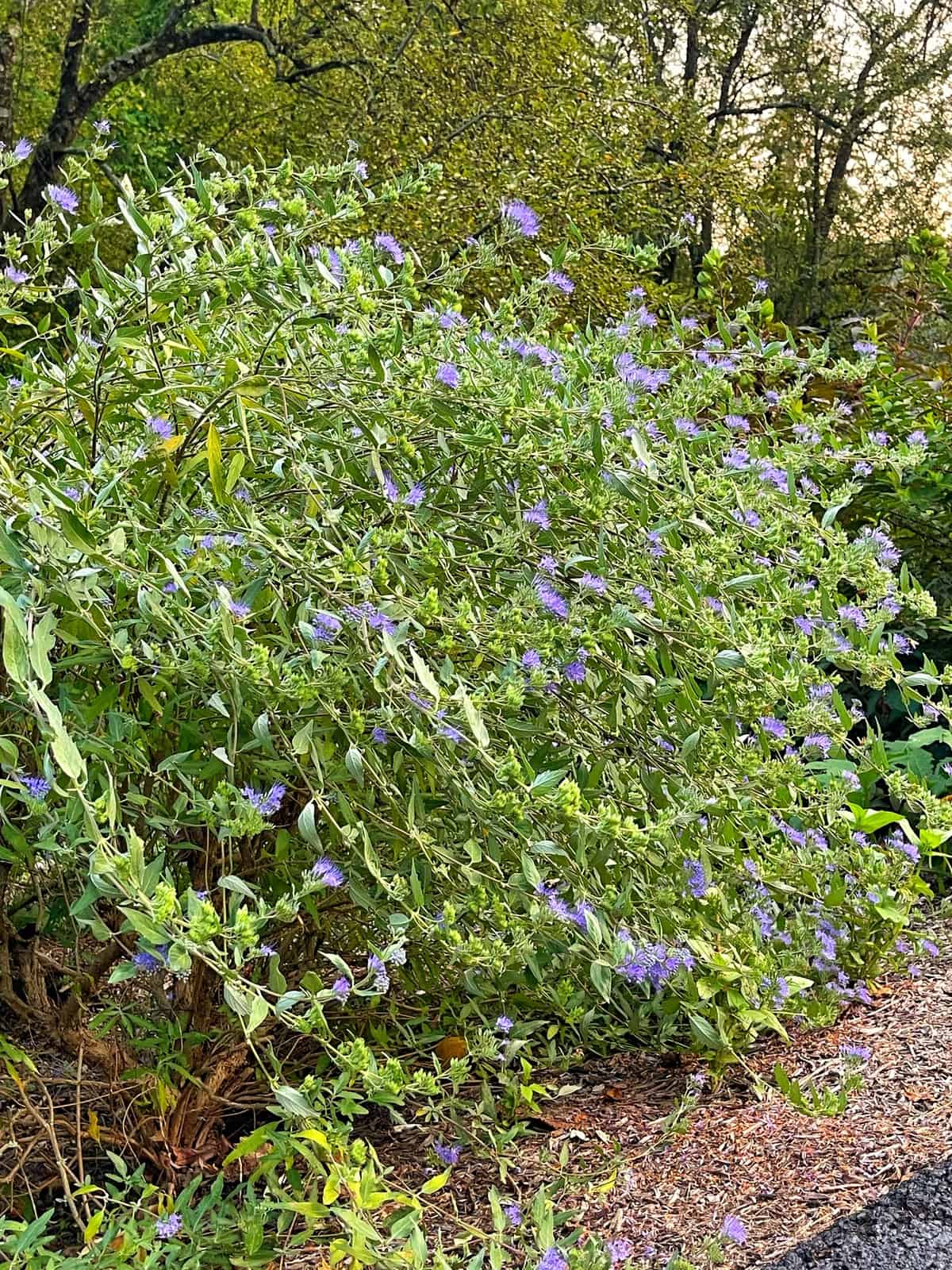
Caryopteris (Bluebeard)
Caryopteris is one of those shrubs that quietly steals the show in late summer. Just when many flowering shrubs have finished blooming, its clusters of vibrant blue flowers appear, bringing a fresh burst of color while attracting bees, butterflies, and other beneficial pollinators.
What I’ve learned:
- It thrives in full sun and well-drained soil.
- Once established, it’s remarkably drought tolerant.
- Pollinators absolutely cover the flowers when they’re in bloom.
- It works beautifully alongside ornamental grasses and warm-colored perennials.
- A light pruning in early spring helps maintain a tidy shape.

Rose of Sharon
Rose of Sharon is one of my favorite shrubs for extending bloom season because it flowers for weeks during one of the hottest parts of summer. The large hibiscus-like blooms provide continuous color when many other shrubs have already finished.
What I’ve learned:
- It blooms from midsummer well into early fall.
- Full sun encourages the heaviest flowering.
- Newer cultivars produce fewer unwanted seedlings than older varieties.
- Hummingbirds, butterflies, and bees are frequent visitors.
- It makes an excellent backdrop in mixed borders.

Coralberry
Coralberry may not be grown for its flowers, but its bright clusters of berries become one of the highlights of the late-season garden. As flowers begin fading, the colorful berries take over, providing beauty that lasts well into winter while feeding birds.
What I’ve learned:
- It grows well in both sun and partial shade.
- The berries persist long after the leaves have dropped.
- It’s an excellent shrub for adding seasonal texture and interest.
- Birds appreciate the berries during the colder months.
- It fits beautifully into naturalistic and woodland-style plantings.
Beautyberry
Beautyberry is one of those shrubs that always surprises visitors to my garden. While its small summer flowers are easy to overlook, the vivid purple berries that appear in fall are unforgettable and create one of the most striking displays in the landscape.
What I’ve learned:
- It performs best in full sun to partial shade.
- The berries develop after flowering and persist well into fall.
- It provides exceptional seasonal interest even after flowering has finished.
- Pruning in late winter or early spring encourages vigorous new growth.
- Few shrubs create such a dramatic display with so little maintenance.

How to Design a Garden That Stays Colorful Into Fall
One of the biggest lessons I’ve learned after nearly 30 years of gardening is that a beautiful late-season garden doesn’t happen by accident. It comes from layering plants with different bloom times, textures, and forms so there’s always something stepping into the spotlight as another plant begins to fade.
The goal isn’t to have every flower blooming at once. It’s to create a garden that evolves naturally from season to season.
Combine Annuals, Perennials, and Flowering Shrubs
The gardens that hold their beauty the longest are rarely made up of just one type of plant. I like to combine annuals for nonstop blooms, dependable perennials that return every year, and flowering shrubs that provide lasting structure and seasonal interest.
Annuals like zinnias, cosmos, and gomphrena fill in bloom gaps, while shrubs such as panicle hydrangeas and Rose of Sharon provide height and a strong visual anchor. Together, they create a garden that feels full and balanced well into fall.

Plan for Succession Blooms
Instead of choosing plants that all bloom at the same time, think about how your garden will change throughout the season. As spring flowers fade, summer bloomers take over. As those begin slowing down, late-season performers step in to carry the garden into autumn.
Planning bloom sequences has completely changed the way I garden because there’s always something new to enjoy.
If you’d like help planning bloom times and layering plants for continuous color, you’ll enjoy my guide to Perennial Garden Design, where I share the approach I use to keep my gardens blooming from spring through fall.

Add Texture Alongside Flowers
Flowers aren’t the only plants that make a garden beautiful.
Some of my favorite late-season combinations include ornamental grasses, berry-producing shrubs, colorful foliage, and interesting seed heads. Hardy fountain grass, coralberry, beautyberry, and the dried flower heads of sedum all continue adding interest long after many blooms have faded.
Those layers of texture are what keep the garden looking intentional even as the seasons begin to change.
Keep Deadheading and Harvesting
Many annuals will continue blooming until frost if you keep removing spent flowers.
Zinnias, cosmos, marigolds, celosia, strawflowers, and dahlias all reward regular cutting with even more blooms. I harvest flowers constantly throughout summer because it keeps the garden productive while filling my home with fresh bouquets.
Leave Some Seed Heads for Fall and Winter Interest
As autumn approaches, I stop deadheading some of my perennials.
Seed heads from sedum, rudbeckia, coneflowers, and ornamental grasses provide beautiful texture through fall and winter while also supplying food for birds. Leaving a few plants standing extends the beauty of the garden long after flowering has finished.

When Should You Plant Late Summer Flowers?
The best time to plant late summer flowers depends on whether you’re growing annuals, perennials, or flowering shrubs.
I generally plant my late-blooming perennials and shrubs in spring so they have plenty of time to establish before their flowering season begins. Fall is another excellent time to plant many hardy perennials and shrubs because cooler temperatures encourage root growth before winter dormancy.
Annual flowers such as zinnias, cosmos, celosia, gomphrena, marigolds, and sunflowers should be planted after your last spring frost once the soil has warmed. Depending on the flower, you can either start seeds indoors or direct sow them outdoors.
One thing I’ve learned over the years is to never overlook nursery clearance sales in late summer and early fall. I’ve picked up some incredible perennial bargains that have become some of my favorite plants in the garden.
No matter when you plant, always choose flowers that are well suited to your growing zone, provide the proper amount of sunlight, and improve the soil with compost before planting whenever possible.
Frequently Asked Questions About Late Summer Flowers
What flowers bloom in late summer?
Some of my favorite late summer flowers include zinnias, cosmos, dahlias, celosia, strawflowers, gomphrena, sedum, hardy hibiscus, Japanese anemones, Russian sage, panicle hydrangeas, and Rose of Sharon. Together they provide weeks of color while supporting bees, butterflies, and hummingbirds.
What flowers bloom from late summer into fall?
Many dependable perennials continue blooming well into autumn, including asters, sedum, Japanese anemones, hardy hibiscus, Russian sage, agastache, and garden mums.
For even more ideas, check out my guide to The Best Late Summer and Fall Blooming Perennials.
Which late summer flowers make the best cut flowers?
Zinnias, dahlias, cosmos, sunflowers, celosia, gomphrena, and strawflowers are among my favorite flowers for cutting because they produce armloads of blooms throughout the season.
If you’re interested in growing more flowers for bouquets, don’t miss my Cut Flower Gardening guide.
Which late summer flowers attract pollinators?
Many late-season flowers provide valuable nectar when pollinators need it most. Agastache, Joe Pye weed, tithonia, cosmos, zinnias, Russian sage, asters, and panicle hydrangeas all attract bees, butterflies, hummingbirds, and other beneficial insects to the garden.
Grow a Garden That Looks Beautiful From Spring Through Fall
One of the biggest lessons I’ve learned over nearly 30 years of gardening is that creating season-long color starts with choosing the right plants. By combining dependable annuals, perennials, and flowering shrubs, you can build a garden that stays vibrant long after many landscapes begin winding down for the year.
If you’d like more guidance on choosing easy-care plants, designing beautiful borders, and creating a flower garden with continuous color, The Bricks ‘n Blooms Guide to a Beautiful and Easy-Care Flower Garden shares the exact approach I use in my own gardens, along with ready-made planting plans and practical design tips.
As your garden grows, one of the most valuable things you can do is keep track of what performs best. The Bricks ‘n Blooms Beautiful and Easy-Care Flower Garden Planner includes dedicated sections for recording bloom times, garden layouts, plant performance, and seasonal observations so you can continue building on what you’ve learned year after year instead of starting from scratch each spring.
Together, the book and planner will help you create a garden that becomes more beautiful, colorful, and enjoyable with every growing season.

Final Thoughts About Growing Late Summer Flowers
One of my favorite moments in the garden is watching late summer blooms begin to take over just as many spring and early summer flowers are winding down. Instead of seeing the season come to an end, I see it as the start of a whole new chapter filled with rich color, pollinator activity, beautiful textures, and fresh bouquets.
Over the years, I’ve learned that the secret to a garden that never feels tired isn’t planting more flowers. It’s choosing the right flowers. By combining long-blooming annuals, dependable perennials, flowering shrubs, and plants that add seasonal texture, you can enjoy a landscape that stays beautiful from the first blooms of spring until the first frost of fall.
If you’re planning a garden with season-long color, you may also enjoy my guides to Perennial Garden Design, Long-Blooming Perennials for Continuous Color, and The Best Late Summer and Fall Blooming Perennials. Together, they’ll help you choose plants that not only look beautiful, but also keep your garden blooming from one season to the next.
I’d love to hear from you! What late summer flowers can you not imagine gardening without? Let me know in the comments below.
For more information about growing late summer flowers, read this article from the Cornell University Cooperative Extension.
Thank you for visiting the blog today!
Enjoy your day! xo



Originally Published .

Stacy,
Such great tips. I will definitely be adding these to my garden.
Thanks
Your gardens are just incredible!!! I live in the desert, so I could only dream of having flowers like this!
Thank you Danielle! Do you grow lots of succulents? I have a friend on IG who grows a lot of them and I love how she designs her containers!
Your garden is so beautiful Stacy! I too love growing sedum autumn joy and dahlias in the garden. It’s such a great pick-me-up when other blooms are fading.
Thank you Kim! I’m so glad you inspired me to grow dahlias – they are amazing!!!! xoxoxo
Great set of fall flowers and they will help to beautify the garden during the fall season.
Keep Sharing more on the maintenance of fall garden.
Thank you.
Will do! Thank you for stopping by Alice! So nice to meet you!
I’m always looking for ways to make my garden shine year round. I definitely need to add some dahlias! Thanks for sharing.
Thank you Marie! I am so happy you stopped by today!
A few other great fall blooming flowers I like to have in my garden are Pineapple sage,(red) Ironweed(purple) Goldenrod(yellow) and lots of grasses that send up beautiful plumes beauty berry (callicarpa)bushes which provide purple berries.
Oh I LOVE pineapple sage too! I had callicarpa at my old house – need to plant it here. It’s a favorite!
I love this. You are so stinking smart. Hugs to you.
Thanks so much Renae! xoxo
I definitely want to add more perennials this fall.
I can’t wait to see!
Beautiful post Stacy! I need to add a few of these to my garden.
Thank you so much Wendy!
Do you have any experience with lusifer crosmosmias? I planted 8 bulbs in a pot in June and it appears that only 2 survived. And by survived I mean each of the 2 bulbs sent up 2 shoots that are currently about 8 to 10 inches tall. I am in zone 5. Should this be growing a little faster? The pot is in full sun and I check the moistness of the soil frequently and water as needed. Maybe these are more suited to being planted in garden vs. in a pot? I was so looking forward to their brilliant red flowers.
I’ve grown crosmosmias before in a pot. But only one season. Have you fed them? Are they in full sun? Is it possible the bulbs weren’t great quality?