
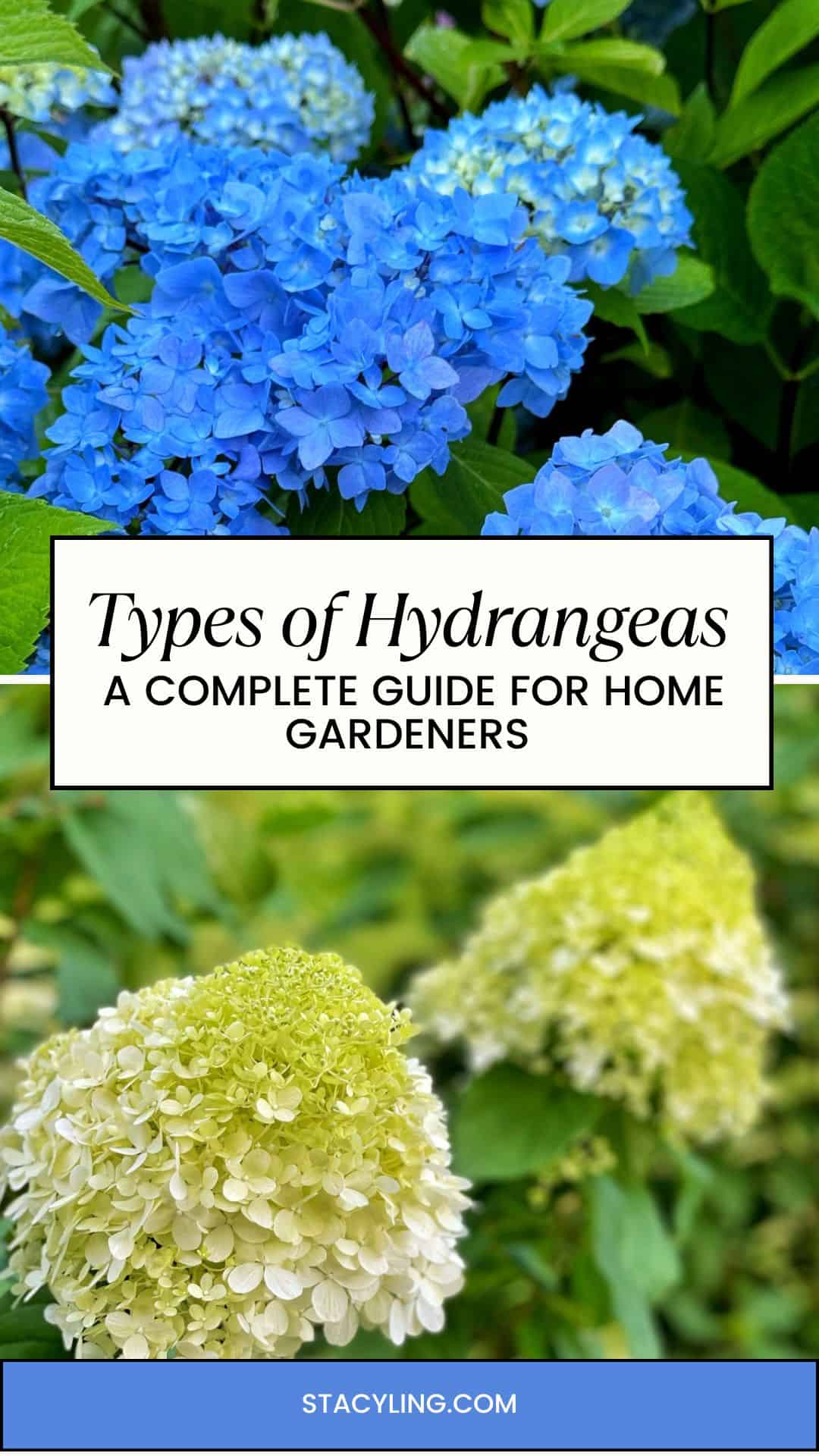
Types of Hydrangeas: A Complete Guide for Home Gardeners

Explore the most popular hydrangea types, their features, and how to grow them successfully in your garden. Simple tips for beautiful blooms.
My love for hydrangeas began with a single Endless Summer hydrangea — the first variety I ever grew that bloomed on both old and new wood. The idea that a hydrangea could rebloom felt like magic to me, and as my passion for gardening grew, so did my fascination with these incredibly diverse shrubs.
In my former garden, I had only enough space to grow a few. But when we moved to our current home, everything changed. The property already included smooth hydrangeas, mountain hydrangeas, a couple of everbloomers, and two old climbing hydrangeas tucked beside the cottage. It was the perfect foundation for what would eventually become one of my favorite plant collections.
Since then, I’ve added dozens of varieties and more than 100 hydrangea plants to our garden. We recently renovated our pool area, and it now features a mix of panicle, mountain, and bigleaf hydrangeas — so many, in fact, that we often jokingly call it “the hydrangea room.” I also rehabbing my porch garden, replacing overgrown rudbeckia with a blend of reblooming bigleaf hydrangea (‘Let’s Dance Sky View’), compact panicles like ‘Bobo,’ and the incredibly beautiful oakleaf ‘Gatsby Pink.’
Growing all six major types of hydrangeas in one garden has given me a true appreciation for how different and how special each variety is. And that’s exactly why this guide exists. Understanding hydrangea types helps you choose the right one for your space, your light conditions, your climate, and the kind of blooms you love most.
If you’re brand new to hydrangeas or want a deeper dive into general care, I highly recommend starting with my Hydrangea Care Basics guide. But if you’re ready to explore the many faces of this iconic shrub, let’s take a closer look at the hydrangeas gardeners love most…and the ones you may just fall in love with next.
(Posts on stacyling.com may contain affiliate links. Click HERE for full disclosure.)
Watch: Which Type of Hydrangea Is Right for Your Garden?
Seeing the different hydrangea types growing in a real landscape can make choosing the right one much easier. In the video below, I’m taking you through my northern New Jersey gardens to compare bigleaf, smooth, panicle, mountain, oakleaf, and climbing hydrangeas. You’ll see where I planted them, how I use them in the landscape, and what I’ve learned from growing more than 15 varieties in my own gardens.

The Six Main Types of Hydrangeas
Hydrangeas fall into six primary categories:
- Bigleaf Hydrangeas (Hydrangea macrophylla)
- Mountain Hydrangeas (Hydrangea serrata)
- Panicle Hydrangeas (Hydrangea paniculata)
- Smooth Hydrangeas (Hydrangea arborescens)
- Oakleaf Hydrangeas (Hydrangea quercifolia)
- Climbing Hydrangea (Hydrangea anomala subsp. petiolaris)
Each type has its own unique look, bloom style, growing conditions, and pruning requirements.
Let’s chat about each one.

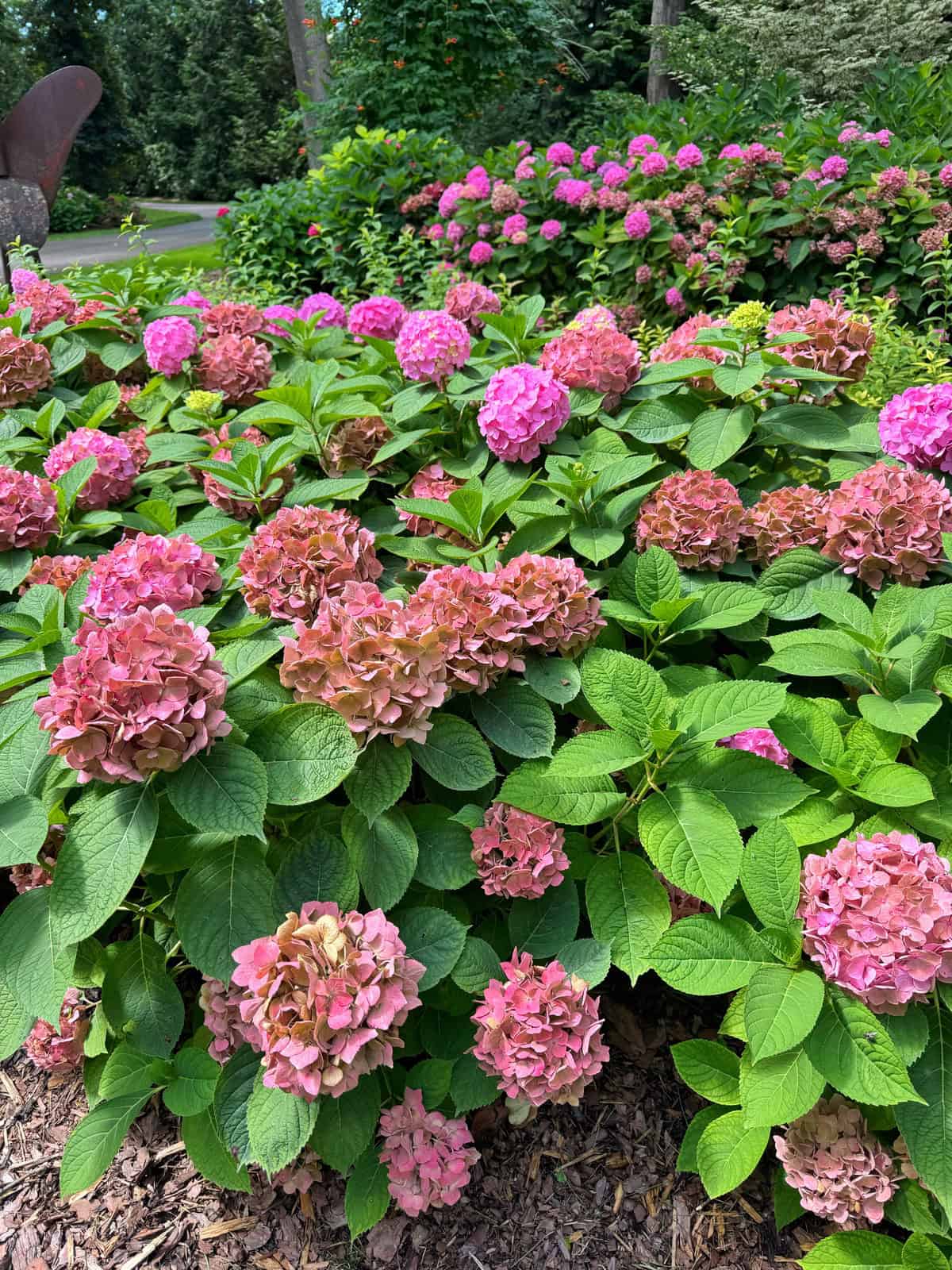
1. Bigleaf Hydrangeas (Hydrangea macrophylla)
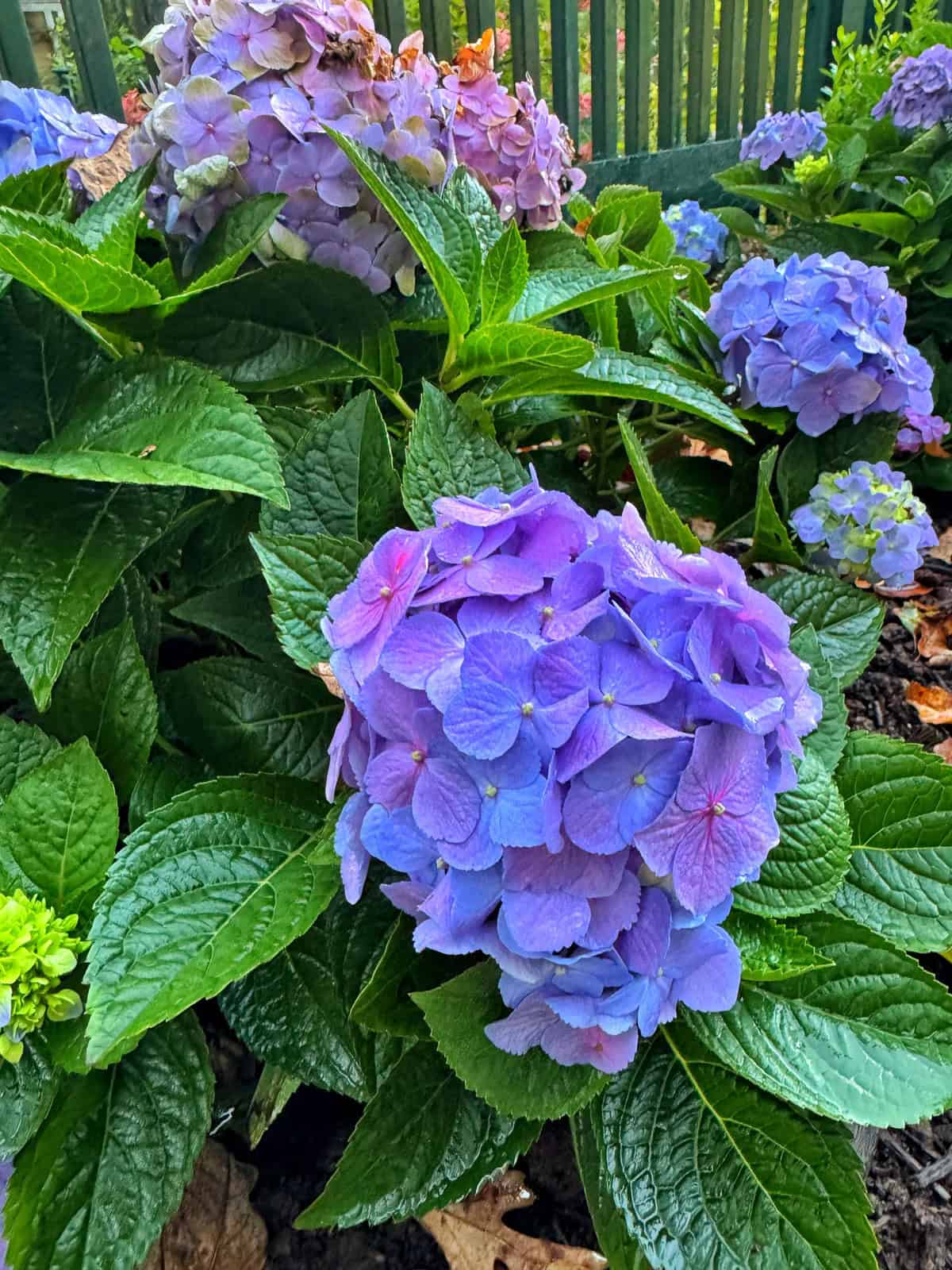
Bigleaf hydrangeas are the classic hydrangeas many of us picture…the large mophead blooms, rich colors, bold foliage, and a romantic cottage-garden feel. They are also the most misunderstood hydrangea type because their blooming success depends heavily on pruning, winter protection, and variety selection.
Key Characteristics
- Mophead or lacecap blooms
- Flower color shifts with soil pH (pink ↔ blue)
- Glossy, broad foliage
- Bloom on old wood (buds form the previous summer)
- Can struggle in cold climates without protection
Growing Conditions
- Prefer morning sun + afternoon shade
- Thrive in rich, well-draining, consistently moist soil
- Benefit from winter protection in Zones 5–6
Best For
- Gardeners who love pink or blue blooms
- Cottage gardens, foundation beds, shade gardens
- Containers (rebloomers especially)
My Experience with Bigleaf Hydrangeas in Zone 6b
Bigleaf hydrangeas stole my heart with Endless Summer. Since then, I’ve grown dozens of different cultivars. In my Zone 6b garden, they bloom best when given morning sun and afternoon shade. I’ve also found they need winter protection to ensure you get the most blooms during the next growing season.
Helpful Links
- Hydrangea Care Basics
- Why Aren’t My Hydrangeas Blooming?
- How to Protect Hydrangeas From Winter Damage
- How to Prune Hydrangeas
2. Mountain Hydrangeas (Hydrangea serrata)
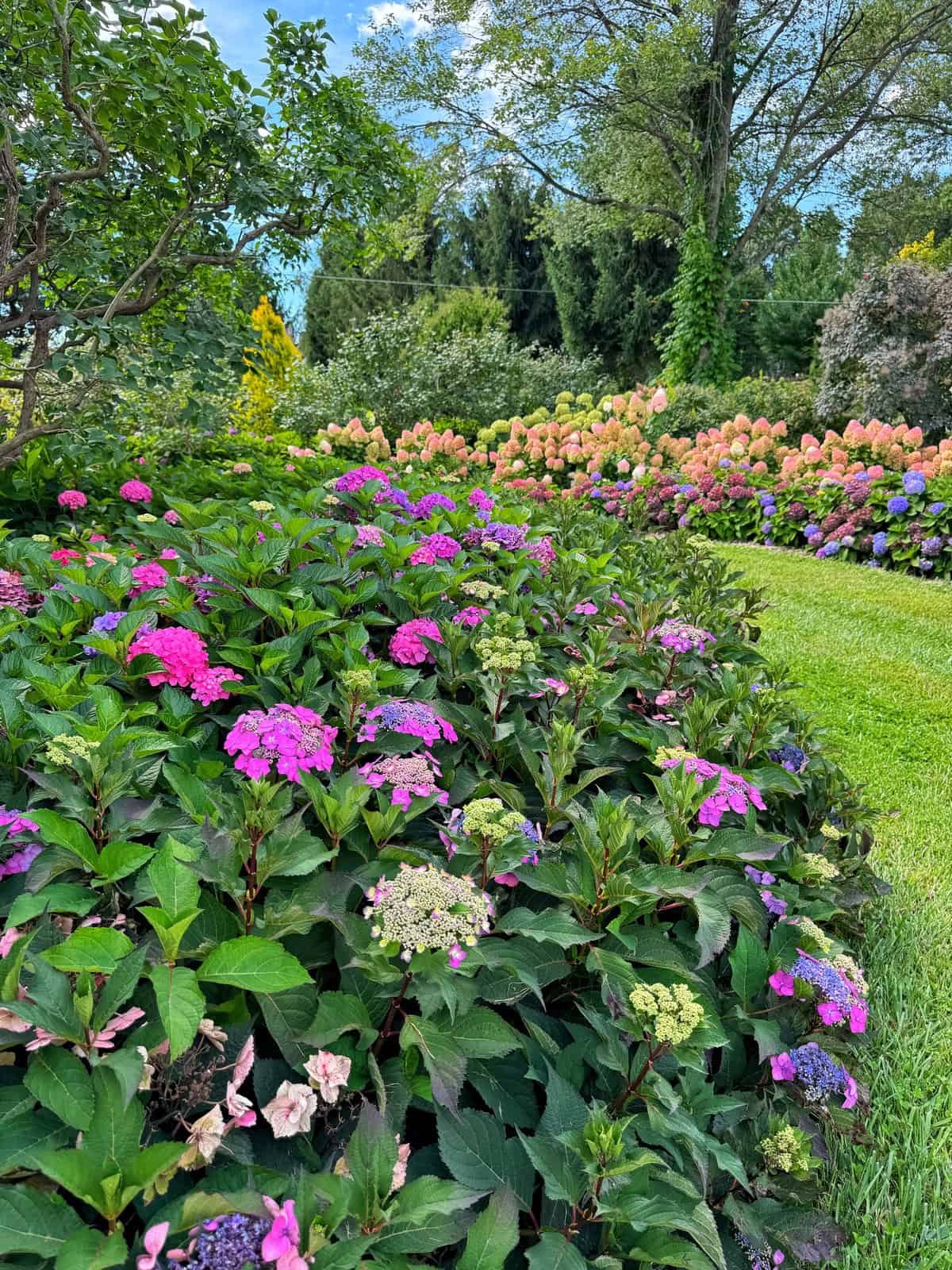
Mountain hydrangeas are closely related to bigleaf hydrangeas but have a more delicate, refined appearance — and better cold tolerance.
Key Characteristics
- Lacecap blooms more often than mopheads
- Slightly smaller leaves and stature
- Bloom on old wood
- More bud-hardy than bigleaf types
Growing Conditions
- Partial shade
- Moist, well-amended soil
- Less prone to winter bud damage than macrophylla
Best For
- Colder climates
- Gardeners who prefer a softer, airier look
- Border gardens, woodland edges, smaller spaces
My Experience with Mountain Hydrangeas in Zone 6b
My former garden didn’t have space for mountain hydrangeas, but our current property came with several established plants, and they’ve become some of my most reliable bloomers. Their delicate lacecap flowers add beautiful texture to the pool garden, and my sweet pup Bodie used to love napping beneath one of them on warm summer days. Most of my mountain hydrangeas grow in full sun here and thrive, which surprises many gardeners. I’ve recently added a few to partial shade as well, and I’m curious to see how they perform. I’ll be sure to share updates as they grow.
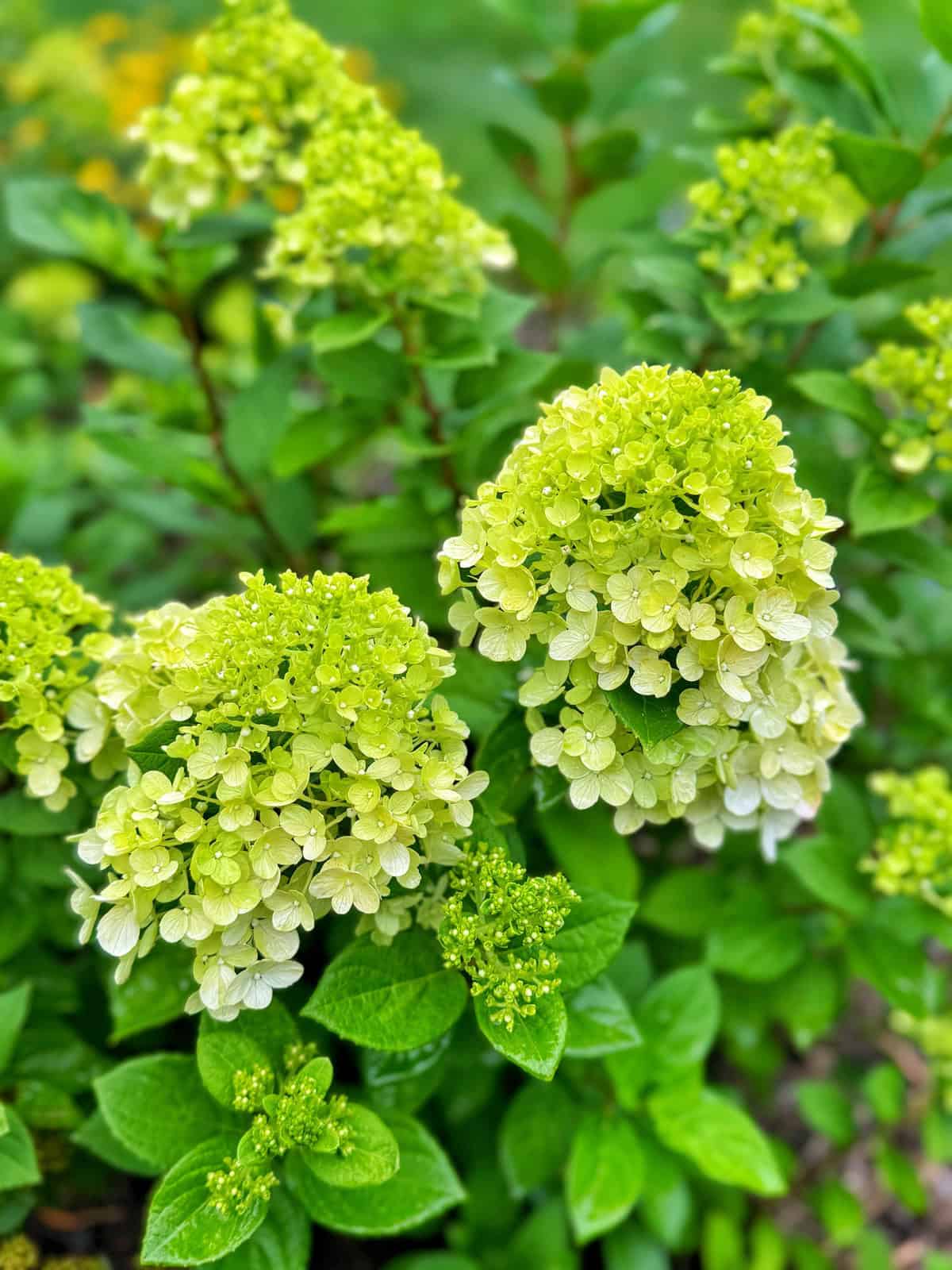
3. Panicle Hydrangeas (Hydrangea paniculata)
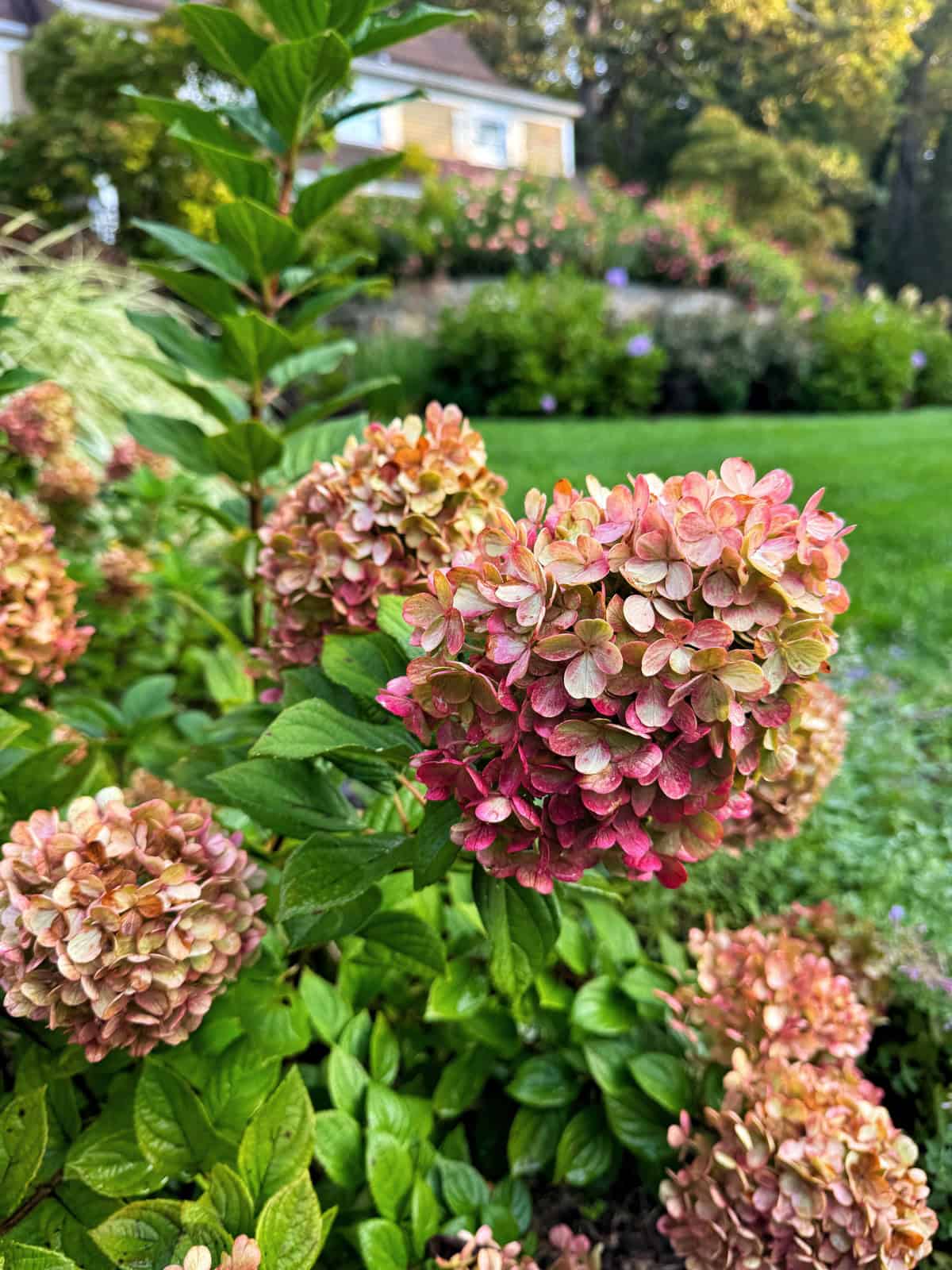
Panicle hydrangeas are the easiest hydrangeas to grow, especially in full sun. They are fast-growing, hardy, and incredibly reliable as they bloom every year regardless of pruning or winter conditions.
Key Characteristics
- Cone-shaped blooms
- Bloom on new wood
- Love full sun
- Heat and drought tolerant once established
- Largest overall shrub size
Popular cultivars include: ‘Limelight,’ ‘Little Lime,’ ‘Pinky Winky,’ ‘Quick Fire,’ ‘Fire Light,’ ‘Bobo,’ and more.
Growing Conditions
- Full sun to part sun
- Tolerant of many soil types
- Moderate water needs
Best For
- Sunny gardens
- Hedges, privacy screens, large backdrops
- Gardeners who want reliable annual blooms
My Experience Growing Panicle Hydrangeas in Zone 6b
My new “hydrangea room” around the pool is filled with panicle hydrangeas that include pufferfish, powerball, and quick fire fab. In my Zone 6b climate, I prune them hard in late winter/early spring and they reward me with towering, show-stopping blooms every summer well and flower well into fall.
When cutting them back in spring, make sure you don’t remove more than 1/3 of the branches to insure stronger stems.
Helpful Links

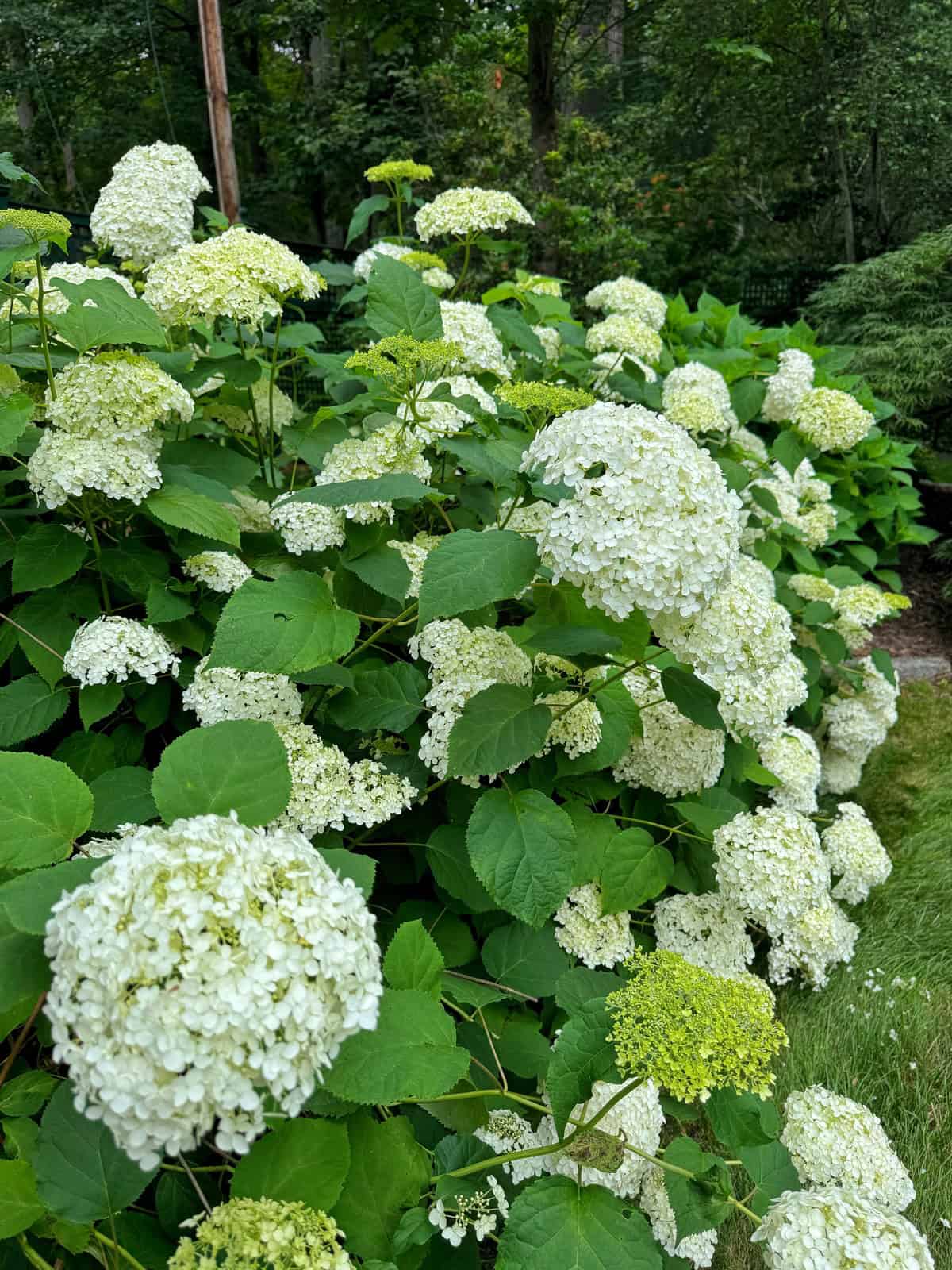
4. Smooth Hydrangeas (Hydrangea arborescens)
Smooth hydrangeas are native to the eastern United States and incredibly hardy. They’re known for their giant round blooms and fuss-free care.
Key Characteristics
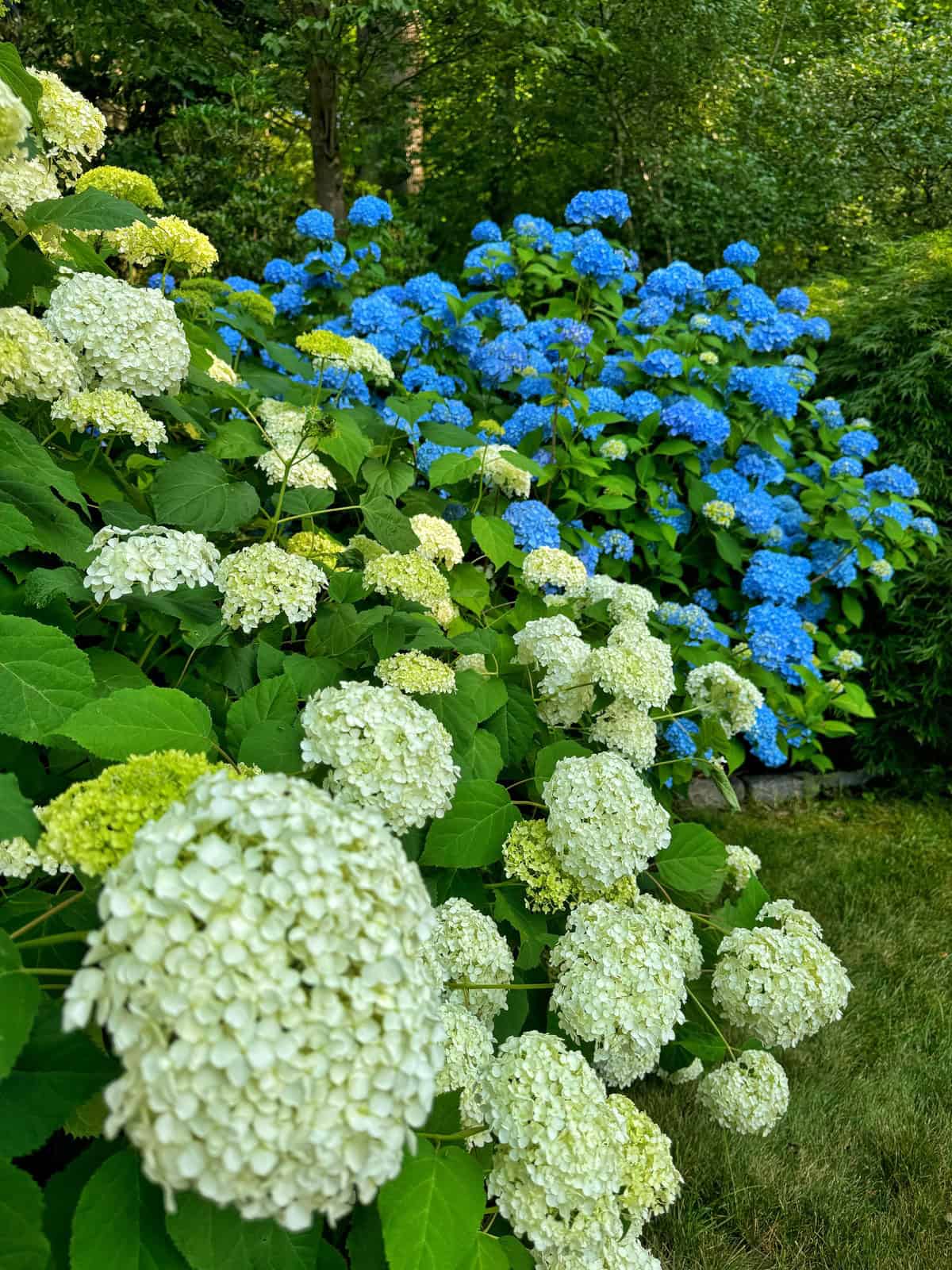
- Large rounded white or greenish-white blooms
- Bloom on new wood
- Very cold hardy
- More flexible, arching stems
Popular cultivars: ‘Annabelle,’ ‘Incrediball,’ ‘Invincibelle Spirit’
Growing Conditions
- Partial shade to part sun
- Moist, rich soil
- Benefit from spring pruning to encourage sturdier stems
Best For
- Woodland edges
- Naturalized plantings
- Gardeners looking for native shrubs
My Experience Growing Smooth Hydrangeas
I’m new to growing hydrangea arborescens because my former garden just didn’t have the growing space. We inherited smooth hydrangeas when we moved in located in our backyard garden, and I’ve added many more since. They’re incredibly forgiving and bloom beautifully even after tough winters. I added a stormproof around the pool and cottage gardens because the stems are stronger and sturdier. It’s a new-to-me variety so I’ll let you know how they do!
5. Oakleaf Hydrangeas (Hydrangea quercifolia)
Oakleaf hydrangeas offer four-season interest, making them one of the most versatile shrubs you can grow.
Key Characteristics
- Distinctive oak-shaped leaves
- Long, cone-shaped flowers
- Bloom on old wood
- Exceptional fall color
- Peeling cinnamon bark adds winter appeal
Growing Conditions
- Partial shade to part sun
- Well-drained soil
- Best in naturalized landscapes
Best For
- Woodland gardens
- Mixed shrub borders
- Four-season landscapes
My Experience Growing Oakleaf Hydrangeas
‘Gatsby Pink’ is one of my newest additions to the porch garden, and its fall color is absolutely breathtaking. I grew oakleaf hydrangeas in my former garden and always loved how vibrant they became in autumn. That plant was positioned with half the shrub in full sun and the other half in part shade, and the difference was striking as the full-sun side consistently produced more blooms. I also loved using the foliage in my fall tablescapes; its rich color and texture add such beautiful, organic style to seasonal décor.

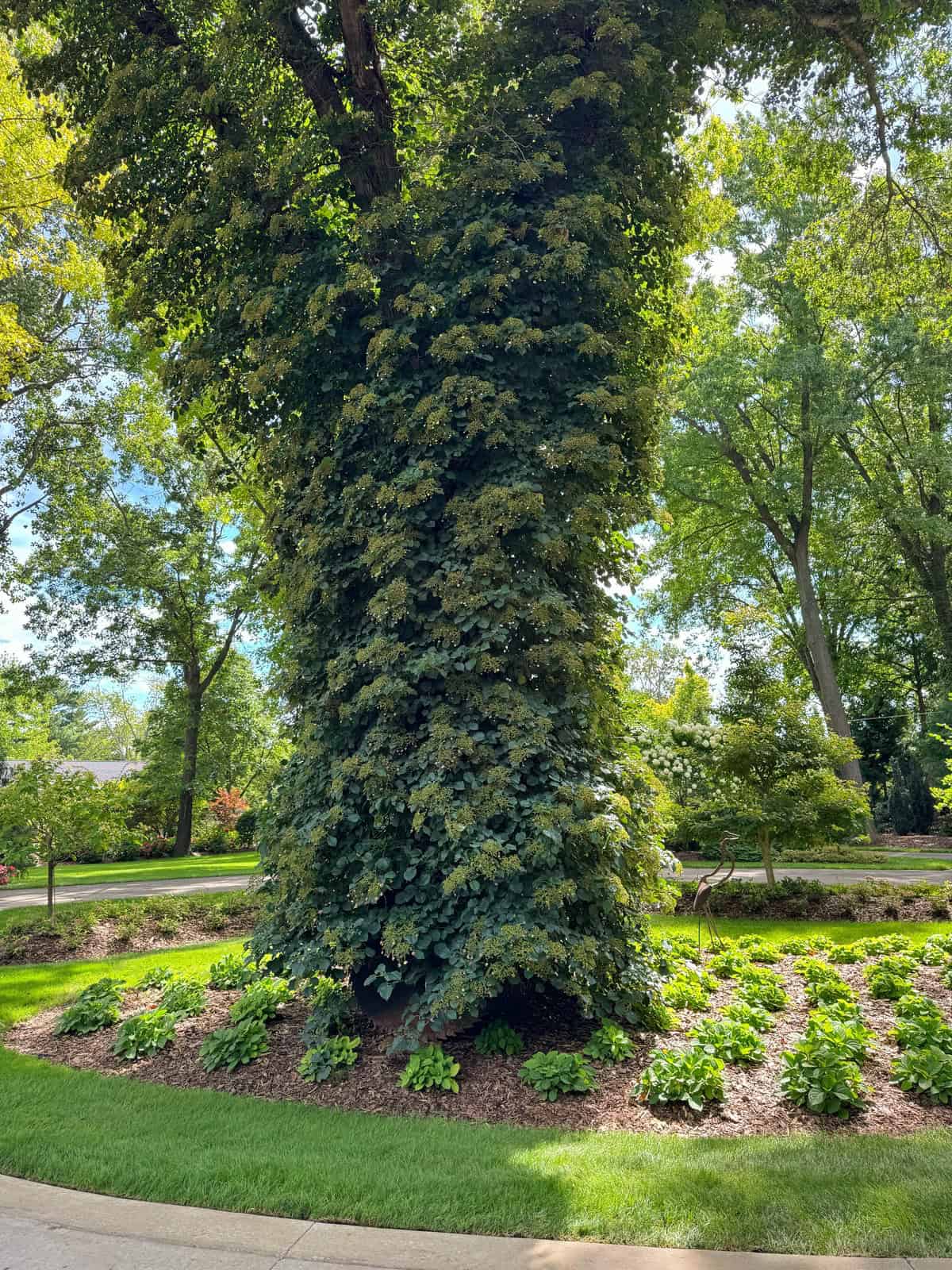
6. Climbing Hydrangea (Hydrangea anomala subsp. petiolaris)
Climbing hydrangeas are unlike any other type as they are tall, architectural, and breathtaking when mature.
Key Characteristics
- Woody vine with aerial roots
- Lacecap-style blooms
- Slow to establish (sleep, creep, leap)
- Can climb up trees, arbors, masonry
Growing Conditions
- Partial shade
- Even moisture
- Room to climb or drape
Best For
- Walls, pergolas, fences
- Old trees (non-strangling)
- Shady spots needing vertical interest
My Experience Growing Climbing Hydrangeas
The two climbing hydrangeas beside our cottage were here long before we moved in. They’ve never bloomed, and I’m not sure I’ll keep them where they are – here’s why. In my previous garden, I trained a climber up the side of my shed. It took several years before it finally bloomed, but the vines eventually damaged the shed’s paint.
Climbing hydrangeas get very tall and need a sturdy, supportive structure to grow on. Recently I visited Proven Winners ColorChoice in Michigan and saw a majestic climbing hydrangea growing up a tree and it was absolutely stunning. That has me thinking I’ll transplant our two climbers onto a suitable tree, once I choose the right one. I believe that setting would let them thrive and give them the display they deserve.

How to Choose the Right Hydrangea for Your Garden
Choosing the right type comes down to:
Sunlight
- Full sun: Panicle
- Part sun/part shade: Smooth, Oakleaf
- Morning sun/afternoon shade: Bigleaf, Mountain
- Shade with structure: Climbing
Bloom Reliability
- Most reliable: Panicle, Smooth
- Somewhat reliable: Oakleaf, Mountain
- Needs best placement and care: Bigleaf
Color Preference
- Blue/pink color change: Bigleaf, Mountain
- White that ages to pink/rose: Panicle
- Classic white: Smooth, Oakleaf
Garden Style
- Cottage garden: Bigleaf, Mountain
- Naturalized/woodland: Smooth, Oakleaf
- Modern/full sun design: Panicle
- Vertical appeal: Climbing
How to Use Different Hydrangea Varieties in Your Garden
Once you understand the different types of hydrangeas, the next step is figuring out how to use them together in your landscape.
Each variety brings something different to the garden. Panicle hydrangeas add height and structure, bigleaf and mountain hydrangeas bring bold color, and smooth hydrangeas help fill in with full, rounded blooms. When you start combining them thoughtfully, you can create a planting that feels layered and interesting throughout the season.
One thing that really changed how I design with hydrangeas was seeing different varieties planted together in mature landscapes. The mix of bloom shapes, sizes, and timing creates a much bigger impact than planting just one type on its own.
If you want to go deeper into what to plant with hydrangeas and how to combine them with other shrubs, perennials, and even more hydrangeas, I share my favorite pairings and real garden combinations in this post: What to Plant With Hydrangeas.

Common Questions About Hydrangea Types
Which hydrangeas are the easiest to grow?
Hands down panicle and smooth hydrangeas because they’re incredibly reliable and bloom on new wood.
Which hydrangeas grow in full sun?
Panicles thrive in full sun. Smooth hydrangeas tolerate it with enough moisture.
Which hydrangeas bloom the longest?
Panicles and reblooming bigleaf varieties.
Which hydrangeas change color?
Bigleaf and mountain hydrangeas.
Are any hydrangeas deer resistant?
No hydrangea is fully deer proof, but oakleaf hydrangeas tend to be less appealing.
For more detail: Are Hydrangeas Deer Resistant?
Still Not Sure Which Hydrangea Is Right for Your Garden?
If you’ve ever looked at all the different hydrangea types and thought, “I have no idea which one I should choose,” you’re not alone. Plant selection is honestly where most gardeners get stuck, especially when different varieties all have different needs and bloom habits.
That’s one of the things I focus on most in The Bricks ‘n Blooms Guide to a Beautiful and Easy-Care Flower Garden. I break down how to choose plants that actually work for your space and how to combine them so your garden looks intentional without feeling overwhelming. You can take a closer look here.
And once you’ve planted your hydrangeas, it’s just as important to track how they perform. Which varieties thrived? Which struggled? What would you do differently?
That’s exactly what my Beautiful and Easy-Care Flower Garden Planner is designed for. It gives you a place to record what you planted and how it performed so you can build on what works and improve your garden year after year. Find it here.

Final Thoughts of Types of Hydrangeas
Hydrangeas offer an incredible range of shapes, colors, bloom times, and landscape uses. After growing every major type, from reblooming bigleafs to towering panicles and architectural climbers, I can honestly say there’s a hydrangea for every garden style and every gardener.
Understanding the different types helps you choose the right variety for your growing conditions, pruning comfort level, and desired look. And once you match the plant to the place, hydrangeas become some of the most rewarding shrubs you can grow.
If you want to build your skills even further, here are some helpful guides:
- Hydrangea Care Basics
- Why Aren’t My Hydrangeas Blooming?
- How to Protect Hydrangeas From Winter Damage
- How to Divide Hydrangeas
- How to Propagate Hydrangeas
- Drying Hydrangeas the Easy Way
- How to Keep Fresh Cut Hydrangeas From Drooping
- How to Make a Hydrangea Wreath
- Are Hydrangeas Deer Resistant?
- How to Create the Prettiest Hydrangea Arrangements
Whether you’re planting your first hydrangea or adding your hundredth (like me!), there is always something new to appreciate about these extraordinary shrubs.
I hope you found this post helpful as you choose your the best hydrangea for your home garden. Which one is your favorite and why? Let’s chat more about it in the comments below.
Thank you for visiting the blog today!
Enjoy your day! xo

Originally Published . Last Updated .

What about cascading hydrangeas?
Bridal waves?
Fairytrail is new and should probably have their own category. I planted the green and white varieties last year – they did not flower this year but we had such a rough spring with that hard freeze. So, we’ll see what happens next year.