
15 Best Companion Plants for Hydrangeas (What to Plant + What to Avoid)

Not sure what to plant with hydrangeas? Discover the best companion plants, real garden pairings, and simple design tips.
Hydrangeas are one of the easiest ways to anchor a garden with big, beautiful blooms; but what you plant around them can make or break the entire space. I’ve found that the right companion plants don’t just fill gaps, they add contrast, extend the season, and help create a garden that feels full and layered from spring through fall.
Hi, I’m Stacy Ling, a trained Master Gardener gardening in USDA Zone 6b, New Jersey. I’ve spent decades designing and growing garden beds with hydrangeas as focal points, experimenting with different plant combinations to see what actually works…and not just what looks good on paper.
If you’re still learning the basics of growing hydrangeas, my Hydrangea Care Guide is a great place to start. And if you’re choosing which varieties to plant, you may also find my Types of Hydrangeas post helpful since sun, shade, and growth habits all play a role in what companions will thrive nearby.
In this post, I’m sharing the best companion plants for hydrangeas including shrubs, perennials, and bulbs, plus real garden combinations I use, and a few plants I avoid so you can build a garden that looks beautiful and grows well together.
(Posts on stacyling.com may contain affiliate links. Click HERE for full disclosure.)
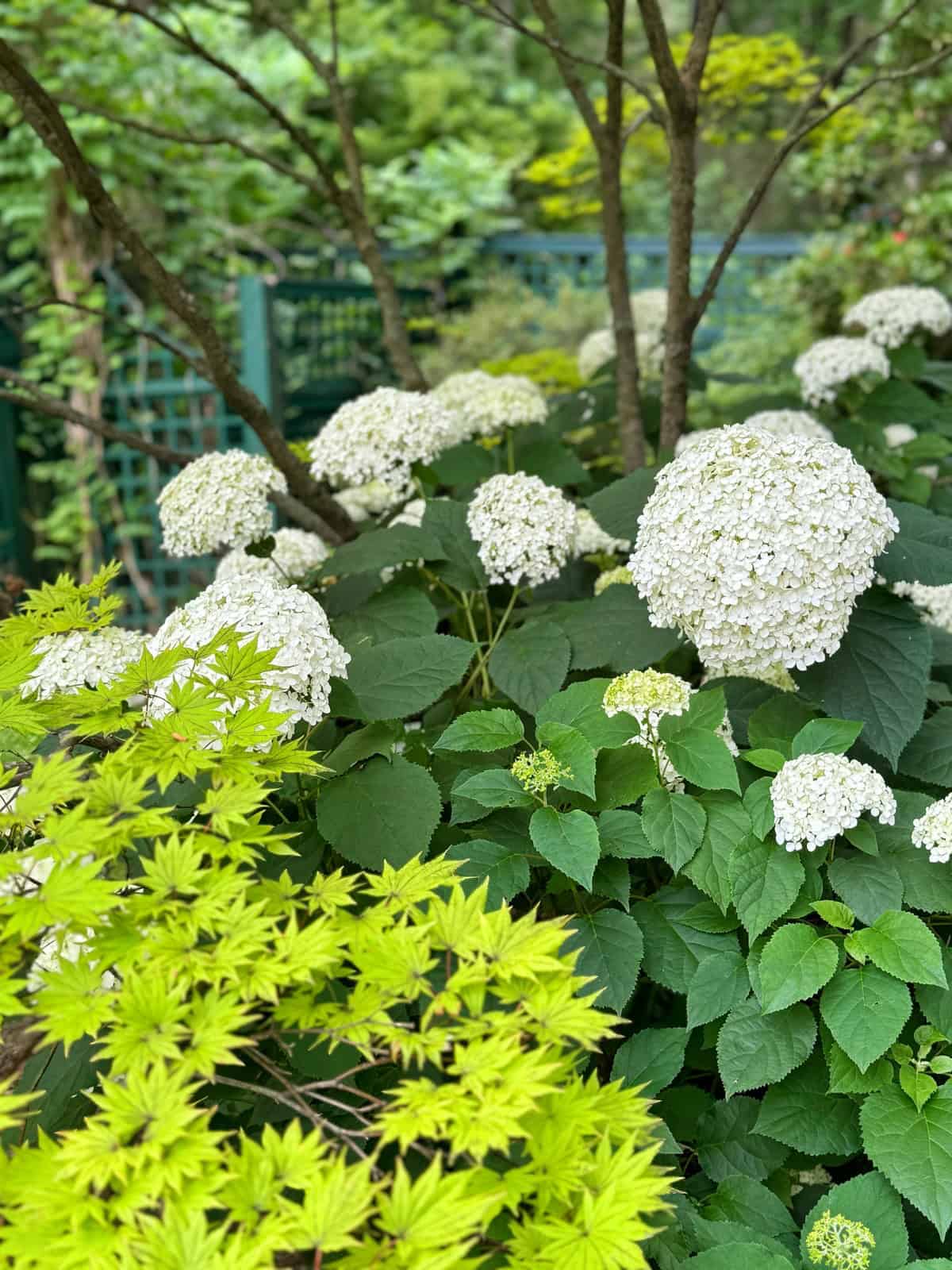
How to Choose Companion Plants for Hydrangeas
Before choosing companion plants, it helps to understand what hydrangeas need to thrive. The best combinations aren’t just about what looks good together. They also need to grow well in the same conditions.
Here are the main things I consider when planting around hydrangeas in my own garden.
Light Requirements
Not all hydrangeas want the same amount of sun, and this is one of the most important factors to get right.
Bigleaf, mountain, and oakleaf hydrangeas generally prefer partial shade, especially in hotter climates, while panicle hydrangeas tolerate and often prefer full sun.
If the light needs don’t match, one plant will usually struggle. I’ve found that when everything in the bed gets the right amount of sun, the entire planting looks healthier and blooms more consistently.
Soil and Moisture
Hydrangeas prefer evenly moist, well-draining soil, and they do not like to dry out for long periods.
When choosing companion plants, I avoid anything that prefers dry or sandy conditions because it makes watering difficult to manage. In mixed plantings, it’s always easier when everything has similar moisture needs.
Growth Habit
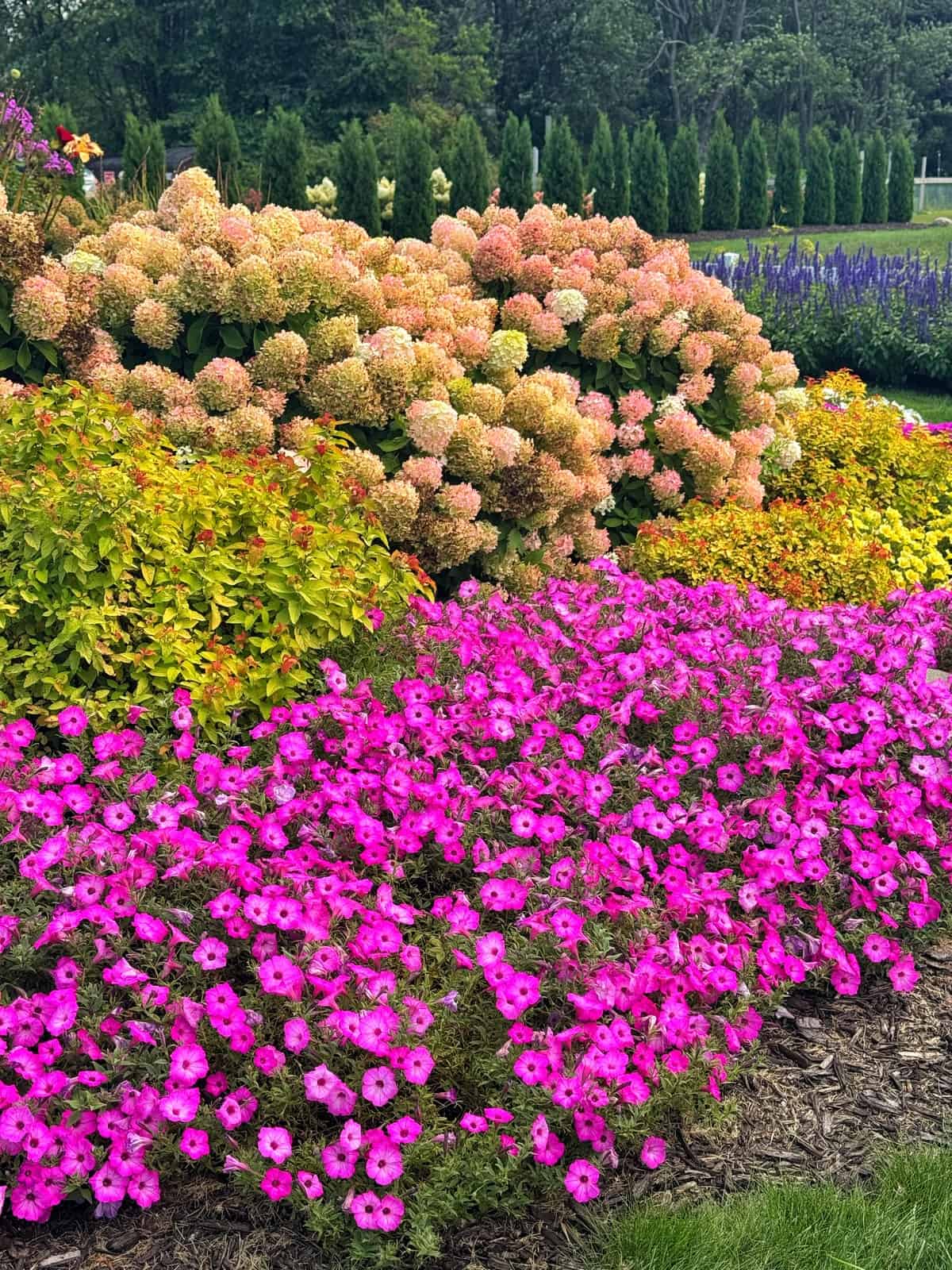
Hydrangeas naturally grow in a rounded, full shape, which makes them great anchor plants in a garden bed.
To create a more balanced and layered look, I like pairing them with plants that either contrast that shape, like spiky or airy forms, or help soften the edges with lower-growing foliage.
This is what makes a planting feel more intentional instead of flat.
Bloom Timing
One of the easiest ways to make a garden feel full all season is to layer bloom times.
Hydrangeas typically bloom in summer, so I like to pair them with plants that flower earlier in spring and others that carry color later into fall.
That way, there’s always something happening in the space, even when hydrangeas are not at their peak.
Best Shade-Loving Companion Plants for Hydrangeas
These pair well with bigleaf, mountain, and oakleaf hydrangeas that thrive in partial shade.
Hellebores (Lenten Rose)
Hardiness Zone: 4–9
Light: Partial to full shade
Why It Pairs Well With Hydrangeas:
Hellebores bloom in early spring before hydrangeas even begin to leaf out, giving your garden color when everything else is still waking up. Their low-growing habit makes them ideal for planting beneath larger hydrangea shrubs without competing for space.
Extra Notes:
In my Zone 6b garden, hellebores are one of the first signs that spring is coming. I love planting them near hydrangeas so the space never feels empty, even in early spring.
To learn more about how I grow hellebores, please visit my guide to growing hellebores (lenten rose) here.

Astilbe
Hardiness Zone: 3–9
Light: Partial shade
Why It Pairs Well With Hydrangeas:
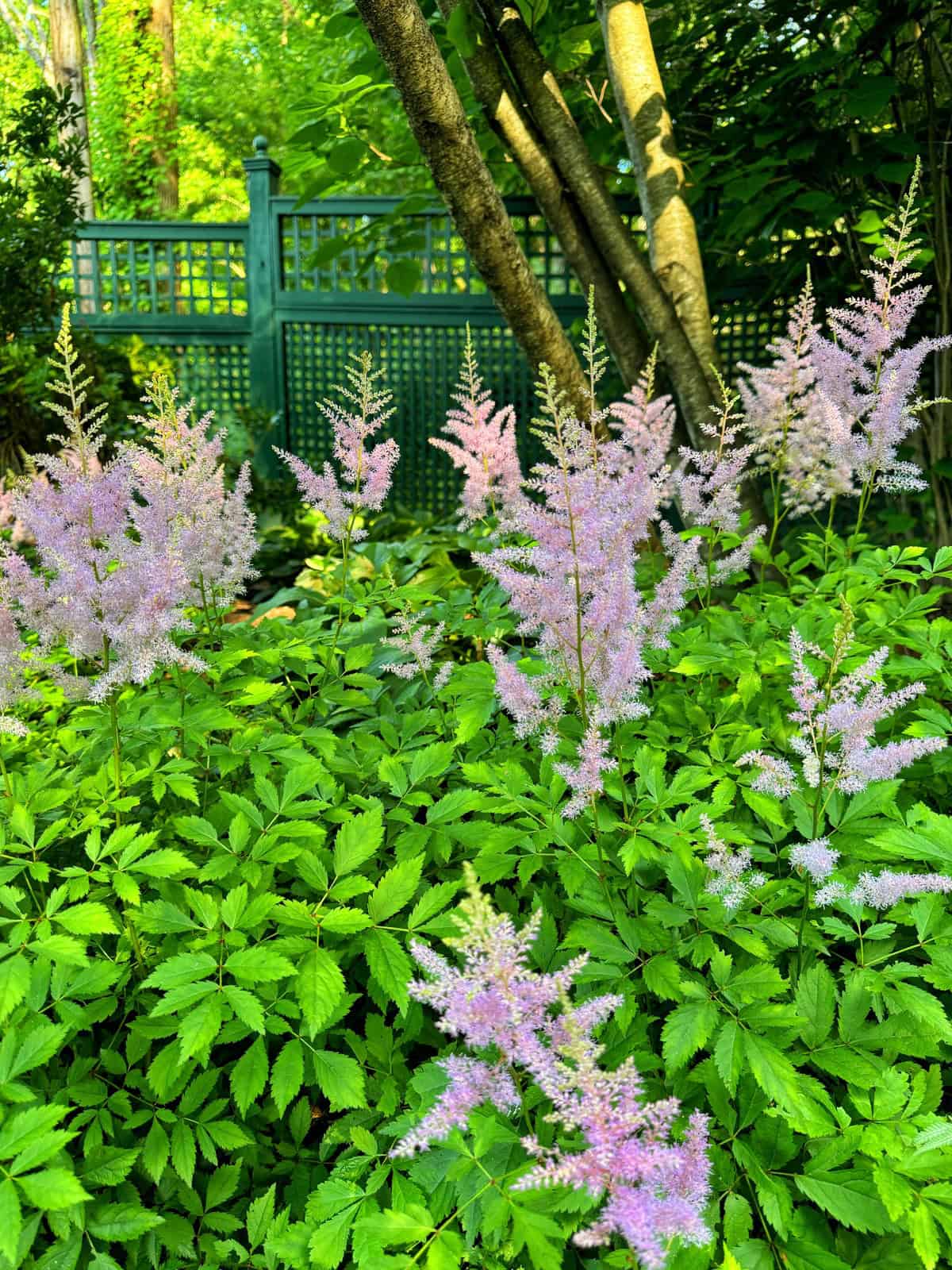
Astilbe adds soft, feathery texture that contrasts beautifully with the bold leaves and blooms of hydrangeas. It also thrives in similar moisture-rich conditions.
Extra Notes:
I use astilbe when I want to lighten up a planting. The texture makes everything feel softer and more layered, especially in shady areas.
Heuchera (Coral Bells)
Hardiness Zone: 4–9
Light: Shade to partial sun
Why It Pairs Well With Hydrangeas:
Heuchera is all about foliage. It brings in color and contrast, which helps carry the garden when hydrangeas are not in bloom.
Extra Notes:
I like using heuchera along the front of beds to edge plantings and tie everything together. It’s especially helpful in shade gardens where flowers can be more limited.
To learn more about how I grow heucheras, please visit my growing heucheras (coral bells) guide here.

Bottlebrush Buckeye
Hardiness Zone: 4–8
Light: Partial shade
Why It Pairs Well With Hydrangeas:
Bottlebrush buckeye adds height and dramatic, spiky blooms that contrast with the rounded shape of hydrangeas. It also attracts pollinators like butterflies, which brings more life into the garden.
Extra Notes:
This is one of my favorite shrubs to pair with hydrangeas. The contrast in flower shape makes the entire planting feel more interesting and less one-note.
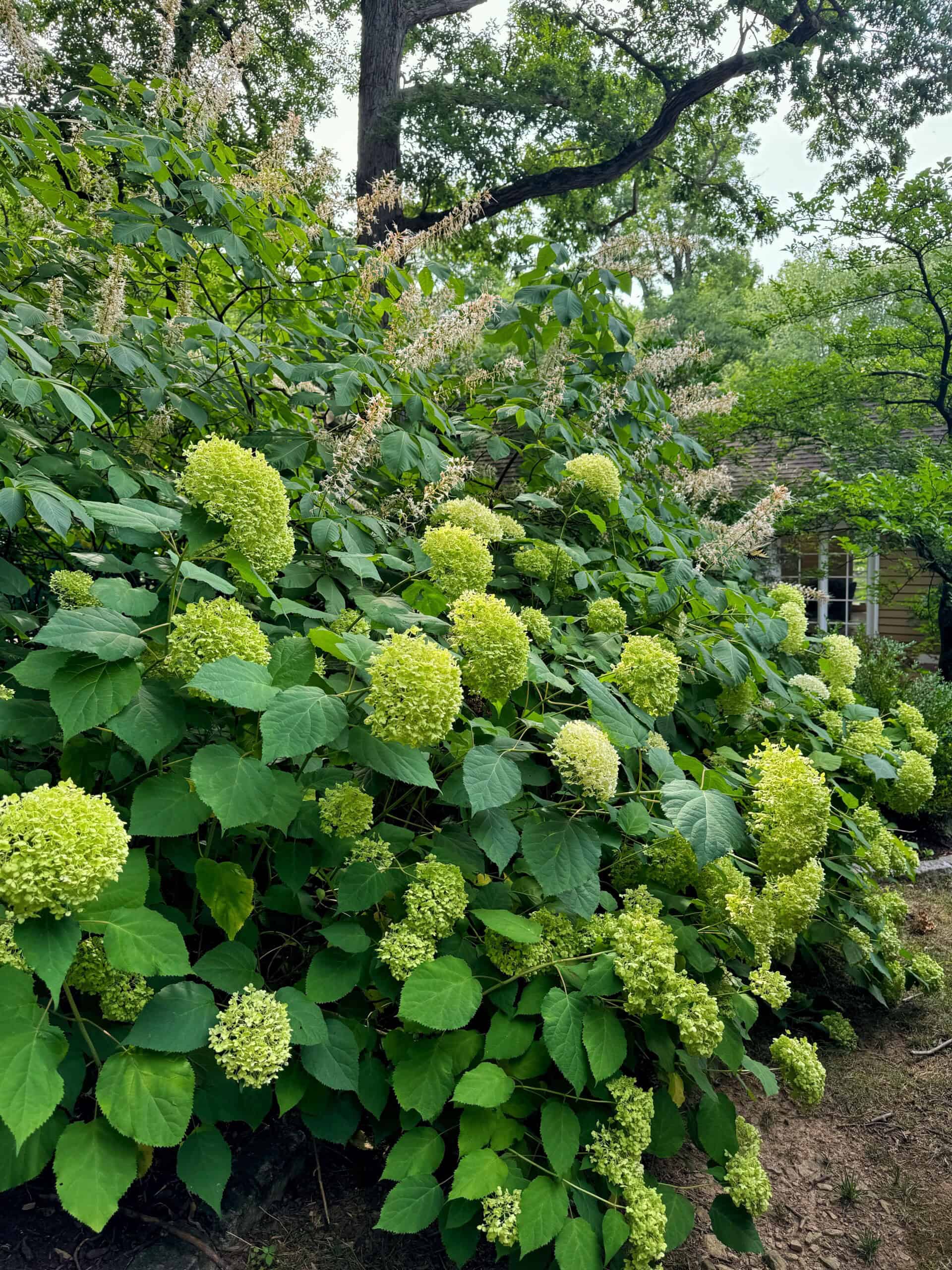
Azalea
Hardiness Zone: 4–9
Light Requirements: Partial shade
Why It Pairs Well With Hydrangeas:
Azaleas provide a burst of early spring color before hydrangeas begin growing. This helps extend the season and keeps your garden from looking bare.
Extra Notes:
I rely on azaleas to carry the garden early in the season. By the time they fade, hydrangeas are ready to take over.
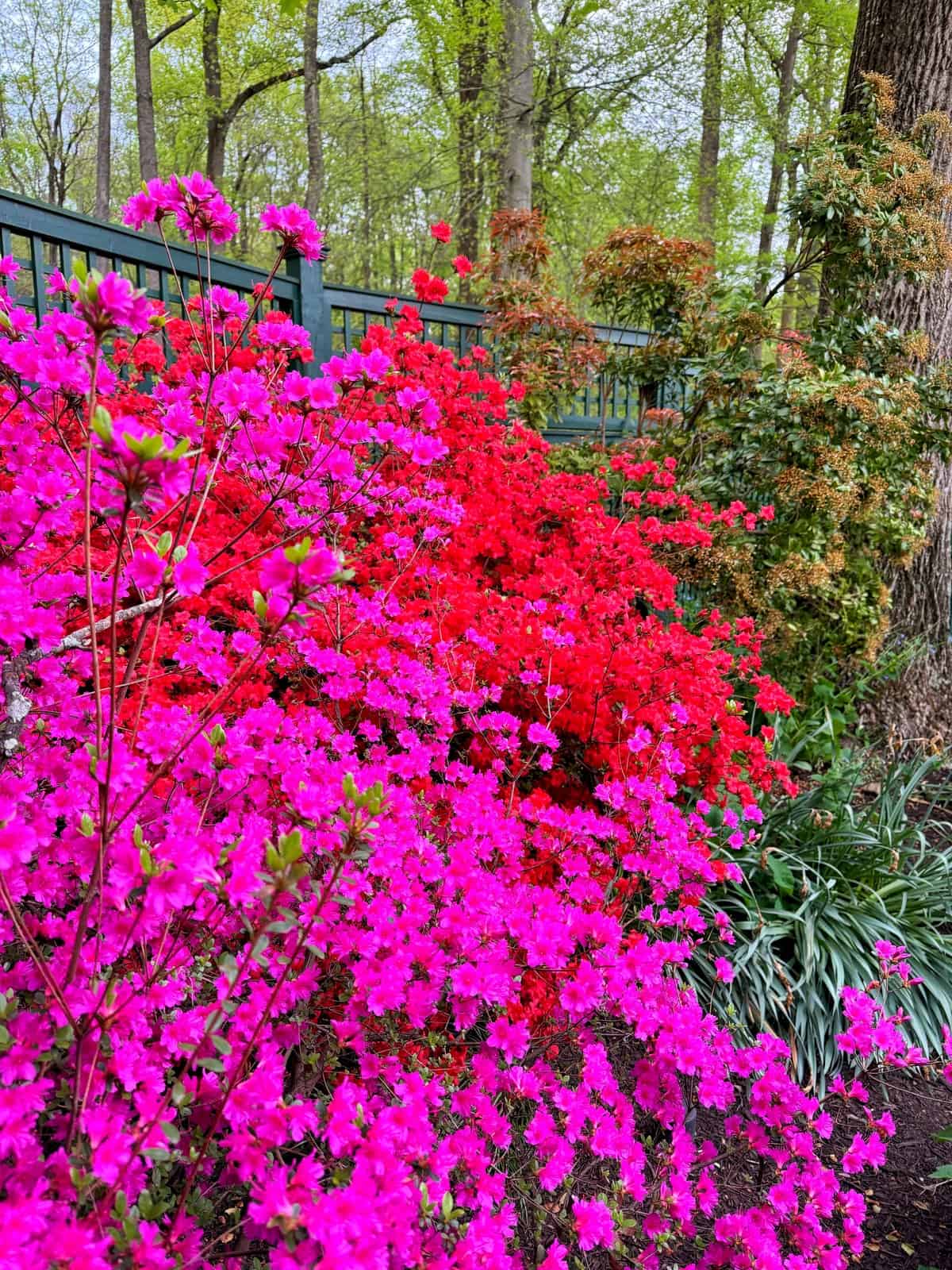
Rhododendron
Hardiness Zone: 4–9
Light Requirements: Partial shade
Why It Pairs Well With Hydrangeas:
Rhododendrons have a similar structure and growth habit to hydrangeas, making them easy to combine in layered shrub borders. Their spring blooms complement the later hydrangea season.
Extra Notes:
I often plant rhododendrons near hydrangeas so there’s a natural transition from spring into summer color.
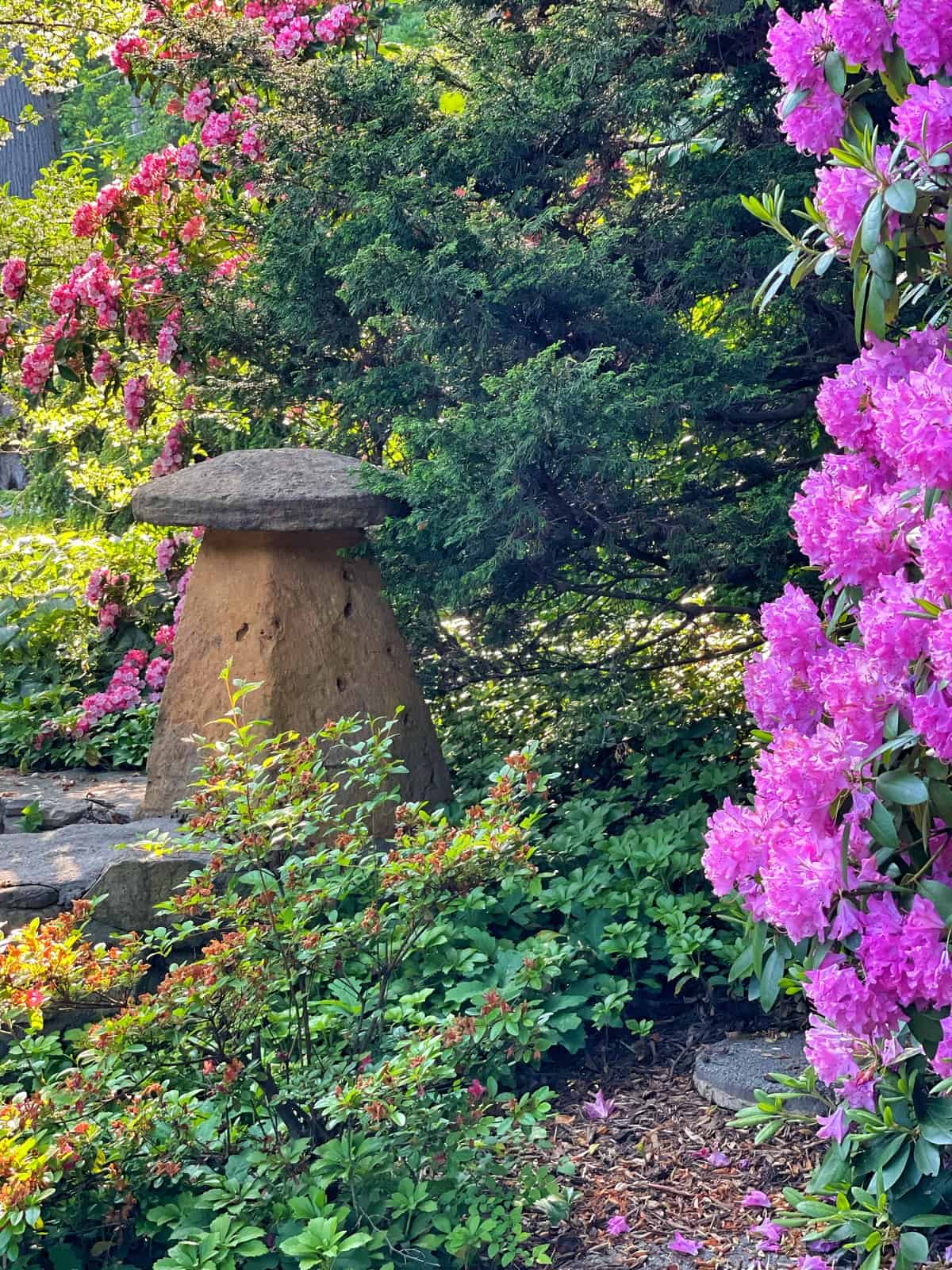
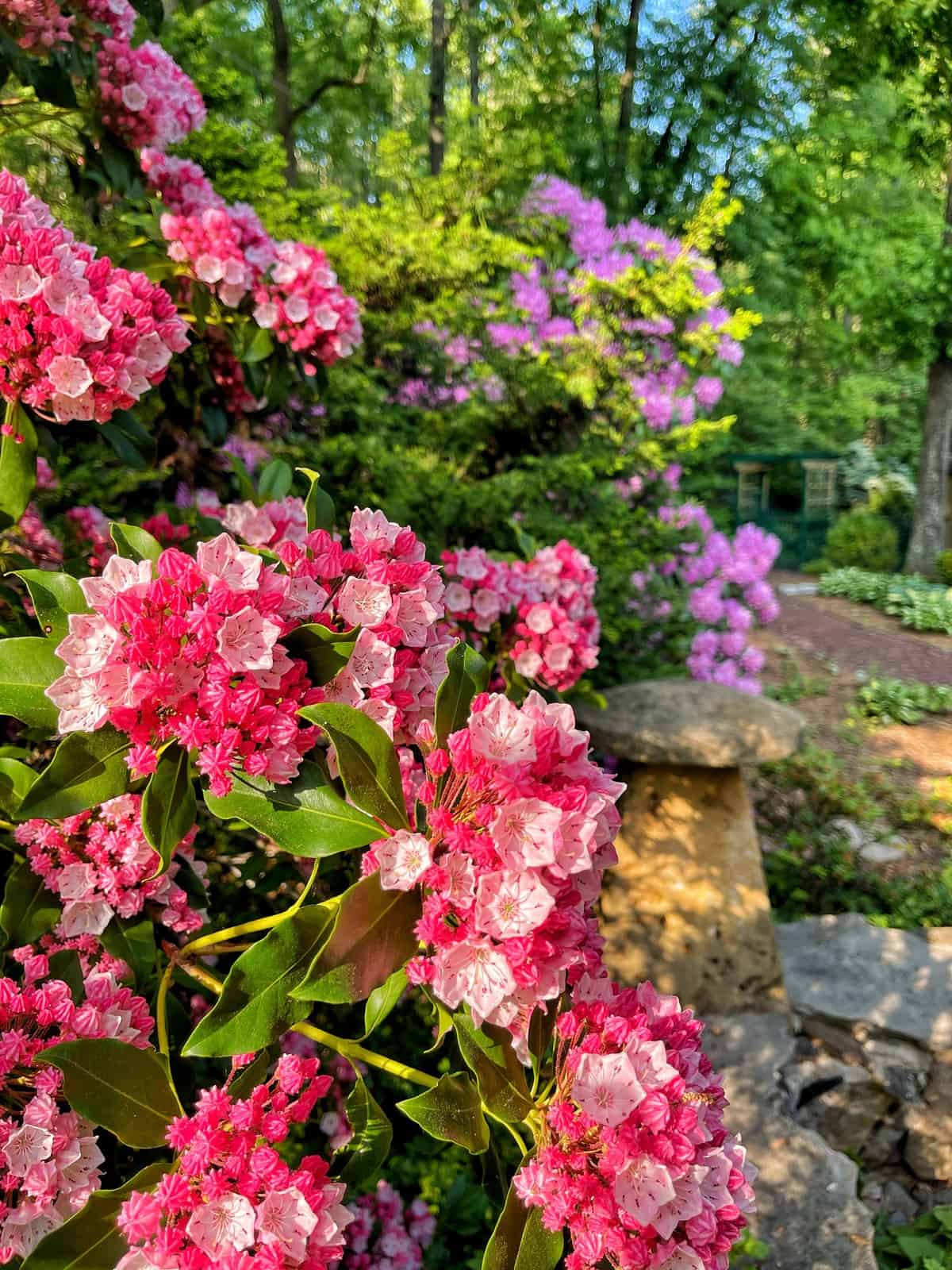
Mountain Laurel
Hardiness Zone: 4–9
Light Requirements: Partial shade
Why It Pairs Well With Hydrangeas:
Mountain laurel offers unique blooms and thrives in similar woodland conditions, making it a natural companion in shaded landscapes.
Extra Notes:
This is a great option if you want something a little different that still fits beautifully into a hydrangea planting.
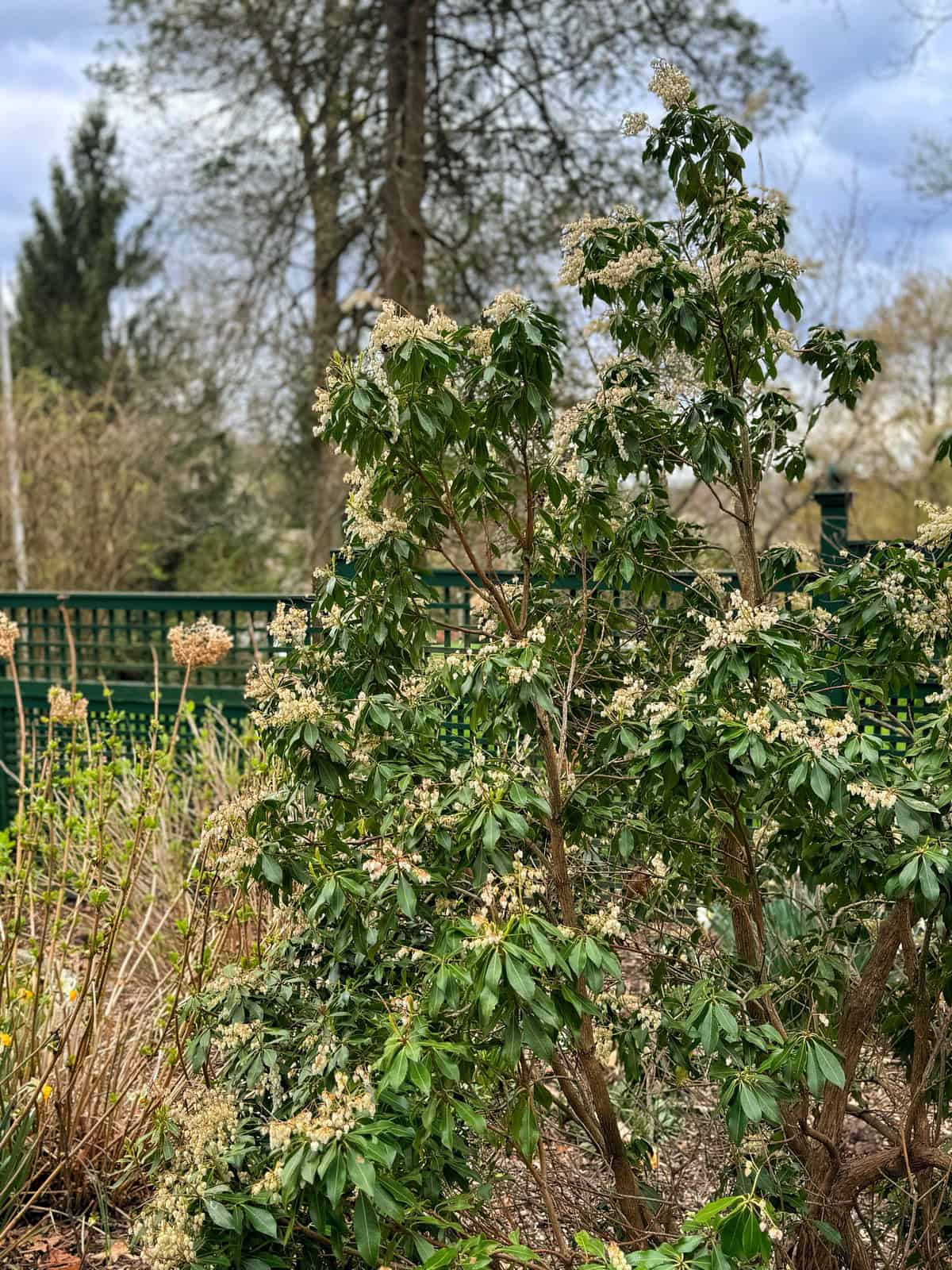
Pieris japonica
Hardiness Zone: 5–8
Light Requirements: Partial shade
Why It Pairs Well With Hydrangeas:
Pieris adds early-season interest with its cascading flowers and colorful new growth, helping bridge the gap before hydrangeas leaf out.
Extra Notes:
I like using pieris when I want something evergreen that still offers seasonal interest beyond just foliage.
Japanese Maple (Acer palmatum)
Hardiness Zone: 5–8 (varies by cultivar)
Light Requirements: Partial shade
Why It Pairs Well With Hydrangeas:
Japanese maples provide structure and height while their delicate foliage contrasts beautifully with the bold leaves of hydrangeas. They also create filtered shade, which benefits many hydrangea varieties.
Extra Notes:
I love using Japanese maples as a backdrop for hydrangeas. They really elevate the entire planting and make it feel more layered and intentional.

Best Sun-Loving Companion Plants for Hydrangeas
These work best with panicle hydrangeas like Limelight that thrive in sunnier conditions.
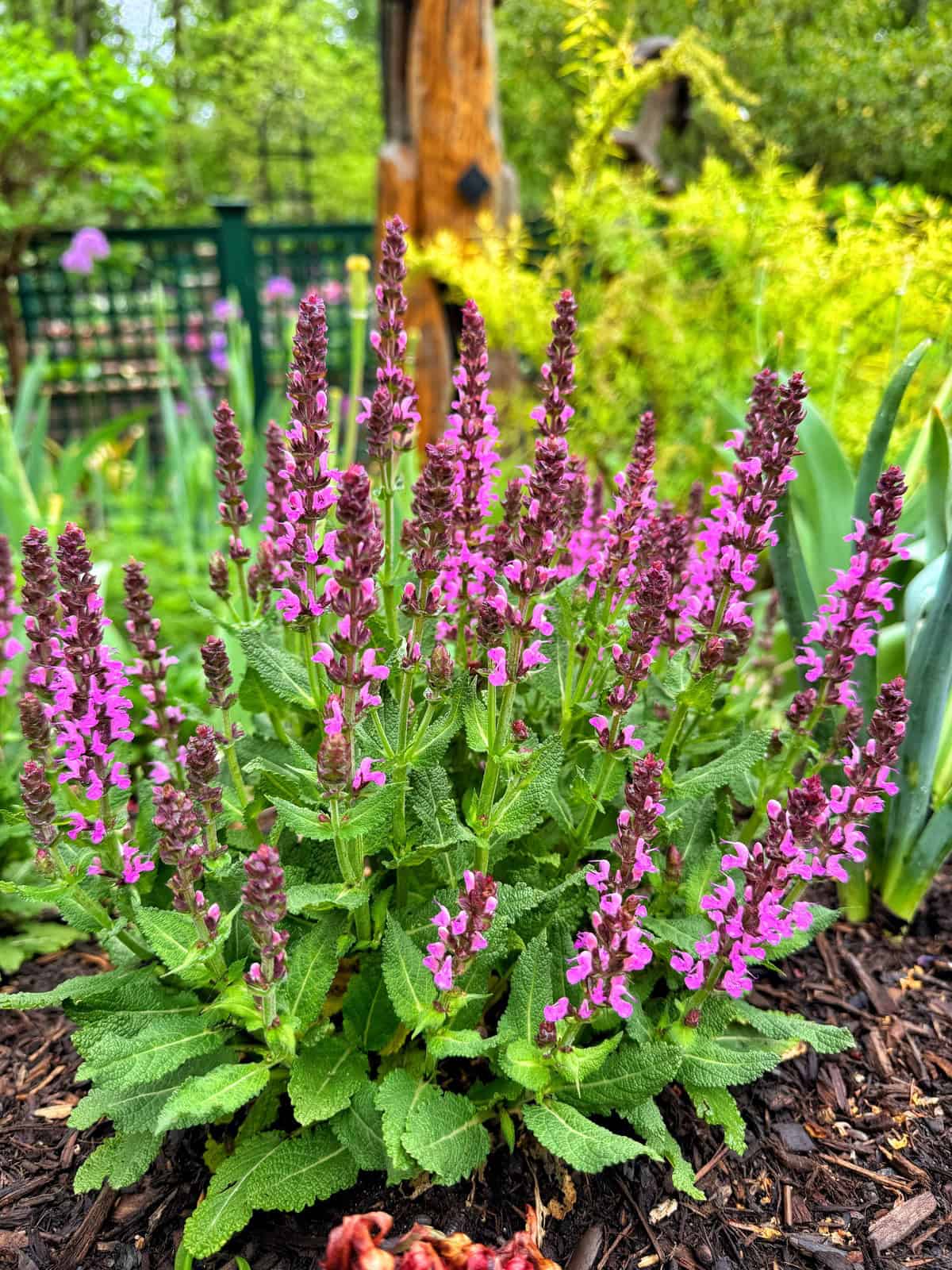
Salvia
Hardiness Zone: 4–10
Light: Full sun
Why It Pairs Well With Hydrangeas:
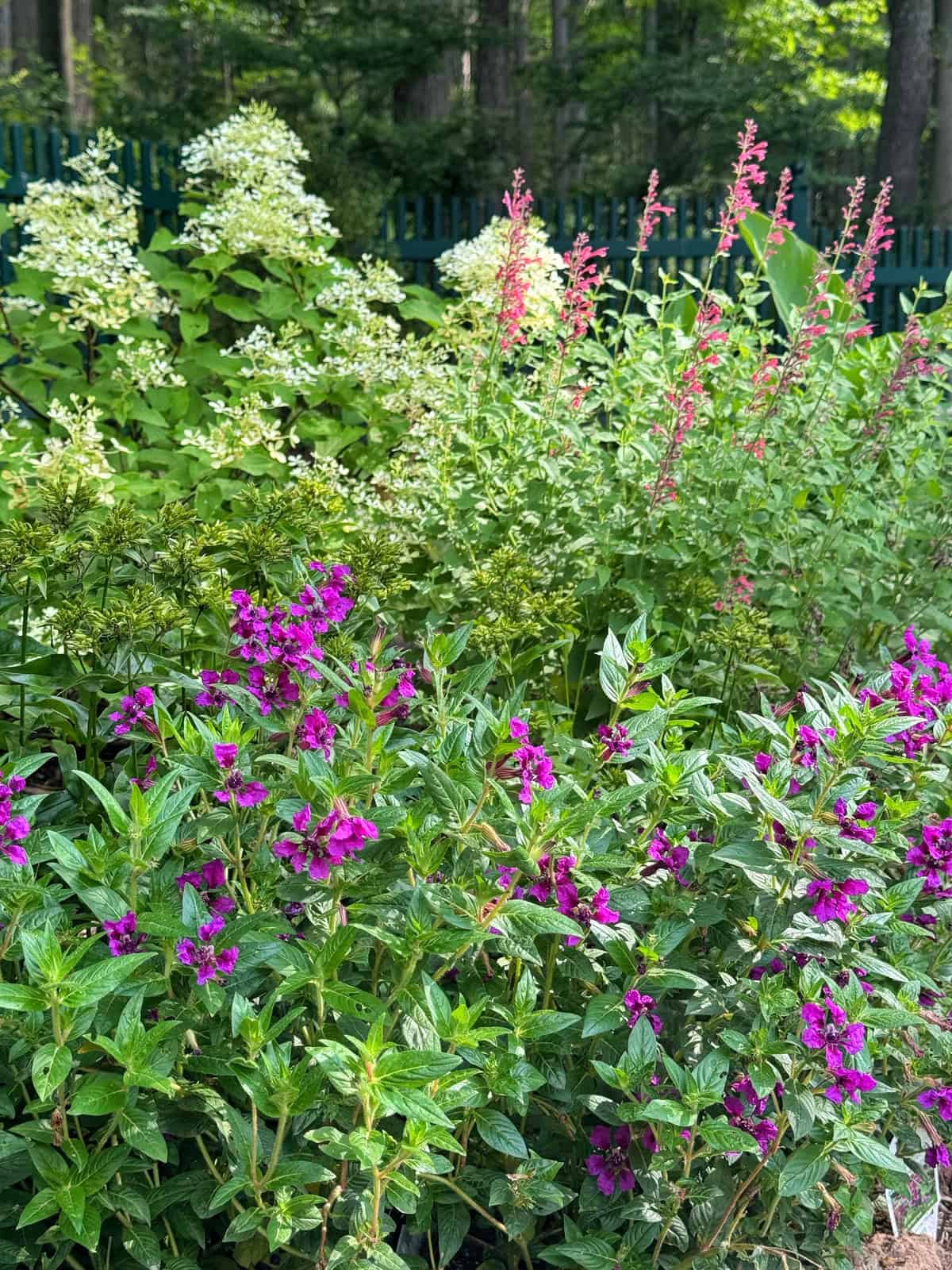
Salvia adds vertical interest and airy blooms that contrast nicely with the large, rounded flowers of hydrangeas. It also attracts pollinators, which helps bring more life into the garden.
Extra Notes:
I like using salvia in front of panicle hydrangeas to soften the planting and create movement. It also helps break up the heavier look of hydrangea foliage.
To learn more about how I grow perennial salvia in my zone 6b garden, please visit my growing salvia plant guide here.
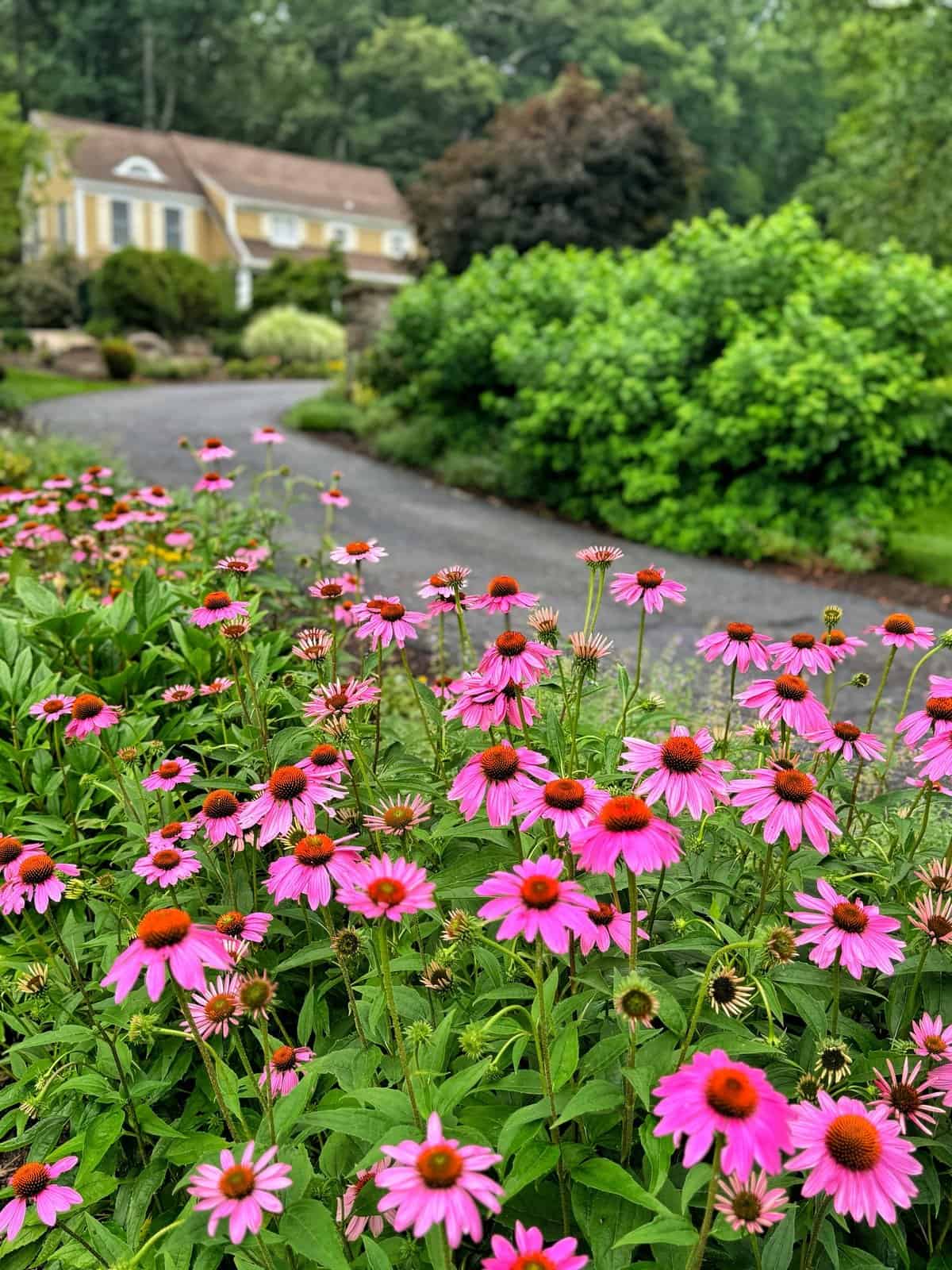
Coneflowers (Echinacea)
Hardiness Zone: 3–9
Light: Full sun
Why It Pairs Well With Hydrangeas:
Coneflowers bring bold color and a more natural, meadow-like feel to hydrangea plantings. Their upright blooms contrast with the softer, fuller shape of hydrangeas.
Extra Notes:
In my garden, I use coneflowers to extend the bloom season and add color when hydrangeas are just starting to come into their own.
To learn more about how I care for coneflowers, please visit my complete guide to growing purple coneflowers here.
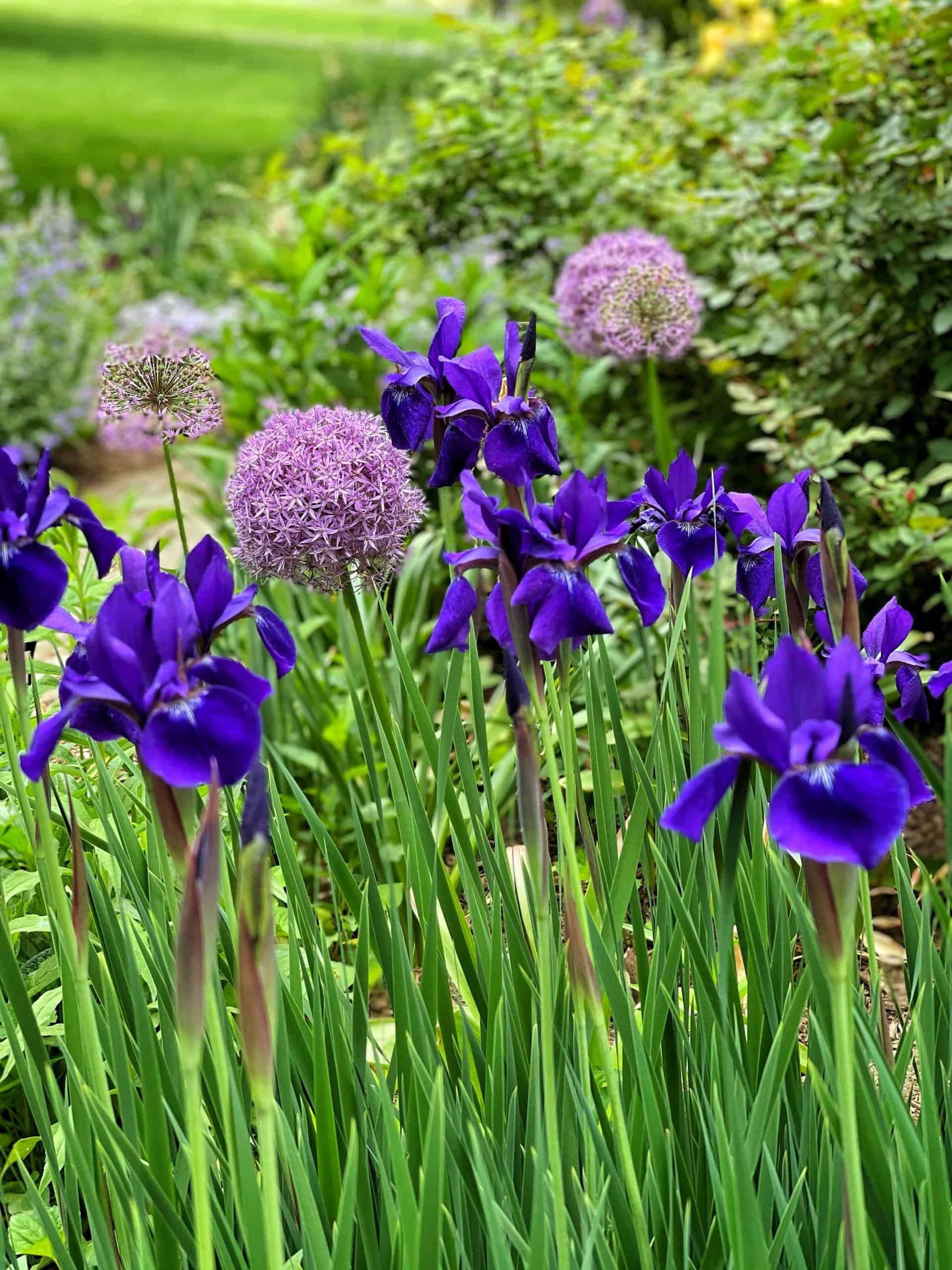
Siberian Iris
Hardiness Zone: 3–9
Light: Full sun to partial shade
Why It Pairs Well With Hydrangeas:
Siberian iris adds height and structure early in the season, which helps fill the space before hydrangeas leaf out and bloom.
Extra Notes:
I like planting these near hydrangeas so there is early interest in the garden before everything fills in.
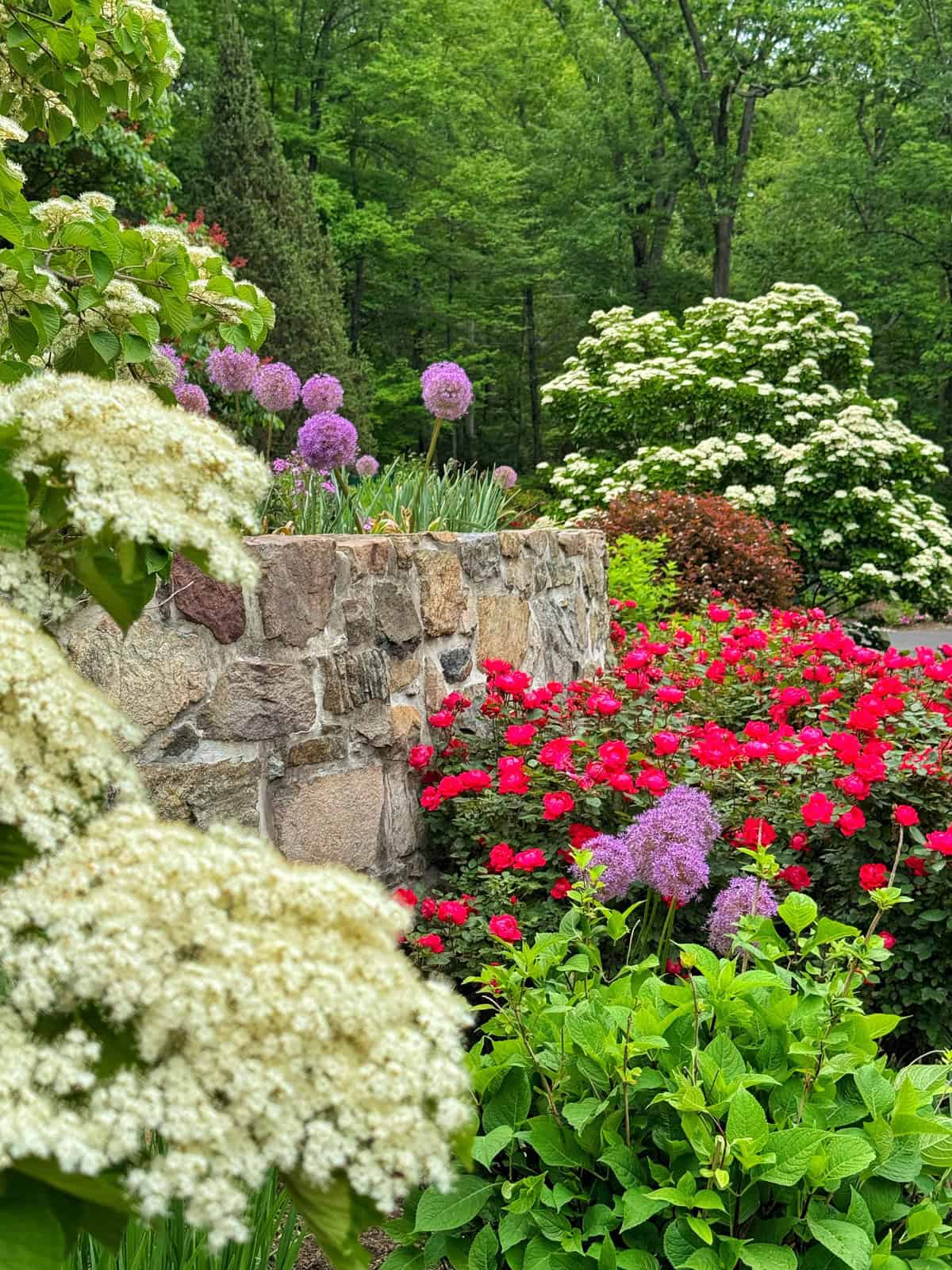
Shrub Roses (Knock Out and others)
Hardiness Zone: 4–9
Light: Full sun
Why It Pairs Well With Hydrangeas:
Shrub roses provide continuous blooms throughout the season, complementing hydrangeas with a softer, more romantic look.
Extra Notes:
I’ve had great success pairing Knock Out roses with panicle hydrangeas. They bloom reliably and help keep color going all summer long. to hydrangea plantings.
To learn more about how I grow roses in my zone 6b garden, please visit my complete guide to growing roses here.
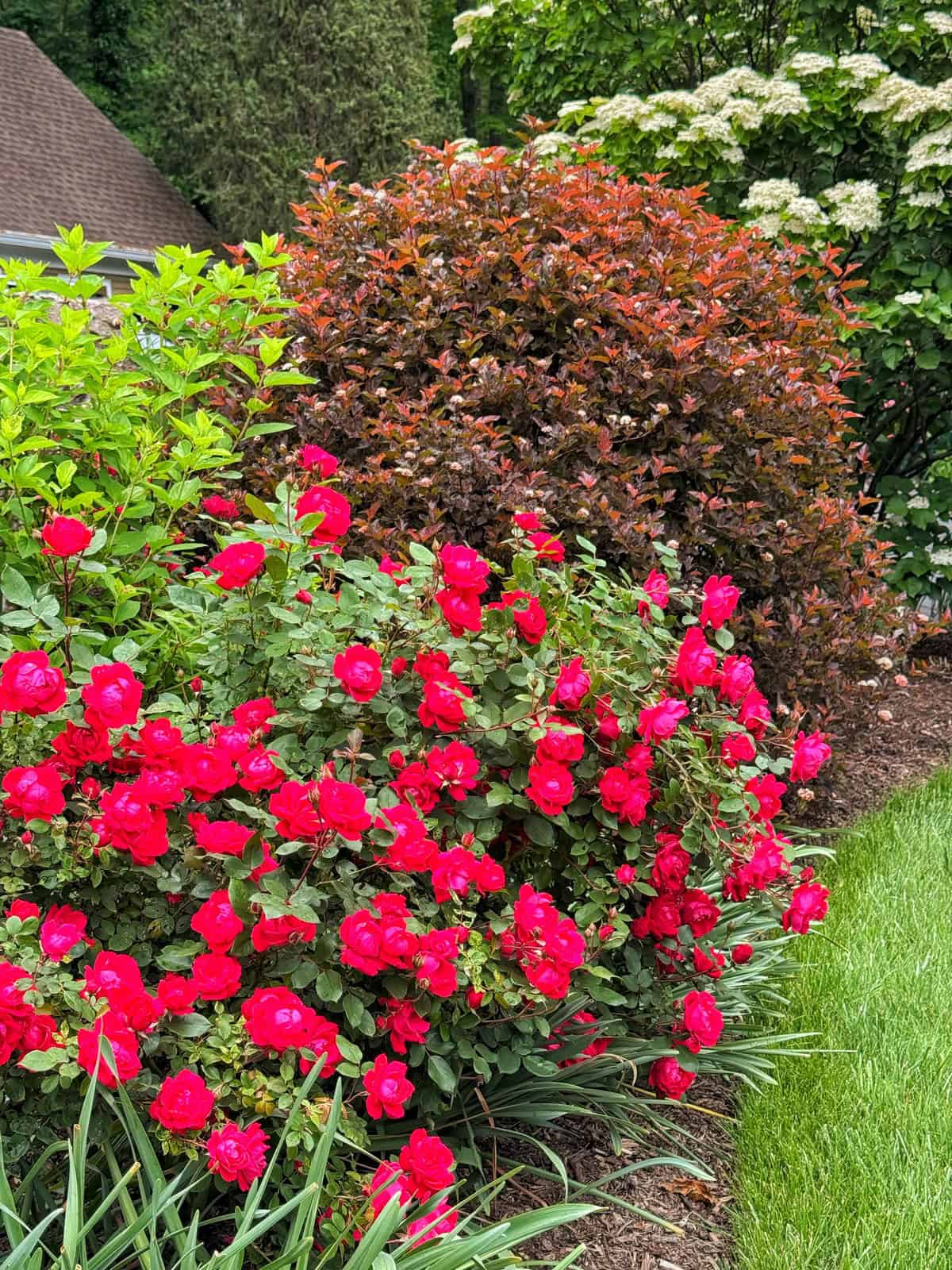
Ninebark
Hardiness Zone: 3–7
Light: Full sun to partial shade
Why It Pairs Well With Hydrangeas:
Ninebark’s deep foliage color and airy branching create beautiful contrast against hydrangeas, especially lighter-colored varieties like Limelight.
Extra Notes:
This is one of my favorite combinations. The contrast between the dark leaves and bright blooms makes the whole planting stand out.

Smokebush
Hardiness Zone: 5–8
Light: Full sun
Why It Pairs Well With Hydrangeas:
Smokebush adds dramatic color and texture, especially varieties with purple foliage. It creates a strong backdrop for hydrangeas.
Extra Notes:
I like using smokebush when I want a bold statement in the garden. It really anchors the space behind hydrangeas.

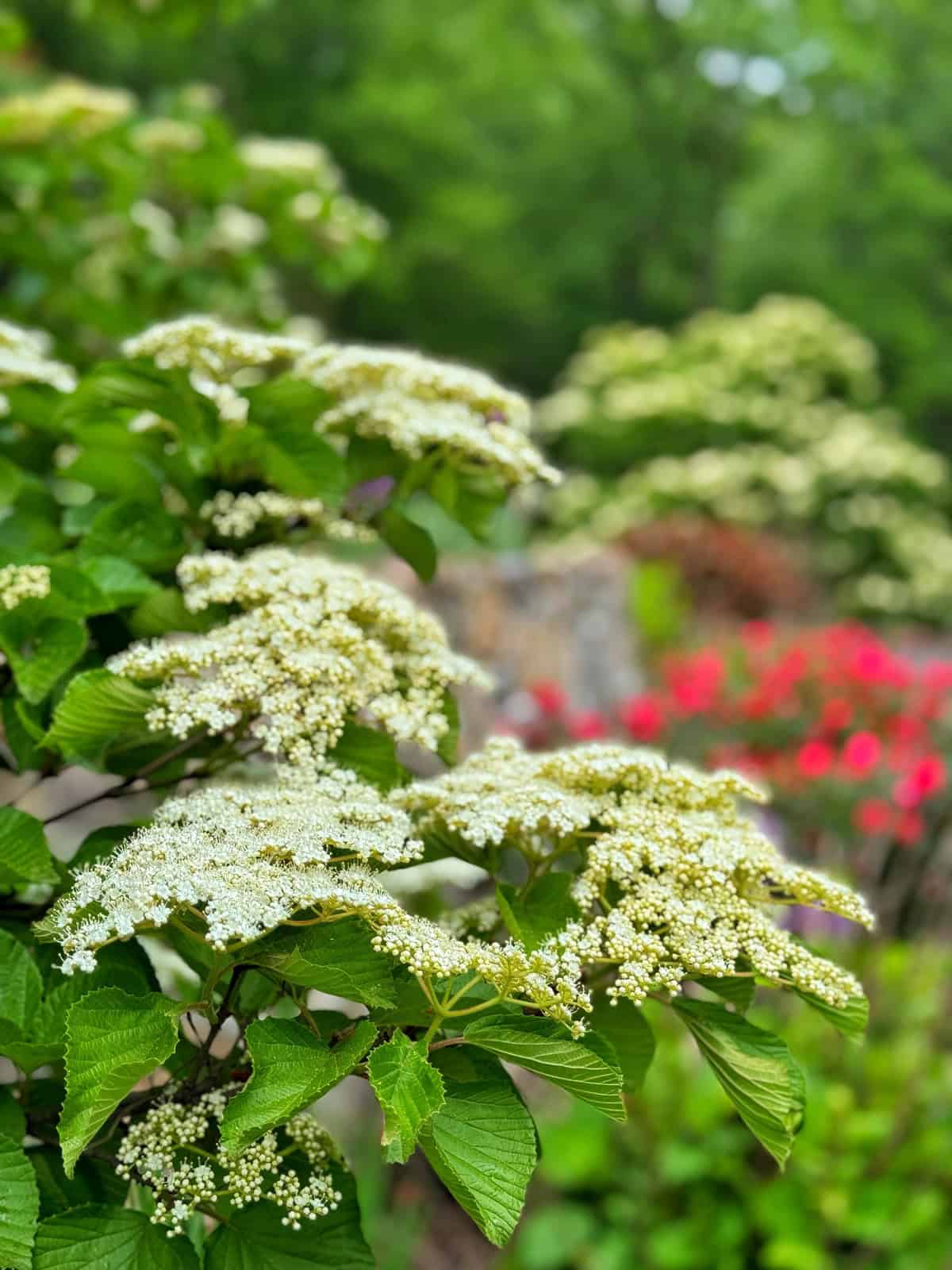
Viburnum
Hardiness Zone: 3–9
Light: Sun to partial shade
Why It Pairs Well With Hydrangeas:
Viburnum adds multi-season interest with flowers, berries, and fall color, making it a great companion for hydrangeas in layered plantings.ies, and fall color.
Dwarf Conical Evergreens (Juniper, Arborvitae)
Hardiness Zone: varies
Light: Full sun
Why It Pairs Well With Hydrangeas:
These provide year-round structure and help anchor the planting, especially in winter when hydrangeas are dormant.
Extra Notes:
I always recommend choosing dwarf varieties and checking mature size so they don’t overwhelm your hydrangeas over time.

Bulbs That Pair Beautifully With Hydrangeas
Bulbs are one of the easiest ways to add early-season color around hydrangeas. Since most hydrangeas don’t start putting on growth until later in spring, bulbs help fill that gap so your garden never feels empty.
I use bulbs a lot in my hydrangea beds because they provide color early in the season, then quietly fade as hydrangeas begin to leaf out and take over.
Daffodils
Hardiness Zone: 3–8
Light Requirements: Full sun to partial shade
Why It Pairs Well With Hydrangeas:
Daffodils bloom in early spring before hydrangeas leaf out, adding bright color when the garden is just waking up. Their foliage begins to fade just as hydrangeas start to fill in, making the transition seamless.
Extra Notes:
I rely on daffodils heavily in my garden for that first burst of color. They naturalize well and come back year after year, which makes them an easy addition around hydrangeas.
To learn more about how I grow and plant daffodils in my zone 6b gardens, please visit my guide to growing daffodils here.

Tulips
Hardiness Zone: 3–8
Light Requirements: Full sun to partial shade
Why It Pairs Well With Hydrangeas:
Tulips provide bold color in mid-spring and work beautifully in front of or around hydrangeas before the shrubs begin active growth.
Extra Notes:
I like using tulips for a more curated, designed look, especially when I want to coordinate colors with my hydrangeas later in the season.
Tulips are one of my favorite spring flowers. If you’d like to learn more about how I grow them, please visit my guide how to grow tulips here.

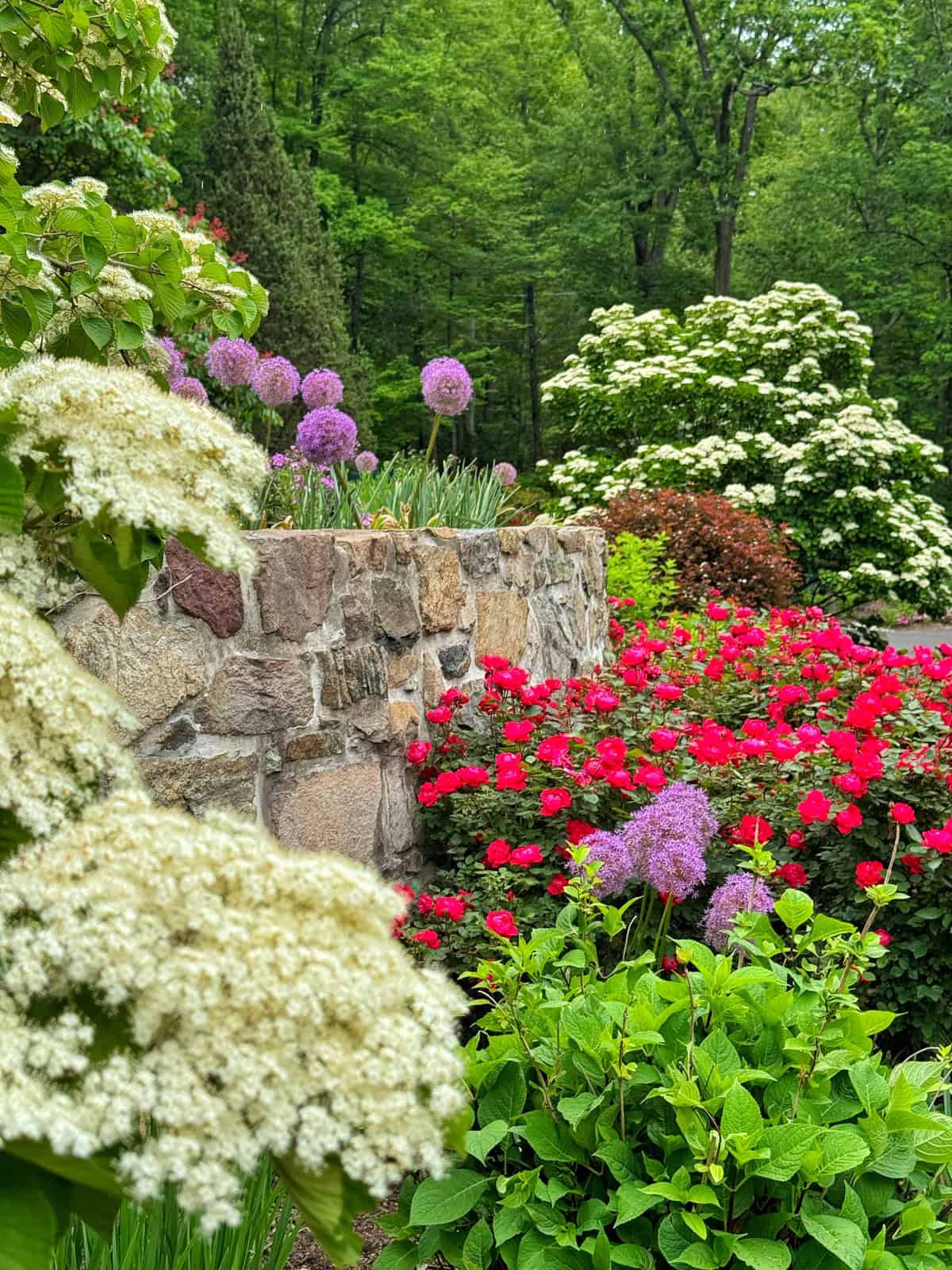
Alliums
Hardiness Zone: 4–9
Light Requirements: Full sun
Why It Pairs Well With Hydrangeas:
Alliums add height and structure with their globe-shaped blooms, which contrast nicely with the softer forms of hydrangeas. They bloom in late spring, helping bridge the gap between early bulbs and summer flowers.
Extra Notes:
I love adding alliums for a little architectural interest. They feel more modern and unexpected compared to traditional spring bulbs.
Can You Plant Hydrangeas Together? (Designing With Multiple Varieties)
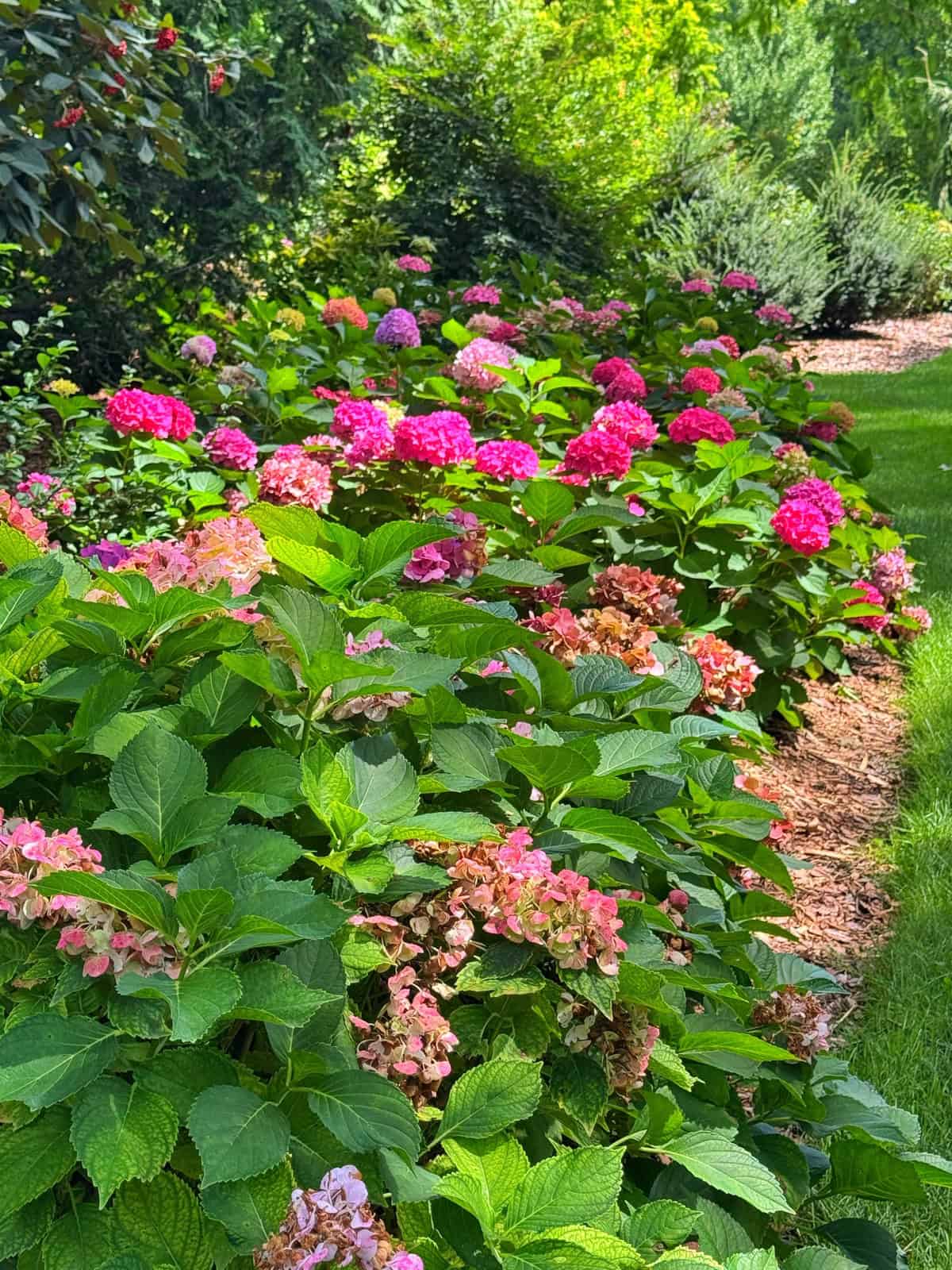
One thing I don’t think gardeners talk about enough is planting hydrangeas with other hydrangeas. Most people think about companion plants as completely different species, but hydrangeas are one of those rare shrubs that actually look incredible layered together.
I didn’t fully appreciate this until I visited Proven Winners ColorChoice at Spring Meadow Nursery in August 2025. Seeing mature plantings of different hydrangea varieties growing together completely changed how I think about using them in the landscape. The combinations were not only beautiful, they felt intentional, layered, and incredibly impactful.
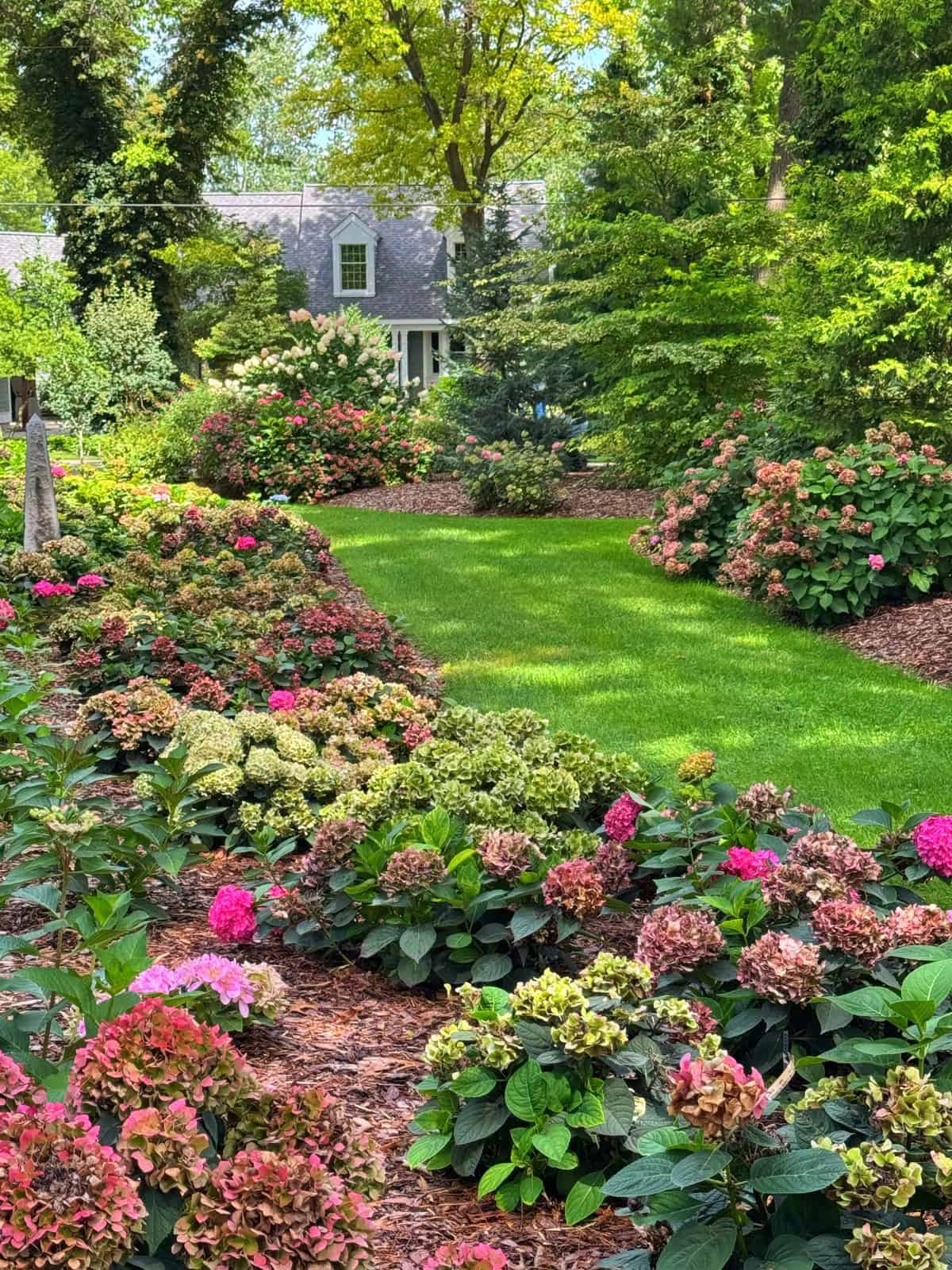
Why Layering Hydrangeas Works So Well
Hydrangeas may all share the same name, but they behave very differently depending on the type. That’s what makes layering them so effective.
You can mix and match varieties to create contrast in:
- bloom shape, from large mopheads to airy lacecaps to cone-shaped panicles
- plant size, from compact varieties to large statement shrubs
- bloom timing, so something is always flowering
- color, whether you prefer soft blends or bold combinations
When you combine these differences thoughtfully, the result feels more like a designed garden rather than a collection of individual plants.
If you’re not sure which types you have or how they differ, my Types of Hydrangeas guide breaks it all down so you can choose the right combinations.
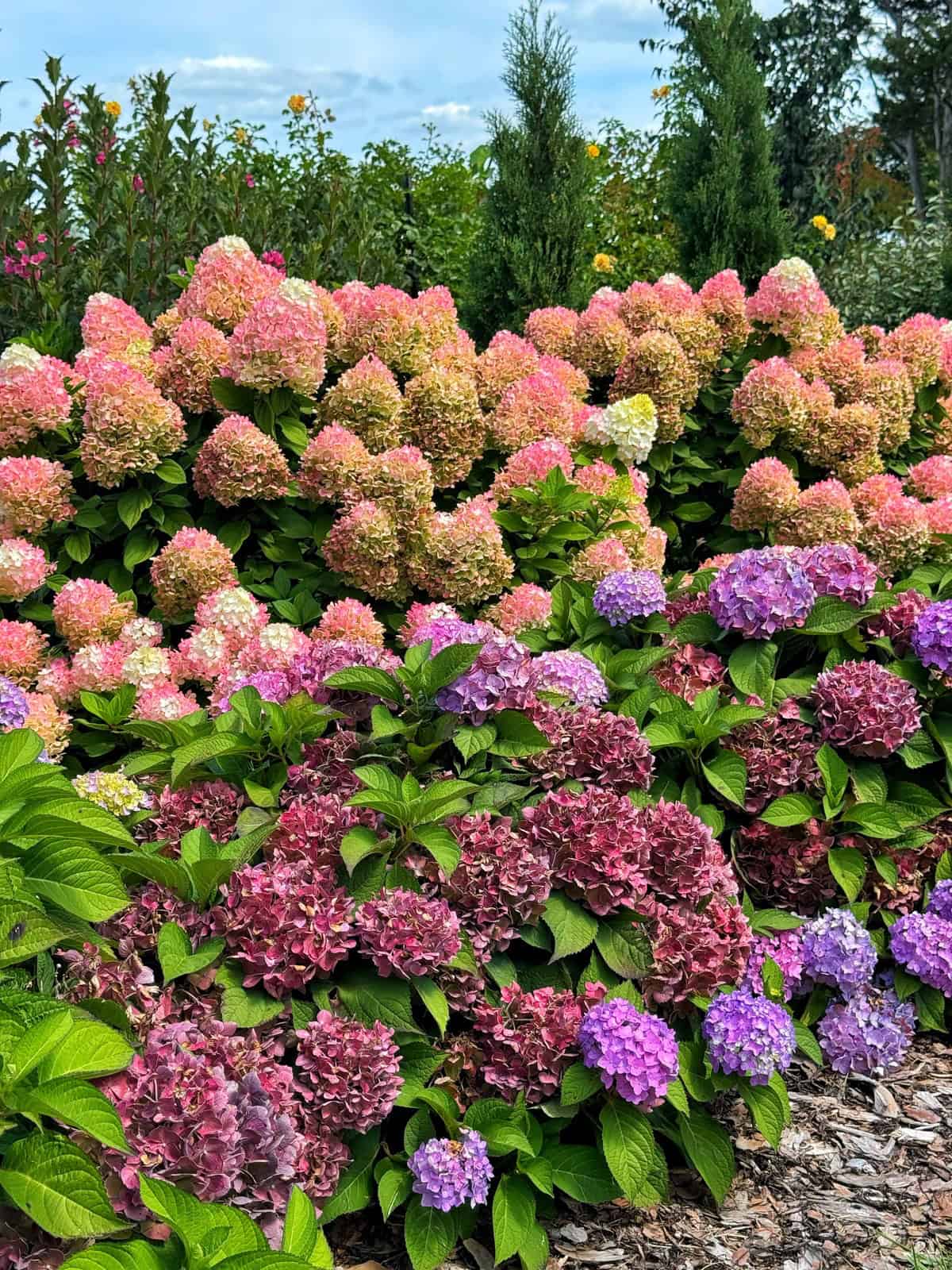
How I Like to Layer Hydrangeas in the Garden
When I plant hydrangeas together, I treat them the same way I would any layered garden bed.
I start with a larger variety as the anchor, then build around it with smaller or differently shaped hydrangeas to create depth and variation.
For example:
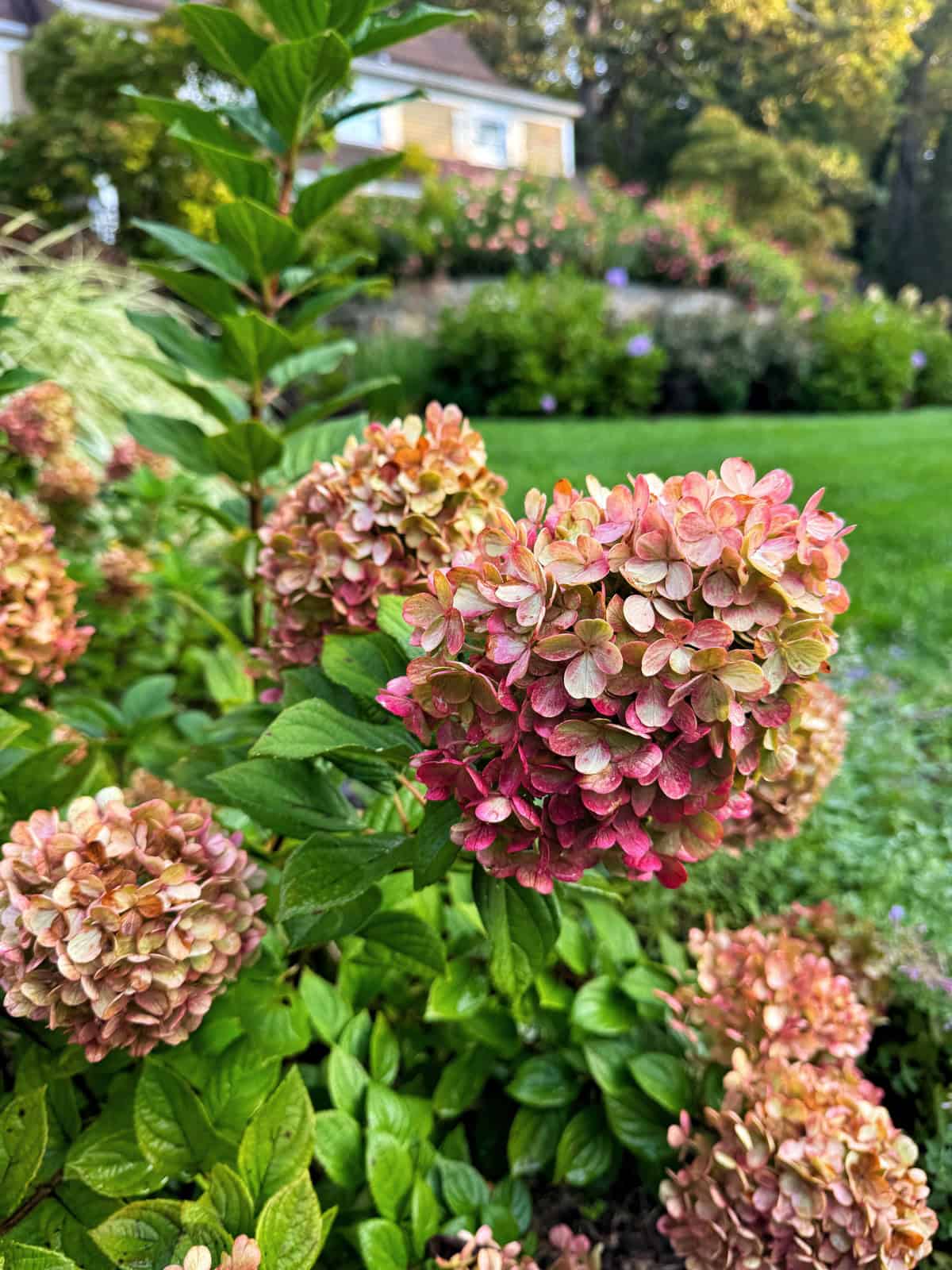
- Panicle hydrangeas like Limelight can provide height and structure
- Smooth hydrangeas fill in the middle layer with full, rounded blooms
- Bigleaf or mountain hydrangeas can add color variation and a softer feel
The key is to give each plant enough space to reach its mature size while still allowing them to visually connect.
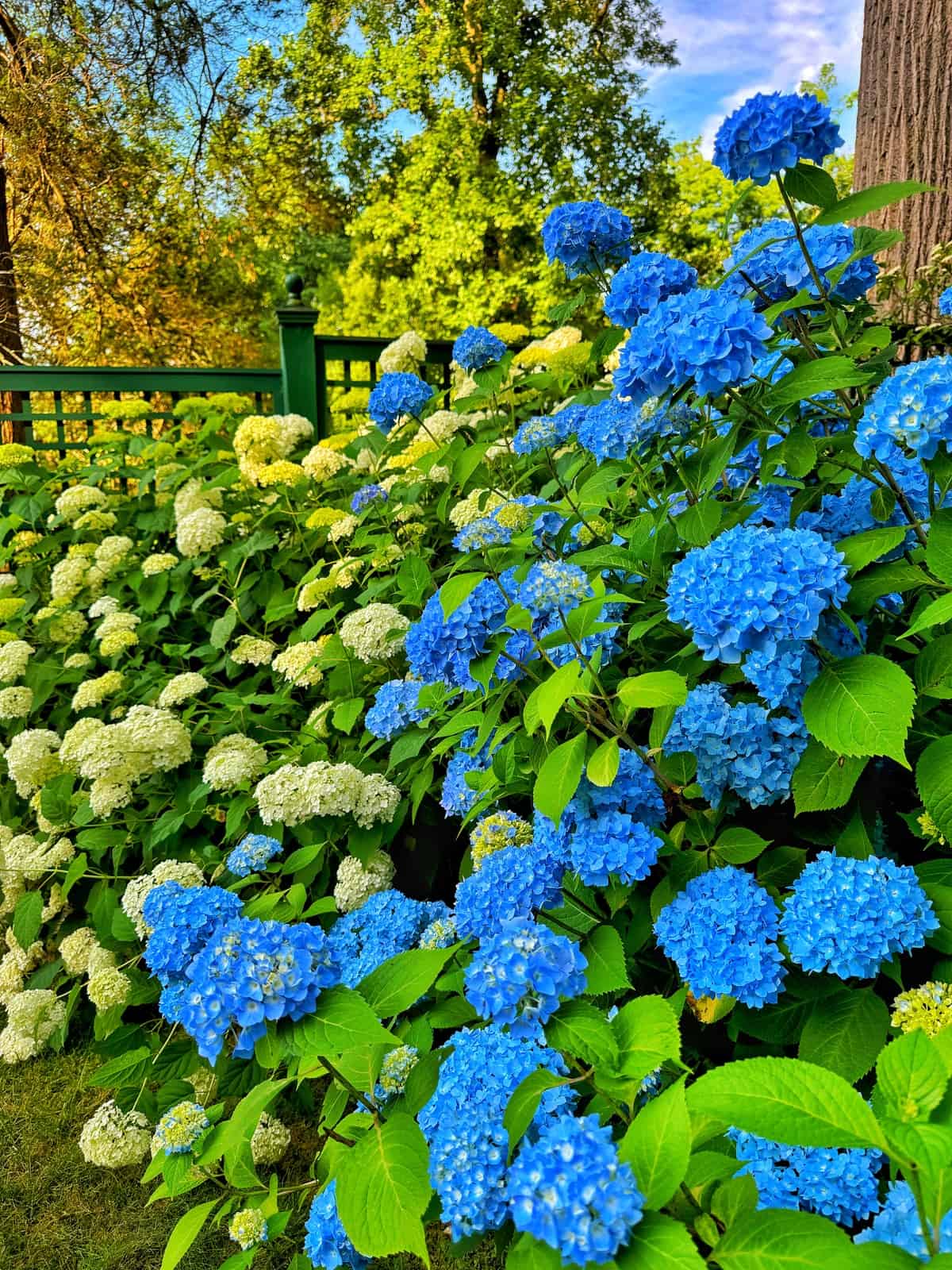
What to Watch For When Planting Hydrangeas Together
While layering hydrangeas can look incredible, there are a few things I always keep in mind:
- Make sure the varieties you choose have similar light requirements
- Pay attention to mature size so one plant doesn’t overwhelm the others
- Consider bloom timing so the display lasts as long as possible
In my garden, I’ve found that when these elements line up, planting hydrangeas together creates one of the most impactful and low-maintenance combinations you can have.
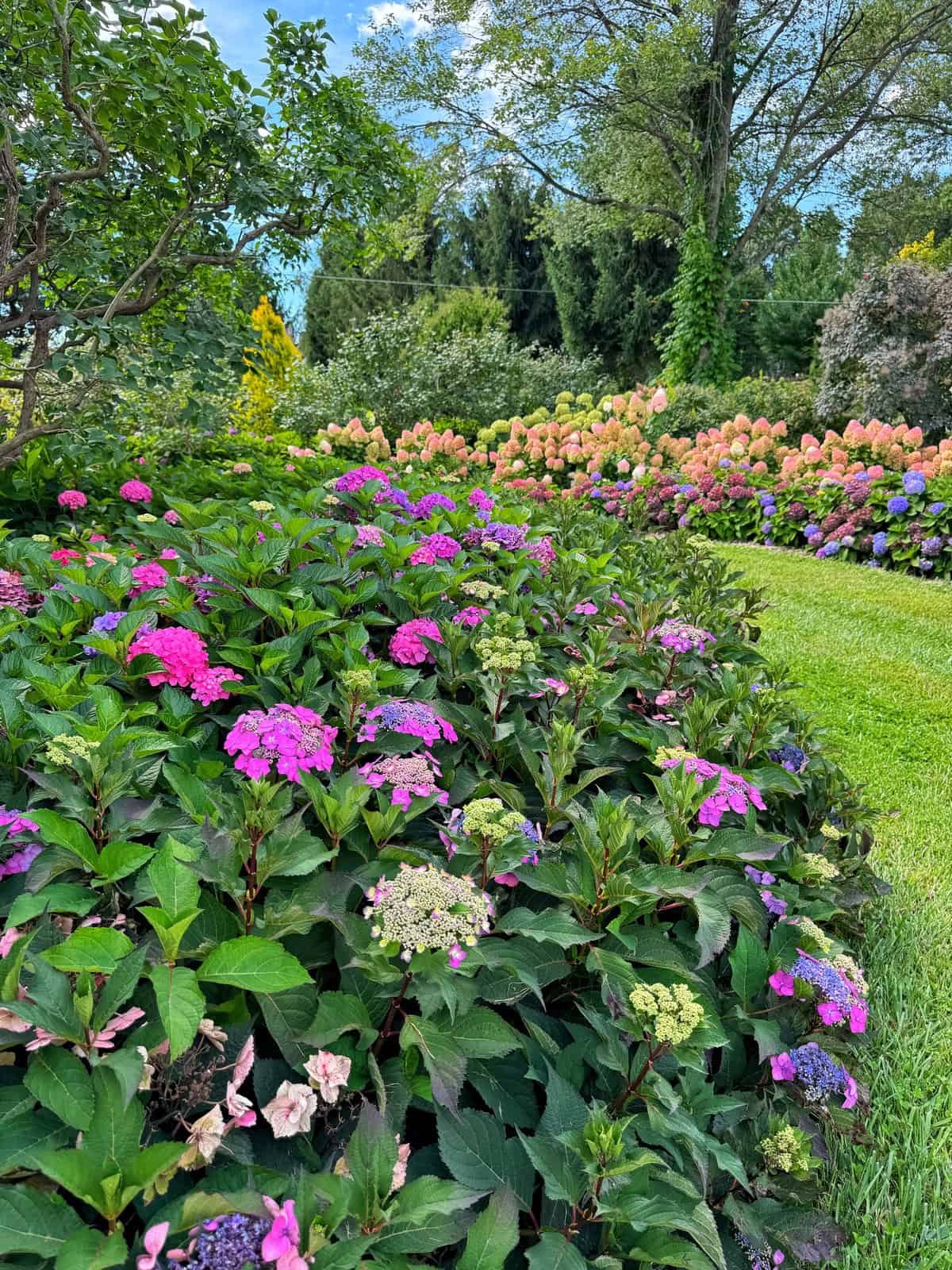
Why This Makes Such a Big Difference
Hydrangeas are already strong focal plants, but when you layer them together, they create a much bigger visual impact than a single shrub on its own.
It’s one of those design choices that feels simple, but completely transforms the space.
And once you see it in action, it’s hard to go back to planting them one at a time.
My Favorite Hydrangea Plant Combinations
One of my favorite ways to design with hydrangeas is to treat them as anchor plants, then build layers around them using a mix of shrubs, perennials, and bulbs. This approach helps create a garden that looks full, balanced, and interesting from early spring through fall.
Here are a few combinations I use often in my own Zone 6b garden.
Sunny Bed Combination
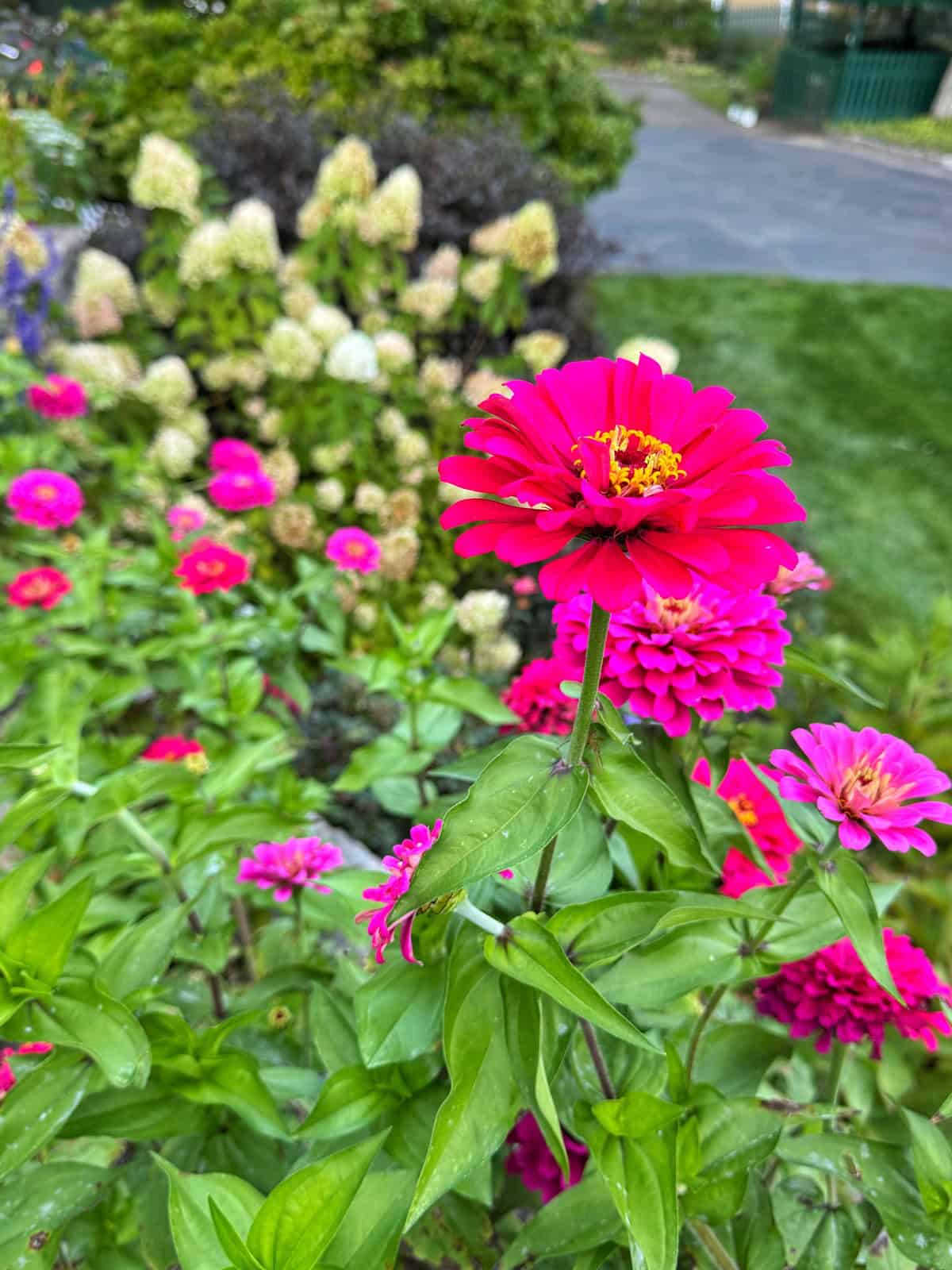
When I’m working with panicle hydrangeas like Limelight, I like to create a planting that mixes structure with softer, flowering layers.
I often pair them with ninebark which adds beautiful contrast with its dark foliage and graceful branching or smoketree with it’s height, color and texture. Behind or alongside that, I include a narrow, conical evergreen like a dwarf juniper to give the bed year-round structure and height.
To soften the look, I add shrub roses, like Knock Outs, which provide continuous blooms and help carry color through the season.


From there, I fill in with perennials and bulbs to keep the space evolving. Early in the season, bulbs like daffodils and alliums bring interest before the hydrangeas leaf out. As summer progresses, perennials help connect everything together so the planting never feels sparse.
In my garden, this combination creates a really balanced look where something is always happening, whether it’s foliage, flowers, or structure.

Shade Garden Combination
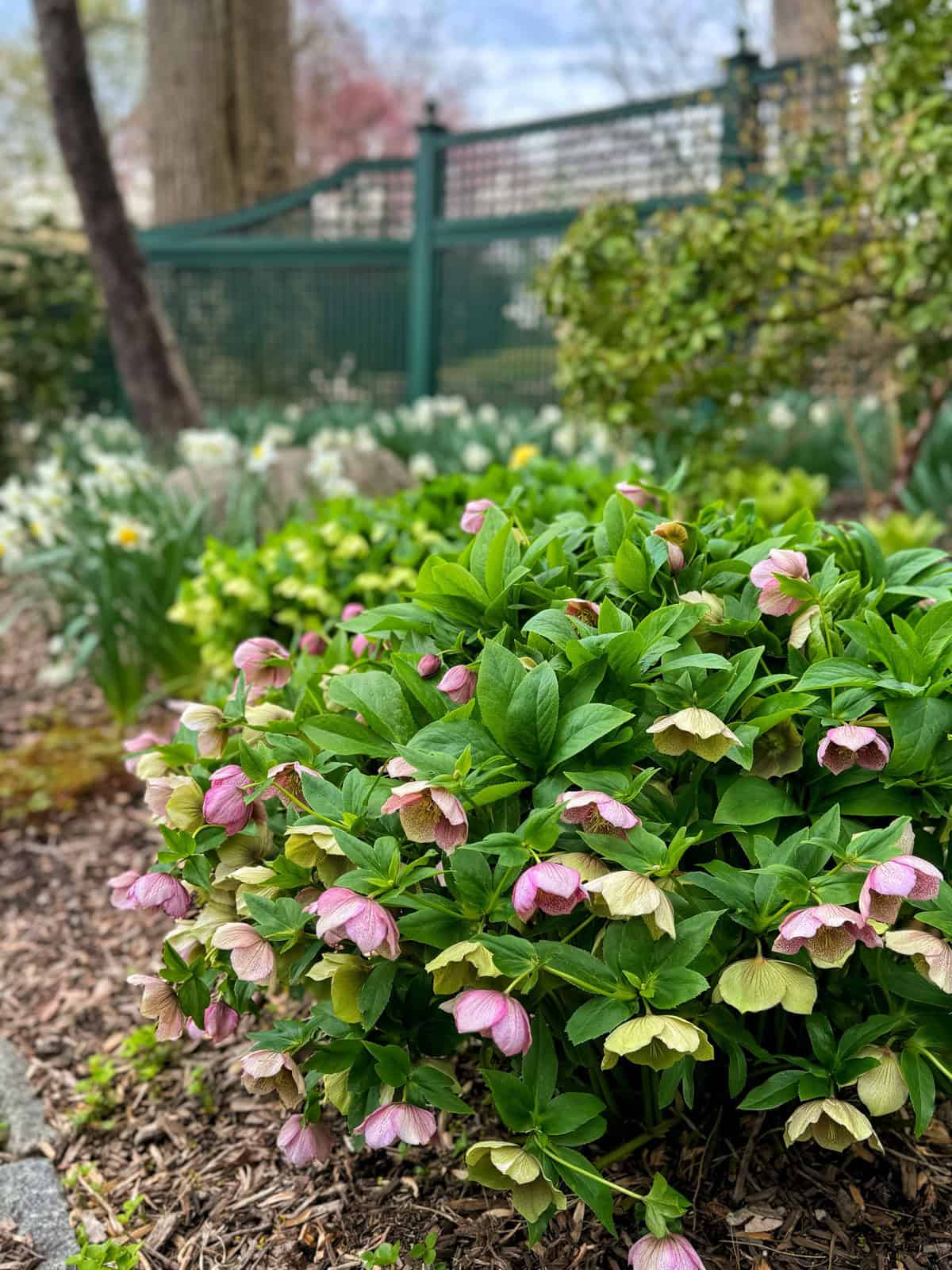
In shadier areas, I focus more on layering textures and extending seasonal interest, especially early in the year before hydrangeas get going.
One of my favorite combinations is pairing hydrangeas with bottlebrush buckeye, which adds height and those unique, spiky blooms that attract pollinators and contrast beautifully with the rounded hydrangea flowers.
I also rely on rhododendrons and azaleas to bring early spring color. This is especially important because hydrangeas can look like bare sticks for a while, and these shrubs help bridge that gap.
To fill in the lower layer, I add hellebores for early blooms, heuchera for foliage color, and astilbe for soft texture and summer interest.
This combination keeps the garden feeling full and layered from early spring through summer, even before hydrangeas reach their peak.
Why These Combinations Work
What these pairings have in common is that everything shares similar growing conditions and complements each other in both form and timing.
I always look for a mix of:
- structure from shrubs and evergreens
- seasonal color from flowering plants
- texture from foliage and bloom shape
Once you start thinking this way, it becomes much easier to build combinations that not only look good, but also grow well together.
What Not to Plant With Hydrangeas
While hydrangeas pair beautifully with many plants, there are a few that simply don’t work well together. Most of the problems come down to mismatched growing conditions or plants competing for space and resources.
Over the years, I’ve found that when something struggles in a hydrangea bed, it’s usually because one of these factors was off.
Drought-Tolerant Plants
Hydrangeas are thirsty plants that prefer consistent moisture, especially during the growing season. Pairing them with drought-tolerant plants like lavender, sedum, or yucca usually doesn’t work well because they need completely different watering conditions.
In my experience, one plant always ends up struggling. Either the hydrangeas don’t get enough water, or the drought-tolerant plants get overwatered and decline.
Plants With Different Light Needs
Not all hydrangeas grow in full sun, and this is where I see a lot of mismatches happen.
Bigleaf, mountain, and oakleaf hydrangeas prefer partial shade, so planting them with full sun lovers like certain salvias or black-eyed Susans can lead to burned foliage and dry blooms.
Panicle hydrangeas are more flexible, but I still try to group plants with similar light needs so everything performs its best.

Aggressive Spreaders
Some plants grow quickly and take over space, which can crowd out hydrangeas over time.
Plants like mint, overly vigorous groundcovers, or aggressive ornamental grasses can compete for water, nutrients, and root space.
I’ve learned it’s best to give hydrangeas room to establish and choose companions that stay in their place rather than spread uncontrollably.
Large Trees With Heavy Root Competition
Planting hydrangeas too close to large trees with shallow, dense root systems can create constant competition for water and nutrients.
Trees like maples are especially tough to plant around because they tend to take up most of the available moisture.
If you want to plant near trees, I’ve had much better success using smaller, more compatible options like Japanese maples that provide light shade without overwhelming the space.
Plants That Clash in Size or Form
Hydrangeas have a naturally full, rounded shape, so pairing them with plants that are too tall, too rigid, or completely different in scale can make the planting feel unbalanced.
Instead, I like to choose plants that either contrast gently or layer well around them so the overall design feels cohesive.
Want Help Designing Your Own Hydrangea Garden?
One of the biggest challenges I see, especially with hydrangeas, is not knowing what to plant together or why something works in one garden but not another. It can feel like you’re guessing your way through plant combinations and hoping for the best.
That’s exactly why I wrote The Bricks ‘n Blooms Guide to a Beautiful and Easy-Care Flower Garden. It walks you through plant selection, layering, and how to design beds that actually work together, using the same approach I use in my own garden. If you want to go deeper on creating combinations like these without second-guessing every decision, you can find it here.
And once you start experimenting with your own plant pairings, the next challenge is remembering what worked. I can’t tell you how many times I used to think, “I need to remember this for next year,” and then completely forgot.
That’s exactly what my Beautiful and Easy-Care Flower Garden Planner is built for. It gives you a place to track what you planted, how combinations performed, and what you want to change so your garden actually improves year after year instead of starting from scratch each season. Take a look here.

Final Thoughts on What to Plant With Hydrangeas
Hydrangeas are one of the most versatile shrubs you can grow, but the real magic happens when you start pairing them with the right companion plants. With a little planning, you can create a garden that feels layered, balanced, and interesting from early spring through fall.
Over the years, I’ve found that the best combinations come down to a few simple things: choosing plants with similar growing conditions, mixing different textures and shapes, and layering bloom times so there is always something happening in the garden.
If you’re still building your hydrangea beds, it helps to understand the basics first. My Hydrangea Care Guide walks through everything you need to know about growing healthy, thriving plants. And if you’re not sure which varieties will work best in your space, my Types of Hydrangeas post breaks down the differences so you can choose the right ones for your light and conditions.
You may also find it helpful to learn more about planting hydrangeas properly and when and how to prune hydrangeas, since both play a big role in how well your plants perform and how they fit into your overall garden design.
The best part is that you don’t have to get it perfect right away. Some of my favorite combinations came from trying different plants, seeing how they performed, and adjusting over time. Once you start thinking in terms of layering and compatibility, designing around hydrangeas becomes much easier and a lot more enjoyable.
Thank you for visiting the blog today!
Enjoy your day! xo

Originally Published . Last Updated .
