
The Best Late Summer and Fall Blooming Perennials

Late summer and fall blooming perennials that extend color, texture, and interest in the garden through the end of the season.
Late summer and fall can be a challenging time in the garden. Many early and midsummer perennials have finished blooming, and without careful planning, garden beds can start to look tired just when you want them to shine the most. After nearly 30 years of gardening in Zone 6B, I’ve learned that the key to keeping a garden vibrant into fall is relying on perennials that bloom later in the season and carry the garden through the transition from summer to autumn.
If you’re building a garden with long-term structure in mind or deciding which plants earn their place year after year, you may find this helpful: Perennials vs Annuals: What Should You Plant?
The perennials below are the ones I depend on most when I want strong color, texture, and interest from late summer straight through fall.
(Posts on stacyling.com may contain affiliate links. Click HERE for full disclosure.)
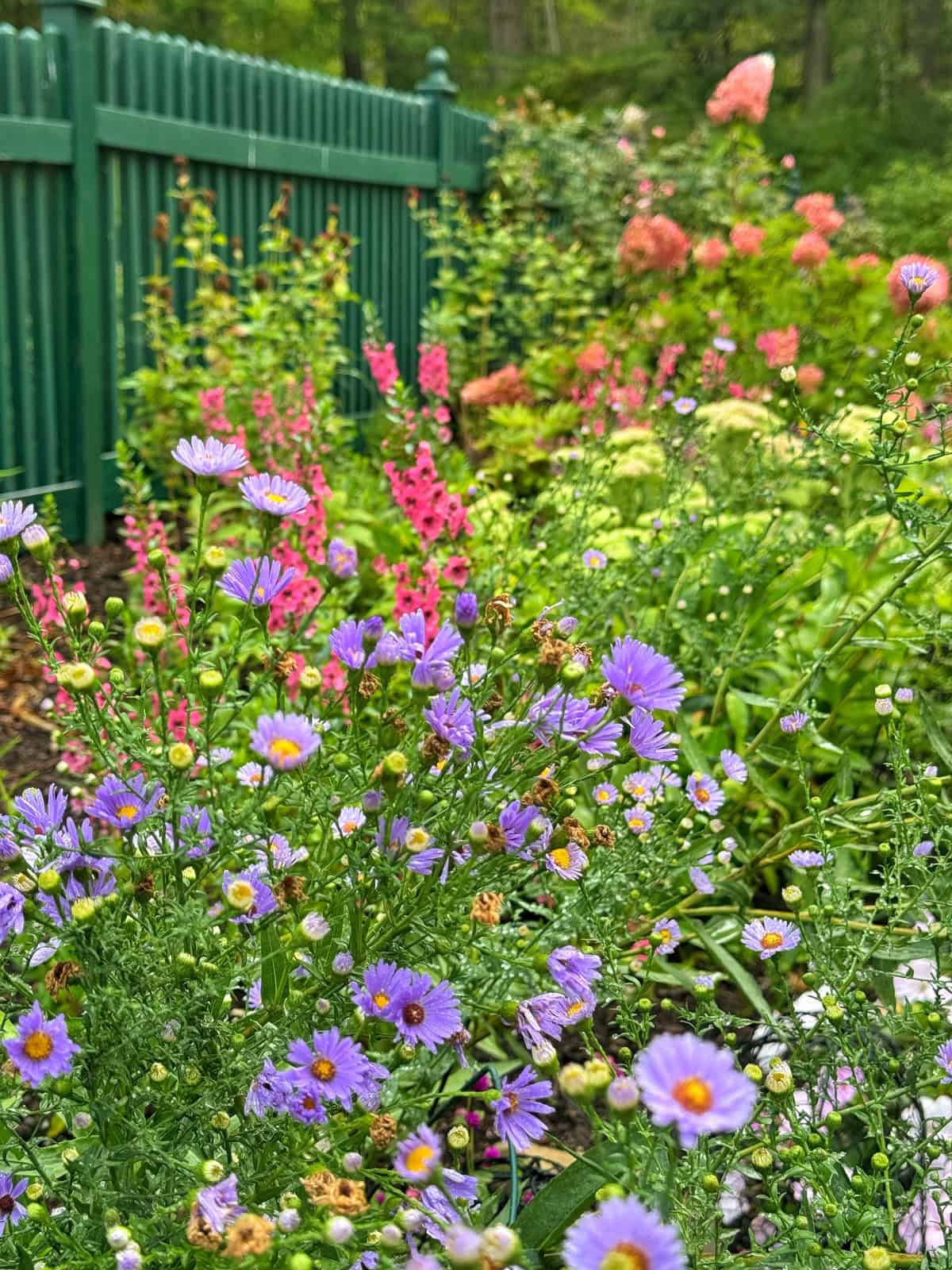
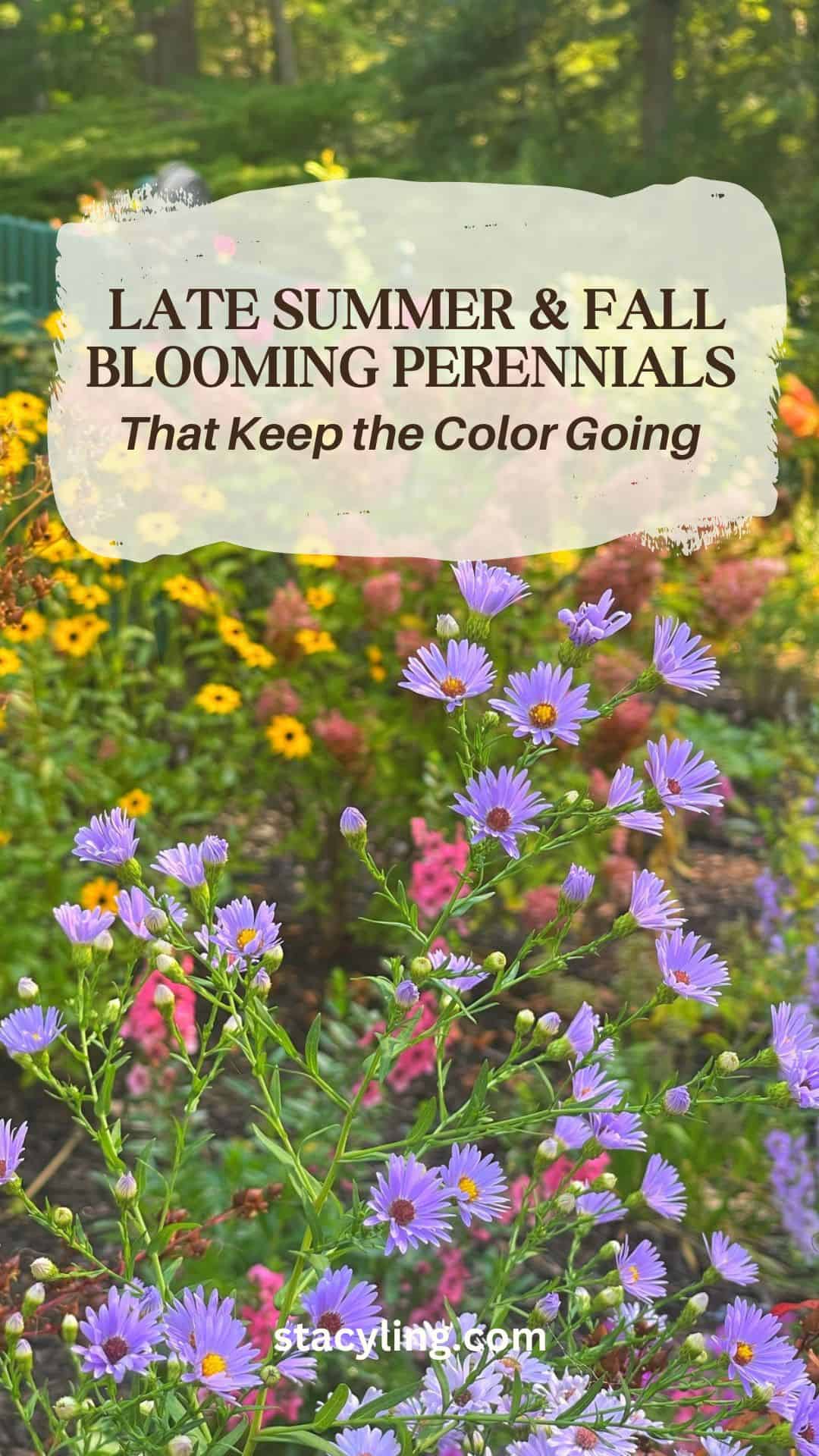
Asters
Asters are essential for late-season color. Just as summer blooms begin to fade, asters burst into flower, providing clouds of daisy-like blooms that support pollinators well into fall.
What I’ve learned:
- Asters bloom reliably from late summer into fall
- Full sun and good air circulation help prevent mildew
- Pinching plants back in early summer encourages fuller fall blooms
- They pair beautifully with ornamental grasses and sedum
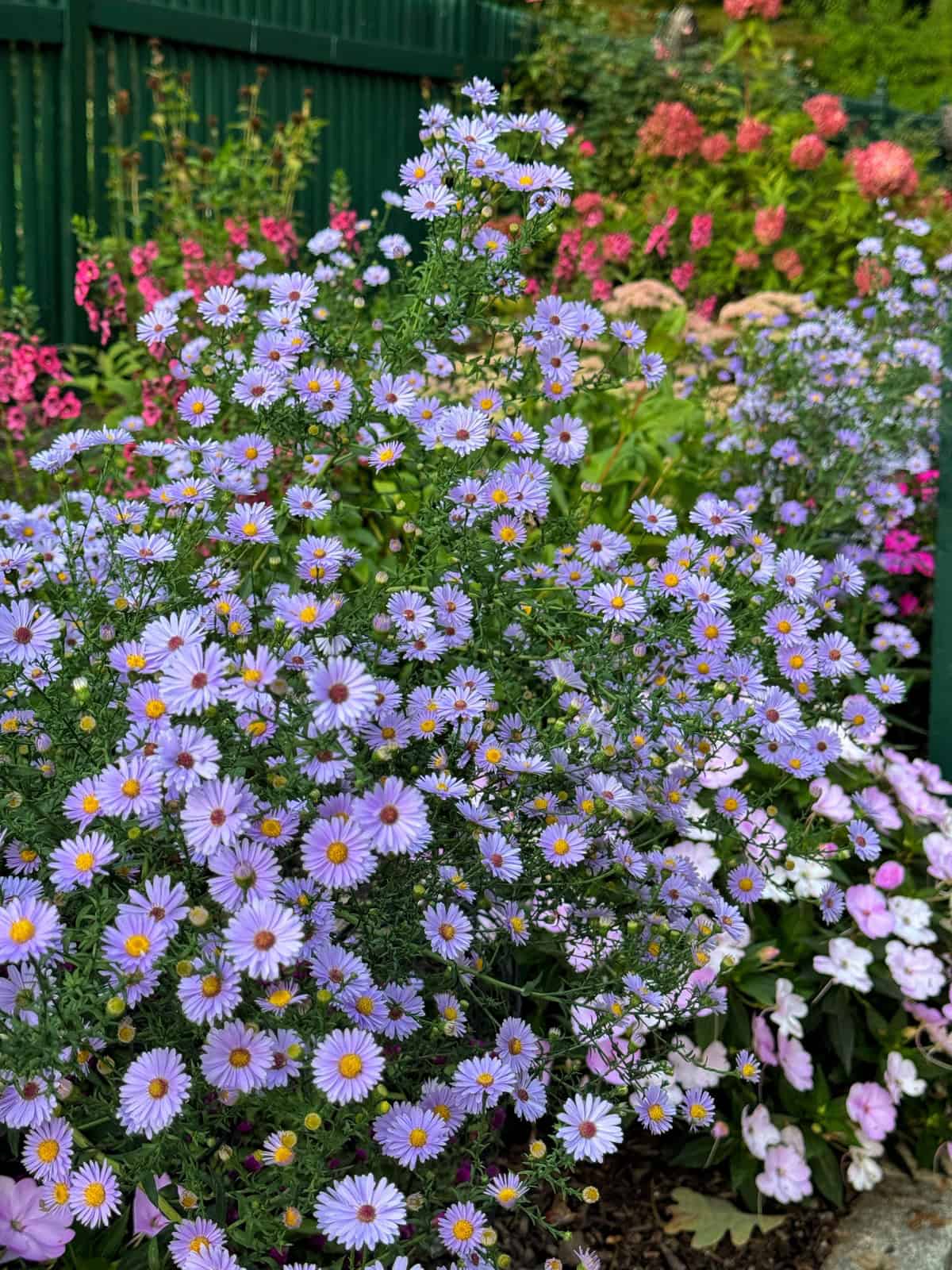
Japanese Anemone
Japanese anemones bring a soft, elegant presence to the late-season garden. Their tall stems and delicate blooms add movement and lightness when many perennials are slowing down.
What I’ve learned:
- They prefer part shade and consistent moisture
- They take time to establish but are dependable once settled
- Their height makes them excellent toward the back of borders
- Blooms often continue right up until frost
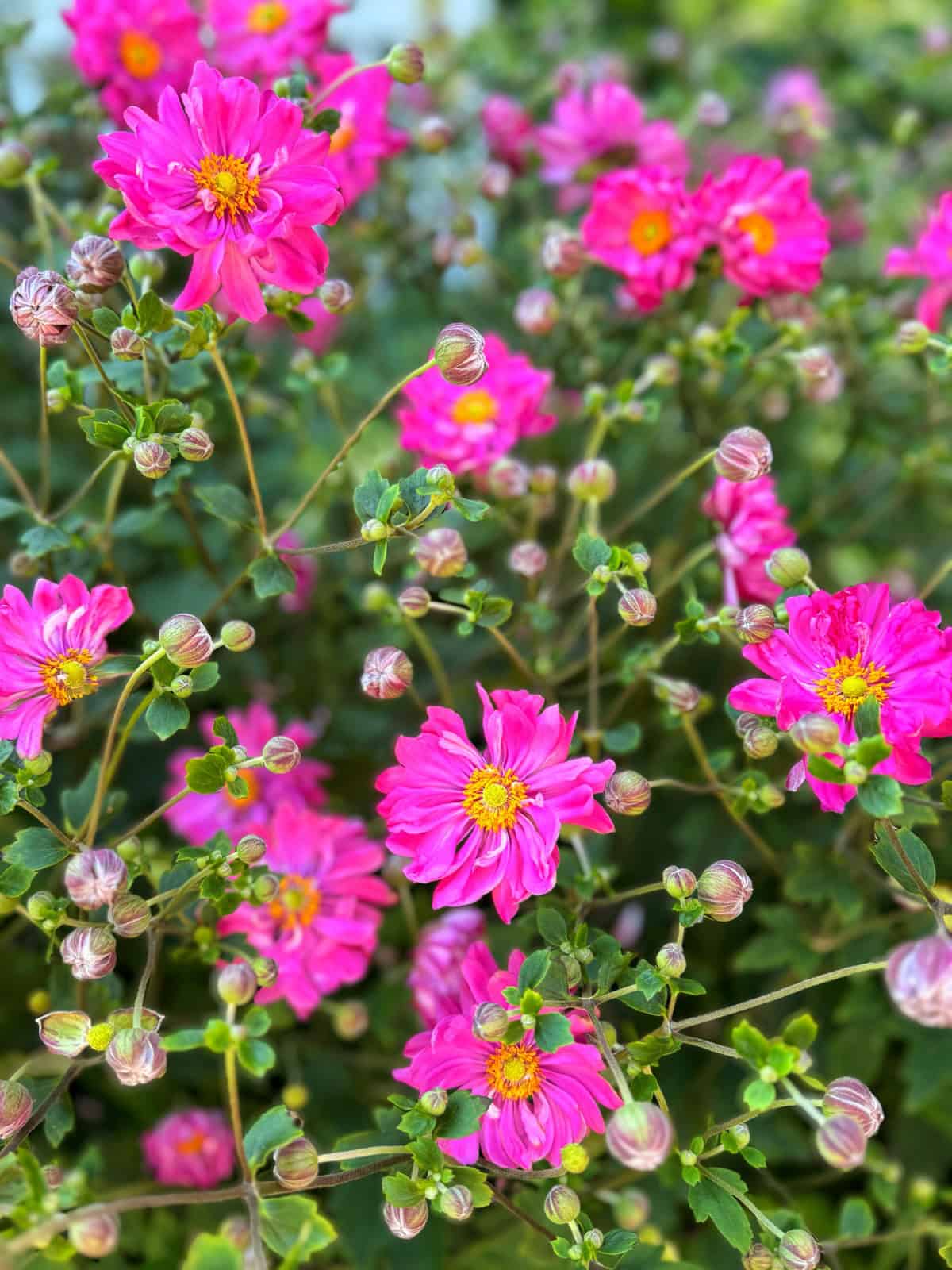
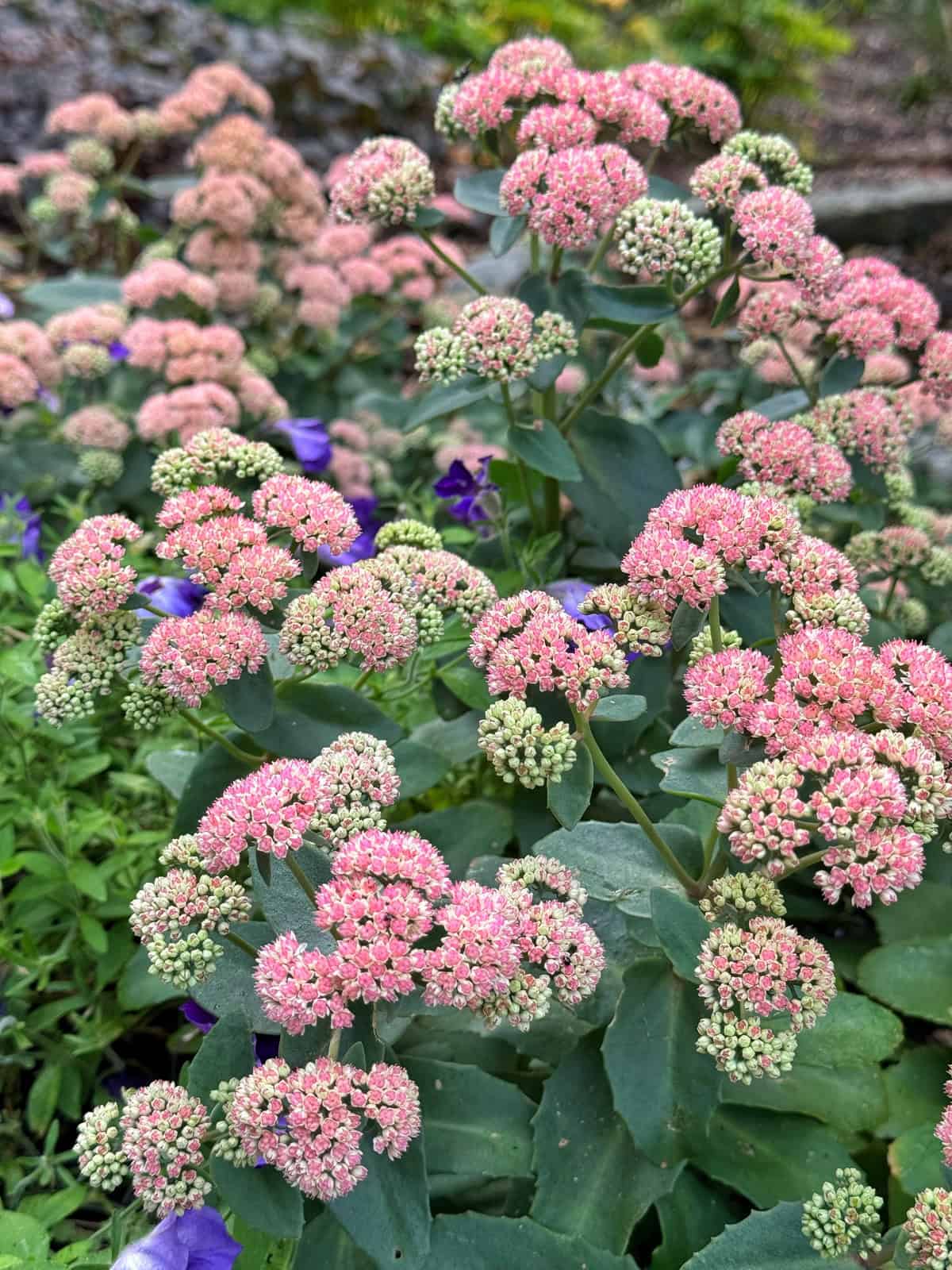
Sedum (Autumn Varieties)
Autumn-blooming sedum is one of the most reliable perennials for fall structure and color. While it begins flowering in late summer, it truly shines as the season shifts.
What I’ve learned:
- Sedum thrives in full sun and well-drained soil
- Blooms transition beautifully from soft pink to deep rust tones
- Seed heads remain attractive long after flowering
- It adds structure even as other plants fade
To learn more about how I grow sedums, please visit my guide: How to Grow Sedum Autumn Joy
Late-Blooming Rudbeckia
Some rudbeckia varieties continue blooming into late summer and early fall, offering bold color and strong garden presence.
What I’ve learned:
- They thrive in full sun and adapt to many soil types
- Deadheading can extend bloom time
- Leaving some seed heads adds fall interest and supports birds
- They bring warmth and brightness to late-season borders
Black-eyed susans are one of my favorite late summer and fall blooming perennials to grow! Pollinators love them and they’re incredibly easy to divide.
To learn more about how I grow rudbeckia, please visit my complete guide here: How to Grow Black-Eyed Susans
And if are just learning how to divide perennials, please visit my guide: How to Divide Perennials

Garden Mums
Garden mums are often treated like disposable fall plants, but when planted early and cared for properly, they can be dependable late-season perennials. Their dense blooms provide some of the strongest color in the garden.
What I’ve learned:
- Hardy mums need to be planted in spring or early summer to establish well
- Pinching back through early summer creates fuller plants and heavier blooms
- They perform best in full sun with good drainage
- They are invaluable for late-season color when the garden needs it most
To learn more about how to I grow garden mums, please visit my complete guide: How to Grow Garden Mums

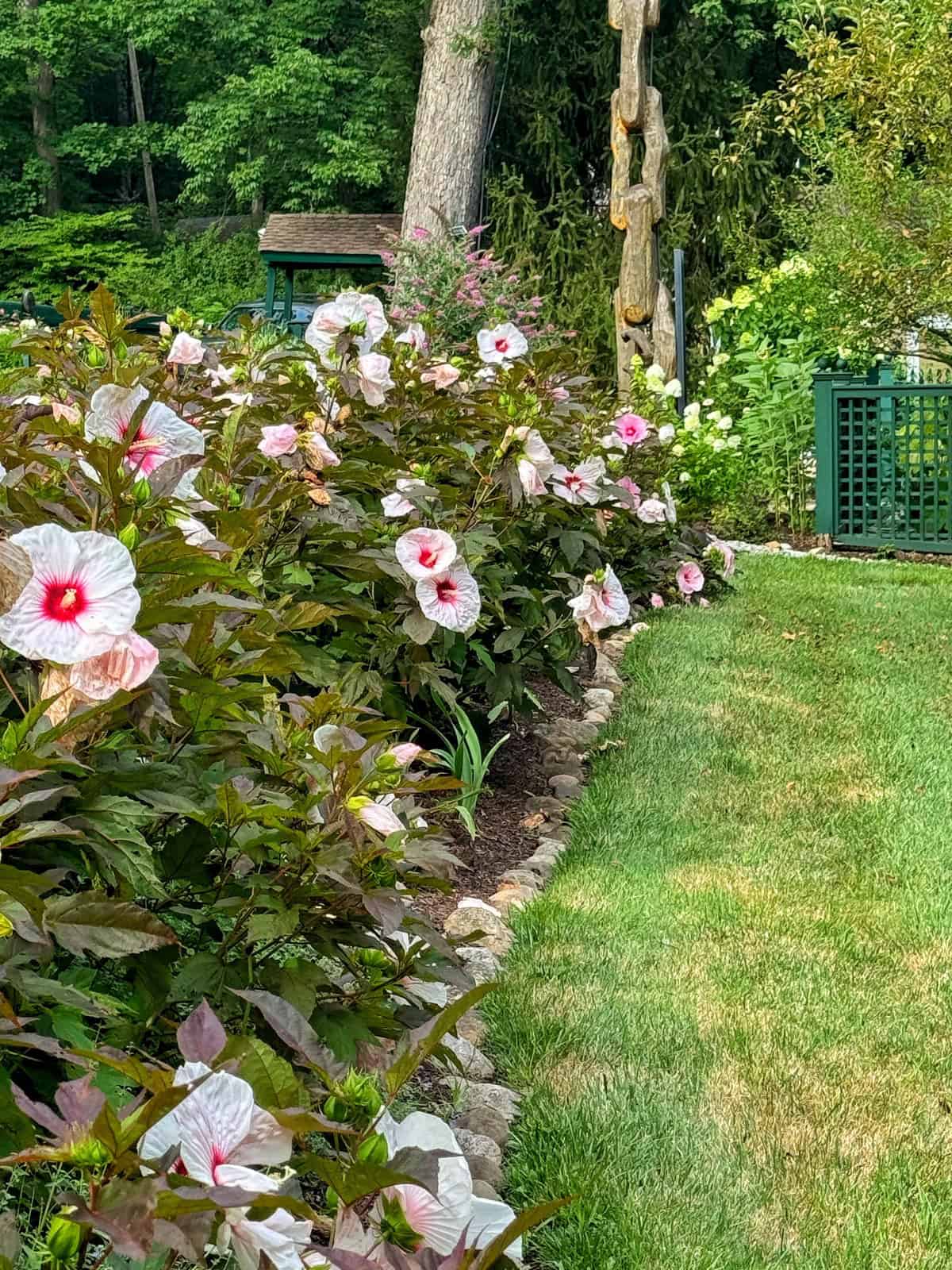
Hardy Hibiscus
Hardy hibiscus brings bold, dramatic blooms to the garden starting in mid to late summer and continuing into fall. Even before flowering, the foliage adds incredible texture and presence that evolves with the season.
What I’ve learned:
- Hardy hibiscus emerges late in spring, so patience is important
- Blooms typically begin in mid-August in my garden and last into fall
- The foliage alone adds strong structure and visual interest
- They perform best in full sun with consistent moisture
I was pleasantly surprised we have an entire border that runs alongside the driveway when we moved here several years ago.
Russian Sage
Russian sage is one of the most dependable perennials for carrying the garden from summer into fall. Its airy purple blooms and silvery foliage add softness, movement, and long-lasting color.
What I’ve learned:
- Russian sage thrives in full sun and well-drained soil
- It blooms from midsummer well into fall
- It requires very little maintenance once established
- Cutting it back in spring keeps plants tidy and strong

Agastache
Agastache is one of my favorite late-season perennials for adding color, movement, and pollinator activity to the garden. Its upright flower spikes bloom from midsummer into fall and bring a light, airy quality that works beautifully in mixed borders.
What I’ve learned:
- Its aromatic foliage helps deter deer and rabbits
- Agastache thrives in full sun and well-drained soil
- It is extremely drought tolerant once established
- The long-lasting blooms attract bees, butterflies, and hummingbirds

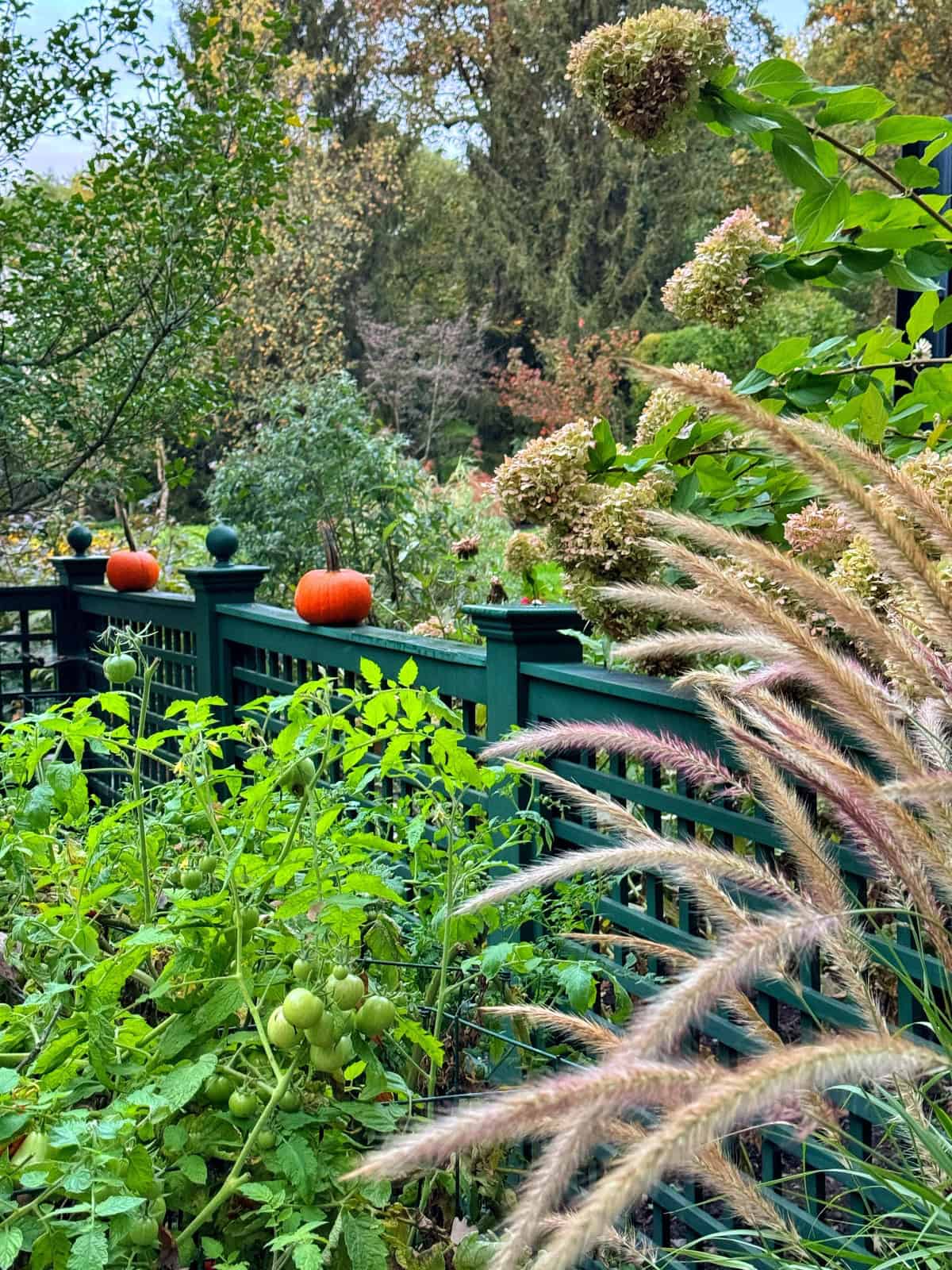
Hardy Fountain Grass
While not a flowering perennial in the traditional sense, hardy fountain grass plays an essential role in late-season gardens. Its graceful plumes and arching foliage add movement, texture, and warmth as the garden transitions into fall.
What I’ve learned:
- Fountain grass performs best in full sun
- Plumes emerge in late summer and persist into fall
- It adds structure even after flowering perennials fade
- It pairs beautifully with asters, sedum, and garden mums
How to Keep the Garden Looking Good Into Fall
Late-season success starts much earlier in the year. I’ve found that spacing plants properly, avoiding excess fertilizer, and cutting certain perennials back in early summer helps promote stronger fall blooms. It’s also important to resist the urge to tidy too soon. Many seed heads and dried blooms add texture and interest well into autumn.
Late-season bloomers are one of the easiest ways to extend color, but they work best when they’re part of a larger plan for continuous blooms from spring through fall.
If you’re planning a garden with season-long interest, Perennial Garden Design: How to Create a Low-Maintenance Garden That Blooms All Season will help you layer perennial plants for continuous color throughout the growing season.
And if you’re looking for dependable plants that bloom over an especially long period, Long-Blooming Perennials for Continuous Color is a great companion guide. For peak summer color, Midsummer Perennial Flowers List fills in the heart of the growing season.

Grow a Garden That Gets Better Every Year
One of the biggest lessons I’ve learned over the years is that creating season-long color doesn’t happen by accident. It comes from paying attention to bloom times, noticing which plants carry the garden through late summer, and making small adjustments each season.
If you’ve ever found yourself thinking, “I wish I could remember when that aster started blooming,” or “I need more plants blooming in September,” that’s exactly why I created The Bricks ‘n Blooms Beautiful and Easy-Care Flower Garden Planner. It includes dedicated sections for tracking bloom times, plant performance, and seasonal observations so you can build on what you’ve learned instead of starting over every spring.
And if you’re still deciding which perennials to grow or how to combine them for continuous color, The Bricks ‘n Blooms Guide to a Beautiful and Easy-Care Flower Garden walks you through my easy-care approach to plant selection, layering, and garden design with ready-made planting plans inspired by my own gardens.
Together, they give you both the knowledge and the system to create a garden that becomes more beautiful with every passing season.
Final Thoughts on Late Summer and Fall Perennials
Late summer and fall blooming perennials are what give a garden a strong finish. Over the years, these are the plants I’ve come to rely on to carry the landscape forward when earlier blooms fade. They provide structure, extend color, and ensure the garden feels intentional and alive right up until frost.
By including dependable late-season performers, it’s possible to enjoy a garden that doesn’t quietly fade away, but instead closes the season with confidence and color.
If you’re still deciding whether to build your garden around perennials or annuals, my Perennials vs. Annuals guide will help you understand the benefits of each. From there, you can learn how to layer plants for season-long interest in my Perennial Garden Design guide, discover more Long-Blooming Perennials for Continuous Color, and round out your beds with my favorite Late Summer Flowers for a Colorful Garden.
Thank you for visiting the blog today!
Enjoy your day! xo

Originally Published . Last Updated .
