
How Far Apart to Plant Zinnias (and Why Spacing Matters More Than You Think)

Learn how far apart to plant zinnias for better airflow, fewer disease issues, and more blooms based on decades of real garden experience.
Zinnia spacing might seem like a small detail, but it has a huge impact on airflow, plant health, and how early problems like powdery mildew show up.
I’ve been growing zinnias for over 20 years. In that time I’ve tried just about every spacing configuration you can imagine…too tight, too loose, by the book, and everything in between. What I’ve learned is that spacing is one of those details that seems minor when you’re standing in the garden with a tray of seedlings, but it quietly affects everything from how long your plants stay healthy, how well they bloom, and how much cutting garden life you actually get out of them before the season winds down.
If you’ve ever ended up with a bed full of powdery mildew by mid-August and wondered what went wrong, spacing might be your answer. It’s one of the biggest factors I talk about in my full guide on how to grow zinnias successfully, especially if you’re gardening in a hot, humid climate like I am. I’ve also seen firsthand how spacing and airflow impact plant performance in my own garden, including in this zinnia support experiment where plant spacing and structure affected bloom production more than I expected.
Here’s what two decades of growing zinnias in New Jersey, where summers are hot, humid, and absolutely relentless, has taught me about why this decision matters more than most gardeners realize.
(Posts on stacyling.com may contain affiliate links. Click HERE for full disclosure.)
The Spacing Recommendation (and What I Actually Do)
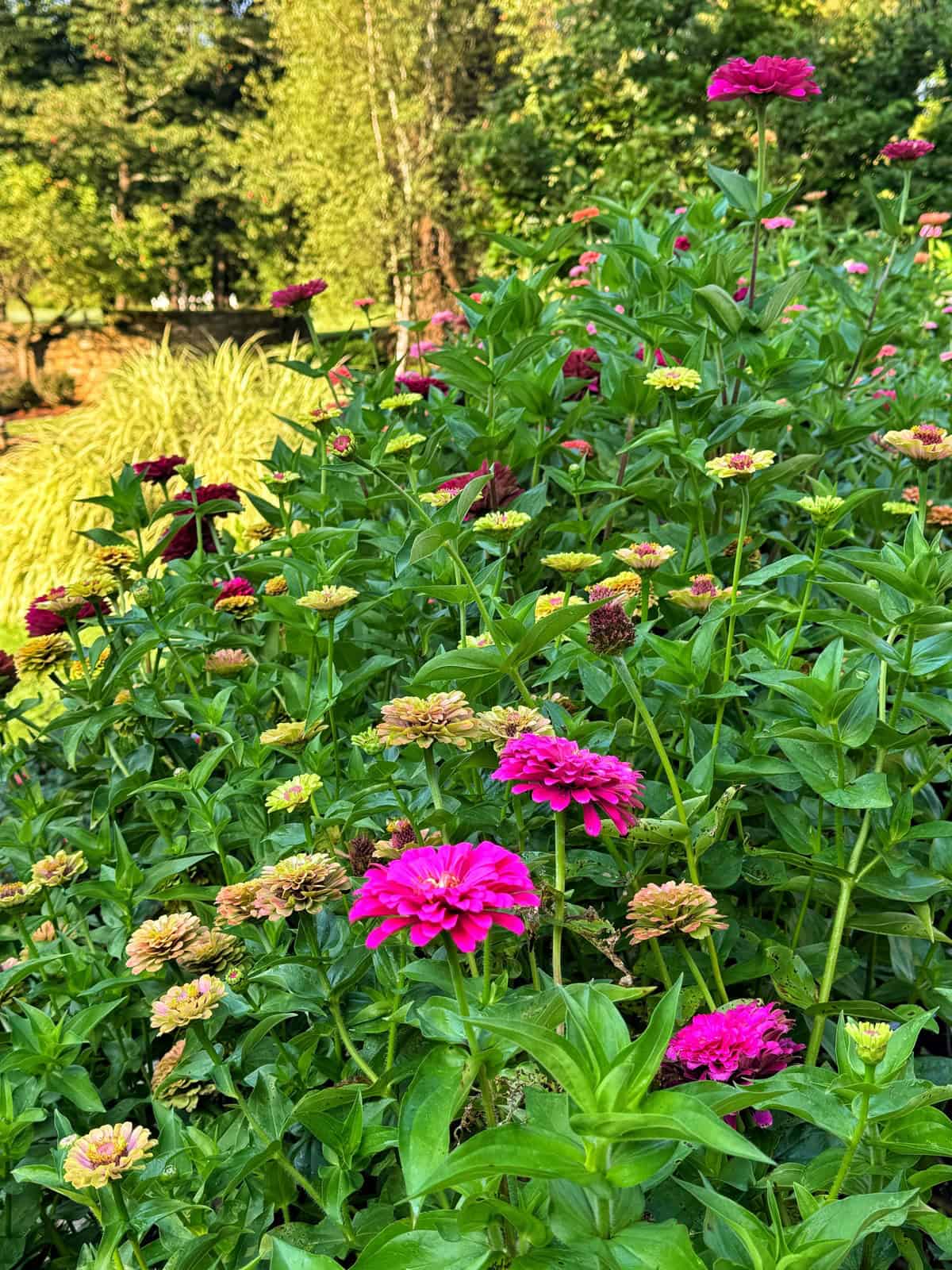
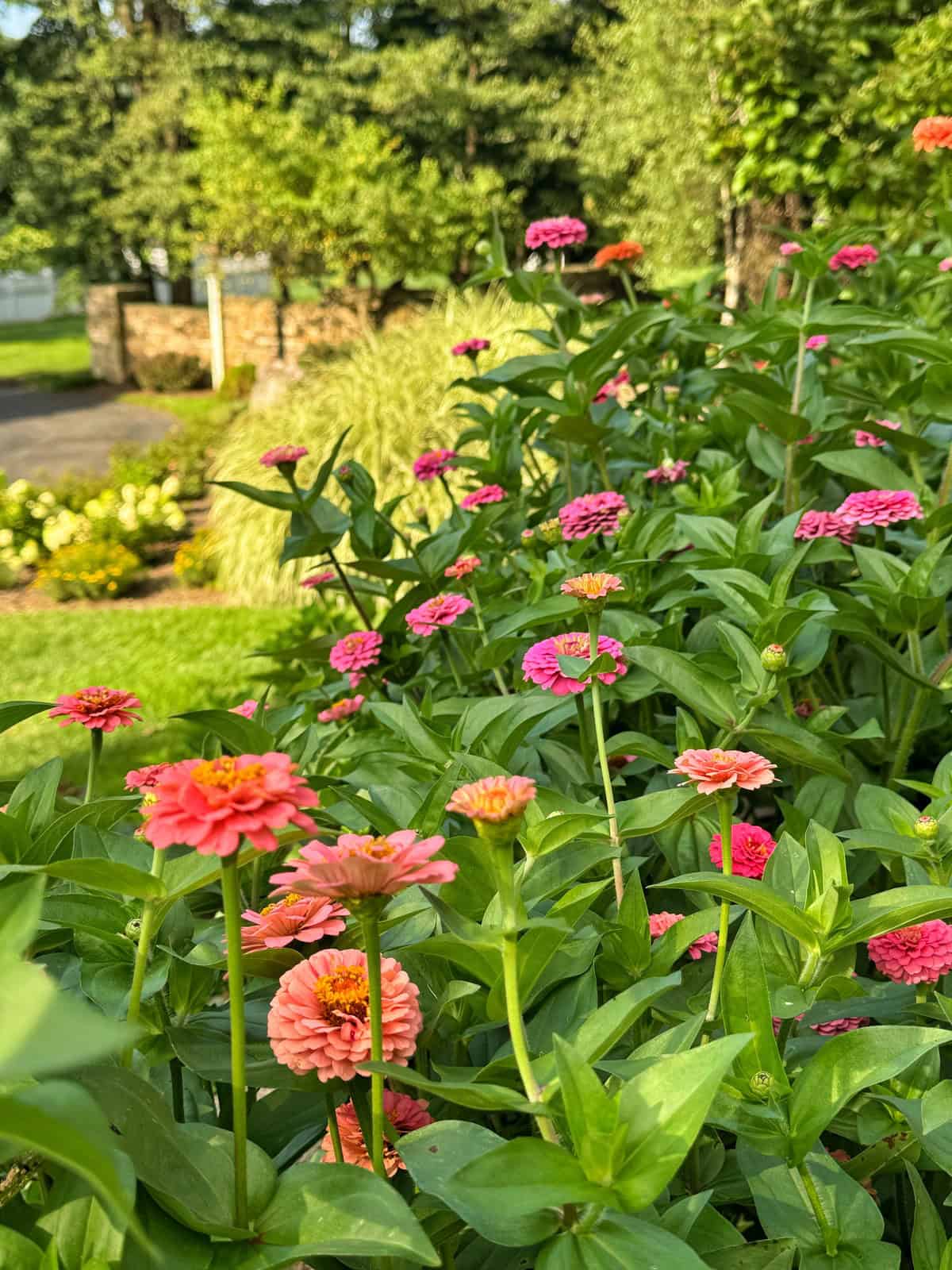
Most seed packets recommend spacing zinnias 6 to 12 inches apart, depending on the variety. For taller types, you’ll usually see 9 to 12 inches suggested. That’s solid general guidance, but in practice, I plant most of my tall zinnias at about 9 inches apart, and here’s why that works for me without sacrificing plant health.
I grow mostly tall varieties like Benary’s Giant (you can see more of my favorites in this guide to the best zinnia varieties to grow), and at 9 inches I can fit more plants into the same bed without running into the issues that come with tighter spacing. I’ve tested closer spacing, around 6 inches, and while it looks great early on, by late July the plants start to struggle.
The difference between 6-inch and 9-inch spacing isn’t just a few inches, it’s airflow. In a hot, humid climate like New Jersey, that makes all the difference.
At 9 inches, I get the best of both worlds: a full, productive cutting garden and enough space for air to move between plants so they stay healthier longer.
I don’t measure with a ruler anymore, I just eyeball it after all these years, but I do make sure they have at least that much room when planting.
Spacing might seem like a small detail, but it’s one of the biggest factors in how your zinnias perform over the season. It’s also one of the most common mistakes I see gardeners make, which I go into more detail on in 7 Common Zinnia Growing Mistakes That Ruin Your Garden by August.
Why Spacing Matters So Much in Hot Humid Climates
Powdery mildew is a fact of life with zinnias. If you grow them long enough, you will see it. It’s not a failure but rather a the reality of the plant’s life cycle, especially as nights cool down in late August and early September while days stay warm and humid.
But here’s what I’ve observed in my own garden over many seasons: spacing doesn’t prevent powdery mildew entirely, but it absolutely affects when it shows up. I talk more about what actually helps, what makes it worse, and how I manage it in my own garden in my full guide on powdery mildew on zinnias.
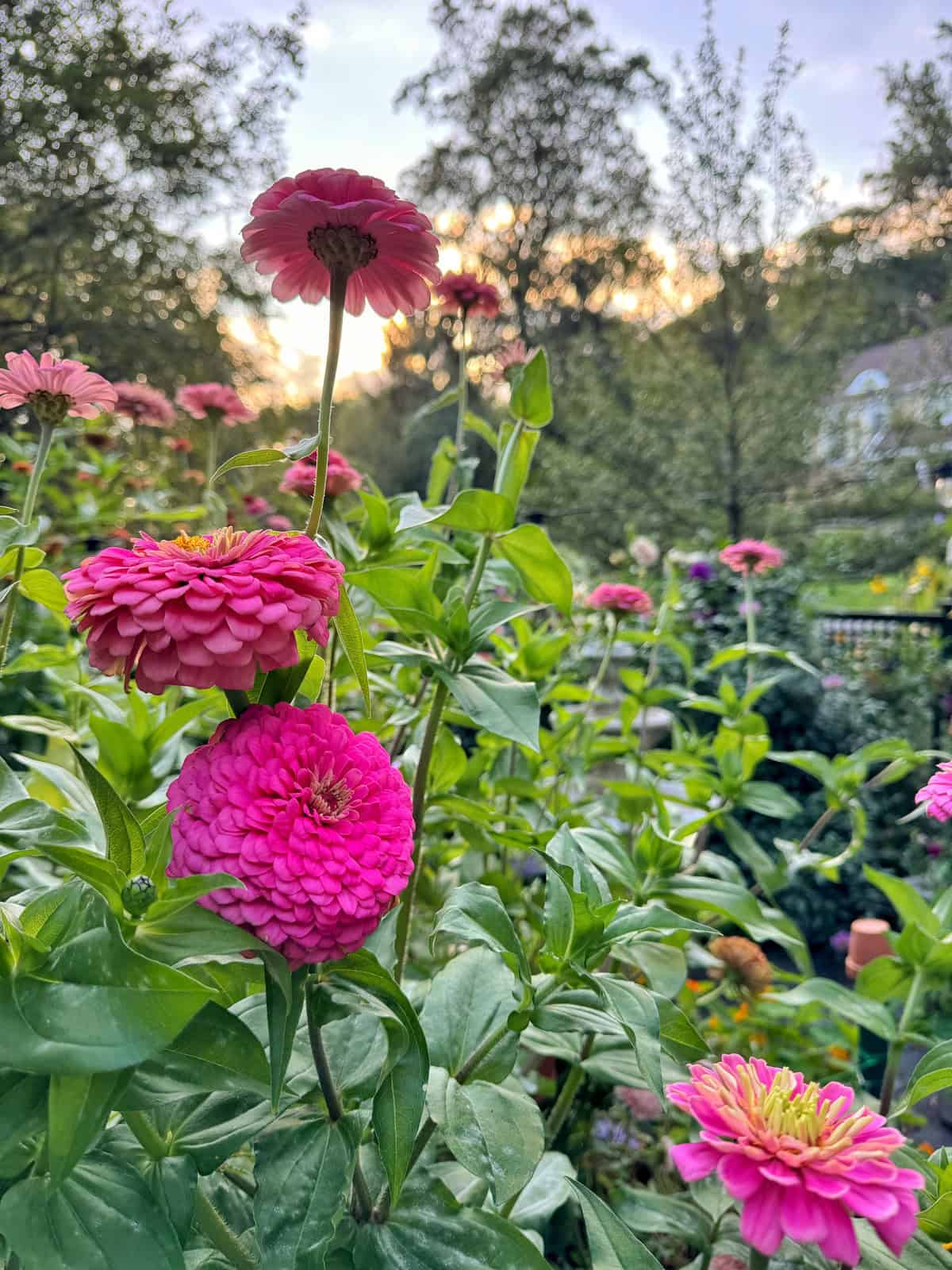
Plants I’ve grown at 6 inches apart have shown powdery mildew noticeably earlier than those at 9 inches in the same bed under the same conditions. The reason is simple. When plants are packed too closely together, air can’t move freely between them and humidity gets trapped at plant level. Crowded foliage can also dry more slowly after rain, creating conditions that favor bacterial and fungal zinnia leaf spot as well.
At 9 inches, there’s enough space between plants that air circulates, leaves dry faster after rain or humidity, and that end-of-season mildew gets pushed back by a few precious weeks. In a cutting garden, those extra weeks mean dozens more bouquets.
The goal is to keep these heavy producing flowers blooming longer!
Climate Matters More Than You Think
Where you garden plays a bigger role in zinnia spacing than most people realize.
In hot, humid climates like mine in New Jersey, tighter spacing almost always leads to earlier powdery mildew because moisture lingers on foliage and airflow becomes restricted. That’s why I’ve found 9 inches to be my personal sweet spot because it gives me good plant density without creating the kind of conditions that invite disease too early in the season.
But if you garden in a drier climate with lower humidity and more consistent airflow, you may be able to space your plants closer without seeing the same issues. In those conditions, moisture evaporates more quickly and fungal pressure is naturally lower.
The key is understanding what your environment is working for or against. Spacing isn’t just about following a number on a seed packet, but rather, it’s about adapting that recommendation to your climate so your plants can stay healthy as long as possible.
What About the “Spacing Doesn’t Matter” Camp?
You’ll find gardening content out there that suggests zinnia spacing is flexible to the point of being irrelevant. That you can pack them in and not worry about it. And I understand the appeal of that advice. More plants in less space sounds great, especially when you’re excited to fill a bed.
But after 20 years of growing zinnias I’d respectfully push back on that. Spacing isn’t about following rules for the sake of it. It’s about understanding what your plants actually need to thrive and what happens when those needs aren’t met.
The consequences aren’t always immediate, which is probably why the myth persists. Your crowded zinnias might look just fine in June and July. August is where you’ll see the difference.
That little bit of extra distance between plants can be the deciding factor in whether your zinnias are still looking healthy and blooming beautifully into September or struggling with disease weeks earlier than they should be. In a garden where zinnias are one of your hardest working summer flowers, that extra time matters enormously.
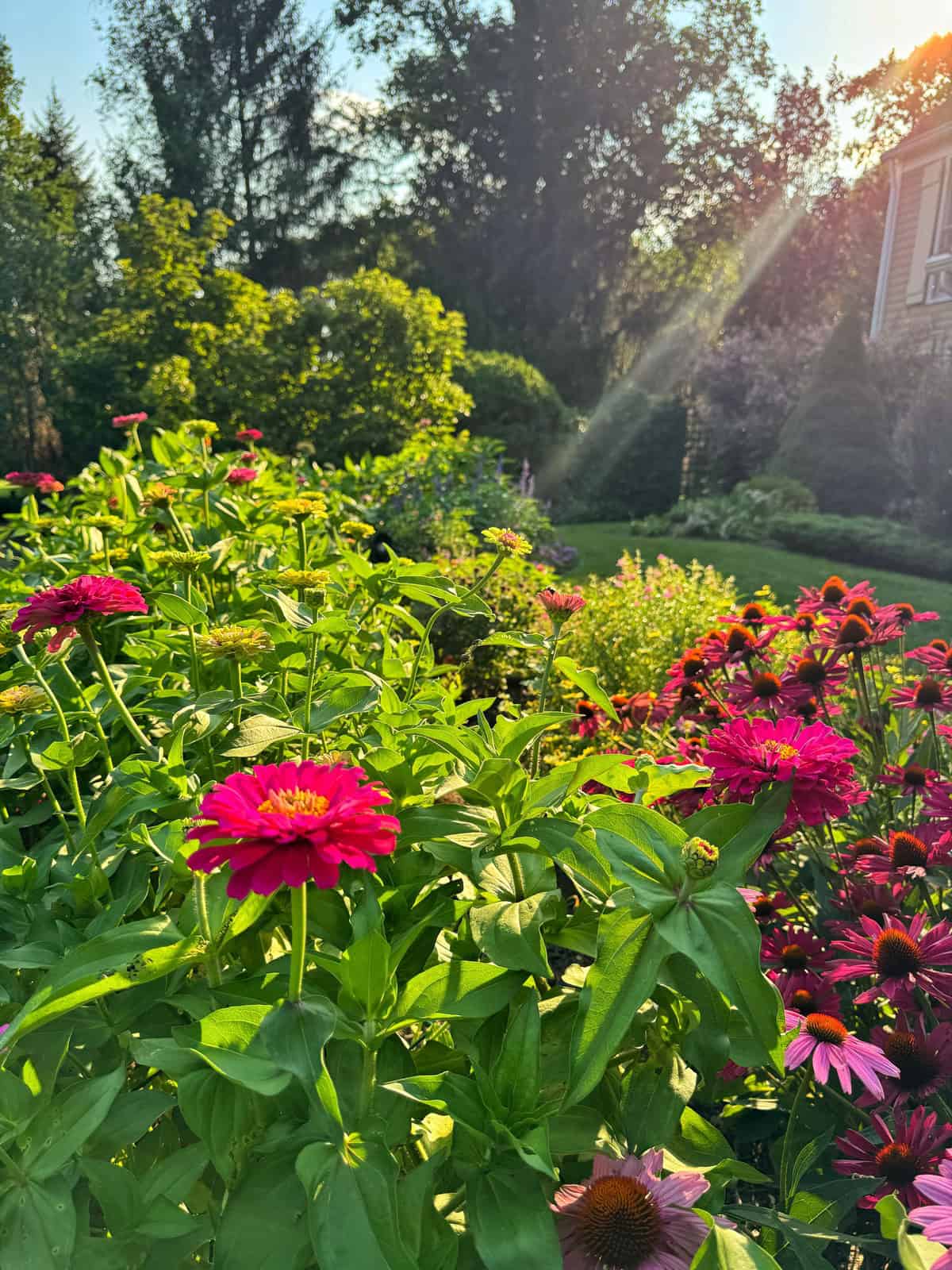
Powdery Mildew and Spacing — What I’ve Actually Observed
Let me be direct about something: powdery mildew on zinnias is inevitable. If you grow them long enough, in enough seasons, you will see it. It is part of the plant’s natural life cycle, particularly as summer shifts toward fall when nights cool down but days stay warm and humid.
In New Jersey that transition typically happens in late August/early September and it is essentially powdery mildew season by default.
But here’s the thing nobody talks about enough. Spacing doesn’t determine whether you get powdery mildew. It determines when.
In my own garden I have watched this play out repeatedly over two decades. Plants spaced at 6 inches will show powdery mildew noticeably earlier in the season than the same variety planted at 9 inches under identical conditions. The mechanism is straightforward because tighter spacing means less airflow between plants, moisture lingers on foliage longer, and you’ve created a microclimate at plant level that’s tailor-made for fungal development.
So here’s my practical advice: if you have struggled with powdery mildew on your zinnias. If it seems to show up earlier than it should, or spread faster than expected then pay close attention to your spacing next season. You may not eliminate powdery mildew entirely. But proper spacing can meaningfully push back that timeline, and in a cutting garden those extra weeks translate directly into more blooms, more bouquets, and a longer season.
The goal isn’t perfection. It’s buying yourself as much healthy growing time as possible. And spacing is one of the most powerful tools you have to do that.

Spacing by Variety — It’s Not One Size Fits All
Not all zinnias need the same amount of space. How you space them should reflect what you’re growing. If you’re not sure which types you have or want to grow, this guide to zinnia varieties for cutting gardens will help you choose the right ones.
Tall varieties like Benary’s Giant, Queeny, or Oklahoma series – these are big plants that can reach 3 to 4 feet tall with substantial stems and foliage. I give these 9 inches minimum. If you have the space and want maximum plant health with zero compromise, 12 inches is ideal.
Mid-size varieties can work well at 8 to 9 inches. They’re less leafy than the giants and slightly more forgiving with airflow.
Dwarf varieties like double zahara raspberry ripple, used as border plants or container fillers can go a bit closer, around 6 to 8 inches, because their compact habit means less leaf mass and better natural airflow at ground level.
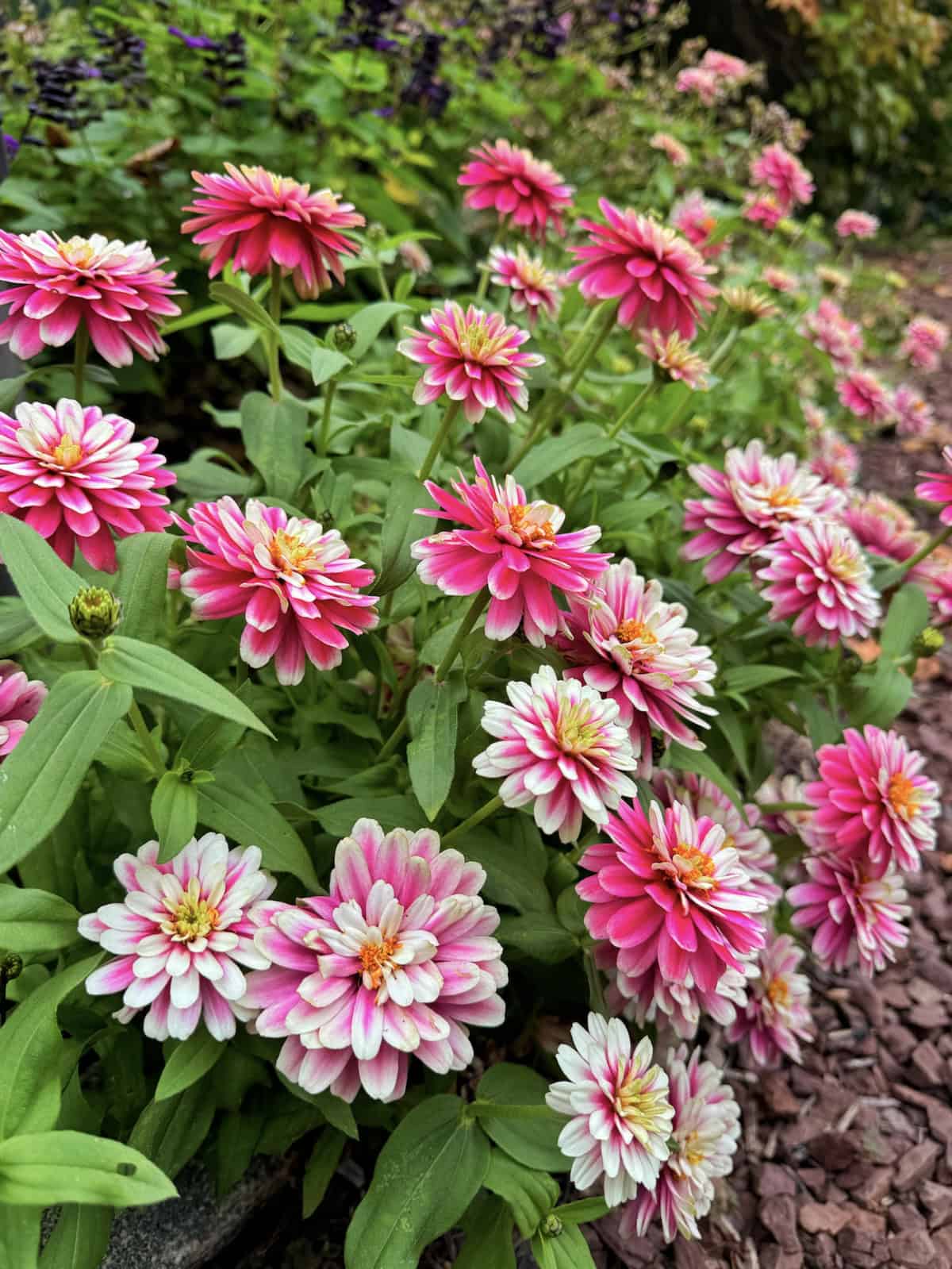
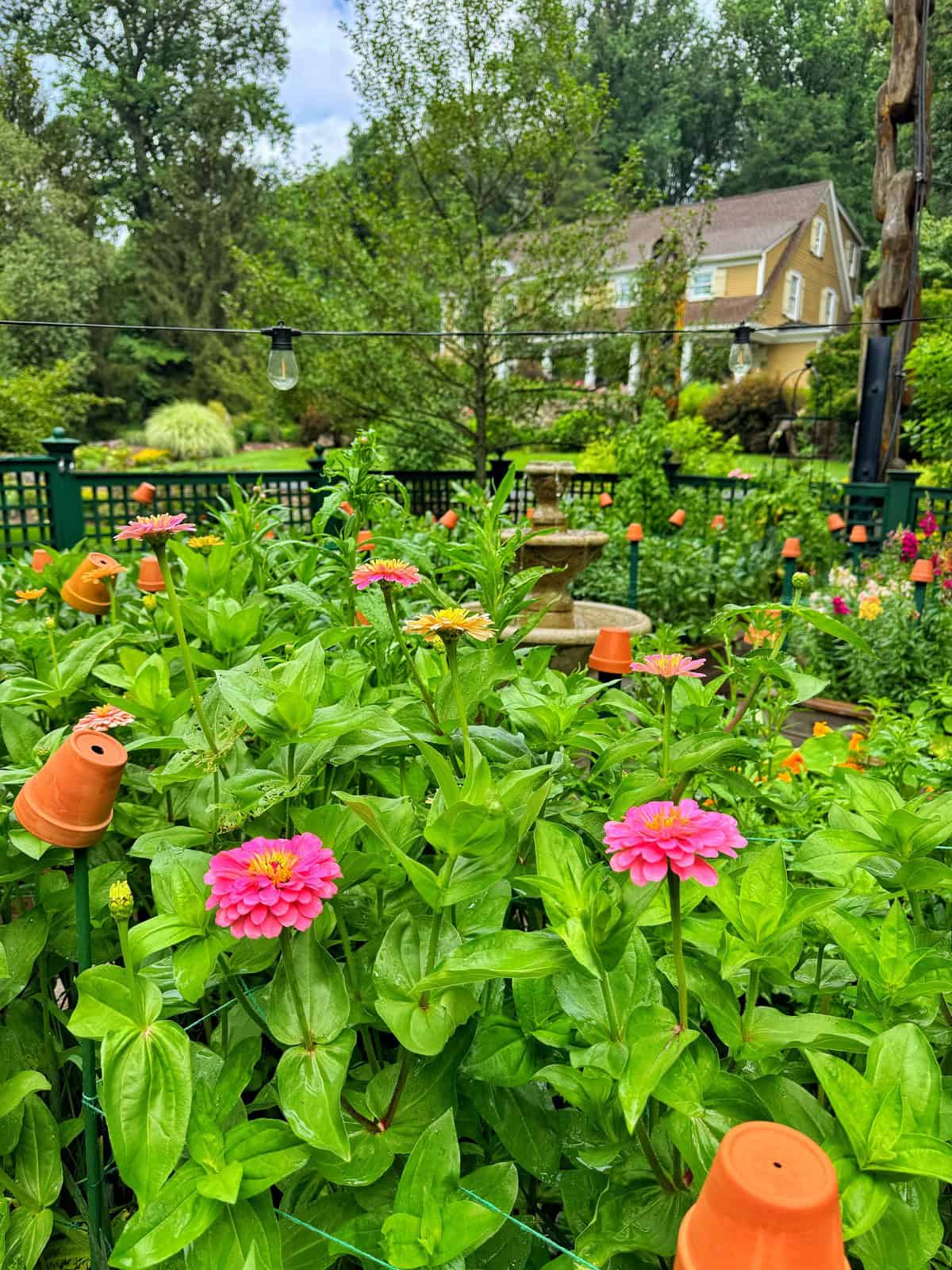
Cut Flower Garden vs. Border Planting — Different Goals, Different Rules
How you’re using your zinnias should influence your spacing decision.
In a cutting garden where you’re harvesting regularly, consistent deadheading and cutting actually helps with airflow naturally, you’re removing foliage and spent blooms that would otherwise trap moisture. This is one reason a well-harvested cutting bed can handle slightly tighter spacing than a purely ornamental border.
If you’re building a cutting garden, this guide to cut flower gardening for beginners walks through how to set it up.
In a border planting where the goal is visual impact and you’re doing less active cutting, give your plants more room. They’ll be carrying their full foliage load all season and need that airspace more.
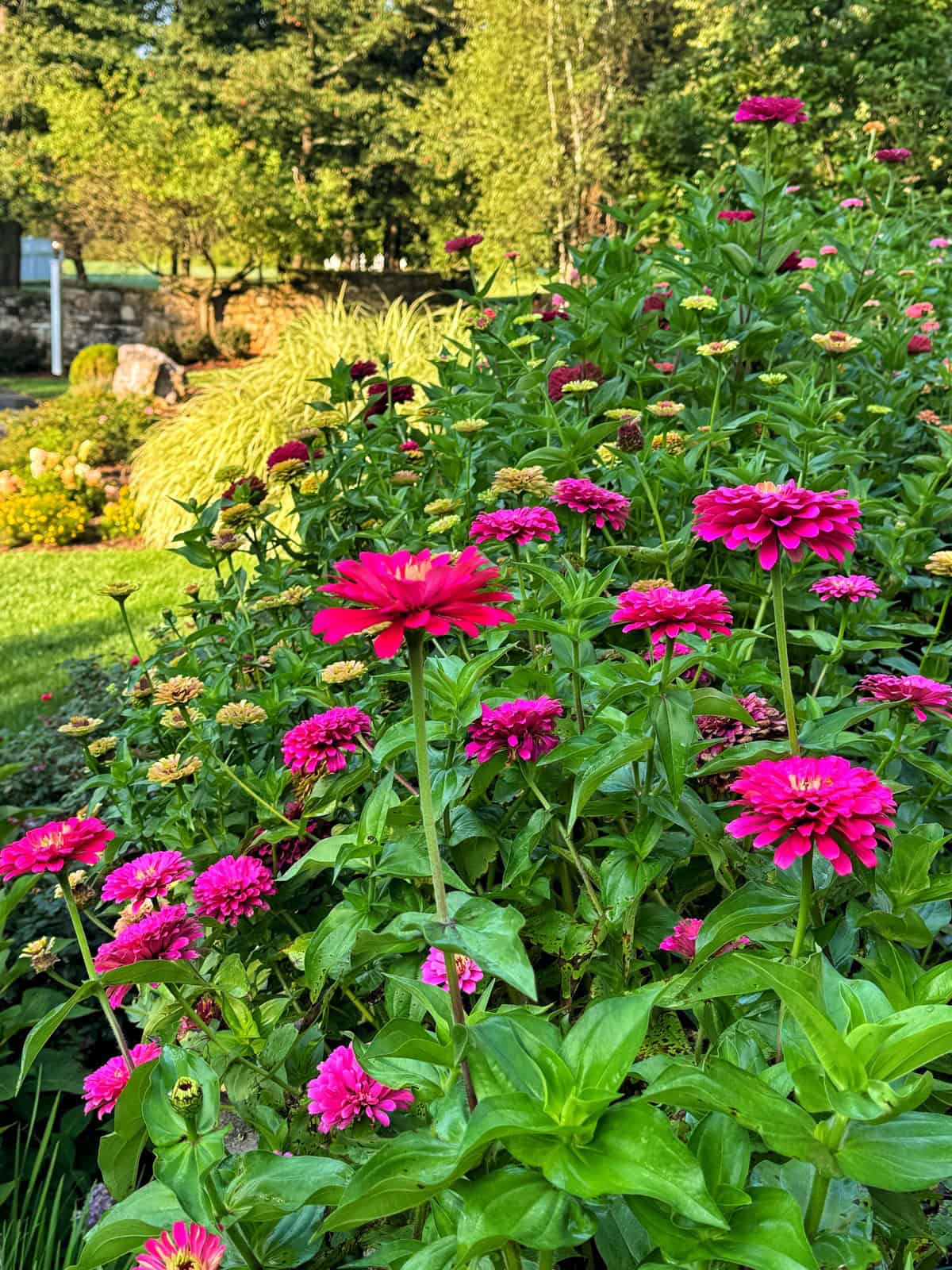
What Happens When You Plant Too Close
If you’ve already planted and you’re realizing your spacing is tighter than ideal, here’s what to watch for and what you can do:
- Thin seedlings early. If you direct sowed and have a dense patch of seedlings, thin to your target spacing while they’re still small. It feels wasteful but those remaining plants will outperform a crowded patch significantly.
- Watch for early powdery mildew signals. White dusty coating on lower leaves is usually the first sign. If you catch it early on a tightly spaced planting, remove affected leaves immediately and improve airflow by selectively removing the most crowded stems. For more tips on preventing and managing powdery mildew, please visit my complete guide to growing zinnias.
- Water at the base, never overhead. This matters more with tight spacing. Wet foliage in a crowded planting is a fast track to fungal problems, especially in humid climates. To learn more about how I water my flowers gardens, please visit my guide on how I water my flower gardens for healthier plants.

Grow a Garden That Gets Better Every Season
If you’ve ever wondered why your zinnias look great early on but struggle later in the season, you’re not doing anything wrong, you just haven’t been given the full picture yet. Things like spacing, airflow, plant selection, and even how your garden is laid out all work together, and when one piece is off, it shows up weeks later in ways that feel frustrating and hard to fix.
That’s exactly why I wrote The Bricks ‘n Blooms Guide to a Beautiful and Easy-Care Flower Garden. It walks you through how to choose the right plants, design your beds, and grow a garden that works with your conditions so you’re not constantly second-guessing your decisions.
And just as important…if you’ve ever thought, “I should remember this for next year,” and then didn’t, that’s where my Bricks ‘n Blooms Beautiful and Easy-Care Flower Garden Planner comes in. It’s the system I use to track what worked, what didn’t, and how I want to adjust things like spacing, layout, and plant combinations so my garden actually improves year after year.
The book gives you the knowledge. The planner helps you build on it.
The Bottom Line on Zinnia Spacing
You don’t have to follow the seed packet to the letter. I don’t. But after more than 20 years of growing zinnias in a hot, humid climate, I’ve learned that spacing is one of the most important decisions you make early in the season when it comes to growing zinnias.
Because it’s not just about how full your garden looks in June or July…it’s about how long your plants stay healthy and productive into August and September. In my garden, that 9-inch spacing has consistently been the sweet spot between maximizing blooms and maintaining enough airflow to delay powdery mildew as long as possible.
If you’ve struggled with zinnias declining earlier than expected, this is one of the first things I would adjust. It’s a small change that can make a noticeable difference over the course of a season.
And if you want to take this a step further, I break down the full process of growing healthy, productive zinnias, from seed starting to spacing, care, and troubleshooting, in my complete guide to how to grow zinnias successfully.
You can also explore:
- my favorite zinnia varieties for cutting gardens to choose plants that perform well in your space
- how to prevent powdery mildew on zinnias
- zinnia leaf spot: what causes black or brown spots on zinnias?
- what happens when you skip pinching zinnias (and why It matters for more blooms)
- my zinnia support experiment where I tested how spacing and structure impact bloom production
Give your zinnias room to breathe, and they’ll reward you with stronger plants, longer bloom time, and a garden that holds up when the season gets tough.
Thank you for visiting the blog today!
Enjoy your day! xo

Originally Published . Last Updated .

I love zinna plants and not getting any good zinna to grow. What recommended to start indoor? And where best to purchase them?
Thank you,
Keith Rossi
Hi Keith! I like to order my seeds from Johnnys Selected Seeds and Floret Flower Farm, but Select Seeds and Renee’s Garden are also great sources for seeds!
Hi, first time planting zinnias- which support do you recommend?
Hi Lisa!!! For me, it depends where I’m planting them. In my cutting garden – which has raised beds, I use trellis netting and garden stakes (affiliate) https://urlgeni.us/amzn/trellissupportnet and https://urlgeni.us/amzn/4ftgreengardenstakes. Last year, I used rectangular grow through supports that have since sold out where I sourced them but are similar to this https://rstyle.me/+HYWJCRu4CTqgahfaQ9bJ2A but I’ve also used these round ones as well https://urlgeni.us/amzn/growthruplantsupports. You could also use green garden stakes and twine.