
An Accidental Zinnia Experiment That Changed How I Grow Them

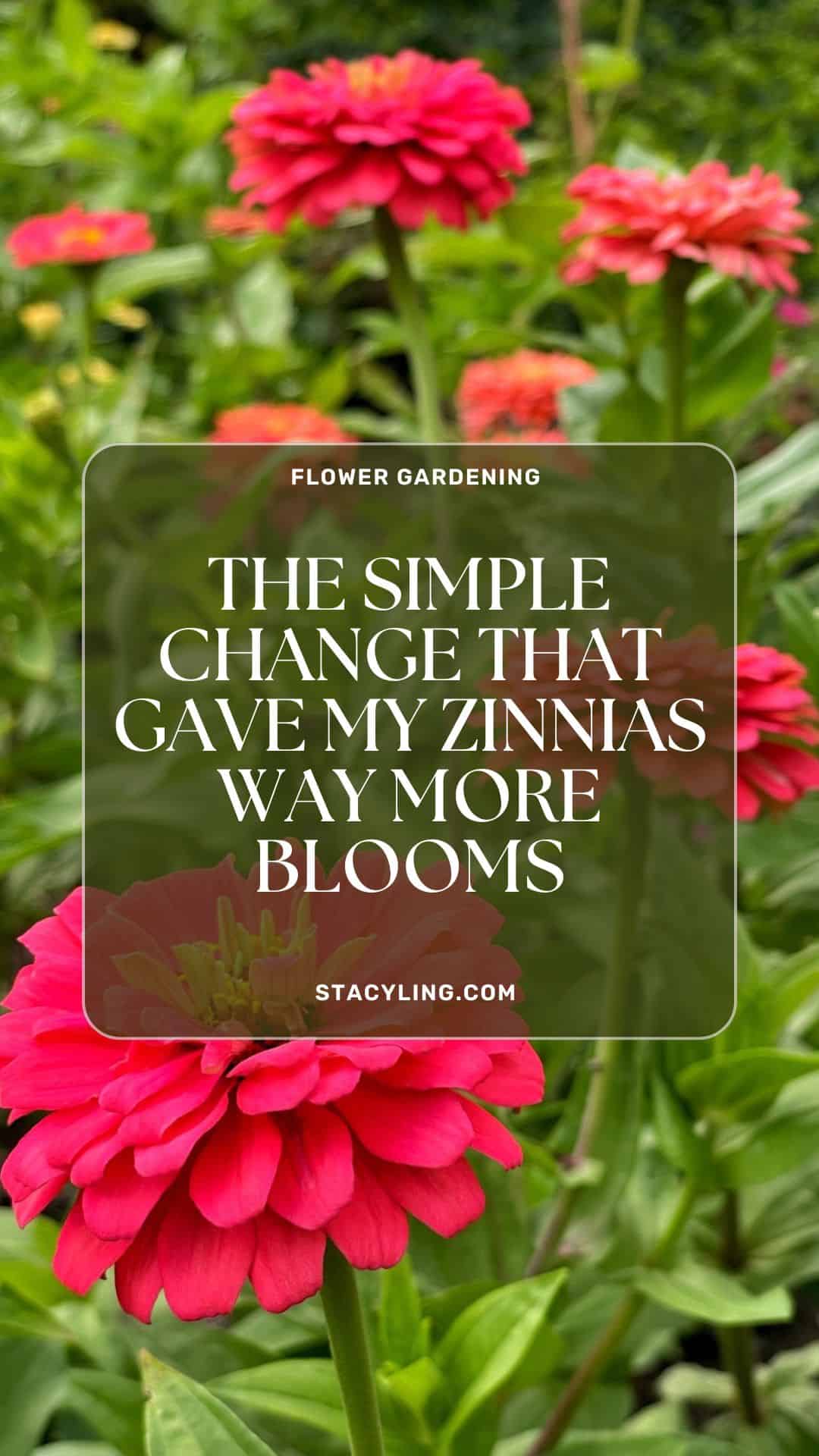
I didn’t plan to run a garden experiment, but supporting my zinnias changed everything. Here’s what I observed — and why I’ll never skip it again.
For years, I let my zinnias fend for themselves.
In my raised beds, I usually supported them, mostly out of habit, the aesthetic, and convenience. But in the welcome garden, especially along the curved edge, staking always felt like too much work. It was a tough spot to add stakes and have it make sense, while the round grow through supports just didn’t do the job well. For the last few years, the plants flopped, leaned on each other, and somehow managed to bloom anyway. And I accepted that as “just how zinnias grow.”
This summer changed that assumption entirely.
What started as a practical decision turned into an unintentional experiment and the results were so dramatic that I’ll never grow zinnias in that garden without support again.
(Posts on stacyling.com may contain affiliate links. Click HERE for full disclosure.)
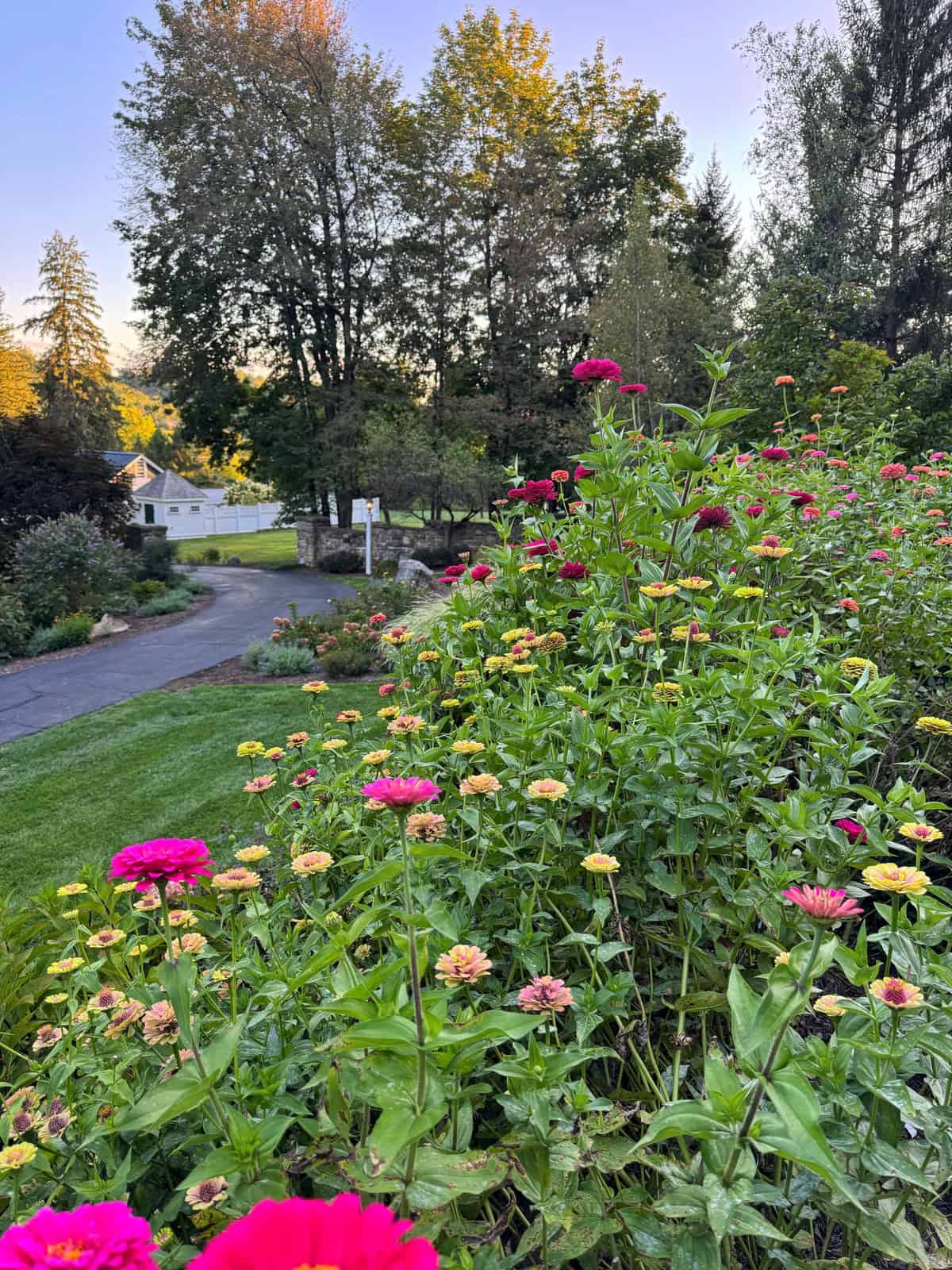
The Setup: Supported vs. Unsupported Zinnias
The welcome garden sits on a curve, visible both from the ground-level porch and from higher up near the house. It’s one of the most visible beds on the property — and also one of the trickiest to manage.
This year, I decided to try rectangular grow-through supports instead of the round ones I typically use. They fit better in straight runs, and I thought they might work along the curve well enough to be worth the effort.
Here’s what happened:
- About 90% of the bed was supported with rectangular grow-through hoops
- Roughly 10% was left completely unsupported
- Same soil
- Same watering (they are on timed drip irrigation)
- Same sun exposure
- Same planting time
The only difference was support.
(Since publishing this post, the supports I use may have sold out. If the link I supplied above doesn’t go to rectangular supports anymore, I found these that are very similar).

The Zinnia Varieties in the Test
This wasn’t a single variety fluke. The bed included several different types of tall zinnias planted at both ends of the bed:
- Benary’s Giant (multiple colors)
- Queeny Lime With Blush
- Oklahoma Salmon
- Zinderella Peach
- Uproar Rose
All of these varieties have one thing in common: they grow tall and bloom heavily — or at least they’re supposed to.
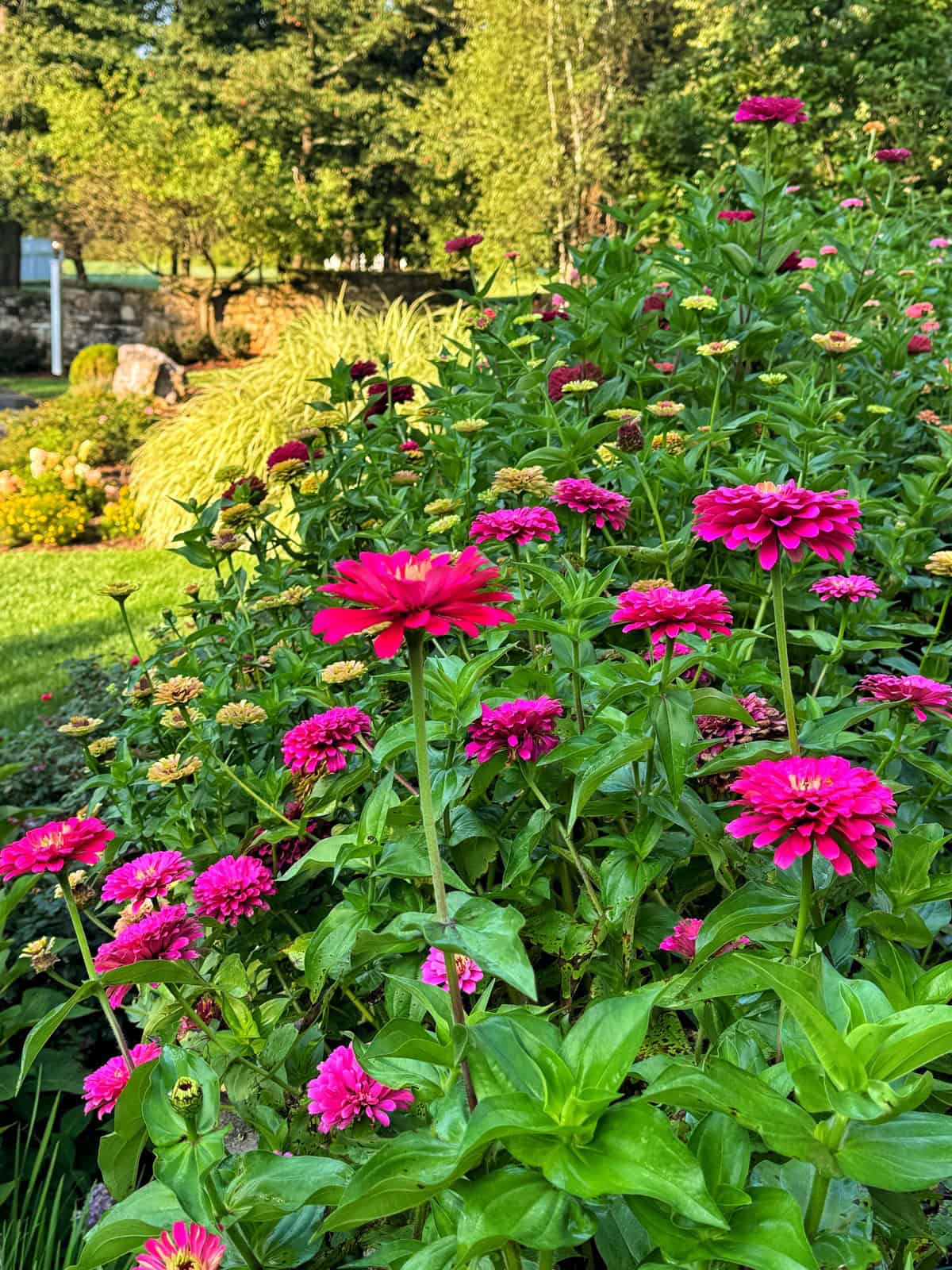
The Results Were Impossible to Miss
I expected some improvement from supporting the plants.
I did not expect this.
The supported zinnias:
- Produced dramatically more blooms
- Had fuller, bushier growth
- Developed longer, straighter, vase-worthy stems
- Looked better from every angle — both up close and from a distance
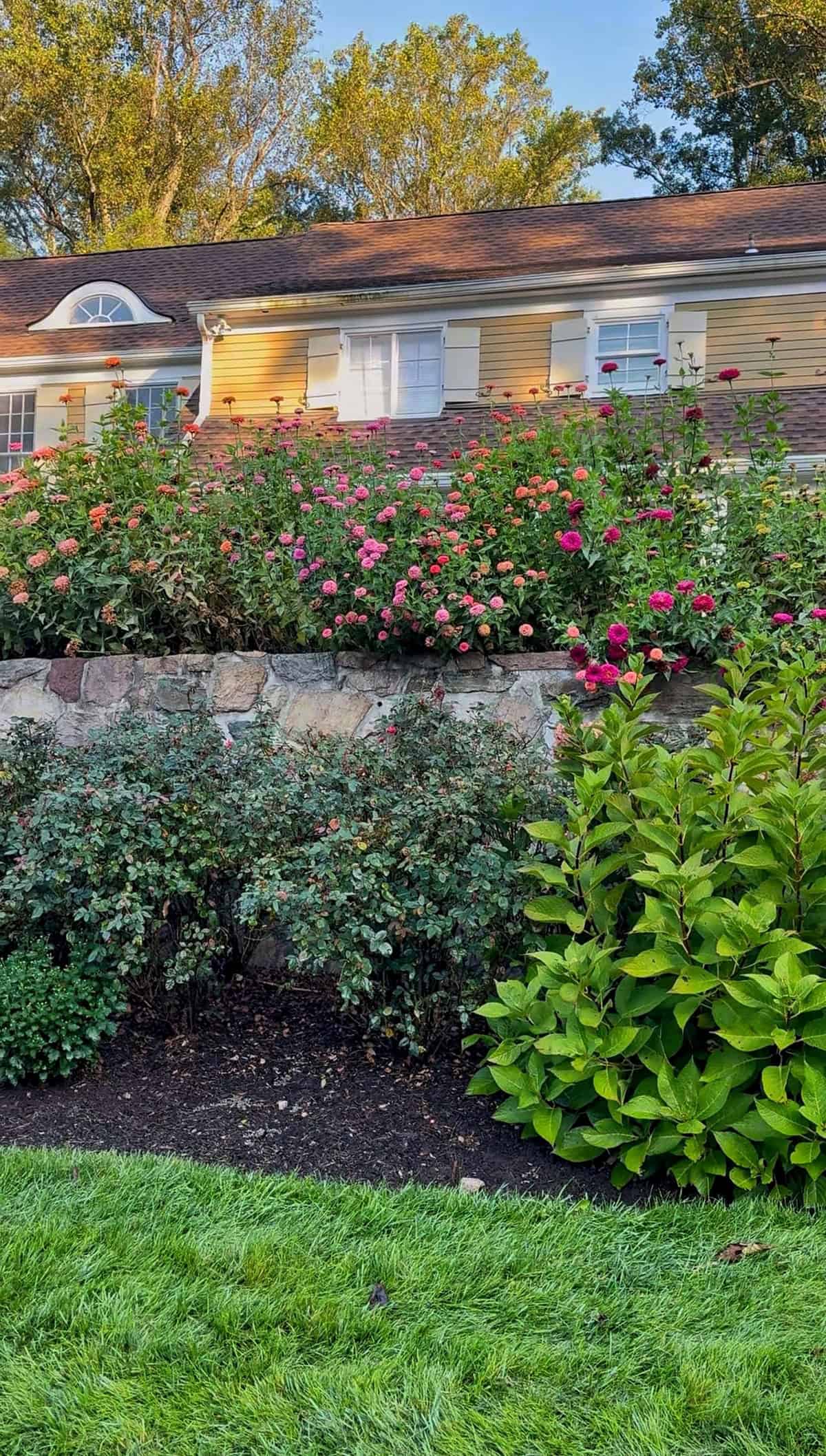
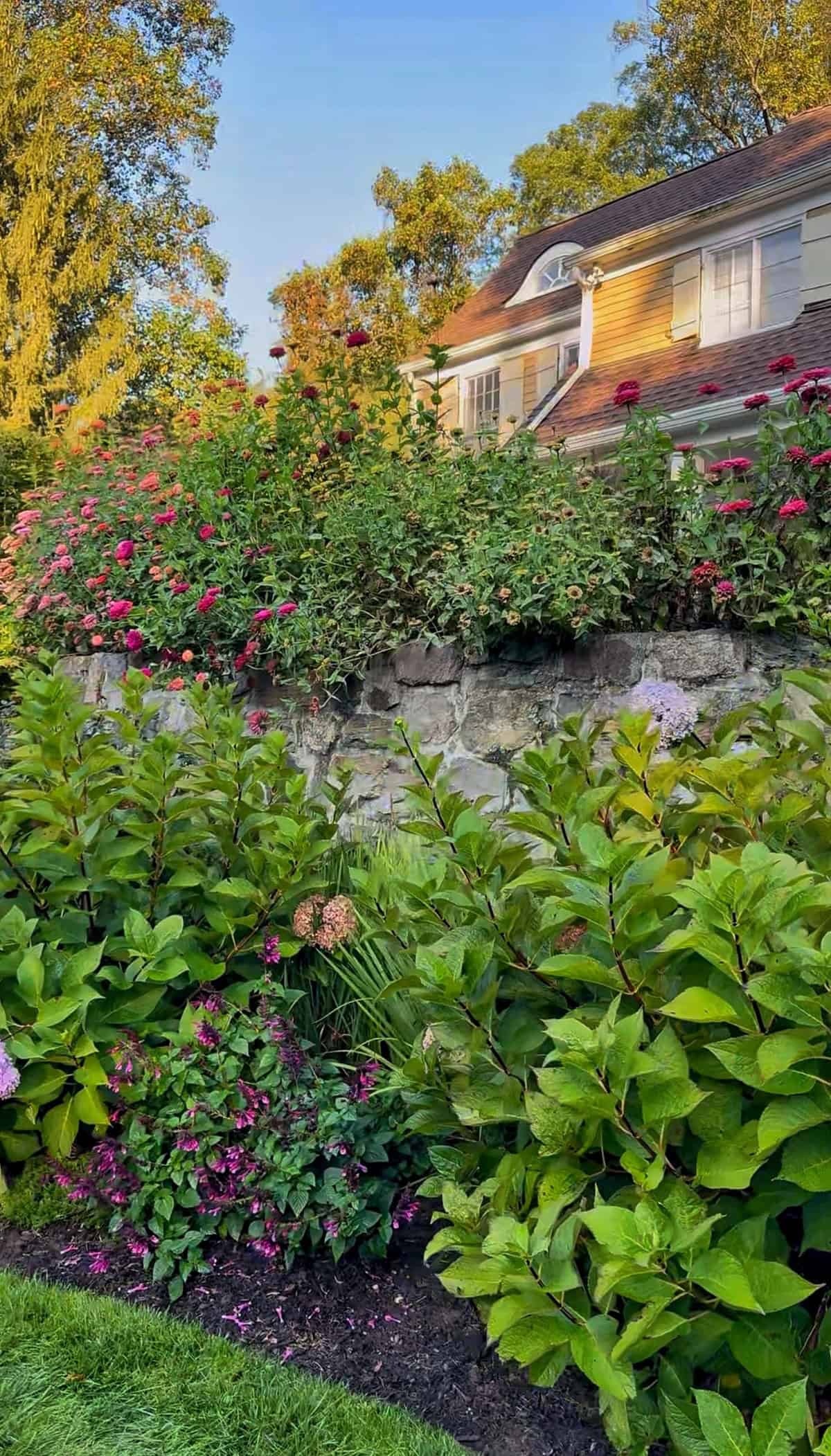
The unsupported section:
- Leaned and tangled early
- Produced far fewer flowers
- Never caught up, even late in the season
- Looked sparse and straggly by comparison
We’re not talking about a subtle difference. The supported plants easily had five to ten times more blooms than the unsupported ones.
Once you see that kind of contrast in the same bed, you can’t unsee it.
Why Supporting Zinnias Makes Such a Big Difference
Many gardeners say staking doesn’t matter for zinnias — and technically, they’re right. Zinnias will grow and flower without support.
But here’s what support actually does:
- Keeps stems upright, so energy goes into growth and branching, not self-correction
- Improves airflow without crowding plants together
- Prevents stems from bending and kinking, which reduces usable cut flowers
- Keeps blooms cleaner and less likely to be damaged by rain or soil splash
When zinnias flop, they survive.
When zinnias are supported, they thrive.
That difference matters, especially if you care about abundance, structure, or cutting flowers.
Why I’ll Never Skip Support in This Garden Again
For years, I assumed the flopping was unavoidable in this spot.
It wasn’t.
The rectangular grow-through supports worked beautifully, even along the curve. The entire bed looked intentional, lush, and cohesive in a way it never had before. From the house, it read as a wall of color. From the porch, it felt immersive instead of chaotic.
And the plants I didn’t support, simply because the curve made it awkward, became the clearest proof of all.
They bloomed. But they never looked good.
See the difference below.
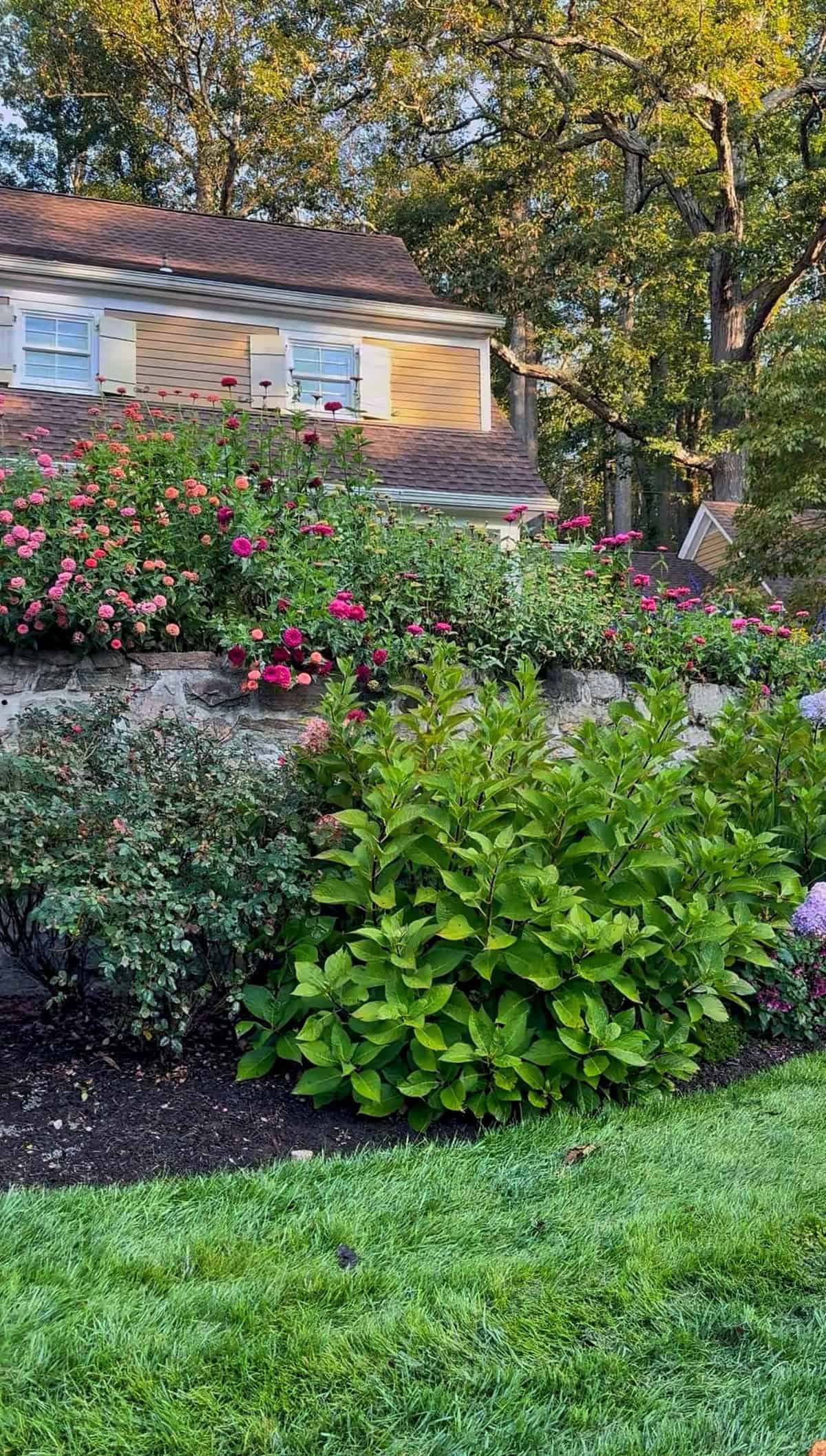
The first photo shows this same section of my zinnia garden in 2025, the year I supported most of the bed with these rectangular grow-through supports.

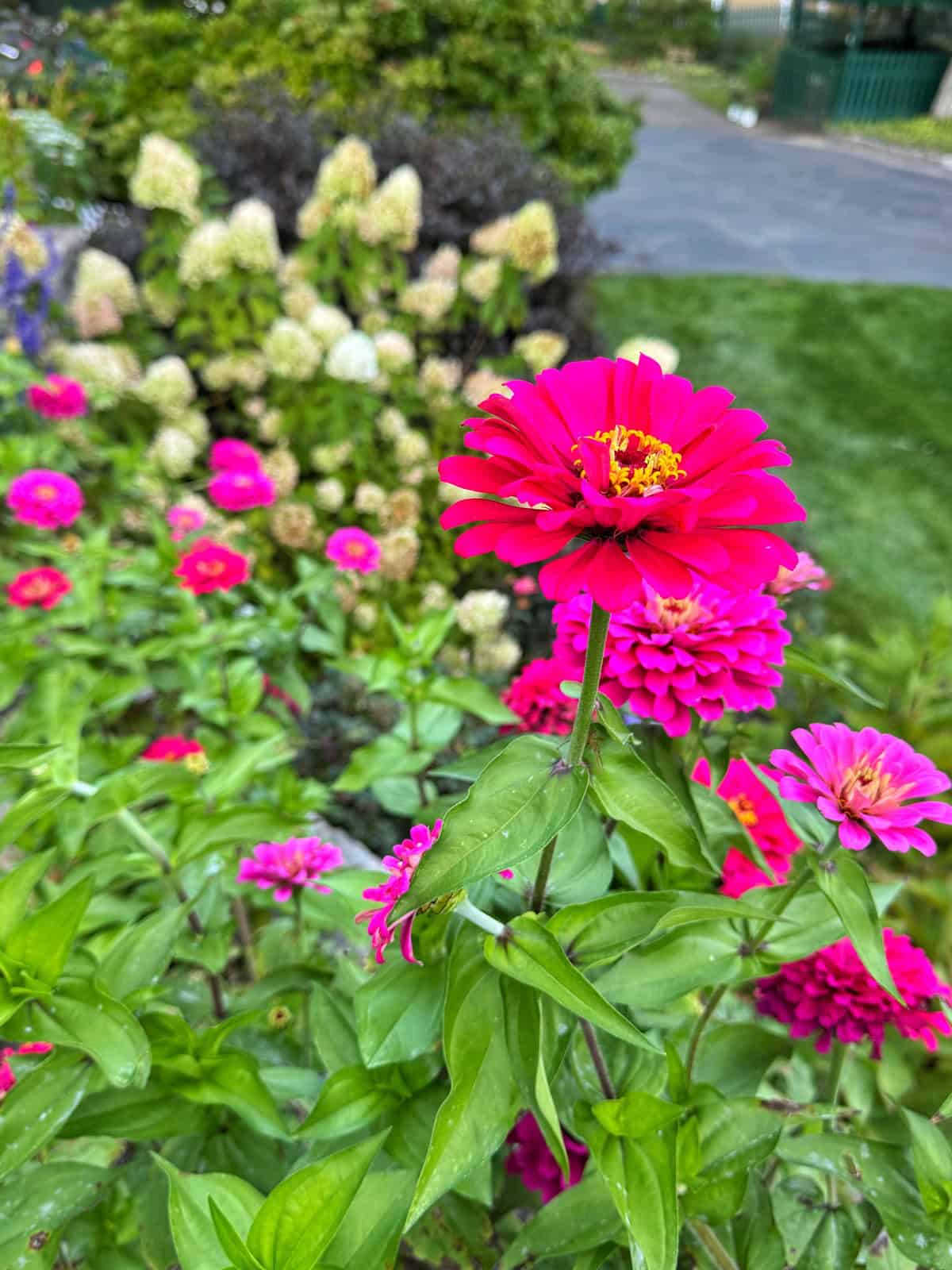
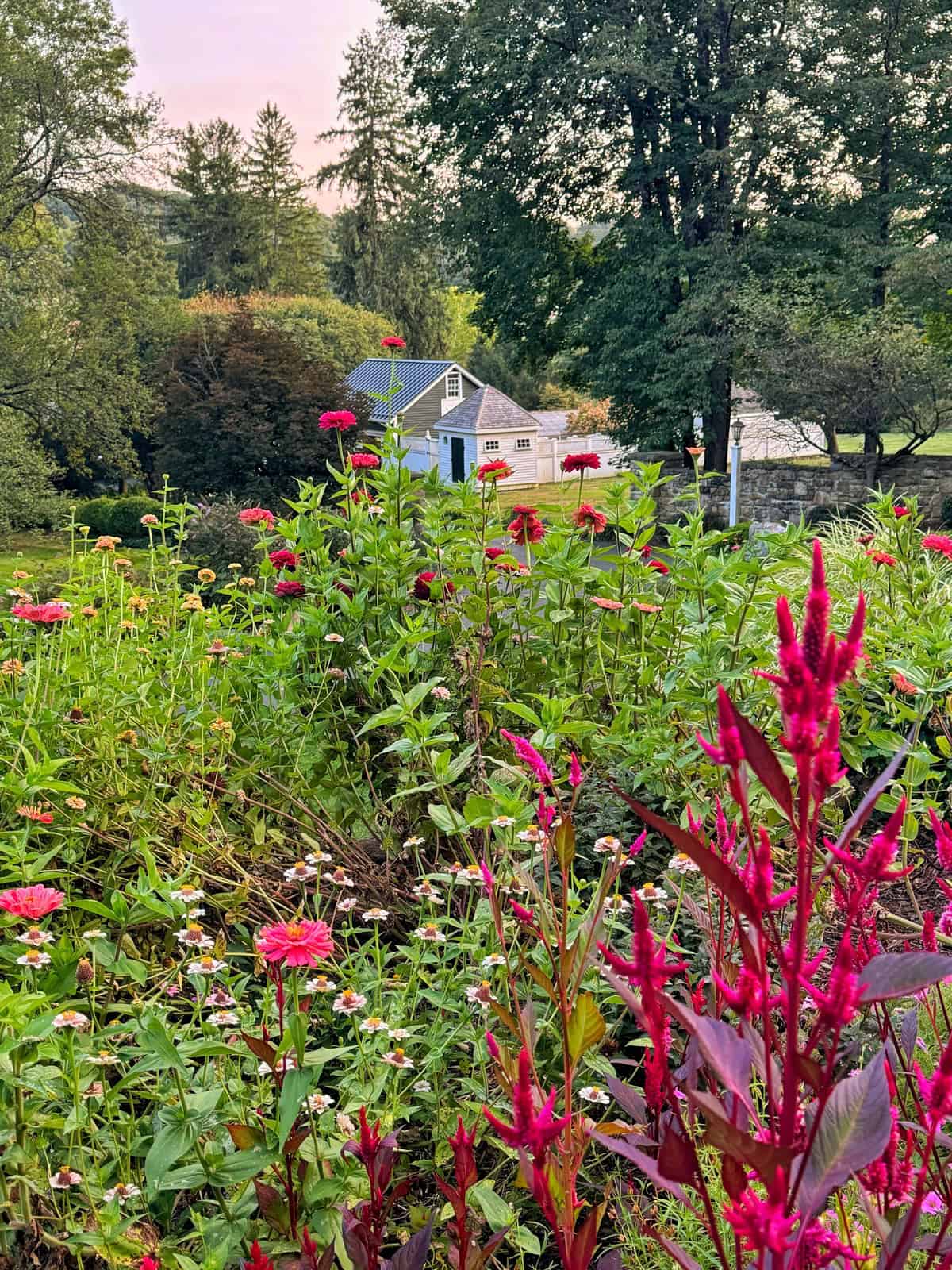
The following photos are from 2024 and 2023, when the zinnias in this spot were left unsupported.
Even though the plants bloomed in all three years, the difference in stature, structure, and overall bloom production is hard to miss. The supported plants stayed upright, branched more evenly, and produced far more flowers, while the unsupported zinnias leaned, flopped, tangled, and never reached the same level of fullness.

The Takeaway: You Don’t Have to Support Zinnias — But You’ll Get More If You Do
If you’re growing zinnias casually and don’t mind some flop, you can absolutely let them stand on their own.
But if you want:
- More blooms
- Stronger stems
- Better structure
- A bed that looks good from every angle
Support matters. A lot.
This accidental experiment changed how I grow zinnias and it’s one of those rare moments in gardening where the answer becomes completely clear once you see it for yourself.
If you’re growing zinnias this season
Supporting them made a bigger difference in my garden than I ever expected. If you’re planning to grow zinnias from seed, my complete guide to growing zinnias covers planting, spacing, and care from start to finish. I also share how I deadhead zinnias to keep them blooming all season, plus the companion plants I’ve found work especially well alongside them.
For more ways to keep tall flowers upright and productive, see my full guide on how to support tall flowers and prevent flopping.
Thank you for visiting the blog today!
Enjoy your day! xo

Originally Published . Last Updated .

Where do you find the support your talking about
Hey there Kay! Here they are (affiliate) https://urlgeni.us/amzn/rectangulargrowthroughplantsupports
You chose to not show the supports? Why? Would’ve been helpful.
What do you mean? I linked to the ones that I used so you can actually see what they look like and check their sizing. The supports were fully covered by the zinnias in the garden on a wall that is like 8 feet high and I couldn’t access to get close ups of them. I shared photos of supported vs unsupported zinnia flowers in the post – was that not a helpful visual? And if you look closely – you can actually see the supports in use. For context – here they are (affiliate): https://urlgeni.us/amzn/rectangulargrowthroughplantsupports
Hello, the embedded link takes us to the round supports with interior squares, not the rectangular supports. Did you use livestock panels or did you purchase something else?
Thank you
I think they must have sold out and are forwarding to a different product! I did find the same ones/same brand on another site – https://atlantishydroponics.com/products/luster-leaf-link-ups-grow-through-grid-plant-support-rectangle-24-inch-x-18-inch-grid-x-30-inch-leg?srsltid=AfmBOopUgZNVHyn4ZRZMar0vYtlJOw0yPiDAJCqUGL85B9vWhP2nnMls