
What Happens When You Skip Pinching Zinnias (And Why It Matters For More Blooms)

Learn what happens when you skip pinching zinnias and how it affects plant shape, stem growth, and overall bloom production.
Pinching zinnias is one of the simplest ways to get fuller plants and significantly more blooms, yet it’s often skipped or misunderstood. The difference between pinched and unpinched plants isn’t subtle. And once you see it, it completely changes how you grow them.
I’ve been growing zinnias for over 20 years and pinching is one of those tasks I do without thinking at this point. It’s built into my early season garden rhythm when seedlings reach the right stage, I grab my snips, and I work my way through the beds. Honestly it’s one of my favorite early season tasks. There’s something genuinely therapeutic about it.
But I’m human. And some years a few plants get missed.
Those accidental experiments have taught me more about the value of pinching than any intentional test ever could. Because when you have pinched and unpinched plants growing side by side under identical conditions, the difference becomes impossible to ignore, especially once July hits and your zinnias really start producing.
If you’re new to growing zinnias, I cover the full process from seed to bloom in my guide to how to grow zinnias successfully, but this is one step that deserves its own spotlight.
Here’s everything I’ve learned about pinching zinnias, what actually happens when you skip it, and how deadheading keeps the whole thing going all season long.
(Posts on stacyling.com may contain affiliate links. Click HERE for full disclosure.)
What Is Pinching and Why Does It Matter?
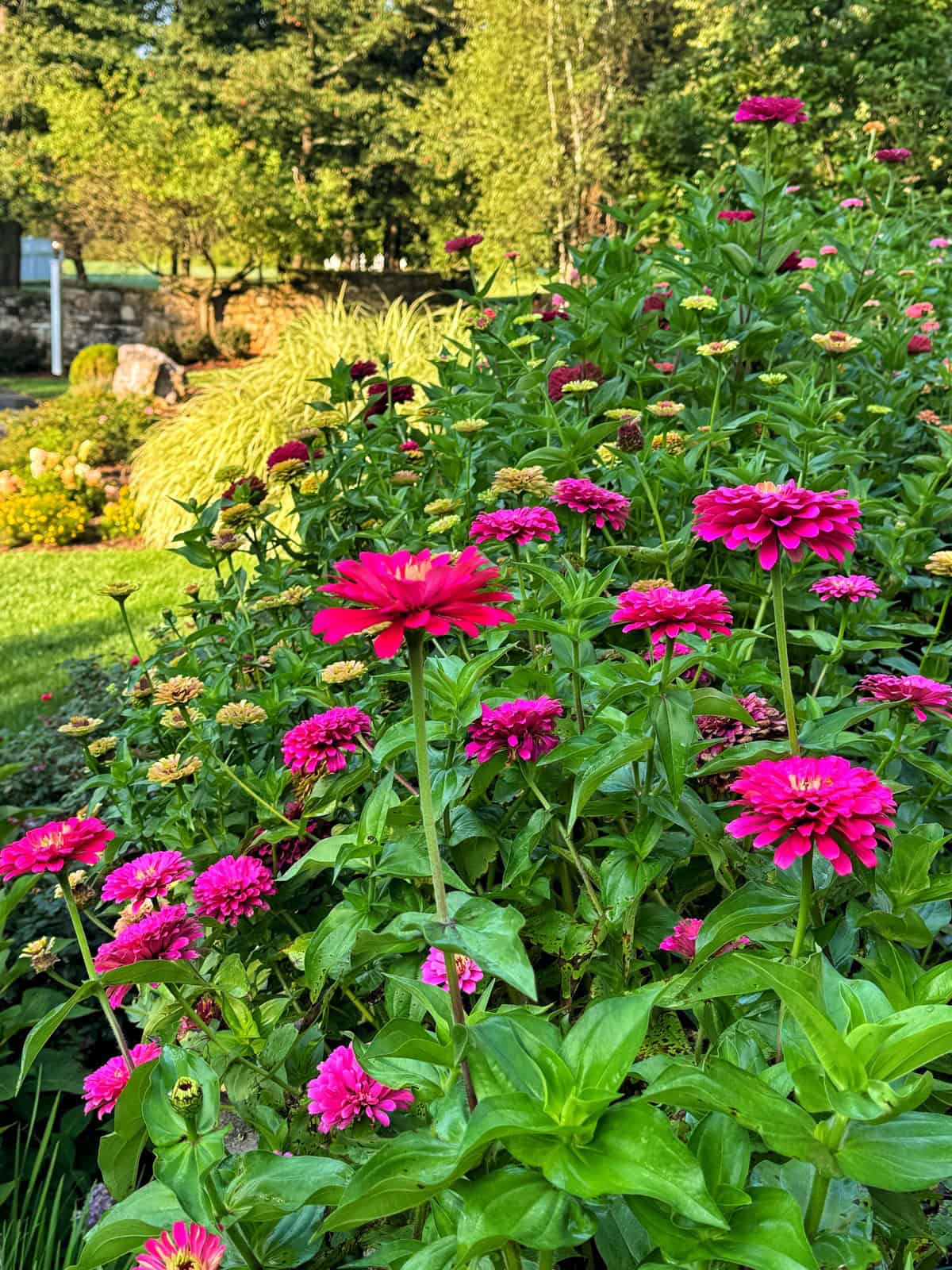
Pinching is the simple act of removing the growing tip of a young zinnia plant to encourage it to branch out rather than grow straight up. Instead of putting all its energy into one central stem, a pinched plant redirects that energy outward, producing multiple branches, more stems, and ultimately far more flowers.
It’s a small intervention early in the season that pays dividends for months.
When to Pinch Your Zinnias
Timing matters. I pinch my zinnias after the first sets of true leaves have developed. At that point my plants are usually somewhere around a foot tall, maybe a little less. That’s the sweet spot where pinching has the most impact on the plant’s branching structure going forward.
This stage also lines up closely with when you’re spacing and establishing your plants, which plays a big role in airflow and overall performance. I go into that more here in my guide on how far apart to plant zinnias
I use sharp garden snips rather than my fingers. A clean cut is better for the plant and honestly, snips just make the whole process more enjoyable. There’s something calming about moving through the beds on a warm morning with a good pair of snips. It’s one of those garden tasks that feels more like a ritual than a chore.
Where to Pinch Zinnias
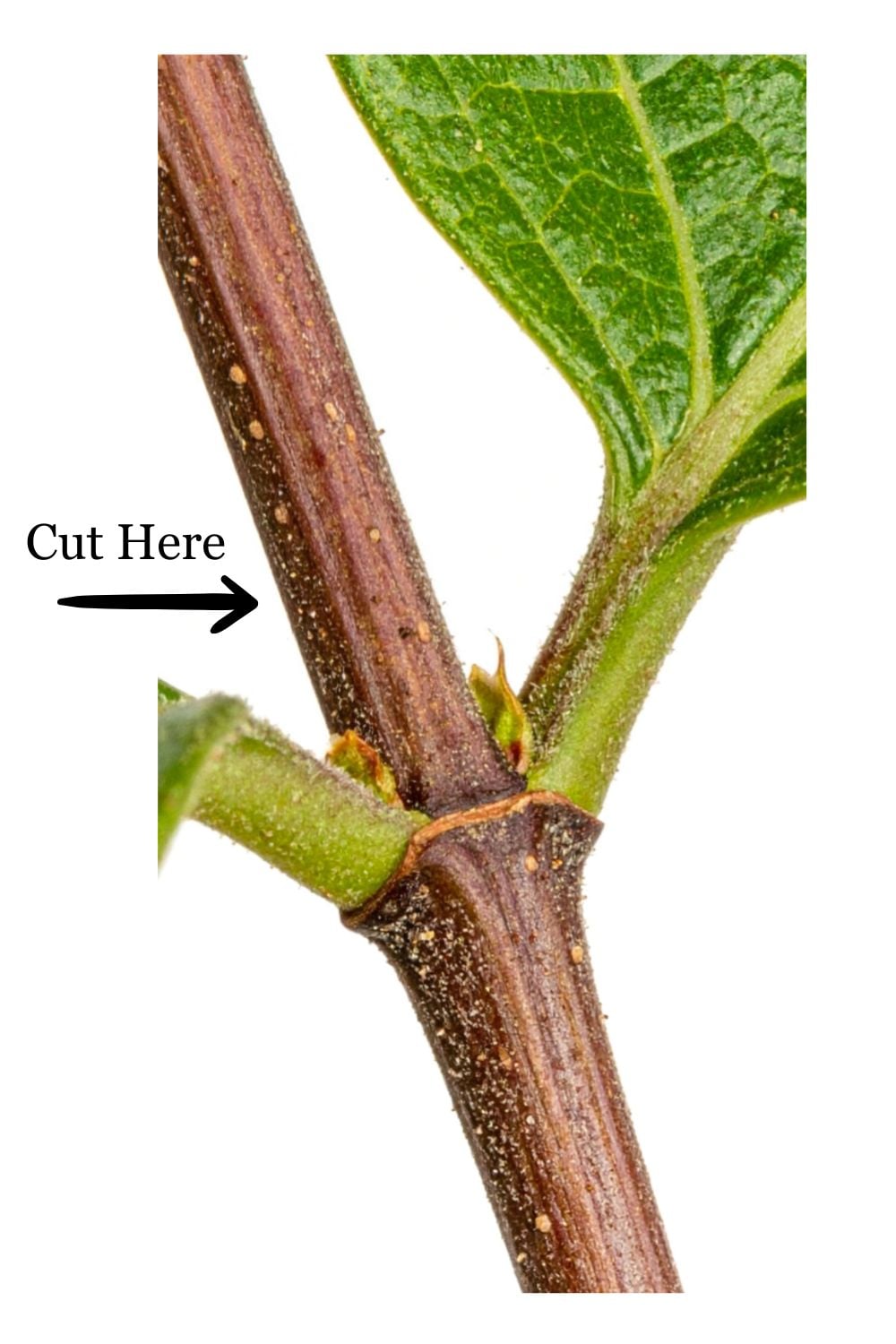
I cut just above a leaf node. That’s the point on the stem where a set of leaves meets the stem. That node is where new branching growth will emerge. Don’t just nip the very tip, go back to a proper node for the best results.
What If You Miss the Window?
Life happens. Some plants get overlooked, and before you know it, they’re past that ideal pinching stage.
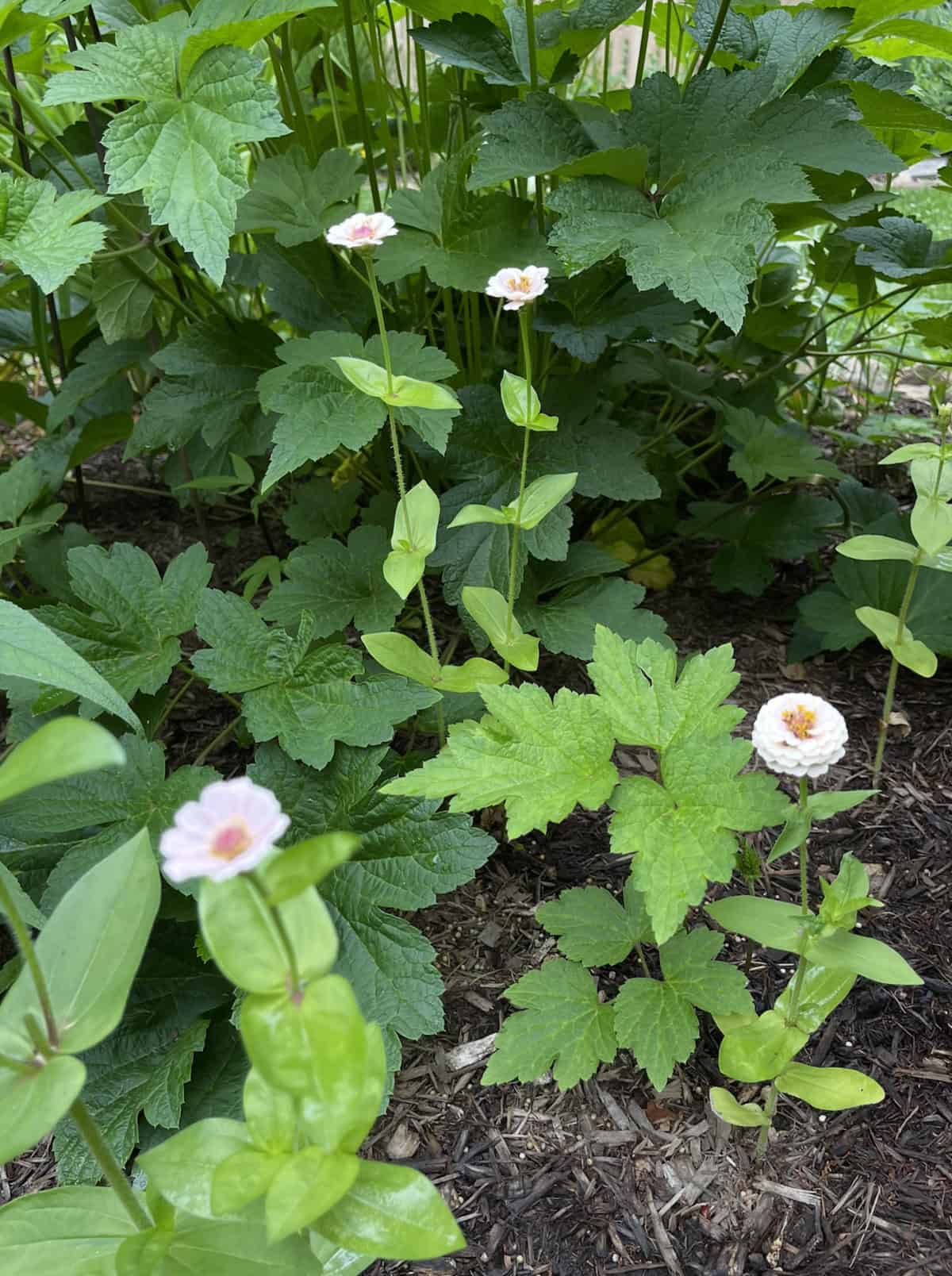
I’ve definitely missed plants and gone back to pinch them when they were already well over 12 inches tall. You can still do it, but there are tradeoffs. Late-pinched plants take longer to bloom and tend to be a bit leggier, with less branching near the base compared to plants pinched at the right time. They’ll still produce flowers, just not as full or as productive as the ones you caught early.
My advice: pinch as close to that first true leaf stage as you can. But if you miss that window, go ahead and do it anyway. A late pinch is still better than no pinch, especially since zinnias are naturally cut-and-come-again flowers.
That said, I’ve also left plants unpinched when I realized I was really late and decided to just let them grow. The result was exactly what you’d expect with fewer blooms and a more straggly-looking plant.
These days, I almost always lean toward pinching late rather than skipping it altogether.
What Happens When You Skip Pinching Entirely
This is where those accidental experiments really tell the story.
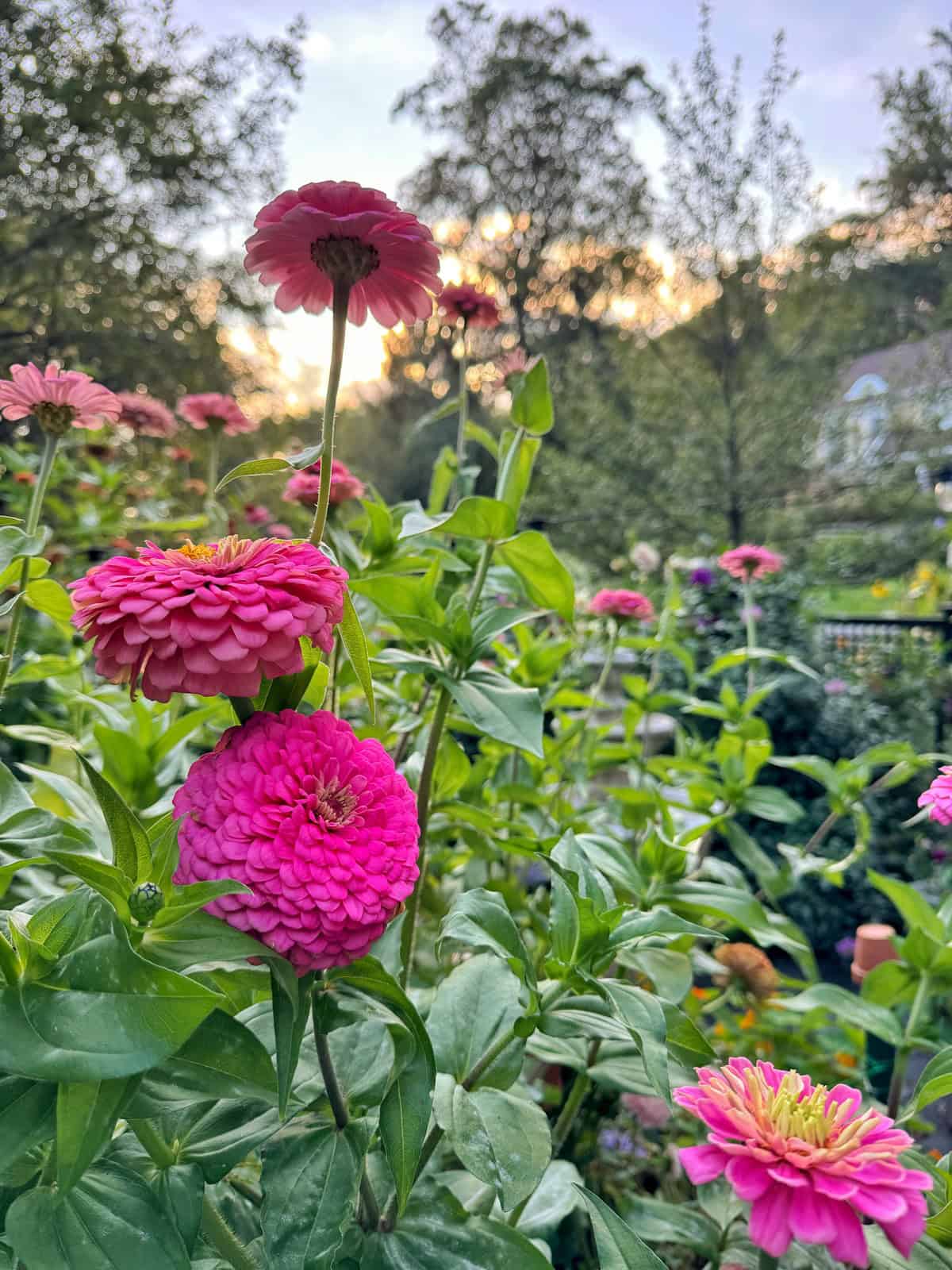
An unpinched zinnia grows taller and leggier with significantly less branching. The result is a plant that produces far fewer flowers than its pinched neighbor growing just a few feet away.
Here’s the important nuance: in my experience, pinching affects quantity, not quality. The blooms on an unpinched plant are just as beautiful as those on a pinched plant. You’re not sacrificing bloom size or color. You’re simply getting far fewer of them.
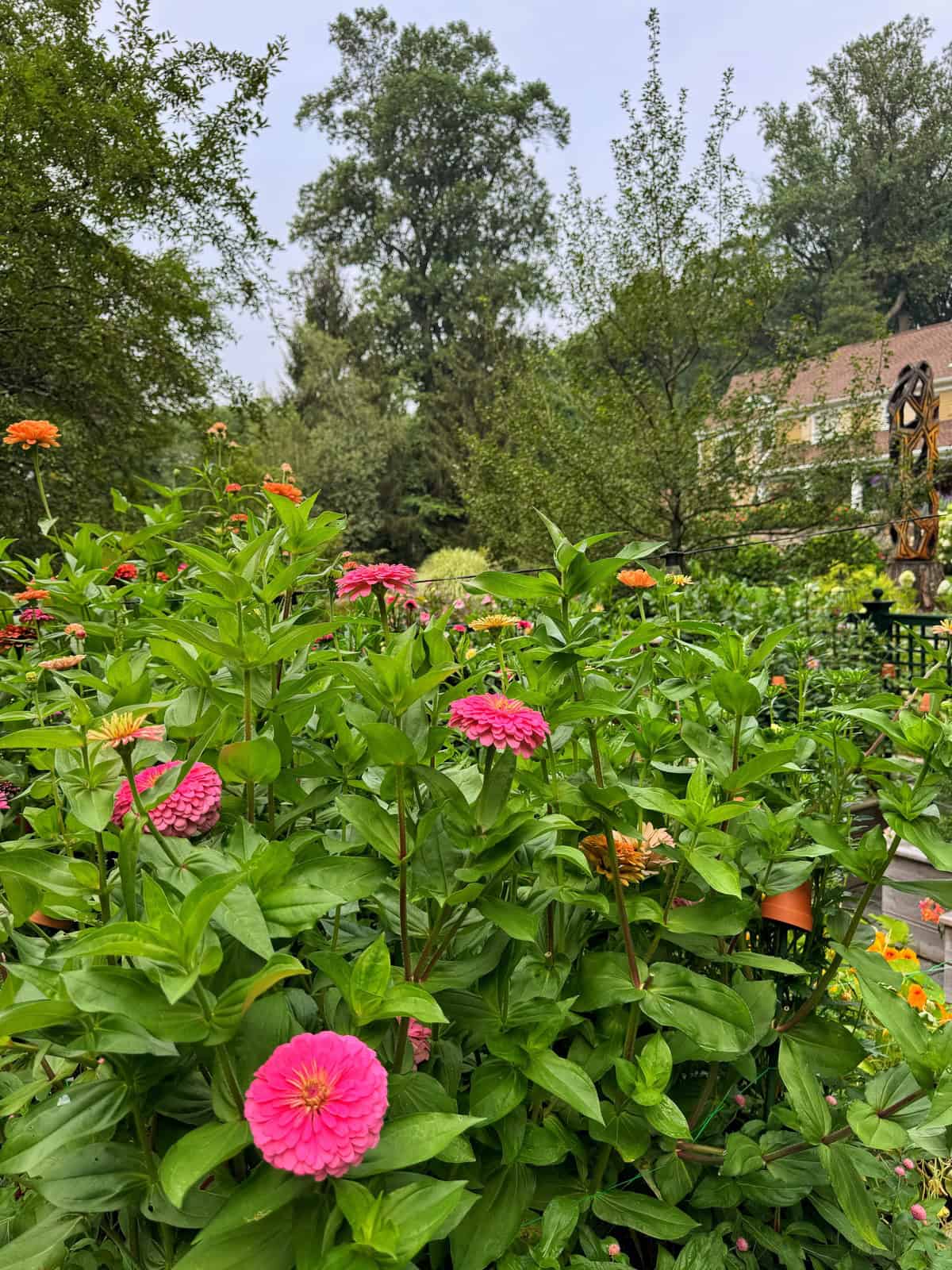
The difference isn’t immediately obvious in June when everything is still getting established. But by July, when zinnias really hit their stride, it becomes clear. Pinched plants are compact, bushy, and covered in flowers, while unpinched plants are taller and noticeably more sparse.
Standing in the garden in mid-summer and seeing both side by side makes the case better than anything I could explain. Skipping this step is one of the most common mistakes I see gardeners make, especially because it’s so easy to overlook. I go into more detail on that here in 7 Common Zinnia Growing Mistakes That Ruin Your Garden by August.
How to Deadhead Zinnias to Keep Blooms Coming
Pinching gets your plants off to the right start. Deadheading is what keeps them productive all season long.
Deadheading is simply the removal of spent blooms. They are flowers that have finished and are starting to fade or dry. When you remove them you’re preventing the plant from putting energy into seed production and redirecting that energy back into making more flowers. Left alone a zinnia will eventually decide its job is done and slow down. Regular deadheading tells it to keep going.
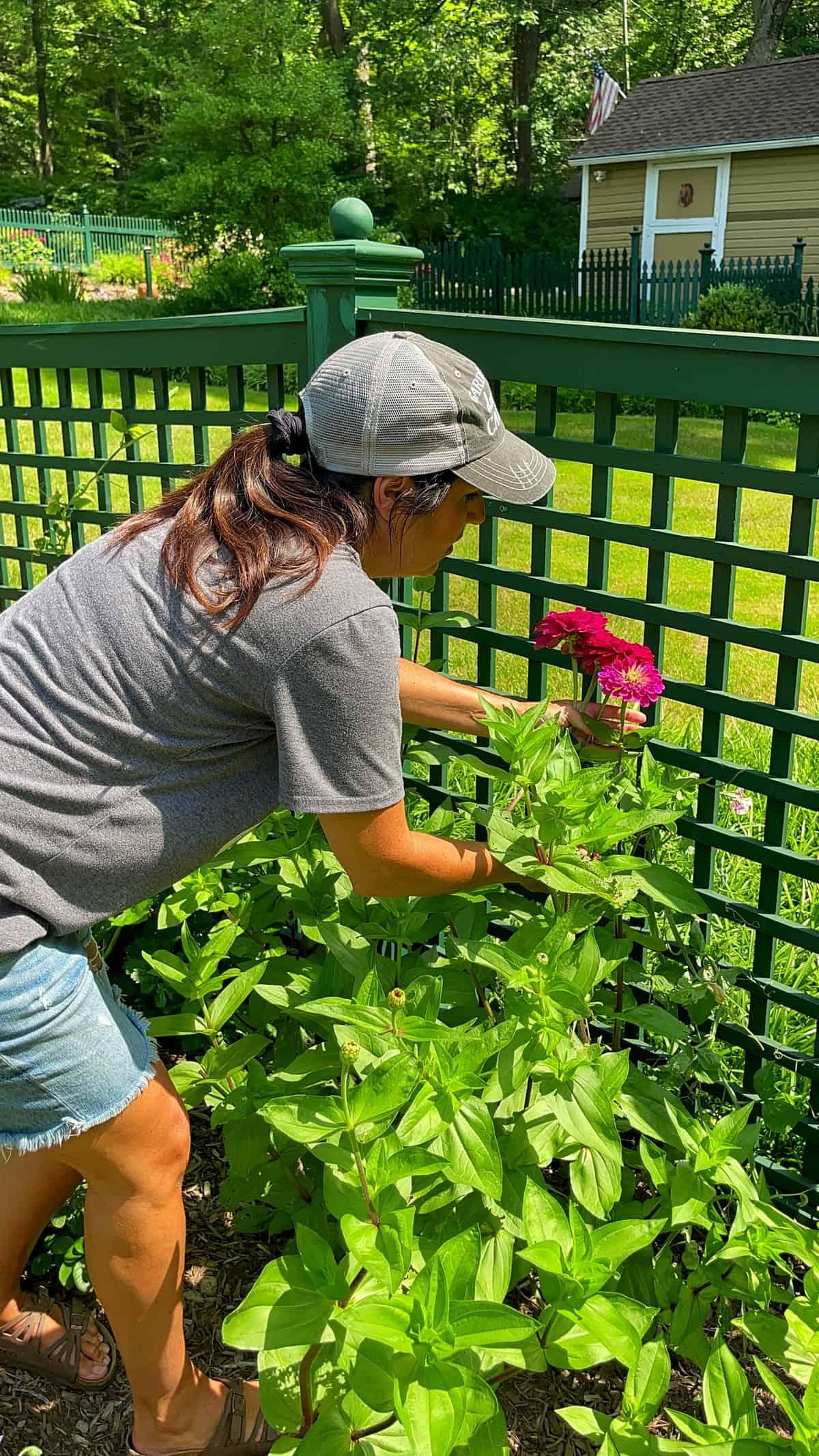
How I deadhead: I remove spent blooms by snipping or pinching them off cleanly. Depending on what I need for a vase I’ll sometimes cut deep into the plant for a long stem, other times I just remove the spent head without going far down. Both work. Let your needs guide how deep you cut.
How often: I try to deadhead or cut flowers about once a week through the season. But honestly, life happens. Some weeks I get to everything, some weeks I don’t. Zinnias are forgiving. You don’t need to be perfect about it, you just need to be reasonably consistent.
For more deadheading tips, please visit my complete guide to deadheading flowers here.
Cutting for bouquets counts: If you’re growing zinnias for cut flowers, harvesting regularly is essentially doing your deadheading for you. Every stem you cut for a vase is a spent or nearly spent bloom you’re removing from the plant. A well-harvested cutting bed often needs less active deadheading precisely because you’re already doing the work every time you bring flowers inside.
If you’re building a cutting garden, regular harvesting naturally does most of this work for you. I walk through that setup in my cut flower gardening guide
What About Letting Zinnias Go to Seed?
Not every zinnia needs to be deadheaded. I have a lot of gardens with a lot of zinnias so I don’t always get to everything and I don’t stress about it. Plenty of my plants go to seed naturally at the end of the season and that’s perfectly fine.
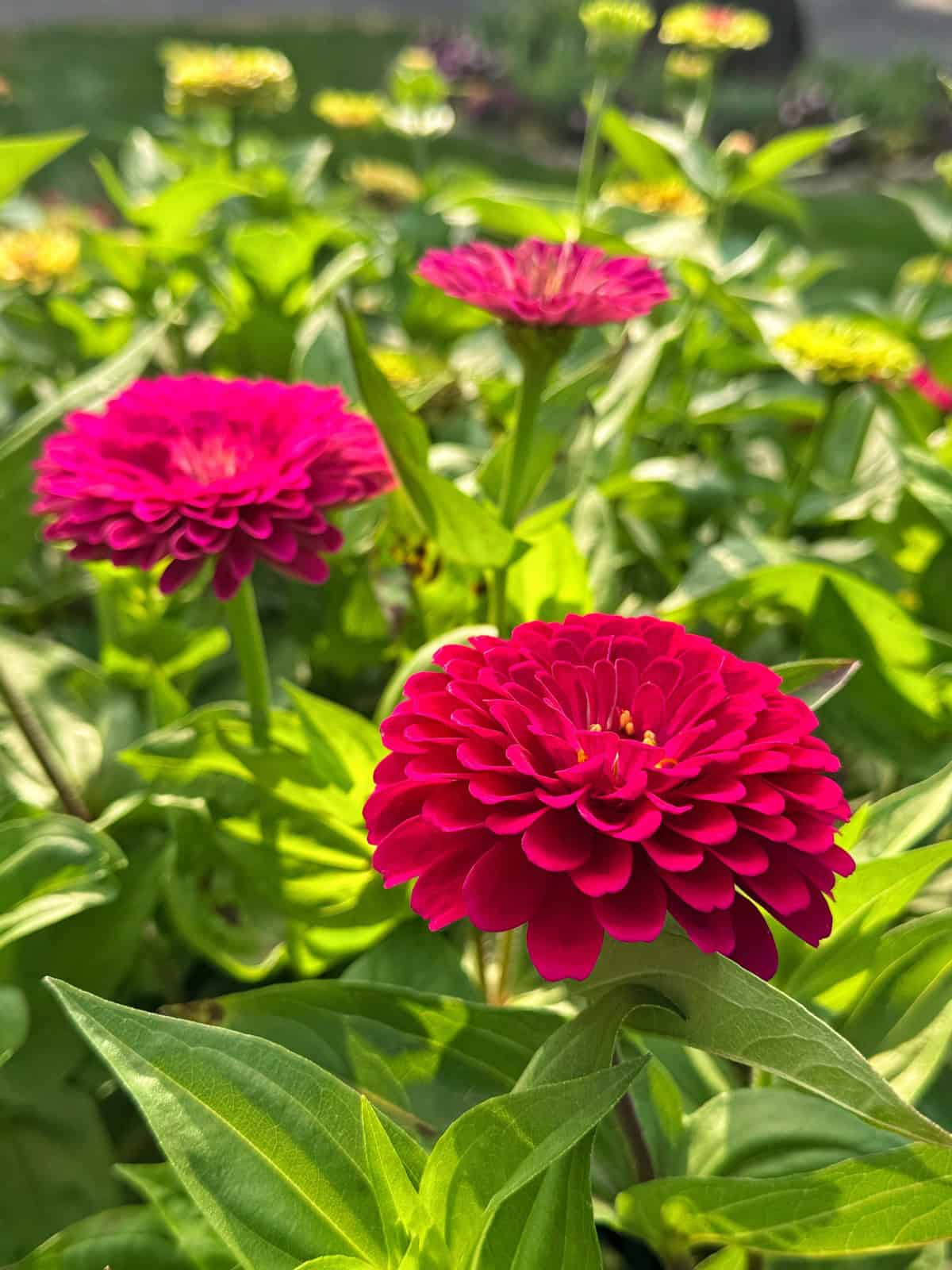
If you want to save zinnia seeds for next year, simply stop deadheading on a few plants toward the end of the season and let the flower heads dry fully on the plant. Once they’re papery and dry the seeds are ready to harvest. It’s one of the most satisfying end-of-season garden tasks and zinnias are one of the easiest flowers to save seed from.
For more my best tips on harvsting zinnia seeds, please visit my complete guide to growing zinnias that shares more about my process for seed collection.
Grow Fuller Plants Without Guesswork
Skipping a simple step like pinching can be the difference between a full, productive plant and one that struggles to keep up later in the season. So much of gardening comes down to understanding how small decisions early on affect what happens weeks later.
That’s exactly why I wrote The Bricks ‘n Blooms Guide to a Beautiful and Easy-Care Flower Garden. It walks you through how to grow plants that actually perform — from choosing the right varieties to understanding the simple techniques that make the biggest difference over the course of a season.
And just as important, if you’ve ever thought, “I should remember this for next year,” that’s where my Bricks ‘n Blooms Beautiful and Easy-Care Flower Garden Planner comes in. It’s the system I use to track what worked, what didn’t, and what I want to adjust — whether that’s pinching earlier, spacing differently, or changing how I manage my cutting garden.
The book gives you the knowledge. The planner helps you build on it, season after season.
The Bottom Line on Pinching Zinnias
Pinching is one of the highest-return tasks you can do for your zinnia garden. A few minutes with a pair of snips at the right moment early in the season sets your plants up for months of better, more abundant blooming.
Skip it and your zinnias will still grow and flower, but they’ll be taller, less full, and far less productive over time. I know because I’ve seen both outcomes side by side in my own garden.
If you want to grow stronger, healthier, more productive plants from the start, I walk through the full process in my guide to how to grow zinnias successfully. You can also learn more about zinnia spacing and airflow and how plant structure impacts performance over the season.
For best flowering, pinch your zinnias, deadhead consistently, and keep cutting the blooms. And give yourself grace when life gets in the way because it always does.
Thank you for visiting the blog today!
Enjoy your day! xo

Originally Published . Last Updated .
