
Powdery Mildew on Zinnias: What Works (And What Makes It Worse)

After decades of growing zinnias in humid Zone 6b NJ, here’s what actually prevents and treats powdery mildew, and what popular advice gets wrong.
Powdery mildew is one of the most common problems zinnia growers face, especially in hot, humid climates. While it’s often treated as something to fix after it appears, the reality is that prevention through proper spacing, airflow, and watering makes the biggest difference in how long your plants stay healthy.
If you grow zinnias long enough in a hot, humid climate, powdery mildew isn’t a question of if. But rather, it’s a question of when. And after more than 20 years growing zinnias in Zone 6b New Jersey, I’ve made peace with that reality. The goal has never been a perfect, mildew-free garden when it comes to growing zinnias. Instead, the goal is keeping plants healthy, productive, and blooming as long as possible before the season winds down naturally.
If you’re new to growing zinnias, I walk through the full process from seed to bloom in my guide on how to grow zinnias successfully, but this is one area where expectations and advice often miss the mark.
What I haven’t made peace with is the amount of genuinely harmful advice circulating online about how to treat it. Some of it will damage your plants. Some of it is completely unnecessary. And most of it skips the one thing that actually makes a difference…prevention.
This is what I’ve learned from growing zinnias in one of the more challenging climates for this disease.
(Posts on stacyling.com may contain affiliate links. Click HERE for full disclosure.)
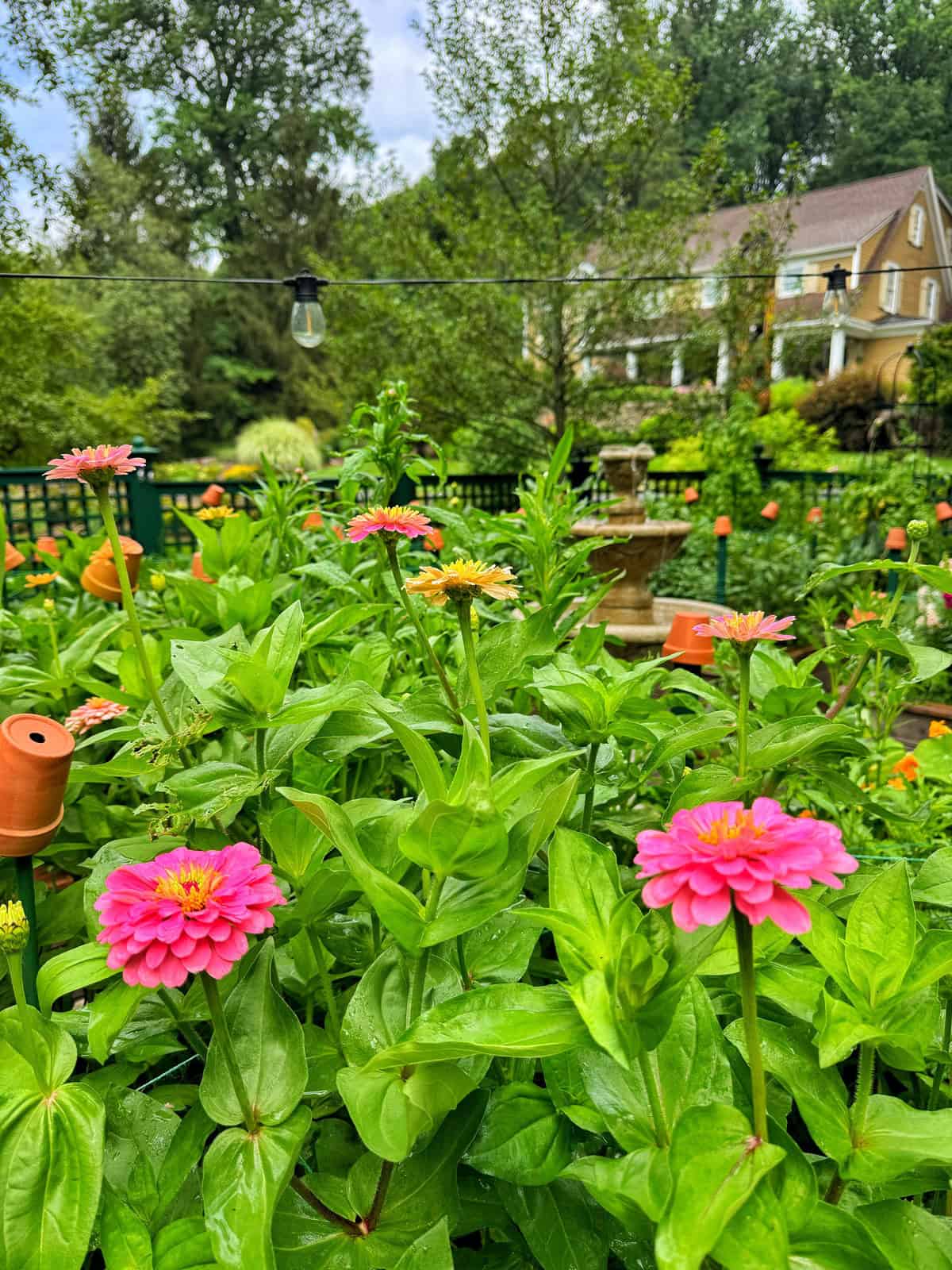
What Is Powdery Mildew on Zinnias?
Powdery mildew is the most common disease issue zinnia growers face. It appears as soft, white powdery spots on leaves and stems and spreads when conditions are warm, humid, and airflow is limited. In my Zone 6b New Jersey garden, those conditions arrive reliably every late summer, which is why prevention matters far more than treatment.
Prevention: What Really Works
Over the years, I’ve learned that the decisions you make at planting time determine how long your plants stay healthy. By the time you see white on the leaves, you’re already managing the problem rather than preventing it. The biggest preventative factors are:
Proper spacing — good airflow dramatically reduces mildew pressure. In my humid climate, overcrowded zinnias almost always develop it earlier in the season, sometimes weeks ahead of well-spaced plants. I go into this in detail in my guide on how far apart to plant zinnias.
Watering at the base — overhead watering keeps foliage wet longer, which creates ideal conditions for fungal growth. In my cutting gardens, I use drip irrigation and soaker hoses specifically for this reason. I share how I manage watering across my garden in my guide on how I water my flower gardens.
Full sun — zinnias planted in partial shade are far more susceptible. This isn’t a plant that tolerates compromise on light without consequences.
Mulch — helps reduce soil splash that can carry spores onto lower leaves, without increasing humidity at the foliage level. I share some great mulching tips in my guide, mulching made easy.
Choosing resistant varieties — some zinnias naturally hold up better than others. The Oklahoma series is notably more mildew-resistant than many of the larger cut flower varieties. I share my favorite varieties in my guide to best zinnias for cut flower gardens.
If you want to see how spacing and airflow decisions play out across a full season, I cover the most common mistakes that lead to early mildew in my post on zinnia growing mistakes that cost you blooms all summer long.
Powdery Mildew Treatment: What Helps…and What Doesn’t
I want to be direct here because some of what circulates online is not just ineffective…it actively harms your plants.
In my experience, treatments help slow powdery mildew but rarely eliminate it entirely. That’s an important distinction. You’re buying time, not solving the problem permanently.
What works:
- Neem oil — a natural fungicide and insecticide that disrupts mildew spore development. Apply according to label directions.
- Potassium bicarbonate sprays — one of the most effective organic options, that is backed by university extension research. Products like MilStop fall in this category.
- Horticultural oil — suffocates spores and disrupts their life cycle.
- Removing heavily infected leaves — improves airflow around remaining healthy growth and reduces the spore load.
The University of Minnesota Extension recommends low-impact fungicides including sulfur, potassium bicarbonate, and horticultural oils as the appropriate treatment options. These are gentle, effective options that protect your plants without harming pollinators. Always follow label directions and apply early in the morning or early evening when pollinators and beneficial insects are less active.
But if I’m being honest here, I use none of this anymore for my zinnias…because I space them well from the beginning and the season is what the season is.
What does NOT work…and what can make things worse
Vinegar — this one needs a direct correction because it appears frequently online with specific recipes and application instructions. Vinegar does not treat powdery mildew. It lowers the pH of the leaf surface so dramatically that it causes chemical burn, stressing the plant and damaging tissue while the mildew continues unaffected. It is not recommended by horticulture extension services, university programs, or experienced growers and actually, is an ingredient used in homemade weed killers. So if you’ve seen this advice online, please do not follow it.
Harsh chemical fungicides — are completely unnecessary for an annual flower. Powdery mildew on zinnias is rarely serious enough to warrant chemical intervention, and reaching for synthetic fungicides on a plant that will naturally die at first frost is an overreaction that can do more harm than good to your garden ecosystem. If the appearance genuinely bothers you mid-season, the simplest solution is to pull the plant and replace it with something else. No chemicals needed.
A Note on Late-Season Powdery Mildew: This Is the Part Nobody Talks About
As zinnias near the end of their natural life cycle, powdery mildew becomes extremely common, even in well-spaced, well-tended, well-watered plantings. In my Zone 6b New Jersey garden, I usually start to see it creep in sometime in September, when nights cool down but days are still warm and humid. That temperature swing creates ideal conditions for the fungus regardless of how well you’ve managed things all summer.
This is the part most gardening content skips entirely. Even when you do everything right, zinnias will often develop powdery mildew late in the season. It’s not a sign that you did something wrong. And it’s not a sign that you need to spray anything. It’s a sign that your zinnias have had a productive season and are beginning their natural decline.
At that point, treatment really isn’t necessary. I let the plants finish out, thank them for an amazing season, enjoy the remaining blooms, and pull them when they’re spent.
Powdery mildew at the end of the season is normal, not a gardening failure.
Build a Zinnia Garden That Learns With You
One of the biggest shifts in my own gardening came when I stopped reacting to problems like powdery mildew and started paying attention to when and why they were happening.
That’s something I talk about in The Bricks ‘n Blooms Guide to a Beautiful and Easy-Care Flower Garden. While I cover pest and disease management, the bigger focus is helping you understand how your garden works so you can make better decisions from the start and avoid problems before they take hold.
And just as important, tracking those patterns year after year makes a huge difference. Noticing when powdery mildew shows up, how weather conditions affect it, and which plants hold up best helps you adjust your approach over time.
That’s exactly what my Bricks ‘n Blooms Beautiful and Easy-Care Flower Garden Planner is designed for. It gives you a place to record what’s happening in your garden so you can connect the dots and improve each season instead of starting over.
The book helps you understand the why. The planner helps you apply it year after year.

Final Thoughts About Powdery Mildew on Zinnias
Managing powdery mildew on zinnias comes down to prevention from spacing, airflow, base watering, and variety selection, as well as realistic expectations about what a season in a humid climate actually looks like. Treatments can help buy time when pressure is high mid-season, but the gentle organic options are all you’ll ever need. Vinegar and synthetic chemicals have no place in this conversation.
If you want to go deeper on the prevention side, my guides on zinnia spacing, watering, and common zinnia growing mistakes cover each of those factors in detail. For a complete start-to-finish approach to growing healthy zinnias, my guide on how to grow zinnias successfully walks through every step.
Grow them well early on, and let the season end on its own terms. That’s really all there is to it.
Thank you for visiting the blog today!
Enjoy your day! xo

Originally Published .

Hi. Does milk work? I have some powdery mildew on a geum. It is quite compact. Should I cut some leafs off?
Hi Ramona! I have never used milk in my gardens but I found an extension fact sheet for you that was really information you might find helpful https://wpcdn.web.wsu.edu/wp-puyallup/uploads/sites/403/2015/03/milk-and-roses.pdf