
How to Grow Hellebores (Lenten Rose) for Year-Round Shade Garden Interest

Learn how to grow hellebores (Lenten rose) with planting, care, and design tips for year-round interest in shade gardens.
Hellebores — often called Lenten roses — are one of the most reliable perennials for late winter and early spring color. While much of the garden is still dormant, their nodding blooms appear as early as February, followed by evergreen foliage that adds texture year-round. Once established, they’re low-maintenance, shade-tolerant, and naturally deer resistant — making them an exceptional choice for long-term garden structure.
I’ll admit, I didn’t fully appreciate hellebores early in my gardening years. After more than two decades of tending mostly sunny gardens, I underestimated their quiet resilience. That changed when a gardening friend gifted me a stinking hellebore (Helleborus foetidus), and I saw firsthand how beautifully it performed in shade. Since then, hellebores have become one of the most dependable plants in my landscape.
If you’re ready to grow hellebores successfully in your own garden, here’s what you need to know — from planting and soil conditions to long-term care and design potential.
(Posts on stacyling.com may contain affiliate links. Click HERE for full disclosure.)
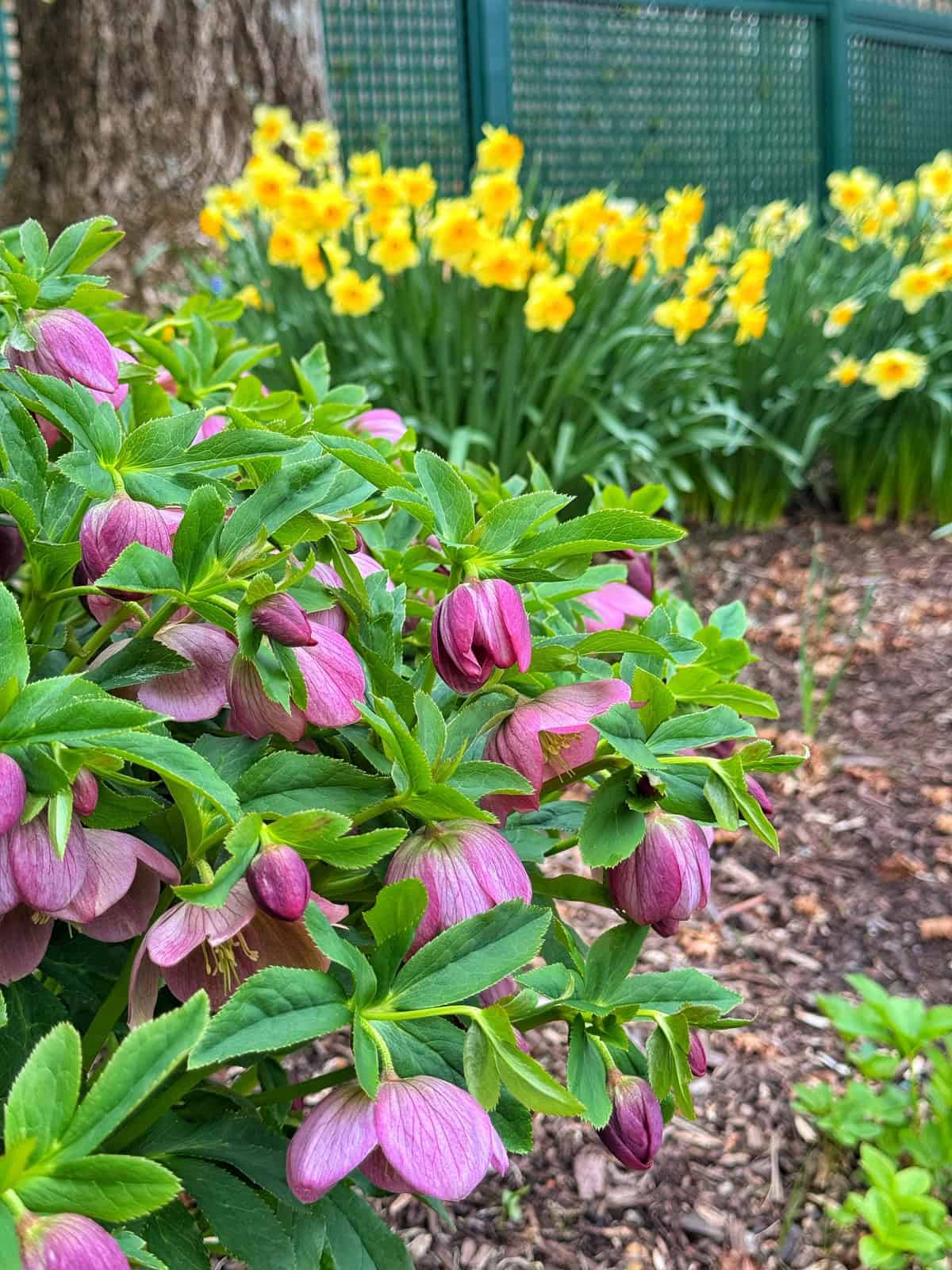
Watch: 5 Reasons to Plant Hellebores (Lenten Rose)
Prefer to see why hellebores are such standout plants? In this video, I share five compelling reasons to grow hellebores — from their early spring blooms and shade tolerance to their deer resistance and long-lasting colo

Understanding the Lenten Rose Plant
Lenten Rose (Helleborus x Hybridus) is a perennial hyrbrid that hails from the buttercup family (Ranunculaceae). It is not part of the rose family, although the name is a bit deceiving.
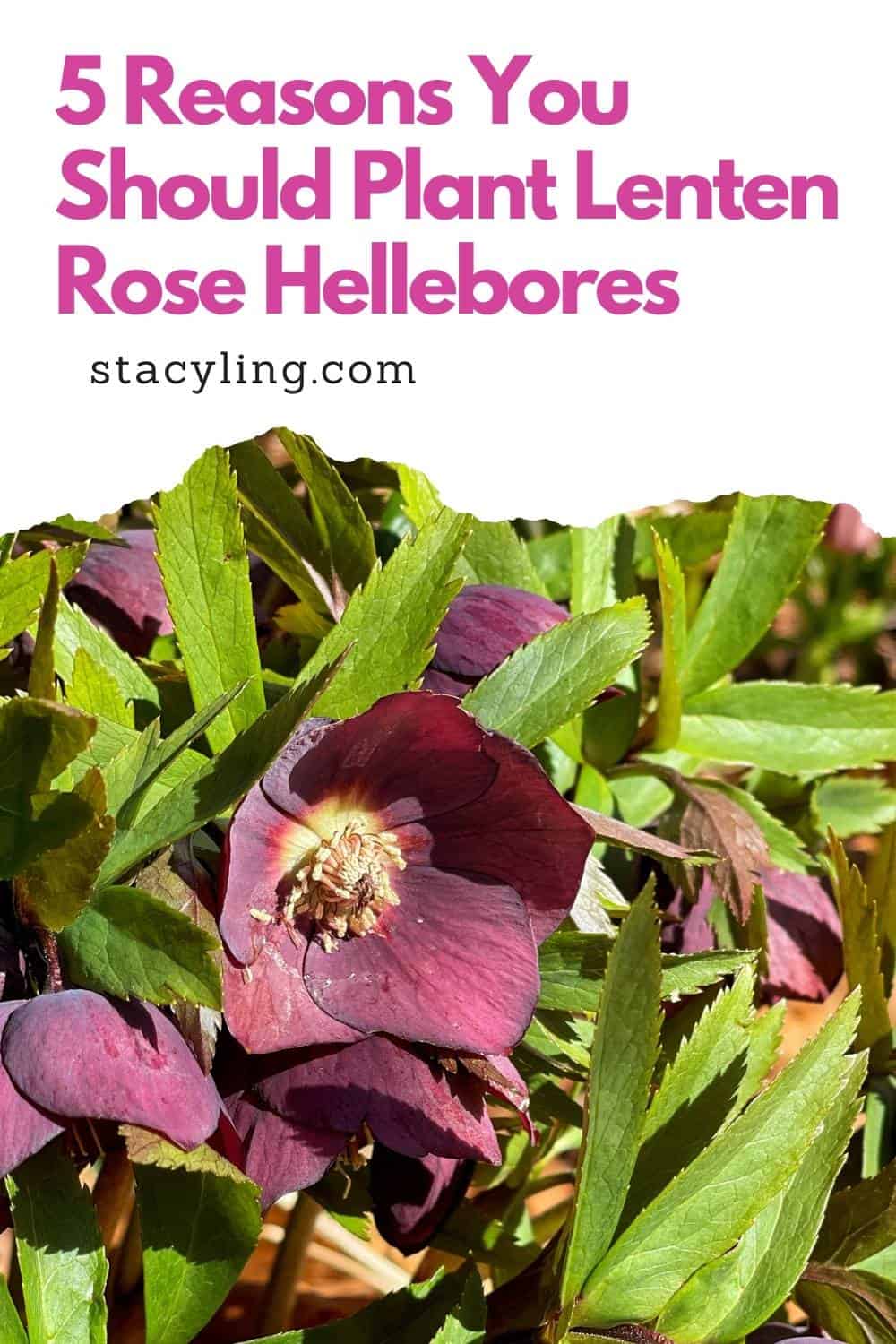
The blooms are rose-like, but hellebores get their name from when they bloom, which is during the season of Lent. Lenten roses flower in late winter with an extended bloom time, and are a welcome sign of the gardening season to come. Hardy to zones 4-9, the lenten rose flower colors range from whites, to pinks and purples.
Hellebores grow gorgeous leather-like evergreen leaves. The height of maturity is roughly 12-18″. It prefers partial shade to shadier locations with moist, well-drained loamy soil that is neutral to alkaline.
The lenten rose plant is known to be toxic to animals. Read this article regarding toxicity information for your pets. They can also be toxic to humans, so do not ingest them and wear gloves while working with them in the garden. While they are toxic to animals and humans, the key is to handle them with care or plant them in a location where pets and humans can’t access them.
- Genus: Helleborus
- Common Name: Hellebore
- Plant Type: Perennial
- Hardiness Zone: 4-9
- Light: Partial to full shade
- Soil Requirements: Moist, well-drained, rich in organic matter
- Height: 1-2 feet
- Width: 1-2 feet
- Flower Color: White, pink, purple, yellow, green
- Foliage Color: Green
- Bloom Time: Late winter to early spring

Benefits of Growing Hellebores (Lenten Rose)
If you are not growing lenten roses yet, you should! Here’s why.
Lenten Rose (Hellebores) Bloom Early and Long
If you want to early blooming flowers in your garden, look no further than the lenten rose. Because they start flowering in late winter and have a long bloom time that can last about 4-6 months, hellebore plants are a great early blooming flower for the cottage garden.
Mine typically start blooming in late February/Early March before the daffodils start flowering and flower for months! I truly did not appreciate the beauty of the hellebore flower and what they do in the garden until moving here in 2021.

Hellebores are Easy Care Perennials
If you want to grow a garden that requires minimal work from you, plant the lenten rose. It not only blooms early in the growing season, but it is also super easy to care for! Simply cut back brown or deceased foliage in winter on a warm day after you see new foliage emerge and the hellebore will do the rest.
Keep them hydrated and mulch them well, but once established they can take drier conditions. (The New Jersey weather seems to do a good job on its own because I’ve done nothing for mine here and they are doing well).

Hellebore Plants Grow and Bloom in the Shade
If you are looking for an easy-care perennial that grows and blooms in shadier locations, lenten rose is a great option for your garden. The hellebore plant prefers shadier locations, so woodland gardens in particular are great spots to grow them.
While flower color fades as summer approaches, blooms can stick around for about 4-6 months. Lenten roses do not need to be fertilized. To nourish these gorgeous perennials, simply amend the soil with good organic matter like compost and mulch that will break down over time and enrich the soil.
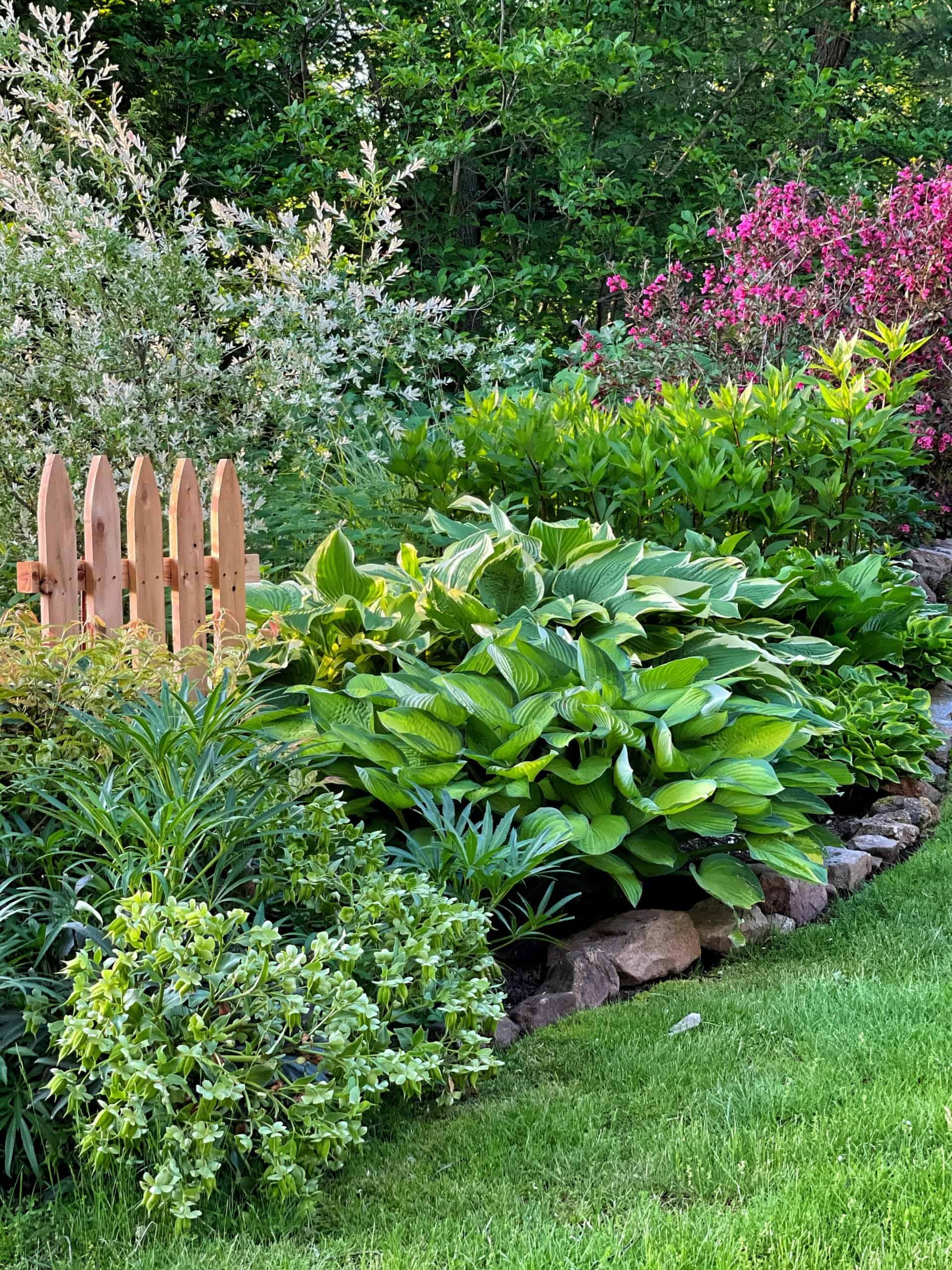
Lenten Rose Hellebores Are Easy to Propagate
If you want to grow your garden for free, hellebore propagation is the way to go. And the lenten rose is easy to divide or grow from seed. They prefer not to be dug up and moved but can take divisions and can bloom more profusely the following growing season.
Hellebores do best when mature plants (have had three seasons of flowers) are divided in late spring. While transplanted divisions can bloom in their first season, don’t fret if they don’t. They may take some time to establish and develop a good root system.
Lenten roses are also easy to start from seed but require a stratification period (a chill period) to help seeds germinate. And they seem to reseed themselves as well too.

Lenten Rose is Deer-Resistant
If you have problems with deer like I do here in New Jersey, hellebores are a great deer resistant option because you won’t need to worry about like other perennials.
Deer can sense when a plant is toxic and will avoid eating them. The leather-like leaves are also less palatable to them. And while deer will dine on anything, lenten roses are perennials that they typically avoid. Therefore, hellebores are a great early blooming plant for the cottage garden in localities where deer damage is prevalent.

Planting Hellebores in Your Shade Garden: A Step-By-Step Guide
Hellebores thrive in partial to full shade. They prefer a spot where they can get some morning sun but be shaded during the hottest part of the day. Too much sun can scorch their leaves, while too little light can reduce blooming.
Hellebores prefer well-drained, fertile soil rich in organic matter. Hellebores prefer slightly acidic to neutral soil (pH 6.0-7.0). Conducting a soil test is a crucial step in preparing your garden for planting them. A soil test helps determine the pH level and nutrient content of your soil, providing essential information for optimal plant growth. Kits are available at your local cooperative extension and garden nursery.
Incorporate compost or well-rotted manure to improve soil fertility and structure. Avoid planting lenten rose in heavy clay or waterlogged soils. If necessary, create raised beds or amend the soil with sand and organic matter to enhance drainage.

Planting Hellebores: A Step-By-Step Guide
Plant hellebores in early spring or fall when the weather is cooler.
- Space plants about 15-18 inches apart to allow for growth and airflow.
- Dig a hole twice as wide and the same depth as the root ball.
- Gently remove the plant from its pot, loosening the roots if they are compacted.
- Place the plant in the hole, ensuring the crown (where the stem meets the roots) is at soil level. Backfill with soil, firming it gently around the plant.
- Water thoroughly after planting and keep the soil moist but not waterlogged until the plant is established.
- Apply a layer of mulch to help retain moisture and regulate soil temperature, keeping it away from the crown to prevent rot.

Watering Tips for Thriving Hellebores
Water newly planted lenten roses regularly until they become established. But keep an eye on them because it’s important not to overwater them. How much you water will depend on the weather in your climate.
Since I typically plant mine in spring or fall, I let nature do its thing because we get enough rain here and the temperatures are cooler. When they are established, reduce watering thoroughly to roughly once or twice a week depending on the weather in your climate. Hellebores are fairly drought-tolerant once established but may require more watering during periods of extreme heat or dryness.
To learn more about how I water my beds and containers, please visit my complete guide to watering flower gardens here.
Fertilizing Hellebores
Lenten rose does not need to be fertilized. Instead, focus on providing the plant with good-quality soil. Amend the soil with compost, and leaf mold, then top it off with some fresh mulch. Over-fertilization can lead to leggy growth, fewer blooms, and invite pest and disease problems. The only time I fertilize perennials is when they are planted in pots.
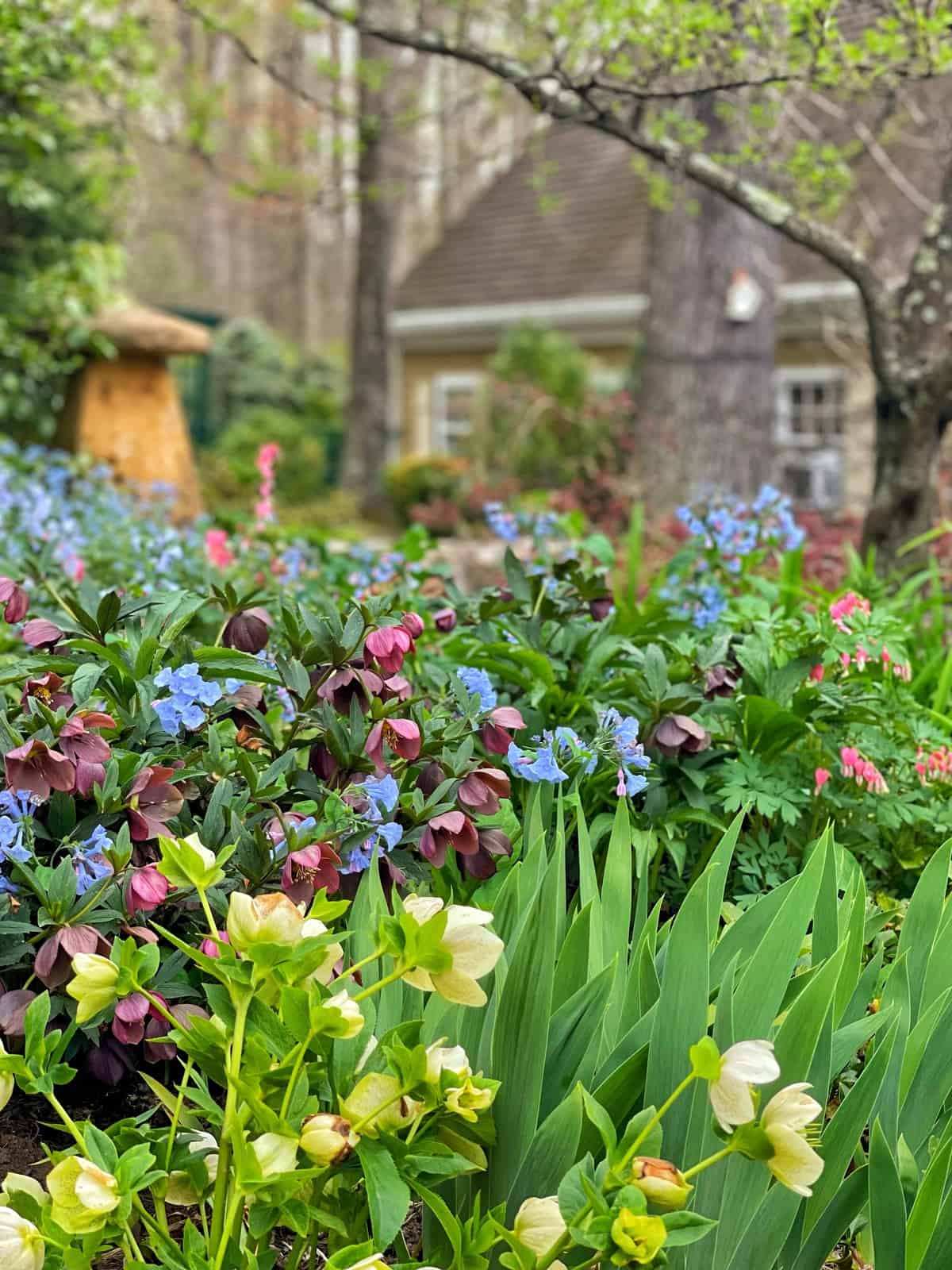
Growing Hellebores in Pots
Growing hellebores in pots are a popular option for gardeners who have limited space or want to add a burst of color to outdoor living spaces where planting in the ground is not feasible.
- Choose a container with a diameter of at least 12 to 16 inches and a depth of at least 12 to 18 inches depending on the size of the plant you purchase. Make sure the container has drainage holes to allow excess water to escape and prevent waterlogging.
- Use a well-draining potting mix. Plant one plant per container and maintain them in part to full shade. Rotate the container periodically to ensure even sunlight exposure on all sides of the plant.
- Containers dry out faster than the ground, so it’s important to water them regularly, checking the soil moisture level with your finger or a moisture meter. Avoid overwatering, as soggy soil can lead to root rot. Allow the top inch of soil to dry out slightly between watering. To make things simpler, I like to set my containers on a drip irrigation system with a timer so it’s set and forget.
- Fertilize hellebores in containers with a balanced slow-release fertilizer formulated for flowering plants and follow the package instructions for application rates and frequency.
While you can grow them as an annual in pots, if you want them to return yearly, plant hellebore varieties that are at least two zones higher than your current hardiness zone. Thus, if you garden in zone 6, you’ll want to make sure your hellebores are hardy to zone 4.

Common Pest and Disease Problems With Lenten Rose
Hellebores are generally robust plants, but they are not immune to certain pests and diseases that can affect their health and appearance. Common pests include aphids, slugs, snails, and vine weevils, which can cause damage to the leaves and roots.
Additionally, hellebores can be susceptible to diseases like black spot, downy mildew, and hellebore leaf spot. Understanding these potential issues and implementing preventive measures can help maintain the vitality and beauty of your hellebore plants.
Pests
- Aphids: These small insects can cluster on new growth, causing distortion and weakening plants. Control with insecticidal soap or neem oil.
- Slugs and Snails: They feed on leaves, leaving holes and ragged edges. Use organic slug bait or traps.
- Vine Weevils: These pests can cause significant damage by eating roots. Use beneficial nematodes or insecticidal treatments.
Diseases
- Black Spot: Causes black spots on leaves, leading to defoliation. Remove affected leaves and use fungicides if necessary.
- Downy Mildew: Yellow spots on the upper leaf surface and gray mold underneath. Improve air circulation and apply fungicides.
- Hellebore Leaf Spot: Fungal disease causing brown spots on leaves. Remove affected foliage and apply appropriate fungicides.
Prevention and Management
Ensure good air circulation to reduce humidity. Remove and destroy infected plant material. Monitor plants frequently to catch problems early. And overall, be vigilant and take preventive measures so you can keep your hellebores healthy and thriving.

Companion Planting For Hellebores
Hellebores pair beautifully with other shade-loving plants, but successful companion planting goes beyond matching light and moisture needs. The key is layering — combining plants that bloom in succession, offer contrasting foliage, and provide structure long after early spring flowers fade.
If you’d like to see exactly how I layer shrubs, perennials, grasses, and seasonal fillers around hellebores in my own garden, I share my full approach in this guide to designing a layered shade garden around hellebores. That post walks through bloom timing, evergreen structure, and how to prevent gaps once spring ephemerals go dormant.
Here are some of my favorite companions and why they work:
- Ferns – Their soft, feathery fronds contrast beautifully with hellebores’ bold, leathery foliage and help soften transitions between shrubs and perennials.
- Hostas – Emerging just as some spring bloomers fade, hostas fill gaps with broad leaves and provide long-lasting structure through summer.
- Epimedium – A refined ground-layer plant with delicate spring flowers and attractive foliage that complements hellebores without overpowering them.
- Snowdrops (Galanthus) – Blooming in late winter, they overlap with hellebores and extend the early-season display.
- Pulmonaria (Lungwort) – Early blooms and patterned foliage add both color and texture in spring.
- Daffodils – Bright early flowers that contrast nicely with hellebore tones and add vertical movement in early spring.
- Astilbe – Feathery plumes rise in early to mid-summer, carrying the garden into a new season of interest.
- Brunnera – Heart-shaped leaves and delicate blue flowers create a soft spring pairing.
- Bleeding Hearts (Dicentra) – Add height and romantic arching blooms just as hellebores begin to fade.
- Virginia Bluebells – Spring ephemerals that weave between hellebores for a brief but beautiful burst of color.
When thoughtfully layered, these companions ensure that hellebores feel integrated rather than isolated — creating a shade garden that evolves from late winter through summer.

Favorite Varieties of Lenten Rose
Each of these plants is from Proven Winners. Some are double-flowering blooms while others are single. Each is beyond gorgeous and a few are newly planted here in my gardens.
- Honeymoon Paris in Pink
- Wedding Party Dark and Handsome
- Honeymoon Irish Luck
- Wedding Party Mother of the Bride
- Honeymoon Tropical Sunset
- Wedding Party Brushing Bridesmaid
- Wedding Party Maid of Honor
- Honeymoon Vegas Nights
- Wedding Party Wedding Bells
- Wedding Party Dashing Groomsman

Commonly Asked Questions About Growing Lenten Rose Plant
What is the problem with hellebores?
In general, hellebore plants are pretty trouble-free, resilient, and easy to care for. However, sometimes bad things happen to good plants. You might see problems such as fungal diseases, aphids, and slug or snail damage. When this arises, check your watering practices and look at soil drainage.
For slug or snail damage, I recommend using an organic slug bait to help protect plants and minimize damage.
Do hellebores need to be deadheaded?
Deadheading hellebores, or removing spent flowers, is not strictly necessary for the plant’s health, but it can be beneficial for aesthetics, controlling seeding, and promoting new growth. That said, I never deadhead mine and just leave them be.
Do all hellebores spread?
Yes, all hellebores self-sow and therefore, will take it upon themselves to spread around your garden. I love this about growing them, but not every home gardener does. This could result in different hybrids when they are grown close together, which, you may or may not want. If you don’t want them to hybridize, thin out seedlings that crop up closer to mature plants.

Is hellebore toxic to dogs?
Yes, the hellebore plant is toxic to animals, including dogs. It has a horrible taste so older dogs may stop themselves from eating it, but the greater concern is around puppies who might mouth, chew and eat the plant without consideration. You’ll know your dog got into it if you see vomiting, diarrhea, drooling, and lethargy.
Because they are toxic to dogs, it’s a good idea to keep pets away from the hellebore plant or watch them when they are around your garden at all times. I have black labs who love to mouth things. My dogs have never, even as puppies, mouthed them but I wouldn’t for a second believe it wasn’t possible.
Where is the best place to plant hellebores?
The best place to plant hellebores is in moist, well-drained soil that is neutral to alkaline. Lenten rose has a USDA Hardiness Zone of 4-9 and prefers dappled sunlight, and partial to deep shade. Plants grow from 12-18 inches tall and wide, so plant them toward the front of a flower garden border.

What do hellebores look like in the summer?
During the summer, hellebores look a bit more green than having loads of fresh blooms. These perennial plants may still have some lingering flowers, but will likely be going into dormancy. When hellebores go dormant, the foliage might start to look a bit tired or turn slightly brown. But even during their dormancy, hellebore plants will look green and look amazing in the garden. It just won’t be as prominent as when they were in their prime a bit earlier in the growing season.
What do hellebores look like in the winter?
In the winter, hellebore plants will start to come out of dormancy. You’ll notice new growth at the base of plants and browned-out foliage before the plant starts blooming again. Cut back the dead foliage and watch your plant green up and bloom for the next growing season.
It might seem like that old growth should stay. As long as it’s fully green, you can leave it. But for the most part, you’ll be cutting it back to allow for the new growth to flourish. Just be careful when you cut so you don’t accidentally cut off the new growth beneath!


Designing With Hellebores for Long-Term Success
Growing hellebores successfully is only the first step. What makes them truly shine is how you design around them — choosing reliable companion plants, building layered structure, and creating a garden that looks full without constant maintenance.
In The Bricks ’n Blooms Guide to a Beautiful and Easy-Care Flower Garden, I share the same practical approach I use in my own beds: selecting dependable plants, layering for season-long interest, and designing gardens that improve year after year instead of becoming overwhelming.
If you enjoy the idea of creating resilient, low-maintenance plantings that still feel intentional and beautiful, the book walks through the broader framework behind the methods I use here.
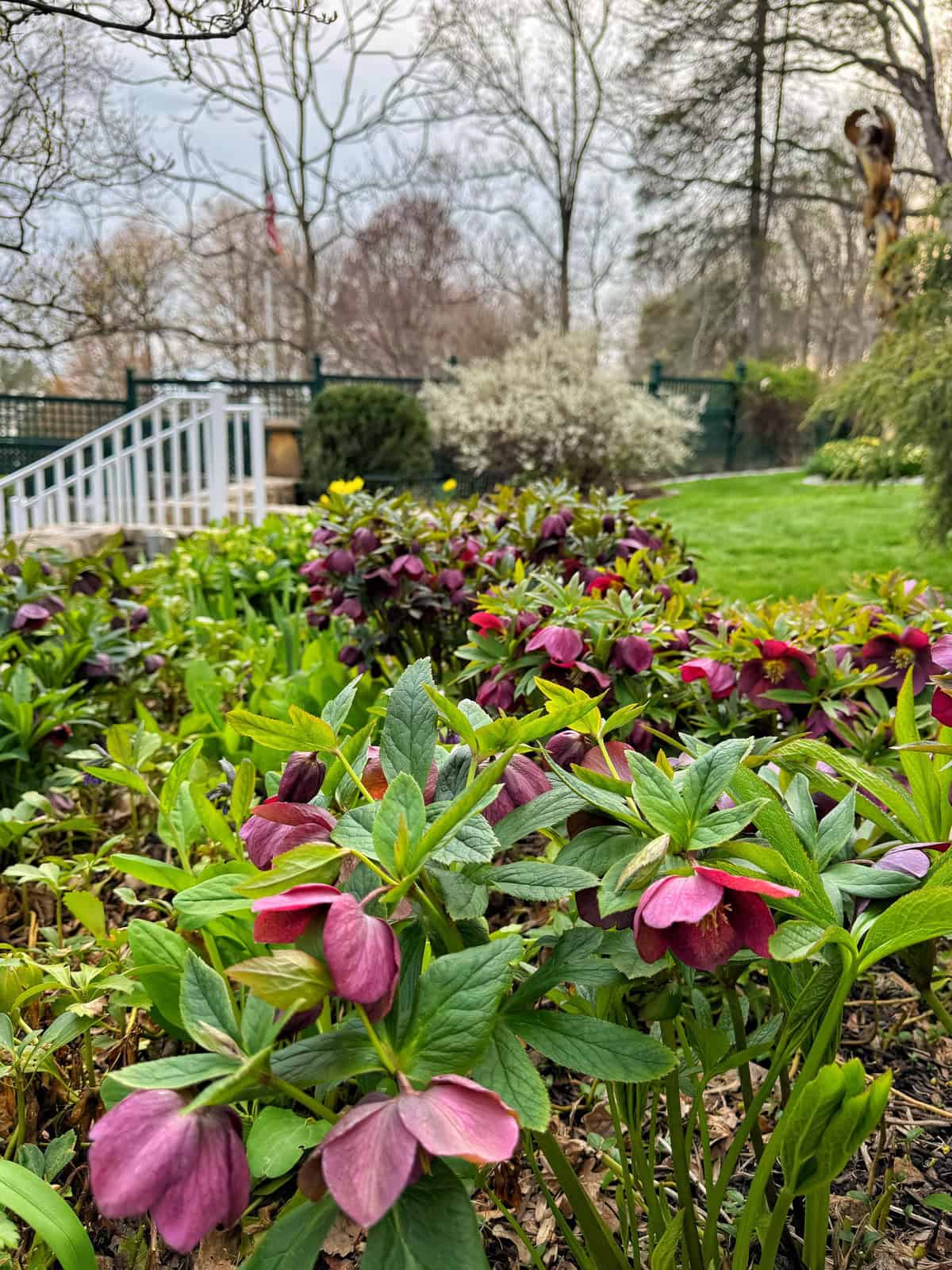
Final Thoughts on Growing Hellebores
After more than two decades of gardening — first in mostly full sun and now in a landscape filled with mature trees — hellebores have proven themselves to be one of the most dependable perennials in my garden. They bloom when little else is happening, tolerate shade beautifully, and maintain attractive evergreen foliage long after their flowers fade.
What I’ve come to appreciate most is their versatility. They aren’t just late-winter bloomers — they’re structural plants that anchor a shade garden year-round. With the right placement and companions, they transition seamlessly from early spring color to summer texture and even winter interest.
If you’re wondering what to plant with hellebores once they’re established, I walk through exactly how I layer shrubs, perennials, bulbs, and grasses in my guide to designing a layered shade garden around hellebores.
And if you’d like to broaden your shade planting even further, my full guide to perennial flowers for shade gardens shares additional dependable options that thrive in similar conditions and pair beautifully with hellebores.ores.
With their low-maintenance nature, deer resistance, and long seasonal presence, hellebores are a smart investment for gardeners at any experience level. When planted thoughtfully and supported by complementary plants, they become far more than a single-season flower — they become the foundation of a resilient, beautiful shade garden that shines through the seasons.
For more information about growing hellebores, please see Clemson Cooperative Extension.
To drill down on more beginner gardening techniques and tips, please read these posts:
- Flower Gardening for Beginners
- Growing a Cut Flower Garden for Beginners
- Container Garden Ideas for Beginners
Want to learn more about Hellebores? You can hear more about them and see the hellebore flower in action in my latest video here.
Thank you for visiting the blog today!
Enjoy your day! xo



Originally Published . Last Updated .

These caught my eye over 25 years ago when I was young and was trying to plant a garden for my mom.
I ended up taking my original plant from Springhill nursery with me when I moved because I fell in love with it.
2 houses later, she is still with me along with a about 7 or 8 other friends and she gave me her first baby last year. Lol ( at least I’m assuming it’s hers)
I would recommend these beautiful plants to anyone.
I couldn’t agree more Teresa. Aren’t they the best? Mine are just about to bloom and I couldn’t be more thrilled! Enjoy them all!
Thank you. GOD Bless you
You are welcome! Thanks for dropping by!
This is wonderful! I love Lenten Roses and had a few bushes at my city house. I saw them all over when I was just in Austria.
How fun you traveled to Austria Kristin! And Thank you! xoxo
Purchased my first 2 hellebores, my question is can these be planted beneath a maple tree. I know the maple tree has a mat of roots that will choke out other shade plants such as hostas, will this also happen to my hellebores or will they thrive?
If there are too many roots, I wouldn’t dig into them for the sake of your maple tree. Can you plant further out under the tree canopy where there are less roots? I would test your soil before planting there as well.