
How to Prepare Your Garden for Winter: 11 Fall Tasks for Zone 6B

Prepare your Zone 6B garden for winter with 11 essential fall tasks, from cleanup and cutting back to mulching and protecting plants.
Hi! I’m Stacy Ling, a trained Master Gardener gardening in Zone 6B, New Jersey. With over twenty five years of hands-on experience caring for flower gardens through every season, I’ve learned exactly what to do in fall to protect plants and set the garden up for success all winter long. These are the simple, practical tasks I follow in my own garden each year to keep it healthy, resilient, and ready for spring.
With fall in full swing, the garden is showing signs that it is slowing down for the season. It’s a bittersweet time for the gardener because, on the one hand, you want it to keep going, but on the other hand, you want a break from the grind.
Some of my perennials are dying back, others have powdery mildew on them, the leaves are changing and falling to the ground. While the gardens still look pretty good overall, it’s time to start preparing the garden for winter.
The first frost will be here before we know it and there are some plants that need to be lifted or brought indoors before that happens.
Follow these tips to garden in the fall and get your garden ready for winter.
(Posts on stacyling.com may contain affiliate links. Click HERE for full disclosure.)

Why Prep Your Garden for Winter
Once you’ve reached the end of the busy growing season, it can be tempting to just let nature have its way with your garden and let it be a problem to think about in spring.
But taking care of some fall gardening tasks to prepare for winter will not only make your spring chores easier, but it can also make your garden healthier.
By preparing your garden for winter in the fall, you can:
- Ensure perennials are protected and ready to bloom again in spring
- Keep your soil healthy (and even make it healthier) throughout winter
- Reduce damage to garden beds and gardening tools by properly packing them up
- Get new bulbs in the ground so your spring garden is ready to go
Preparing your garden for winter isn’t always the most glamorous part of gardening, but it’s very important!

When should I start winterizing my garden?
The best time to start winterizing your garden will depend on your location. But in general, you want to get most of your fall gardening tasks to prepare for winter taken care of before the first frost.
For me in New Jersey, freezing temperatures can arrive as early as mid- to late-October usually in October. Pay close attention to the weather conditions as you enter fall. If it looks like freezing temperatures are coming, make sure to bring tender plants indoors right away.
If an early frost is expected and you want to keep things going, you can opt to cover tender plants with a crop cover, sheet or other covering to protect them from harsh overnight temperatures.
I have to admit though, that I don’t do this with all of my garden flowers and plants. My gardens are too large and expansive to get everything covered, so I just let nature take its course and focus on things like my houseplants.

11 Ways to Prepare Your Garden for Winter
There are many fall gardening chores you can do now to prepare your garden for winter. Most gardeners I know have their own unique winter garden preparation checklists. We all do it a little bit differently!
Here’s a guide to what I do in my garden each year:
1. Bring Houseplants Indoors
If you brought houseplants outdoors for summer, it’s time to bring them back inside before the first frost. Re-pot or divide plants that are outgrowing their containers to ensure they stay healthy indoors throughout the winter.
It can be hard to know when the first frost is coming – it’s often earlier than you might expect! Check the weather regularly to see if a frost is expected or bring them indoors now to avoid the risk of damage.
I usually bring mine in sometime during the month of October. But it really depends on the nighttime temperatures. If they are getting consistently colder, I bring them in sooner than later.

2. Lift Tender Plants, Bulbs and Tubers
A “tender bulb” is a type of plant that is a bulb or tuber in its natural habitat but is not hardy enough to withstand cold temperatures and frost in certain regions or climates.
If you have tender plants, bulbs and tubers in your garden, you have two choices to prepare for winter: treat these plants like annuals or dig them up and store them indoors for the cold season.
While there are certain plants I prefer to treat like annuals (for example, I don’t try to keep my snapdragons or zinnias alive all year), I like to lift and store most of my tender plants, like dahlias, colocasia, and caladiums, so that they’re ready for the garden come spring. Learn how to overwinter dahlias and other tender perennials here.

3. Overseed the Lawn
Fall is a fantastic time to overseed the lawn. By adding grass seed in early fall, you give the seed time to establish root systems after the hot summer months and before the ground freezes. Come spring, your lawn will be able to bounce back better than ever!
Here in New Jersey, it is best to overseed your lawn with tall fescue grass than other varieties like Kentucky bluegrass or perennial rye. According to Rutgers, tall fescue grass is more disease-resistant, drought-tolerant, and less habitable for Japanese beetle grubs.
4. Cut Back Diseased Plants
I like to leave a lot of my perennials throughout the winter, but it’s important to cut back any diseased plant foliage before winter and remove all of the foliage. Doing so ensures that these issues don’t spread and become worse by spring. Just make sure that you do not compost any of the diseased plant foliage you cut.

5. Tidy Up Perennials and Annuals
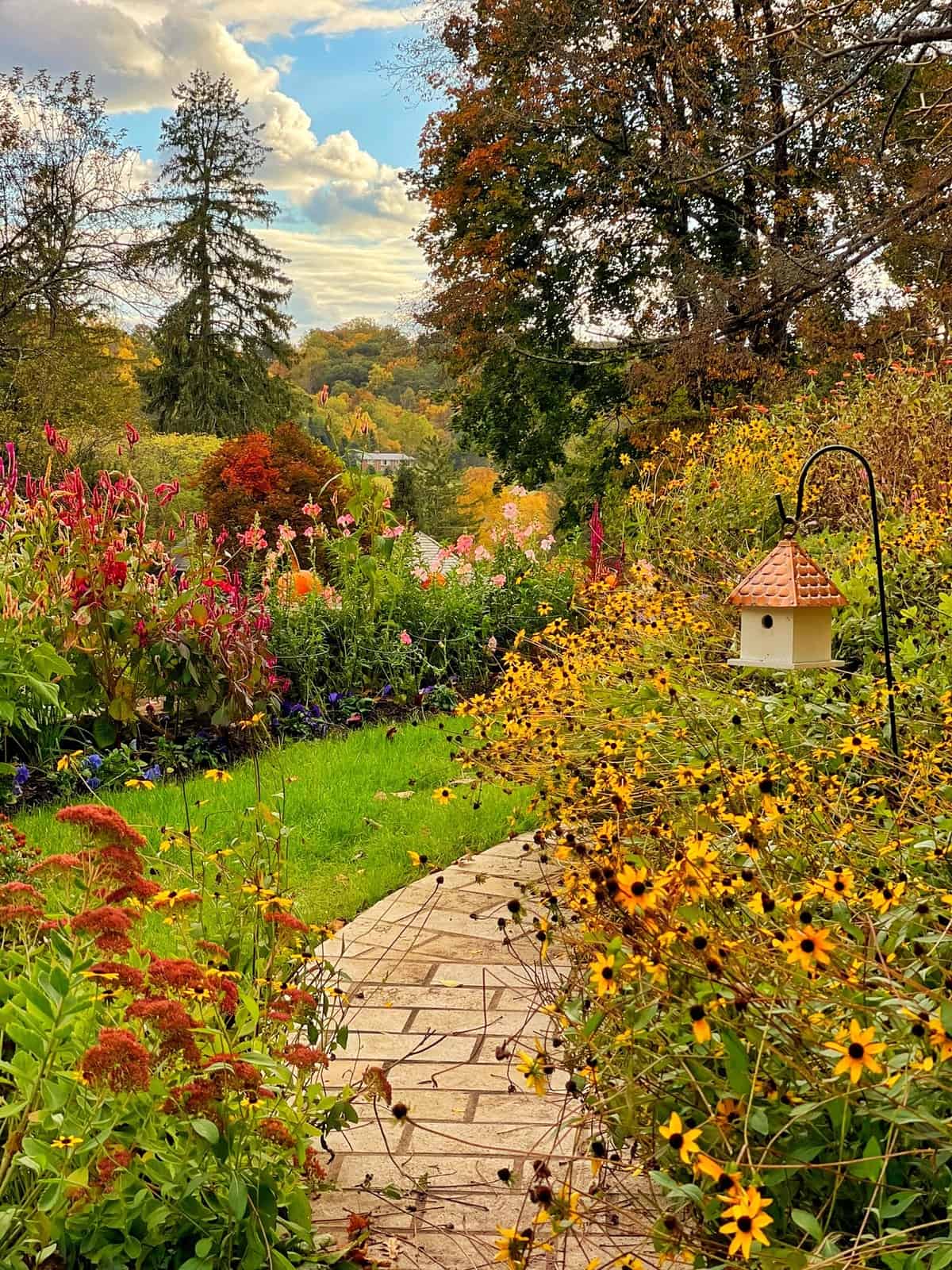
I don’t cut back my garden as much as some gardeners, but I do make sure to tidy up plants that are falling over. I leave a lot of perennials and their deceased foliage up all winter so the birds can enjoy the seed as well as add winter interest to the gardens.
Leaving plants up all winter can also give pollinators and beneficial bugs (yes, they really do exist!) safe spaces to overwinter, all of which can help your soil and garden come spring.
That’s not to say that I don’t cut back some perennials too, because I certainly do. But there are some plants, like sedum autumn joy and joe pye weed, that look beautiful in the gardens covered in snow so I leave them be until spring.

Moreover, I pull out most of the flowering annuals from summer too when they are completely done for the season or otherwise don’t look good anymore.
In general, the only flowering annuals I leave are pansies flowers because they will overwinter and bounce back in spring. So I can actually get two seasons out of them here in my gardening zone 6a.
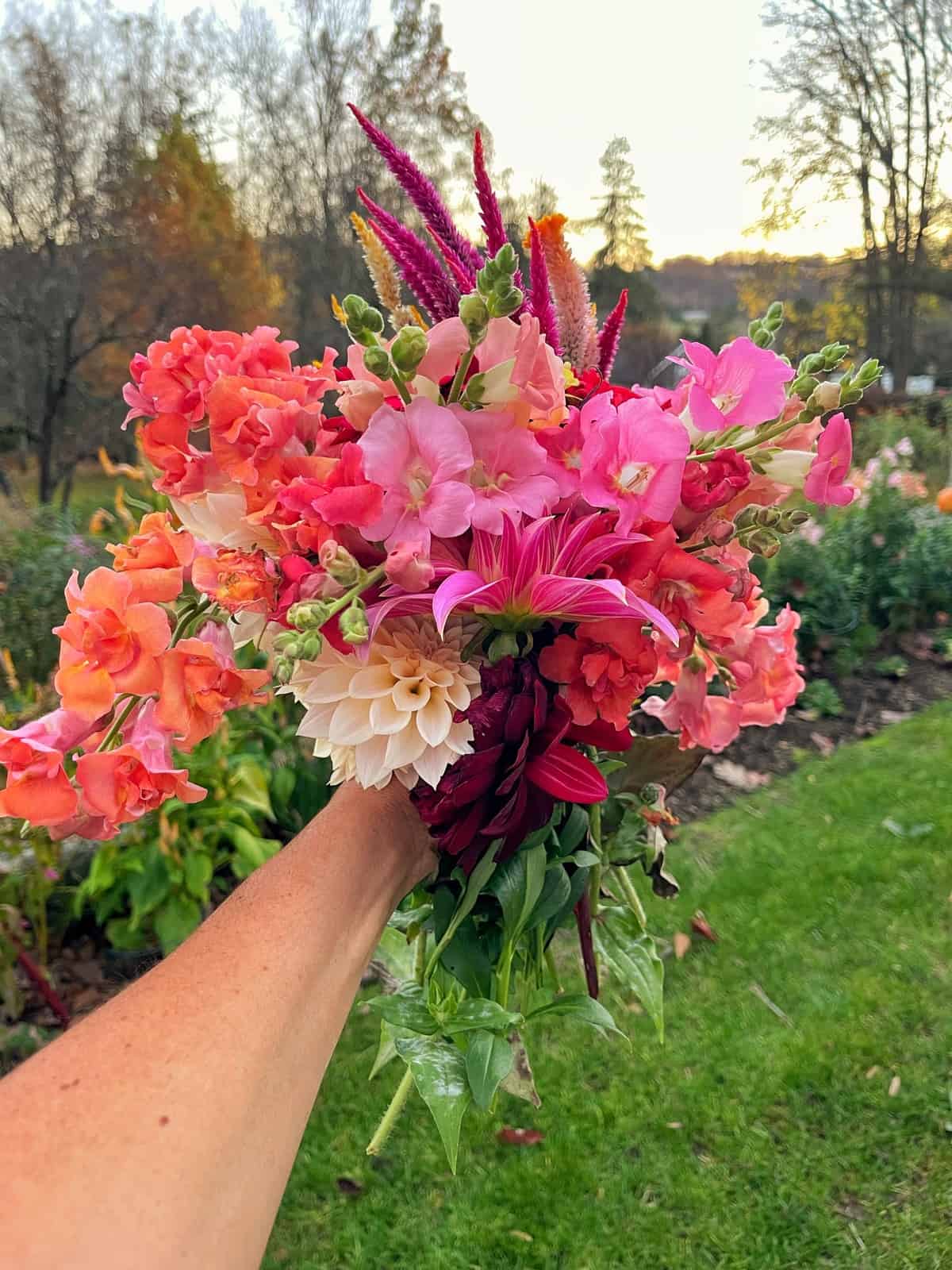
And while we’re cleaning things up, I usually take one last cut of all the flowers before the first frost so I can enjoy them indoors. They will be done after the first frost anyway, so might as well get a few more days with them, am I right?
6. Plant Bulbs Before Winter
Plant spring flowering bulbs (Tulips, Daffodils, etc.). Do not plant too early though – I usually wait until the temps are much cooler – usually in late October and sometimes as late as early November.
Planting bulbs now ensures you have a beautiful, early spring garden! Learn how to plant bulbs in fall for an unforgettable spring garden here.
7. Plant Perennials, Trees & Shrubs
Bulbs aren’t the only thing you can plant in fall to prepare for winter and spring. Now is a great time to plant perennials, vines, shrubs, or trees. Garden nurseries are selling their stock off at a discount so run, don’t walk to get plants now while supplies last. (For more great tips on saving money at the garden nursery, click here)
While it is generally recommended to get them in the ground weeks before the ground freezes, as long as the ground can be worked, you can plant.

8. Dig, Divide and Move Perennials
One of my favorite things about gardening is that I can change the design of my garden each year. Not only does this keep things interesting, but it promotes good plant health too!
Dividing perennials is an essential gardening practice that involves separating the roots and crowns of mature perennial plants into smaller sections. These smaller sections become new plants, which you can place in new spots throughout the garden.
This process is crucial for maintaining the health and longevity of perennial plants and ensuring that they continue to thrive and bloom for many years to come. This fall, spend some time digging up, dividing, and moving perennials around to tweak next year’s design and keep your plants healthy.
For more great tips on how to divide perennials in the fall, click here.

9. Pick Up (and Use) Leaves Properly
Leaves can be great organic matter for soil, but your plants won’t like it if they’re piling up and smothering them throughout the fall! Pick up leaves weekly and make sure they’re not covering plants or accumulating around the base of trees.
Don’t just move leaf piles to other parts of your yard, either. They make great homes for rodents as well as promote other pests and diseases. However, they can be helpful though! Instead of tossing leaves, make leaf mold compost with THESE tips.
You can use the leaf mold compost to cover any bare garden beds and cover beds where you’ve planted new bulbs or perennials. The compost will help protect the plants and enrich the soil for a better spring garden.
While leaf mold has fewer nutrients than regular compost (made with yard and food waste), it excels at improving soil structure and moisture retention. I use both leaf mold and traditional compost to feed my plants instead of using fertilizer because feeding plants start with really good soil quality.

10. Do General Maintenance
Fall is the time to take care of any general garden and yard maintenance that might have fallen through the cracks during the busy summer months. Damaged raised beds or containers will only get worse in the winter as the snow piles up and temperatures rise and fall.
Take some time now to clean up all your gardening tools, sharpen any that need it, and take stock of what might need to be replaced by spring. If you have a watering or irrigation system, make sure that’s turned off before the ground freezes too!
We have an irrigation system that is tied to the house that we blow out and turn off every fall. But I also have these drip irrigation systems that run to all of my containers. We regularly pull these out, clean them off, and store them for the season.
As an aside, the drip irrigation systems that I use for my container gardens are AWESOME. I set them on a timer so they keep my planters hydrated all season long with no work from me. Ever since I started using them, my container gardens have never looked better.
For more information about container garden care for winter, click here.

11. Reflect and Plan
One of the best things you can do this fall to prepare your garden for winter is to reflect on the past season and plan ahead. Take note of the plants that really thrived this growing season and make sure to pay close attention to any plants that didn’t. Consider the factors that may have impacted the plants’ growth and plan for adjustments in the coming year.
If you want to add new plants or change the layout of your garden next year, fall is the perfect time to start making those plans. After all, you’re going to be dividing and moving perennials and planting bulbs – you might as well do it strategically!
How Are You Preparing the Garden For Winter?
Have you started closing your garden for the season yet?
I’m busy in the gardens digging, dividing and moving plants around here at the new house. And since it’s cooling down more and more every day, I brought all of my houseplants indoors for the season. Many of which are in the sunroom.
Tell me what you are doing in the comments below.
Thank you so much for following along.
Enjoy a beautiful day! xo


Originally Published .
