
How to Protect Hydrangeas in Winter (Easy Methods That Actually Work)

Learn how to protect hydrangeas from winter damage with easy, proven methods. Keep buds safe and ensure beautiful blooms next summer.
Winter can be tough on hydrangeas—especially big leaf and mountain varieties that form their flower buds on old wood. After gardening in USDA Zone 6b New Jersey for thirty years, I’ve learned that winter protection can be the difference between a summer full of gorgeous blooms or a season of leafy shrubs with nothing to show.
It’s not something you necessarily HAVE to do, but if you want to ensure you get all the flowers in the next growing season, I strongly recommend protecting them. Cause believe me when I tell you that I’ve seriously missed out before from not taking these extra steps.
I just wrapped my bigleaf hydrangeas this week, and in this guide, I’m sharing the exact methods I use every year to protect tender buds from freezing temperatures, harsh winds, fluctuating weather, and late-spring frosts.
If you’re new to hydrangeas or want to brush up on overall care, be sure to read my Hydrangea Care Basics guide. But here, we’re going deep into winter protection techniques so you can set your hydrangeas up for success next summer.
Let’s get started!
(Posts on stacyling.com may contain affiliate links. Click HERE for full disclosure.)

Why Hydrangeas Need Winter Protection
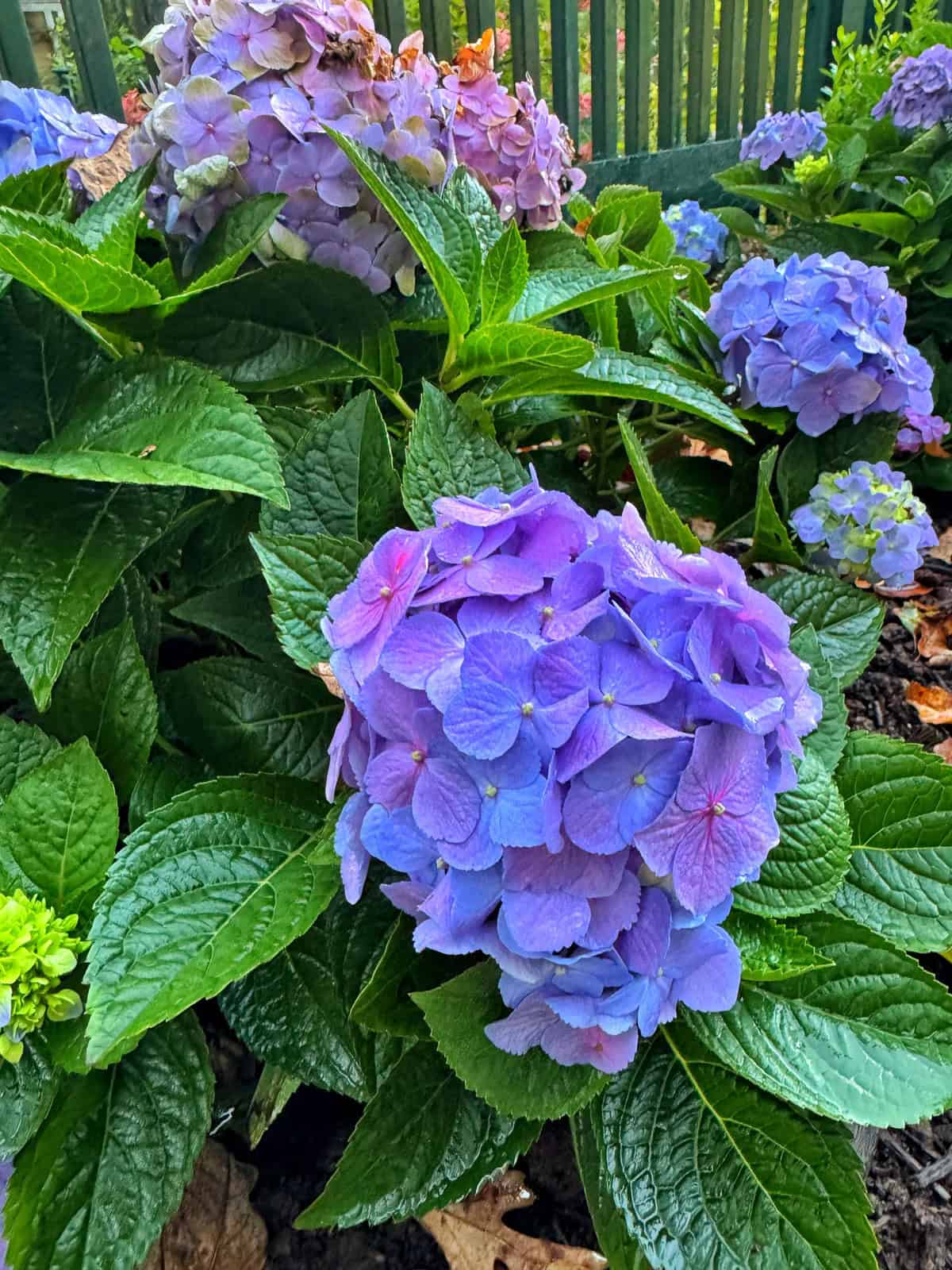
Hydrangeas don’t all form buds the same way. Bigleaf and mountain hydrangeas set their flower buds on last year’s stems (old wood), which means those buds sit outside all winter long. Once they’re damaged by cold temperatures or drying winds, the plant may leaf out normally in spring but fail to produce blooms.
Panicle and smooth hydrangeas bloom on new wood, so winter doesn’t affect their bloom development the same way. Oakleaf hydrangeas usually handle winter well but appreciate some mulch at the base.
Zone 6b winters can be unpredictable. Freeze–thaw cycles, cold snaps, harsh winds, and a lack of consistent snow cover all make bud damage more likely. And because bigleaf buds are tender, even a single cold night can wipe out an entire season of blooms.
To learn more about the different types of hydrangeas, please visit this post: Types of Hydrangeas
Which Hydrangeas Need Protection
Not every hydrangea needs the same level of winter care. Here’s a quick guide:
Hydrangeas that benefit most from winter protection:
- Bigleaf hydrangeas (Hydrangea macrophylla)
- Mountain hydrangeas (Hydrangea serrata)
- Reblooming varieties in colder zones
- Variegated hydrangeas
- Newly planted shrubs
Hydrangeas that usually don’t need wrapping:
- Panicle hydrangeas
- Smooth hydrangeas
Oakleaf hydrangeas:
- Usually fine on their own
- A layer of mulch at the base is helpful
When to Protect Hydrangeas
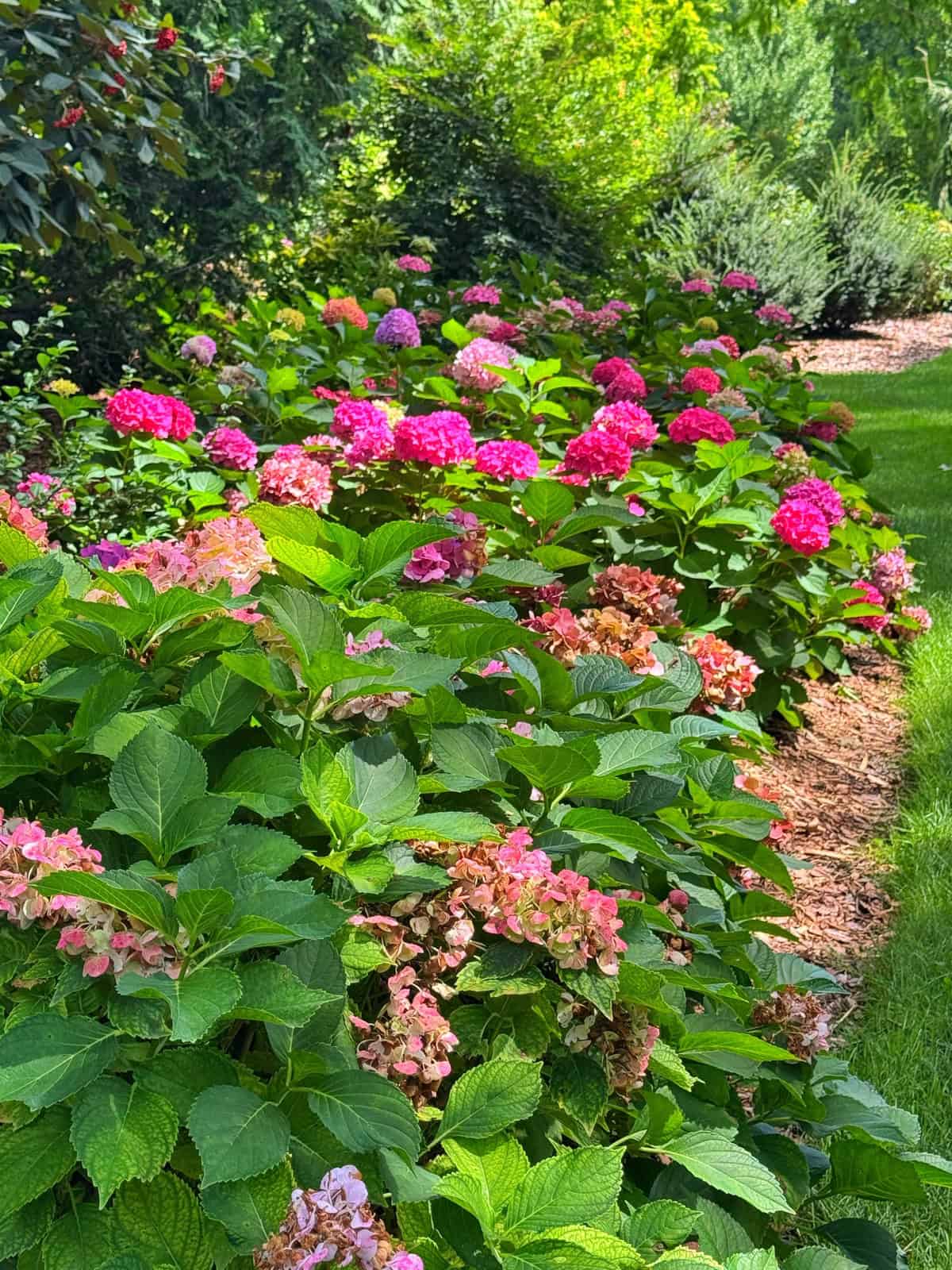
The timing matters just as much as the method.
Wrap or insulate hydrangeas:
- After the first hard frost
- Before temperatures settle into the low 20s
- Once the plant is fully dormant
Avoid wrapping too early because it can trap moisture and cause rot.
Remove protection gradually in spring, especially if the weather swings warm and suddenly cold again. Early spring frost can be just as damaging as deep winter cold.

Supplies I Use Every Year
Here’s what I rely on to get the job done:
- Burlap
- Jute or garden twine
- Tomato cages or simple wooden stakes
- Dry leaves
- Mulch
- Frost blankets (for spring frosts)
- Wire fencing (for DIY cages)
Avoid using plastic because it traps moisture and can cause the plant to rot.
How I Wrap Bigleaf Hydrangeas for Winter
This is the method I use every year because it consistently protects tender buds in my Zone 6b garden.
- Do not prune in fall. Leave old wood intact to protect buds.
- Mulch the base with 3–4 inches of mulch once the ground starts to cool.
- Set up stakes or a tomato cage around the plant to hold the burlap away from the branches.
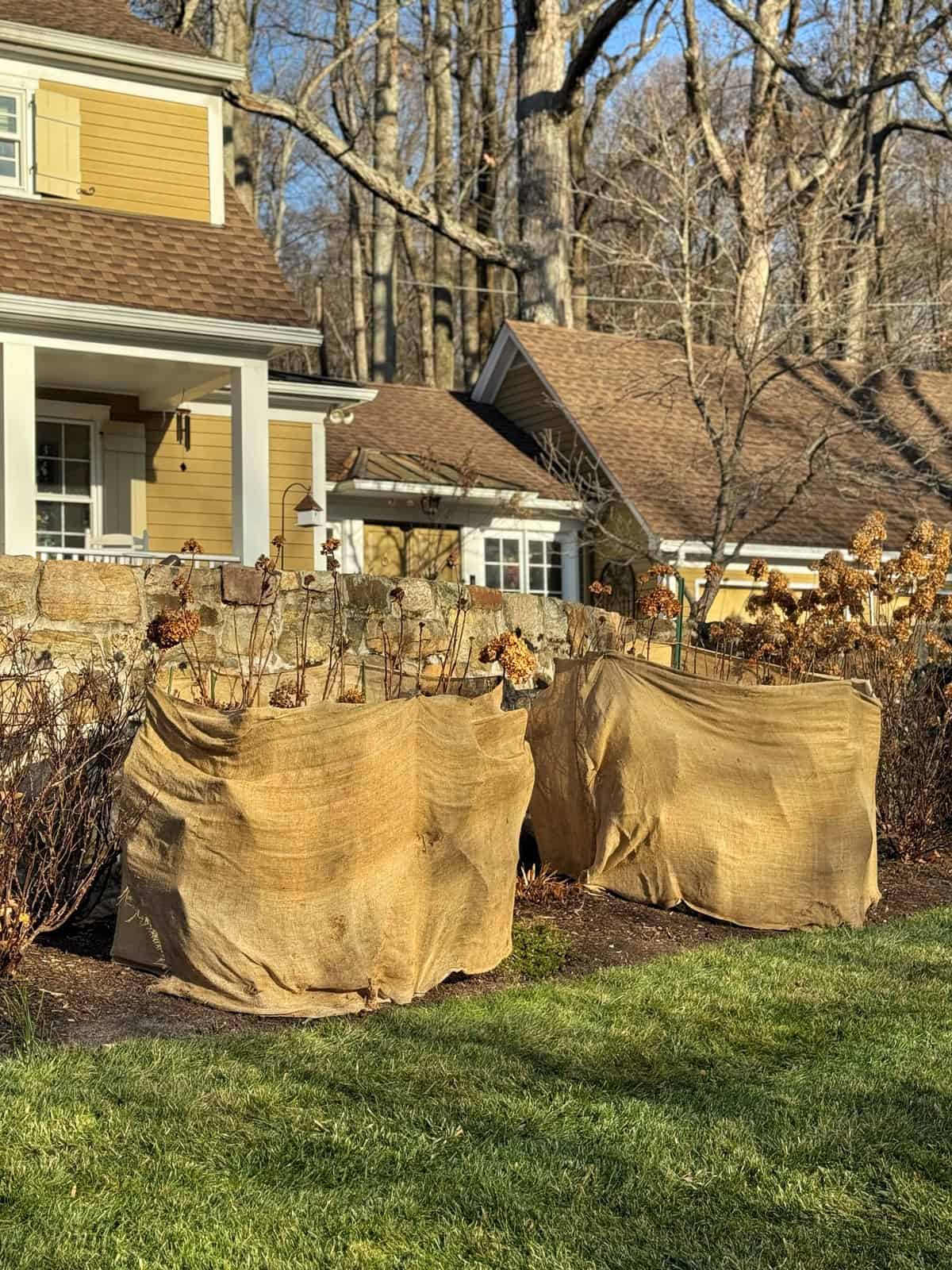
- Wrap the plant loosely with burlap, allowing airflow while still insulating the shrub.
- Secure everything with twine.
- Add dry leaves inside the cage if you want extra insulation.
Stacy’s Zone 6b Tip: Dry leaves are an excellent natural insulator. Adding them inside the burlap enclosure is one of the most effective ways I’ve found to help buds survive winter.

Using a Leaf Mound for Smaller Hydrangeas
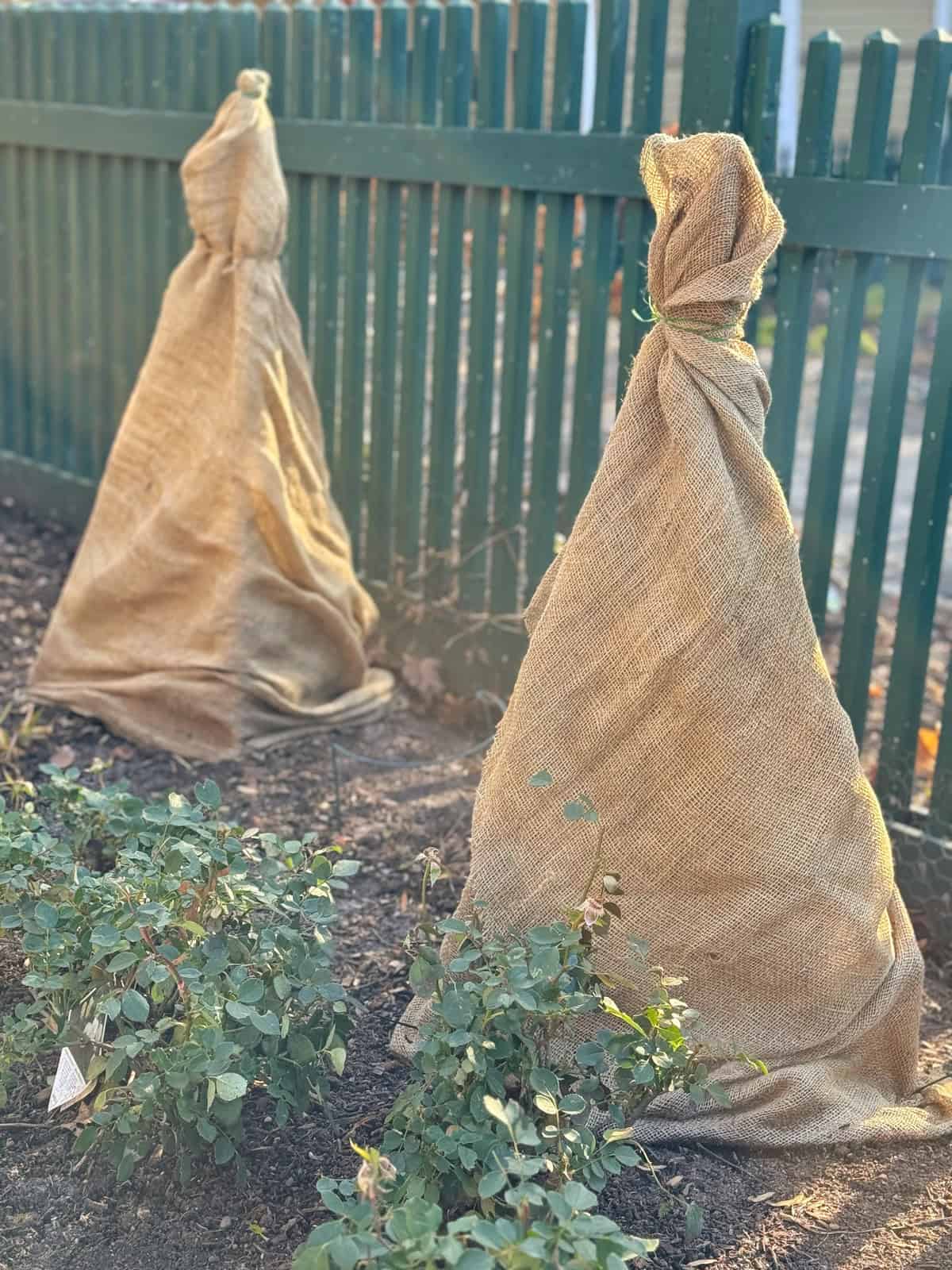
For smaller or newly planted hydrangeas, a simple leaf mound works beautifully. I gather dry leaves and lightly mound them over the plant, then cover them with burlap or a breathable leaf bag. This technique is especially helpful for gardeners who want an inexpensive, easy option and don’t need a full wrapping structure.
Building a DIY Hydrangea Winter Cage
In windy areas or gardens with heavy snow, I sometimes build a winter cage using wire fencing or hardware cloth. I shape it into a cylinder, stake it into the ground, fill it with leaves or straw, and wrap the outside with burlap. It looks a bit rustic, but it protects the plant exceptionally well.
This year, I ran out of burlap (cause I have so many hydrangeas here now LOL) that I grabbed some frost cloth so I could call it a day.

Protecting Hydrangeas From Spring Frosts
April and May can be just as dangerous as winter in many climates. Bigleaf hydrangea buds often start swelling early, making them vulnerable to late freezes. Having a frost blanket or lightweight burlap sheet on hand makes a big difference. Simply drape the plant overnight during frost warnings and remove the cover in the morning.
Stacy’s Zone 6b Tip: I’ve lost entire seasons of bigleaf blooms to surprise late frosts. Now I check the forecast diligently in April and May and cover my shrubs anytime the temperature drops near freezing.

How to Protect Potted Hydrangeas
Hydrangeas growing in containers are more vulnerable to winter injury because the roots are above ground. These should be moved to a sheltered spot like a garage or shed, wrapped in burlap, or heavily mulched. Grouping containers together also helps reduce wind exposure.
What Not to Do
Avoid using plastic around hydrangeas during winter. It doesn’t breathe, traps moisture, and can cause the plant to rot. Don’t wrap too early, and resist the urge to prune in fall—save pruning for the appropriate time based on your hydrangea type. Also avoid removing winter protection too early. Early spring warmth can be misleading, and buds can be lost overnight if the temperature drops.
What I’ve Learned After 30 Years in Zone 6b
Every winter is different, and so is every hydrangea. Some years are mild enough that my hydrangeas barely need protection, and other years I’m grateful I wrapped them early. I’ve learned that hydrangeas are much more resilient than we give them credit for, but giving them a little winter help makes a dramatic difference in their ability to bloom reliably.
I’ve tried many methods over the decades, and while not every plant needs the same level of care, bigleaf hydrangeas almost always reward the extra attention. Burlap has outperformed every other material I’ve tried, and dry leaves remain one of my favorite insulators. Most importantly, winter protection has consistently turned struggling, inconsistent bloomers into reliable summer performers.

Final Thoughts on Protecting Hydrangeas from Winter Damage
After growing hydrangeas in my Zone 6b New Jersey garden for thirty years, I can say with confidence that a little winter protection can dramatically improve a hydrangea’s ability to bloom the following season. I’ve had years where I skipped wrapping and lost nearly every bigleaf bloom to the cold and other years where a simple burlap wrap and a layer of leaves made all the difference. Over time, I’ve learned that hydrangeas are tougher than they look, but they still appreciate a bit of help navigating our unpredictable winters.
Understanding why your hydrangeas need protection and choosing the right method for your garden will set you up for a much more reliable display next summer. And once you get the hang of it, winterizing becomes second nature.
If you’re looking to deepen your hydrangea knowledge or troubleshoot other issues, here are some guides that pair perfectly with this one:
- Hydrangea Care Basics – Everything you need to keep hydrangeas thriving year-round.
- Types of Hydrangeas – Learn the different types of varieties to grow.
- Why Aren’t My Hydrangeas Blooming? – A full troubleshooting guide for stubborn non-bloomers.
- How to Prune Hydrangeas – Learn exactly when and how to prune based on hydrangea type.
- How to Divide Hydrangeas – A step-by-step method I use to make new plants.
- Propagating Hydrangeas Methods – step-by-step methods for ground layering and stem cuttings.
- How to Grow Hydrangeas in Pots – Helpful if you’re working with containers or small spaces.
- How to Dry Hydrangeas – Preserve your blooms for arrangements, wreaths, and crafts.
- Keeping Fresh-Cut Hydrangeas From Wilting in a Vase – Learn how to keep fresh blooms from drooping in an arrangement
- Are Hydrangeas Deer Resistant? – Tips on protecting your hydrangeas from deer damage
- Creating the Prettiest Hydrangea Arrangements For Your Home – discover hydrangea arranging ideas.
- DIY Hydrangea Wreath – Learn how to make a fall wreath for your decor.
Hydrangeas are some of the most rewarding shrubs you can grow, and with the right winter care, they’ll reward you with bigger, fuller, and more reliable blooms year after year. I hope these tips give you the confidence to protect your plants and enjoy a beautiful hydrangea season ahead.
With a little preparation now, your hydrangeas will be ready to reward you with loads of beautiful blooms next season.
For more information about protecting hydrangeas during the winter, please read this article from the University of New Hampshire Cooperative Extension.
Thank you for visiting the blog today!
Enjoy your day! xo


Originally Published . Last Updated .
