
Easy Hummingbird Plants for a Low-Maintenance Garden

Easy hummingbird plants that thrive with minimal care, attract birds reliably, and perform well in real home gardens.
Hummingbirds are such beautiful creatures, aren’t they? I love watching them zip through my garden, their tiny, jewel-toned wings bringing constant movement and life to the landscape.
Over the years, I’ve learned that attracting hummingbirds doesn’t require complicated setups or constant feeder maintenance. The most reliable way to bring them into the garden is by growing flowers that naturally provide the nectar they’re looking for — and choosing varieties that are easy to care for and perform well season after season.
In this post, I’m sharing easy hummingbird plants that thrive with minimal maintenance and consistently attract birds in real home gardens. These plant choices are part of a broader pollinator-friendly approach, which I cover in more detail in my guide on how to create a pollinator garden. If you’re looking for garden design and habitat tips beyond plant selection, you may also want to explore my gardening for hummingbirds guide.
(Posts on stacyling.com may contain affiliate links. Click HERE for full disclosure.)

Why Grow Plants for Hummingbirds?
Hummingbirds aren’t just beautiful to watch — they’re active pollinators that help keep gardens lively and full of blooms. In my own garden, spaces planted with nectar-rich flowers consistently see more hummingbird activity than areas without them, and the added movement brings the garden to life all season long.
Choosing plants that naturally attract hummingbirds is the easiest, most low-maintenance way to enjoy their presence without relying on feeders.

Easy, Low-Maintenance Plants Hummingbirds Love
The plants below are ones I’ve grown myself and found to be reliable, low-maintenance performers in the garden. They offer the nectar hummingbirds are drawn to while fitting easily into everyday garden spaces without constant care. If you’re looking for flowers that attract hummingbirds and still work within a realistic gardening routine, these are strong places to start.
Foxgloves (Digitalis)
These tall, elegant flowers produce a profusion of tubular, bell-shaped blooms that hummingbirds are drawn to, especially in late spring and early summer. Foxgloves perform best in partial shade with consistently moist soil.
(Hardiness Zones: 4–10 | Bloom Time: Spring to Early Summer)
I struggled with growing foxgloves for years. In the past, I’d buy mature plants at the nursery, only to have them fade out after planting. Everything changed when I started them from seed indoors under grow lights. Not only did they bloom the first season, but they returned the following year as well. If foxgloves haven’t worked for you before, starting from seed can make a noticeable difference.
For more information about how I grow foxgloves, please visit: How to Grow Foxgloves.

Nepeta (Catmint)
Nepeta is a low-maintenance perennial with soft purple blooms and aromatic foliage that hummingbirds and butterflies consistently visit. It performs best in full sun with well-drained soil and is valued for its long bloom period.
(Hardiness Zones: 3–8 | Bloom Time: Late Spring to Fall)
In my garden, nepeta has proven to be reliably deer resistant and easy to manage. After the first flush of flowers, cutting the plant back by about half encourages fresh growth and a second round of blooms later in the season.
To learn my best tips for growing nepeta, please visit: How to Grow Nepeta

Bee Balm (Monarda)
With its bright pink, spiky blooms, bee balm is a reliable hummingbird magnet during the summer months. It grows best in full sun with consistently moist soil and is known for spreading readily once established.
(Hardiness Zones: 4–9 | Bloom Time: Summer)
In my garden, monarda spreads quickly, so I give it plenty of room to grow. Dividing plants periodically helps keep them healthy and prevents them from overtaking nearby plantings.

Echinacea (Coneflowers)
Coneflowers offer long-lasting color and a steady supply of nectar throughout the summer and into fall. This tough native plant handles heat and drought well while attracting hummingbirds, butterflies, bees, and other beneficial insects.
(Hardiness Zones: 3–9 | Bloom Time: Summer to Fall)
In my garden, coneflowers have been dependable performers that return year after year with minimal care, making them an easy choice for low-maintenance pollinator gardens.
To learn more about how I grow coneflowers, please see: Purple Coneflower Care

Columbine (Aquilegia)
Delicate and graceful, columbine produces nodding, bell-shaped flowers in a range of colors that hummingbirds readily visit in spring and early summer. It performs best in dappled shade with consistently moist soil.
(Hardiness Zones: 3–8 | Bloom Time: Spring to Early Summer)
In my Zone 6b garden, columbine grows easily and returns reliably each year. However, it can self-seed freely in some regions, so it’s a good idea to check with your local cooperative extension before planting to understand how it behaves in your area.

Rose Mallow (Hardy Hibiscus)
With its large, showy blooms in shades of pink, red, and white, rose mallow is a striking plant that hummingbirds are consistently drawn to. It tolerates heat and humidity well and performs best in full sun.
(Hardiness Zones: 4–9 | Bloom Time: Summer to Fall)
Rose mallow is not deer resistant, so some protection may be needed in areas with high browsing pressure. In my own gardens, I use a deer repellent, which has been effective at keeping deer from damaging the plants.
With its large, showy blooms in shades of pink, red, and white, rose mallow is a stunning addition that hummingbirds can’t resist. It tolerates heat and humidity, flourishing in full sun. Just we aware that hardy hibiscus is not deer resistant and will need some protection from browsing. (Hardiness Zones: 4-9, Bloom Time: Summer-Fall)

Salvia
Salvias come in a wide range of colors and forms, but they all share one thing in common: tubular flowers that hummingbirds are strongly attracted to. Depending on the variety, salvias perform well in full sun to partial shade and are valued for their long bloom periods.
(Hardiness Zones: Varies by type | Bloom Time: Varies by type)
In my garden, salvias have been easy to grow as long as they’re planted in well-draining soil, as they don’t tolerate consistently wet conditions. Like nepeta, many varieties are deer resistant, and deadheading after the first flush of flowers often encourages additional blooms later in the season.
To learn more about how I grow and care for salvia, please read how to grow salvia plant and deadheading salvia flowers

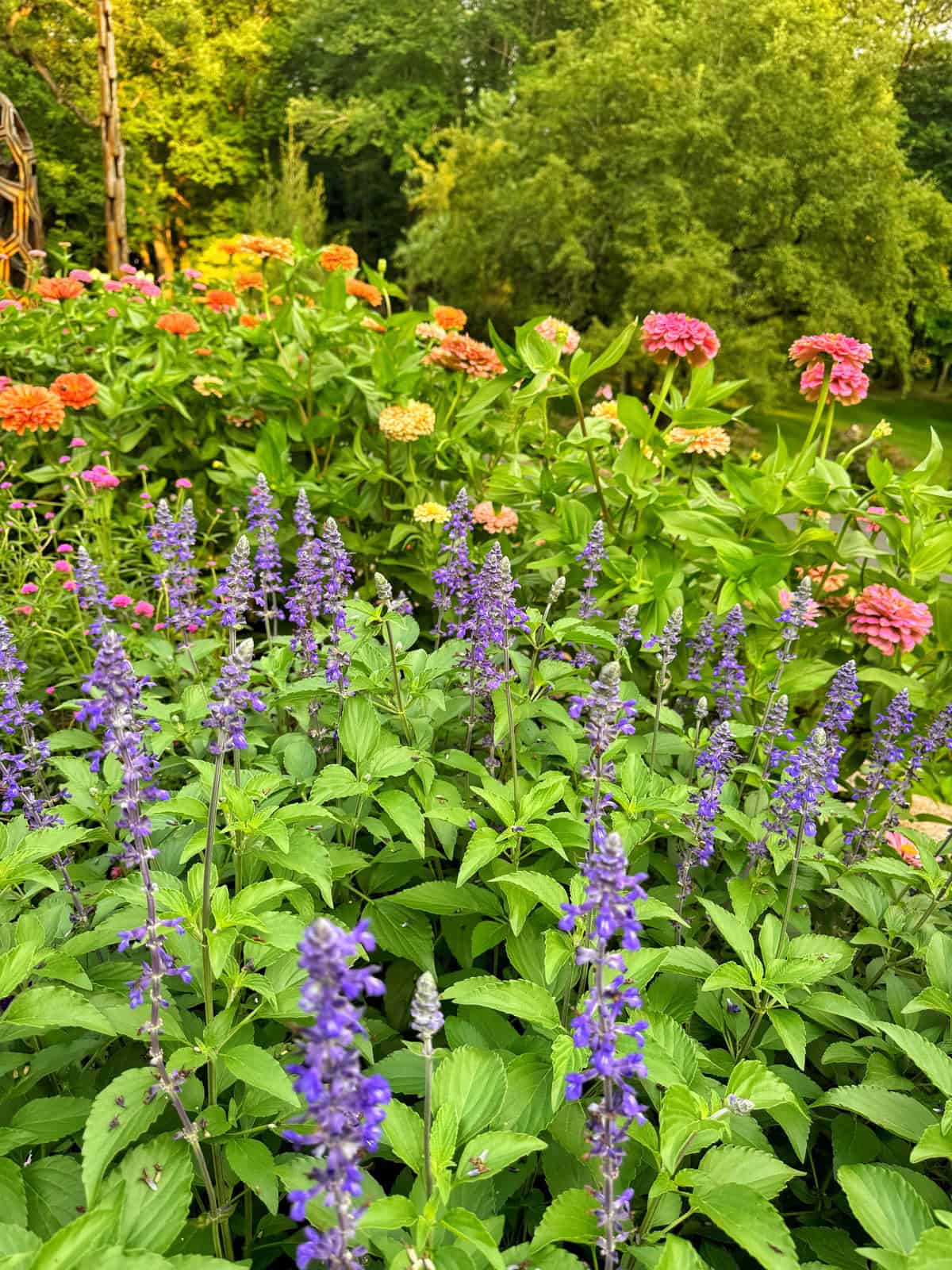
Zinnias
Zinnias are cheerful, daisy-like annuals that come in a wide range of vibrant colors. They thrive in full sun and are reliable hummingbird favorites throughout the summer and into fall.
(Hardiness: Annual | Bloom Time: Summer to Fall)
Zinnias are easy to grow from seed, which makes it simple to experiment with different varieties each season. In my garden, they also double as excellent cut flowers, adding color to both the landscape and fresh bouquets.
To learn how I grow zinnias please visit: How to Grow Zinnias and Enjoy the Flowers

Petunias
Available in a wide range of colors and patterns, petunias are reliable hummingbird favorites throughout the summer. They’re among the easiest flowering annuals to grow and perform best in full sun with regular watering.
(Hardiness: Annual | Bloom Time: Summer to Fall)
In my garden, petunias are dependable fillers for beds, containers, and window boxes, making it easy to add hummingbird-friendly blooms to a variety of spaces.

Cleome
Cleome is a distinctive annual with spidery blooms in shades of pink, white, and purple that add height and texture to the garden. It thrives in full sun and blooms continuously throughout the summer.
(Hardiness: Annual | Bloom Time: Summer to Fall)
Cleome is also deer resistant, which makes it especially valuable in gardens with browsing pressure. In my Zone 6b garden, it readily drops seed and often returns the following year, filling in spaces with minimal effort.

Penstemon (Beardtongue)
Penstemon produces upright spikes of tubular flowers that hummingbirds are naturally drawn to, especially in late spring and early summer. It performs best in full sun with well-drained soil and is valued for its tidy habit and long bloom period.
(Hardiness Zones: 3–9, depending on variety | Bloom Time: Late Spring to Summer)
In my garden, penstemon has been a reliable, low-maintenance perennial that returns year after year without much attention. I’ve found them not to be deer resistant and therefore, need protection.

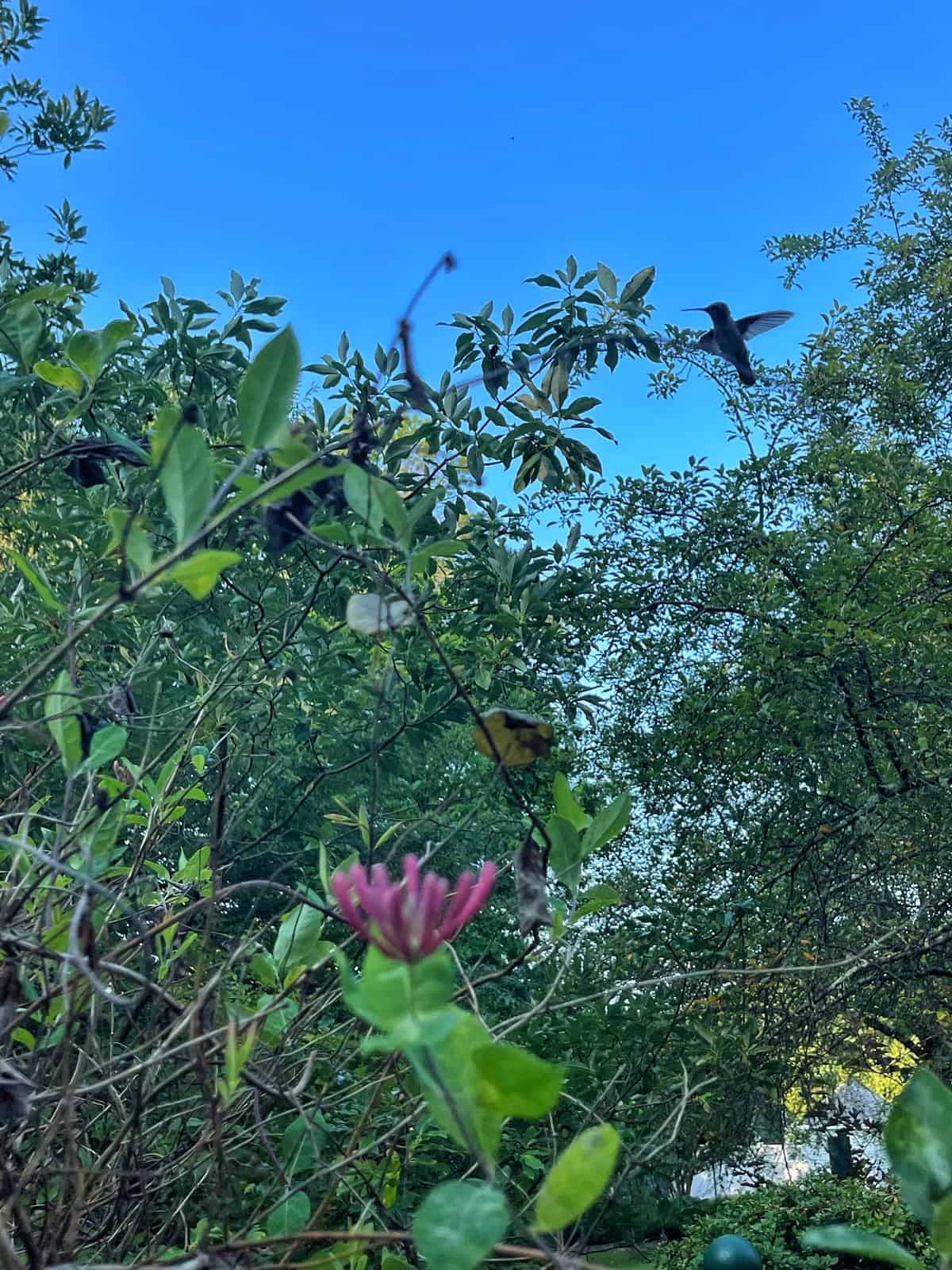
Honeysuckle (Lonicera — Non-Invasive Varieties Only)
Non-invasive honeysuckle varieties produce clusters of fragrant, tubular flowers that hummingbirds are naturally drawn to. These vines or shrubs perform well in full sun to partial shade and add vertical interest while providing a reliable nectar source.
(Hardiness Zones: Varies by variety | Bloom Time: Late Spring to Summer)
In my garden, I only grow non-invasive honeysuckle selections, since some older varieties can spread aggressively. Choosing well-behaved cultivars allows you to enjoy the benefits for hummingbirds without the risk of plants taking over the garden.

How to Use These Plants in Your Garden
You don’t need to grow every plant on this list to attract hummingbirds. Even a few well-chosen flowers, planted in generous groupings, can make a noticeable difference.
When selecting plants, focus on:
- Repeating the same flowers in clusters rather than scattering single plants
- Choosing varieties that fit your sun, soil, and moisture conditions
- Mixing early-, mid-, and late-season bloomers for consistent nectar
If you’re looking for guidance on garden layout, flower placement, feeders, and habitat design, I share those details step by step in my gardening for hummingbirds guide.
For a broader look at how hummingbirds fit into a thriving ecosystem alongside butterflies and bees, you may also enjoy my guide on how to create a pollinator garden.

Final Thoughts
One of the things I love most about gardening for hummingbirds is how approachable it can be. You don’t need a complicated plan or constant maintenance to see results — choosing plants that naturally attract hummingbirds and fit your growing conditions goes a long way.
The plants in this list are ones I’ve grown myself and found to be reliable, low-maintenance performers. Whether you’re planting in the ground, filling containers, or tucking flowers into existing beds, even a few of these selections can bring noticeable hummingbird activity to your garden throughout the season.
If you’d like guidance on how to arrange these plants, design a garden that supports hummingbirds, or decide whether feeders make sense for your space, I share that step by step in my gardening for hummingbirds guide. For a broader look at how hummingbirds, butterflies, and bees all fit together, my guide on how to create a pollinator garden walks through the bigger picture.
And if you’re curious about incorporating more native plants into your garden, I also share how native plants support pollinators and how I balance them alongside other easy-care favorites. Start with what works where you live, pay attention to what hummingbirds respond to, and let your garden evolve naturally from there.
Thank you for visiting the blog today!
Enjoy your day! xo

Originally Published .
