
Best Companion Plants for Lavender (What to Plant and What to Avoid)

Discover the best companion plants for lavender, including what to plant and what to avoid for a thriving, low-maintenance garden.
Companion planting with lavender is one of the easiest ways to create a garden that looks beautiful while staying low-maintenance. By pairing lavender with plants that thrive in the same sunny, well-drained conditions, you can build a space that requires less watering, less upkeep, and fewer interventions overall.
If you’ve ever struggled with plants not thriving together or found yourself constantly adjusting care routines, you’re not alone. One of the biggest shifts in my own garden came when I started grouping plants based on what they actually need instead of just how they look. Lavender was a turning point for me. Once I planted it alongside other drought-tolerant perennials and herbs, everything became easier to manage and much more cohesive.
In my garden, lavender acts as a structural anchor. I use it to add softness, movement, and fragrance, then layer in companion plants that support pollinators, deter pests, and create a relaxed cottage garden feel without adding extra work.
If you’re new to growing lavender or want to make sure you’re giving it the right conditions, be sure to read my complete guide to growing lavender. It walks through everything from planting and care to pruning and harvesting so you can set your plants up for long-term success.
In this guide, I’ll share the best companion plants for lavender, including herbs and perennials that thrive in similar conditions, along with design ideas to help you create a garden that feels full, balanced, and easy to care for.
(Posts on stacyling.com may contain affiliate links. Click HERE for full disclosure.)

Watch: The Best Companion Plants for Lavender
Lavender is one of the most popular plants gardeners grow, but it often looks and performs best when paired with the right companions.
In this video, I’m sharing my favorite plants to grow with lavender, including herbs, flowering perennials, annuals, and structural plants that thrive in the same sunny, well-drained conditions. You’ll also learn which plants to avoid and why choosing the right neighbors can help create a healthier, more beautiful garden.
Watch the video below:

How to Choose Companion Plants for Lavender
Choosing the right companion plants for lavender comes down to one simple idea: match the growing conditions.
Lavender thrives in full sun, well-drained soil, and relatively dry conditions. When you pair it with plants that prefer the same environment, everything becomes easier to care for and more successful long term. When plants have different needs, you often end up overwatering, over-fertilizing, or constantly adjusting just to keep everything alive.
The most important factor to consider is drainage. Lavender does not tolerate wet soil, so avoid pairing it with plants that require frequent watering or consistently moist conditions. Instead, look for drought-tolerant perennials and herbs that naturally prefer lean soil and good airflow.
Sunlight is just as important. Lavender needs at least 6–8 hours of direct sun each day, so its companions should be able to handle full sun exposure without wilting or burning out.
Beyond growing conditions, think about how plants will look and function together. Lavender has a soft, mounded shape with upright flower spikes, so pairing it with a mix of textures creates a more balanced and layered garden. I like to combine it with low-growing ground covers, airy perennials, and a few structural plants to keep things visually interesting without feeling crowded.
In my garden, I’ve found that when I stick to plants that thrive in the same dry, sunny conditions, everything not only looks better but requires far less effort to maintain. It’s one of the easiest ways to create a garden that feels full and intentional without adding more work.
Best Companion Plants for Lavender (Full Sun & Well-Drained Soil)
Because lavender thrives in full sun and well-drained soil, the best companion plants are those that naturally prefer the same growing conditions. When you group plants with similar needs, your garden becomes easier to care for and far more successful over time.
In my garden, I like to combine lavender with a mix of herbs, flowering perennials, and a few structural plants to create a layered, cottage-style look that feels relaxed but still intentional. This approach helps support pollinators, adds texture and color throughout the season, and keeps maintenance to a minimum.
Here are some of the best plants to grow alongside lavender.
Roses
Hardiness Zone: 5–9
Light: Full sun
Why It Pairs Well With Lavender:
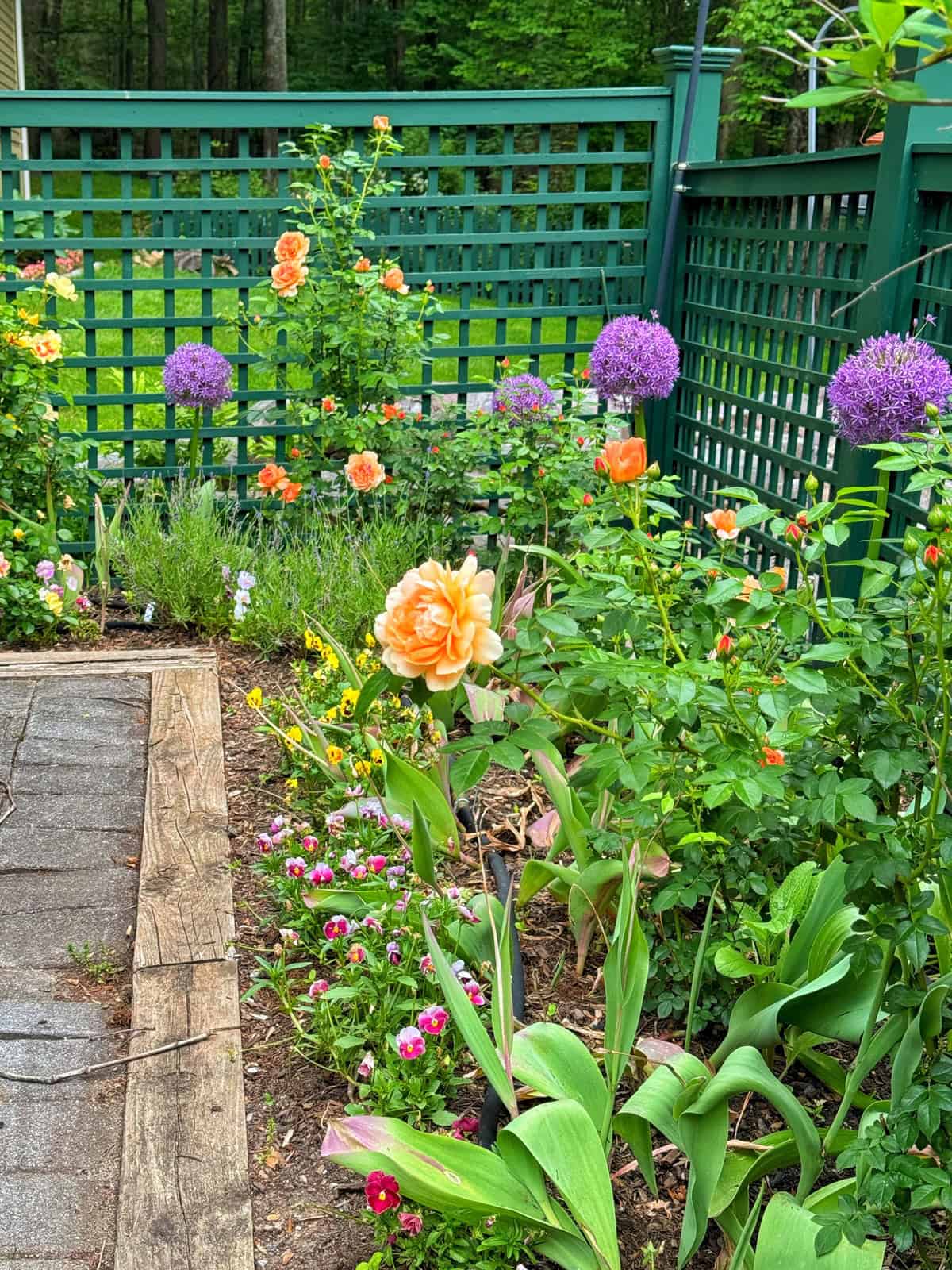
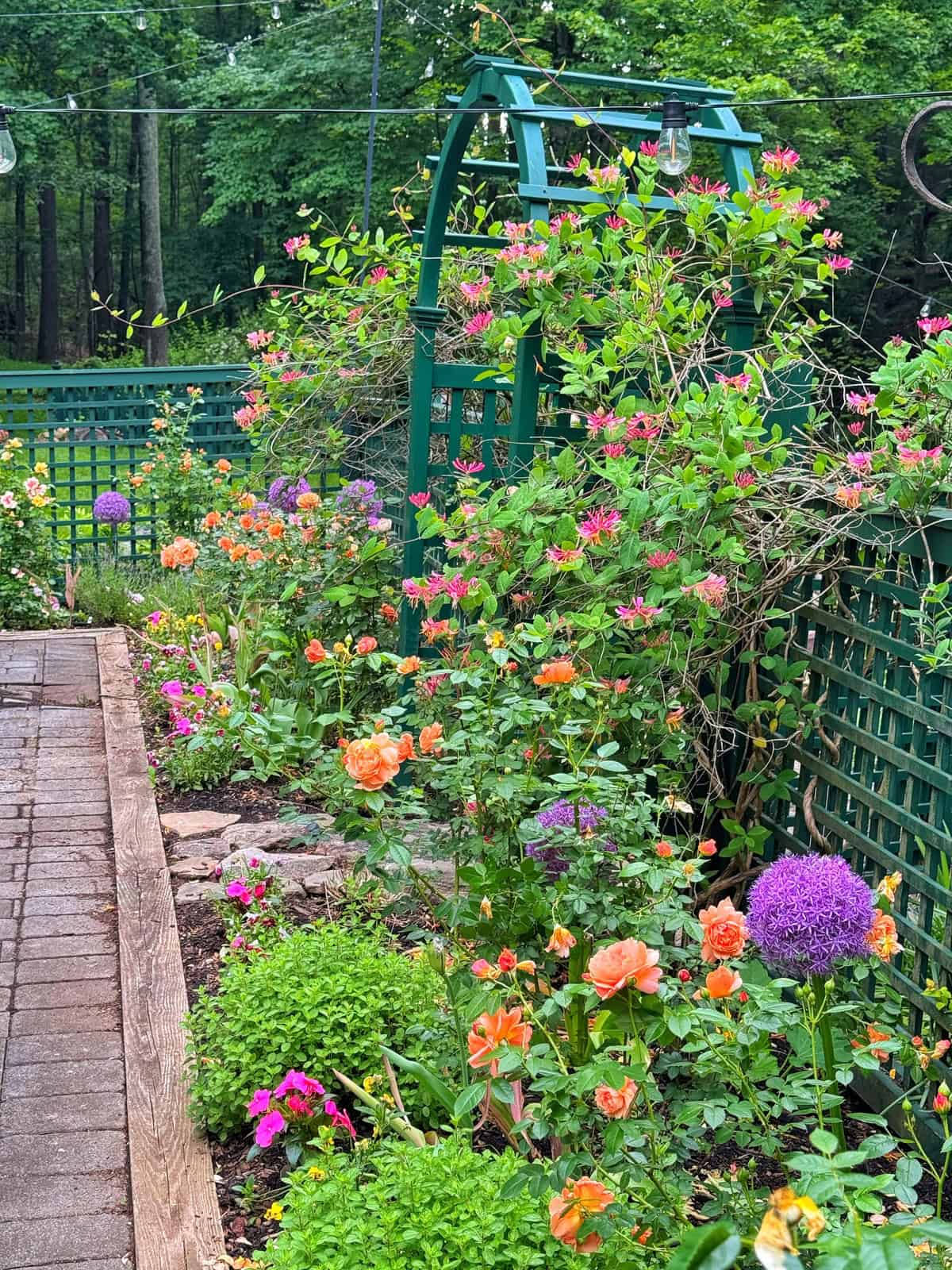
Lavender and roses are a classic cottage garden pairing. Lavender’s strong fragrance can help deter pests like aphids and other insects that commonly affect roses, while the contrast between soft rose blooms and lavender’s upright flower spikes creates a balanced, layered look.
Extra Notes:
In my garden, I like to plant lavender along the front of rose beds or near walkways where the fragrance can be enjoyed up close. It softens the structure of rose bushes and helps create a more relaxed, natural planting style that still feels intentional.
To learn more about how I grow roses, please visit my complete guide to growing roses here.
Herbs That Grow Well With Lavender
Thyme
Hardiness Zone: 5–9
Light: Full sun
Why It Pairs Well With Lavender:
Thyme thrives in the same dry, sunny conditions as lavender, making it one of the easiest companion plants to grow alongside it. Its low-growing habit helps suppress weeds and fill in space around taller plants.
Extra Notes:
I like to plant thyme around the base of lavender or along pathways. It creates a soft, trailing effect while helping keep the garden tidy and low-maintenance.

Sage
Hardiness Zone: 4–10
Light: Full sun
Why It Pairs Well With Lavender:
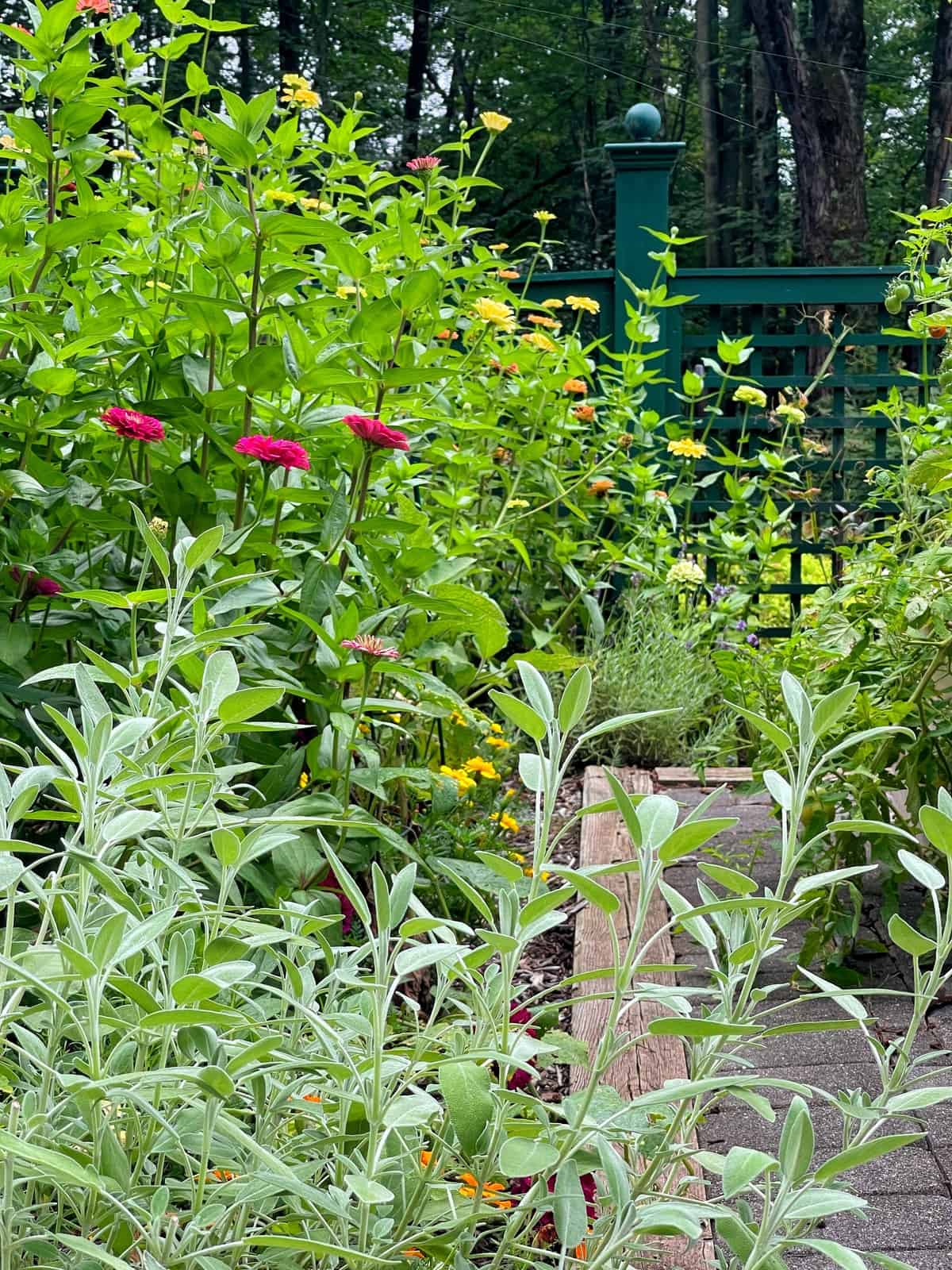
Sage and lavender share very similar growing requirements, including well-drained soil and minimal watering. Their contrasting foliage textures create visual interest while still feeling cohesive in the garden.
Extra Notes:
Pairing herbs like sage and lavender together creates a simple, functional planting area that looks beautiful while being incredibly easy to care for.

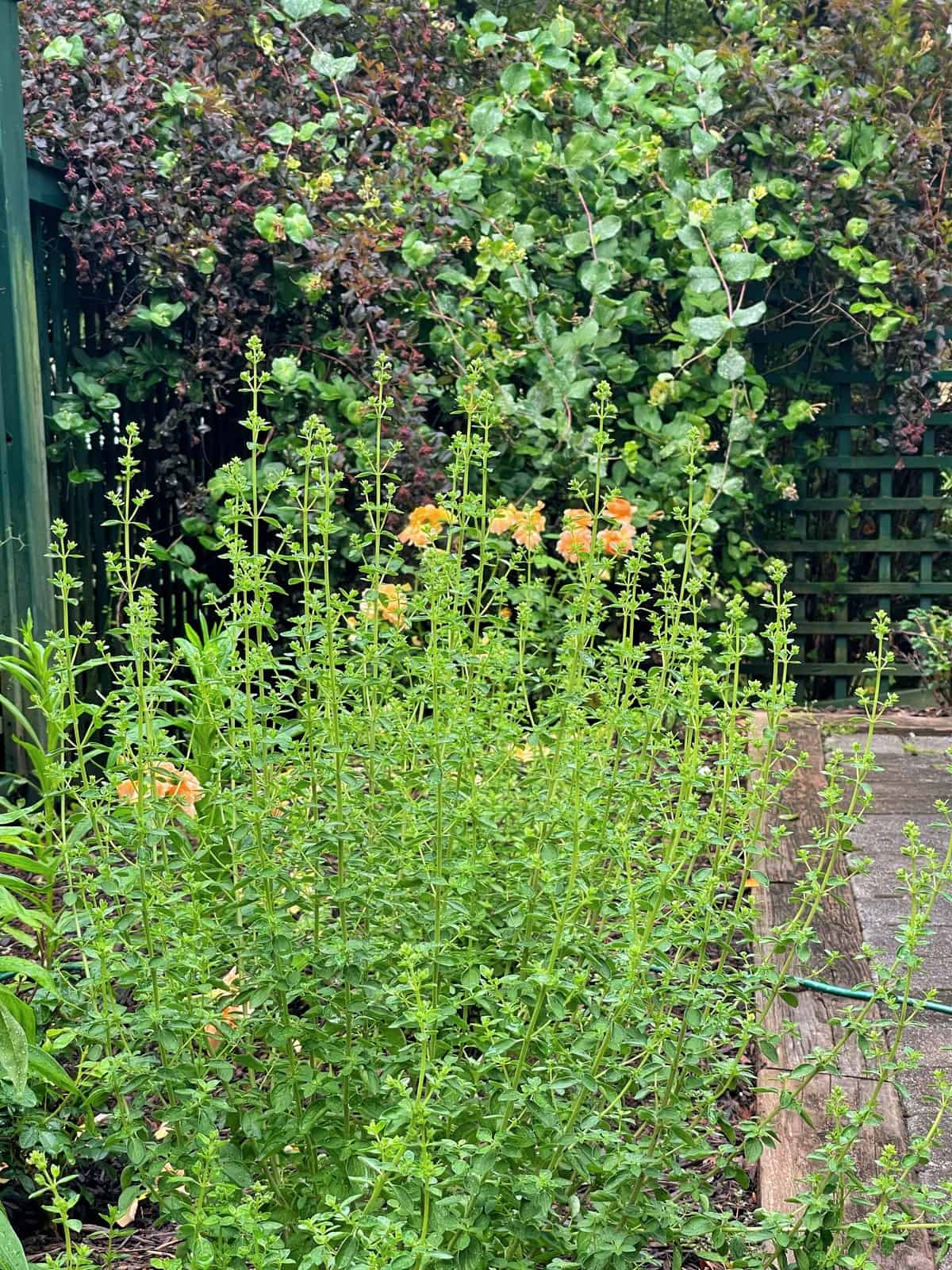
Oregano
Hardiness Zone: 5–10
Light: Full sun
Why It Pairs Well With Lavender:
Oregano thrives in dry, well-drained soil and full sun, making it a natural companion for lavender. It also attracts beneficial insects and pollinators, which helps support a healthy garden ecosystem.
Extra Notes:
I like to use oregano as a filler plant around lavender. It spreads gently and adds a soft, informal look that works really well in a cottage-style garden.
To learn how I grow oregano and other herbs, please visit my complete guide to growing an herb garden.
Rosemary
Hardiness Zone: 7–10 (some varieties may be hardy in Zone 6 with protection)
Light: Full sun
Why It Pairs Well With Lavender:
Rosemary and lavender share similar Mediterranean origins and thrive in full sun, well-drained soil, and relatively dry conditions once established. Their aromatic foliage and complementary flower colors create a cohesive look while attracting bees and other pollinators to the garden.
Extra Notes:
I especially like growing rosemary and lavender together in herb gardens, containers, and potager gardens. Both plants are highly fragrant and require very little maintenance once established. In colder climates, rosemary can also be grown in containers and overwintered indoors while lavender remains in the garden.

Flowering Perennials That Pair Beautifully With Lavender
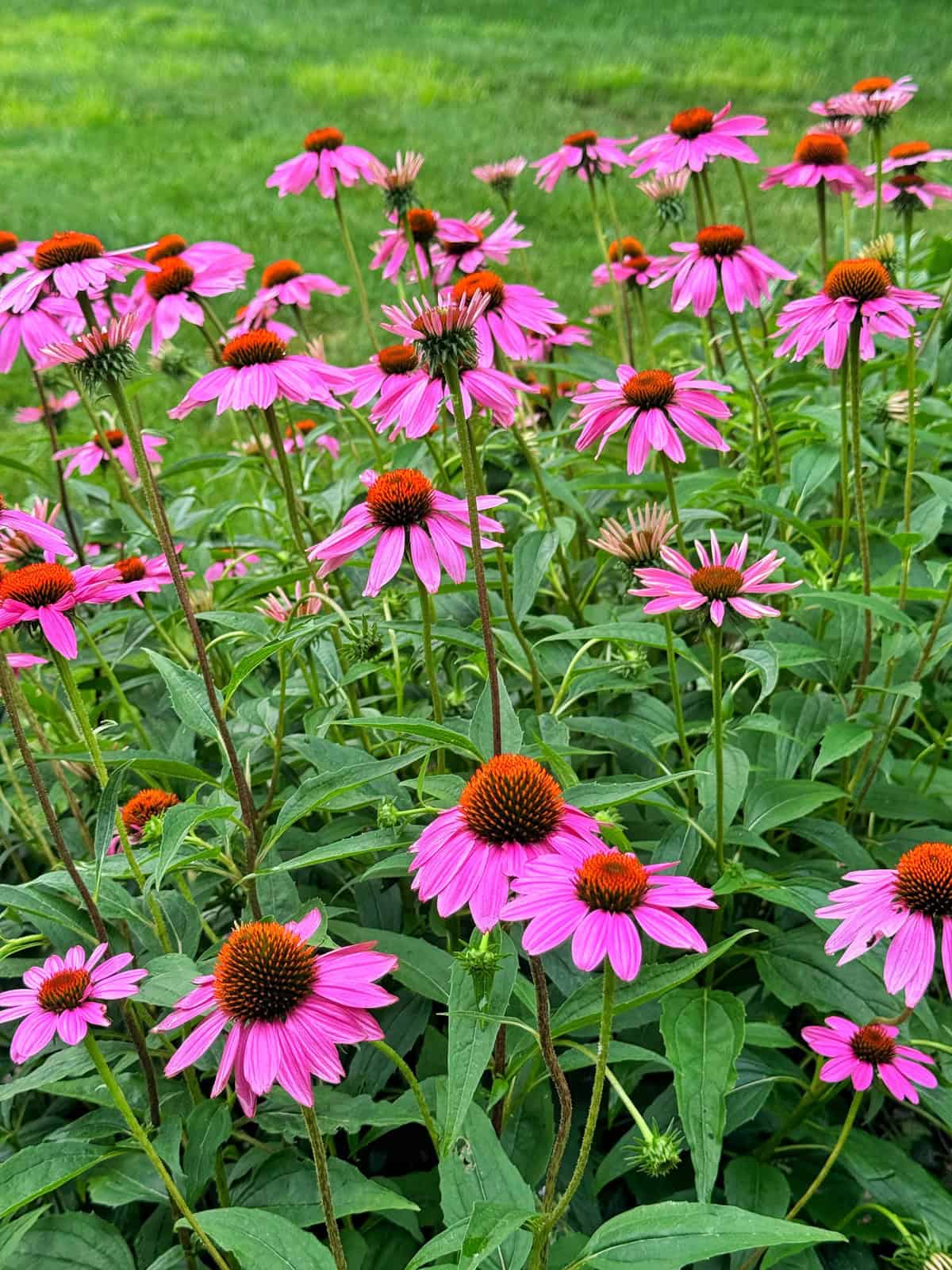
Echinacea (Coneflower)
Hardiness Zone: 3–9
Light: Full sun
Why It Pairs Well With Lavender:
Echinacea and lavender both thrive in full sun and well-drained soil. Their bloom times overlap beautifully, and together they attract bees, butterflies, and other pollinators throughout the summer.
Extra Notes:
This is one of my favorite combinations in the garden. The bold, daisy-like blooms of coneflowers paired with the soft spikes of lavender create a balanced and natural cottage garden look.
To learn how I grow coneflowers in my garden, please visit my guide on how to grow purple coneflowers.
Yarrow (Achillea)
Hardiness Zone: 3–9
Light: Full sun
Why It Pairs Well With Lavender:
Yarrow is a tough, drought-tolerant perennial that thrives in the same conditions as lavender. It attracts beneficial insects and adds a soft, airy texture that contrasts nicely with lavender’s structure.
Extra Notes:
Yarrow is a great plant to mix in if you want a garden that feels full without adding extra maintenance. It’s one of those plants that quietly supports everything around it.
To learn more about how I grow yarrow in my cottage garden, please visit my complete guide to growing yarrow here.

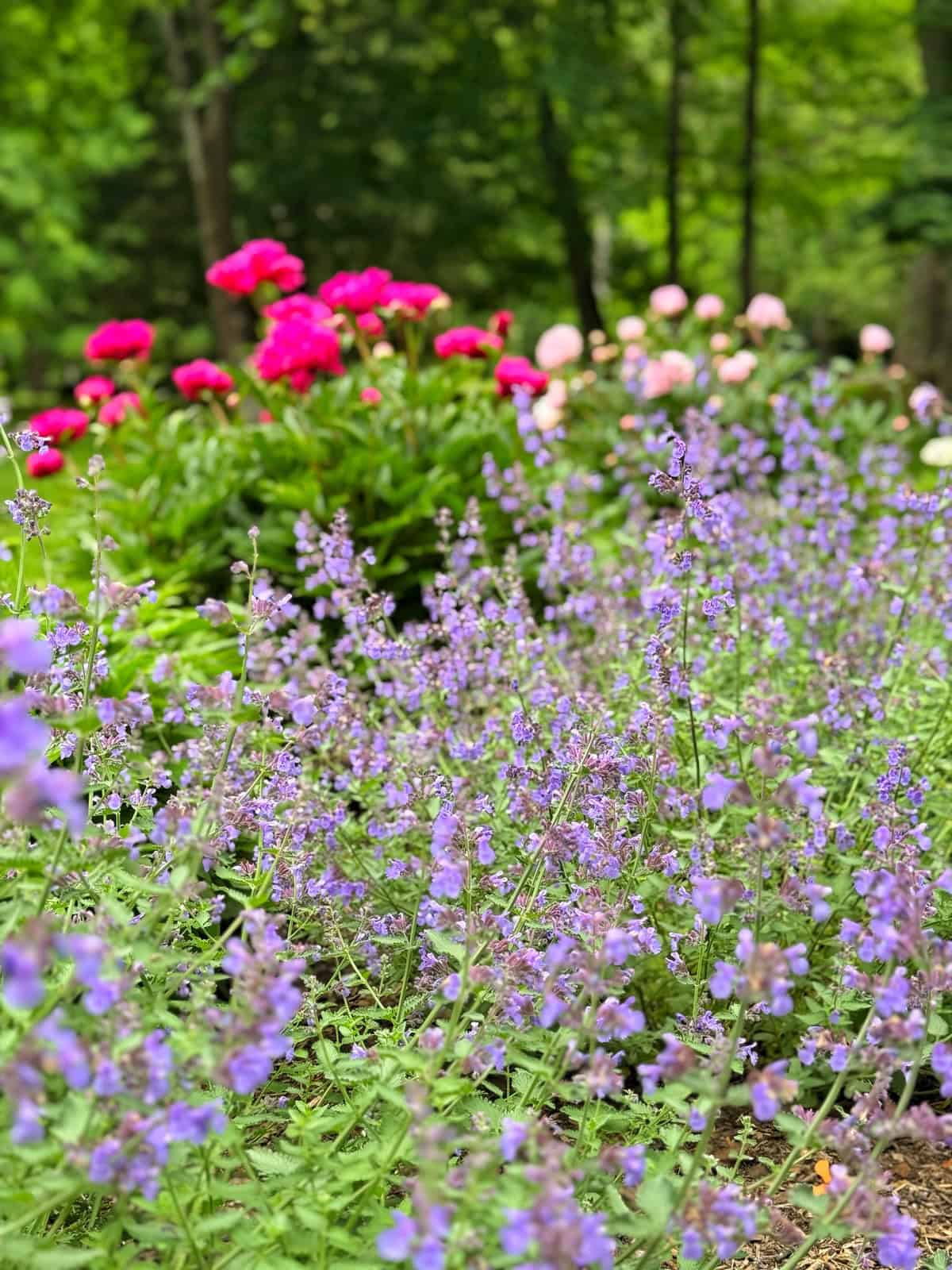
Catmint (Nepeta)
Hardiness Zone: 3–8
Light: Full sun
Why It Pairs Well With Lavender:
Catmint is another drought-tolerant perennial that thrives in similar conditions. Its long-lasting blue-purple blooms complement lavender beautifully while attracting pollinators.
Extra Notes:
I like to plant catmint near lavender to extend the bloom season. It adds a soft, flowing layer that helps tie everything together visually.
To learn more about how I grow nepeta in my gardens, please visit my complete guide to growing nepeta.
Agastache (Hummingbird Mint)
Hardiness Zone: 5–10
Light: Full sun
Why It Pairs Well With Lavender:
Agastache thrives in the same sunny, well-drained conditions that lavender loves. Its long-lasting flower spikes provide months of color while attracting hummingbirds, butterflies, bees, and other beneficial pollinators. The similar flower forms create a natural visual connection that helps plantings feel cohesive and intentional.
Extra Notes:
One of my favorite things about agastache is its exceptionally long bloom period. While lavender often puts on its biggest show in early summer, agastache continues flowering well into late summer and sometimes fall. Together they create a pollinator-friendly planting with season-long interest.

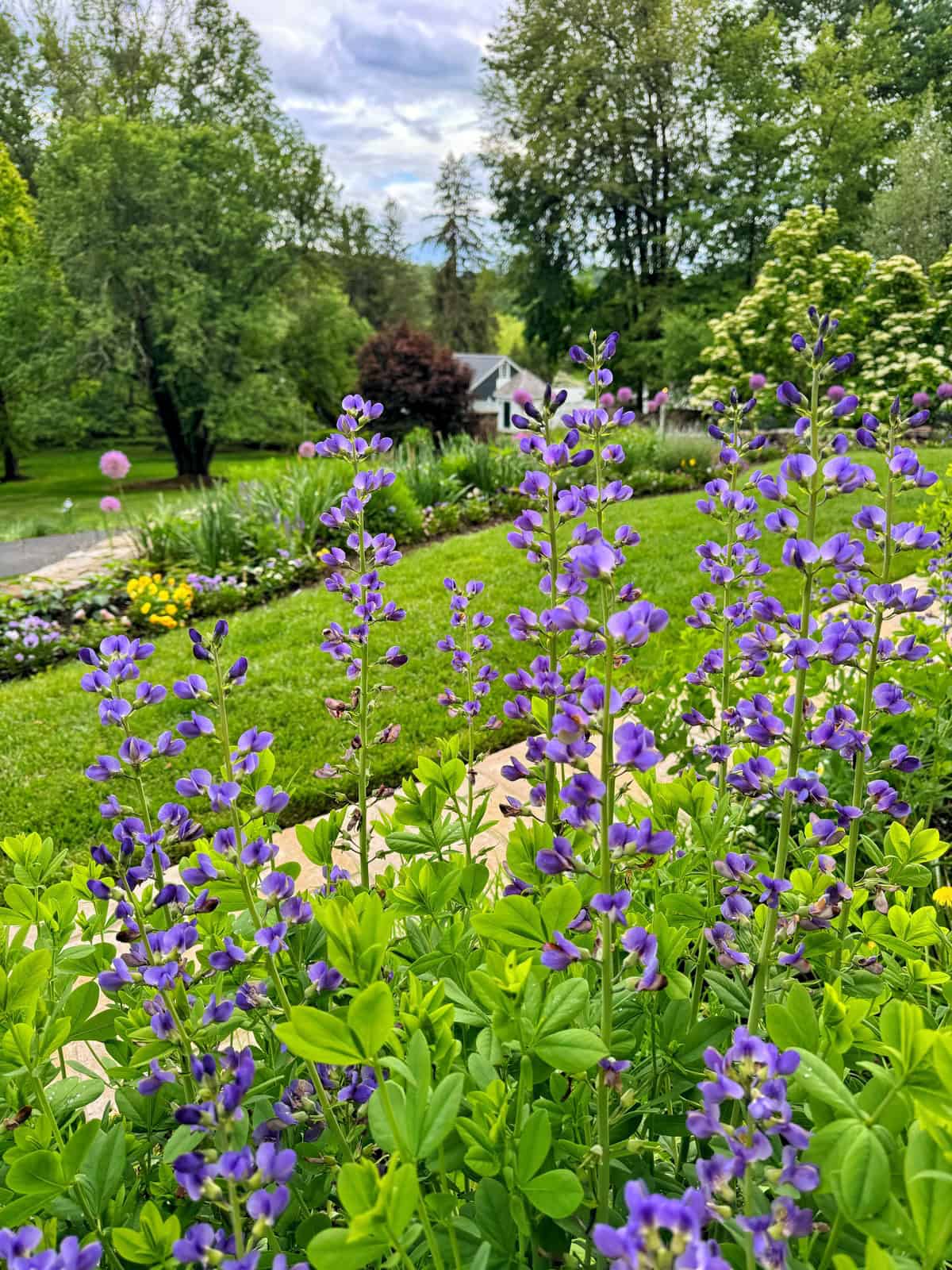
False Indigo (Baptisia)
Hardiness Zone: 3–9
Light: Full sun
Why It Pairs Well With Lavender:
False indigo is a long-lived perennial that pairs beautifully with lavender in sunny garden beds. Once established, baptisia develops excellent drought tolerance and thrives in conditions similar to lavender. Its upright flower spikes complement lavender’s bloom shape while adding strong architectural interest to the garden.
Extra Notes:
I love using baptisia as a structural anchor in perennial borders. After flowering, the attractive blue-green foliage continues providing texture and presence throughout the growing season. Because it forms a substantial clump over time, it helps create a strong framework around smaller companion plants like lavender.
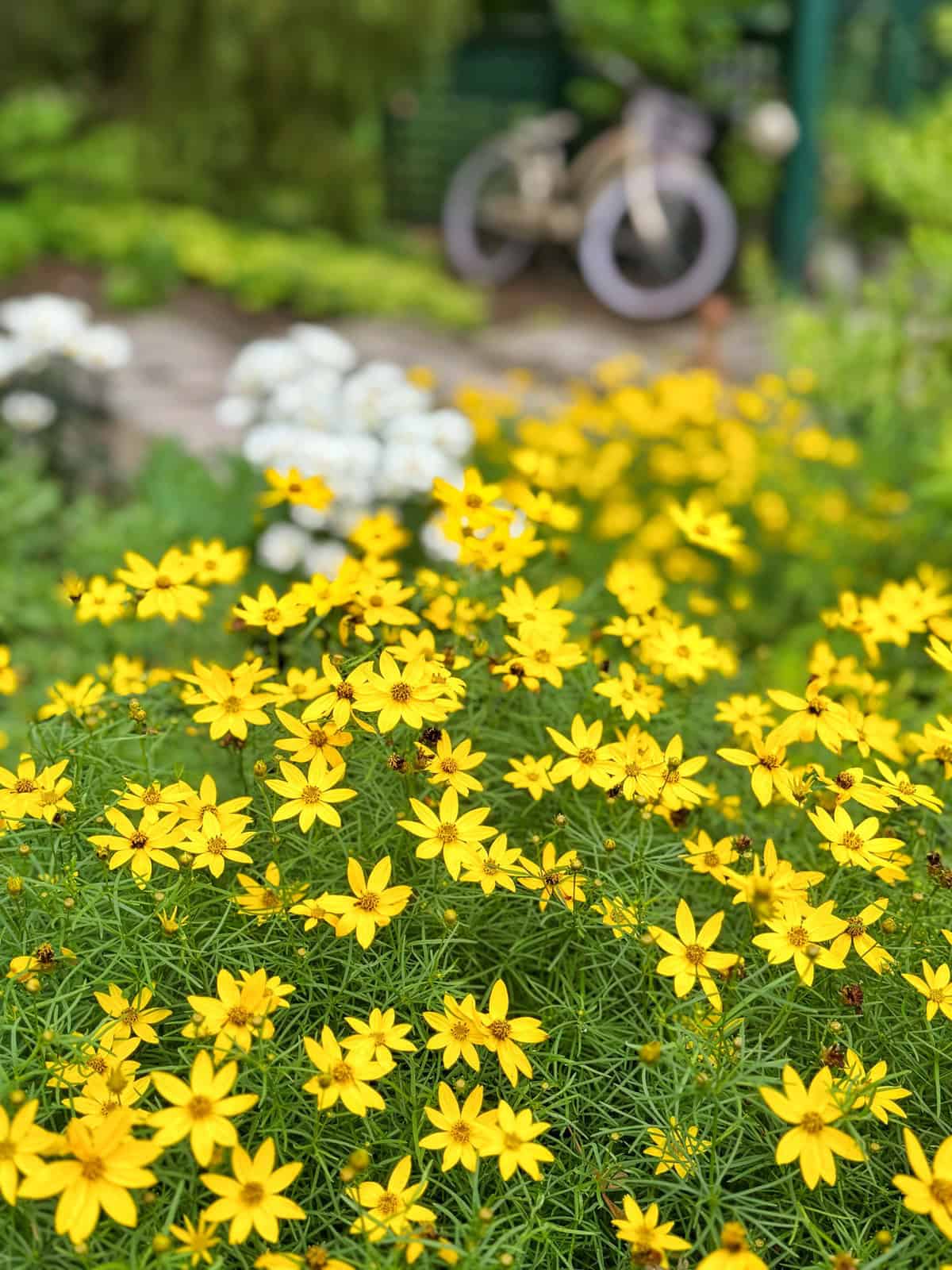
Coreopsis
Hardiness Zone: 4–9
Light: Full sun
Why It Pairs Well With Lavender:
Coreopsis adds bright color and long-lasting blooms to lavender plantings while thriving in the same sunny, well-drained conditions. The cheerful yellow and gold flowers create beautiful contrast against lavender’s cool purple blooms, helping both plants stand out in the landscape.
Extra Notes:
Many coreopsis varieties bloom for weeks, helping extend color in the garden after lavender’s first flush begins to fade. Their easy-going nature and pollinator-friendly flowers make them a great addition to cottage gardens, pollinator gardens, and sunny perennial borders.
To learn more about growing coreopsis, please visit my complete guide to growing coreopsis here.
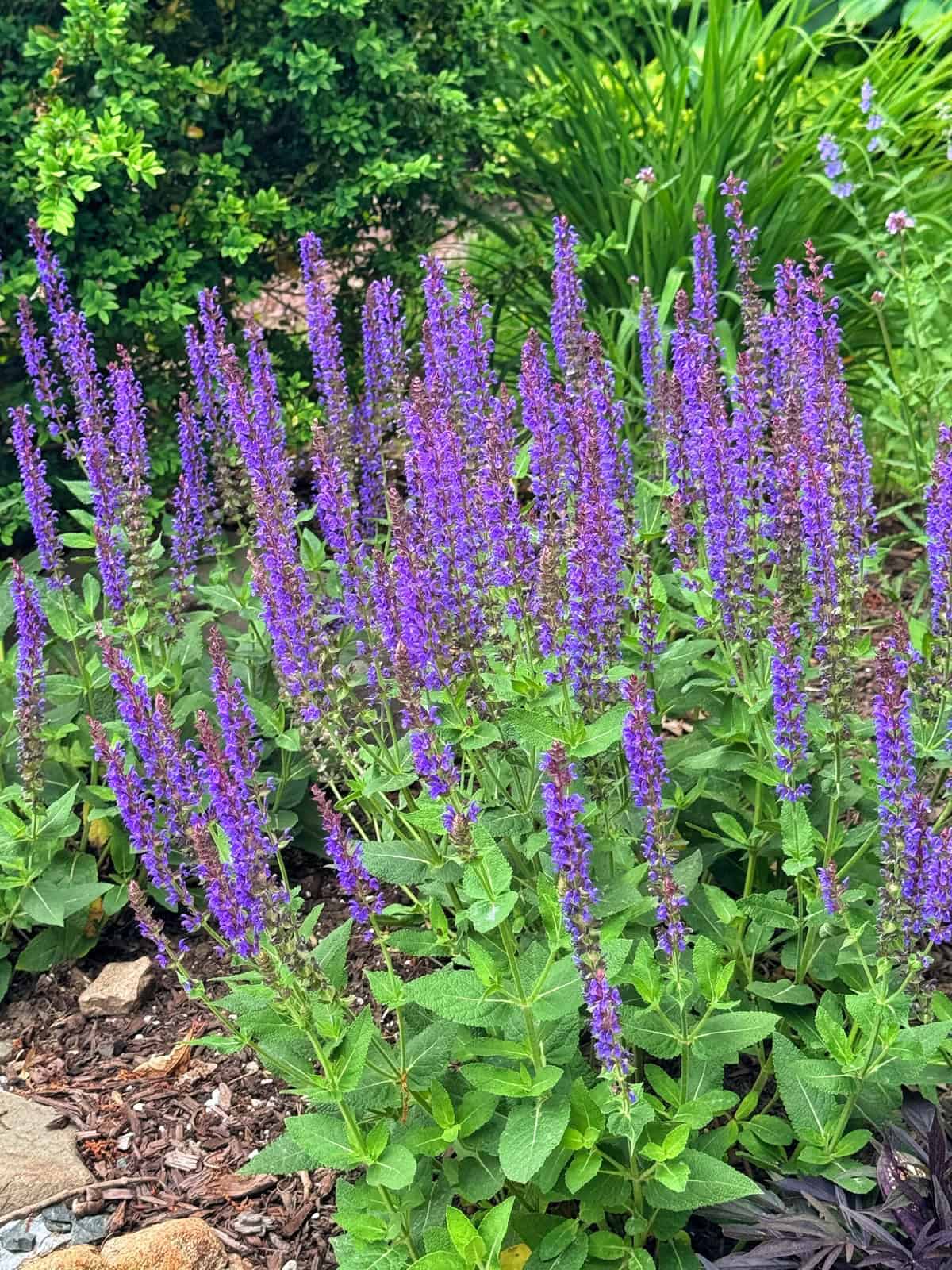
Perennial Salvia
Hardiness Zone: 4–10 (depending on variety)
Light: Full sun
Why It Pairs Well With Lavender:
Perennial salvia is one of the best companions for lavender because both plants thrive in full sun, well-drained soil, and relatively dry conditions once established. The upright flower spikes create a natural visual connection, while the long bloom period helps extend color in the garden beyond lavender’s peak flowering season. Both plants are also highly attractive to bees, butterflies, and other pollinators.
Extra Notes:
I love using perennial salvia with lavender in cottage gardens and pollinator plantings because they provide months of color with very little maintenance. Many perennial salvias can be trimmed after flowering to encourage another flush of blooms, helping keep the garden looking fresh throughout the summer.
To learn more about growing perennial salvia, please visit my complete guide to growing salvia here.
Structural Plants for Contrast and Seasonal Interest
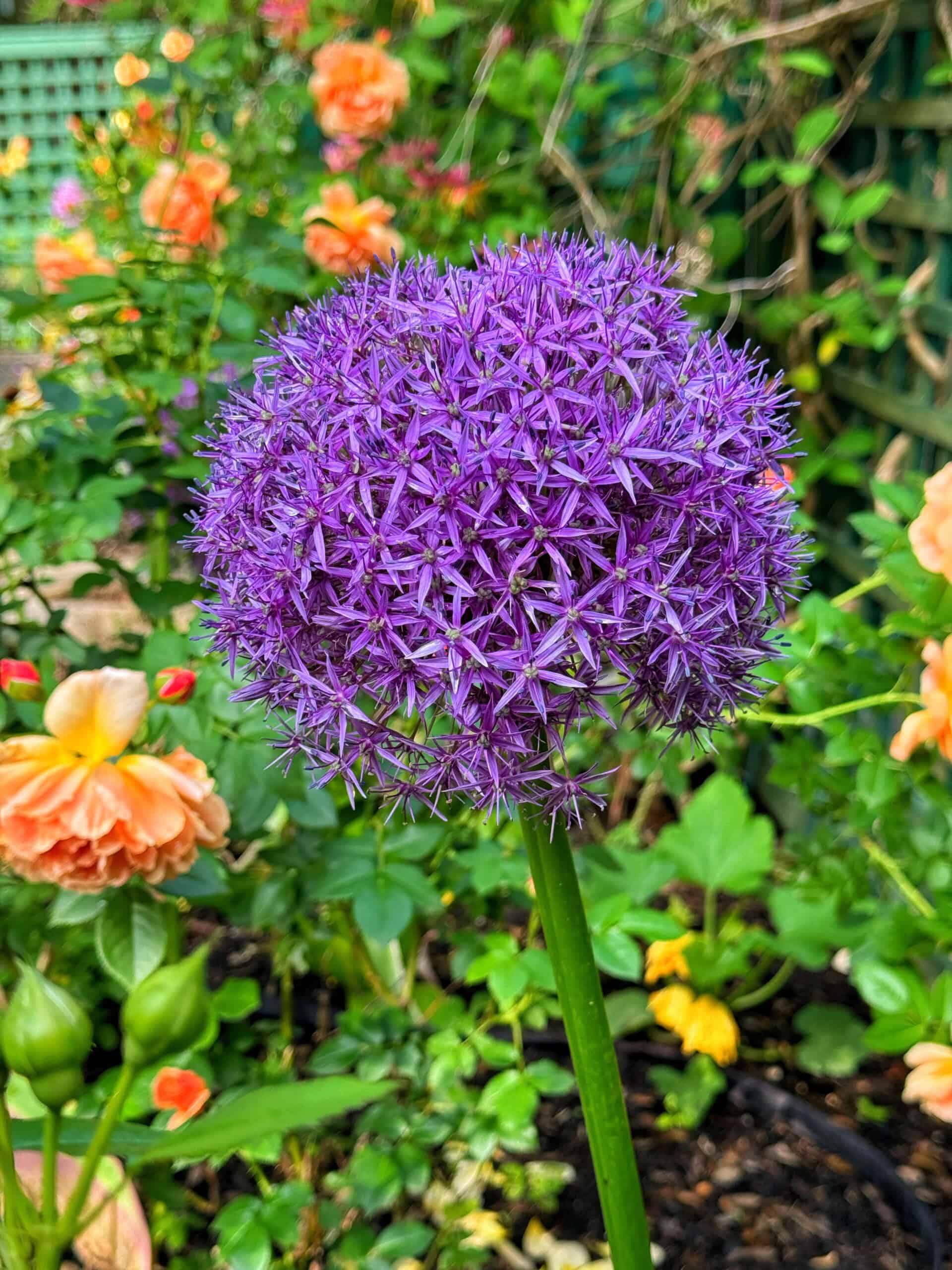
Alliums (Ornamental Onions, Garlic, and Chives)
Hardiness Zone: 3–9
Light: Full sun
Why It Pairs Well With Lavender:
Alliums help deter pests like aphids and onion flies while adding strong vertical interest. Their globe-shaped blooms contrast beautifully with lavender’s softer flower spikes.
Extra Notes:
I like to tuck alliums throughout lavender plantings to add structure in spring and early summer. They bring a different shape that keeps the garden visually interesting.
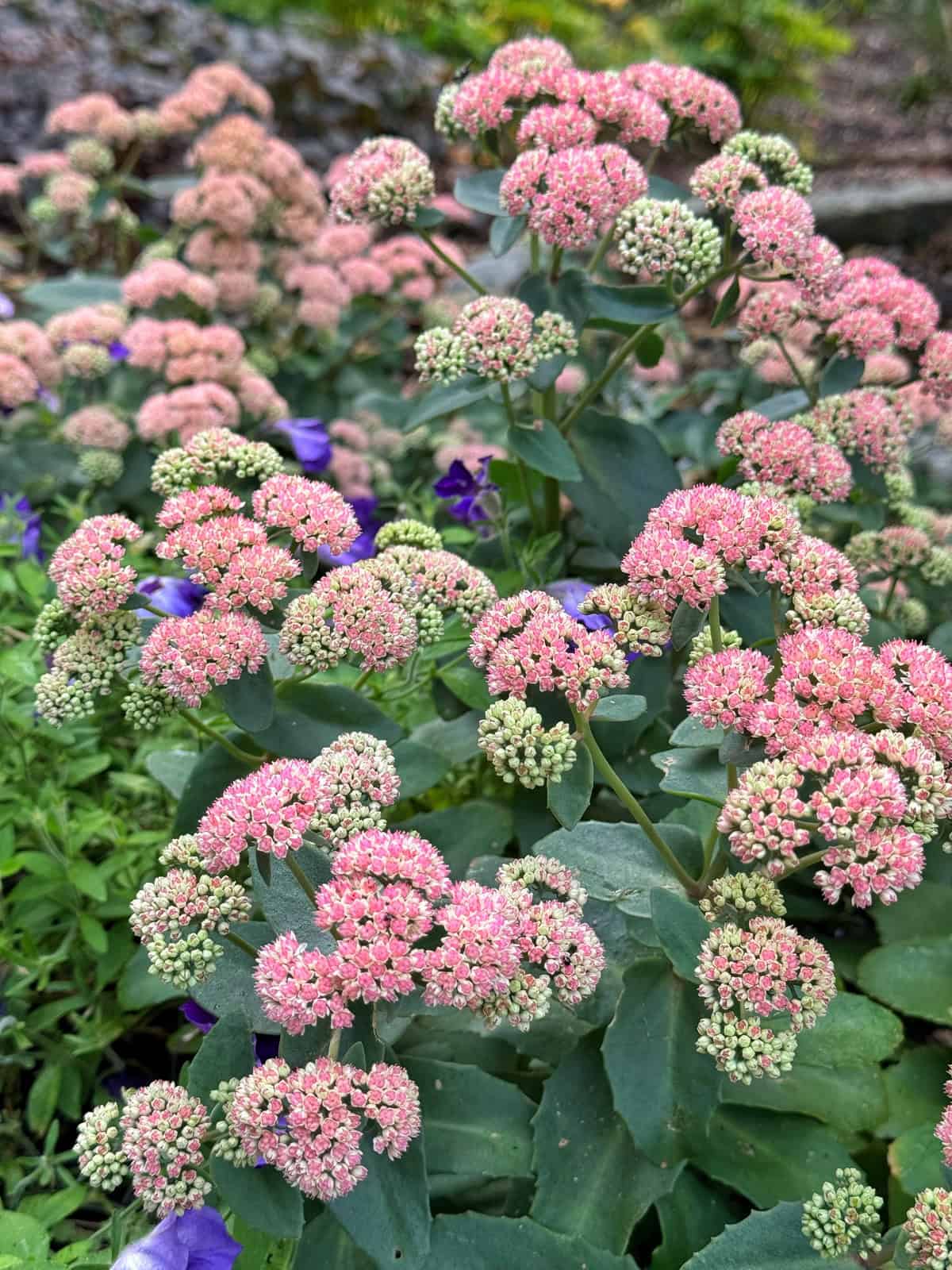
Sedum (Stonecrop)
Hardiness Zone: 3–9
Light: Full sun
Why It Pairs Well With Lavender:
Sedum thrives in dry, well-drained soil and requires very little maintenance. Its succulent foliage provides a unique texture that contrasts nicely with lavender’s finer leaves.
Extra Notes:
Sedum is a great option for extending seasonal interest, especially into late summer and fall when other plants begin to fade.
I love growing sedums in the beds here in my zone 6b garden. One of my favorite varieties is sedum autumn joy. To learn more about how I grow it in my flower gardens, please visit my complete guide to growing sedum autumn joy here.
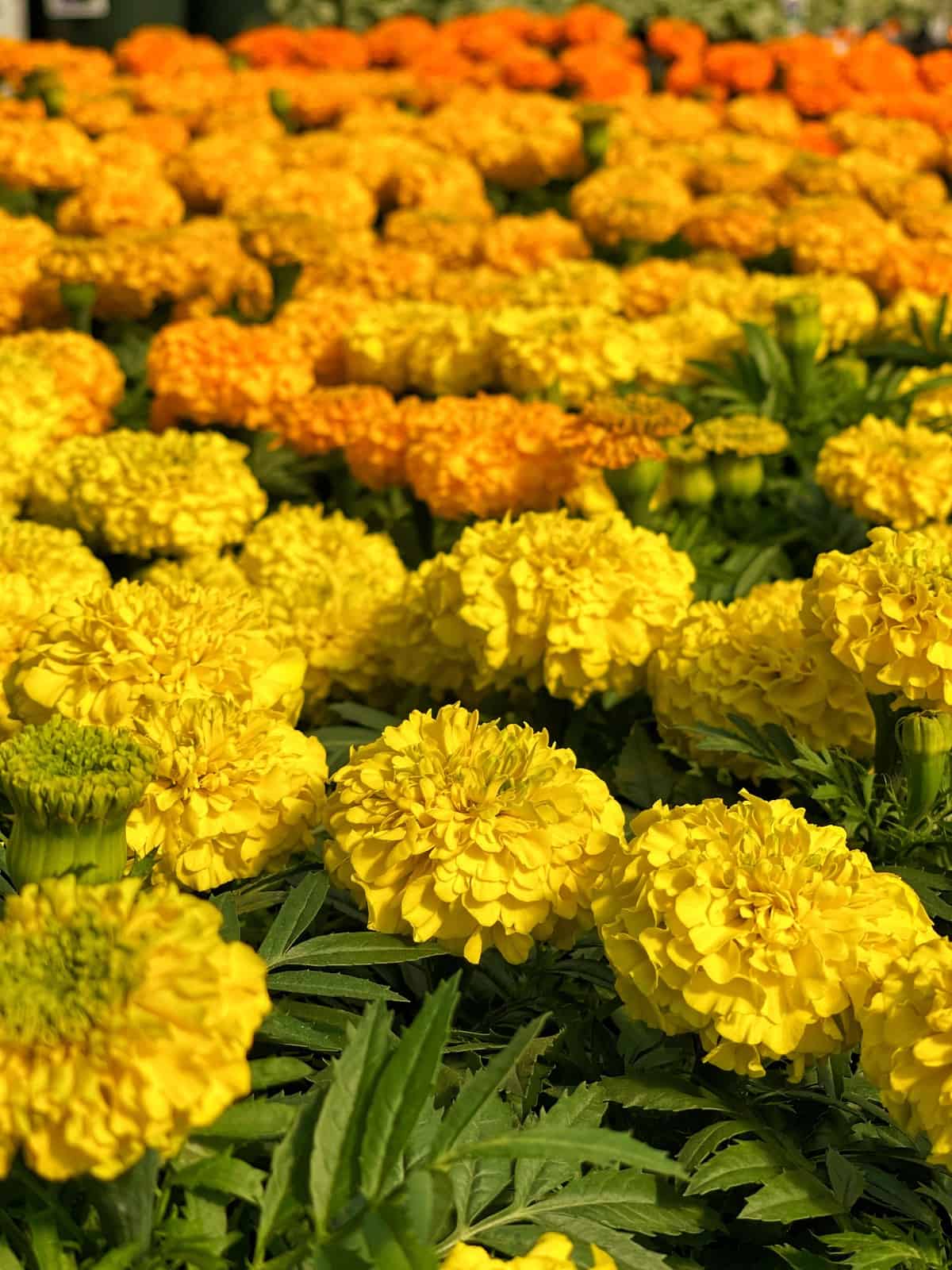
Seasonal Annuals to Pair With Lavender
While lavender is most often paired with perennials and herbs, you can also mix in a few annuals for seasonal color and variety.
The key is to choose plants that can tolerate full sun and avoid overwatering so you don’t create conditions that lavender won’t tolerate.
Some annuals I’ve grown successfully with lavender include:
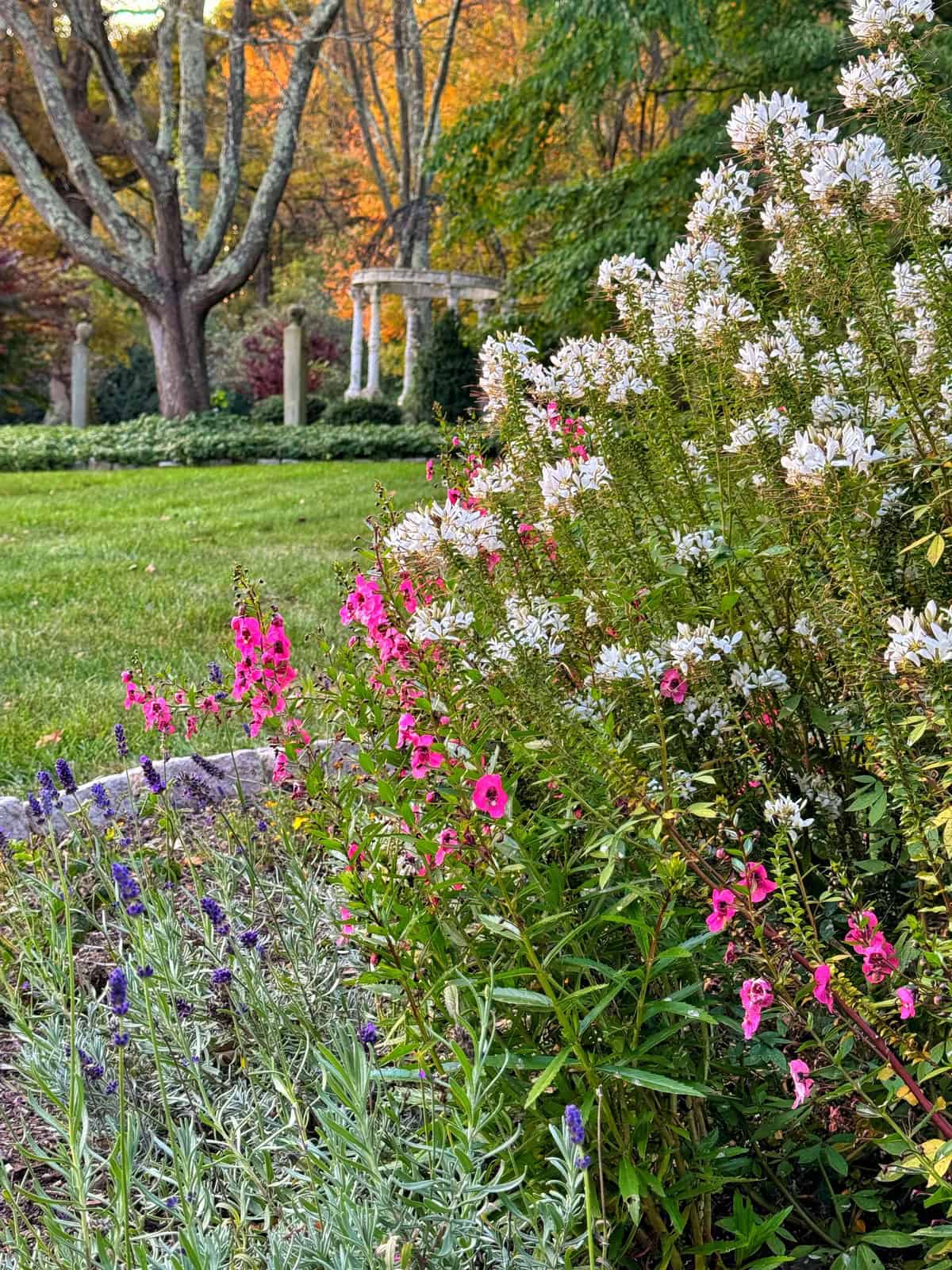
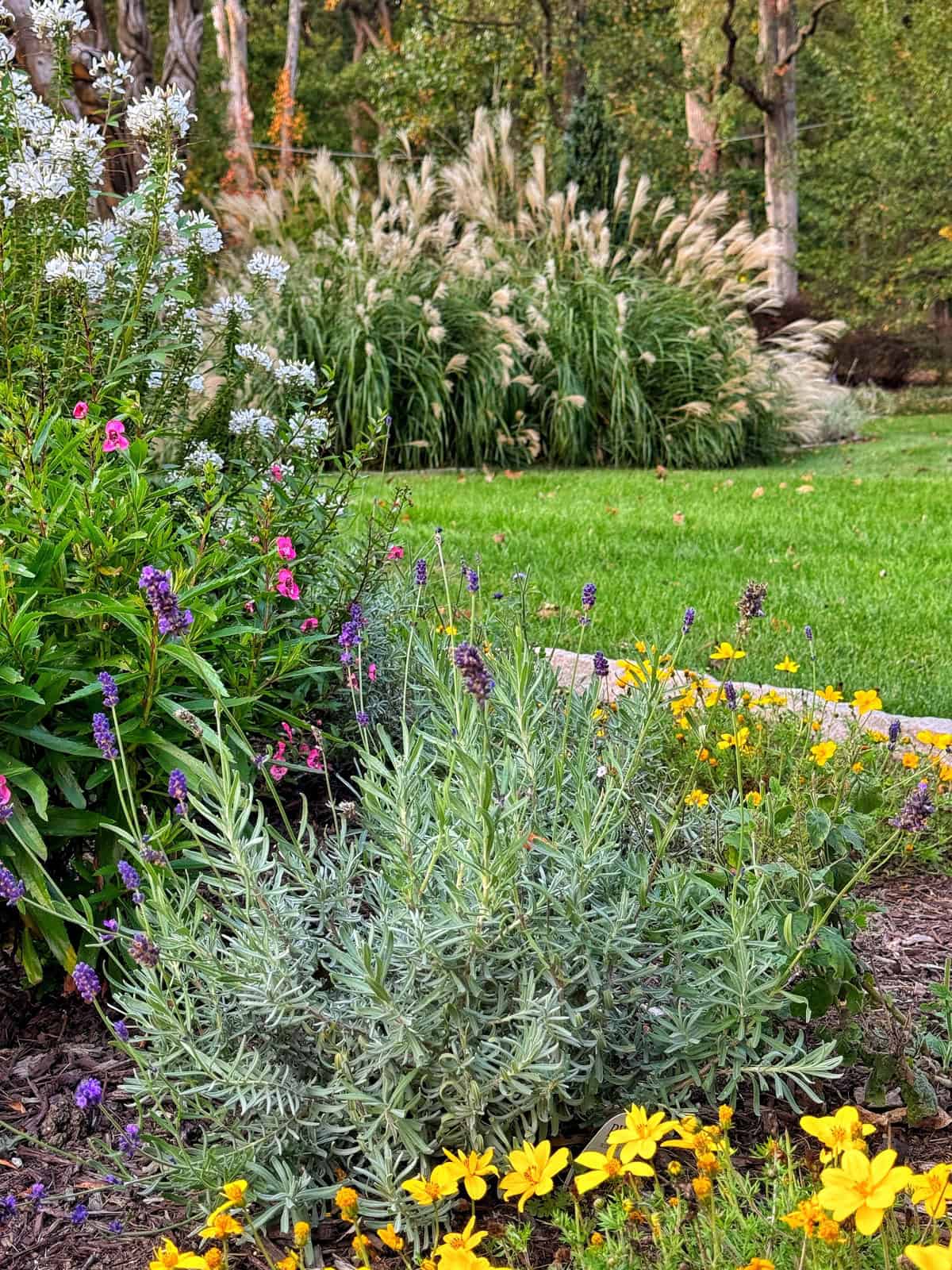
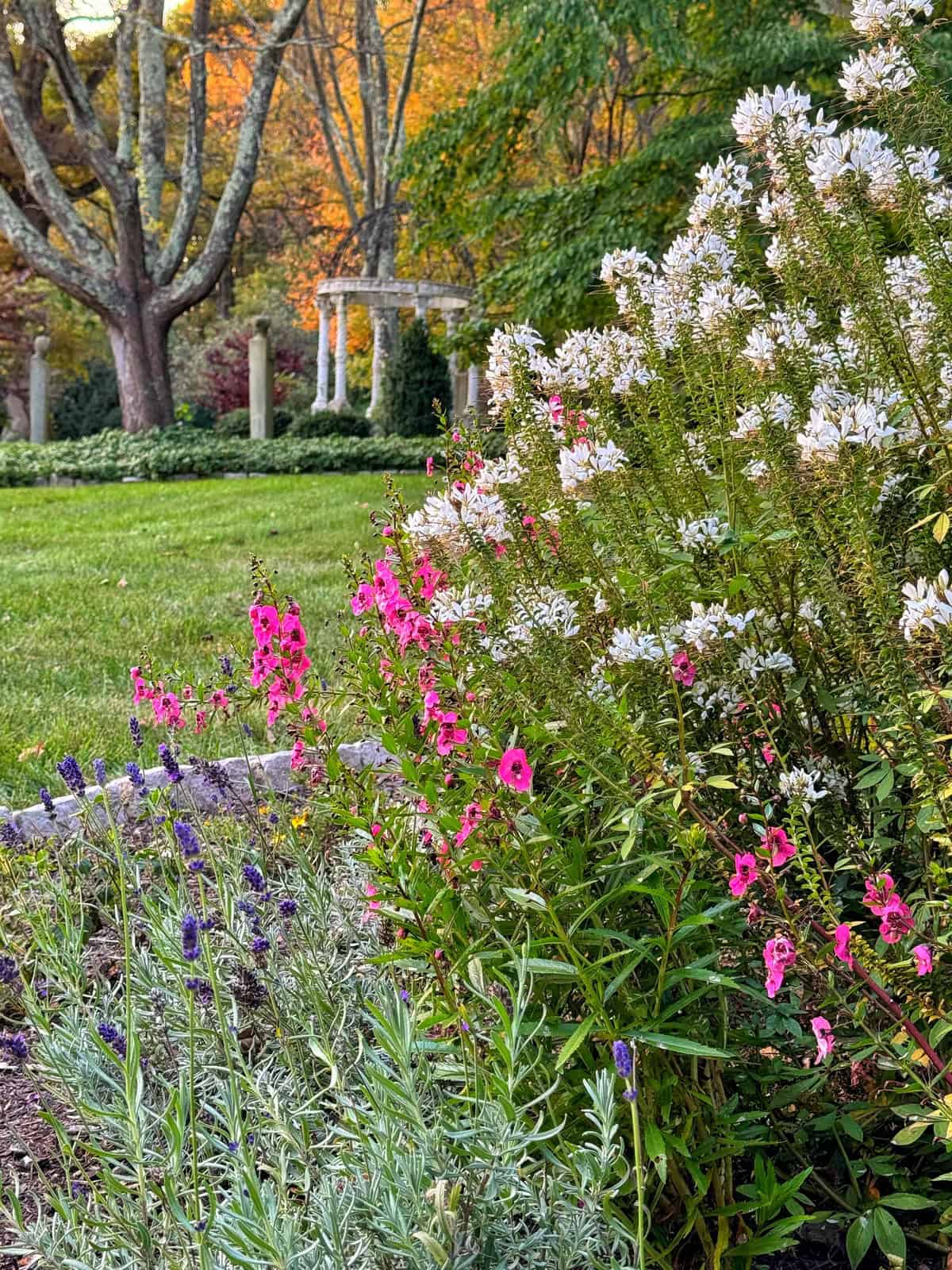
- Angelonia, which handles heat well and adds upright color similar to lavender
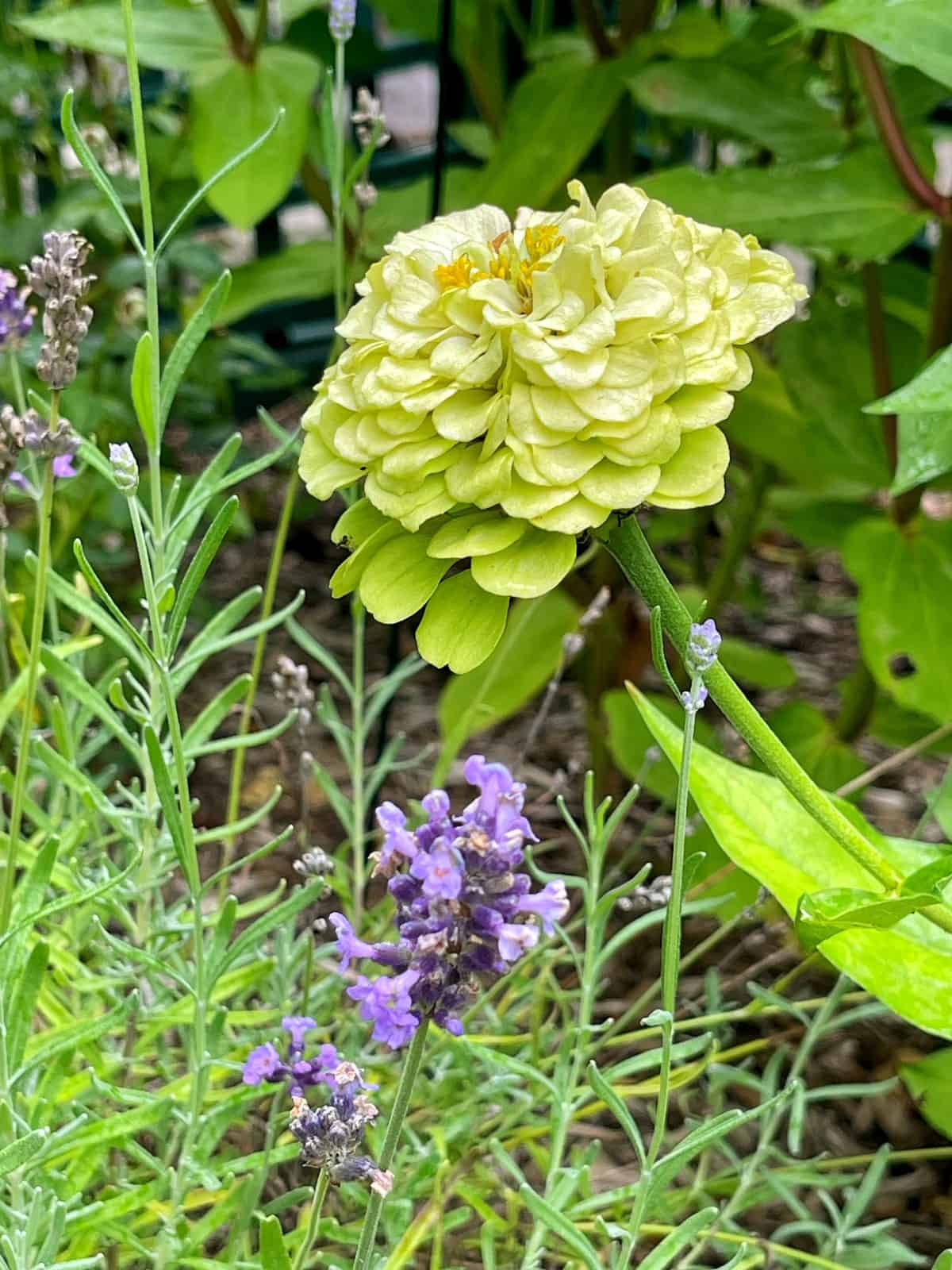
- Zinnias, which bring bright, cheerful blooms and attract pollinators
- Cleome, which adds height and an airy, informal look to the garden
- Bidens, which works well in containers or drier garden spots when watering is managed carefully
- Marigolds, which add season-long color and create beautiful contrast against lavender’s purple blooms.
These combinations can work beautifully, especially in newer garden beds or containers where you’re looking to fill space while perennials are still establishing.
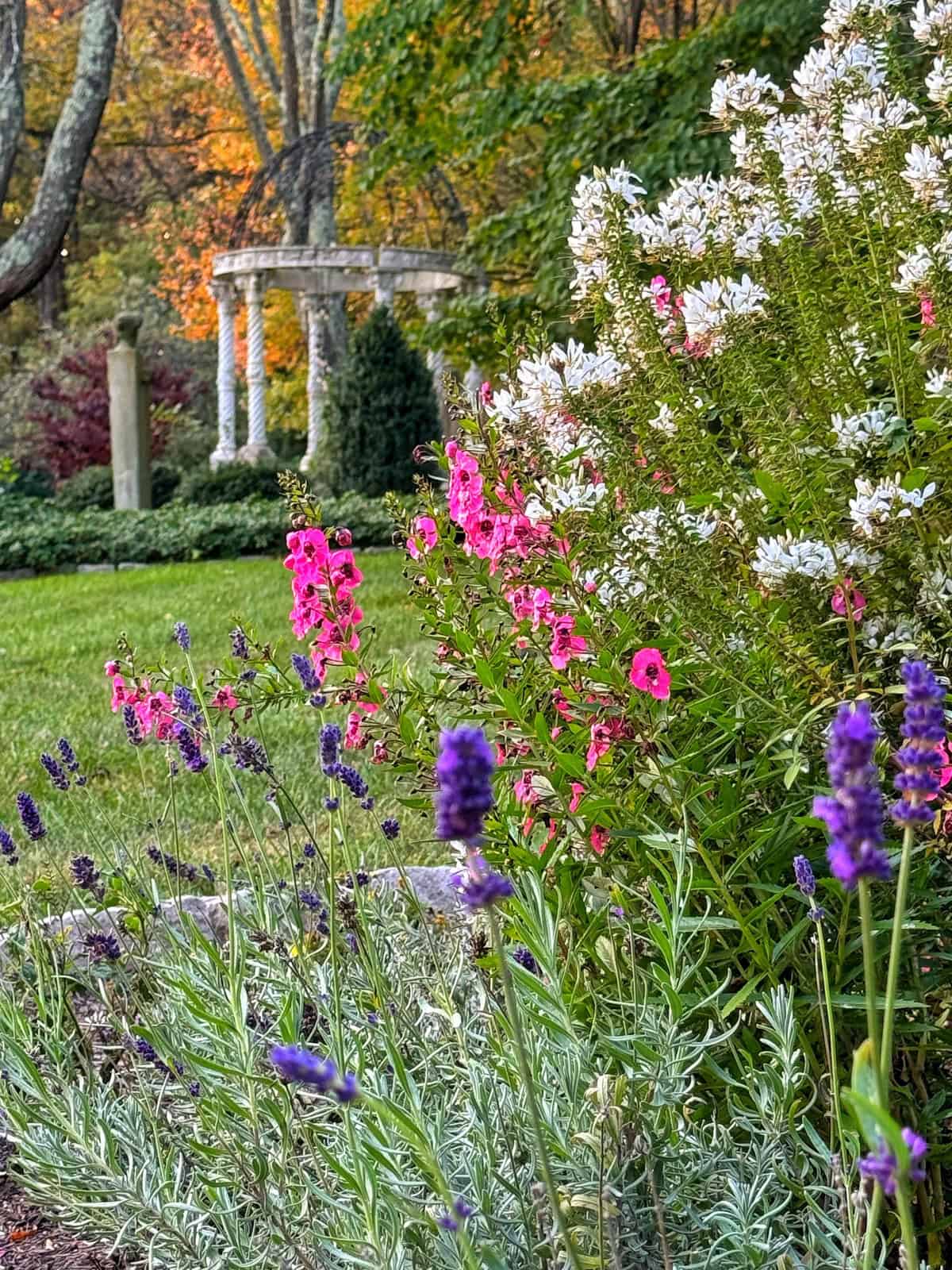
I planted this exact combination in my formal garden a few years ago to see how deer resistant it would be. Out of everything I grew, the only plant that had any noticeable nibbling was the angelonia, and even then, the damage was minimal.
To see more of my favorite deer resistant planting ideas, please visit my deer resistant flowers list here.

My Favorite Lavender Plant Combinations
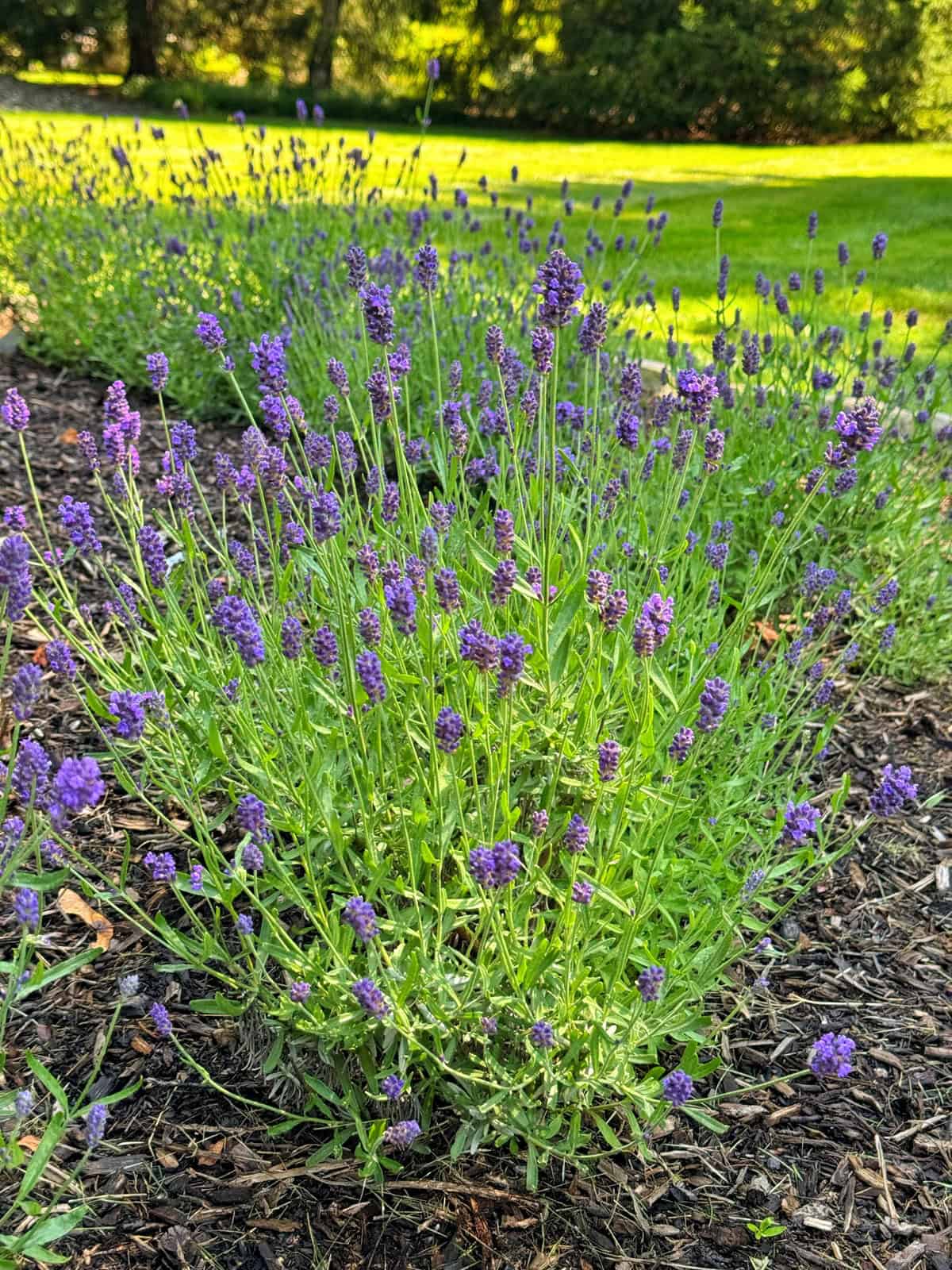
One of the things I love most about growing lavender is how easy it is to build beautiful combinations around it. Because it pairs so well with other sun-loving, drought-tolerant plants, you can create a garden that feels full and layered without adding extra maintenance.
Over the years, I’ve experimented with different plant pairings, and a few combinations consistently stand out in both performance and overall look.
Lavender and Roses for a Classic Cottage Garden
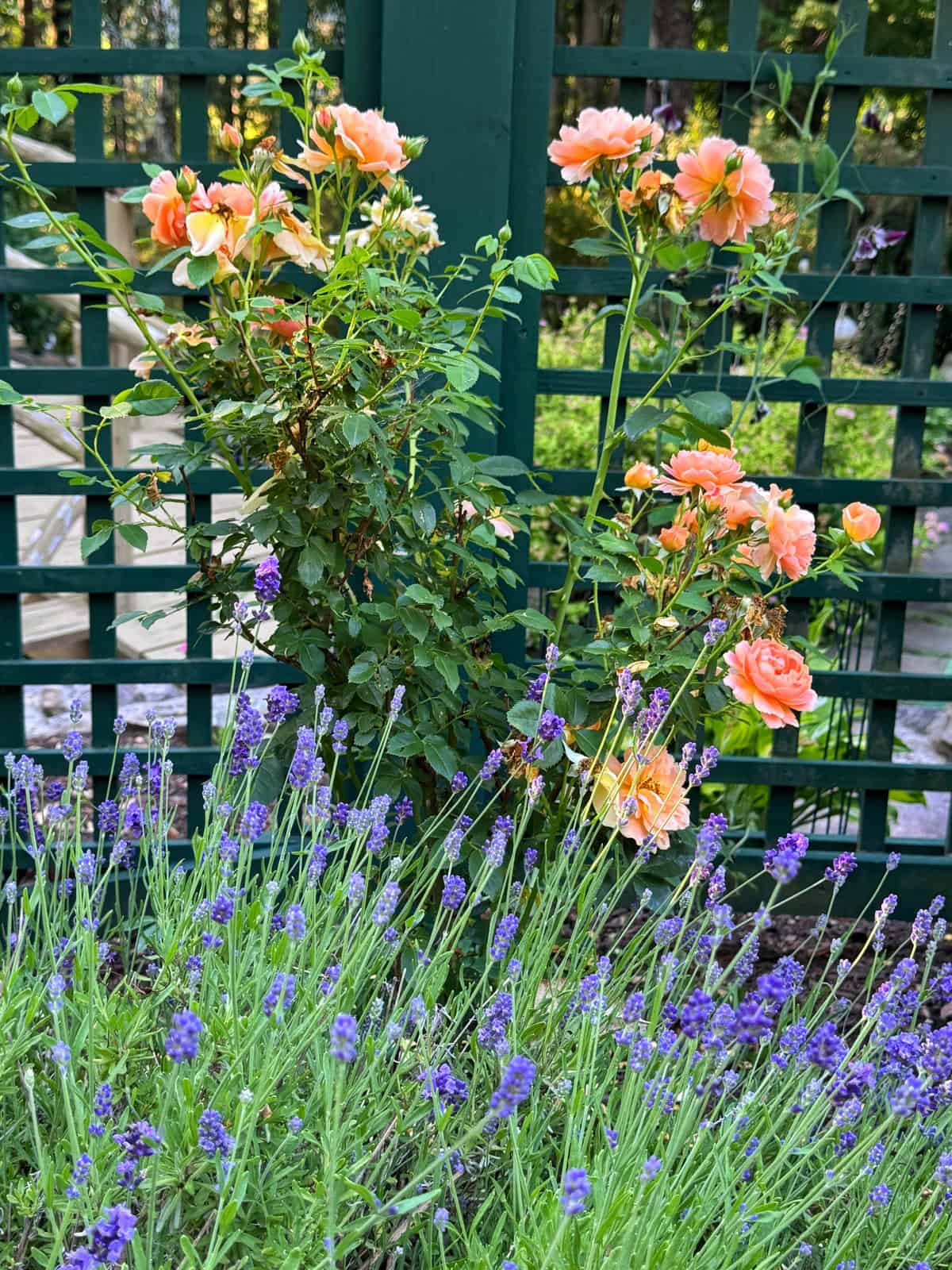
This is one of my favorite combinations and one I come back to again and again. The soft structure of lavender paired with the fuller blooms of roses creates that relaxed, romantic cottage garden feel.
I like to plant lavender along the front of rose beds or along pathways. It helps soften the look of the roses while adding fragrance right where you can enjoy it most.
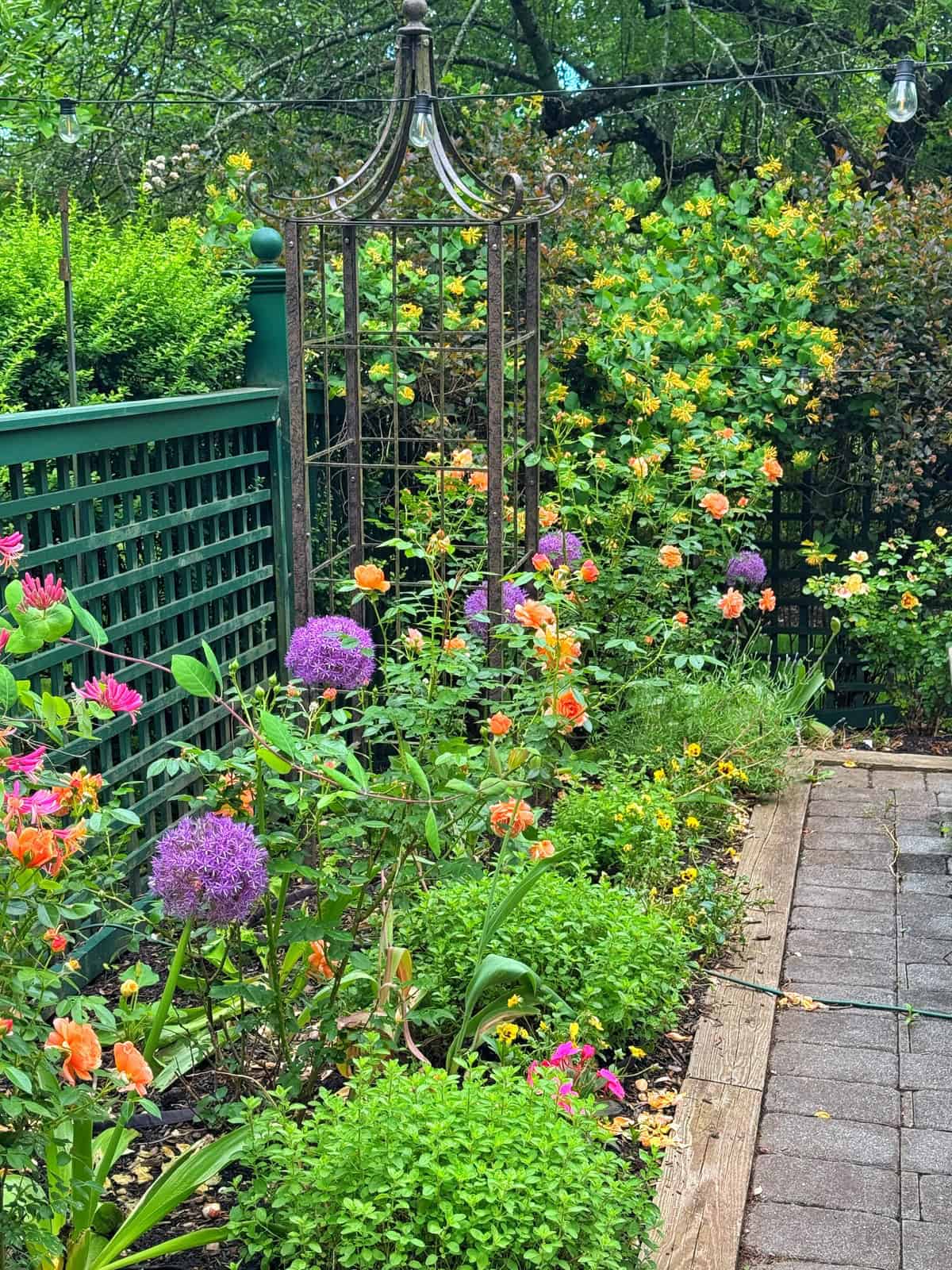
In my potager garden, lavender is paired with ‘At Last’ roses and globemaster alliums. The peach and purple combination is truly striking!
Lavender, Coneflower, and Yarrow for a Pollinator Garden
If you’re looking to attract bees and butterflies, this combination works beautifully.
All three plants thrive in full sun and well-drained soil, and their bloom times overlap to provide continuous color throughout the summer. The mix of flower shapes and textures also creates a natural, meadow-like look that feels effortless.

Lavender and Catmint for Long-Lasting Color
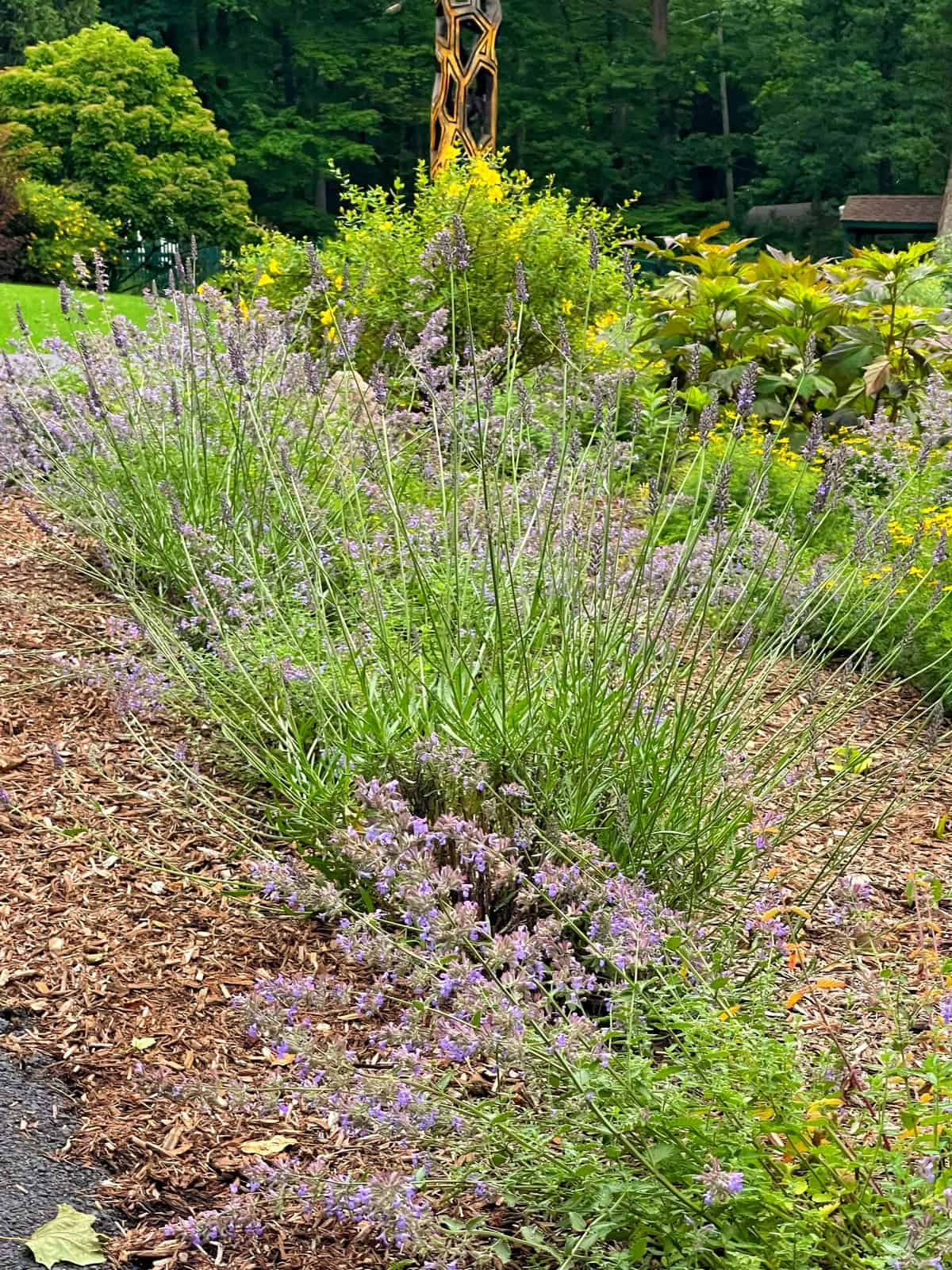
Lavender and catmint are a great pairing if you want extended blooms and a soft, flowing look.
Catmint tends to bloom longer than lavender, so it helps fill in gaps once lavender starts to fade. The similar color tones create a cohesive look without feeling too uniform.
Lavender and Herbs for a Functional Garden
Pairing lavender with herbs like thyme, sage, and oregano creates a planting area that’s both beautiful and useful.
These plants all prefer the same dry, sunny conditions, so they grow well together without needing extra care. I love this combination near pathways or outdoor seating areas where you can brush against the plants and enjoy their fragrance.
Lavender and Sedum for Late-Season Interest
For a garden that carries through into late summer and fall, I like pairing lavender with sedum.
Lavender provides early to mid-season color, while sedum picks up later in the season. This helps keep the garden looking full even as other plants start to fade.
What Not to Plant With Lavender
While lavender pairs beautifully with many plants, it’s just as important to know what not to plant nearby. The biggest issue usually comes down to mismatched growing conditions.
Lavender thrives in full sun, dry conditions, and well-drained soil. When it’s planted next to plants that need frequent watering or rich, moisture-retentive soil, it often struggles.
Here are a few types of plants to avoid pairing with lavender.
Moisture-Loving Plants
Plants that require consistently moist soil are generally not good companions for lavender.
Lavender performs best in well-drained soil and is much more tolerant of dry conditions than wet ones. When planted near flowers that need frequent watering, the soil can stay too moist for too long, increasing the risk of root and crown rot.
As a general rule, plants that require regular irrigation and consistently moist soil are usually better planted in a different area of the garden than lavender.
Examples include:
- Hydrangeas
- Balloon Flower
- Tall Phlox
- Bee Balm
While these plants can be beautiful additions to the landscape, they typically perform best in conditions that are much wetter than lavender prefers.
Shade-Loving Plants
Lavender needs at least 6–8 hours of direct sunlight each day, so it won’t perform well when planted near shade-loving plants.
Avoid pairing with:
- Hostas
- Ferns
- Astilbes
- Impatiens
- Begonias
- Caladiums
Mixing sun-loving and shade-loving plants in the same space often leads to one or both struggling.
Plants That Require Rich, Fertile Soil
Lavender actually prefers lean soil and doesn’t need heavy fertilizing. Plants that require nutrient-rich soil or frequent feeding can create an imbalance, leading to excessive foliage growth and fewer blooms in lavender.
Plants That Spread Aggressively
Some fast-spreading plants can crowd out lavender and reduce airflow, which increases the risk of disease.
Avoid planting lavender near aggressive spreaders that:
- compete for space
- trap moisture around the base
- reduce air circulation
Design Tips for Planting Lavender With Companion Plants
Once you’ve chosen the right companion plants, the next step is arranging them in a way that looks natural, balanced, and easy to maintain. Lavender works beautifully as a foundation plant in the garden, and a few simple design principles can make a big difference in how everything comes together.
Use Lavender as a Structural Anchor
Lavender has a naturally mounded shape with upright flower spikes, which makes it a great plant to anchor a garden bed.
I like to plant lavender in small groupings or repeat it throughout a bed to create rhythm and consistency. This helps tie everything together and gives the garden a more cohesive look.
Layer Plants by Height
To create a full, layered look, arrange plants by height:
- Taller plants like roses and coneflowers toward the back
- Medium-height plants like lavender and catmint in the middle
- Lower-growing herbs like thyme and oregano near the front
This creates depth and ensures every plant gets the sunlight it needs.
Focus on Texture and Contrast
Lavender pairs especially well with plants that offer different shapes and textures.
Mix:
- Soft, airy plants like yarrow
- Bold blooms like coneflowers and roses
- Compact or trailing plants like thyme
This contrast keeps the garden visually interesting without feeling busy.
Repeat Plant Groupings
Repeating the same plants throughout a garden bed helps create a more intentional and polished design.
Instead of planting one of everything, try grouping plants in threes or fives and repeating those groupings across the space. This makes the garden feel more cohesive and easier on the eye.
Give Plants Room for Airflow
Lavender needs good airflow to stay healthy, especially in humid conditions.
Avoid overcrowding, and make sure there’s enough space between plants for air to move freely. This helps prevent disease and keeps plants looking their best over time.
Stick With Plants That Share the Same Needs
This is the most important design tip of all.
When all of your plants prefer full sun, well-drained soil, and lower water needs, your garden becomes much easier to maintain. You won’t have to constantly adjust watering or worry about one plant struggling while another thrives.
In my garden, sticking to plants with similar needs has made everything simpler and more enjoyable to care for.
To learn more about how to design a perennial garden with lavender, please visit my perennial garden design guide here.

Plan Your Garden With Confidence
If you’re drawn to planting combinations like these, you’re already thinking about your garden in a more intentional way. And that’s where things really start to come together.
In The Bricks ‘n Blooms Guide to a Beautiful and Easy-Care Flower Garden, I walk through how I choose plants that not only look good together, but actually grow well together. From selecting the right perennials to designing beds that work with your conditions, it’s all about creating a garden that feels manageable and rewarding instead of overwhelming.
And once you start experimenting with combinations like lavender, coneflowers, herbs, and more, keeping track of what works makes a big difference. The Bricks ‘n Blooms Beautiful and Easy-Care Flower Garden Planner helps you map out your plant pairings, track performance throughout the season, and refine your garden year after year.
Companion planting is one of the easiest ways to build a garden that works with you instead of against you, and having a plan in place makes it even more successful.
Final Thoughts on Companion Planting With Lavender
Companion planting with lavender is one of the simplest ways to create a garden that feels both beautiful and easy to care for. When you focus on pairing plants with similar needs, everything works together more naturally, and you spend less time troubleshooting and more time enjoying your space.
In my own garden, lavender has become one of those anchor plants I rely on year after year. Once I started planting it alongside other sun-loving, drought-tolerant perennials and herbs, the entire garden became more cohesive and much easier to maintain. It’s a great reminder that good plant combinations aren’t just about how things look, but how they grow together over time.
If you’re just getting started or want to make sure your plants are set up for success, be sure to read my complete guide to growing lavender. It walks you through everything from planting and care to pruning and harvesting so you can build a strong foundation.
And once your plants are established, don’t forget to harvest a few stems to enjoy indoors. It’s one of the easiest ways to bring your garden inside, and you can learn exactly how I harvest lavender for the best results here.
When you choose the right companions and give them the conditions they need, lavender becomes more than just a single plant. It becomes part of a garden that works together beautifully.
Thank you for visiting the blog today!
Enjoy your day! xo

Originally Published . Last Updated .
