
Raised Bed Gardening for Beginners (What Worked, What Didn’t, and What I’d Do Again)

Raised bed gardening for beginners with tips on setup, soil, planting, and what’s worked in my gardens for over 25 years.
Raised bed gardening is one of the easiest ways to start a garden, but like anything else, how well it works really depends on how you set it up and what you grow in it. I’ve used raised beds for years in different ways, from simple galvanized beds in my former home to the custom-built beds I use now in my potager garden. And along the way, I’ve learned what actually makes them worth it, what I would do differently, and how to make them work long-term.
Over more than 25 years of gardening, I’ve grown in everything from in-ground beds to containers to raised beds, and each has its place. One of the biggest reasons I continue to use raised beds is the control they give me over soil, drainage, and overall growing conditions, especially for vegetables, herbs, and cut flowers. If you’re still figuring out what you want to grow, I break that down step-by-step in my flower gardening for beginners guide, along with my beginner guides for growing vegetables and herbs, because choosing the right plants for your space makes all the difference.
In this post, I’m sharing how I use raised beds in my own garden, what’s worked well over time, and what you should know before starting so you can build a setup that actually works for you.
(Posts on stacyling.com may contain affiliate links. Click HERE for full disclosure.)

Why I Use Raised Beds in My Garden
There are a lot of ways to garden, but raised beds have become one of my go-to methods for a few key reasons.
First, you have much more control over your soil. Instead of trying to work with whatever you have in the ground, you can build the soil from the start so it drains well, holds moisture appropriately, and supports healthy plant growth.
They’re also much easier to work in. You’re not down at ground level, which makes planting, weeding, and harvesting far more manageable, especially as the season goes on.
And if you deal with critters, raised beds can help with that too. When we built ours, we added a layer of chicken wire along the bottom so animals can’t burrow up from underneath. That alone has made a big difference in protecting what I grow.

How My Raised Bed Gardening Has Evolved Over Time
Like most things in my garden, my approach to raised beds has evolved.
In my former home, I used galvanized raised beds, and they worked really well from a functional standpoint. They were easy to set up, durable, and a great option if you want something simple and ready to go.
If you want to see exactly how I set those up, you can read more about my galvanized raised garden beds here.
When we moved to this home, I initially set those same beds up in what is now my potager garden, which had previously been used as a basketball court by the former homeowners.
And while they worked, something felt off.
The look didn’t match the space or the overall feel I wanted for that garden. It’s something I didn’t think as much about in my earlier years, but over time I’ve come to care just as much about how a garden feels as how it functions.
So the following growing season, my husband and I decided to build new raised beds that better fit the space.
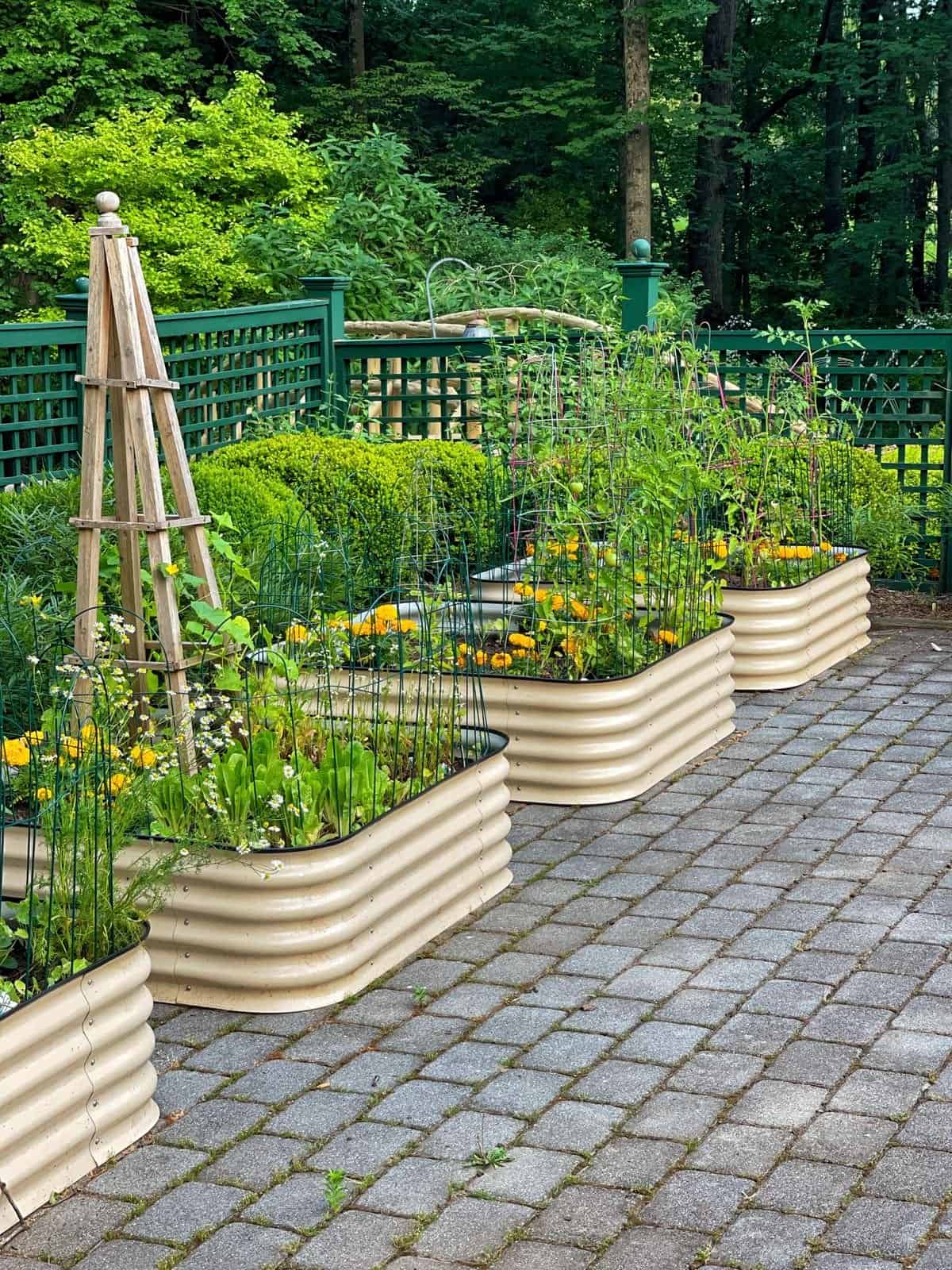
My Current Raised Bed Setup (What I Use Now)
The beds we built are about 22 inches high, which has made a huge difference in how comfortable they are to work in.
My husband also added a ledge around the top so I can sit while I’m gardening. It’s one of those small details that ends up making a big impact, especially when you’re spending a lot of time out there.
We also designed them with a slight lip along the edge, which helps make it more difficult for animals to climb in.
This garden has become one of my favorite spaces. It’s where I grow a mix of vegetables, herbs, and cut flowers all together in a more structured layout.
That mix has worked really well for me, but getting the layout and plant choices right is what makes a raised bed garden feel productive instead of crowded.
So if you’re just getting started, this is usually the part that feels the most overwhelming.
If you’re just getting started with any of those, you can learn more in my:
- vegetable gardening for beginners guide
- herb gardening for beginners guide
- and my cut flower gardening posts
Raised beds work beautifully for all of them because you can tailor the soil and conditions to what you’re growing.


What It Actually Takes to Fill Raised Beds
This is the part that most people don’t talk about enough.
Filling raised beds, especially larger or taller ones, takes a lot more material than you think. And if you’re buying all new soil and compost, it can get expensive quickly.
When we built ours, we used a combination of:
- Twigs and small branches
- Leaf mold
- Compost
- Raised bed soil
Layering in those organic materials at the bottom helps reduce how much soil you need to buy while also building healthy soil over time as everything breaks down.
That said, you still need a good amount of quality soil on top where your plants will actually grow.
And one thing to expect is settling.
During the first year or two, the soil level will drop as all that organic matter decomposes. I top mine off each season with additional compost and raised bed soil to keep everything at the right level.
If you’d like to save money purchasing compost, it is so easy to make your own. Please visit my how to make a compost pile guide here to learn more.

Raised Beds vs In-Ground Gardening
Since I’ve gardened both ways for years, this is a question I get a lot.
Raised beds are a great option if you want:
- Better control over soil
- Improved drainage
- Easier access for planting and maintenance
In-ground gardening can be a better choice if:
- You have good native soil
- You’re working with larger spaces
- You want a more natural, less structured look
There isn’t a right or wrong answer. It really comes down to your space, your goals, and how you want to garden.
If you’re still figuring that out, my flower gardening for beginners guide walks through how to choose what works best for your garden overall.


What I Would Do Again (and What I’d Do Differently)
Looking back, there are a few things I would absolutely do again.
I would still use raised beds because of how much control and ease they provide.
I would also still build them at a comfortable height. That alone has made gardening more enjoyable and sustainable for me long-term.
What I would do differently is think more about how the beds fit into the overall design of the space from the beginning.
The galvanized beds worked well in my former garden, but they didn’t align with the look I ultimately wanted here. That’s something I pay much closer attention to now. Because they are great beds but may not match your garden aesthetic long term.
And I would plan more intentionally for filling them, knowing how much material they really take and how much settling happens over time. I couldn’t believe how much and how often we filled these beds the first few years of using them.

Are Raised Beds Right for You?
If you’re new to gardening, raised beds can be a great place to start.
They’re especially helpful if:
- Your native soil isn’t ideal
- You want a more controlled growing environment
- You prefer a more structured layout
They also work well across different types of gardens, whether you’re growing vegetables, herbs, or flowers.
If you’re still in the early stages of planning your garden, I’d recommend starting with:
- my flower gardening for beginners guide
- my vegetable gardening for beginners guide
- and my herb gardening for beginners guide
Getting clear on what you want to grow and what your space can support will make every decision after that much easier.

How to Start Raised Bed Gardening (Simple First Steps)
If you’re new to raised bed gardening, don’t overcomplicate it. Start with a simple setup and build from there.
Here’s what I recommend:
- Choose a location that gets at least 6–8 hours of sun and is close to a water source.
- Start with one or two beds instead of filling your whole yard
- Use a mix of quality raised bed soil and compost to fill them
- Grow a few easy plants first so you can learn what works
You don’t need to get everything perfect right away. In fact, you won’t. The best way to learn is by starting small, paying attention to what works in your garden, and adjusting as you go.

How to Plan Raised Beds That Actually Work Long Term
One of the reasons raised beds work so well is that they give you more control from the very beginning, but that can also make them feel a little overwhelming when you’re deciding what to plant and how to lay everything out.
If you find yourself second-guessing what to grow, how to combine it, or how to make the whole space feel cohesive, that’s exactly the feeling I wrote The Bricks ‘n Blooms Guide to a Beautiful and Easy-Care Flower Garden to fix. It walks you through plant selection, garden design, and my easy-care approach so you stop guessing and start growing with confidence. You can find it here.
And once your raised beds are planted, the next challenge is remembering what actually worked.
Because that’s the part most gardeners lose track of:
- what you planted where
- which varieties performed best
- how the soil settled over time
- what needed more compost, more space, or a different layout the following season
If you’ve ever made a mental note to remember something for next year and then completely forgotten it, that’s exactly what my Bricks ‘n Blooms Beautiful and Easy-Care Flower Garden Planner is designed to solve. It gives you a place to track bed layouts, plant performance, seasonal tasks, and the changes you want to make so your garden actually improves year after year instead of feeling like a fresh start every spring. Take a look here.
Final Thoughts
Raised bed gardening has been one of the most useful tools in my garden, but not because it’s trendy or easier across the board.
It works because it gives you control.
Over time, I’ve learned how to use that control to create better soil, grow healthier plants, and design a garden that not only produces well but also feels right in the space.
Like anything in gardening, it doesn’t have to be perfect from the start. You learn as you go, adjust along the way, and build on what works.
And when you do that, your garden gets better each season, and a lot easier to manage too.
Thank you for visiting the blog today!
Enjoy your day! xo


Originally Published .
