
How to Host the Best Clambake Ever

Learn how to host the best clambake ever with tips on preparation, menu ideas, and expert advice for a perfect seafood party. Make your event unforgettable!
Want to host the best clambake party ever? Get ready to gather your friends and family for an unforgettable seafood bash! There’s just something so fun and festive about a clambake, whether you’re planning a lively summer get-together or a cozy celebration when the weather turns cooler.
Traditionally, a clambake is a New England seafood feast featuring clams, lobster, shrimp, corn, and potatoes cooked together and shared with family and friends.
The great news? Hosting a clambake isn’t nearly as hard as it might seem! (Cause at one time I thought it was complicated too!) But I’ve hosted countless clambakes over the years, from fun summer parties to our cherised Christmas Eve clambake tradition, and they’ve always been huge hits with family and friends.
In this ultimate guide, you’ll find everything you need to know to create an amazing clambake party any time of the year. I’m sharing a super easy, go-to recipe, along with all my best tips for menu ideas, essential prep work, and setting the perfect atmosphere. Wait until you see how simple it is to host a clambake that will have your guests raving long after the last clam has been eaten!
(Posts on stacyling.com may contain affiliate links. Click HERE for full disclosure.)

What Is a Clambake?
Clambakes are a traditional New England seafood feast that typically includes lobster, shrimp, clams, mussels, corn on the cob, and potatoes cooked together and shared with family and friends. Traditionally, clambakes were held on the beach, where seafood was layered over hot stones and steamed beneath seaweed.
Today, most of us recreate that same experience at home using large stockpots outdoors or on the stovetop. While some people refer to these gatherings as a clam boil, I still think of them as clambakes because they capture the same flavors, atmosphere, and communal spirit of the traditional New England event.
One of the things I love most about hosting a clambake is that it feels special without being complicated. Whether I’m serving one during the summer or hosting our annual Christmas Eve clambake tradition, it always brings people together around great food and conversation.

What is Typically Served at a Clambake?
A classic clambake is a bounty of fresh, steamed delights! At its heart, you’ll find an abundance of seafood, commonly including lobster, clams, mussels, shrimp, and sometimes crab. These are often cooked alongside sweet corn on the cob and tender potatoes that absorb all those delicious flavors. You might also serve a light side salad or crusty bread to soak up the broth.
What Dessert Goes With a Clambake?
For dessert at a clambake, you can’t go wrong with something light and fruity! Think about serving a classic New England dessert like blueberry cobbler or strawberry shortcake. Both are sweet, refreshing, and the perfect end to a seafood feast.
I love a good quick and easy recipes – so try my fruity dump cake recipes that pair well with a clambake party theme!
What Do You Drink at a Clambake Party?
Clambake drinks should be refreshing and pair well with seafood. Try serving cold beer, crisp white wine like Sauvignon Blanc, or even a light rosé. For non-alcoholic options, lemonade and iced tea are always crowd-pleasers.
I also love to serve fun cocktails for a clambake. These are a few of my favorite recipes perfect for a backyard clambake party:
- Long Island Iced Tea Recipe
- Peach Sangria Recipe
- Watermelon Sangria Recipe
- White Wine Spritzer Recipes
For some non-alcoholic options, try these garden-to-table homemade lemonade recipes.

Clambake vs. Seafood Boil: What’s the Difference?
While clambakes and seafood boils share many of the same ingredients, they come from different regional traditions. A traditional New England clambake typically features clams, lobster, mussels, potatoes, and corn steamed together, while a Southern seafood boil or Low Country Boil often includes shrimp, sausage, corn, and potatoes cooked in heavily seasoned water.
In my experience, both are fantastic options for entertaining because they create a relaxed, communal dining experience where everyone gathers around the table and digs in. The choice often comes down to the flavors and traditions you enjoy most.
If you’re interested in trying the Southern version, check out my Low Country Boil Menu and Low Country Boil Party Ideas for another fun seafood-centered gathering.

My First Clambake Party
Since I enjoy cooking and trying new recipes, I was really inspired to make a stovetop clambake for friends after we returned home from a trip to Fire Island a a few summers ago. My brother-in-law made one on the stovetop. His clambake was super amazing and I wanted to throw one when we got back.
I searched online and found a super easy recipe from Martha Stewart. Comparing it to others, her recipe sounded pretty simple, quick, and delicious! And come on…it’s from Martha!!! Looking at Martha’s Stovetop Clambake recipe, it boils down to layering the ingredients in the pot and cooking them in accordance with proper timing. I mean, how easy is that?
The hardest part is the food prep, but even that is fairly easy. It’s a little more time consuming though than most of the recipes I make, but the result is totally worth it. After I found Martha’s Stovetop Clambake recipe, I hosted my first clambake party for friends that same summer over Labor Day Weekend. It was a huge success!
The ingredients were readily available, the preparation was straightforward and the recipe was easy-to-follow. I was surprised by how simple Martha’s recipe was to make! And of course, I needed a good drink to serve as well, so I made this AWESOME watermelon sangria that is a must-try for a fun summer cocktail.
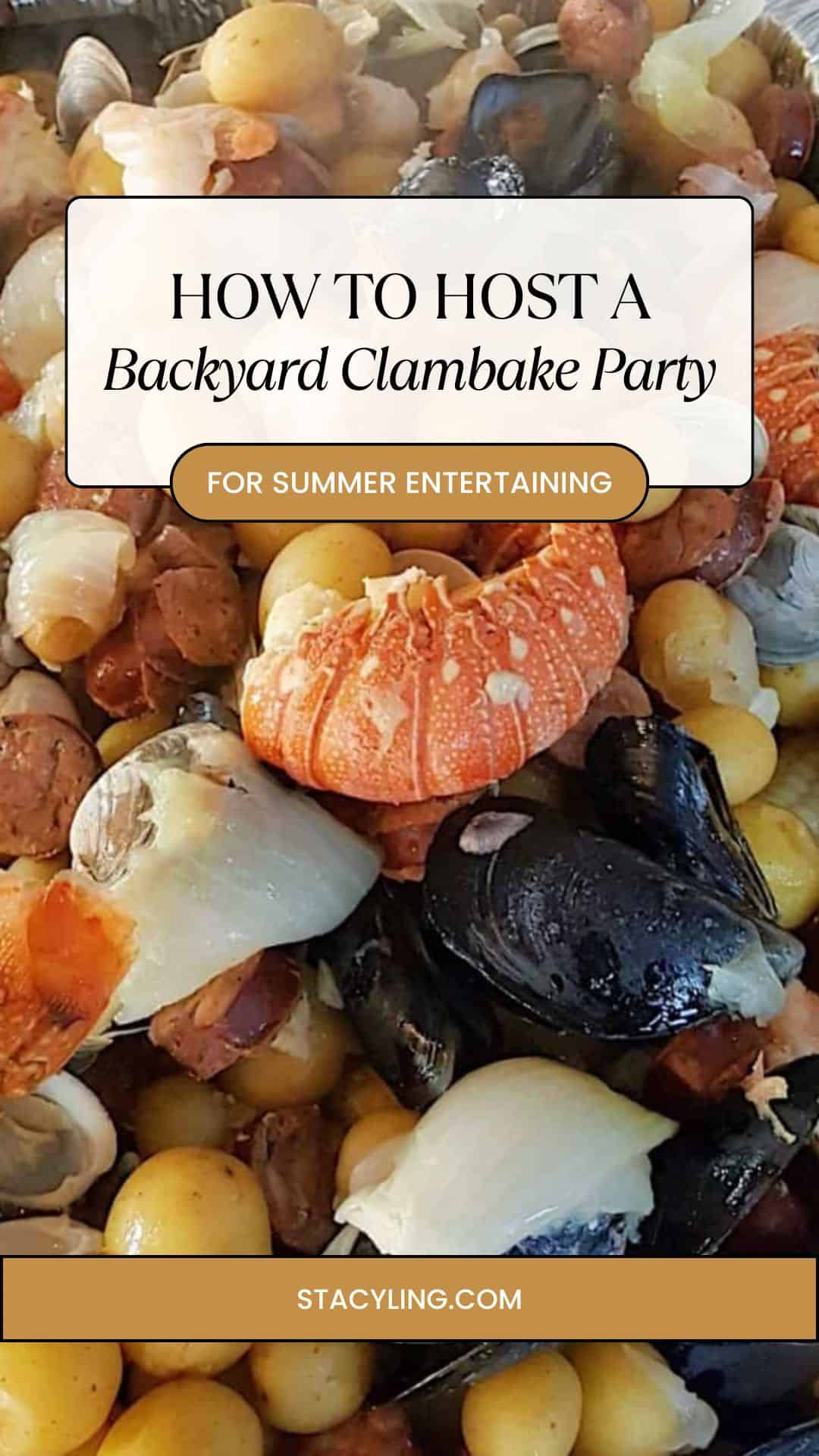
I’ve thrown a few clambakes since then using Martha’s recipe and the result is nothing short of fabulous every time! Since I don’t have great quality photos from the first clambake I hosted, here are a few pics from the second clambake I threw when we rented a house in Long Beach Island, NJ with family the following summer.


Tips For Hosting a Clambake Party
Since this recipe cooks on the stovetop, it can be made any time of the year as long as you have access to the ingredients. If an ingredient is not available, subtract it out. It wouldn’t be the same, but it’s not detrimental to the recipe. Here are a few more tips to hosting a clambake.
Buy High-Quality and Fresh Seafood For Your Clambake Party
Because I wanted the highest quality ingredients for the clambake, I pre-ordered the seafood from one of our local markets. I suggest going with high-quality seafood, wherever you can find it locally. To cook the clambake, I used very large stockpots. If I am doubling the recipe, I use two stockpots of similar sizes to fit all the seafood.
How Many Clams Per Person for a Clambake Party?
Plan on about 1 to 1.5 pounds of clams per person. This usually works out to roughly 10-12 clams each, depending on their size. It’s always better to have a few extra than to run out! This may vary depending on how many other types of seafood you’re cooking along with the clams. If you’re adding in mussels, lobster and shrimp, for example, you may not need as many clams.

How to Prepare Seafood for a Clambake Party
When you bring fresh seafood home, some of it will need to be cleaned before cooking. I seriously dislike sandy clams and mussels, so cleaning them well is a must. Preparing seafood for a clambake involves a few key steps to ensure everything is fresh and flavorful. Start by sourcing high-quality, fresh seafood such as clams, lobsters, mussels, and shrimp.
Clean all shellfish thoroughly by scrubbing and rinsing them under cold water to remove sand and debris. Soak clams and mussels in saltwater to help expel any remaining grit. Keep seafood chilled until you’re ready to cook.
For added flavor, marinate shrimp and lobster in a blend of herbs, garlic, and lemon juice. Proper preparation guarantees a delicious and memorable clambake experience. To learn more about preparing the seafood for your clambake, read these articles to help get rid of that fishy shrimp smell, clean shellfish and debeard mussels.
Because it drives me crazy when clams or mussels have even the slightest amount of sand or grit, I go through the cleaning process twice and scrub them both off with a bristle brush after the first cleaning. It’s been a very effective process for me – but do what works for you.

Creating the Perfect Table Setting for a Clambake
Creating the perfect table setting for a clambake involves blending coastal charm with practical elements to enhance the dining experience. Start with a sturdy, weather-resistant table and cover it with a gingham or nautical-themed tablecloth.
Use rustic, durable dinnerware and provide plenty of napkins or wet wipes for easy cleanup. Incorporate centerpiece elements like seashells, candles, or small flower arrangements to add a touch of elegance.
Ensure there are ample utensils for cracking shells and serving seafood, and provide individual bowls for butter and dipping sauces. The right table setting will make your clambake both beautiful and functional. Styling a table for a clambake can be as simple or as elaborate as you want. And you can do it a few ways depending on the season and whether you are hosting it indoors or out.
I’ve been to a few clambakes where the tabletop decor was as simple as newspaper on the table and then the clambake was dumped right on top. Guests stood around the table, ate with their hands and discarded shells right on the table. Could that be any simpler?
A little messy, but it was super fun! I’ve also been to clambakes where the meal was served a little more neatly in bowls and trays.
When I host, I opt for huge aluminum trays to keep it a little neater and easier to clean up. I purchase 2x the amount of trays so that one could be used for the clambake and the other could be used for the discarded shells. It works very well.

Clambake Party Decor Ideas
The type of decor you’ll use for a clambake party depends on where and when you’re hosting it. For a summer backyard clambake, I love to keep things simple and on-theme.
Picnic or nautical elements like blue and white striped tablecloths or even fishing nets draped over tables would be easy and beautiful. Adding string lights to your outdoor dining area also adds a special touch to any gathering. Although I love to create festive and elaborate tablescapes, I keep mine pretty simple for clambakes I host.
So instead of working on actual table settings, I focus more on a seasonal centerpiece that I could easily remove from the table to accommodate the trays. You can get ideas for easy centerpieces you can make in minutes in my guide or explore some of my favorite seasonal centerpieces.
Ultimately, you should consider what will work for you and the number of guests you will have. Once you host one, you’ll see how you like serving a clambake.


Hosting a Christmas Clambake Party
When I offered to host a Christmas Eve clambake a few years ago, I knew it would be fun, but I had no idea how much fun it would be! And we’ve hosted one every year since!
We hosted twenty-three guests that first year, so I doubled Martha’s recipe, pre-ordered the seafood and planned ahead how the meal would be served. As an aside, doubling the recipe worked well. It was just enough after serving a few appetizers prior to sitting down.
And the best way to fit a lot of family around the dining table is with our DIY tabletop to fit as many as we could around the table. It’s a must for any clambake party (or other party) I host!
To keep things simple yet neat for Christmas Eve, I decided to go with paper products and aluminum trays. Three trays to serve the meal and three for the discarded shells. Clean-up was a breeze when we were done!

Making Martha Stewart’s Stovetop Clambake Recipe
While I followed Martha Stewart’s Stovetop Clambake Recipe to the letter, I did make a few adjustments to make it easier for myself to prepare while entertaining guests.
For starters, I did not not use any seaweed nor have I ever used seaweed to separate the layers. I’m not really sure the difference it would make but it’s not a necessary step if you don’t have access to it. She’d probably say otherwise, but I don’t do this step.
I also just used whatever beer I had on hand. The last Christmas Clambake I hosted, I used Sam Adams Winter Lager and the dish was AWESOME! So no worries on the variety of beer you use either.
I also found it easier to make a cheat sheet of the recipe so I could quickly layer the ingredients without needing to read through the full recipe. This saved a lot of time from referring back to the recipe while entertaining guests. When I am ready to start cooking, I can quickly refer to the cheat sheet, add ingredients to the pot, and follow the cooking time.

Tips for Cooking a Clambake
Do all of the prep work ahead of time before guests arrive. It’s much easier to slice, dice, and prepare the seafood ahead than trying to entertain while working. Then set everything in bowls ready to go before the guests arrived.
As part of the pre-guest arrival prep, clean the shellfish and debeard the mussels. Then let them sit in the water again to get any final grit out before tossing in the stockpot.
Last Christmas, the market made an error with our seafood order and omitted the mussels all together. Uh oh! And because it was Christmas Eve, the market did not have many fresh mussels left. So they gave me whatever fresh mussels they had on hand, as well as these frozen ones that were already cooked and open.
While not ideal, I rolled with it and the dish still tasted great. The frozen, cooked, and open mussels weren’t the same as fresh ones but overall, the dish was not affected by it. I layered them together with the fresh mussels and cooked according to Martha’s directions. And it all worked out! I’m telling you, this recipe is so good and easy to work with!

Final Thoughts About Hosting a Clambake Party
I’ve hosted clambakes everywhere from summer gatherings with friends to our annual Christmas Eve celebration, and what I love most about them is how they bring people together. There’s something special about gathering around a table piled high with seafood, corn, and potatoes, sharing good food and even better conversation.
Over the years, I’ve learned that a successful clambake doesn’t require complicated techniques or elaborate planning. The key is starting with fresh ingredients, doing as much prep work ahead of time as possible, and creating a relaxed atmosphere where everyone can enjoy themselves. That’s one of the reasons I keep coming back to Martha Stewart’s stovetop clambake recipe. It’s simple, reliable, and always a crowd-pleaser.
While clambakes are often associated with summer entertaining, don’t be afraid to think outside the box. Our Christmas Eve clambake has become one of my family’s favorite traditions, proving that this seafood feast can be enjoyed any time of year. Whether you’re hosting a backyard clambake, planning a holiday gathering, or looking for a fun alternative to a traditional dinner party, it’s a memorable way to celebrate with the people you love.
If you’re looking for more seasonal entertaining inspiration, be sure to check out my Low Country Boil party ideas, outdoor table setting ideas, and garden-inspired backyard entertaining posts for even more ways to gather family and friends around the table.
Have you ever hosted a clambake? I’d love to hear your favorite menu ideas, entertaining tips, or family traditions in the comments below.
Thank you for visiting the blog today!
Enjoy your day! xo



Looking for More Seafood Dinner Ideas?
Wait until you try these super simple seafood dishes!


Originally Published . Last Updated .

This looks so yummy!
So good and so fun Rachel! I can’t wait to do this a the new house!
Yum
My favorite.
Mine too!!!