
Cottage Garden Plant Combinations I Love in June

After 30 years of gardening, these are my favorite cottage garden plant combinations for a beautiful June garden.
June is when a cottage garden really begins to hit its stride. Spring flowers are still putting on a show, summer bloomers are coming into their own, and the garden starts to feel layered, colorful, and alive. While individual plants can certainly shine on their own, some of my favorite moments happen when flowers overlap in bloom and create combinations that look as though they were meant to grow together.
If you’re looking for cottage garden plant combinations for June, these pairings offer beautiful color, texture, structure, and season-long interest. From classic combinations like roses and foxgloves to unexpected pairings such as borage and roses, these are flower combinations that have performed beautifully in my own garden and help create the relaxed, abundant look cottage gardens are known for.
I’ve been growing cottage gardens for decades and one of the biggest lessons I’ve learned is that successful garden design is rarely about individual plants. The real magic happens when plants complement one another in bloom time, flower form, color, and growth habit. Some of these combinations were carefully planned, while others revealed themselves over time through observation and experimentation. Either way, they have become pairings I look forward to seeing every June.
These combinations also reflect the same low-maintenance cottage garden principles I use throughout my gardens. Choosing plants that bloom well together, support one another visually, and fill space naturally is one of the easiest ways to create a garden that feels abundant without becoming overwhelming. If you’re still deciding what plants belong in your garden, I also recommend reading how to decide which plants belong in a cottage garden and exploring my favorite cottage garden plants to help build a foundation for beautiful combinations throughout the growing season.
(Posts on stacyling.com may contain affiliate links. Click HERE for full disclosure.)
Take a Walk Through My June Cottage Garden
The best way to see these plant pairings is in the garden itself.
Join me for a walk through my June cottage garden as I share these combinations in bloom and explain why each one works so well. You’ll see how I use color, texture, flower shape, and bloom succession to create the relaxed, abundant look that’s at the heart of every cottage garden.
▶️ Watch the video below

Early June Cottage Garden Plant Combinations
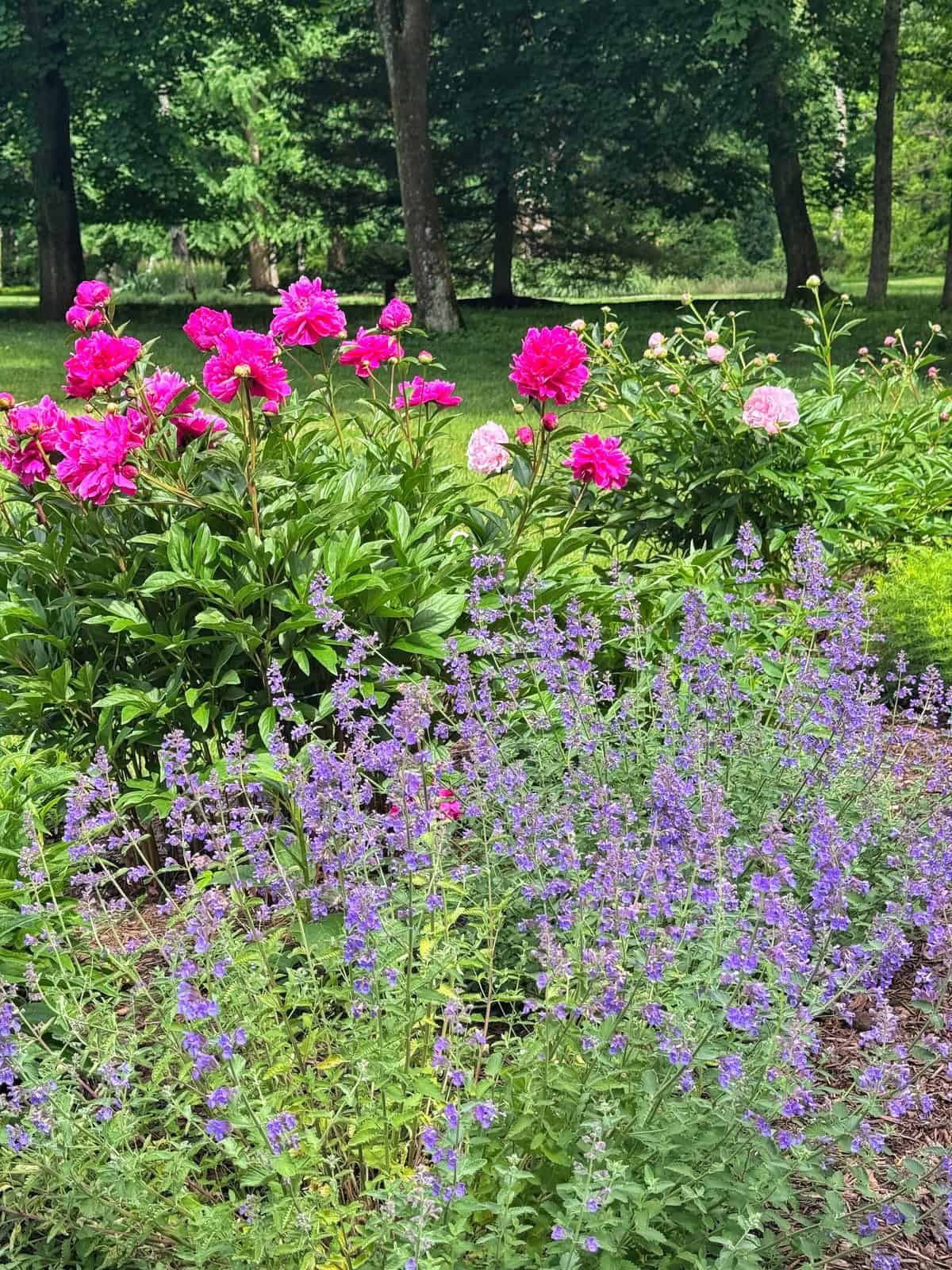
Nepeta + Peonies
If I could choose one early June cottage garden combination that always feels soft, romantic, and beautifully layered, it would be nepeta and peonies. Peonies bring the drama with their large, ruffled blooms, while nepeta softens everything around them with clouds of blue-purple flowers and airy foliage.
What makes this combination work so well is the contrast in scale. Peony flowers are bold and substantial, so they need something lighter around them to keep the border from feeling heavy. Nepeta does that perfectly. It spills around the base of the peonies, softens the edge of the planting bed, and creates that relaxed cottage garden look without competing with the peony blooms.
In my own gardens, I love growing nepeta in front of peonies because it carries the border after the peonies finish blooming. Peonies are gorgeous, but their bloom time is brief. Nepeta keeps flowering and helps the bed transition into summer, so the garden does not feel like it suddenly lost its focal point.
This pairing is also a great example of why cottage gardens look full without feeling crowded. The plants are not fighting for attention. One is bold and rounded, the other is soft and billowy. Together, they create fullness through contrast, repetition, and plant form rather than simply adding more plants.
If you are looking for an easy-care perennial that works beautifully in cottage garden borders, growing peonies and growing nepeta in a cottage garden is one of my favorite ways to soften edges, fill gaps, and support showier blooms like peonies.
Alliums + Roses
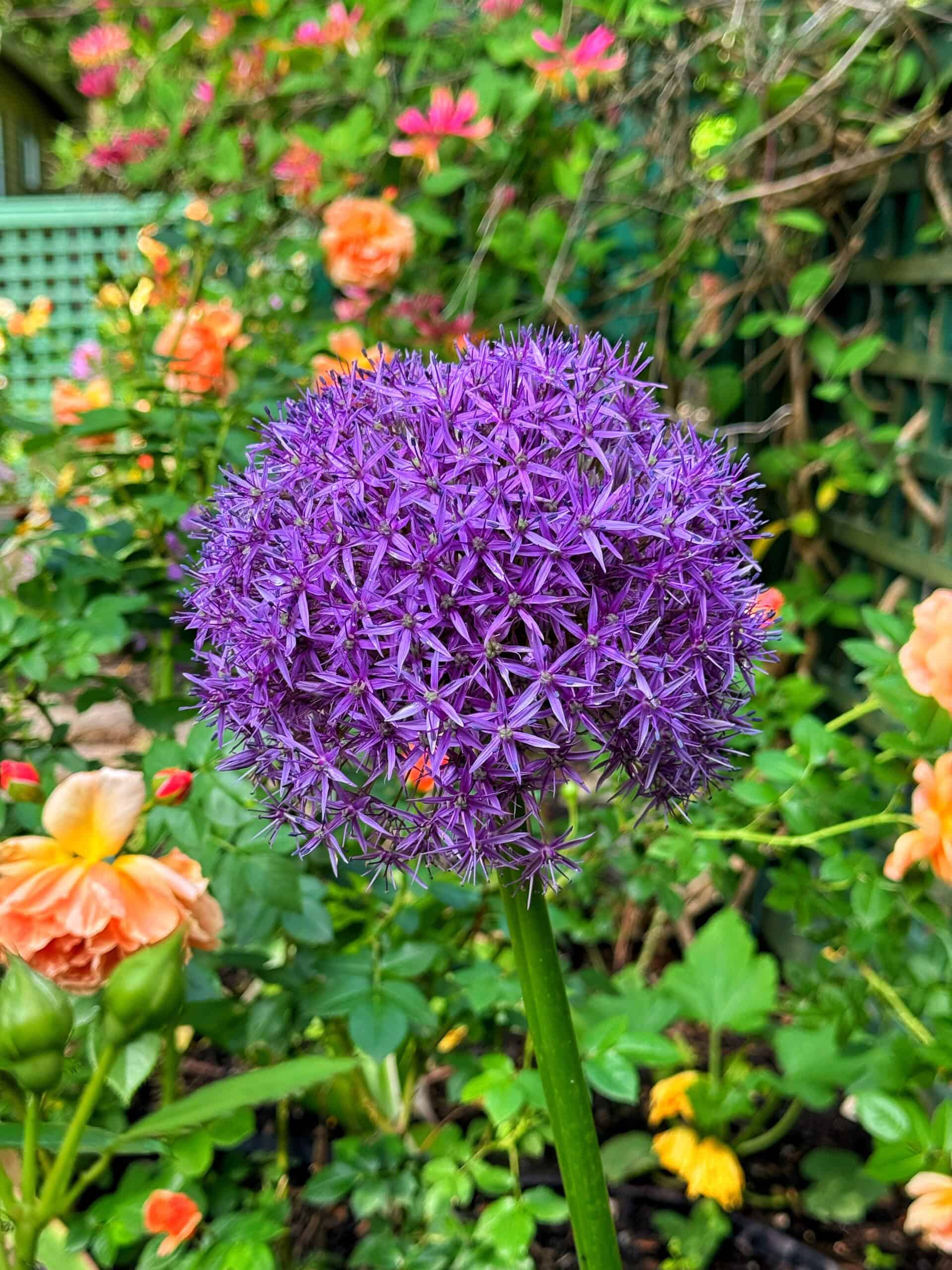
Alliums and roses are one of those early June combinations that make the garden feel like it is shifting from spring into summer. The round, globe-shaped blooms of alliums rise above the border just as roses begin to take center stage. Together, they create a beautiful contrast between architectural structure and soft romance.
I especially love how alliums add punctuation to a cottage garden. Their flower heads almost float above the surrounding plants, which gives the border height and rhythm without adding bulk. That is important in a cottage garden because too many heavy plants at the same level can make a bed feel flat or crowded.
Roses bring fullness, fragrance, and softness, while alliums add clean vertical lines and sculptural interest. This combination works especially well when the allium foliage begins to fade because surrounding perennials and roses help disguise it naturally.
In my garden, alliums are one of those plants that help bridge the seasonal gap. They carry the eye upward before the summer border fully fills in. Paired with roses, they create a look that feels intentional but still relaxed.
If roses are part of your cottage garden, learning how to grow roses well makes a big difference because they can become one of the main anchors in a June border.
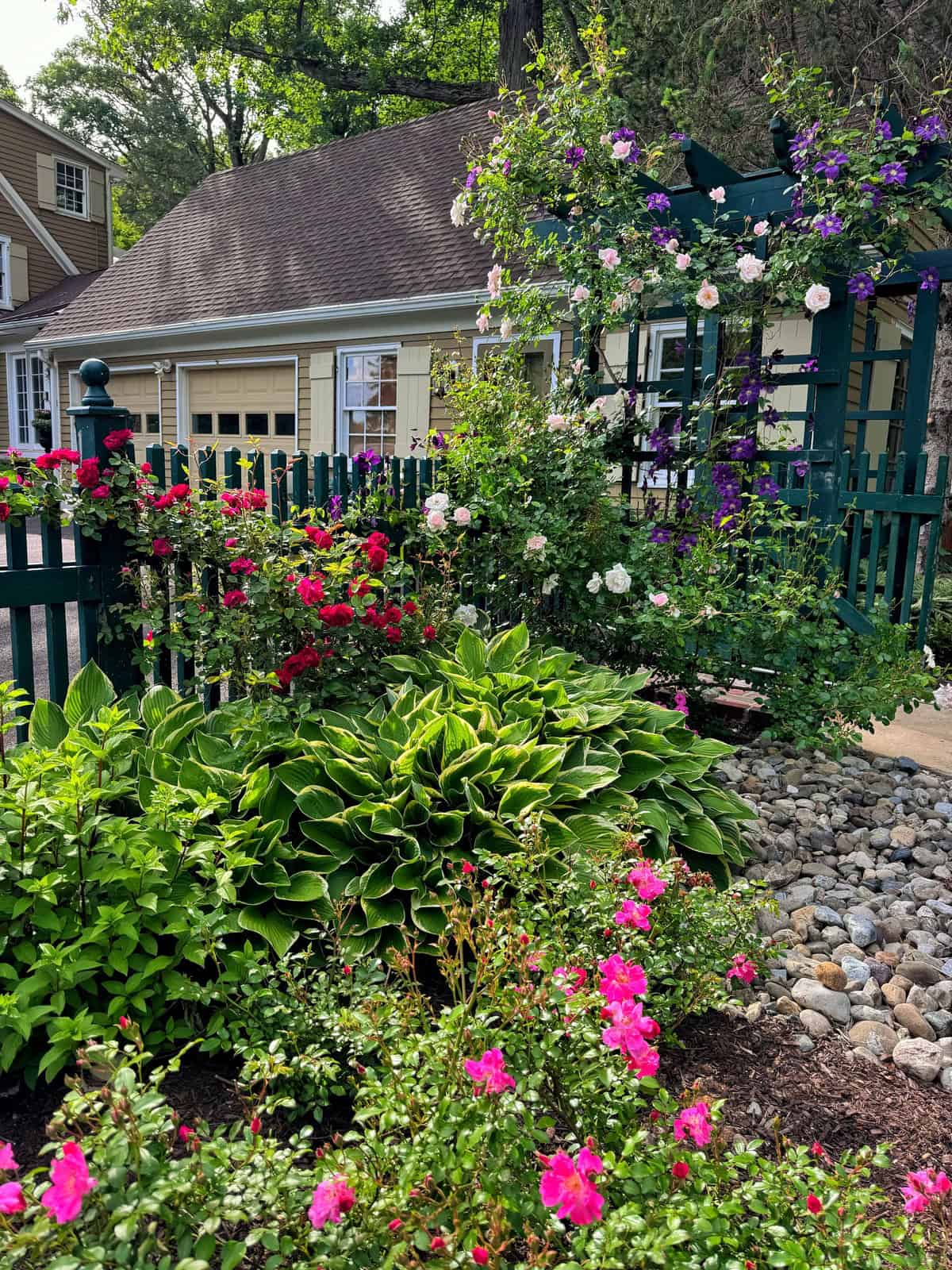
Roses + Clematis
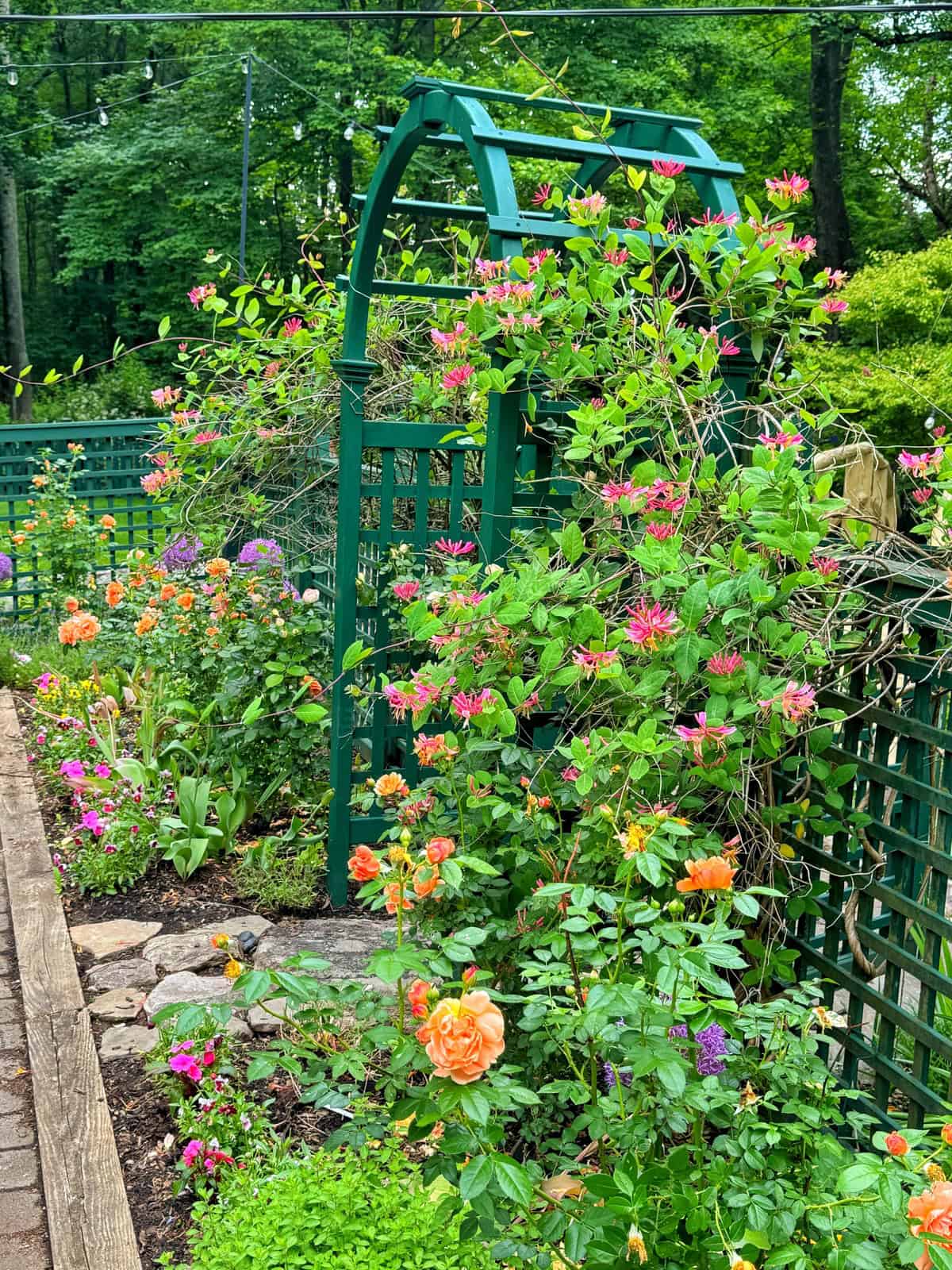
Roses and clematis are a classic cottage garden combination because they use vertical space so beautifully. Instead of filling more ground, clematis weaves upward and through the rose, adding another layer of bloom and color without taking up much additional room in the bed.
This is one of my favorite ways to make a garden feel lush without overcrowding it. The rose provides the structure, while the clematis brings movement, softness, and another bloom shape. When they flower together, the effect can look like one incredibly full plant, even though the two are working together.
I love this pairing on arbors, obelisks, fences, and garden structures because it adds height and romance to the garden. A cottage garden needs vertical layers, not just plants spreading across the ground. Roses and clematis do that beautifully.
What I have learned over the years is that this combination works best when each plant has enough space, light, and support. Clematis may look delicate, but it still needs thoughtful placement. Pairing it with roses is not just about looks. It is about understanding how both plants grow and making sure they can coexist happily over time.
If you want to try this pairing, start with how to grow clematis and how to grow roses so both plants have what they need to thrive before you combine them.
Foxgloves + Roses
Foxgloves and roses are one of the most romantic early summer cottage garden combinations. The tall, upright spires of foxgloves rise above the rounded blooms of roses, creating height, drama, and that classic layered look cottage gardens are known for.
I love this pairing because the flower forms are completely different. Roses are soft, rounded, and full, while foxgloves are vertical and architectural. That contrast keeps the garden interesting and prevents the border from feeling like one big mass of similar flowers.
This combination also has a very personal place in my garden experience. For years, I admired foxgloves in other gardens but struggled to get them to return reliably in my own. My New Jersey garden is not one where foxgloves happily self-sow everywhere and come back on their own. Once I started growing foxgloves from seed myself, I had much better success.
That experience changed how I think about cottage garden plants. Sometimes a plant does belong in the garden, but the way you bring it into the garden matters. For me, foxgloves perform better when I grow them from seed rather than relying only on transplants.
If foxgloves have been tricky for you too, my guide to growing foxgloves from seed explains what finally worked for me. And if you are pairing them with roses, growing roses in a cottage garden gives you that soft, romantic foundation that makes foxgloves look even more magical.

Mid-June Cottage Garden Plant Combinations
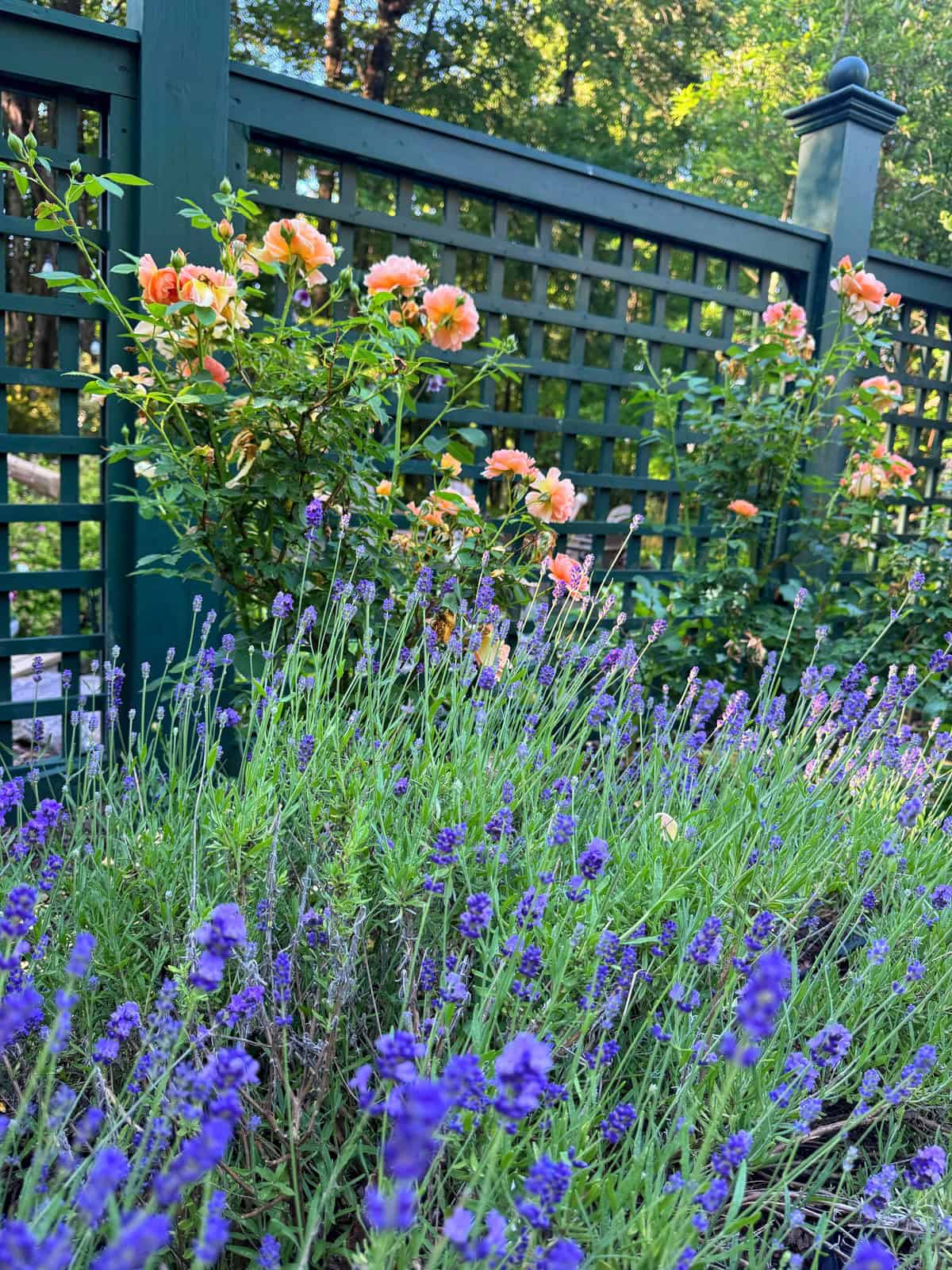
Lavender + Roses
Lavender and roses are a timeless cottage garden pairing, but the reason they work goes beyond color and fragrance. Roses are full, romantic, and often visually dominant. Lavender brings a lower, neater form that grounds them beautifully.
In my garden, lavender works almost like a living edge around roses. Its silvery foliage creates contrast even when the flowers are not blooming, and its upright purple flower spikes echo the cottage garden style without making the bed feel too busy. That foliage texture is one of the reasons I love this combination so much.
Lavender also helps solve a common design issue with roses. Depending on the variety, roses can look a little bare at the base. Lavender softens that lower area and creates a fuller, more finished look around the plant.
This is a great example of choosing plants for both bloom and structure. The roses bring the show, but lavender brings the support. Together, they create a border that feels fragrant, layered, and classic.
If you want to try this pairing, growing lavender alongside roses works best when both plants are placed in the sunniest, best-draining areas of the garden. For more details, see my guides on how to grow lavender and how to grow roses.
Borage + Roses
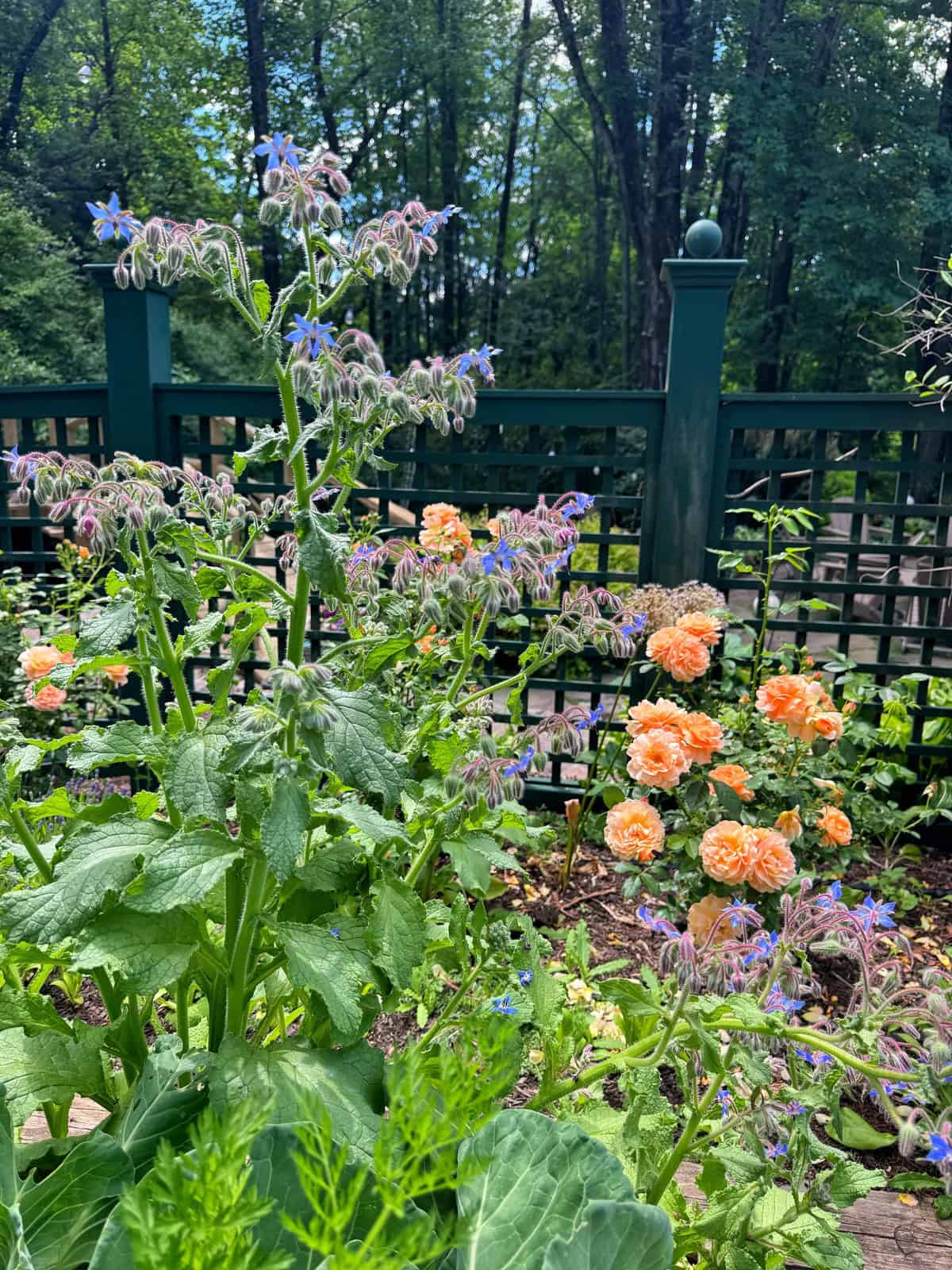
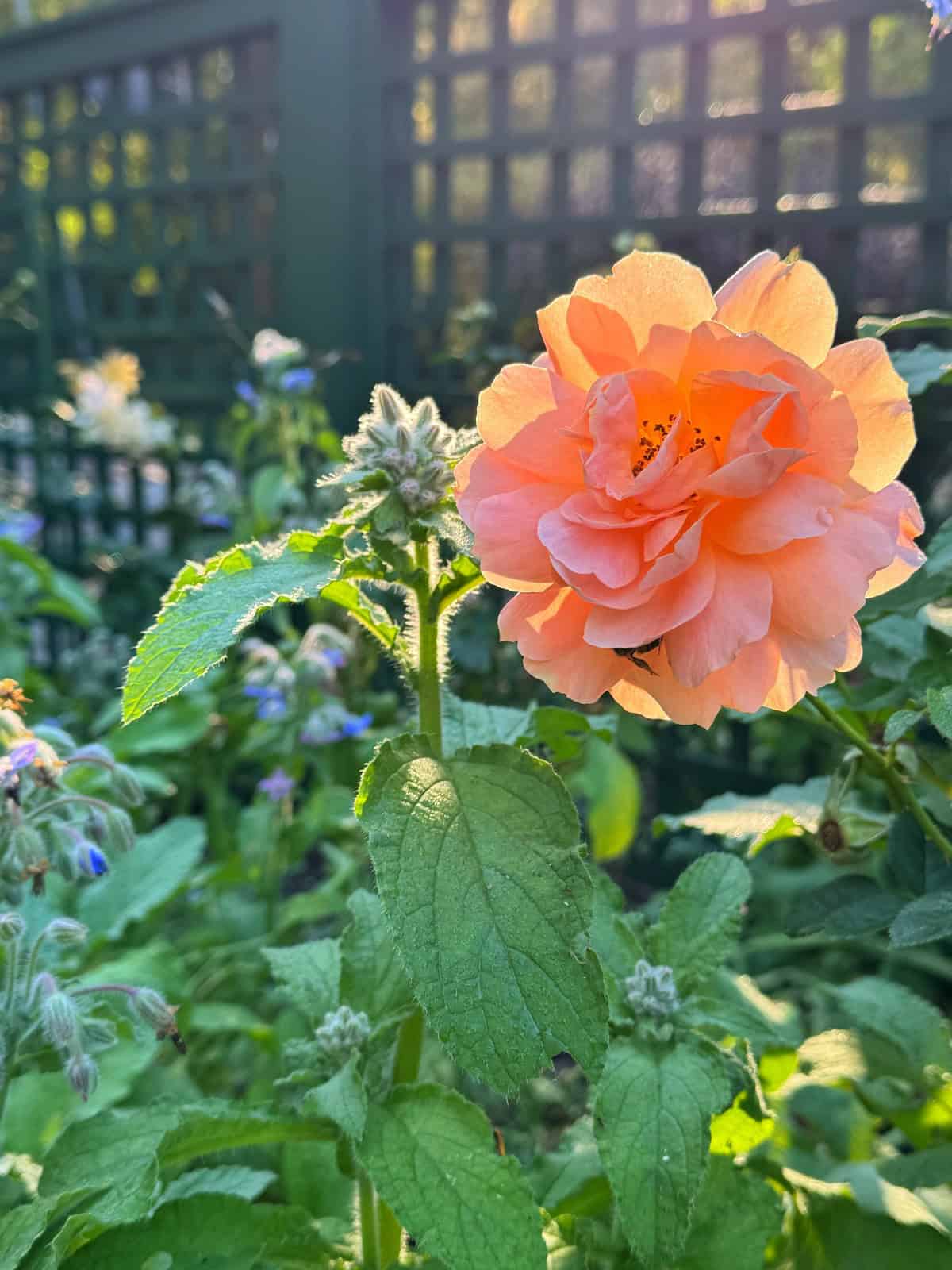
Roses and borage may not be the first combination most gardeners think of, but I love the way they look together in June. Borage has bright blue, star-shaped flowers that add a loose, informal quality around roses. It keeps the garden from feeling too polished.
The blue flowers are what make this pairing so special. Blue is not always easy to find in the flower garden, and borage brings a clear, vibrant color that contrasts beautifully with pink, blush, white, peach, and even deeper rose tones.
I also love the way borage changes the energy of a planting. Roses feel romantic and elegant. Borage feels casual and slightly wild. Together, they create a cottage garden moment that feels relaxed, alive, and full of movement.
As someone who loves both cottage gardening and cut flower gardening, I appreciate plants that blur the line between ornamental and useful. Borage attracts pollinators, fills space quickly, and adds that slightly untamed feeling that makes a cottage garden feel authentic.
This combination also reinforces how to decide which plants belong in a cottage garden. Sometimes the best pairings are not the most traditional ones. They are the ones that bring the right color, movement, and mood to the border.
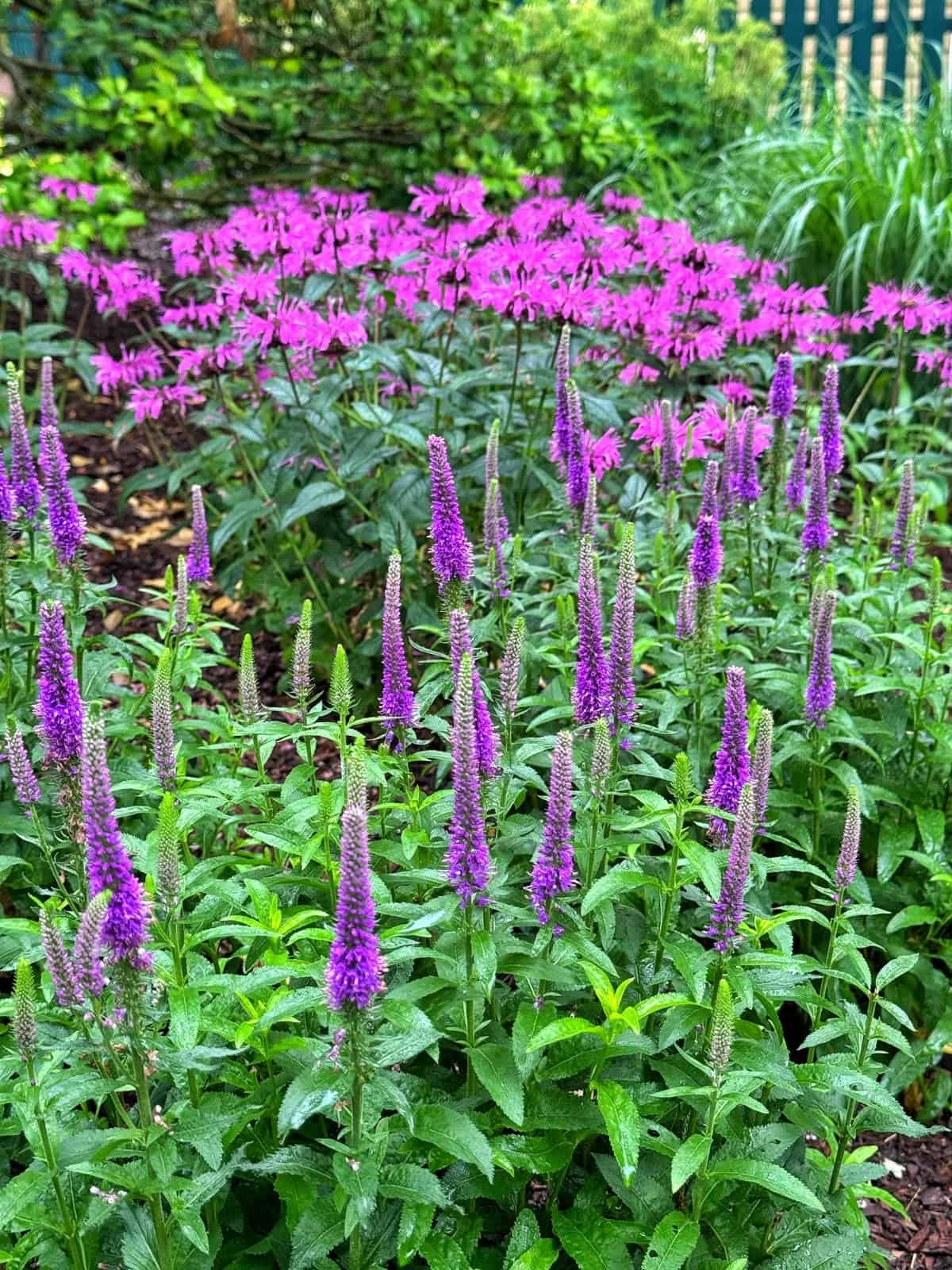
Monarda + Veronica
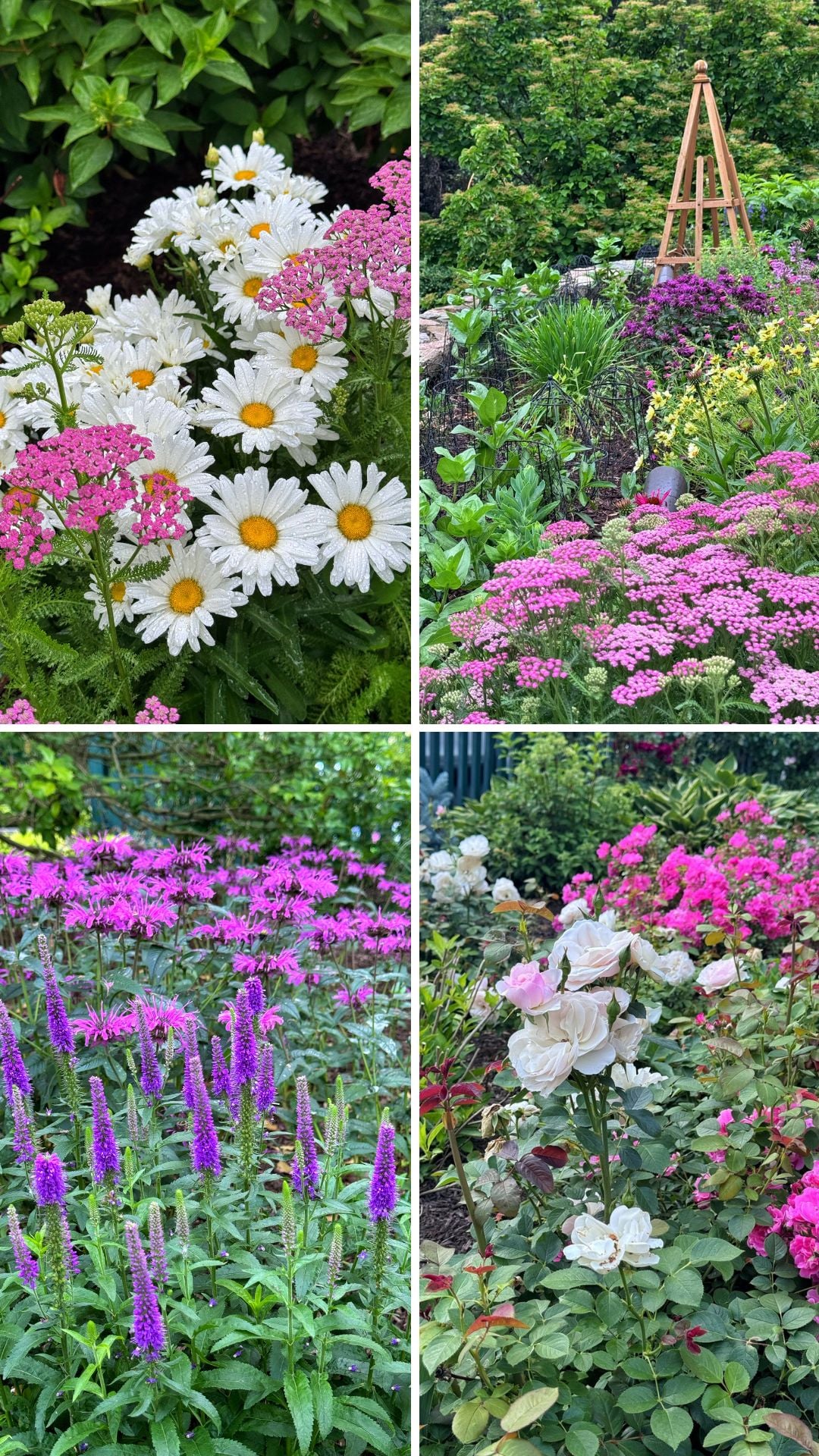
Veronica and monarda are a strong mid-June pairing because they bring two very different flower forms together. Monarda has shaggy, rounded blooms that feel loose and playful, while veronica offers clean, upright spikes that bring structure.
That contrast is what makes the combination work. When every plant in a border has the same shape, the garden can feel flat. But when rounded flowers are paired with vertical spires, the eye moves through the planting more naturally.
I love this combination in the middle of the border because both plants have presence without feeling overly formal. Monarda brings movement and pollinator activity, while veronica adds rhythm and definition. Together, they help bridge the garden from early summer into the warmer part of the season.
In my own garden, I have learned that flower form can be just as important as color. Monarda and veronica prove that beautifully. Even when their colors are not an exact match, their shapes create enough contrast to make the combination feel intentional.
This is also the kind of pairing that supports a low-maintenance cottage garden because both plants contribute to the overall structure of the border instead of needing to be fussed over constantly.
Late June and Early Summer Cottage Garden Plant Combinations
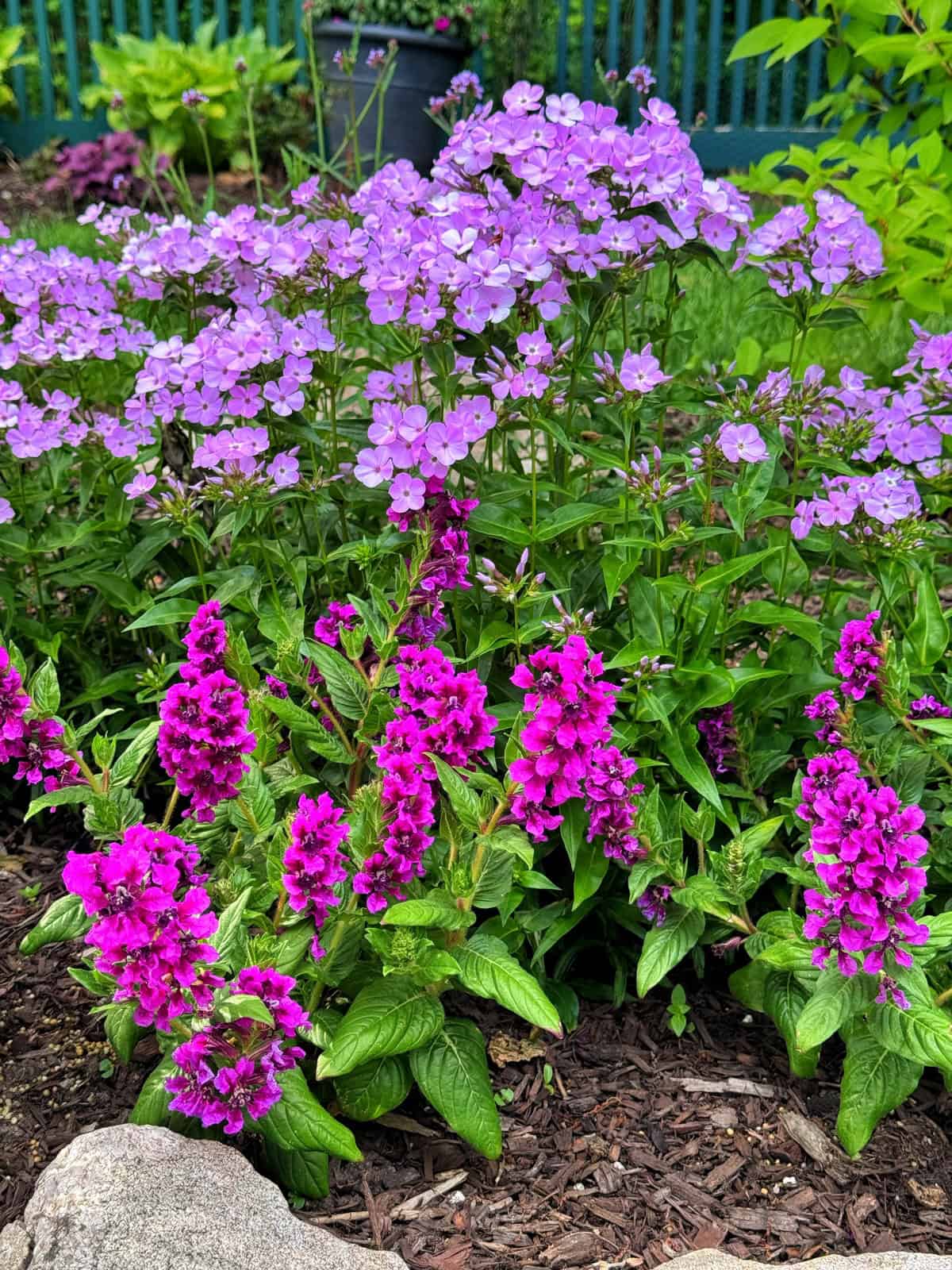
Cuphea + Phlox
Cuphea and phlox create a colorful, energetic combination as June moves into early summer. Phlox brings larger flower clusters and a more traditional cottage garden feel, while cuphea adds smaller blooms, movement, and a lighter texture.
What I like about this pairing is the difference in scale. Phlox tends to read as a fuller, more substantial plant in the border. Cuphea softens that weight and keeps the planting feeling loose and lively.
This combination is especially useful when you want a cottage garden bed to feel colorful without becoming too heavy. The phlox gives the border presence, while cuphea adds sparkle and movement around it.
In my garden, I like combinations that keep going as the season gets hotter. By late June, the garden needs plants that can carry color forward. Cuphea and phlox help do that in a way that still feels relaxed and informal.
This pairing is a good reminder that cottage garden combinations do not always need to be made from the most traditional plants. Sometimes the right annual can make a perennial border feel more alive.
Shasta Daisies + Yarrow
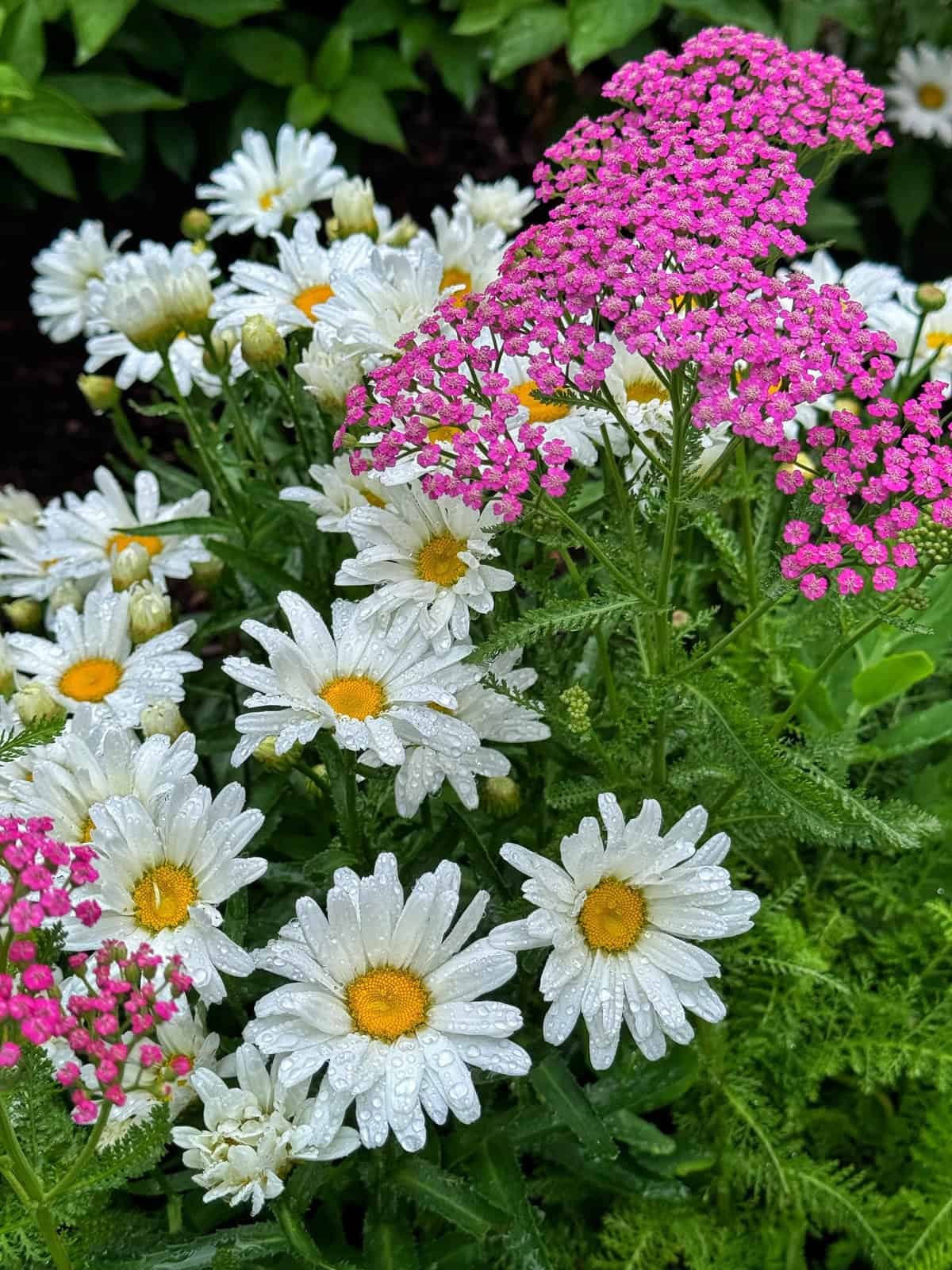
Shasta daisies and yarrow create a fresh, cheerful combination that feels right at home in a sunny cottage garden. The crisp white daisy flowers bring brightness, while yarrow adds flat-topped blooms and a softer meadow-like texture.
This pairing works because the flower shapes are different but compatible. Shasta daisies are simple and familiar, while yarrow has a flatter, more horizontal form that creates a completely different layer in the border.
I especially love this combination for cutting garden areas that blend into cottage garden spaces. Both plants have that casual, gathered-from-the-garden feeling, which is exactly what I want in June.
Yarrow also helps make daisies feel less formal. On their own, Shasta daisies can sometimes read as a little stiff if planted in a row. When they are mixed with yarrow, the whole planting feels softer and more natural.
If you are building a sunny, easy-care border, growing yarrow in sunny flower beds is one of the simplest ways to add long-lasting color, texture, and pollinator interest.
Coreopsis + Shasta Daisies
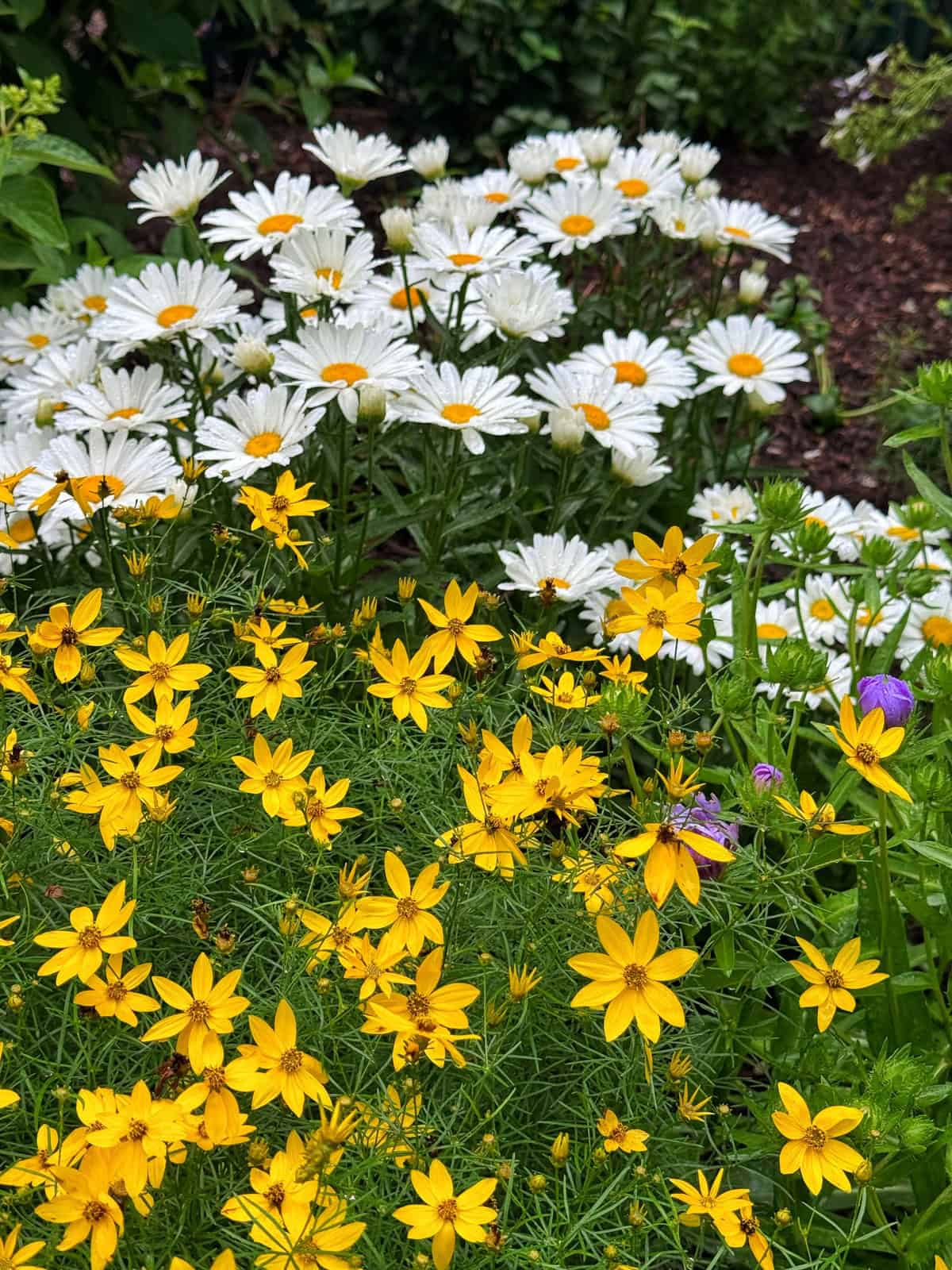
Coreopsis and Shasta daisies bring that bright, happy early summer feeling to the garden. The golden yellow flowers of coreopsis look beautiful with the clean white blooms of Shasta daisies, and together they brighten the border without feeling fussy.
This is one of those combinations that works especially well from a distance. The yellow and white read clearly across the garden, which makes the bed feel lively and welcoming. In a large cottage garden, that matters because not every combination is viewed up close.
Coreopsis also brings a lighter, more delicate texture compared to the larger daisy flowers. That difference keeps the combination from feeling too repetitive even though both plants have daisy-like blooms.
I like using combinations like this where the garden needs a lift. By late June, soft spring pastels are giving way to stronger summer color, and coreopsis helps make that transition feel natural.
If you want more sunny, low-maintenance flowers in your cottage garden, how to grow coreopsis is a great place to start because it brings weeks of cheerful color and blends beautifully with other summer bloomers.
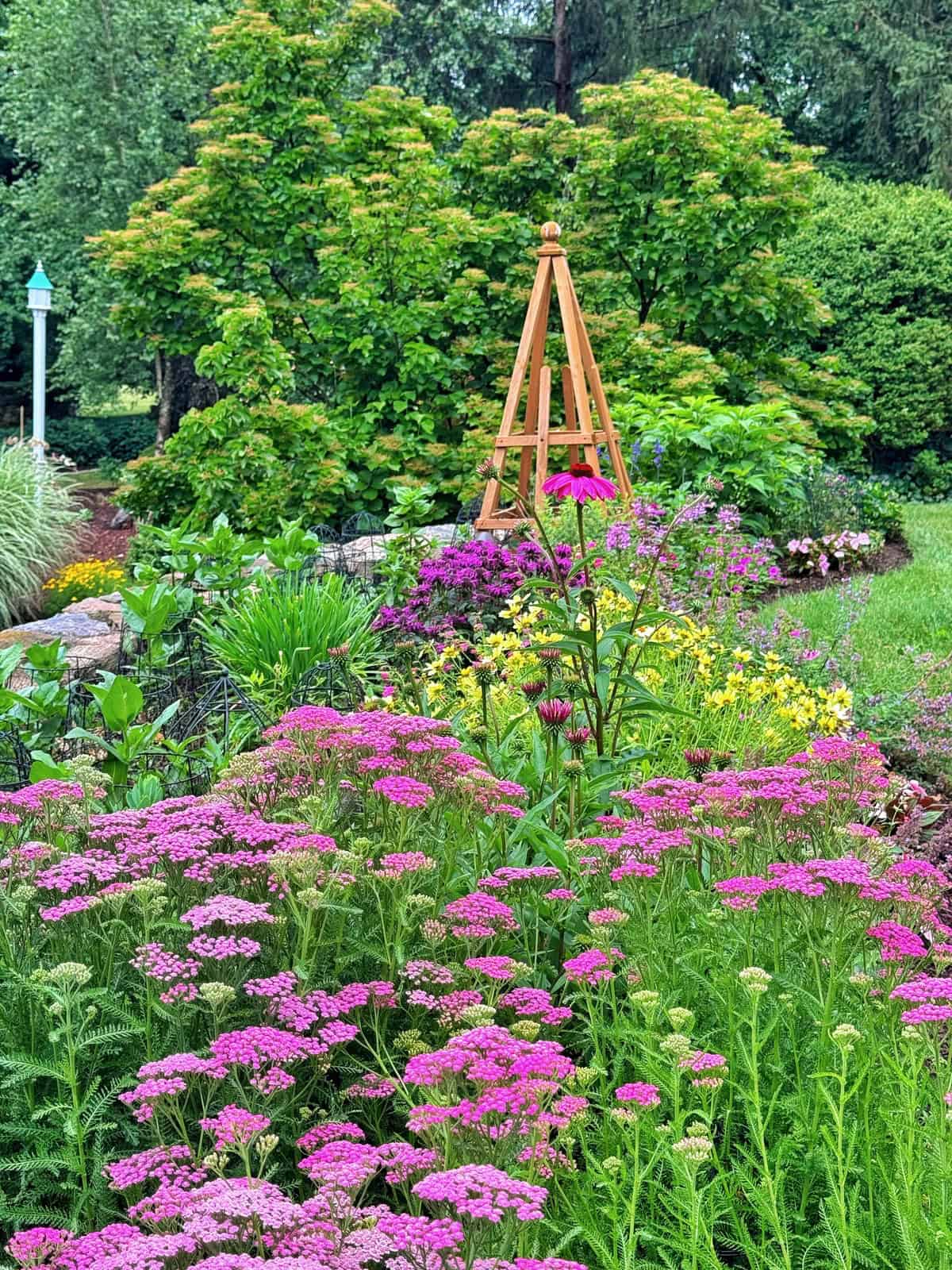
Yarrow + Coneflowers
Yarrow and coneflowers are one of my favorite late June into summer combinations because they are strong, reliable, and full of pollinator activity. They also bring excellent contrast in flower form.
Yarrow has flat, horizontal flower clusters that create a landing-pad effect in the border, while coneflowers have upright stems and distinctive cone-shaped centers. Together, they create structure without stiffness.
This pairing works especially well as the weather gets hotter. In my New Jersey garden, late June often means heat and humidity are settling in, so I appreciate combinations that can hold their own as conditions become more challenging.
I also love this combination because both plants bridge ornamental gardening and cut flower gardening. They look beautiful in the border, attract pollinators, and can be cut for arrangements. That makes them especially valuable in a cottage garden where beauty and usefulness often overlap.
If you are looking for dependable summer flowers, how to grow yarrow and how to grow coneflowers are both worth reading. Together, these plants help carry the garden from early summer into the heart of the season.

What Makes a Cottage Garden Plant Combination Successful?
After 30 years of gardening, I have learned that the best cottage garden plant combinations are not just about color. Color matters, of course, but the strongest pairings usually work because they combine several design elements at once.
A good combination often includes:
- Different flower shapes
- Complementary or repeating colors
- Contrasting foliage textures
- A mix of heights
- Overlapping bloom times
- Plants that support the border after one finishes blooming
That last point is especially important. A combination should not fall apart the second one plant stops flowering. The best pairings carry the garden forward, either through foliage, structure, rebloom, or another plant stepping into the spotlight.
This is exactly why cottage gardens look full without feeling crowded. The fullness comes from the way plants work together over time, not from cramming more plants into the bed.
Build Beautiful Plant Combinations With My Book and Garden Planner
If you’re inspired to recreate these cottage garden combinations in your own landscape, my books can help you turn those ideas into a cohesive garden design.
In The Bricks ‘n Blooms Guide to a Beautiful and Easy-Care Flower Garden, I walk through the same design principles I use throughout my own gardens, including how to combine plants for season-long color, create layered borders, and build flower gardens that are both beautiful and manageable.
Once you know which combinations you’d like to try, The Bricks ‘n Blooms Beautiful and Easy-Care Flower Garden Planner helps you put those ideas into action. You can map out your garden beds, keep track of bloom times, record successful plant pairings, and make notes about what performs best in your own growing conditions.
One of the best things I’ve learned after 30 years of gardening is that every garden teaches you something new. Keeping track of the combinations you love makes it much easier to build on those successes year after year and create a cottage garden that becomes even more beautiful with time.
Final Thoughts About June Cottage Garden Plant Combinations
June is one of my favorite months in the cottage garden because it shows how beautifully plants can overlap from one season into the next. Peonies are finishing, roses are blooming, annuals are beginning to settle in, and summer perennials are starting to take over.
After 30 years of gardening, I have learned that these combinations are what give a cottage garden its character. Individual plants may be beautiful, but the pairings are what create rhythm, movement, and charm.
The best combinations are not always the ones I planned perfectly. Some revealed themselves over time. Others came from experimenting when a plant did not work the way I hoped it would. That is part of the joy of cottage gardening. The garden teaches you as it grows.
If you are planning your own cottage garden, start with a few reliable combinations instead of trying to plant everything at once. Choose plants that bloom together, contrast in form, and support the garden after their peak moment passes. Then let the garden evolve from there.
For more help building a garden that feels abundant but manageable, start with my low-maintenance cottage garden principles, then explore my favorite cottage garden plants and my guide to how to decide which plants belong in a cottage garden.
Thank you for visiting the blog today!
Enjoy your day! xo

Originally Published .
