
Why Cottage Gardens Look Full Without Feeling Crowded

Learn why cottage gardens feel lush without looking crowded and how design, spacing, and plant choices create that effect.
One of the most common things people notice about cottage gardens is how full they look without ever feeling crowded. That effect is not accidental. It comes from understanding how plants grow, how the eye reads space, and how gardens change over time. A well-designed cottage garden feels abundant and relaxed, not because it is packed with plants, but because each plant has room to settle in and do its job.
When I first started gardening nearly thirty years ago, I assumed fullness came from planting more. Over time, and after years of editing beds, moving plants, and watching what actually thrived, I learned that the opposite is often true. Cottage gardens feel lush when they rely on repetition, structure, and thoughtful spacing rather than sheer quantity. This shift in thinking is what allowed my gardens to look generous while becoming easier to maintain.
The same low-maintenance cottage garden principles that guide how I choose plants also shape how I space and layer them. When those principles are applied consistently, a garden can feel rich and full of charm without becoming overwhelming or difficult to care for.
(Posts on stacyling.com may contain affiliate links. Click HERE for full disclosure.)
Fullness Comes From Repetition, Not More Plants
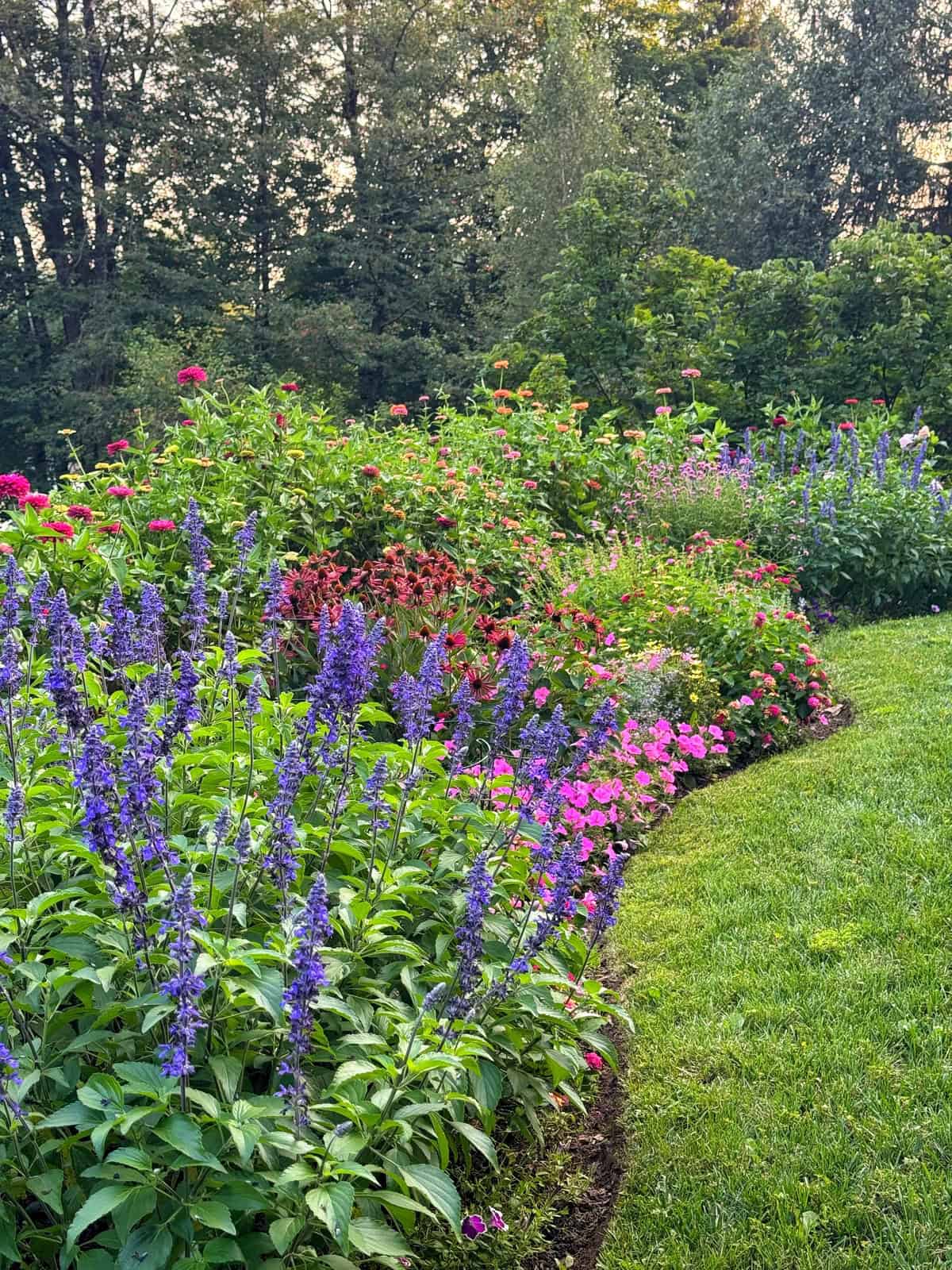
One of the biggest reasons cottage gardens look full without feeling crowded is repetition. Repeating the same plants throughout a bed creates rhythm and calm, even when the planting feels generous. The eye reads repeated shapes and colors as intentional, which allows the garden to feel lush rather than chaotic.
Early in my gardening journey, I made the mistake of planting too many different things in a single space. Every plant was beautiful on its own, but together they competed for attention. The result was visual noise and far more maintenance than I expected. Over time, I learned that using fewer plant varieties, repeated thoughtfully, created a garden that felt fuller and more cohesive with much less effort.
Repetition also simplifies care. When you are managing the same plants in multiple places, you learn their habits quickly. You know when they emerge, how they behave after flowering, and when they need to be edited back. This approach naturally supports a low-maintenance cottage garden, where abundance comes from familiarity rather than constant adjustment.
Many common cottage gardening mistakes start with the belief that fullness requires more plants. In reality, it often requires fewer choices made with greater intention.
Plant Shape Matters More Than Plant Count
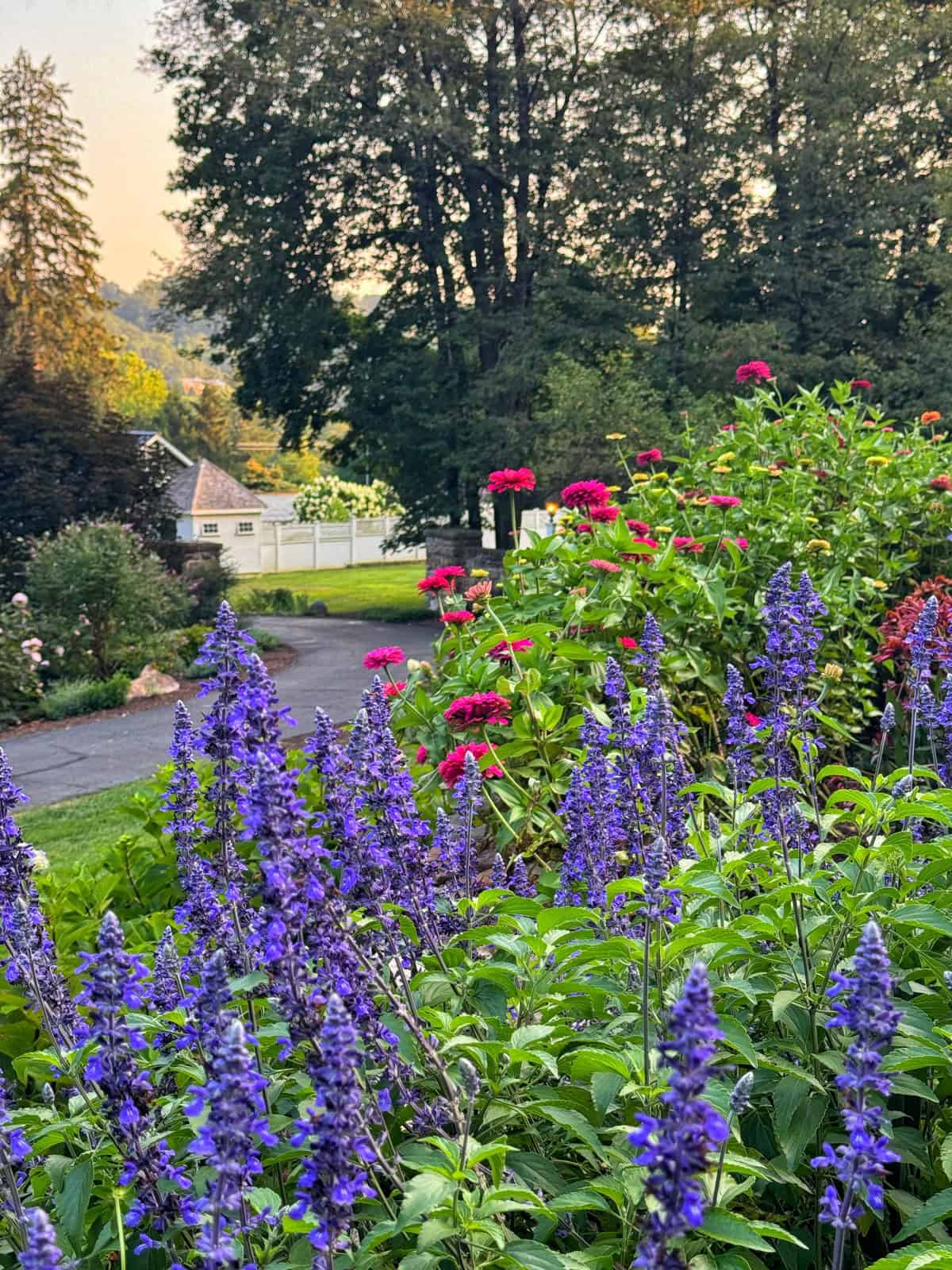
Cottage gardens feel calm and cohesive because they rely on a mix of plant shapes rather than sheer numbers. Upright plants, mounded plants, and airy plants each play a role in how the garden is read visually. When these forms are balanced and repeated, the garden feels layered and full without looking cluttered.
Early on, I focused too much on individual flowers and not enough on plant form. I would add more plants when something felt off, assuming the space needed filling. What I eventually learned is that too many plants with the same shape, especially mounded or sprawling forms, can make a bed feel crowded very quickly. Introducing vertical and airy forms allows the eye to move through the garden more easily.
This is also where substitutions become powerful. When a classic cottage plant struggles, I now look for another plant that fills the same visual role rather than forcing something that does not thrive. Upright annuals, structural perennials, and even shrubs can all serve the same purpose if their form works within the design. This mindset keeps the garden looking intentional while adapting to what actually performs well.
Thinking in terms of form instead of plant names is one of the simplest ways to create a cottage garden that feels abundant and balanced at the same time.
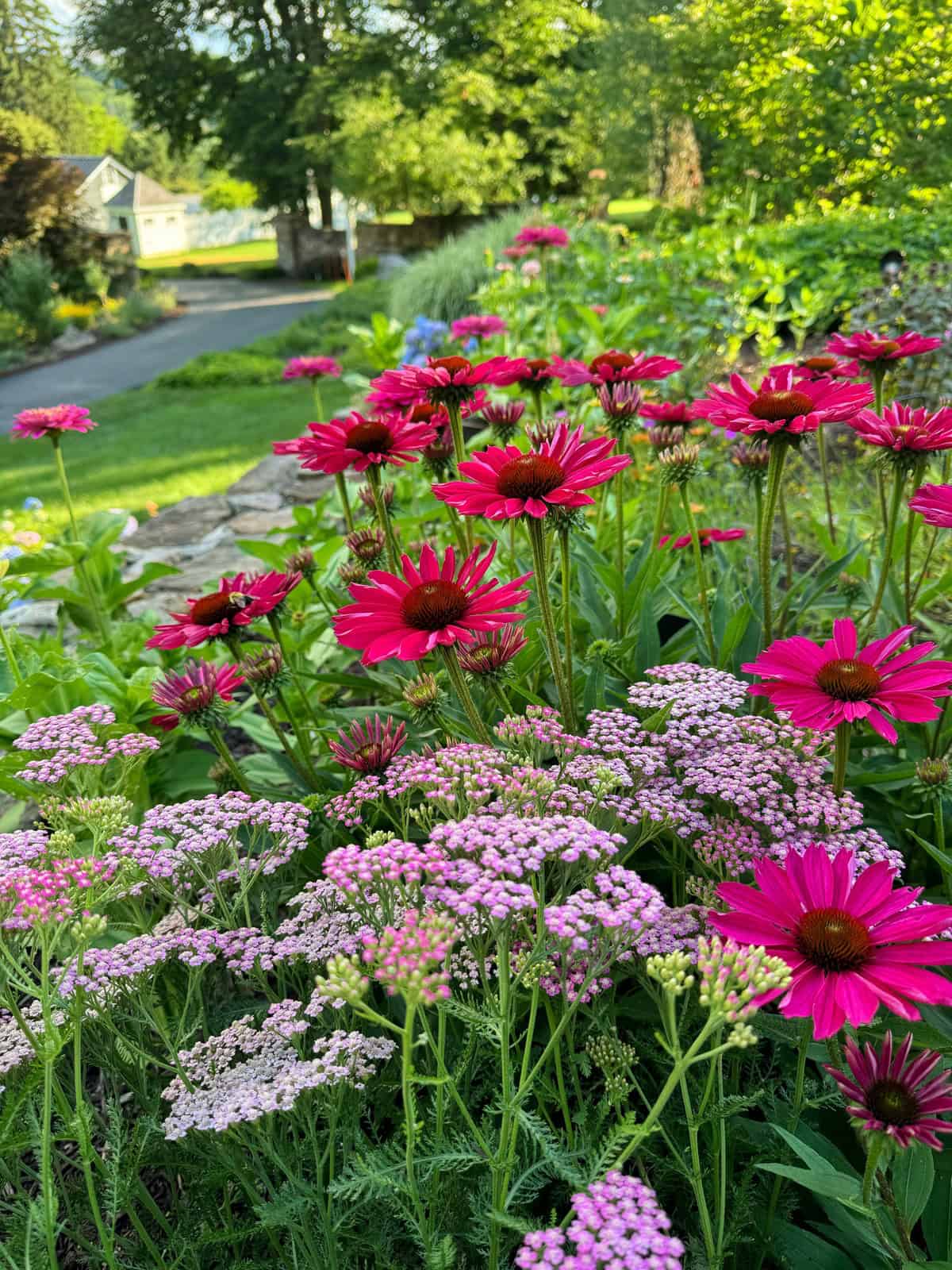
Seeing these principles in action is often easier than describing them. These are some of my favorite cottage garden plant combinations that demonstrate how contrasting flower forms and repeated colors create fullness without clutter.
Space Is Built In Over Time, Not at Planting
One of the biggest misconceptions about cottage gardens is that they are meant to be crowded from the start. In reality, the space that makes a cottage garden feel comfortable and full is created over time as plants grow, expand, and knit together. When everything is planted too closely in the beginning, that natural process never has a chance to happen.
Earlier in my gardening years, I planted beds tightly because I wanted instant fullness. What I learned after several seasons is that those same beds quickly became difficult to manage. Plants competed for air, light, and nutrients, and many needed to be moved or removed entirely. The gardens that aged the best were the ones where I allowed plants enough room to grow into their mature size, even when the bed looked a little sparse at first.
This is one of the reasons I now pay close attention to how plants behave long term before deciding whether they belong in a space. Understanding growth habits, root spread, and mature size is a key part of how to decide which plants belong in a cottage garden. When plants are chosen and spaced with the future in mind, they fill in naturally without overwhelming one another.
Spacing also affects plant health. In my hot and humid New Jersey summers, allowing for airflow has made a noticeable difference in how well plants perform. Beds that are given breathing room stay healthier, look better longer, and require less intervention overall.
Layering Creates Depth Without Making a Garden Feel Crowded
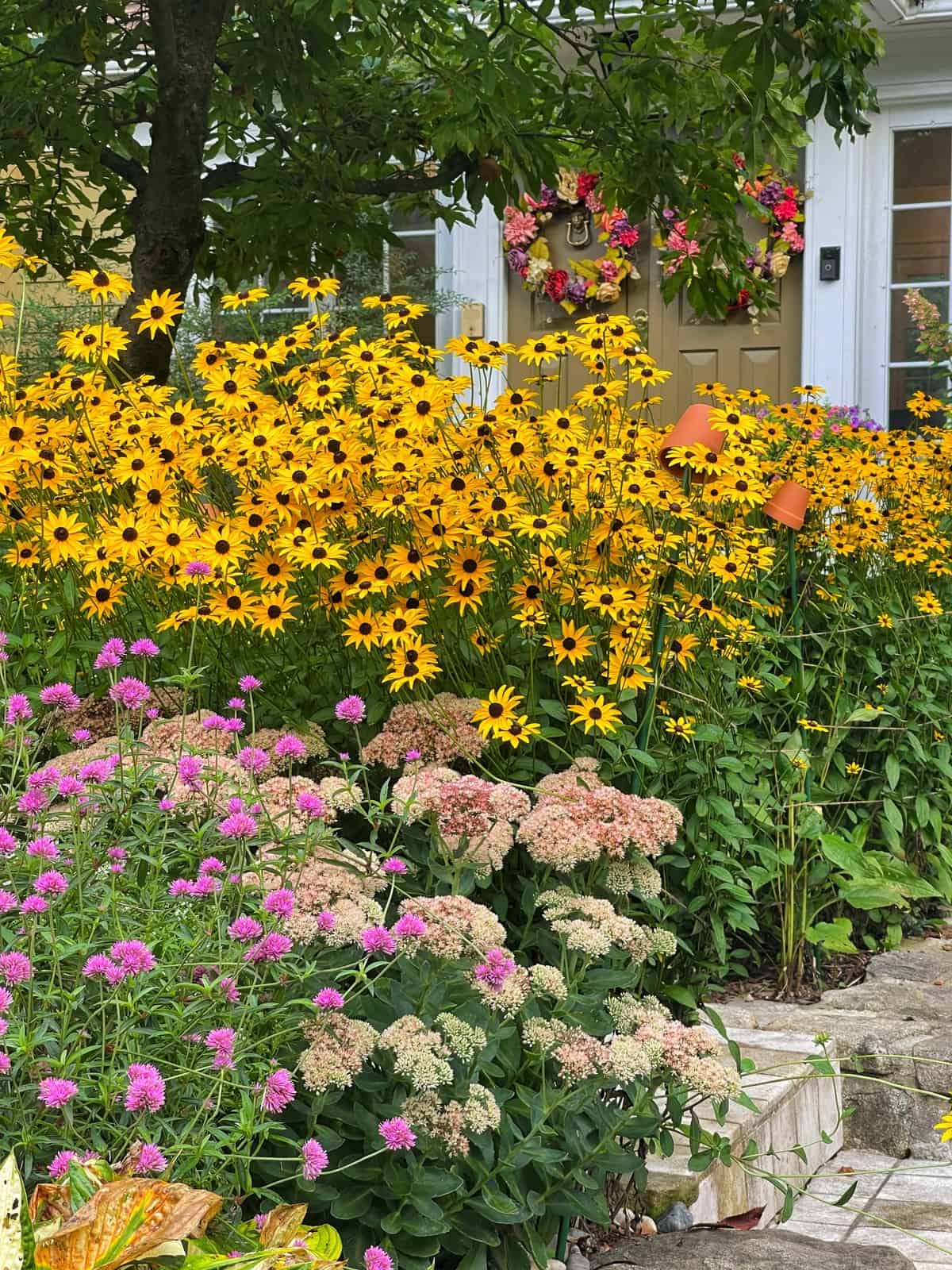
Layering is one of the most important design principles behind cottage gardens that feel full but never overwhelming. Instead of relying on more plants, layering uses height, depth, and structure to create visual richness within the same footprint.
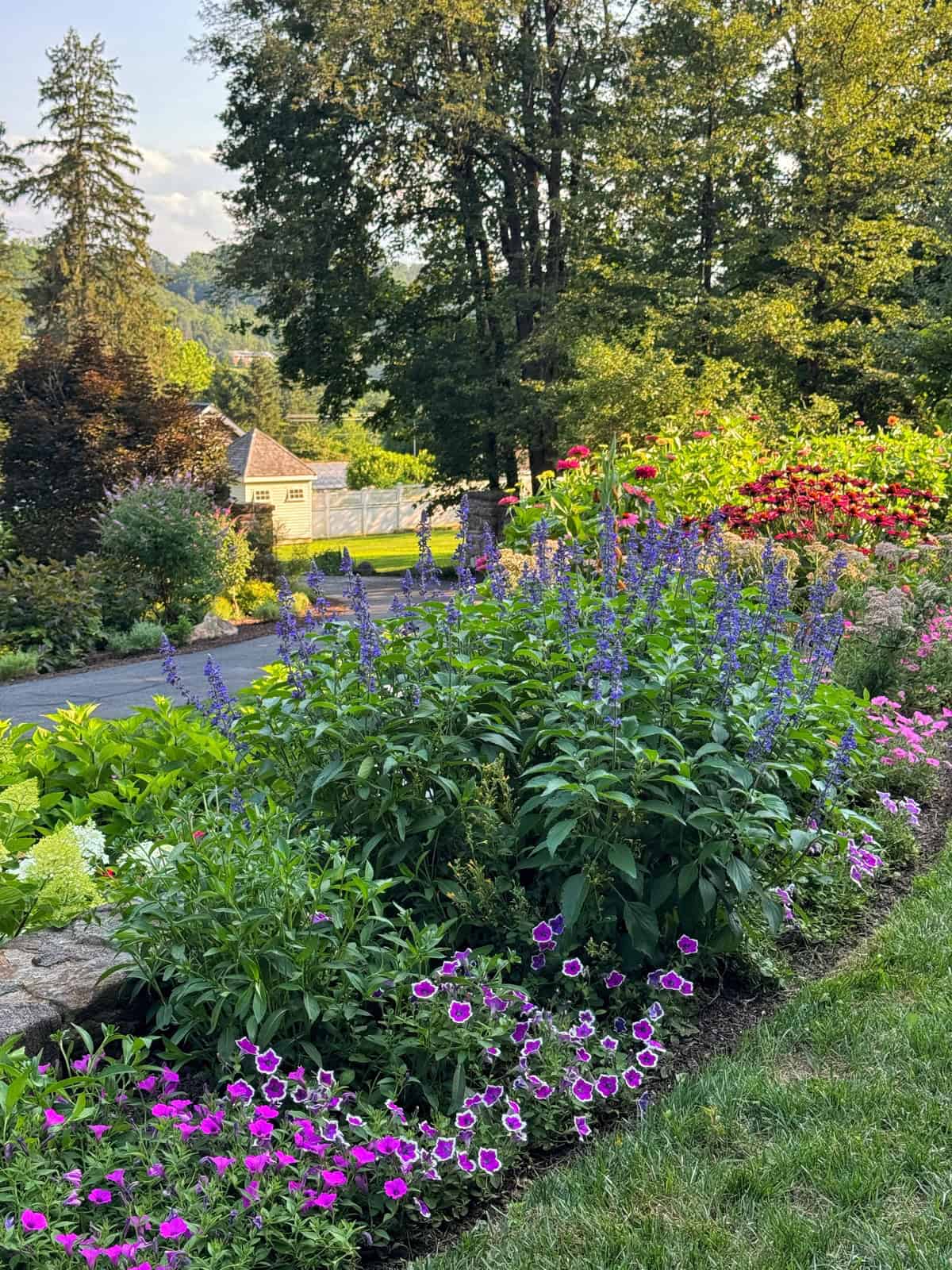
In my own gardens, I think in three simple layers. Taller plants and shrubs create a backdrop that anchors the space. Mid-sized plants provide body and continuity through the season. Lower-growing plants soften edges and weave everything together. When these layers are clearly defined, the garden feels deep and lush even when individual plants have room to grow.
This approach took time to learn. Early on, I placed plants based mostly on bloom color and timing, which often led to flat-looking beds. As I began observing how plants matured and interacted, I started arranging them with their final height and form in mind. The result was a garden that felt fuller without adding more plants, simply by using space more intentionally.
Layering also makes maintenance easier. When plants are placed where they naturally belong, they support one another instead of competing. Taller plants shade lower ones, dense foliage suppresses weeds, and the garden becomes more self-sustaining over time. This is a key reason layered beds align so well with a low-maintenance cottage garden approach.
Let Plants Touch Without Competing
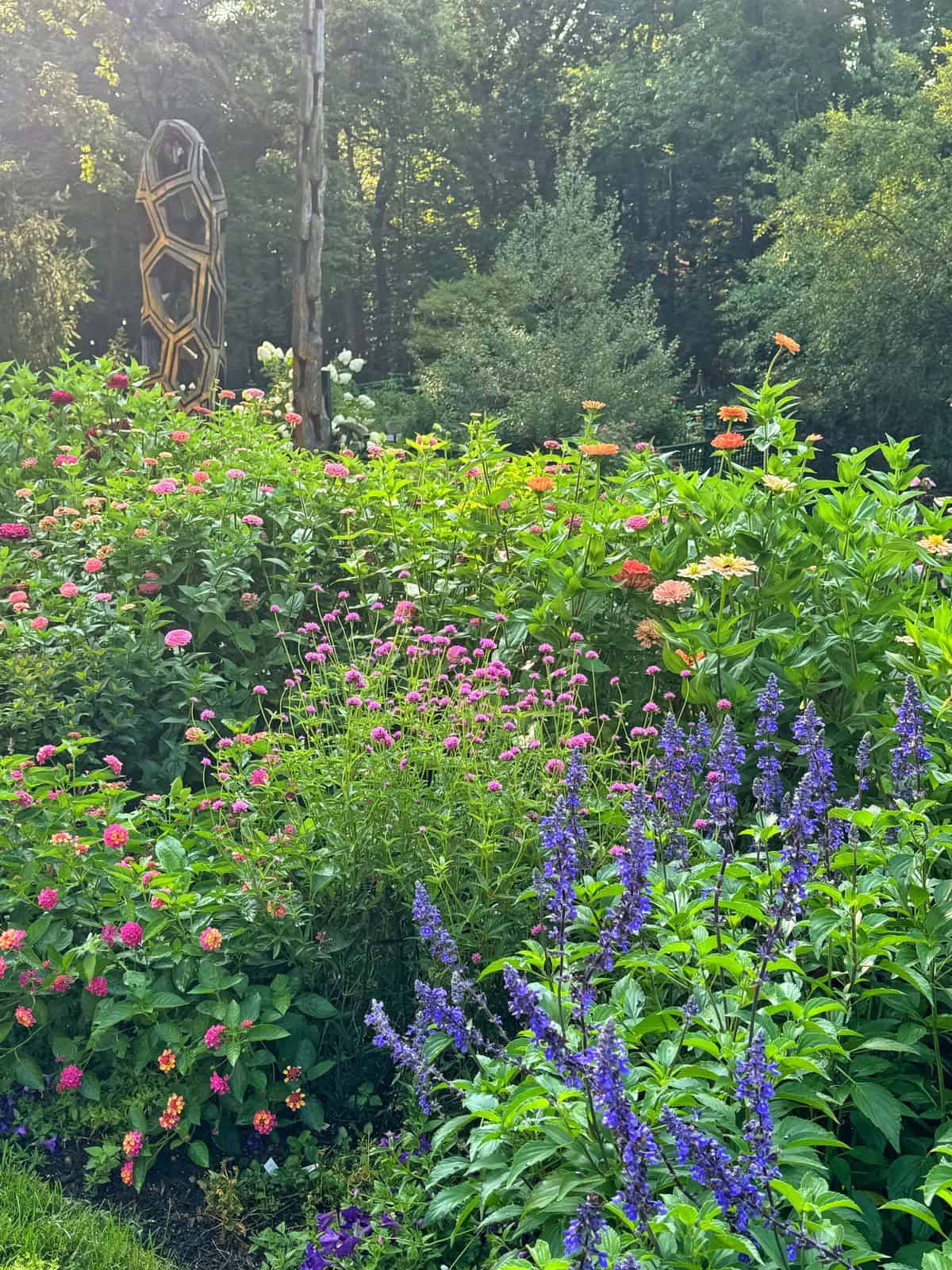
One of the defining traits of a cottage garden is that plants appear to mingle and brush against one another. That closeness is what gives the garden its soft, abundant feel. What keeps it from looking crowded is understanding the difference between plants touching above ground and competing below it.
Earlier in my gardening years, I often assumed that if plants were touching, something was wrong. I would thin, move, or remove plants too quickly. Over time, I learned that light contact between foliage is not only natural, it is desirable. It creates continuity and helps the garden read as a whole rather than as a collection of individual plants.
What matters more is what is happening beneath the surface. Plants with similar root systems placed too closely can struggle, especially during hot, dry stretches. In my garden, where summers are often hot and humid, I have learned to watch for signs of stress rather than reacting to how full the bed looks. When plants are chosen thoughtfully and spaced with maturity in mind, they can touch above ground without competing for resources below.
This balance is one of the reasons cottage gardens feel relaxed rather than rigid. Allowing plants to lean into one another slightly creates softness and movement while still preserving plant health. It also reduces the urge to constantly intervene, which supports the long-term goal of a low-maintenance cottage garden.

Editing Is What Keeps Full Gardens From Becoming Messy
Even the most thoughtfully designed cottage garden needs editing over time. This is not a sign that something went wrong. It is part of how a full garden stays balanced and intentional instead of slipping into chaos.
Early on, I viewed editing as a failure. If a plant needed to be removed or reduced, I assumed I had made the wrong choice. After years of gardening and watching beds mature, I came to understand that editing is simply how gardens evolve. Plants grow, conditions change, and what worked beautifully one year may become too dominant the next.
In my own gardens, I now expect to make adjustments. Some plants outgrow their space. Others lose vigor and quietly fade. Editing allows me to maintain the structure and rhythm of the garden while preserving the relaxed cottage feel. Removing or reducing plants creates breathing room and keeps repetition clear, which is essential for a garden that looks full without feeling crowded. I love to make these changes in the fall when the growing season comes to a close to improve next year’s garden.
This mindset is closely tied to how to decide which plants belong in a cottage garden. When plants are chosen thoughtfully, editing becomes easier and less frequent. The garden largely manages itself, with occasional refinement rather than constant correction.
Editing is also what makes cottage gardens forgiving. There is no fixed endpoint. The goal is not perfection, but balance. A garden that is allowed to change and be adjusted over time will always feel more natural and welcoming than one that is forced to stay the same.
Final Thoughts About Why Cottage Gardens Look Full Without Feeling Crowded
Cottage gardens look full without feeling crowded because fullness is created with intention. Repetition, thoughtful spacing, layered planting, and ongoing editing all work together to create a garden that feels generous rather than overwhelming. When these principles are understood, abundance comes from design, not from cramming more plants into a space.
Much of this understanding comes with time. After nearly thirty years of gardening, I have learned that the most successful cottage gardens are not rushed or forced. They are shaped gradually through observation, patience, and a willingness to adjust. Plants are allowed to grow into their space, reveal their habits, and earn their place in the garden.
These ideas are part of the same low-maintenance cottage garden principles that guide every bed I design. When those principles are applied consistently, a garden can feel lush and charming while remaining manageable and enjoyable to care for. If you are still in the planning phase, understanding how to decide which plants belong in a cottage garden will help everything else fall into place.
A cottage garden does not need to be crowded to feel full. It needs balance, intention, and the confidence to let plants do what they do best.
Thank you for visiting the blog today!
Enjoy your day! xo

Originally Published . Last Updated .

Thank you for the information. I will use it now when I design my gardens! I found the information very helpful!
I am so grateful that you found this helpful June!
This has been so helpful. It came at just the right time as I have a new flower bed going in. Thank you so much!
Hey Nancy! I’m so glad you found it all helpful!