
African Violet Not Blooming? Your Guide to Gorgeous Flowers Again

African violet not blooming? Discover common reasons like light, soil, and watering issues. Get expert tips to encourage vibrant flowers on your African violet again!
As an avid gardener, there’s a particular satisfaction that comes from nurturing a plant from humble beginnings to a gorgeous display. And for me, few things beat the consistent, beautiful blooms of a healthy African Violet. You bring one home and it’s a showstopper because it is showering you with these gorgeous, velvety flowers for weeks on end.
Then, inevitably, the show ends. And sometimes, frustratingly, it just… stops. No new buds, no vibrant petals, just a beautiful green rosette staring back at you. You wait for them to return, thinking the plant is taking a break, but then nada. That’s precisely what happened with one of my African Violets, and I know I can’t be the only one who’s experienced this sudden halt in floral production. So let’s drill down on why that happens and how to fix it! Because it is fixable.
(Posts on stacyling.com may contain affiliate links. Click HERE for full disclosure.)
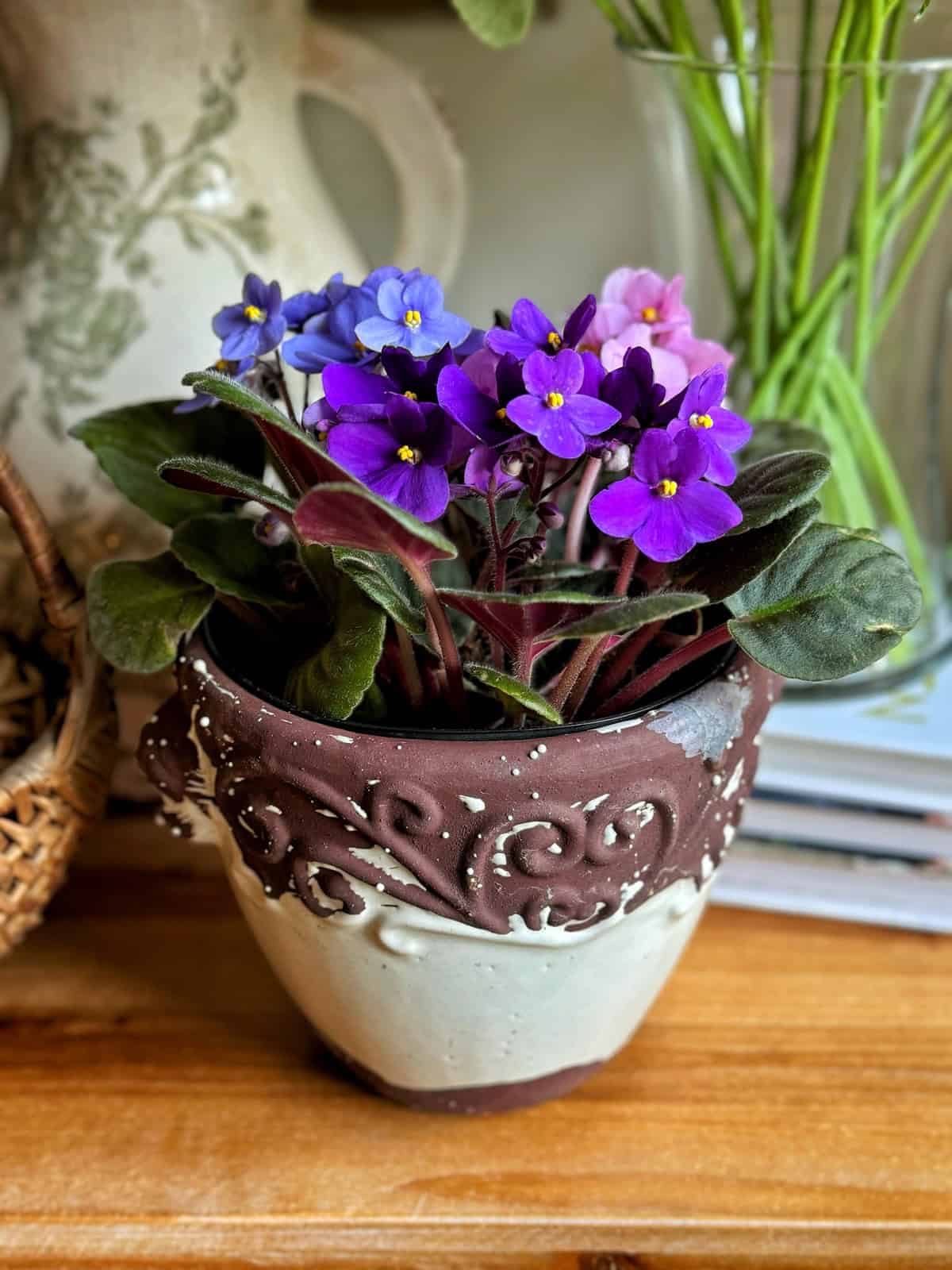
African Violet Not Blooming? Here are 6 Reasons Why and How to Fix it!
1. The Great Light Deception: Are They Getting Enough (or Too Much)?
This is, hands down, the number one reason your African Violet likely stopped blooming. They might have been happy in their spot initially, but things change!
- The Problem: African Violets are surprisingly particular about their light. They crave bright, indirect light to produce those stunning flowers. If they were blooming beautifully and then stopped, consider if anything shifted. Did a tree outside grow bigger, blocking more light? Did you move the plant? Is it winter now, and the sun’s angle has changed dramatically? Too little light means the plant just doesn’t have the energy to produce flowers. On the flip side, too much harsh, direct sun (especially afternoon sun) can scorch their leaves and stress them out, making them unwilling to bloom.
- My Fix (and yours!): My African Violet was thriving in a north-facing window for months. Then, as the seasons shifted, it just wasn’t getting enough hours of that gentle, consistent light. I’ve now moved it to a slightly brighter spot, still indirect, near an east-facing window. If you don’t have ideal natural light, a grow light for 12-14 hours a day can be a game-changer. Just make sure it’s not too close – about 12-18 inches away is usually perfect. This is the grow light I use for my houseplants.
2. Hungry, Hungry Violet: When Nutrients Run Low
Imagine trying to run a marathon on an empty stomach. That’s what your African Violet is doing if it’s trying to bloom without enough fuel!
- The Problem: When they’re actively blooming, African Violets are using up a lot of phosphorus, the nutrient crucial for flower production. If you haven’t fertilized in a while, or if you’re using a general houseplant fertilizer not specifically formulated for African Violets, your plant might be experiencing a nutrient deficiency.
- My Fix (and yours!): I’m a big believer in “weakly, weekly” fertilizing. I was using a gentle organic fertilizer but have since switched to a specialized African Violet fertilizer (they’re typically higher in phosphorus, represented by the middle number in the N-P-K ratio, e.g., 12-36-14). I dilute it to about 1/4 or 1/2 strength and feed every time I water.

3. Too Much Elbow Room? Pot Size Matters!
This might sound counterintuitive for us gardeners who love to give our plants space, but African Violets are a little peculiar.
- The Problem: African Violets are notorious for preferring to be slightly root-bound. If they’re in a pot that’s too large, they’ll focus all their energy on growing roots to fill that space, rather than on producing those beautiful blooms. If your plant has been in the same pot for a long time and has been growing lots of leaves but no flowers, this could be it.
- My Fix (and yours!): The general rule of thumb is that the pot diameter should be about one-third the diameter of the plant’s leaf span. So, for a plant with a 9-inch leaf span, a 3-inch pot is ideal. If your violet is swimming in its current home, it might be time to gently downsize. When I last repotted, I actually kept my violet in the same size pot, but refreshed the soil (more on that next!).
4. Old Dirt, No Go: The Importance of Fresh Soil
Even the best potting mix eventually breaks down, compacts, and loses its oomph.
- The Problem: Over time, the soil in your African Violet’s pot can become depleted of nutrients, compacted, and lose its airy structure. This leads to poor drainage and aeration, which suffocates roots and prevents them from taking up water and nutrients efficiently. A stressed root system equals no blooms.
- My Fix (and yours!): I aim to repot my African Violets every 6-12 months, even if it’s just refreshing the soil in the same pot. I always use a light, airy potting mix specifically formulated for African Violets – it drains well and provides the right amount of aeration. This simple step can truly revitalize a stagnant plant.

5. The Root of All Evil (or Lack Thereof): Improper Watering
As a low-maintenance gardener, I appreciate consistency, and African Violets are right there with me. Erratic watering is a blooming no-no.
- The Problem: Both overwatering and underwatering can stress an African Violet to the point of not blooming. Overwatering leads to root rot (a silent killer!), while underwatering causes the plant to shut down. Using cold water can also shock the roots.
- My Fix (and yours!): I wait until the top inch of soil feels dry to the touch before watering. Stick your finger into the soil and really feel it before you water. I prefer bottom-watering (placing the pot in a saucer of water and letting it soak it up from below) as it ensures the roots get what they need without wetting the leaves, which can lead to spots. I also always use room-temperature water. Consistency is key here!
6. The “Neck” of the Problem: An Aging Violet
As African Violets get older and shed their lower leaves, they can develop a “neck” – a bare, woody stem that extends above the soil line.
- The Problem: This neck indicates the plant isn’t fully anchored, and its older root system might not be functioning optimally. A plant struggling with its foundation isn’t going to put energy into blooming.
- My Fix (and yours!): This is a simple fix called “neck repotting.” Gently scrape off the hard outer layer of the neck with a knife, then replant the violet deeper into its pot so the “neck” is buried in fresh soil. New roots will form along the buried stem, giving your plant a new lease on life and energy for blooming!

So Why is My African Violet Not Blooming? Here’s My Take!
Now that we’ve covered the most common culprits, let’s drill down into my specific African Violet that sparked this post. It was a prolific bloomer for nearly a year, then suddenly, crickets. I decided to methodically go through each potential issue, observing and adjusting.
First, light. During the year, my African Violet sits less than two feet away from a bright south-facing window. It gets great ambient light, but as summer rolled in, I moved it outdoors where it is in full shade on my back porch. I don’t think light is the issue with my plant per se, but I decided to move it to an area of the porch where it would receive a little more filtere sunlight than zero.
Next, fertilizer. I consistently feed mine with this organic liquid fertilizer every time I water like I do with all of my other houseplants. The foliage is perfect but there are no flowers. So it’s possible my violet just doesn’t love the organic fertilizer enough to flower so I’ve resumed its regular feeding schedule with a high-phosphorus African Violet specific blend.
I recently repotted my plant with an African Violet soil and earth worm castings to improve soil health in these clear plastic nursery pot. Why clear pots? Because you can see the soil and the root system without ever disturbing the plant. This makes them much easier to care for.
While repotting, I didn’t see any neck issues so that was not part of the problem. So this leads me to looking at my watering practices. I’m pretty consistent with bottom-watering, and it drains well, so I initially ruled this out. But thinking back, there were a couple of times I might have let it get a tad drier than usual before watering. Not enough to cause wilting, but perhaps enough to signal stress to a plant trying to bloom. So, I’ve recommitted to my consistent “just dry to the touch” method.
By systematically addressing each of these points – especially the light, consistent feeding, and a fresh soil – I’m confident my African Violet will be back to bright beautiful blooms. It’s a process of observation and response, which, as gardeners, we know all too well!

African Violet Not Blooming? Don’t Give Up – It Wants To!
It’s frustrating when our beloved plants don’t perform as expected, especially when they’ve been star performers. But remember, a non-blooming African Violet isn’t a lost cause! Most of the time, it’s just a matter of fine-tuning their environment and care routine.
Take a good look at your plant and its current conditions. Has anything changed? Are you consistent with its care? With a little detective work and adjustment, you’ll soon have your African Violet bursting with those vibrant, cheerful blooms once again.
What’s your biggest African Violet blooming challenge? Or have you successfully revived a non-bloomer? Share your tips and stories in the comments below – we’re all in this green journey together!
For more information about how to help your African violet bloom, please check out these articles from the Minnesota Cooperative Extension, University of Georgia Cooperative Extension, and the Penn State Cooperative Extension.
To drill down on houseplant care basics and grow an indoor garden that thrives, please read my articles:
- Houseplant Care 101
- From Shop to Home: How to Acclimate Your Tropical Plants
- How to Water Indoor Plants Like a Pro
- How to Revive Houseplants You Thought Were Goners
- Is Your Houseplant Getting Enough Light? Here’s How to Tell.
Thank you for visiting the blog today!
Enjoy your day! xo


Originally Published . Last Updated .

Thanks for the tips on African Violets! I need to repot mine in fresh soil.
I’m so glad you found it helpful Elaine!