
Why Your Peonies Aren’t Blooming (And How to Fix It)

Why your peonies aren’t blooming and how to fix it. Learn common causes like planting depth, sun, and care for better flowers.
Peonies that don’t bloom are one of the most frustrating garden problems. You get a healthy plant with lots of lush foliage, maybe even buds forming, and then nothing. No flowers, or buds that never open.
The good news is that peonies are not unpredictable. When they fail to bloom, there is almost always a specific reason behind it, and in most cases, it’s something you can fix.
I’ve been growing peonies for nearly 30 years in my Zone 6 garden, and I’ve run into all of these issues at one point or another. When we moved a few years ago, I planted more than 30 new peonies, so I’m right back in that phase of watching them establish, set buds, and prepare to bloom again.
For a full foundation on growing them well, you can start with my guide on how to care for peonies, where I cover planting, site selection, and long-term success.
In this post, I’ll walk through the most common reasons peonies don’t bloom and exactly how to fix each one so you get the flowers you’re expecting.
(Posts on stacyling.com may contain affiliate links. Click HERE for full disclosure.)

Watch Why Your Peonies Aren’t Blooming (and What to Do About It)
Peonies are one of those plants that people plant once and expect to bloom beautifully every year, so it’s frustrating when you end up with lots of foliage and no flowers.
There’s usually a clear reason why it’s happening, whether it’s planting depth, sunlight, or even how the plant was handled the previous season.
In this video, I walk through the most common reasons peonies don’t bloom and exactly what to check so you can get those big, full blooms they’re known for.

Why Peonies Don’t Bloom
Planting Too Deep
This is the most common reason peonies don’t bloom.
Peonies grow from small buds at the crown, often called “eyes,” and those need to sit just about one to two inches below the soil surface. If they’re planted too deep, you’ll end up with a healthy, full plant that produces plenty of leaves but no flowers.
I see this happen all the time, especially in established gardens (including my own). Over time, soil can settle or mulch can build up around the base, slowly burying the crown deeper than it should be.
If your peony hasn’t bloomed in a few years, this is always the first thing I check.
And if you’re not sure what correct planting depth looks like, I walk through it step by step in my post on how to plant peonies.
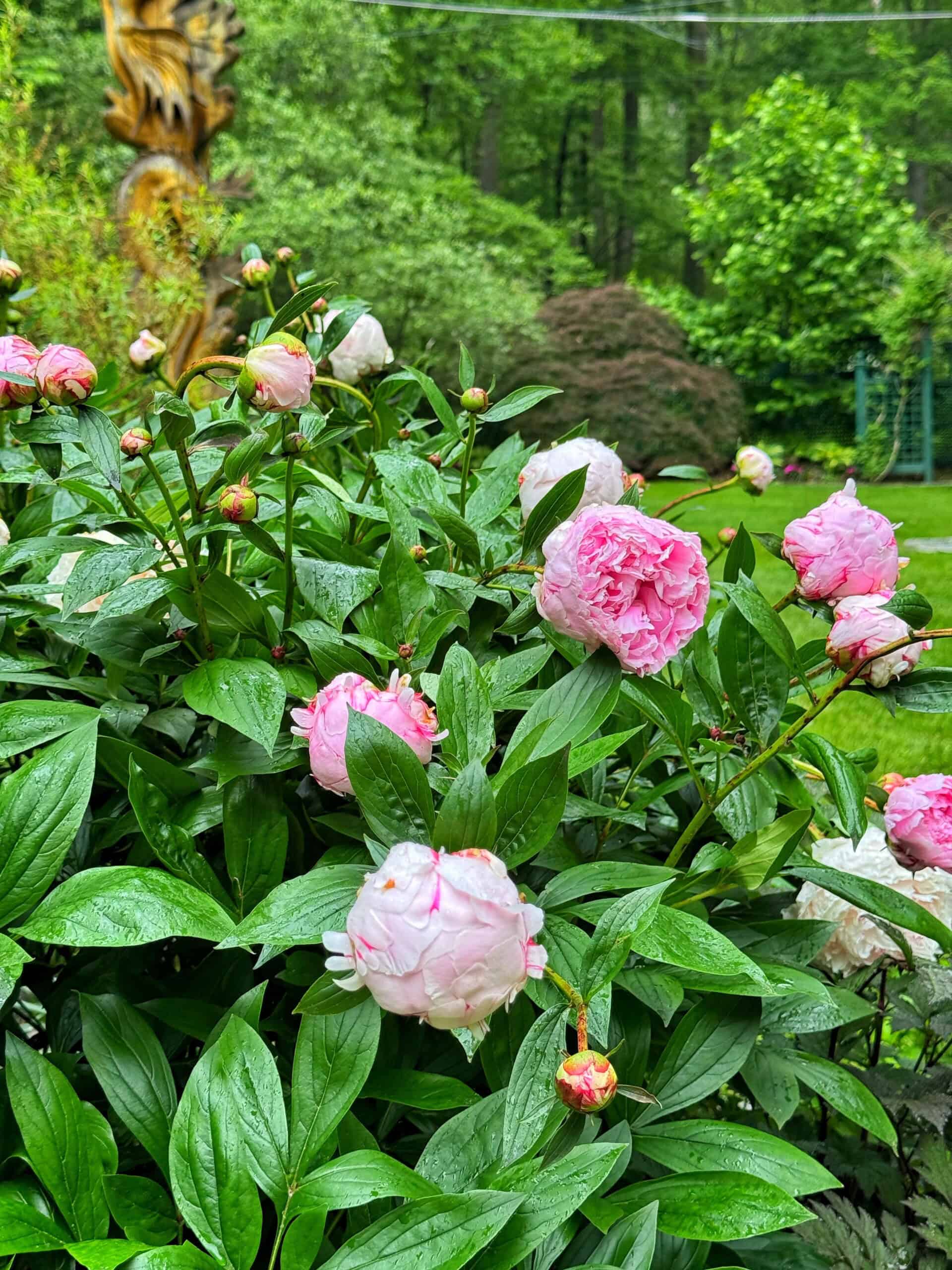
Not Enough Sun
Peonies need full sun to bloom well. They can tolerate a bit of shade, but flower production drops quickly when they are not getting enough direct light. As gardens mature, it’s common for nearby trees or shrubs to start casting more shade than they did when the peonies were first planted.
If your plant looks full and healthy but isn’t flowering, check and see how much sunlight it receives. Light is often the missing piece.

Too Much Nitrogen
This is one that surprises a lot of gardeners.
If your peony is large, lush, and deep green but not blooming, it may be getting too much nitrogen. This often happens when lawn fertilizer reaches the bed or when nearby plants are being fed regularly.
Too much nitrogen pushes leafy growth instead of flowers, which is why you end up with a beautiful plant that never actually performs.
Personally, I don’t fertilize my peonies at all. They don’t need heavy feeding, and because their bloom window is so short, it’s not where I focus my effort. Instead, I focus on building healthy soil by adding compost and organic matter over time. That supports the plant more naturally without overstimulating leafy growth.
If you suspect fertilizer might be the issue, the simplest fix is to pull back and let the plant rebalance.
And if you want to be certain, a soil test through your local cooperative extension office is always a smart step. It gives you a clear picture of what your soil actually needs instead of guessing.
To learn more about how I fertilize peonies in my zone 6b gardens, please visit my complete guide on how to grow peonies here.

Cutting Back Too Early
What you do after peonies bloom matters more than people realize. The foliage is still actively feeding the plant after flowering, helping it store energy for next year’s blooms. If you cut it back too early, especially right after blooming, you can reduce flower production the following season.
For best results, I leave the foliage in place until fall, when it naturally declines or is killed back by frost.
Bud Blast
If your peonies form buds that never open, you’re likely dealing with bud blast. This is usually caused by environmental stress during bud development, such as a late frost, sudden temperature swings, or inconsistent moisture. In some cases, the plant may not have enough stored energy to fully support bud development.
It can be frustrating, but it’s typically not a long-term issue. Once growing conditions stabilize, peonies usually return to normal blooming the following season.

Plants Are Still Getting Established
Peonies are slow to settle in, and they reward patience. If they are newly planted or recently moved, it can take a couple of years before they bloom well. During that time, they are focused on building a strong root system.
If everything else looks right, this may simply be a matter of giving them more time. I’ve seen some peonies in my gardens take years to flower. Be patient, as it is part of the process.
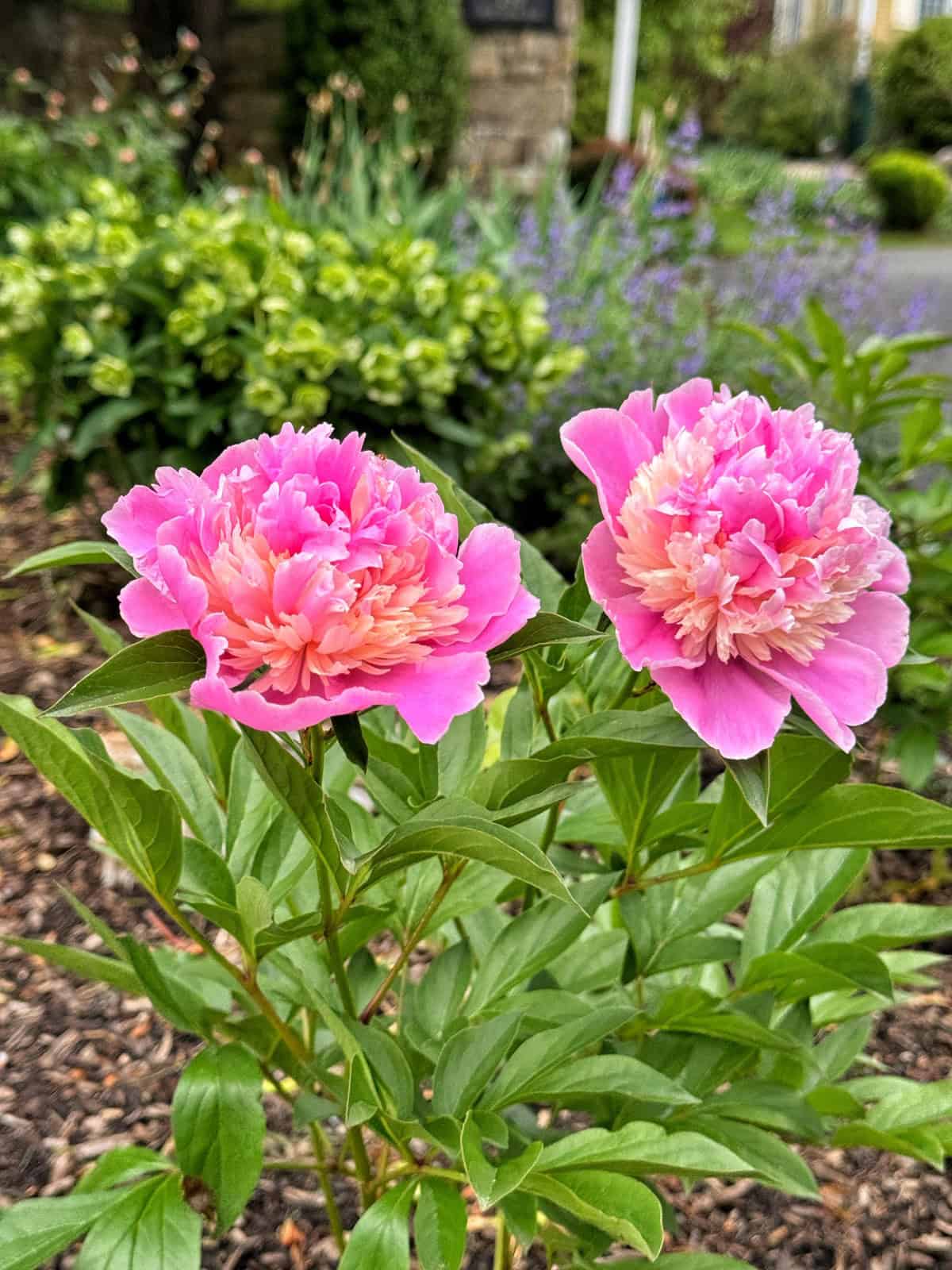
Lack of Support
Once peonies do bloom, those flowers are heavy. If they flop over, it’s not a bloom issue. It’s a support issue. The flowers don’t look great when they flop onto the ground, so I suggest supporting them early.
I use grow-through supports early in the season to keep everything upright so the flowers can be enjoyed properly. You can see exactly how I do that in my post on keeping peony blooms upright and off the ground.

Quick Recap
If your peonies aren’t blooming, it usually comes down to one of a few key factors: planting depth, sunlight, fertilizer, pruning timing, weather stress, or simply giving the plant time to establish. Once those are dialed in, peonies are incredibly reliable and long-lived.
If Your Peonies Bloom but Your Garden Still Feels Empty
Getting peonies to bloom is just the first step. Because their bloom window is short, I never plant peonies on their own. I always pair them with other perennials that carry the garden into summer and fall.
If you want to see exactly what I plant with peonies to keep my garden full all season, take a look at my guide on what to plant with peonies for a garden that never looks empty.
And if you’re trying to extend your peony season itself, it helps to plant a mix of early, mid, and late varieties. I break that down in my post on how to make peonies bloom longer.

If You Want Peonies That Perform Year After Year
If you’ve ever felt like your plants should be doing better than they are, you’re not alone.
A lot of it comes down to understanding your specific garden conditions and choosing plants that actually thrive in them. That’s the approach I focus on in my book, Bricks ‘n Blooms Guide to a Beautiful and Easy-Care Flower Garden, where I walk through plant selection, garden design, and the system I use so plants don’t just grow, they perform.
And if you find yourself thinking you should remember what worked last season but never write it down, that’s exactly why I created The Bricks ‘n Blooms Beautiful and Easy-Care Flower Garden Planner. Tracking bloom timing, plant performance, and what you would change is what allows your garden to improve year after year.
The book gives you the knowledge. The planner gives you the system to build on it.

Final Thoughts on Why Peonies Don’t Bloom
Peonies are not difficult, but they are specific. After growing them for nearly 30 years, I can tell you that when they don’t bloom, it’s almost never random. It usually comes down to one of a few things like planting depth, sunlight, or timing. Once you correct those, they settle in and become one of the most reliable perennials in the garden.
I’ve gone through this process myself more than once, especially after replanting and adding new varieties in my current garden. Even now, as I watch newer plants come up and set buds, it’s a reminder that getting the basics right makes all the difference.
If you’re still troubleshooting, take a closer look at your planting depth and growing conditions in my guide on how to plant peonies and my full post on how to care for peonies. Those two pieces alone solve most bloom issues.
And if your peonies are blooming but not performing the way you want, whether they are flopping or fading too quickly, you can also read how I keep peony blooms upright and how I plan for a longer bloom season with different varieties.
Once your peonies are blooming consistently, the next step is designing around them so your garden doesn’t peak for a few weeks and then fade out.
That’s where companion planting comes in. I walk through exactly how I layer peonies with other perennials for season long impact in this post on what to plant with peonies for a garden that never looks empty.
That’s when your garden really starts to come together.
Thank you for visiting the blog today!
Enjoy your day! xo

Originally Published . Last Updated .

Hi Stacy,
Thanks for all these great tips! I purchased a peony plant and this is its second season. It appears to have peony leaf blotch. I failed to notice this last year and left the pruned cuttings near by the plant. Both years the plant has failed to produced flowers. This year, it produced one bud, but it died on the stem before opening. I thought leaf blotch wouldn’t kill the plant or prevent it from flowering? Since it was originally put in as a plant and not a bulb, could depth still be a problem? I have roses, lilies, tulips, begonias, asters, dahlias, rhododendrons, azaleas that all do great! This plant is set back from the grass line by at least two feet so I don’t think fertilizer is an issue. TIA!
Hi! I’n sorry to hear that. It could be – how deep is it and is it in full sun/well draining soil?