
Best Companion Plants for Peonies (What to Plant for Season-Long Color)

Best peony companion plants for spring, summer, and fall. Create a layered garden that stays full long after peonies fade.
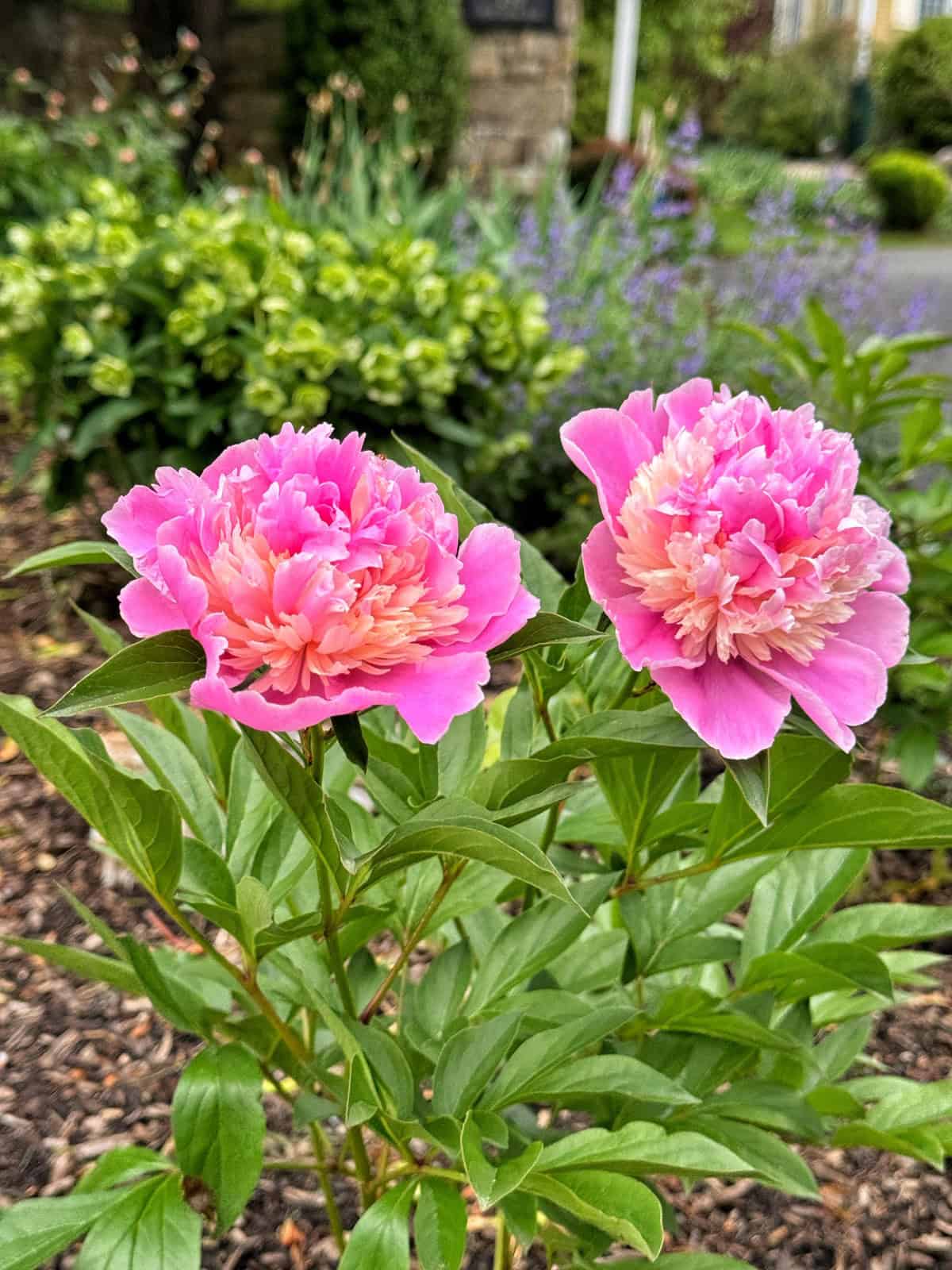
Peonies are breathtaking, but they are not long performers. If you’re wondering what to plant with peonies so your garden doesn’t look empty after they fade, the answer is simple: layer them with the right companion plants.
The best peony companion plants are perennials that thrive in full sun and well-drained soil, bloom alongside peonies in late spring, and then carry the garden into summer and fall. Plants like allium, baptisia, nepeta, salvia, coneflowers, sedum, and asters create succession, structure, and contrast long after peony petals drop.
For a few glorious weeks, peonies steal the show. The blooms are lush, romantic, and unforgettable.
And then? You’re left with a mound of green foliage and a noticeable lull in the border.
After years of growing peonies in my Zone 6 garden, I’ve learned this: planting them alone is the biggest design mistake you can make. Bloom timing isn’t enough — you need height variation, texture contrast, and seasonal layering.
If you’re new to growing peonies, start with my complete guide to growing peonies and my step-by-step planting tutorial. And if you want to extend their bloom time, don’t miss how I keep my peonies blooming longer.
Here’s exactly what to plant with peonies for a garden that performs from spring through fall.
(Posts on stacyling.com may contain affiliate links. Click HERE for full disclosure.)
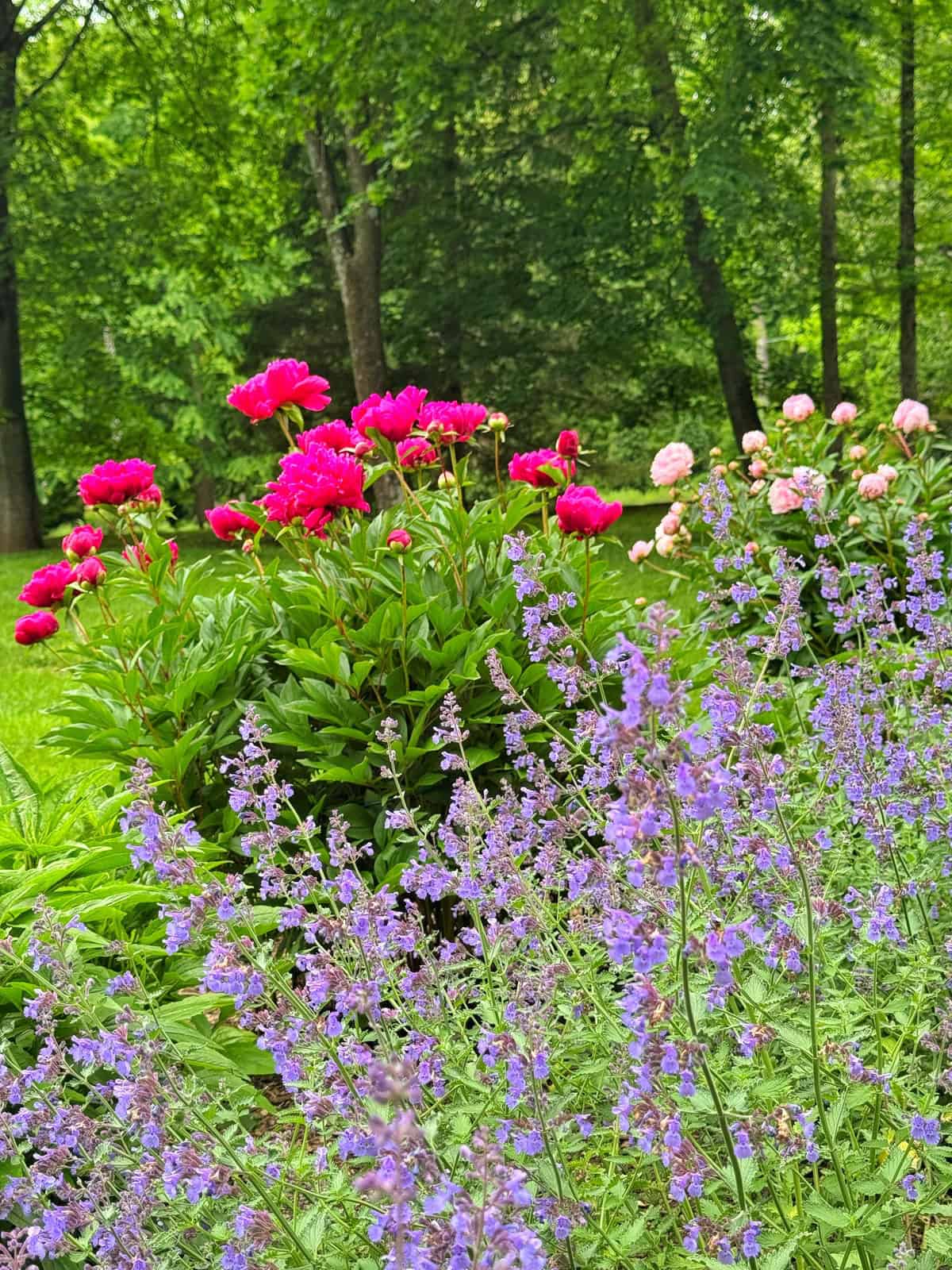
Spring Companions (Bloom With Peonies)
These plants overlap with peony bloom time and enhance their impact instead of competing with them.
Allium (Ornamental Onion)
USDA Zones: 3–8 (some varieties to 9)
Bloom Time: Late spring
Alliums bloom at the same time as most herbaceous peonies, sending up tall stems topped with globe-shaped flowers.
That spherical form is key. Peonies are soft, layered, and rounded. Alliums provide architectural contrast with clean lines and height that rise above the peony foliage.
From a design standpoint, I plant alliums behind or threaded between peonies so the blooms appear to float above them.
From a cultural standpoint, they thrive in the same conditions peonies prefer: full sun and well-drained soil. Because their foliage dies back early, peony leaves later disguise the fading allium foliage so there is a natural succession that keeps the bed tidy.

Bearded Iris (Iris germanica)
USDA Zones: 3–9
Bloom Time: Mid to late spring
Bearded iris bloom just before or alongside peonies, depending on variety.
What makes them excellent companions is textural contrast. Iris foliage is upright and sword-like, while peony foliage is mounded and full. The combination creates visual rhythm rather than a single mass of green.
Both prefer excellent drainage and full sun. In heavier soils, it’s important to keep iris rhizomes slightly exposed and ensure peonies are not planted too deeply — cultural compatibility matters.
I use iris when I want bold, defined color blocks near peonies.
To learn more about how I grow and care for bearded irises, please visit my complete guide to growing bearded iris.

Foxglove (Digitalis purpurea)
USDA Zones: 4–9
Bloom Time: Late spring to early summer
Foxgloves bring vertical drama just as peonies are peaking.
Their tall spires create height and repetition in the border, especially when planted toward the back of a peony grouping.
They prefer moist, well-drained soil and tolerate partial shade, which makes them useful if your peonies receive slightly less than full-day sun.
Foxgloves are technically biennial or short-lived perennials, but they can reseed gently adding a romantic, cottage-garden effect that complements peonies beautifully.
While they have this capability in many gardens, they don’t do that in mine. I need to start my foxgloves from seed every year to have the same effect. To learn more about how I grow foxgloves in my garden year after year, please visit my complete guide to growing foxgloves.

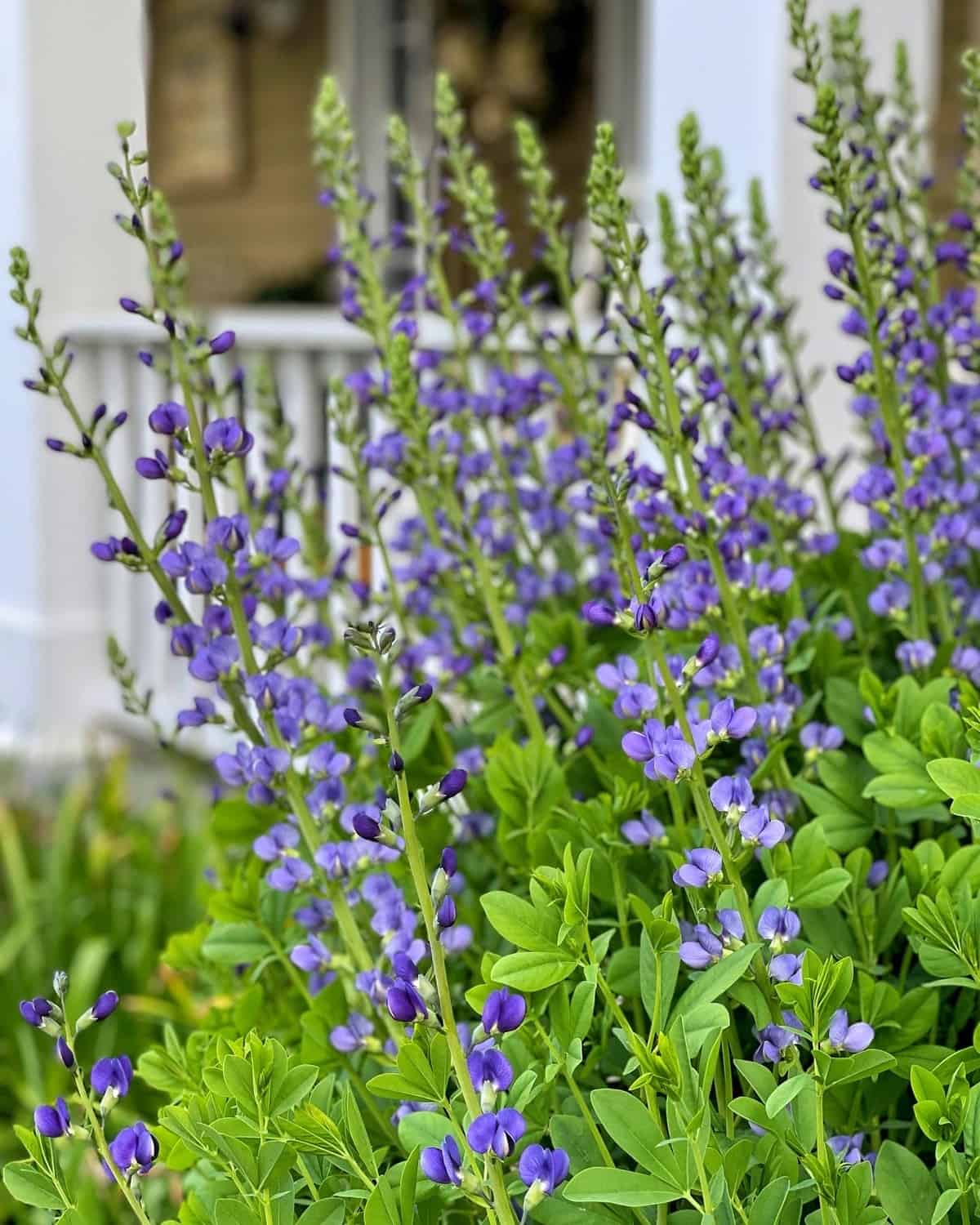
Baptisia (False Indigo)
USDA Zones: 4–9
Bloom Time: Late spring
Baptisia is one of the strongest structural companions you can pair with peonies.
It blooms around the same time, but even after the flowers fade, the blue-green foliage remains upright and shrub-like for the rest of the season.
This is important. Peonies fade quickly. Baptisia holds presence.
Both prefer full sun and average to well-drained soil. Baptisia develops a deep taproot and dislikes transplanting so placement matters from the beginning.
If you want a bed that feels anchored and intentional, baptisia is a powerhouse companion.
Nepeta (Catmint)
USDA Zones: 3–8
Bloom Time: Late spring into summer
Nepeta is one of my favorite softening plants for peonies.
Its airy blue-lavender flowers spill gently at the base of heavier peony blooms, visually lightening the composition.
Unlike peonies, nepeta continues blooming well into summer especially if lightly sheared after the first flush.
It thrives in full sun and tolerates drier conditions once established, making it excellent for the front of the border where soil can dry out more quickly.
Think of nepeta as the transition plant that carries the garden forward. I love it paired with peonies in my gardens!
To learn more about how I grow catmint, please visit my care guide for growing nepeta.

Early to Mid-Summer Companions (Bridge the Gap)
These plants prevent the “post-peony slump.”
Salvia (Hardy Perennial Types)
USDA Zones: 4–9
Bloom Time: Late spring through summer
Salvia overlaps with peonies but truly shines after they fade.
Its vertical flower spikes create repetition and pollinator activity just as peony petals drop.
Most perennial salvias prefer full sun and well-drained soil that is very similar cultural needs to peonies.
A light trim after the first bloom often encourages a second flush.
I use salvia when I want structure and strong color to carry momentum into summer. It’s one of the easiest flowers to grow and I incorporate it in many of my perennial gardens here.
To learn more about how I grow salvias in my perennial cottage gardens, please visit my care guide for growing salvia.

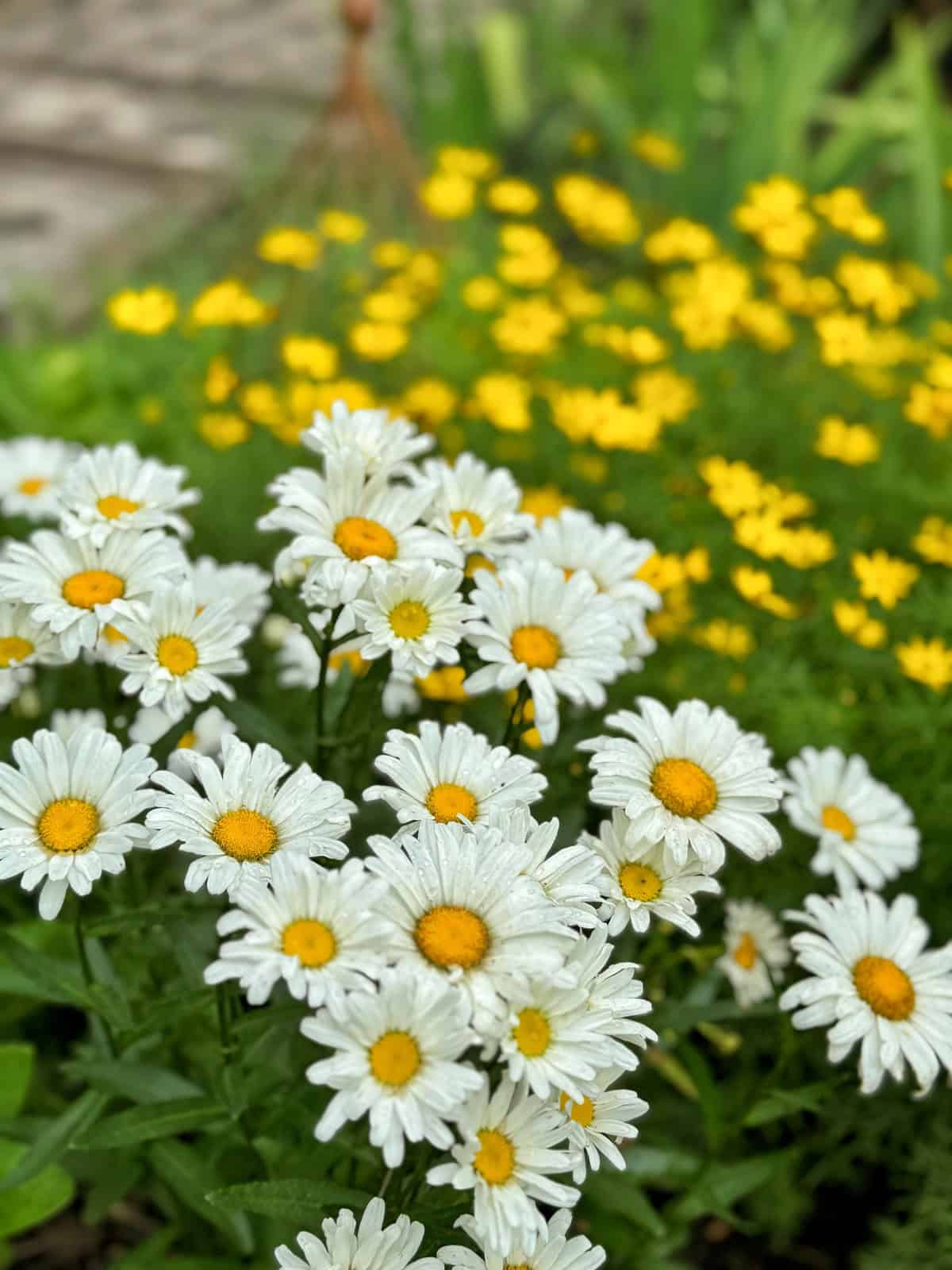
Shasta Daisy (Leucanthemum × superbum)
USDA Zones: 5–9
Bloom Time: Early to mid-summer
Shasta daisies begin flowering just as peonies are finishing, making them a natural bridge into summer.
Their crisp white petals and golden centers bring clarity to the border after the lush, layered texture of peonies. If your peonies are blush, soft pink, or white, Shasta daisies echo that palette early, and then shift the bed into a cleaner, brighter midsummer look once peony blooms are gone.
That transition matters.
Without it, peony beds can feel heavy or overly green after June. Shasta daisies lighten the composition and restore definition.
They thrive in full sun and well-drained soil, which makes them culturally compatible with peonies. In richer soils, they may grow taller and require staking, so I prefer planting them where neighboring perennials can offer subtle support. Dividing every few years helps maintain vigor and prevents centers from thinning out.
I use Shasta daisies in mid-border groupings rather than scattered singles. Repetition creates cohesion…and cohesion is what keeps a seasonal transition from looking accidental.
They’re simple plants but used intentionally, they create a clean summer reset in a peony bed.
Daylilies (Hemerocallis)
USDA Zones: 3–9
Bloom Time: Early to mid-summer
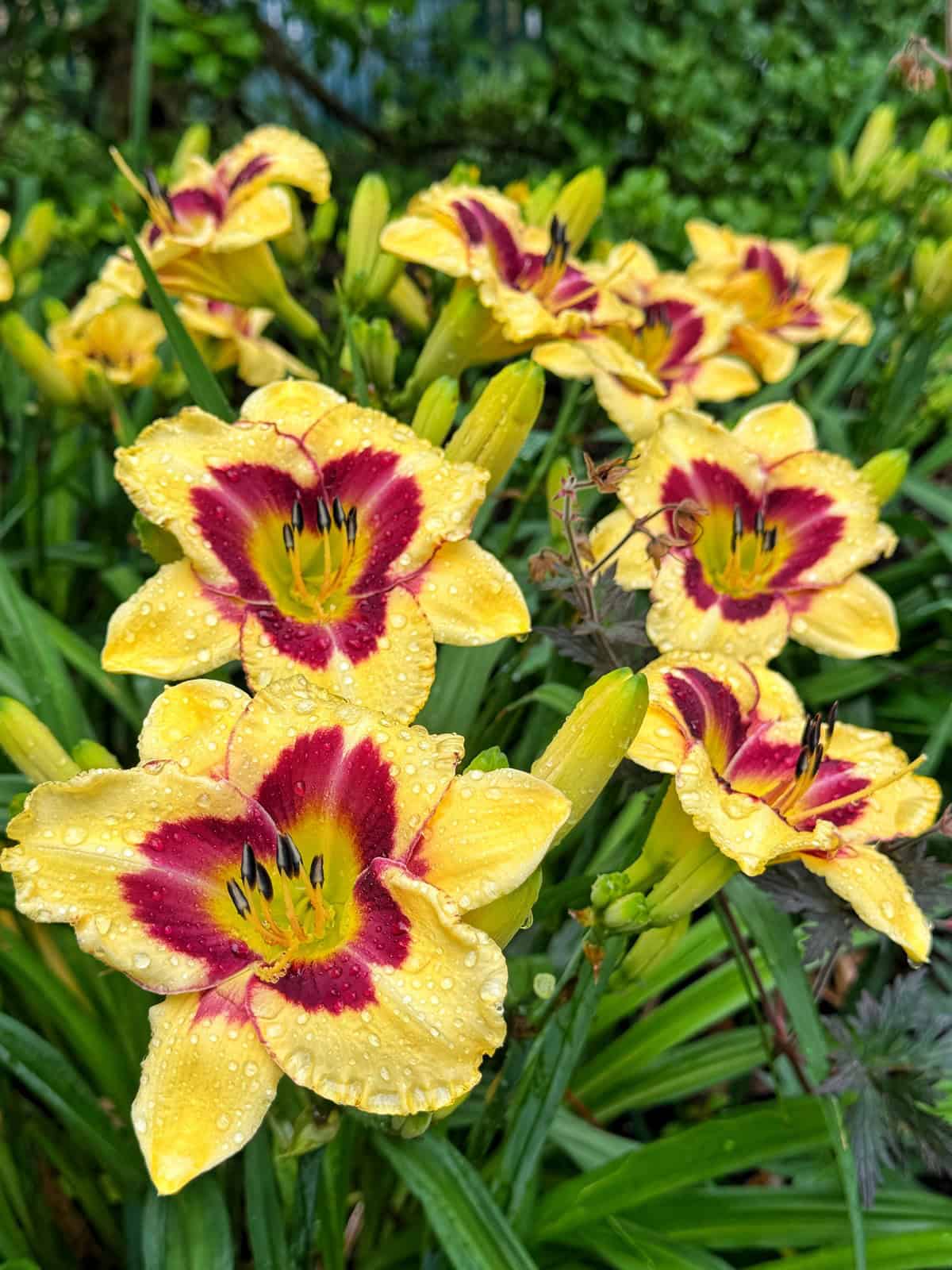
Daylilies step in just as peony petals begin to drop, making them one of the easiest succession partners you can plant.
While peonies create a dense, mounded presence in spring, daylilies bring a more relaxed, arching form that softens the transition into summer. That shift in shape keeps the bed from feeling static. Instead of one rounded mass of foliage, you get movement and contrast.
It’s true that each individual bloom lasts only a day — but mature plants produce multiple buds per scape, extending the overall display for weeks. Planting in generous clumps rather than singles ensures real impact.
Culturally, daylilies are highly adaptable. They tolerate a range of soil types, handle heat well, and perform reliably in full sun — the same conditions peonies prefer. In heavier soils, they’re often more forgiving than many other summer perennials.
I especially like using daylilies behind or beside peonies so their strappy foliage fills gaps left after spring bloom. Reblooming varieties can extend color even further into late summer, strengthening the succession effect.
They may not have the romance of peonies — but they are dependable workhorses that keep the border from collapsing in July.
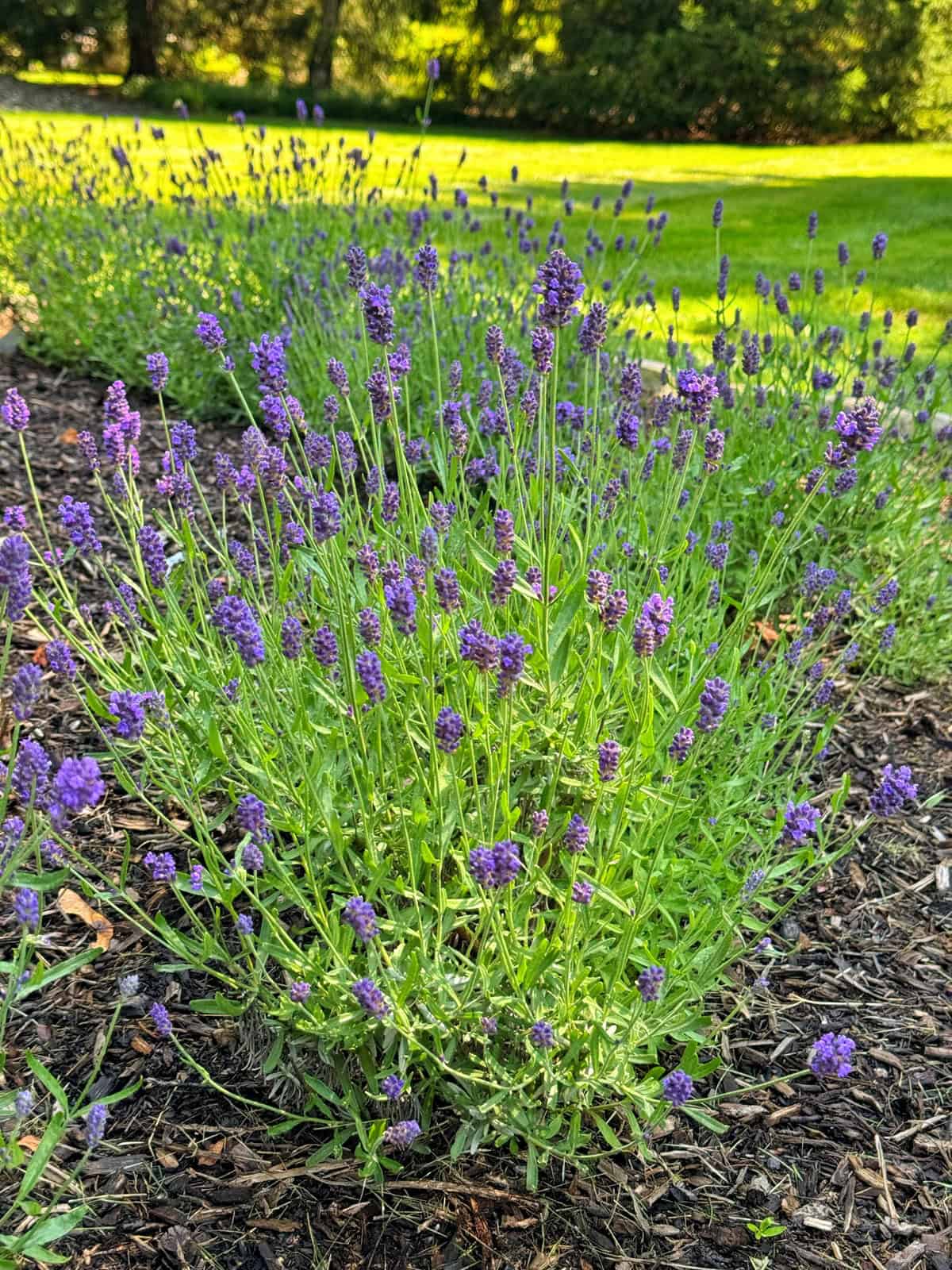
Lavender (Lavandula angustifolia types)
USDA Zones: 5–9
Bloom Time: Early to mid-summer
Lavender adds silver foliage contrast which is something peony beds often lack. The fine texture and fragrance provide sensory variety, and the bloom period follows peonies nicely.
Good drainage is essential. In heavier soils, raised beds or amended planting areas help ensure winter survival.
Lavender works especially well in more structured or formal designs when planted around the base of peonies. I love the contrast in the foliage when the blooms fade as well.
To learn more about how I grow lavender, please visit my care guide for growing lavender here.
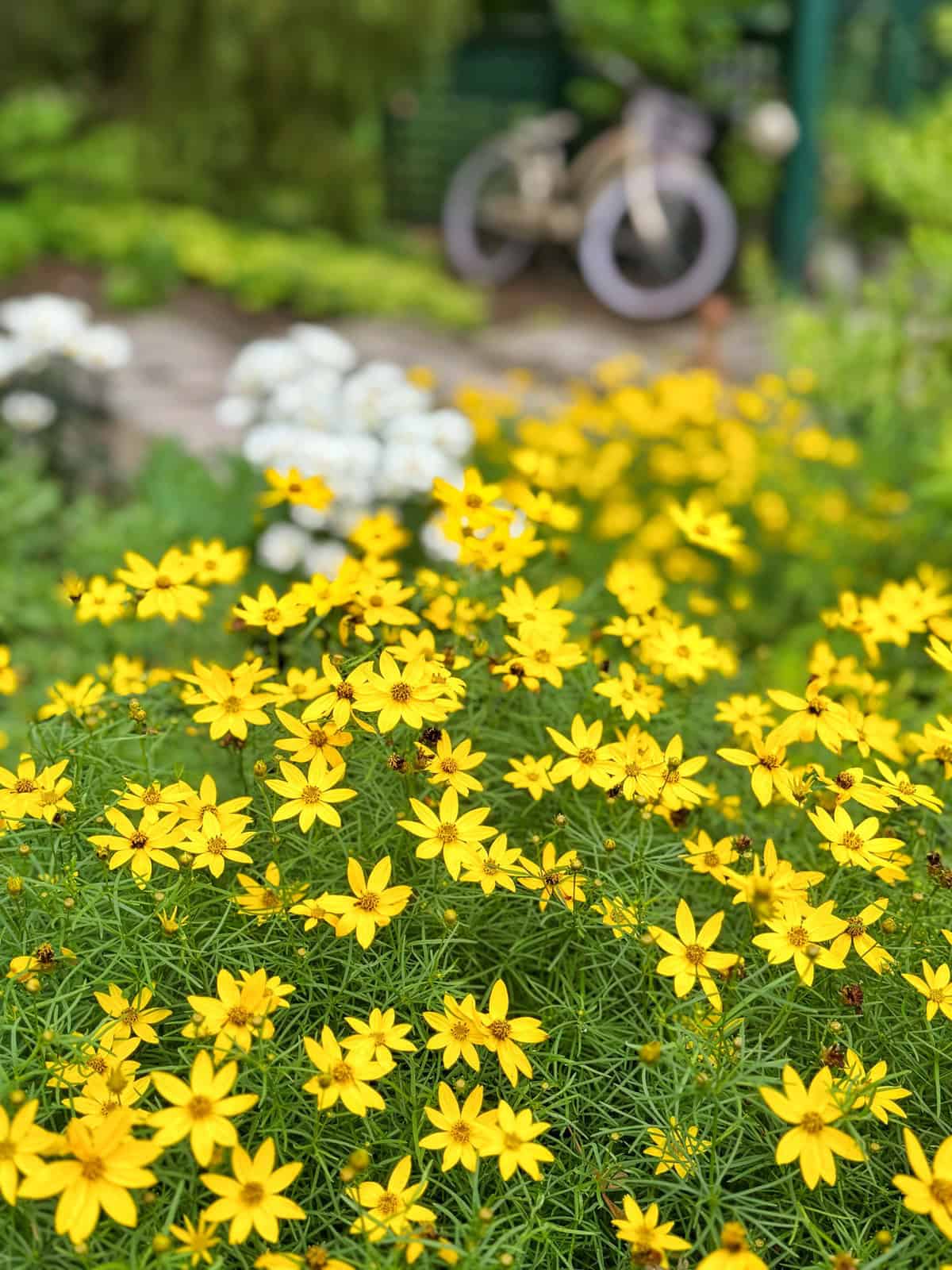
Coreopsis (Tickseed)
USDA Zones: 4–9 (variety dependent)
Bloom Time: Early summer through fall
Coreopsis is one of the most reliable succession bloomers you can plant with peonies.
While peonies finish in late spring, coreopsis begins just as the border needs new energy, and many varieties continue blooming well into late summer or even early fall.
What makes it especially useful in a peony bed is its long performance window and airy texture. The daisy-like flowers add brightness without overwhelming heavier spring blooms, and the fine foliage contrasts nicely with the broad peony leaves.
Coreopsis prefers full sun and well-drained soil, making it culturally compatible with peonies. Once established, it tolerates heat and moderate drought. Deadheading improves rebloom on some varieties, though newer cultivars are bred for extended flowering without heavy maintenance.
I like using coreopsis toward the front or middle of the border where it can weave between larger structural plants like baptisia or salvia. It’s not dramatic — it’s dependable. And dependable is exactly what a peony bed needs after its big spring moment.
To learn more about how I grow tickseed, please visit my care guide for growing coreopsis here.
Late Summer to Fall Companions (Keep the Garden Alive)
This is where thoughtful layering really pays off.
Coneflower (Echinacea)
USDA Zones: 3–9
Bloom Time: Summer into fall
Coneflowers are one of the most reliable ways to carry a peony bed from early summer well into fall.
After peonies finish their lush, layered bloom, coneflowers shift the visual tone of the garden. Their upright stems and prominent central cones introduce structure and definition which is a sharp contrast to the soft, romantic texture peonies bring in spring.
That contrast is important. Without it, a bed that starts with pastel peonies can feel visually flat by midsummer. Coneflowers restore balance with bold form and saturated color.
Culturally, they are well-suited companions. Coneflowers prefer full sun and well-drained soil, just like peonies, and once established they tolerate heat and moderate drought. They are also exceptional pollinator plants, drawing bees and butterflies throughout summer.
Even after blooming, the seed heads persist into fall and winter, adding architectural interest and feeding birds if left in place. I rarely cut mine back immediately — those structural silhouettes extend the season visually long after flowers fade.
If peonies are the spring statement, coneflowers are the summer backbone.
To learn more about how I grow echinacea, please visit my care guide for growing purple coneflower here.

Yarrow (Achillea millefolium and hybrids)
USDA Zones: 3–9
Bloom Time: Early to late summer
Yarrow is one of the most adaptable and long-performing companions you can plant with peonies.
After peonies finish their lush spring bloom, yarrow introduces flat-topped flower clusters in shades of white, yellow, peach, or soft pink. The fine, fern-like foliage contrasts beautifully with the broad, dense peony leaves, creating a lighter texture in early summer.
What makes yarrow especially valuable is its durability. It thrives in full sun and sharply drained soil and tolerates heat and drought once established. In fact, overly rich soil can cause weak stems, so leaner conditions often produce stronger plants.
I use yarrow toward the middle or front of a peony bed where its horizontal flower form adds a different structural layer than vertical plants like salvia or coneflowers. Deadheading encourages rebloom, and even fading flower heads can add subtle late-season interest.
If your goal is a resilient, lower-maintenance succession plant, yarrow is a strong addition.
To learn more about how I grow yarrow in my gardens, please visit my complete guide to growing yarrow here.

Black-Eyed Susan (Rudbeckia)
USDA Zones: 3–9
Bloom Time: Mid-summer to fall
Rudbeckia is one of the most dependable late-season anchors you can add to a peony bed.
By the time peonies have finished and early summer perennials begin to slow down, rudbeckia steps in with saturated golden blooms and dark centers that add contrast and warmth to the border.
What makes it especially effective with peonies is the seasonal shift it creates. Peonies bring soft, romantic texture in spring. Rudbeckia introduces bold color and strong form in summer — preventing the garden from feeling washed out or overly pastel as the season progresses.
Most varieties prefer full sun and well-drained soil and tolerate heat, humidity, and a range of soil types once established. In my experience, they perform best when planted in generous drifts rather than as single specimens. Massed plantings create movement and repetition, which keeps the bed from feeling fragmented.
Some types (like Rudbeckia fulgida ‘Goldsturm’) are reliably perennial, while others may reseed freely. Deadheading can extend bloom, but leaving seed heads in place adds fall structure and supports birds later in the season.
To learn more about how I grow rudbeckia in my gardens, please visit my complete guide for growing black-eyed susan.

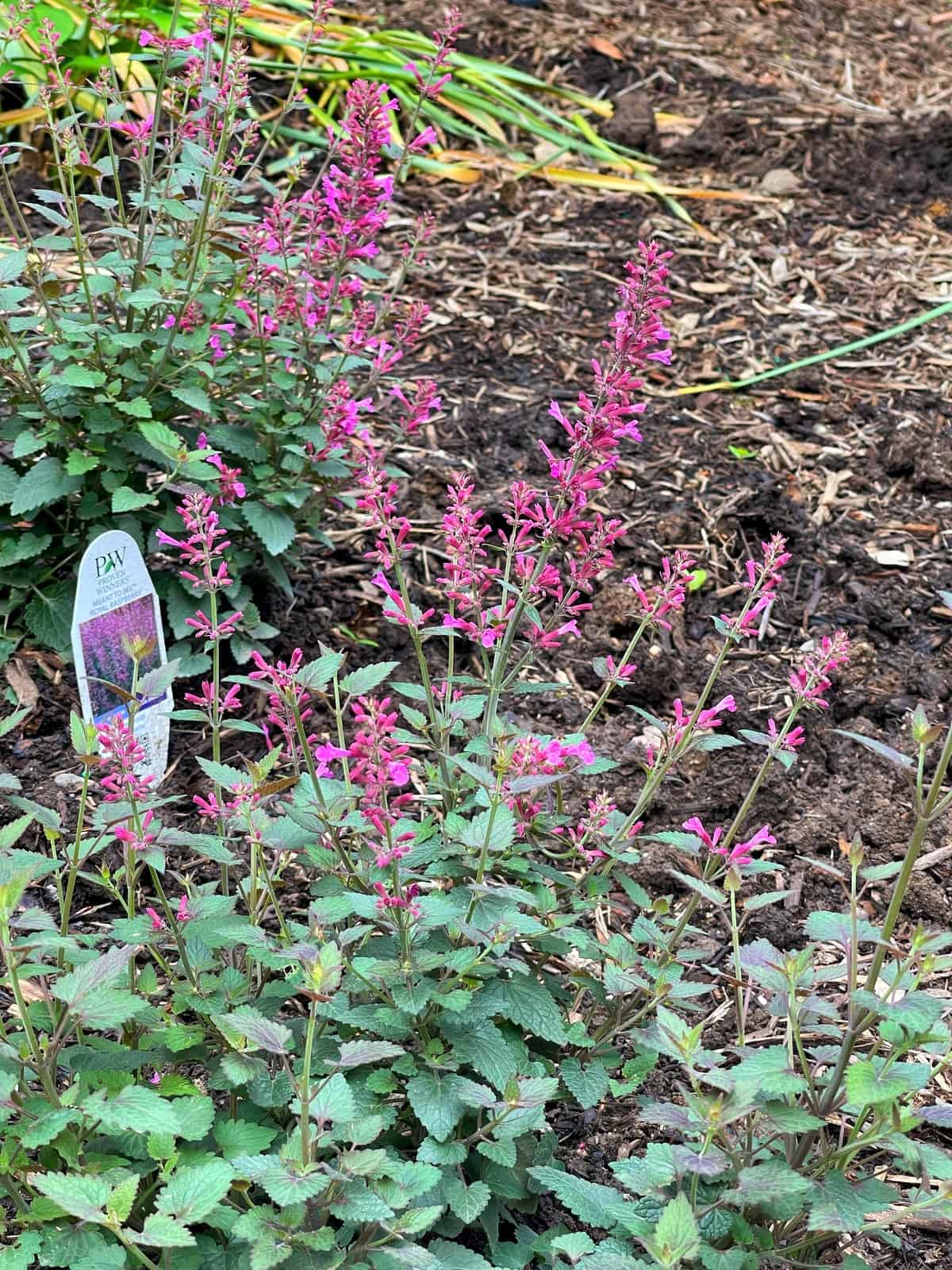
Agastache (Hyssop)
USDA Zones: 5–9 (some varieties hardy to Zone 4)
Bloom Time: Mid-summer through fall
Agastache brings vertical movement and long-lasting color to a peony bed just as summer heat intensifies.
Its upright flower spikes in shades of lavender, blue, coral, or pink, create a different rhythm from earlier spring blooms. The foliage is often aromatic, and the flowers are magnets for pollinators throughout the season.
Agastache prefers full sun and excellent drainage. In heavier soils or areas with winter wet, survival can decline, so placement matters. Once established, however, it tolerates heat and dry conditions extremely well.
I like planting agastache toward the mid-border, where its vertical spikes weave between structural plants like sedum or coneflower. It keeps the bed lively in August when many spring-focused gardens begin to feel tired.
Where peonies provide fullness in spring, agastache delivers lift and motion in late summer.
Sedum ‘Autumn Joy’ (Hylotelephium)
USDA Zones: 3–9
Bloom Time: Late summer to fall
Sedum is one of the most dependable late-season anchors you can pair with peonies.
While peonies dominate in spring, sedum quietly builds structure all season with thick, succulent foliage. Then, just as many summer perennials begin to slow down, its flower heads emerge, aging from soft pink to deep rose and finally bronze as fall progresses.
That color evolution extends interest well beyond peak bloom.
Sedum thrives in full sun and sharply drained soil. In heavier or consistently wet soils, it will struggle so drainage is non-negotiable. Once established, it tolerates heat and drought exceptionally well.
I use sedum toward the front or middle of a peony bed, where its upright form contrasts with peony mounds and provides strong fall presence long after spring flowers are a memory.
To learn more about how I grow Sedum Autumn Joy, please visit my care guide for growing sedum autumn joy here.

Russian Sage (Perovskia atriplicifolia)
USDA Zones: 4–9
Bloom Time: Mid to late summer
Russian sage shifts the energy of a peony bed from lush spring romance to airy summer movement.
After peonies finish their heavy, layered blooms, Russian sage introduces a completely different texture — fine, silvery foliage topped with a haze of blue-purple flowers that persists for weeks. That contrast keeps the border from feeling dense or overly green as summer progresses.
It thrives in full sun, heat, and sharply drained soil. In fact, the leaner the soil, the better it performs. Excess fertility can lead to floppiness, so avoid over-amending the area around it.
Because of its upright yet transparent habit, Russian sage works beautifully toward the back or mid-border of a peony bed. It adds height without visual heaviness and allows neighboring plants to show through.
If peonies are about fullness, Russian sage is about lift — and that lift keeps the entire planting feeling balanced through late summer.

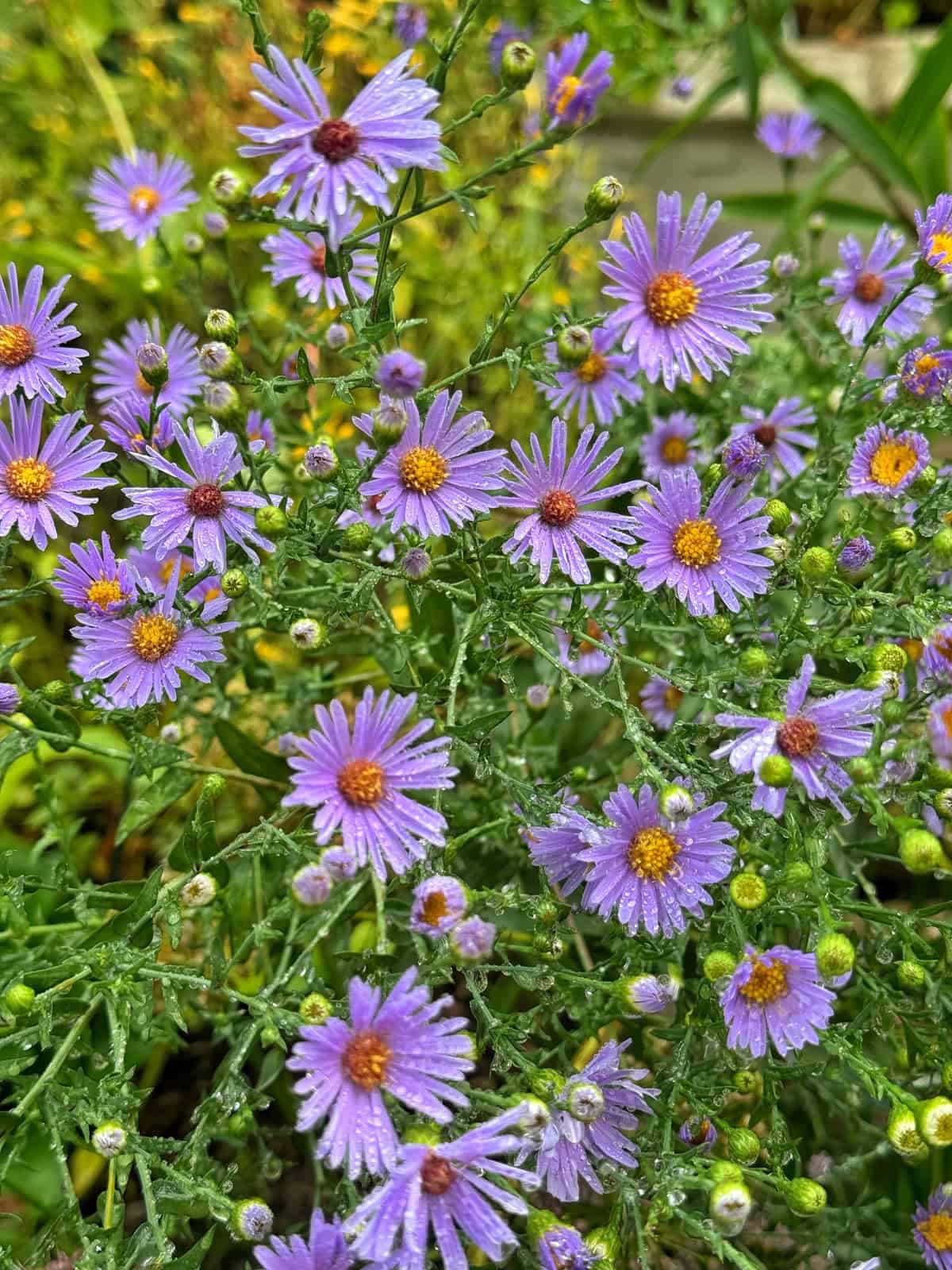
Asters (Symphyotrichum)
USDA Zones: 3–8
Bloom Time: Late summer to fall
Asters are what keep a peony bed relevant in September.
Long after spring flowers are finished and even many summer perennials begin to fade, asters step in with clouds of purple, blue, pink, or white daisy-like blooms. That late surge of color prevents the garden from feeling tired just as the season begins to shift toward fall.
They’re also exceptional pollinator plants. In my garden, asters are often covered in bees and butterflies when little else is blooming — which adds movement and life to beds that might otherwise feel static.
Most asters prefer full sun and average, well-drained soil. Taller varieties benefit from pinching in early summer to reduce height and improve branching, which helps prevent flopping later. Good air circulation is important, as some types can be prone to mildew in humid climates.
I plant asters toward the back or mid-border of a peony bed so their late-season bloom rises above earlier foliage. They don’t compete with peonies — they finish the story.
When you include asters, your peony bed doesn’t just peak in May. It carries presence into fall.
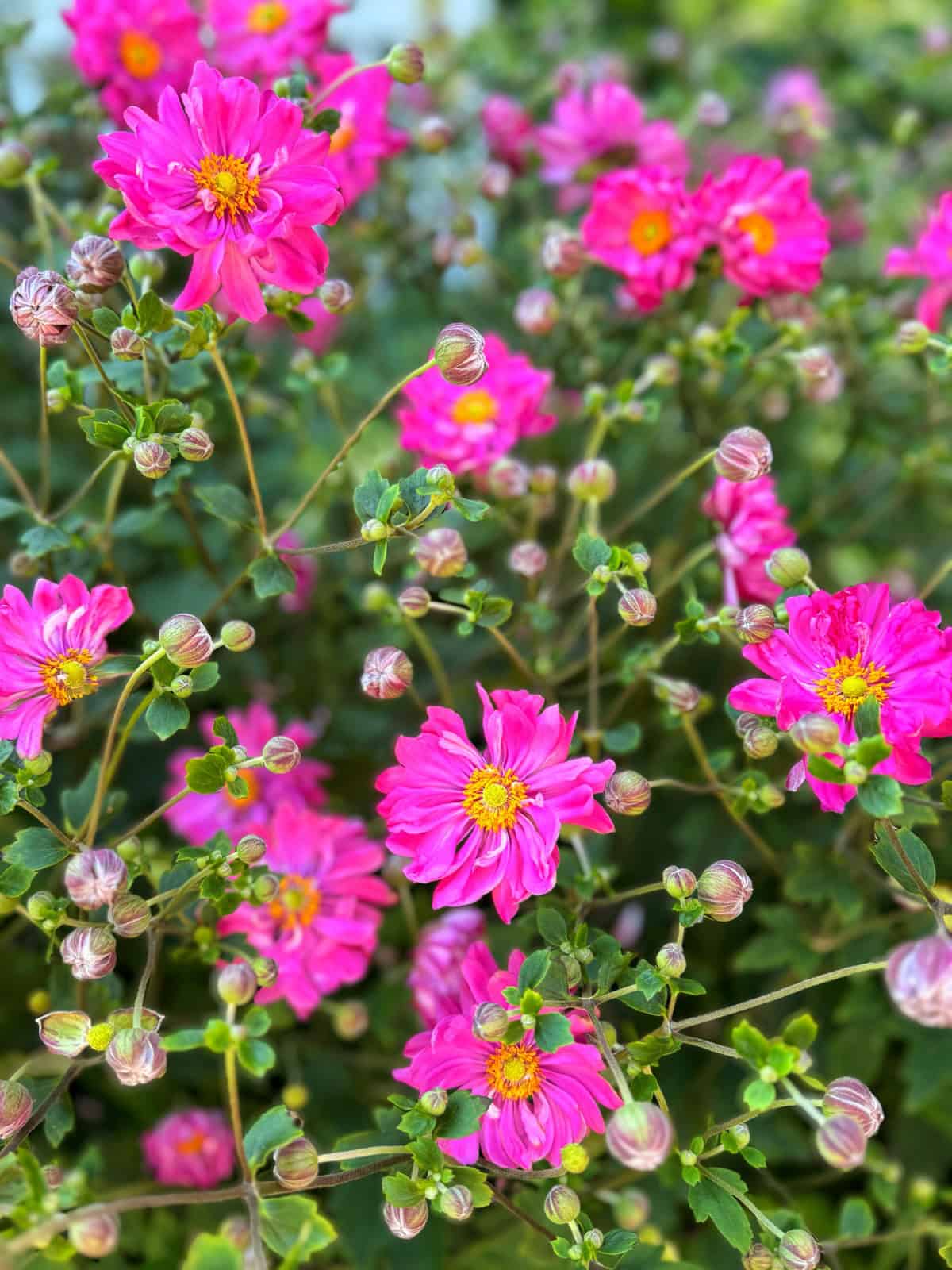
Japanese Anemone (Anemone hupehensis)
USDA Zones: 4–8
Bloom Time: Late summer to fall
Japanese anemones bring a refined, airy elegance to the peony bed just as the garden begins to shift into fall.
While many late-season perennials are bold or saturated, Japanese anemones offer a lighter touch — soft pink or white blooms held on wiry stems that move beautifully in the breeze. That movement keeps the border from feeling heavy at the end of the season.
They prefer part sun to light shade and evenly moist, well-drained soil, which makes them especially useful for peonies planted in less intense afternoon sun. In hotter climates, they appreciate protection from harsh late-day heat.
Over time, they form expanding clumps and can naturalize gently in favorable conditions. I like planting them toward the back of the border so their tall stems rise above fading summer foliage, creating a layered, graceful finish rather than an abrupt seasonal stop.
If peonies are the spring crescendo, Japanese anemones are the quiet closing note.
How to Layer a Peony Bed for Season-Long Impact
When I design around peonies, I think in three layers:
1. Spring Structure (Bloom Overlap)
Allium, iris, baptisia — plants that rise with peonies and add contrast.
2. Summer Transition (Momentum Builders)
Salvia, coreopsis, daylilies, Shasta daisies — plants that prevent the June lull.
3. Late-Season Anchors (Structure + Pollinators)
Coneflowers, rudbeckia, sedum, asters, agastache — plants that carry the bed into fall.
Then I repeat texture:
- Mounded (peonies)
- Vertical (salvia, foxglove, agastache)
- Airy (Russian sage, Japanese anemone)
- Structural (sedum, baptisia)
That repetition is what makes the bed feel intentional rather than crowded.
If you’re still learning how to grow strong, long-lasting peonies before layering around them, start with my complete guide to growing peonies. Proper planting depth and site selection matter more than any companion plant ever will.
And if your blooms tend to flop before your companions even get going, here’s how I keep my peonies upright and blooming longer.
If Your Peony Bed Feels Amazing in May… and Flat by July
That “spring peak and collapse” feeling usually isn’t about the peonies.
It’s about planning.
One of the biggest shifts in my own garden happened when I stopped planting for single bloom moments and started designing beds that carried themselves across seasons. That layered, low-maintenance thinking is the foundation of my book, Bricks ‘n Blooms Guide to a Beautiful and Easy-Care Flower Garden.
Inside, I walk through plant selection, ready-made garden designs, and the exact easy-care system I use so beds look intentional from early spring through fall — not just during one spectacular week of bloom.
If you want plant combinations and layouts you can actually follow, you can find it here
And if you’re the kind of gardener who says, I need to remember what bloomed when — but never quite keeps track — that’s where The Bricks ‘n Blooms Beautiful and Easy-Care Flower Garden Planner comes in.
Tracking bloom timing, plant performance, and what needs moving is what allows a peony bed to improve every single year. The planner gives you a structured system to capture that information so you’re building on experience instead of repeating mistakes.
You can see the planner here
The book gives you the knowledge.
The planner gives you the system to use it.

The Bigger Design Principle For What to Plant With Peonies
The goal isn’t just bloom overlap.
It’s succession, structure, and contrast.
When you layer peonies with companions that take turns carrying visual weight, your garden doesn’t peak and collapse.
It builds.
Peonies are the opening act.
The rest of the cast keeps the performance going.
But companion planting only works if the peonies themselves are planted and cared for properly.
If you want to build that foundation first, start with:
- My complete guide to growing peonies (site selection, soil, long-term success)
- How to plant peonies correctly (depth matters more than most gardeners realize)
- How to keep peony blooms upright and off the ground
- And how to make your peonies bloom longer
Once your peonies are thriving, layering around them becomes easy.
Design the structure.
Plan for succession.
Then let the seasons take turns.
That’s how you create a peony bed that never looks empty.
Thank you for visiting the blog today!
Enjoy your day! xo

Originally Published . Last Updated .

What a great list with solutions for all situations. Thank you…here in NW Alabama peonies look horrible right now but if I plant a few of these around them (coreopsis, yarrow, two colors of hyssop, asters in the back)!
So true! Mine are not looking so great right now after a very hot, humid and wet NJ summer! I love what you planted with them.