
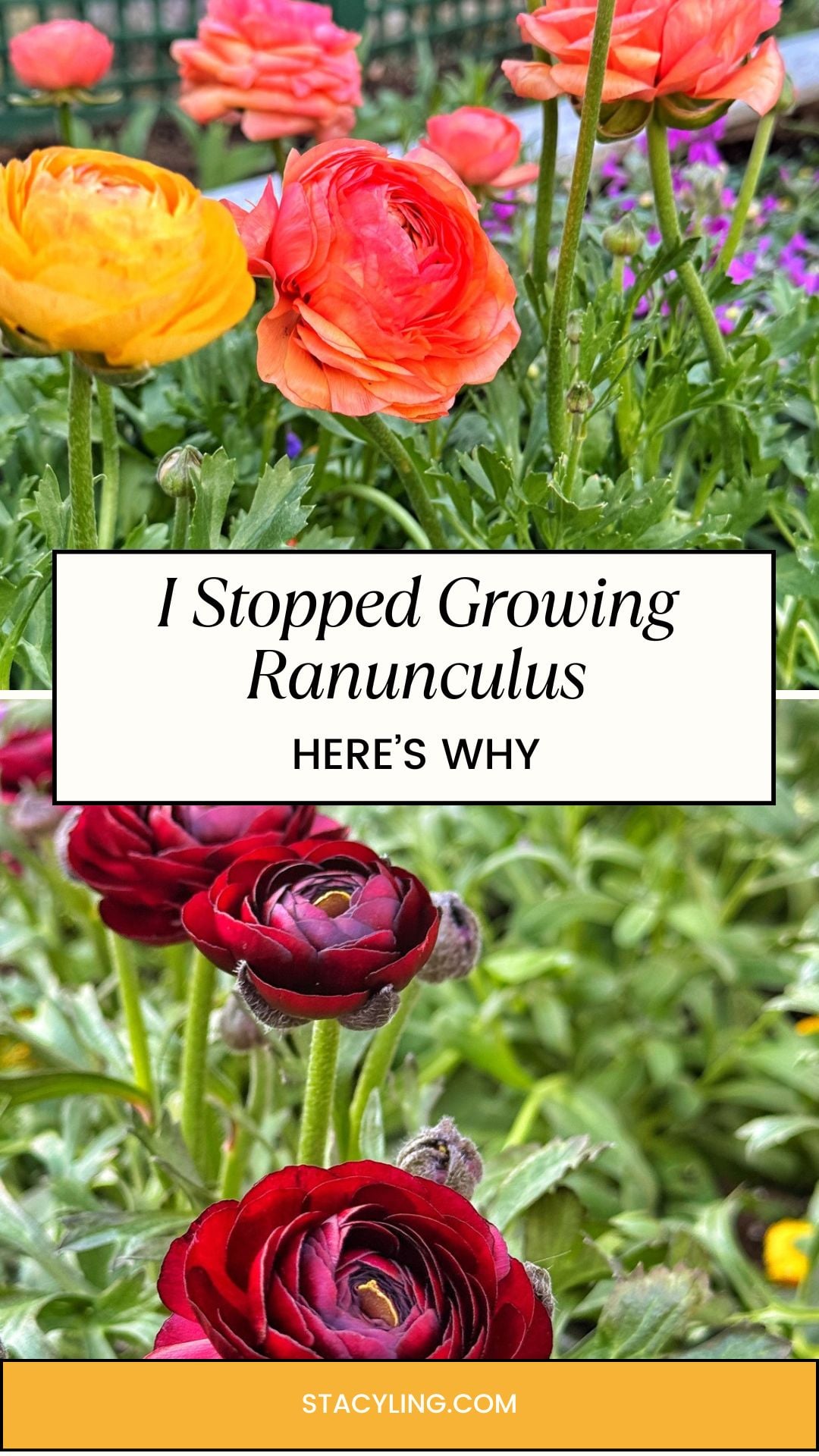
Why I Stopped Growing Ranunculus (And What I’m Trying Instead)

Love ranunculus but tired of the short bloom time? Here’s why I stopped growing them in NJ and what I’m trying instead this fall.
I love ranunculus. The layers, the colors, the way they look in a bouquet… they are easily one of the prettiest flowers you can grow for spring. And for years, I’ve tried to make them work in my garden.
But here’s the reality. They just don’t love growing here.
Every time I plant them, it follows the same pattern. They start off strong, put on some beautiful early growth, and I get excited thinking maybe this is the year they’ll really perform. And then the weather shifts. Temperatures climb fast, and just like that, they start to decline. The blooms are short-lived, and what’s left behind is not something I enjoy looking at.
This year was the breaking point.
I planted them just a couple of weeks ago, right on schedule for spring. Then we got hit with unseasonably hot weather pushing close to 90 degrees, and they’ve struggled ever since. They haven’t bounced back, and I already know how this story ends.
And at some point, you have to decide what’s worth the effort.
Over the years, I’ve really shifted how I approach planting. I’m much more focused on building a garden that’s beautiful but also easy to care for, filled with plants that actually thrive in my conditions instead of constantly needing to be managed or rescued. It’s the same approach I share in my low-maintenance cottage garden ideas, where plant choice does most of the work for you instead of the other way around.
Because I have a pretty simple philosophy when it comes to gardening.
I call it the motel theory. Plants check in, and they either love it and stay… or they don’t, and they check out.
And as much as I love ranunculus?
They’re checking out.
So I’m done growing them the way I have been. But before I give up on them completely, I’m going to try one last thing and see if they can earn their place in my garden under different conditions.
(Posts on stacyling.com may contain affiliate links. Click HERE for full disclosure.)
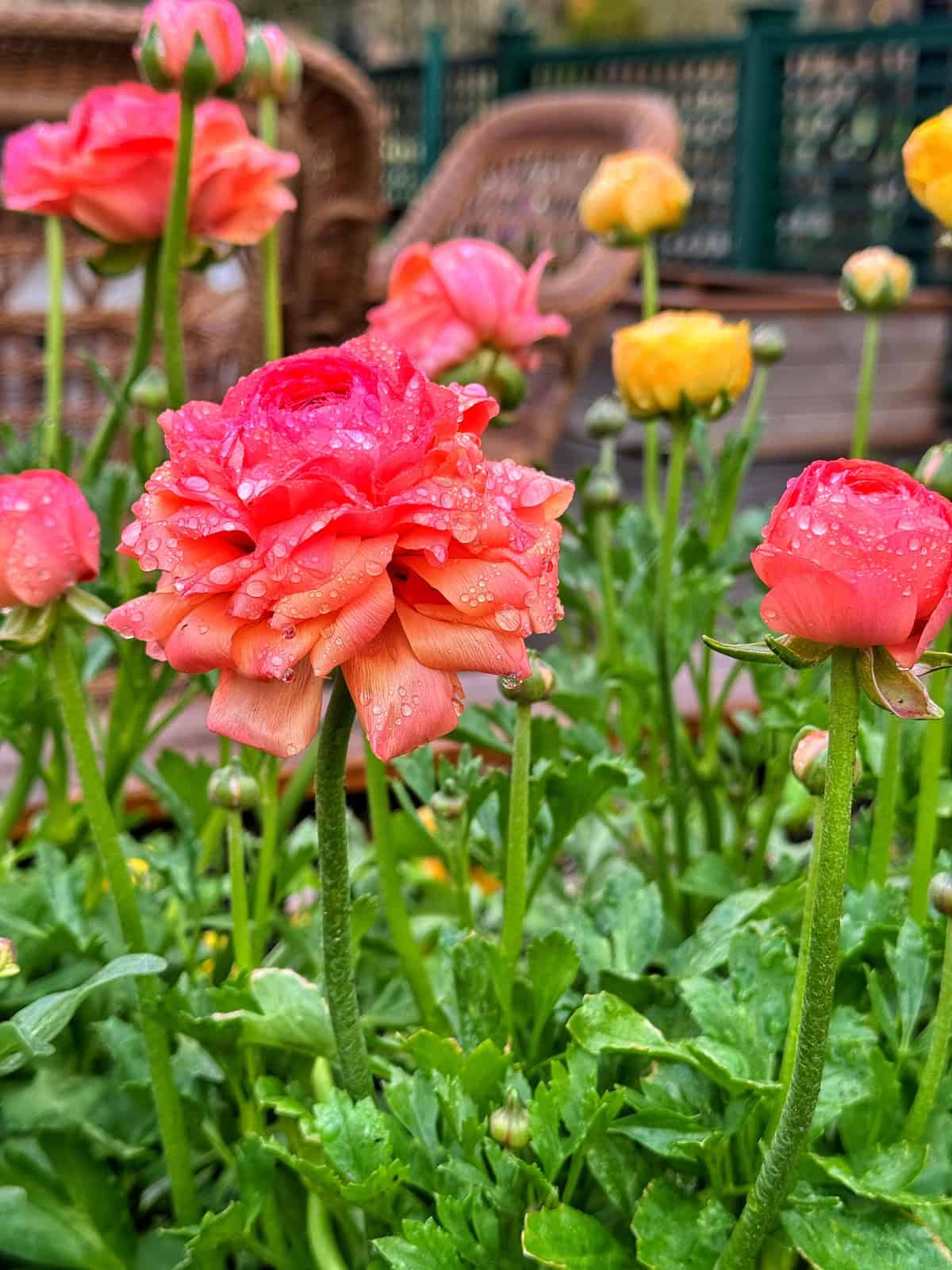
How to Grow Ranunculus
Ranunculus are often treated like easy spring flowers, but they’re actually pretty particular about their growing conditions. And understanding what they need is key to understanding why they can be challenging to grow in climates like New Jersey.
According to university extension guidance, ranunculus perform best as a cool-season crop. They thrive in mild, steady temperatures and struggle once conditions start to warm up.
For best results, they need:
- Cool daytime temperatures and chilly nights
- Full sun while temperatures remain mild
- Well-draining soil to prevent rot
- Consistent moisture without sitting in wet conditions
In colder regions, corms are typically planted in early spring as soon as the soil can be worked. In warmer climates, they’re often planted in fall to take advantage of a longer, cooler growing period.
And that difference in timing is important.
Because ranunculus aren’t failing randomly… they’re reacting to conditions that just don’t line up with what they need.
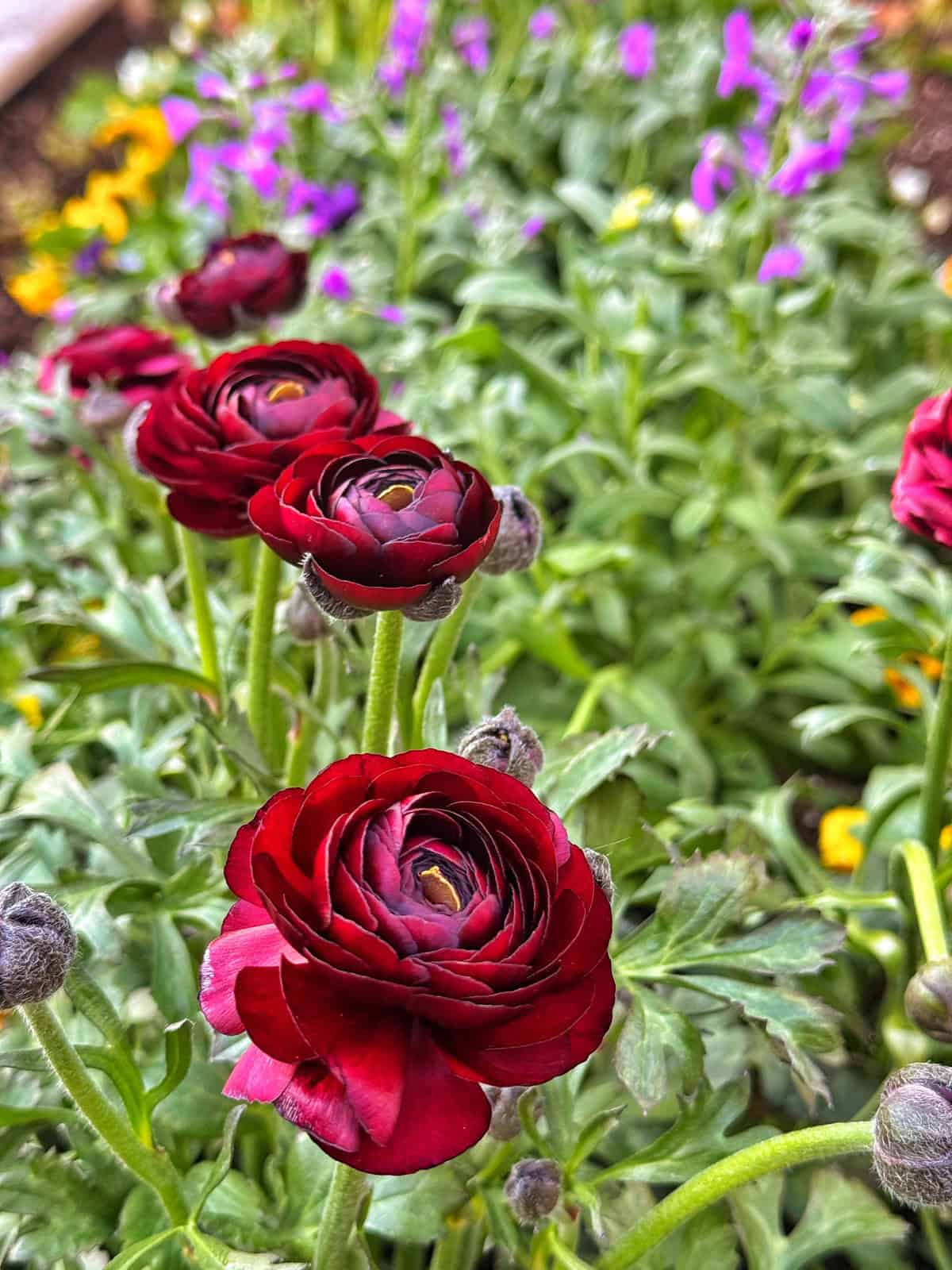
Ranunculus Growing Quick Care Sheet
If you’re thinking about growing ranunculus, here’s a quick snapshot of what they need. They are cut flowers (with realistic expectations).
- Botanical Name: Ranunculus asiaticus
- Plant Type: Tender perennial (grown as an annual in colder climates)
- Bloom Time: Spring
- Light: Full sun in cool conditions
- Temperature: Prefers cool weather. Ideal range: 40–60°F. Declines once temperatures rise into the 70s and above
- Soil: Well-draining soil is essential
- Watering: Keep evenly moist but not soggy
- Planting Time (Zone 6–7): Early spring (as soon as soil is workable). Optional fall planting in protected areas
- Planting Depth: About 2 inches deep
- Spacing: 4–6 inches apart
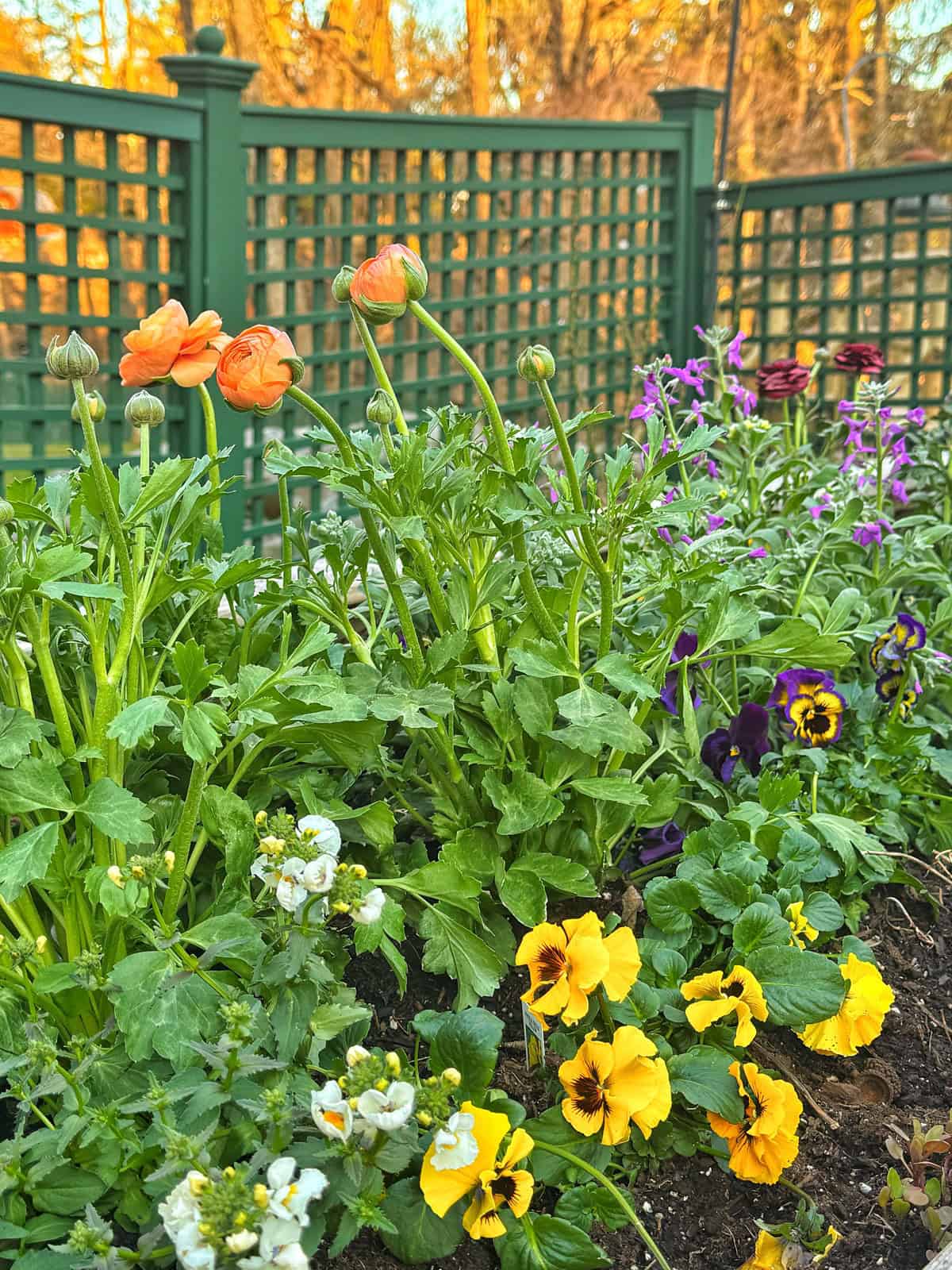
The Reality of Spring Weather in New Jersey
One of the biggest challenges with growing ranunculus here isn’t just the plant… it’s our spring weather. In New Jersey, spring is anything but consistent.
We can go from cold nights and near frost to warm, almost summer-like days in a matter of weeks. Some years, it feels like we skip right over that gentle, cool spring window entirely and jump straight into heat. And that’s a problem for a flower like ranunculus.
Ranunculus are true cool-season growers. They need steady, mild temperatures to establish, grow, and bloom well. But instead of giving them that long, gradual season, our weather tends to swing back and forth and then spike quickly.
I’ve seen it happen over and over again in my garden.
They start off beautifully when temperatures are still cool. The foliage looks great, buds begin to form, and everything seems on track. But then we get a stretch of warmer weather, and it doesn’t even have to last that long. Once those temperatures start pushing up, the plants begin to decline fast.
And if we get an early heat wave like we just did, it can cut their season short before they ever really get going. That lack of consistency makes a big difference.
Some flowers can handle those fluctuations and keep pushing through. Others, like ranunculus, really need stable conditions to perform well. And that’s just not something I can count on here.
Why I’m No Longer Growing Ranunculus in Spring
At some point, you have to stop and ask yourself if a plant is really worth it. And for me, ranunculus just aren’t anymore. At least not the way I’ve been growing them.
It’s not that they aren’t beautiful. They absolutely are. But in my garden, they’re a lot of effort for a very short window of reward. I plant them, watch them start to grow, get excited for what’s coming… and then just as quickly, they’re on their way out.
And what’s left behind isn’t something I enjoy looking at. The foliage starts to decline, the blooms fade fast, and instead of adding to the garden, they start to take away from it. And that’s a big part of how I make decisions now.
I don’t just think about how a plant looks at its peak. I think about how it performs over time.
Throughout my nearly 30 years of growing experience, I’ve really leaned into a more low-maintenance approach to gardening, where I’m choosing plants that actually thrive in my conditions instead of constantly trying to manage or rescue something that doesn’t. It’s the same approach I talk about in my easy-care cottage garden ideas, where the goal is to create a garden that works with you, not against you.
Because I have a pretty simple philosophy when it comes to planting. I call it the motel theory. Have you heard of it before?
Plants check in, and they either love it and stay… or they don’t, and they check out. And I’ve learned to pay attention to that.
If something struggles year after year, if it needs constant attention, or if it just doesn’t perform the way I want it to in my garden, I don’t keep forcing it. There are too many other plants that will thrive in the same space with far less effort.
Ranunculus? As much as I love them… they’re checking out.
So I’m done giving them prime space in my spring garden when they haven’t earned it. But before I completely move on, I’m going to try one last thing and see if changing when I grow them makes any difference.
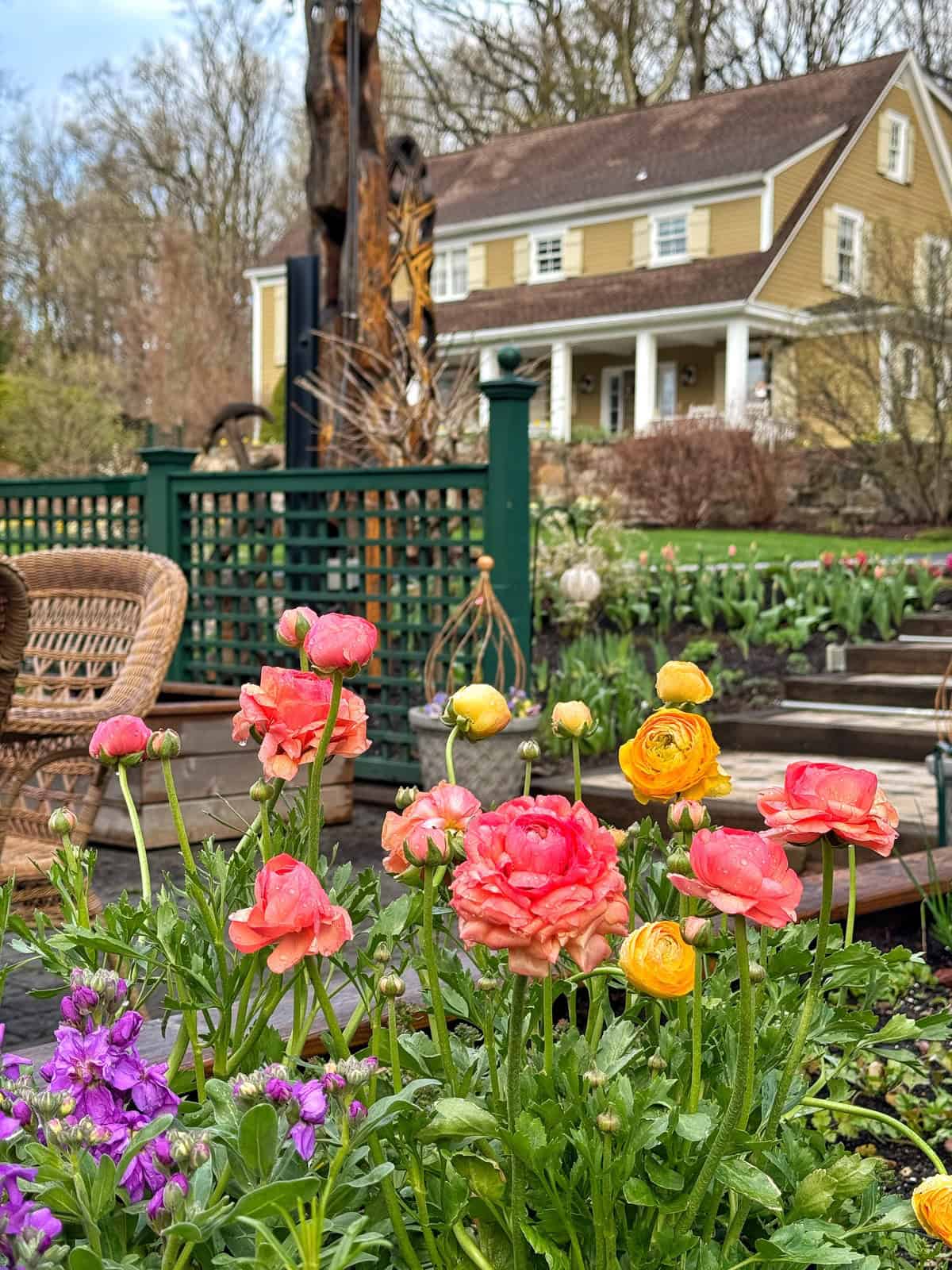
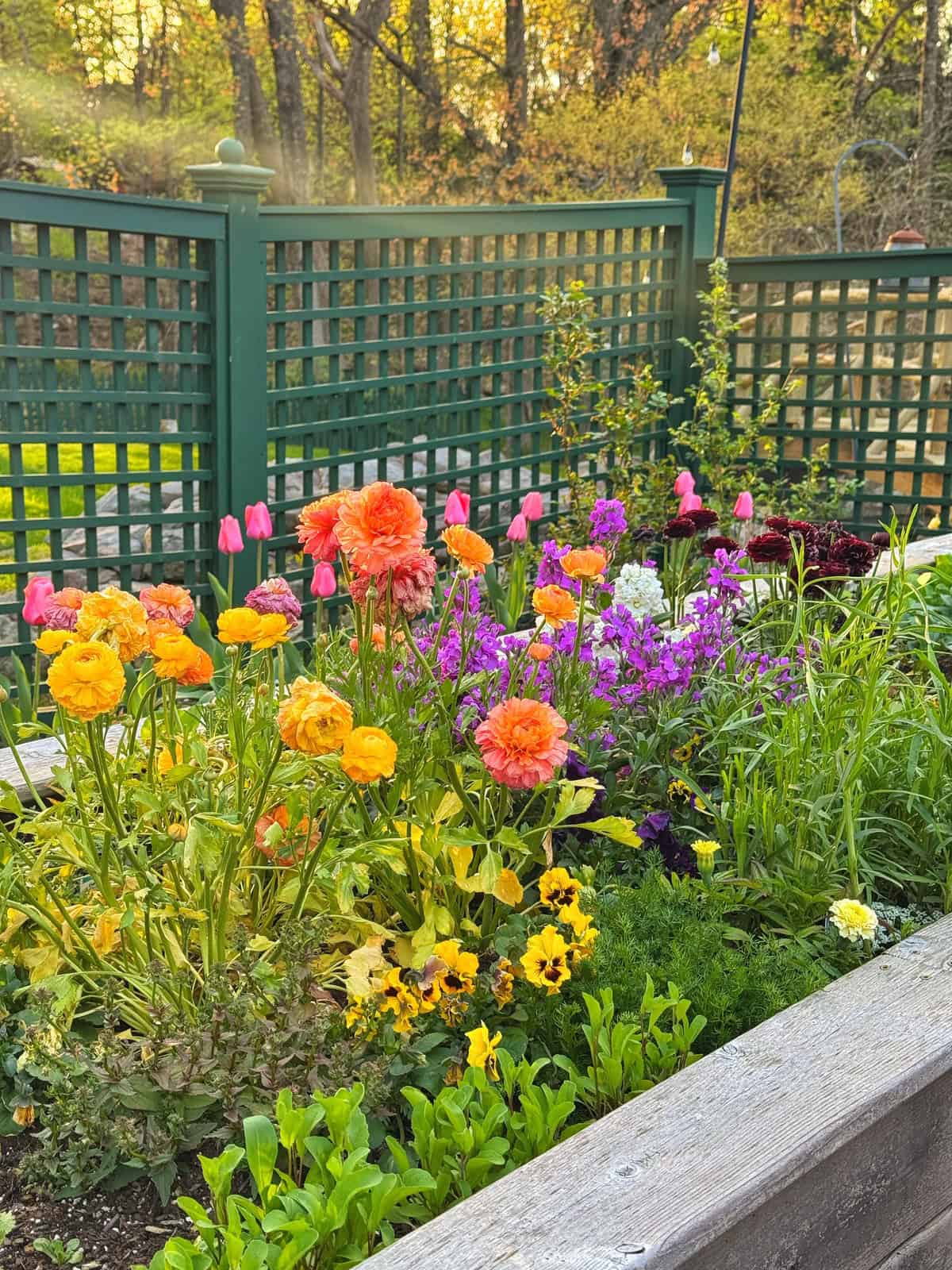
In the photos below – notice how the ranunculus foliage are starting to decline and dieback. It’s not pretty…and I’m not here for it.
My Last-Ditch Effort: Trying Ranunculus in Fall
Before I give up on ranunculus completely, I’m going to try one last experiment. Instead of planting them in spring like I always have, I’m digging up the corms and saving them to replant in late summer/early fall, when temperatures start to cool down again.
In theory, this should give them a better chance.
Ranunculus naturally prefer cooler conditions, and in milder climates, they’re often grown as a fall-planted crop that blooms in late winter or early spring. The idea is that they get a longer, steadier window to establish and grow before heat becomes an issue. And that’s really the goal here.
To see if changing the timing gives them a better shot at actually performing the way I want them to. But I’m going into this with realistic expectations.
Fall in New Jersey can be just as unpredictable as spring. We can have beautiful, cool stretches, but we can also get sudden temperature swings that don’t exactly create ideal growing conditions. So while this might work better, I’m not counting on it. But it’s always worth the test.
This isn’t me recommitting to ranunculus. It’s me giving them one last chance to prove they belong in my garden.
If they perform better with a fall planting, great. I’ll happily adjust and make space for them in a way that makes sense.
But if I see the same pattern again? That’s it. I’m done.
Because at the end of the day, I want a garden filled with plants that show up, perform well, and actually want to be here.
And if ranunculus can’t do that… there are plenty of others that will.
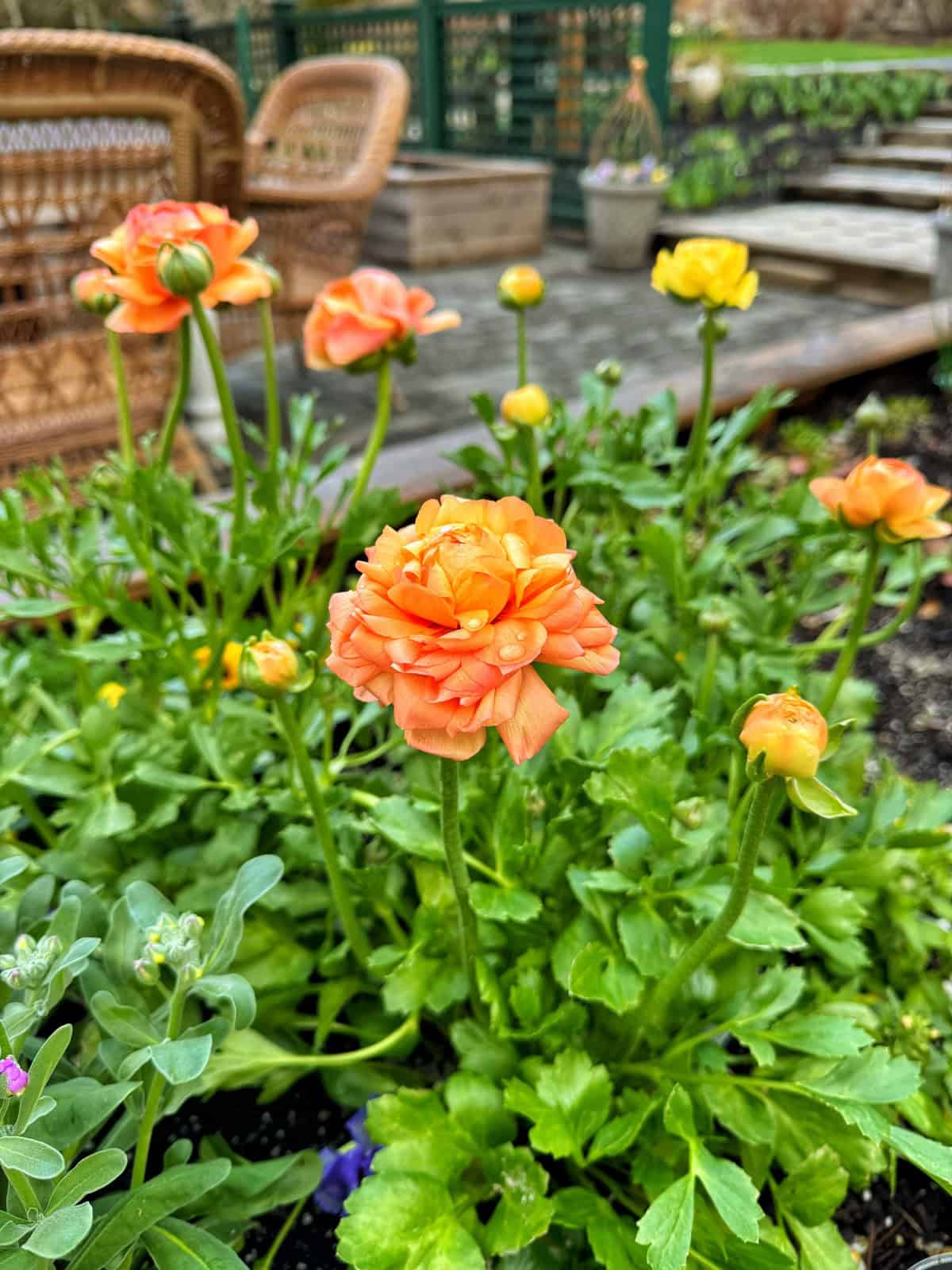
If You Still Want to Grow Ranunculus in Climates Like New Jersey
If you’re gardening in a climate like New Jersey, where spring temperatures can swing from cold to hot in a short period of time, growing ranunculus can be a bit of a challenge.
That doesn’t mean you can’t grow them.
But it does mean you need to be a little more intentional about how you approach them… and realistic about what kind of performance you’ll get.
The biggest thing to understand is that ranunculus are not well-suited to unpredictable spring weather. They need a steady stretch of cool temperatures to really thrive, and that’s not something we consistently get here.
If you still want to give them a try, here are a few things that can help.
Start as Early as Possible
In climates like ours, timing is everything. Plant as soon as the soil is workable in early spring to take full advantage of the cooler temperatures before the heat arrives.
Prioritize Excellent Drainage
Ranunculus do not tolerate wet soil, especially during cooler weather. If your soil tends to stay damp, consider planting in raised beds or improving drainage with organic matter.

Try to Buffer Temperature Swings
If you’re willing to put in a little extra effort, using row covers or frost cloth early in the season can help create a more stable environment while temperatures are fluctuating.
Experiment With Fall Planting
Some gardeners in similar climates have better success planting in fall, especially in protected areas. This is what I’m trying next, but it’s still a bit of an experiment given how unpredictable our fall weather can be.
Start the Corms Indoors
You could also get a jump start by pre-sprouting or starting ranunculus corms indoors before planting them outside. This can help them establish earlier and give you a slightly longer window before the heat sets in.
But for me, this is where I’ve had to be honest about my time and priorities.
I already spend a lot of time starting seeds indoors each year, and that’s something I genuinely enjoy. Adding another step for a plant that hasn’t proven itself in my garden just doesn’t make sense for me. At some point, it’s not just about what can be done… it’s about what you actually want to spend your time doing.
Adjust Your Expectations
This is probably the most important part. Even when everything goes right, ranunculus in climates like New Jersey tend to have a shorter bloom window. They’re not going to give you the same long-lasting performance you might see in milder regions.

What I Grow Instead for Spring Impact
At the end of the day, I’m not willing to give up that early-season beauty in the garden. I just want plants that actually perform in my conditions.
So instead of continuing to fight with ranunculus, I’ve shifted toward spring flowers that can handle our unpredictable weather and still put on a great show. These are the plants that give me color, texture, and that same romantic feel… but with a lot less frustration.
Pansies
If you want reliable early color, pansies are hard to beat. They handle cold snaps, temperature swings, and even light frost without missing a beat. While other plants struggle to get established, pansies are already settled in and blooming.
They’re one of the easiest ways to get that instant spring refresh without worrying about the weather cooperating.
To learn more about how I grow pansies here in zone 6b New Jersey, please visit my complete guide to growing pansies here.

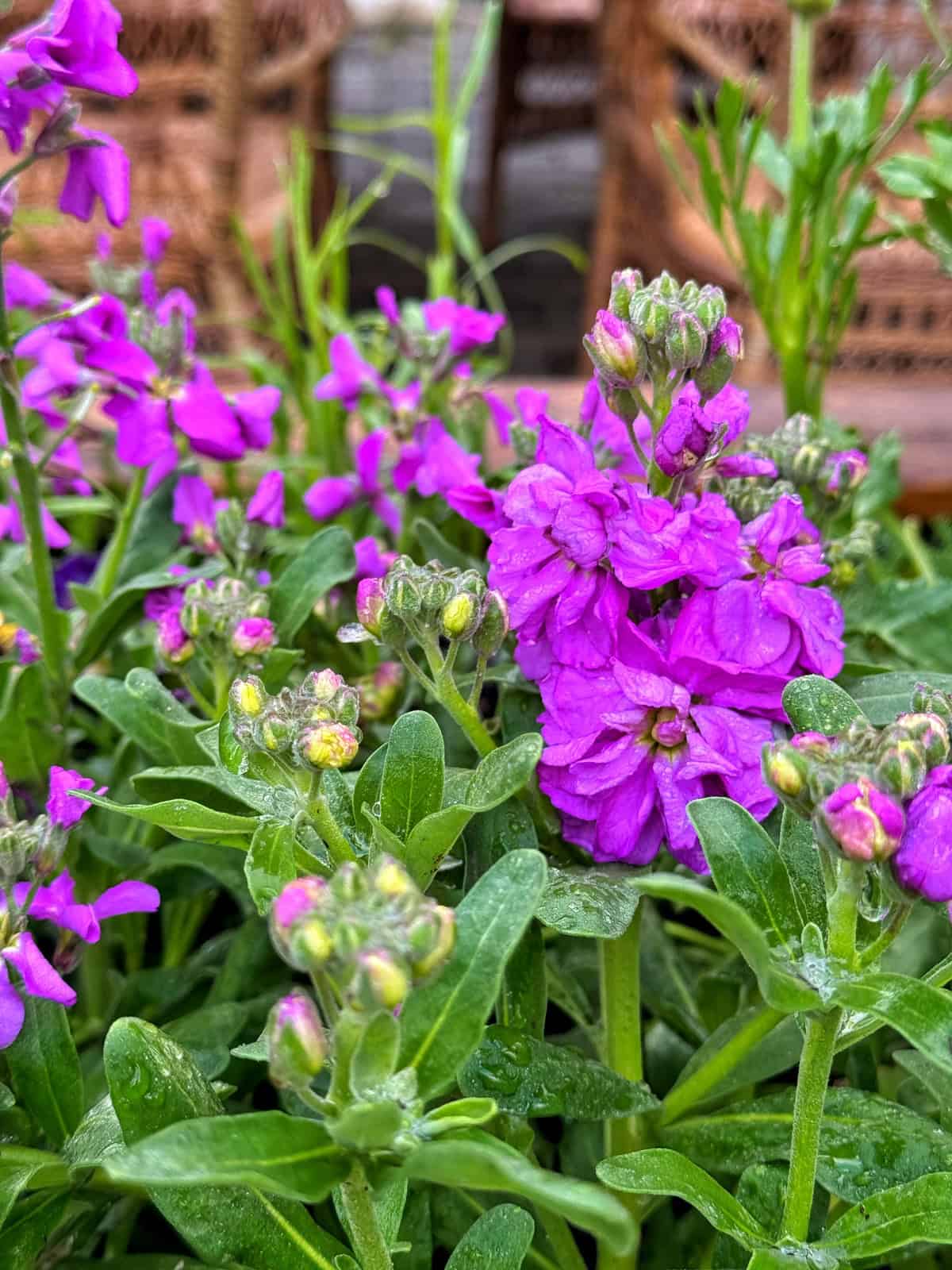
Stock
Stock gives you that soft, layered, romantic look that I love in ranunculus, but it performs much more consistently in cool spring conditions.
And the fragrance? That alone makes it worth growing.
It’s a great option if you’re looking for something that feels a little more elevated but still fits into a low-maintenance garden.
This year, I’ve come to the conclusion that it is best for me to only buy stock plants from the nursery instead of starting them from seed. I’ve successfully grown them using the winter sowing method and indoors under grow lights, but they just don’t bloom well with my climate and I’d rather get the blooms out of the gate from the nursery. So these are officially off my seed starting list!
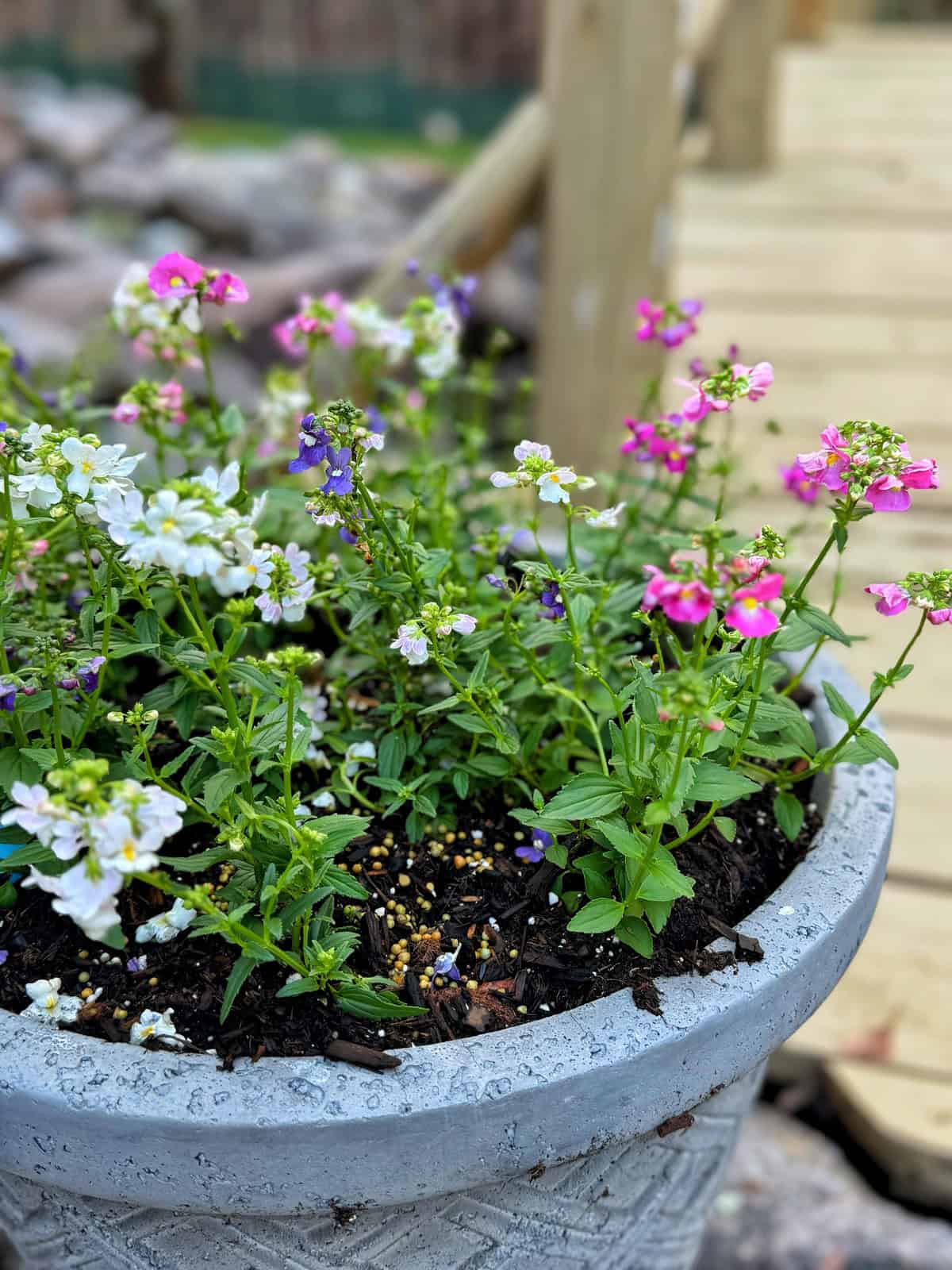
Nemesia
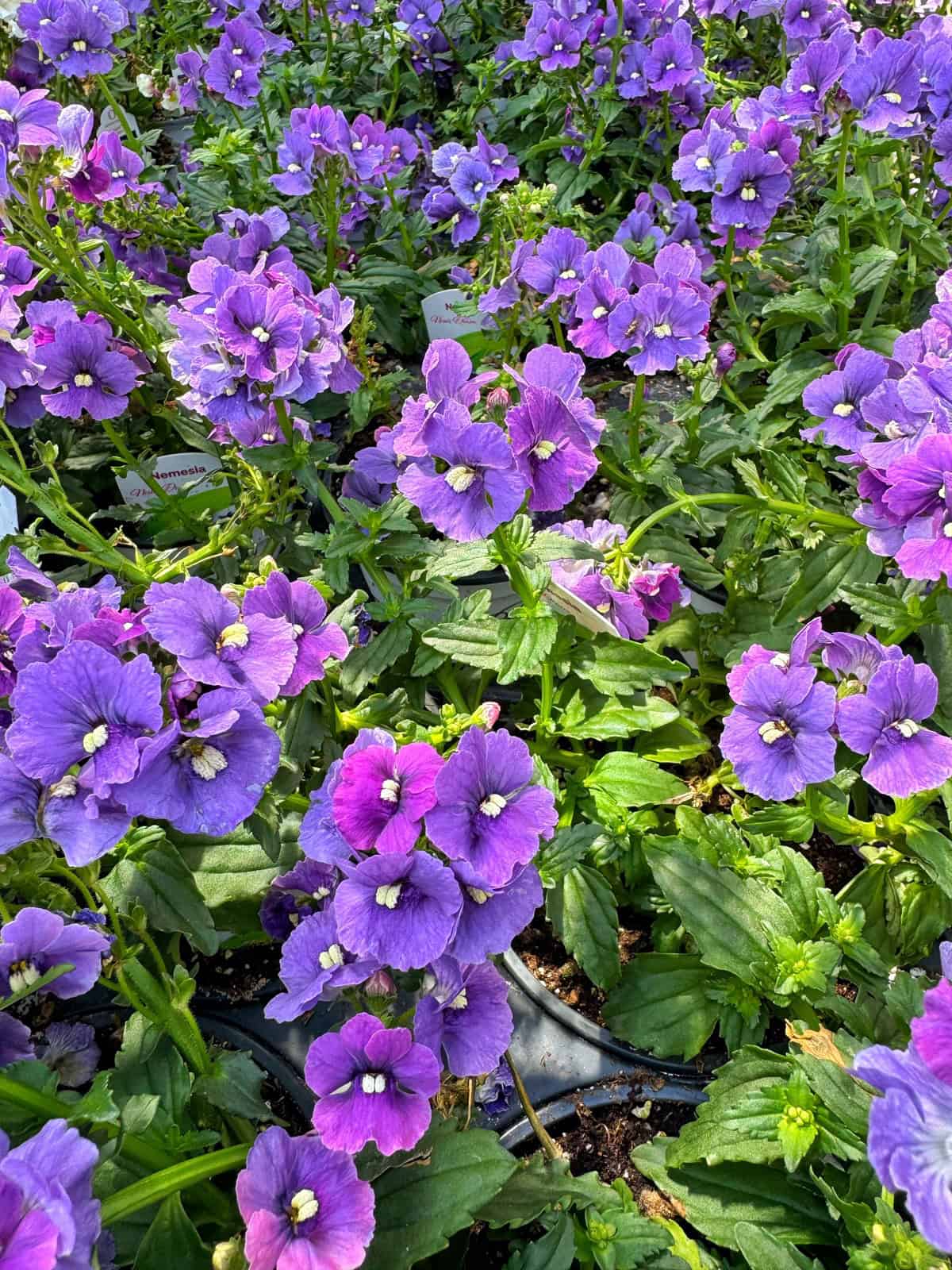
Nemesia is one of those underrated spring performers. It thrives in cool weather, blooms heavily early in the season, and keeps going longer than you’d expect before summer heat slows it down.
I especially love it for containers and edging where you want continuous color without a lot of effort.
Last year, I planted nemesia in several gardens and pots. It lasted the entire growing season (until the first frost) when I had it planted in part shade.
Tulips
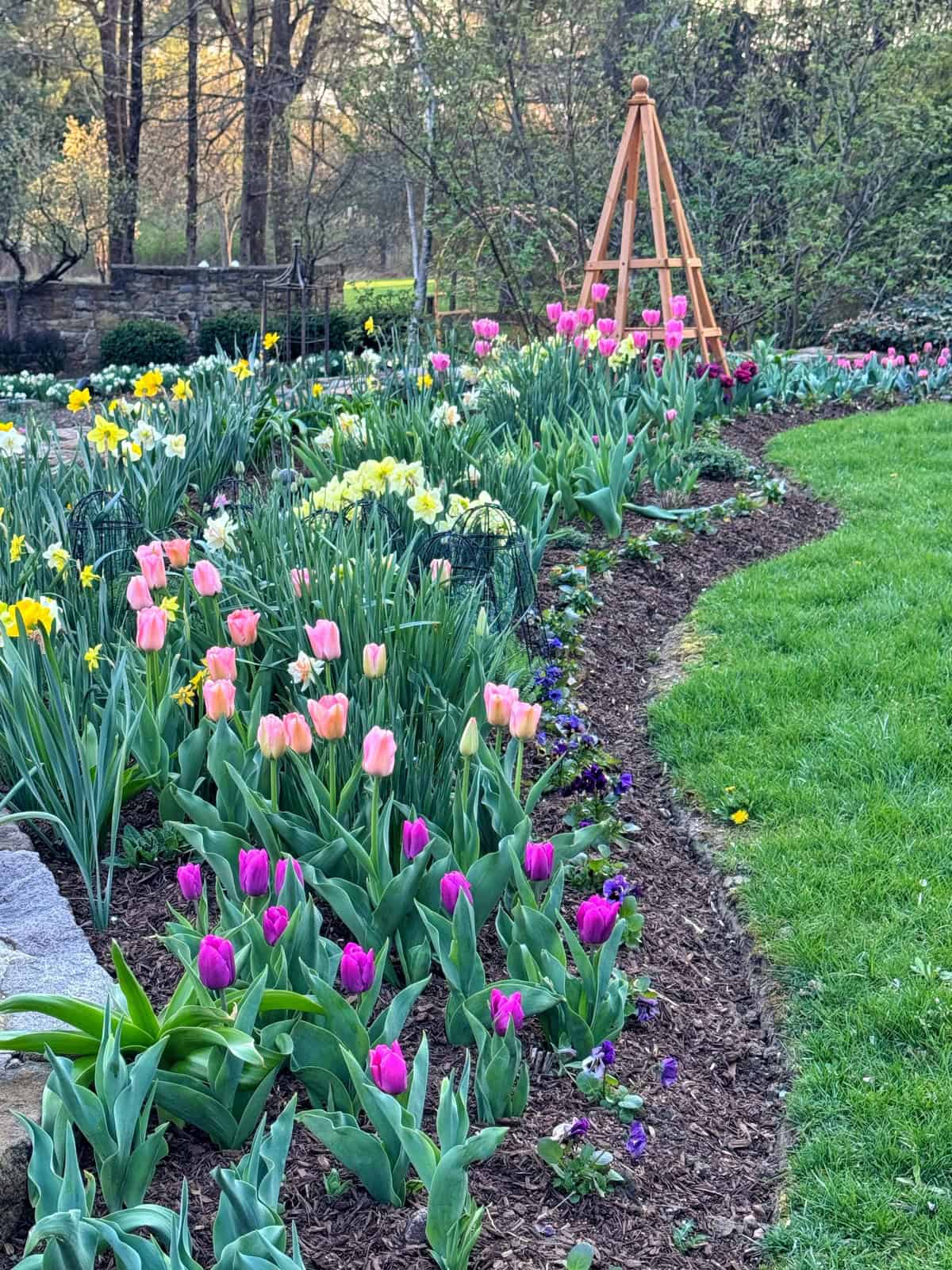
If you want that true “wow” moment in spring, tulips deliver every time.
The key is planting a mix of early, mid, and late-season varieties so you’re not limited to just one short bloom window. That alone gives you far more impact than what I’ve experienced with ranunculus here.
If you want to see how I layer bulbs for a longer-lasting display, you can take a look at my early spring garden flowers guide here.
And if you’d like to learn more about how I grow tulips (especially with deer around), please visit guide on how to grow tulips.
Daffodils
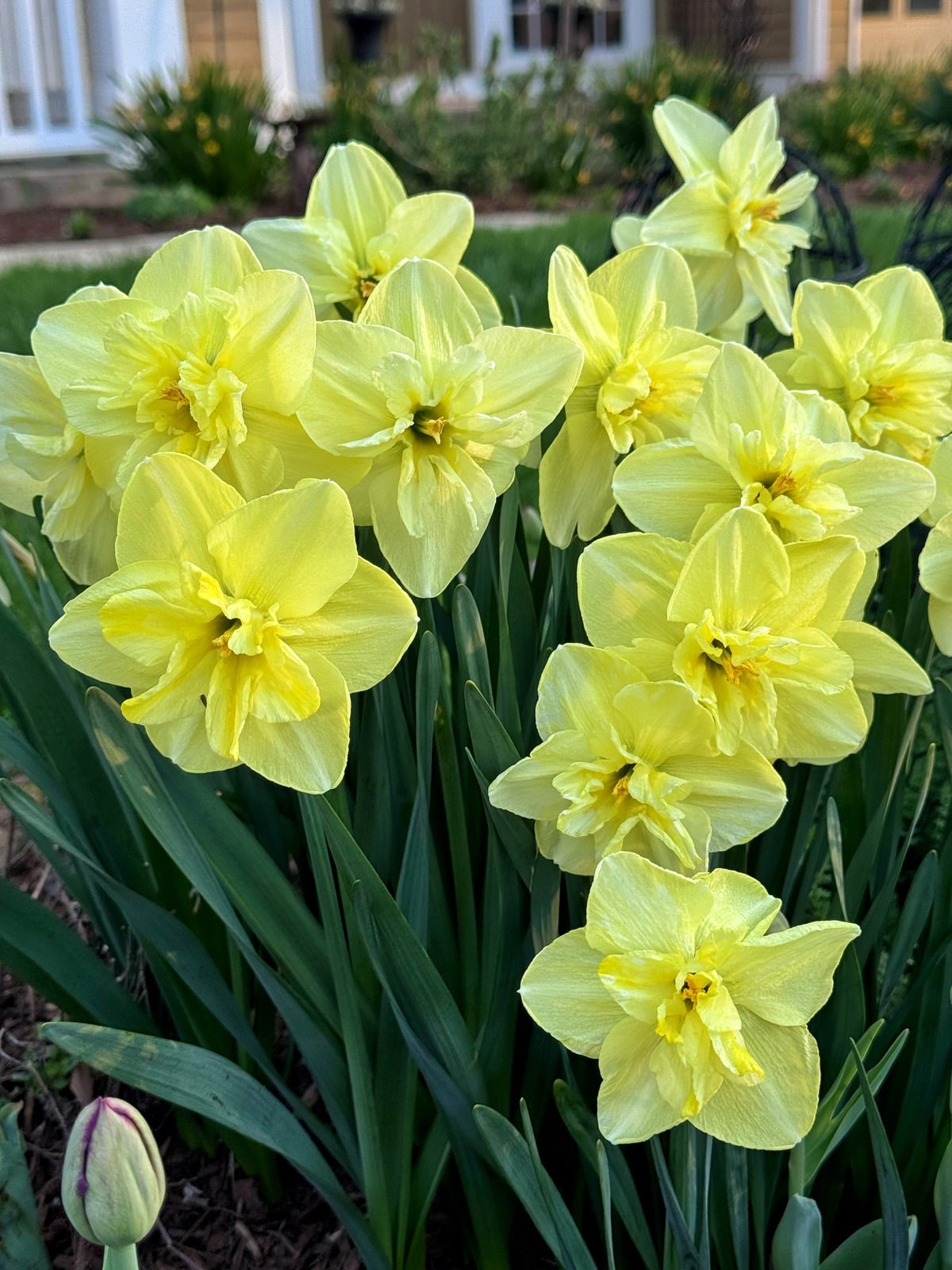
Daffodils are one of the easiest, most reliable spring flowers you can grow. They come back year after year, handle unpredictable weather without issue, and require almost no maintenance once they’re planted.
For me, they’re the definition of working smarter, not harder in the garden.
If you’d like more information about how to grow daffodils, please visit my complete growing guide here.
Hyacinths
For fragrance and color, hyacinths are always worth including. They may not bloom for a long stretch individually, but when you plant them in combination with other bulbs, they add another layer of interest and extend the overall display.

Alliums
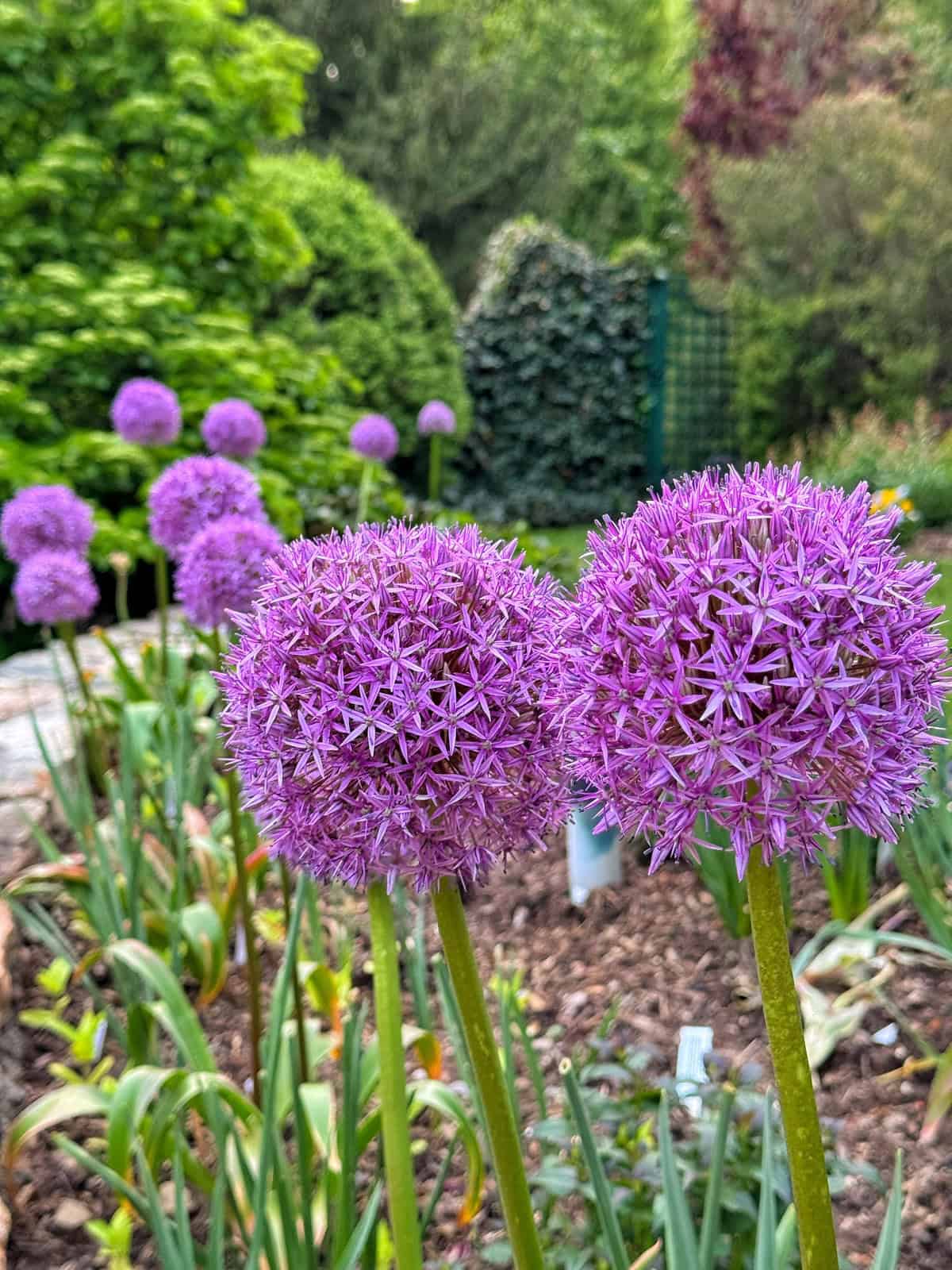
Alliums help carry the garden from spring into early summer. They bring height, structure, and that slightly whimsical look that pairs beautifully with cottage-style planting. And unlike ranunculus, they don’t collapse the second temperatures start to rise.
If you love that full, romantic garden style but want plants that actually thrive without constant attention, I share more ideas in my easy-care cottage garden guide here
A Different Way to Think About What You Grow
If you’ve ever felt frustrated when a plant doesn’t perform the way you expected, you’re not alone.
It’s easy to assume you’re doing something wrong or that you just need to try harder to make it work. I’ve been there too, especially with plants like ranunculus that are so beautiful it feels worth the extra effort.
But over time, I’ve realized it’s not about trying harder.
It’s about thinking differently.
A big part of that shift is what I call the motel theory of gardening. Plants check in, and they either thrive in your conditions or they don’t. And when they don’t, it’s not a failure. It’s just information.
That way of thinking completely changed how I approach my garden.
Instead of forcing plants to work or feeling discouraged when they don’t, I use that experience to make better choices moving forward. It’s what allows me to keep trying new things without getting stuck in frustration when something doesn’t go as planned.
I go much deeper into this approach in The Bricks ‘n Blooms Guide to a Beautiful and Easy-Care Flower Garden. It’s where I walk through how to choose the right plants for your space, build a garden that actually works with your conditions, and stop second-guessing every decision along the way. It’s the framework I wish I had when I was starting out.
And just as important as how you think about your garden… is how you track what actually happens in it.
Because here’s the truth.
It’s really easy to forget.
You remember how beautiful a flower looked, but not how quickly it declined. You forget how frustrated you felt when something didn’t perform… and before you know it, you’re planting it again and hoping for a different result.
That’s why I started writing everything down.
Using The Bricks ‘n Blooms Beautiful and Easy-Care Flower Garden Planner, I keep track of what I planted, how it performed, what worked, and what didn’t. It takes the guesswork out of future decisions and helps me avoid repeating the same mistakes season after season.
Together, that combination of mindset and tracking has made all the difference.
It’s what allows me to experiment in the garden, learn from it, and keep moving forward without feeling frustrated when something doesn’t work out.

Final Thoughts: Grow What Loves You Back
I still love ranunculus. That hasn’t changed.
They’re one of the prettiest flowers you can grow, and every time I see them, I understand the appeal. I’ve tried them more than once, and I’ll probably always be tempted to try them again.
But at some point, I had to be honest about what was actually happening in my garden. They weren’t thriving here.
And instead of continuing to put time, effort, and space into something that consistently struggles, I’ve learned to shift my focus to plants that actually want to grow in my conditions.
That’s really what low-maintenance gardening comes down to.
It’s not about doing less just to do less. It’s about making better choices from the start so your garden works with you instead of against you. And that’s where everything we talked about here really comes together.
The mindset of paying attention to what works. The willingness to let go of what doesn’t. And even taking the time to track it so you don’t forget and repeat the same cycle again
Because not every plant, no matter how beautiful, is worth forcing into your garden. And that’s okay. That’s part of the process.
My motel theory always brings me back to that. Plants check in… and they either love it and stay, or they don’t.
Ranunculus?
As much as I love them, they’re checking out.
I’ll give them one last shot this fall and see if they prove me wrong. And if they do, I’ll happily make space for them in a way that works better. But if not, I’m moving on.
Because there are too many plants that will show up, perform beautifully, and actually want to be here.
And those are the ones worth growing.
Thank you for visiting the blog today!
Enjoy your day! xo

Originally Published . Last Updated .
