
How to Treat Scale on Ninebark (Sooty Mold Fix)

Learn how to treat scale on ninebark and get rid of sooty mold using simple, effective methods that improve plant health and prevent spread.
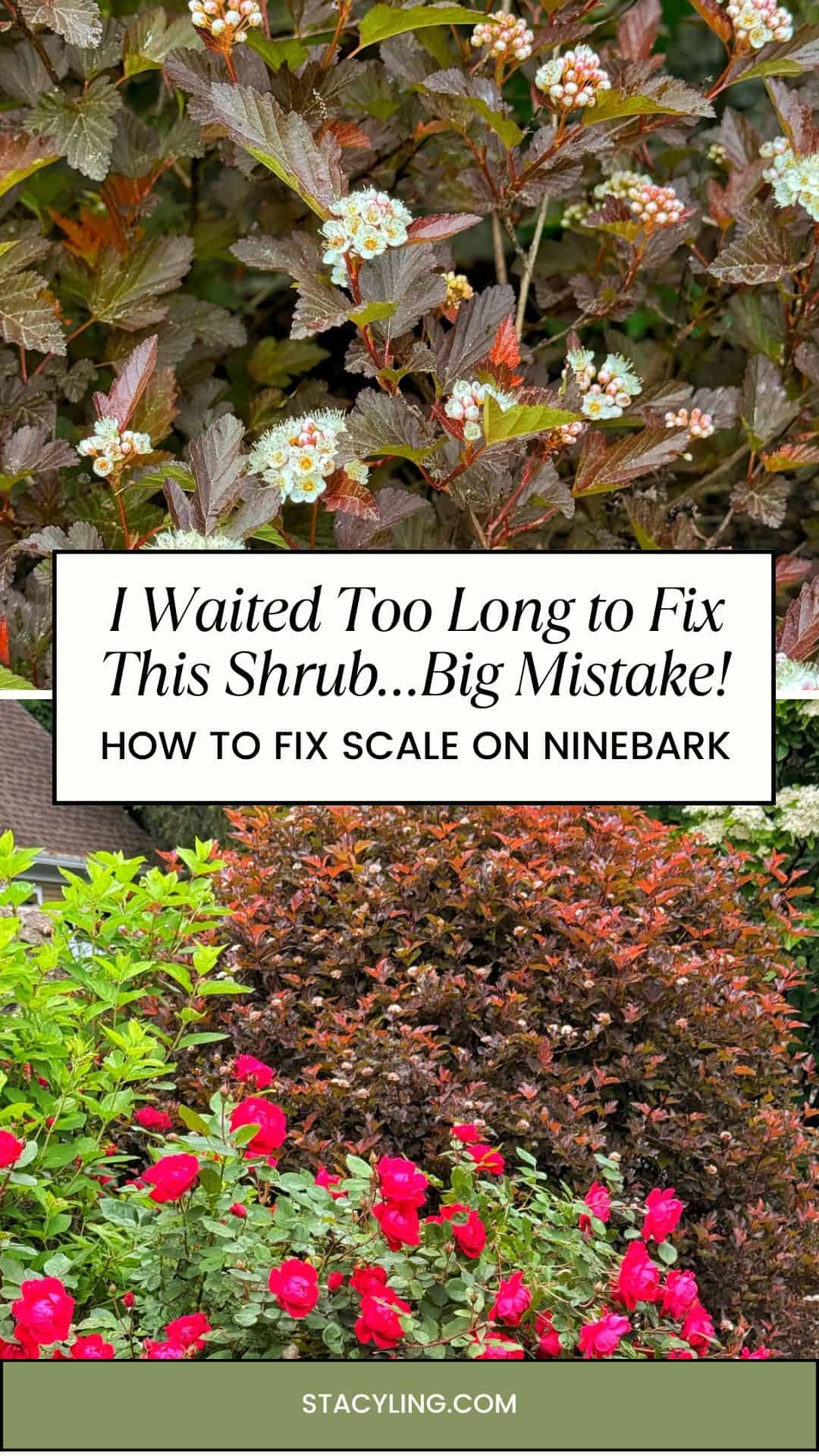
If you’re dealing with scale on ninebark or noticing black sooty mold on your shrubs, this is exactly what I found, how I treated it using targeted, low-impact methods, and what I would do differently next time to prevent it from getting this far.
Last fall, I noticed something wasn’t quite right with my ninebark. The foliage looked a little off, but between wrapping up the garden for the season and dealing with a driveway project, I didn’t take the time to really figure out what was going on.
Fast forward to spring, and that small issue had turned into a much bigger one. The entire shrub was covered in black sooty mold, and once I started digging in, I realized it was dealing with a pretty heavy scale infestation.
As a trained master gardener, I know better than to ignore early signs like that. But the reality is, life gets busy, and sometimes things in the garden don’t get the attention they should. When that happens, you don’t avoid the problem, you just end up dealing with a bigger one later.
Before doing anything, I took the time to research how to properly treat scale on ninebark so I wouldn’t make things worse. From there, I focused on improving the structure of the plant using proper pruning techniques, applying horticultural oil at the right time, and creating a plan to manage it moving forward.
(Posts on stacyling.com may contain affiliate links. Click HERE for full disclosure.)
Why My Ninebark Was Covered in Sooty Mold
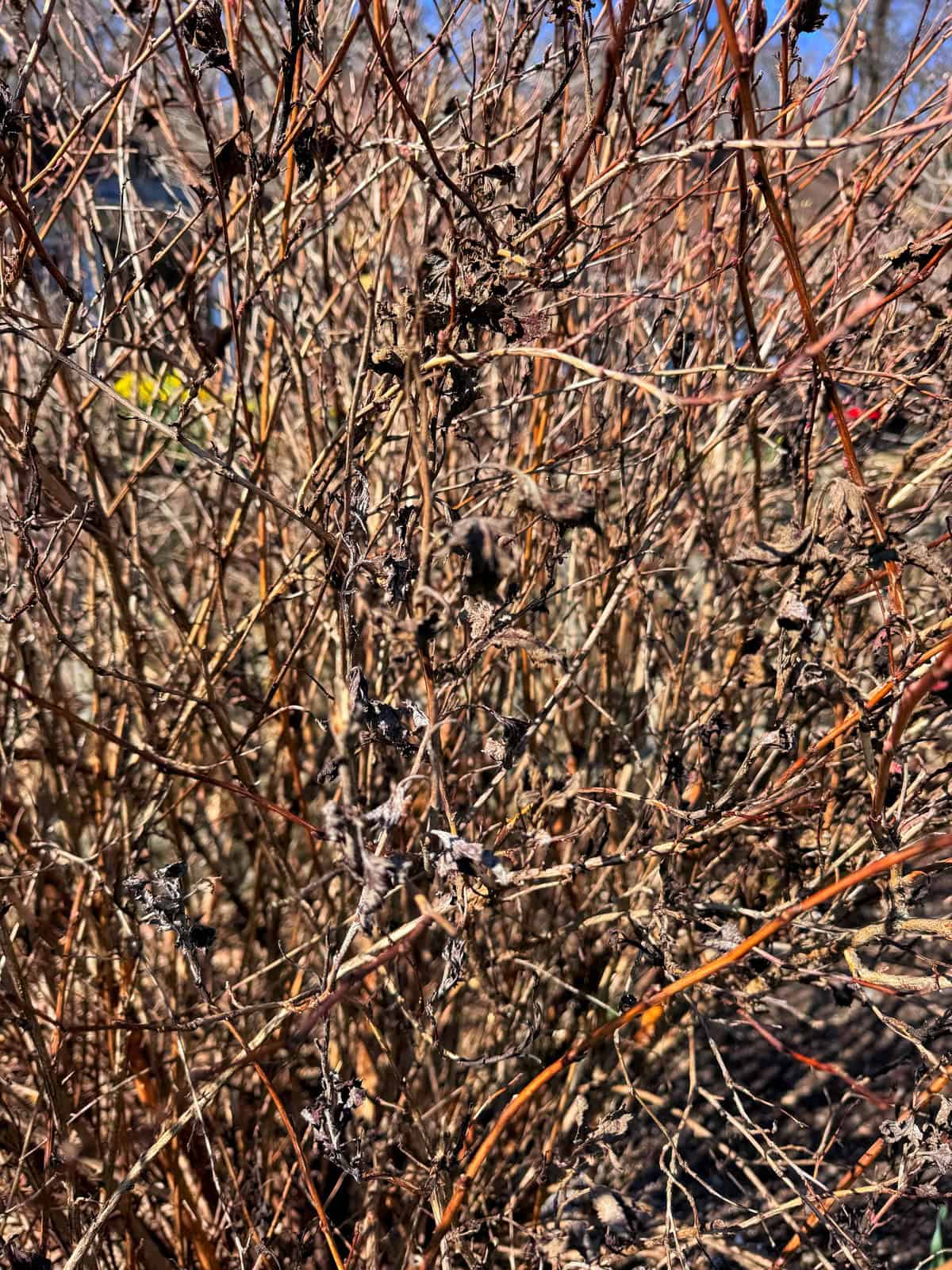
When I first walked up to this shrub in early spring, the most obvious issue wasn’t the pest, it was the black coating covering the branches and stems.
At first glance, it looked like the plant was diseased. But once I took a closer look, it became clear that the sooty mold was actually a symptom of a bigger problem.
Sooty mold grows on the sticky residue left behind by sap-feeding insects, and in this case, that insect was scale.
As I started pruning and opening up the plant, I could see just how widespread the issue was. The interior was dense with growth, and many of the branches were covered with small, immobile bumps, classic signs of a scale infestation.
Because the shrub hadn’t been thinned out, there was very little airflow or light reaching the center of the plant. That created the perfect environment for scale to thrive and made it difficult to spot early on.
By the time the sooty mold became obvious, the scale population was already well established.
What Is Scale on Ninebark (And Why It’s a Problem)
Once I started digging into what was going on, it became clear that scale was the root of the issue.
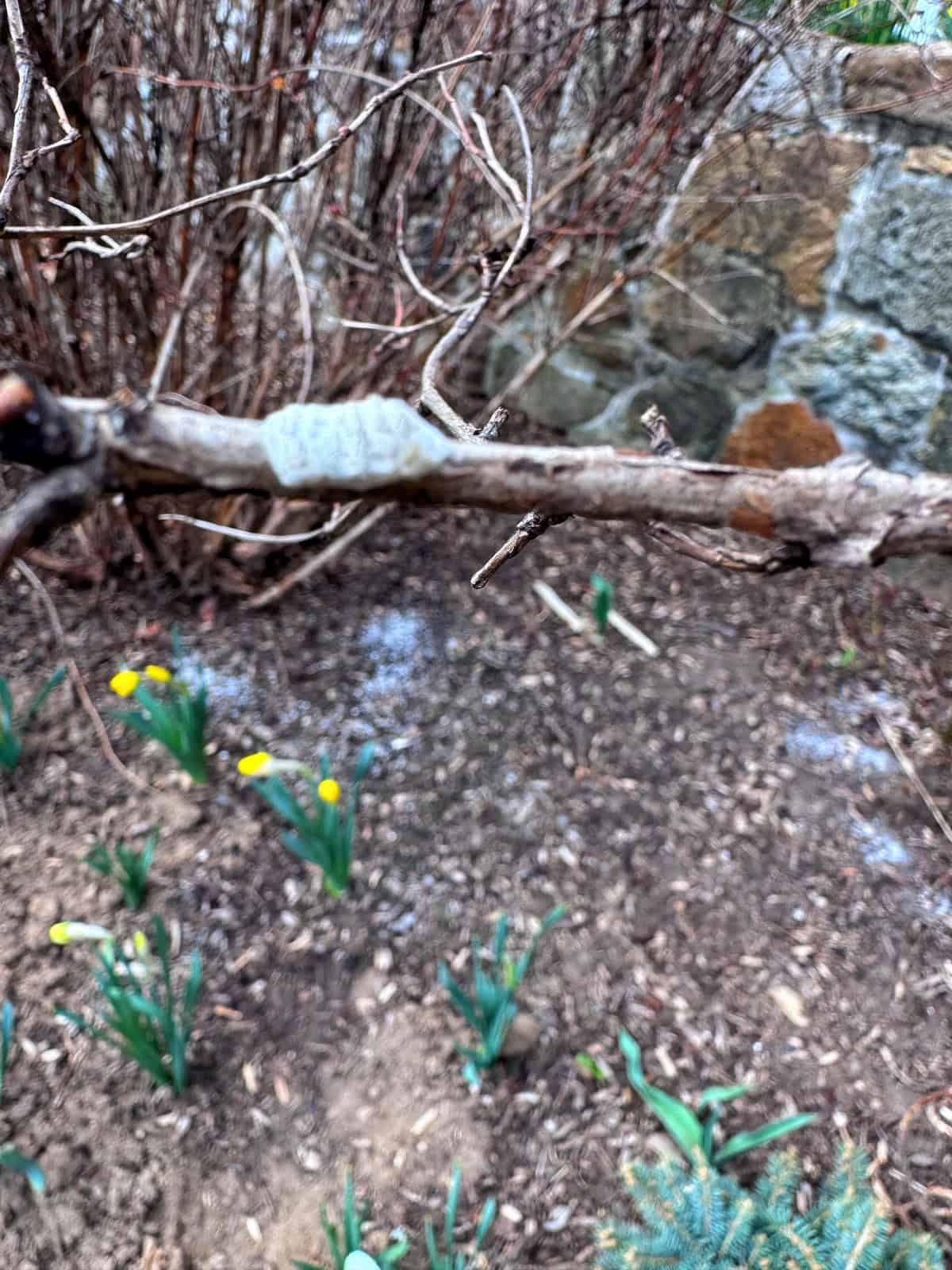
Scale insects are small, sap-feeding pests that attach themselves to the stems and branches of plants. They don’t move much, which makes them easy to overlook, especially when they blend in with the bark.
One of the reasons they’re so difficult to manage is that many types are protected by a hard, waxy covering. That outer layer helps shield them and makes them harder to control once they’re established.
As they feed, they weaken the plant by pulling out nutrients, but they also create another issue. Many scale insects produce a sticky substance called honeydew that coats the plant.
That sticky residue is what allows sooty mold to develop.
So while the black coating is what you notice first, it’s not the actual problem. It’s a sign that scale has been present long enough to build up and spread.
In a dense shrub like ninebark, this can happen without being obvious at first. The interior of the plant is often crowded, which limits airflow and makes it harder to see what’s going on or get good coverage when treating it.
By the time sooty mold is widespread, the scale infestation is usually well established.
Signs of Scale and Sooty Mold on Shrubs
One of the reasons scale can get out of hand is that it’s easy to miss in the early stages. The signs aren’t always obvious until the infestation is more established.
Small Bumps on Stems and Branches
Scale often looks like tiny bumps attached to the stems. They can be brown, gray, or slightly raised with a waxy appearance, and they don’t move when touched.
Sticky Residue on Leaves or Surfaces
If you notice a shiny or sticky coating on leaves, nearby plants, or even outdoor furniture, that’s often honeydew produced by sap-feeding insects like scale.
Black Sooty Mold
This is usually the most noticeable sign. The black coating can cover leaves and stems, and while it looks serious, it’s actually growing on that sticky residue, not the plant itself.
Declining Plant Health
Over time, heavier infestations can lead to reduced vigor, poor growth, or thinning foliage as the plant loses nutrients.
Dense, Crowded Growth
Thick interior branching makes it easier for pests like scale to go unnoticed and much harder to treat effectively.
How to Treat Scale on Ninebark
Once I confirmed scale was the issue, the goal wasn’t to rush in with the strongest treatment. It was to take a step back, improve the structure of the plant, and then apply treatments in a way that would actually work.
Start by Pruning to Open Up the Plant
The first step was addressing the structure of the shrub.
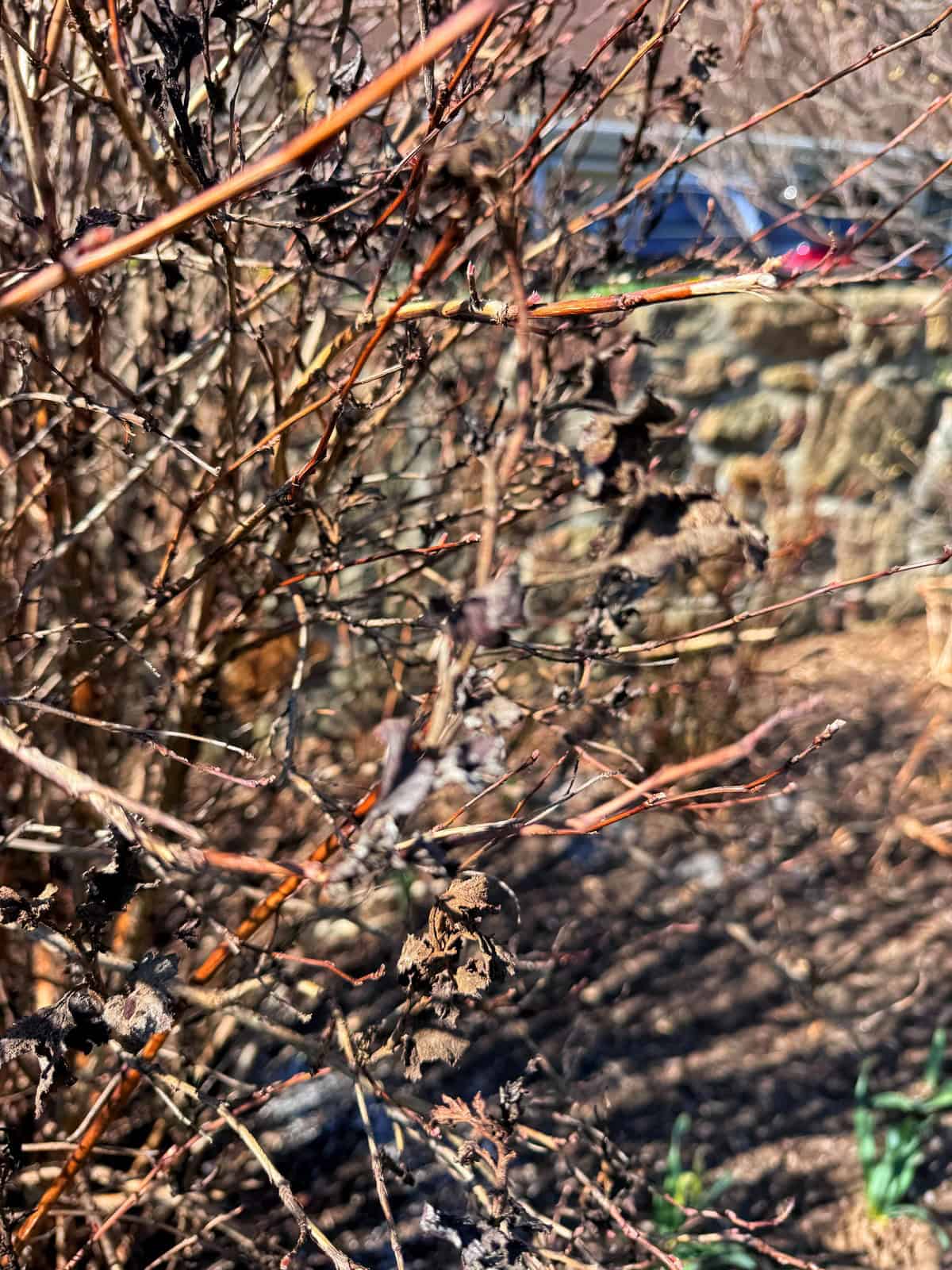
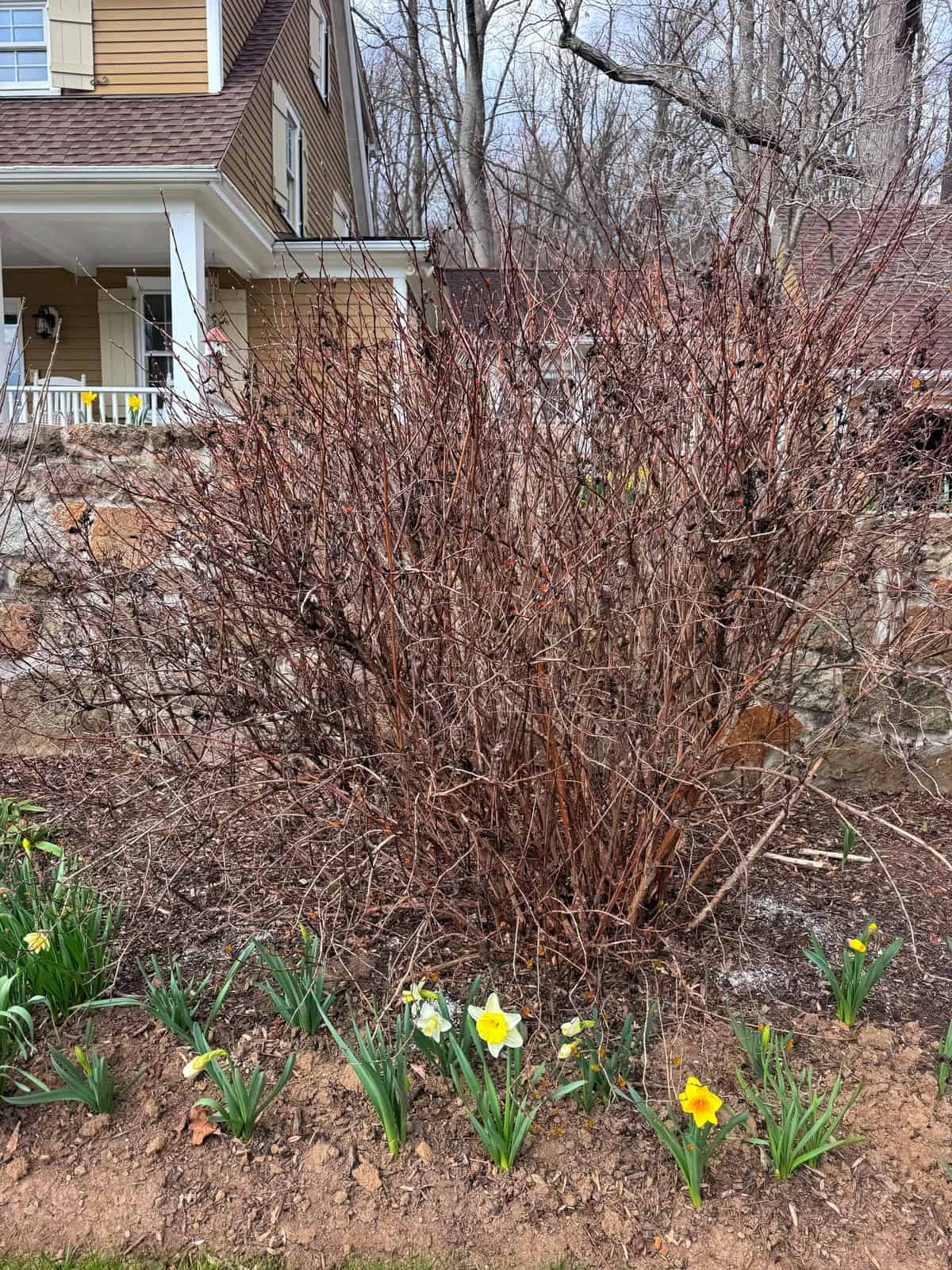
This ninebark had a lot of dense, crowded growth, including suckers, crossing branches, and areas where airflow was almost nonexistent. Before treating anything, I focused on removing:
- Dead and damaged branches
- Crossing or rubbing growth
- Heavily infested areas
- Excess interior growth to improve airflow
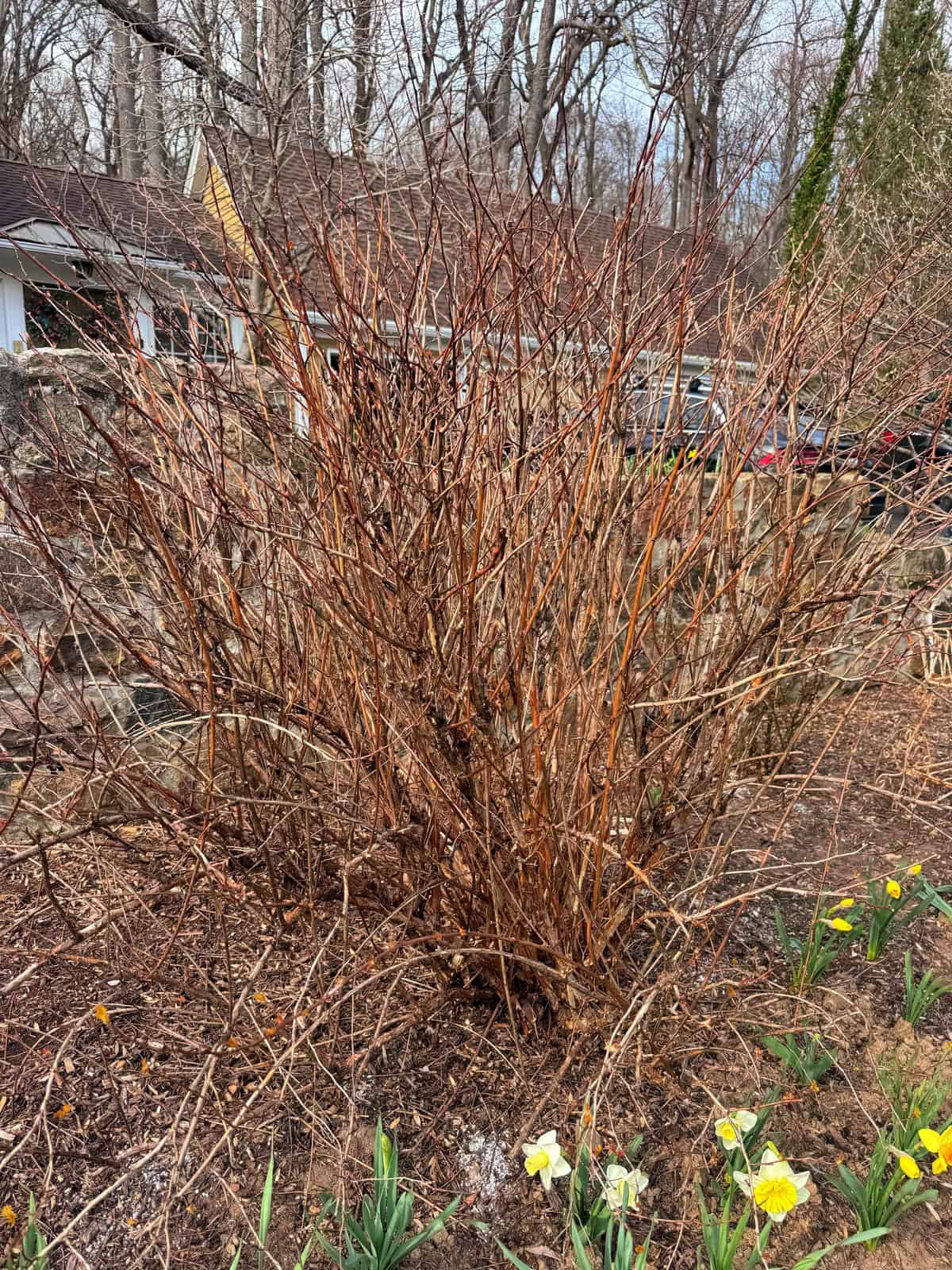
Opening up the plant made a huge difference. Not only could I finally see what I was dealing with, but it also allowed any treatment to reach the areas where scale was hiding.
If the plant stays dense, sprays won’t penetrate well enough to be effective.
I could totally cut this back to make it even easier, but I want to try and salvage some blooms for spring. So I surgically pruned out what I could in the first round and will likely do a second round to finish it all up.
Apply Horticultural Oil at the Right Time
After pruning, I applied horticultural oil while the plant was still in early bud stage, right around the time the forsythia were blooming and temps were above 40 degrees.
Horticultural oil works by coating and smothering the insects, which makes it an effective option for scale when applied thoroughly.
The key here is coverage. Now that the plant was pruned, I was able to get into the interior branches where the infestation was most concentrated.
Without that pruning step, this treatment wouldn’t have been nearly as effective.
Follow Up With Insecticidal Soap if Needed
Because scale can be persistent, I’m planning to follow up with insecticidal soap as the season progresses if I continue to see activity.
Insecticidal soap helps manage active populations, especially in earlier life stages, and works best when applied directly to the insects.
This isn’t a one-and-done process. It’s about staying ahead of the problem and adjusting as needed.
Focus on Coverage, Not Stronger Products
One of the biggest takeaways from this process is that effectiveness comes down to access and coverage, not stronger chemicals.
Before pruning, I had already tried treating this plant, but the structure of the shrub made it nearly impossible to reach the areas where scale was hiding.
Once the plant was opened up, the same types of treatments had a much better chance of working.
Don’t Forget Nearby Plants
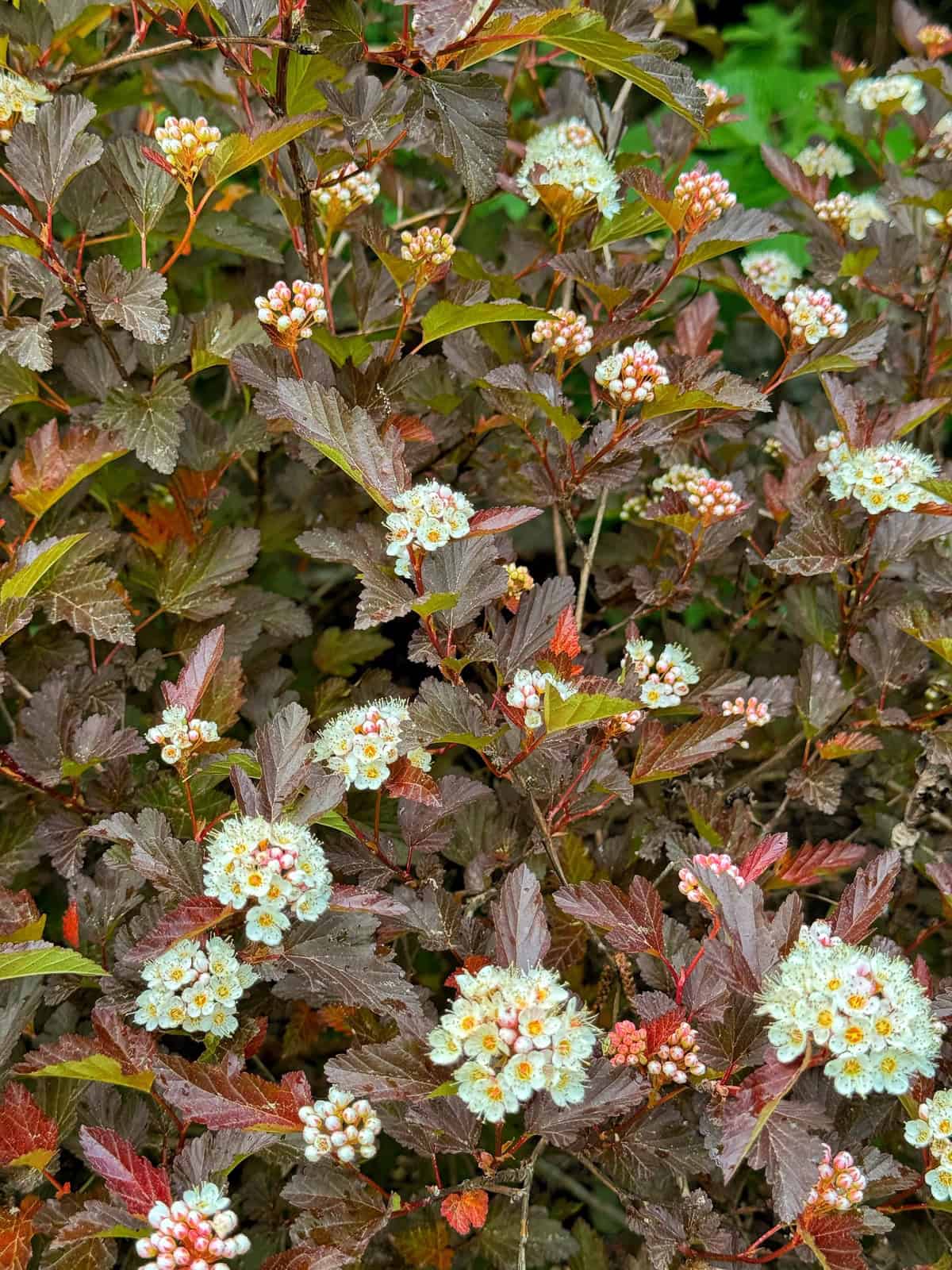
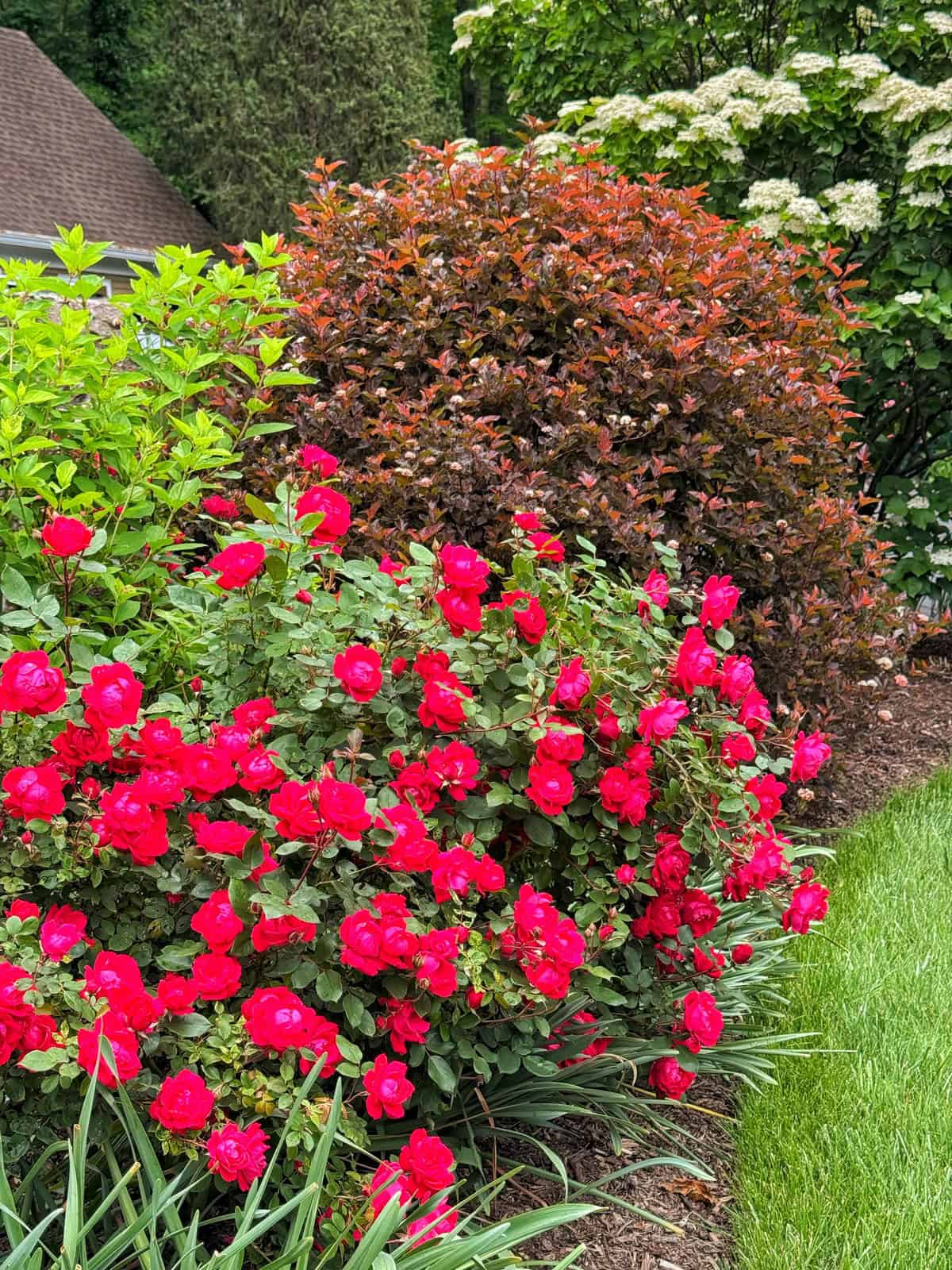
Since this ninebark sits right next to my knockout roses and limelight hydrangea, I also treated the surrounding plants as a precaution.
Scale and other sap-feeding insects can spread, so it’s worth keeping an eye on anything nearby and taking early action if needed.
Why I Stick With a Natural Approach First
When something like this shows up in the garden, especially when it looks as bad as this did in early spring, it can be tempting to reach for stronger chemical treatments right away.
But in most home garden situations, that’s not necessary.
For this ninebark, I focused on lower-impact options like horticultural oil and insecticidal soap, along with pruning to improve airflow and access. These methods work with the plant and the pest cycle instead of trying to overpower the problem all at once.
Horticultural oil is effective because it coats and smothers the insects, while insecticidal soap helps manage active populations when applied directly. Both options rely on proper timing and thorough coverage to work well.
Just as important, they don’t come with the same risks to beneficial insects or the surrounding garden environment when used correctly.
In a mixed border like mine, where this ninebark sits next to roses and hydrangeas, that matters. I want to manage the problem without creating new ones.
This approach also forces you to slow down and really understand what’s happening with the plant. Instead of reacting quickly, you’re making targeted decisions based on what you’re seeing.
And in most cases, that leads to better long-term results.
This experience definitely changed how I approach situations like this, and there are a few things I would handle differently next time.

What I Would Do Differently Next Time
Looking back on this, there are a few things I would handle differently if I saw the same issue again.
The biggest one is taking the time to fully understand what I was dealing with earlier in the season. I noticed something was off in the fall, but I didn’t drill down far enough to identify scale as the root problem. The plant still had foliage, I couldn’t really see well enough into it and didn’t want to prune it hard that late in the season.
Even though I did apply insecticidal soap, I didn’t address the structure of the plant, and that limited how effective that treatment could be.
If I could go back, I would have done more selective pruning in the fall, even knowing that ninebark blooms on old wood. Removing some of that dense interior growth would have made it much easier to get better coverage with treatments and reduce the environment where scale was thriving.
It may have meant sacrificing some blooms, but it likely would have prevented the level of infestation I’m dealing with now.
I also would have followed up more consistently. With pests like scale, timing and repetition matter, and a single application is rarely enough once they’re established.
And finally, I would have paid closer attention to how dense the shrub had become overall. That structure played a big role in how this problem developed and how difficult it was to manage later.
This wasn’t about doing nothing, it was about not going far enough early on.
And this also wasn’t the first time I’ve learned this lesson the hard way.
This Isn’t the First Time I’ve Let a Garden Problem Go
This situation with my ninebark reminded me of a completely different experience in an older garden, and in that case, I handled things very differently.
With the ninebark, I made a conscious decision to hold off on pruning because of timing and flowering. Looking back, I would adjust that approach, but there was at least some level of management and thought behind it.
The situation with dodder was not that.
At the time, I was running nonstop with my three young kids and their activities, and I noticed a thin, thread-like weed starting to weave its way through one of my garden beds. I remember seeing it and thinking I needed to deal with it, but I kept putting it off.
When I finally came back to it, it had spread through nearly a third of the border.
It turned out to be dodder, and the only way to get rid of it was to remove that entire section of the garden. Plants, soil, everything in that area had to go.
And even after that, it took almost two full seasons to completely eradicate it.
That experience was a much more extreme version of the same lesson.
In one case, I made a decision that limited how effective my treatment would be. In the other, I didn’t act at all.
But both led to more work, more time, and more disruption than if I had addressed the issue earlier.
Small problems in the garden have a way of becoming much bigger ones when they’re left too long, whether that’s from inaction or simply not going far enough.
Before You Move On From This
One of the biggest shifts in how I garden came from situations exactly like this.
When something goes wrong, whether it’s scale, sooty mold, or even something like dodder taking over a bed, it’s easy to feel like you’re constantly reacting instead of actually improving your garden over time.
For me, the turning point was stepping back and focusing on two things. Choosing plants and approaches that actually work with my conditions, and understanding how structure, especially pruning, plays a role in plant health and pest management.
That’s something I go into in detail in The Bricks ‘n Blooms Guide to a Beautiful and Easy-Care Flower Garden, where I share my full approach to plant selection, garden design, and include an entire chapter on pruning. If you’ve ever second-guessed when or how much to prune, or worried about making the wrong call like I did here, this is exactly what I wrote the book to help with. You can find it here.
And this situation is also a perfect example of why I track what’s happening in my garden year to year.
It’s one thing to notice a problem. It’s another to remember exactly when it started, what you tried, and what actually worked.
If you’ve ever thought “I need to remember this for next year” and then didn’t, that’s exactly why I use The Bricks ‘n Blooms Beautiful and Easy-Care Flower Garden Planner. It gives you a place to track things like pest issues, pruning decisions, treatments, and timing so your garden actually improves each season instead of starting over. You can take a look here.

The Biggest Lesson From This Experience
If there’s one thing this situation reinforced for me, it’s that small problems in the garden rarely stay small.
Sometimes life gets busy and things don’t get handled right away. Other times, you make a thoughtful decision based on timing or plant health, but it doesn’t play out quite the way you expected.
Both happened here.
In the case of my ninebark, I made a deliberate choice to hold off on pruning, but that decision limited how effective my treatment could be. With the dodder, I simply didn’t act at all, and the problem spread much further than it should have.
In both situations, the result was the same. More work, more time, and more disruption than if I had addressed things earlier or gone a step further when I had the chance.
Going forward, my focus is less about doing everything perfectly and more about responding early and adjusting as needed.
That might mean doing a little more pruning than feels ideal at the time, following up treatments more consistently, or simply taking a closer look when something seems off.
Because in the garden, the sooner you understand what you’re dealing with, the easier it is to manage before it turns into something much bigger.
To learn more about how I prune shrubs in my garden to maintain size, shape, and pest management, please visit my guide on pruning hydrangeas and ornamental shrubs here.
Thank you for visiting the blog today!
Enjoy your day! xo

Originally Published . Last Updated .
