
Poison Ivy Survival Guide: How to Identify, Treat, Prevent, and Remove It

Discover how to identify, prevent, and treat poison ivy, plus the products I rely on after 30 years of gardening.
After three decades of gardening, poison ivy is one of the few things I genuinely dread. I’ve had small patches over the years, but one severe outbreak completely changed how I prepare before working outdoors. The rash was painful, incredibly itchy, and lasted for almost a month. I tried multiple over-the-counter treatments, prescription steroids, and just about every remedy people recommended before finally finding a product that actually worked.
If you’ve come into contact with poison ivy, quick action can make a big difference. In this guide, I’ll show you how to identify poison ivy, prevent future outbreaks, safely remove it from your property, and treat the rash using the products and techniques I’ve found to be the most effective. I’ll also share the prevention routine I now follow every time I’m weeding, mulching, pruning, or working in areas where poison ivy might be growing.
What makes this guide different is that it’s based on both firsthand gardening experience and practical research. I’ll walk you through what worked for me, what I’d do differently today, and the over-the-counter products I now keep stocked in my garden cabinet so I’m prepared if poison ivy strikes again.
(Posts on stacyling.com may contain affiliate links. Click HERE for full disclosure.)

What Is Poison Ivy?
Poison ivy (Toxicodendron radicans) is a native woody plant that can grow as a climbing vine, a sprawling groundcover, or even an upright shrub. You’ll commonly find it growing along woodland edges, fence lines, stone walls, overgrown landscapes, hiking trails, and sometimes right in the middle of home gardens.
I’ve learned never to assume poison ivy only grows “out in the woods.” I’ve found it tucked behind shrubs, climbing mature trees, weaving through ornamental plantings, and even hiding among weeds while cleaning up neglected areas. That’s one of the reasons I always take a few minutes to scan an area before I start weeding or pruning.
How to Identify Poison Ivy
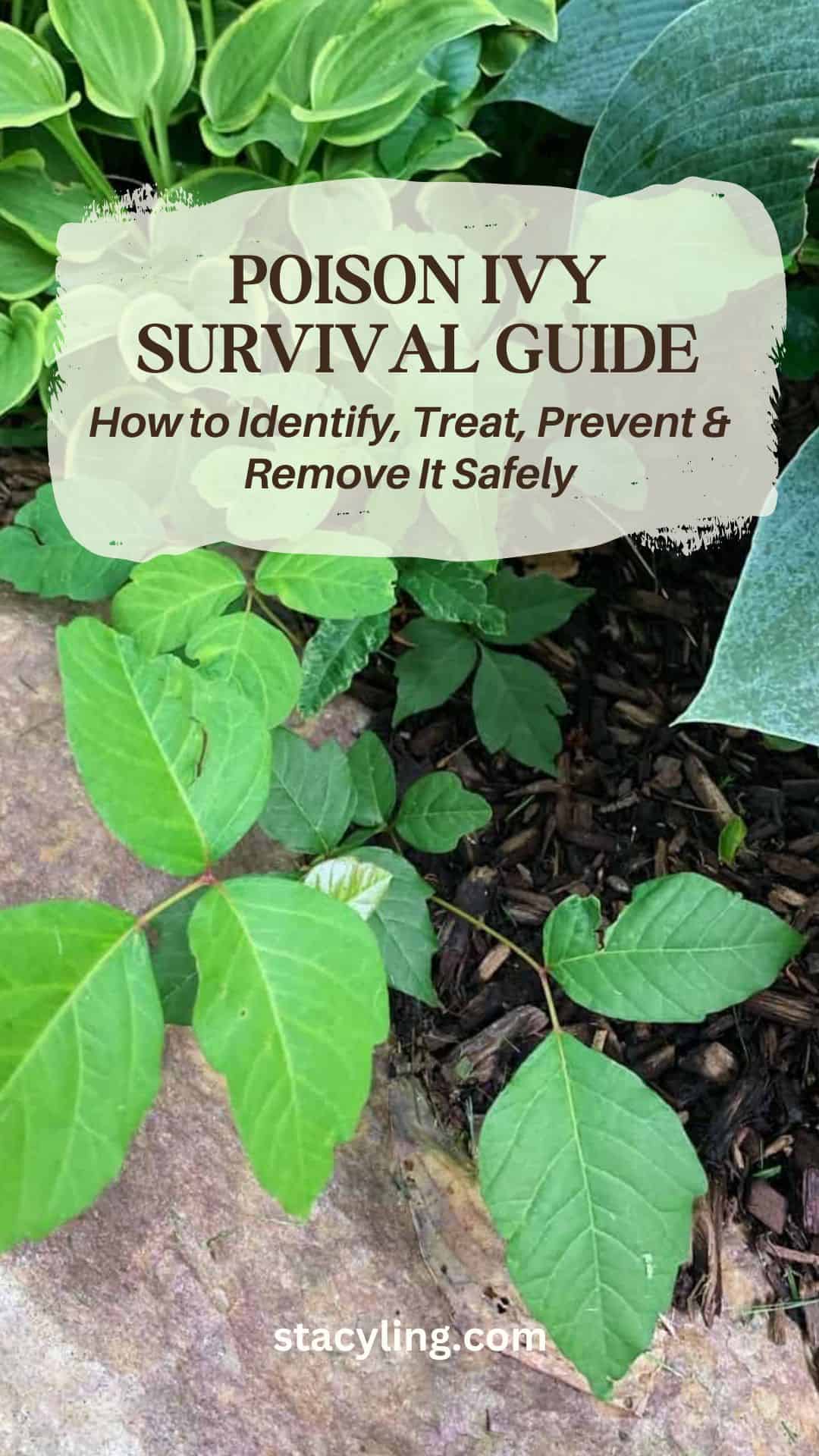
The easiest way to identify poison ivy is to remember the old saying, “Leaves of three, let it be.” While that’s a helpful starting point, poison ivy doesn’t always look exactly the same.
The leaves can be glossy or dull, smooth or slightly toothed, and they may emerge reddish in spring before turning green for summer and brilliant shades of yellow, orange, or red in fall. Because its appearance changes throughout the year, I always recommend erring on the side of caution if you’re unsure.

“Leaves of Three, Let It Be”…Usually
Although poison ivy can vary in appearance, every leaf is made up of three leaflets. That’s its most recognizable feature.
One of the most common mistakes I see gardeners make is confusing poison ivy with Virginia creeper. While poison ivy always has three leaflets, Virginia creeper typically has five leaflets, making it much easier to tell the two plants apart once you know what to look for.
It’s also important to remember that every part of the poison ivy plant is capable of causing a reaction. The leaves, stems, roots, and vines all contain urushiol, the oily resin responsible for the itchy rash. That oil remains active year-round, even after the leaves have fallen or the plant appears dormant, so it’s possible to develop a rash during any season.
For more detailed identification information, Rutgers Cooperative Extension has an excellent resource on poison ivy identification and management that I recommend reviewing if you’re unsure what you’re seeing.

What Causes a Poison Ivy Rash?
Poison ivy rashes are caused by urushiol, an oily resin found throughout the poison ivy plant. The leaves, stems, roots, and vines all contain this potent oil, which is responsible for the redness, intense itching, swelling, and blistering many people experience after coming into contact with the plant.
One of the biggest misconceptions about poison ivy is that you’re either allergic to it or you’re not. In reality, your sensitivity can change over time.
For years, I thought I wasn’t allergic because I had only experienced a few small rashes after working outdoors. Then everything changed. After one particular exposure, I developed the worst case of poison ivy I’d ever had. The rash was incredibly painful, lasted for nearly a month, and completely changed how I approach poison ivy prevention and treatment today.
Even if you’ve never reacted to poison ivy before, that doesn’t mean you’re immune. It’s possible to develop a sensitivity after repeated exposure, which is why I always recommend wearing protective clothing and taking precautions whenever you’re working in areas where poison ivy might be growing.

How Do You Know If You Have Poison Ivy?
Poison ivy doesn’t usually cause an immediate reaction. In most cases, the rash develops within 12 to 48 hours after exposure, although some people may notice symptoms sooner or later depending on how sensitive they are to urushiol.
The first signs are often intense itching, followed by redness, swelling, and small blisters that may appear in streaks or patches where the plant brushed against your skin. New blisters can continue to develop for several days after exposure, making it seem like the rash is spreading. In reality, it’s usually the result of different amounts of urushiol being absorbed into the skin at different rates.
If you think you’ve come into contact with poison ivy, don’t wait for the rash to appear. Wash the exposed skin as soon as possible with cool water and soap or a poison ivy cleanser. The sooner you remove the urushiol oil, the better your chances of reducing the severity of the reaction.
Most mild cases can be treated at home with over-the-counter products, cool compresses, and soothing lotions. However, if the rash is widespread, affects your face or eyes, or you’re having difficulty breathing, contact your healthcare provider immediately, as you may need prescription medication.

How I Got the Worst Case of Poison Ivy I’ve Ever Had
Although I’ve dealt with a few small cases of poison ivy over the years, nothing prepared me for what happened one Labor Day weekend.
A few days before the holiday, I let my dogs outside to run around the front gardens. When they came back in, Koda climbed onto my lap and rested across my bare legs while we relaxed together. At the time, I didn’t think anything of it.
Later that day, I took a hot shower and shaved my legs. By the following day, I had developed the worst case of poison ivy I’d ever experienced.
The rash covered most of both lower legs and eventually spread to parts of my back where I must have unknowingly transferred the urushiol oil. The itching and burning were almost unbearable, and the rash lasted for nearly a month despite trying multiple treatments.
When I looked back at everything I’d done that week, I realized I hadn’t even been gardening. The only explanation was that Koda had run through a small patch of poison ivy growing in one of the gardens and unknowingly transferred the oil to my skin when she laid on my legs.
That experience completely changed how I think about poison ivy. Now, I never leave even a small patch growing near areas where my dogs roam, and I’m much more careful about washing exposed skin, clothing, and pets after spending time outdoors. It also taught me that preventing exposure is far easier than treating a severe rash once it develops.

My Poison Ivy Prevention Routine
After dealing with the worst case of poison ivy I’ve ever had, I completely changed how I prepare before working outdoors. While there’s no way to guarantee you’ll never come into contact with poison ivy, these are the steps I now take every time I’m weeding, pruning, mulching, or clearing overgrown areas around my property.
Remove Poison Ivy as Soon as You Find It
One of the biggest lessons I learned is not to ignore even a small patch of poison ivy. If I spot it growing in my landscape, I remove it as soon as I can instead of telling myself I’ll come back later. That one decision could save you weeks of discomfort.
I keep a box of inexpensive disposable kitchen gloves with my gardening supplies so I can quickly grab a pair whenever I find poison ivy. They’re inexpensive enough that I don’t mind throwing them away afterward. While you can use reusable gardening gloves, remember that urushiol can remain active on surfaces for years, so I don’t take that chance.
When removing poison ivy, be sure to pull as much of the root system as possible. Bag the entire plant immediately and dispose of it with your household trash. Never compost poison ivy or leave it lying in the yard.
Some gardeners recommend spraying poison ivy, but I’ve found it can be difficult to eradicate completely. While my homemade weed killer works well for many weeds around the garden, I don’t rely on it to eliminate poison ivy because removing the entire plant is usually the most dependable long-term solution.
Cover Up Before Working Outdoors
Whenever I’m working in areas where poison ivy could be hiding, I wear long sleeves, long pants, socks, and sturdy garden boots to keep as much skin covered as possible.
I’ll admit, this isn’t always comfortable during the hottest part of summer. But after living through a month-long poison ivy rash, I’d much rather be a little warm for an afternoon than deal with weeks of itching and burning.
Wash Off Immediately
As soon as I finish gardening or hiking in areas where poison ivy may be growing, I head inside and wash exposed skin immediately.
One product I never garden without now is Tecnu Skin Cleanser. I use it as soon as possible after potential exposure because the quicker you remove the urushiol oil, the better your chances of preventing or reducing a reaction.
And one piece of advice I can’t emphasize enough: always use cool water.
Avoid washing with warm or hot water immediately after exposure because heat can open your pores, allowing more of the urushiol oil to penetrate your skin.

Don’t Forget Your Clothing, Tools, and Pets
One of the biggest mistakes people make is thinking they’ve washed away all of the poison ivy oil after cleaning their skin.
Urushiol can remain on clothing, gardening gloves, tools, and even your pets’ fur. Since I believe my dog accidentally transferred the oil to my legs during my worst outbreak, I’m especially careful now.
After working outdoors, I wash my clothes promptly, clean my garden tools, and if my dogs have been running through wooded or overgrown areas, I make sure they get cleaned up too. Taking a few extra minutes after gardening is much easier than dealing with another severe poison ivy rash.

Why I Prefer Removing Poison Ivy by Hand
Over the years, I’ve found that carefully pulling poison ivy by hand is the approach that works best for me. While some homeowners choose to use herbicides to control poison ivy, I prefer removing the entire plant whenever it’s practical to do so.
One reason is effectiveness. Simply spraying the leaves doesn’t always eliminate the entire plant, especially if the root system remains alive. By carefully removing as much of the vine and roots as possible, I’ve had better long-term success keeping poison ivy from returning in the same location.
Another reason is that I try to limit herbicide use around my ornamental gardens whenever possible. With so many perennials, shrubs, and self-seeding flowers growing close together, it’s easy for desirable plants to be damaged by accidental overspray. Hand removal gives me much more control in those situations.
If you decide to pull poison ivy yourself, always wear disposable gloves, long sleeves, long pants, and eye protection. Bag the plants immediately and dispose of them in the trash. Never compost poison ivy, and never burn it, as inhaling the smoke can cause a serious reaction.
If you have a very large infestation or poison ivy growing in an area that’s difficult to access safely, it may be worth consulting a landscape professional who has experience removing it.
While I occasionally use my homemade weed killer to spot-treat common weeds in pathways and hardscape areas, poison ivy is one plant I prefer to remove manually whenever possible.

How to Remove Poison Ivy Safely
One of the reasons poison ivy is so frustrating is that it’s incredibly persistent. Simply removing the leaves or cutting the vines usually isn’t enough because the root system often survives and sends up new growth.
I’ve found that the best time to remove poison ivy is as soon as I notice it. While many experts recommend tackling it in spring or fall when the soil is moist, I’ve learned the hard way that waiting often creates bigger problems. If I spot a small patch in one of my gardens, I remove it before it has a chance to spread.
Wear the Right Protective Clothing
Before you begin, cover as much skin as possible by wearing:
- Long sleeves
- Long pants
- Closed-toe shoes or boots
- Disposable gloves
- Eye protection if you’re working around larger vines
Remove the Entire Root System
Using a trowel or shovel, carefully loosen the soil around the plant and remove as much of the root system as possible. If roots are left behind, poison ivy can regrow.
Afterward, thoroughly clean any tools that came into contact with the plant because urushiol oil can remain active on tool surfaces for years if it isn’t removed properly.
Dispose of It Properly
Immediately place the vines, roots, and any contaminated plant debris into a sturdy garbage bag and seal it before disposing of it with your household trash.
Never compost poison ivy, and never burn it. Burning poison ivy can release urushiol particles into the smoke, which can cause a serious reaction if inhaled.
Continue Monitoring the Area
Even after removing poison ivy, I keep an eye on that area of the garden throughout the growing season. Occasionally, small pieces of root left behind can produce new shoots, but catching them early makes them much easier to remove than waiting until they’ve become established again.
The Best Poison Ivy Treatments I’ve Used
Over the years, I’ve tried everything from home remedies and over-the-counter creams to prescription medication. Some products have helped relieve the itching, while others have become staples that I won’t garden without.
These are the products I personally keep on hand during gardening season. While I can’t guarantee they’ll prevent or cure every case of poison ivy, they’ve made a tremendous difference for me over the years.
Tecnu Skin Cleanser: My First Line of Defense
If I think I’ve come into contact with poison ivy, this is the very first product I reach for.
I keep Tecnu Skin Cleanser in both my kitchen and shower so I can wash exposed skin as quickly as possible after weeding, pruning, mulching, or clearing overgrown areas. The goal is simple: remove as much urushiol oil as possible before it has a chance to cause a reaction.
Since I use it regularly throughout the gardening season, I usually buy the larger bottles or multi-packs so I always have one nearby.
Tecnu Scrub
I also keep Tecnu Extreme Poison Ivy Scrub in my shower. It’s excellent for removing any remaining oils and provides some relief if my skin has already started feeling irritated.
The tubes are fairly small, so I usually purchase a two-pack and keep an extra on hand.
Tecnu Anti-Itch Products
If I do end up with a mild rash, I’ll often reach for Tecnu’s anti-itch gel or spray to help calm the itching and burning.
In my experience, these products work best for minor reactions or early treatment. During my worst poison ivy outbreak, they helped somewhat, but I needed something stronger.
The One Product That Finally Gave Me Relief: Zanfel
As much as I like the Tecnu line, Zanfel is the product that completely changed my opinion about over-the-counter poison ivy treatments.
When I developed the worst case of poison ivy I’ve ever had, I tried everything I could think of. I used multiple Tecnu products, home remedies, cool compresses, aloe from my own plants, and eventually even needed a prescription steroid from my doctor.
Nothing provided lasting relief.
After more than a week of miserable itching, burning, and very little improvement, I started researching other options and kept seeing people recommend Zanfel. Honestly, I was skeptical because by that point I felt like nothing was going to work.
I bought a tube anyway, and from the very first use I noticed a difference.
The itching finally started to calm down, the rash began improving, and for the first time in days I felt like I was actually healing instead of getting worse.
Ever since that experience, I’ve kept Zanfel stocked in my medicine cabinet. I hope I never need it again, but if I do, I know it’s there.
My Recommendation
Today, I use these products differently than I did years ago.
- Tecnu Skin Cleanser is my go-to product immediately after potential exposure.
- Tecnu Scrub helps remove lingering oils and soothe irritated skin.
- Tecnu Anti-Itch Gel or Spray provides relief for mild reactions.
- Zanfel is the product I keep on hand for more severe cases because it’s the only over-the-counter treatment that made a dramatic difference during my worst poison ivy outbreak.
I hope you never need any of these products. But if you spend as much time outdoors gardening, hiking, or working around wooded areas as I do, I highly recommend keeping them on hand before you need them rather than scrambling to find them after a rash develops.
Build Better Gardening Habits Before Problems Start
One of the biggest lessons I’ve learned after nearly 30 years of gardening is that a little preparation goes a long way. Whether it’s keeping poison ivy cleanser stocked before I need it, staying ahead of weeds with mulch, or choosing plants that require less maintenance, the goal is always the same: spend more time enjoying the garden and less time solving preventable problems.
That’s exactly why I wrote The Bricks ‘n Blooms Guide to a Beautiful and Easy-Care Flower Garden. It’s filled with the practical gardening strategies I’ve developed over decades to help you grow a beautiful landscape that’s easier to care for season after season.
I also rely on my Bricks ‘n Blooms Beautiful and Easy-Care Flower Garden Planner to keep track of seasonal tasks, plant performance, garden projects, and observations throughout the year. Recording what worked, what didn’t, and even where I found poison ivy helps me make smarter gardening decisions each season.
Final Thoughts About Preventing and Treating Poison Ivy
If there’s one thing poison ivy has taught me, it’s that prevention is always easier than treatment. One severe outbreak was enough to completely change the way I garden. Today, I’m much more aware of where poison ivy grows, I remove it as soon as I find it, and I never work in questionable areas without taking a few simple precautions.
While no one wants to think about poison ivy when they’re enjoying their garden, being prepared can save you weeks of discomfort. Keeping the right products on hand, learning how to identify the plant, and taking a few minutes to wash up after working outdoors can make all the difference.
If you’re spending time weeding, mulching, pruning, or maintaining your landscape this season, you may also find these guides helpful:
- How I Use Mulch to Reduce Weeding, Watering, and Garden Maintenance
- Homemade Weed Killer: A Simple Recipe That Really Works
- How I Manage So Many Garden Beds (Without Overdoing It)
After one month of misery from the worst poison ivy rash I’ve ever had, I can honestly say I hope you never need this advice. But if you do, I hope my experience helps you avoid the same mistakes I made and gets you back to enjoying your garden as quickly as possible.
Thanks so much for joining me on the blog today!
Enjoy a beautiful day! xo



Originally Published . Last Updated .

I too had a very good bad case of poison ivy a few years ago, I was prescribed a steroid and even that did not help. Now I use a plant identification app if I’m not sure. I wear disposable gloves and use a plastic bag to pull it. I put the bag over the plant, pull it out, tie it up in the bag and throw it in the trash.
Oh that’s a good tip! I will do this too!!!
The best thing to use, better than your suggestions is Fels- Naptha bar soap. Wash with it directly after any contact with poison ivy or poison oak. It’s inexpensive and will work as well as anything else you can buy. Also use it daily on any areas that you have a rash from poison oak /poison ivy as it will dry it up. I’ve had this problem since I was a child and had it so bad my eyes were swollen shut. If you think you have it on your eye lids or face at all call a doctor and get a steroid immediately. If you are allergic to it do not try to remove it yourself, do not put it in a burn pile. Pay someone that isn’t affected to remove it.
Thanks for your comment Judy! I’ve never heard of that one before – I will check it out!