
How I Finally Stopped Babysitting My Dahlias

After years of tying and re-tying, I found a support system that actually works for tall, heavy dahlias without constant mid-season fixing.
For years, growing dahlias felt like a season-long exercise in babysitting. I loved the flowers, but I never felt ahead of them.
I’ve grown dahlias for many years, and while the basics of growing dahlias are straightforward enough, figuring out how to keep tall plants upright has always been the bigger challenge. No matter what I tried, I was constantly tying, re-tying, and checking plants that looked fine one week and were leaning the next.
In my former garden, I planted dahlias directly in the ground in different beds and tried several support methods: green garden stakes with twine, grow-through hoops, and even tying plants along a fence and using that as support. Each approach worked to a point. That is, until the plants gained height and the blooms got heavy. By mid to late summer, especially after storms, it felt like I was always intervening.
(Posts on stacyling.com may contain affiliate links. Click HERE for full disclosure.)

Starting Fresh in Raised Beds
When we moved here back in 2021 and built the raised beds, I knew I wanted to rethink dahlia support from the beginning. I planted them in the large U-shaped bed and decided to try trellis netting, cutting it to fit the bed rather than forcing the bed to fit the netting.
If you are growing taller varieties, having a solid support system in place early makes all the difference. I share more of my preferred methods in my guide to supporting tall flowers here.
I grow tall, heavy varieties like Penhill Watermelon, Thomas Edison, and Café au Lait, so I knew whatever system I used needed to provide real structure, not just something that looked good early in the season.
Year one: trellis netting, but not enough of it
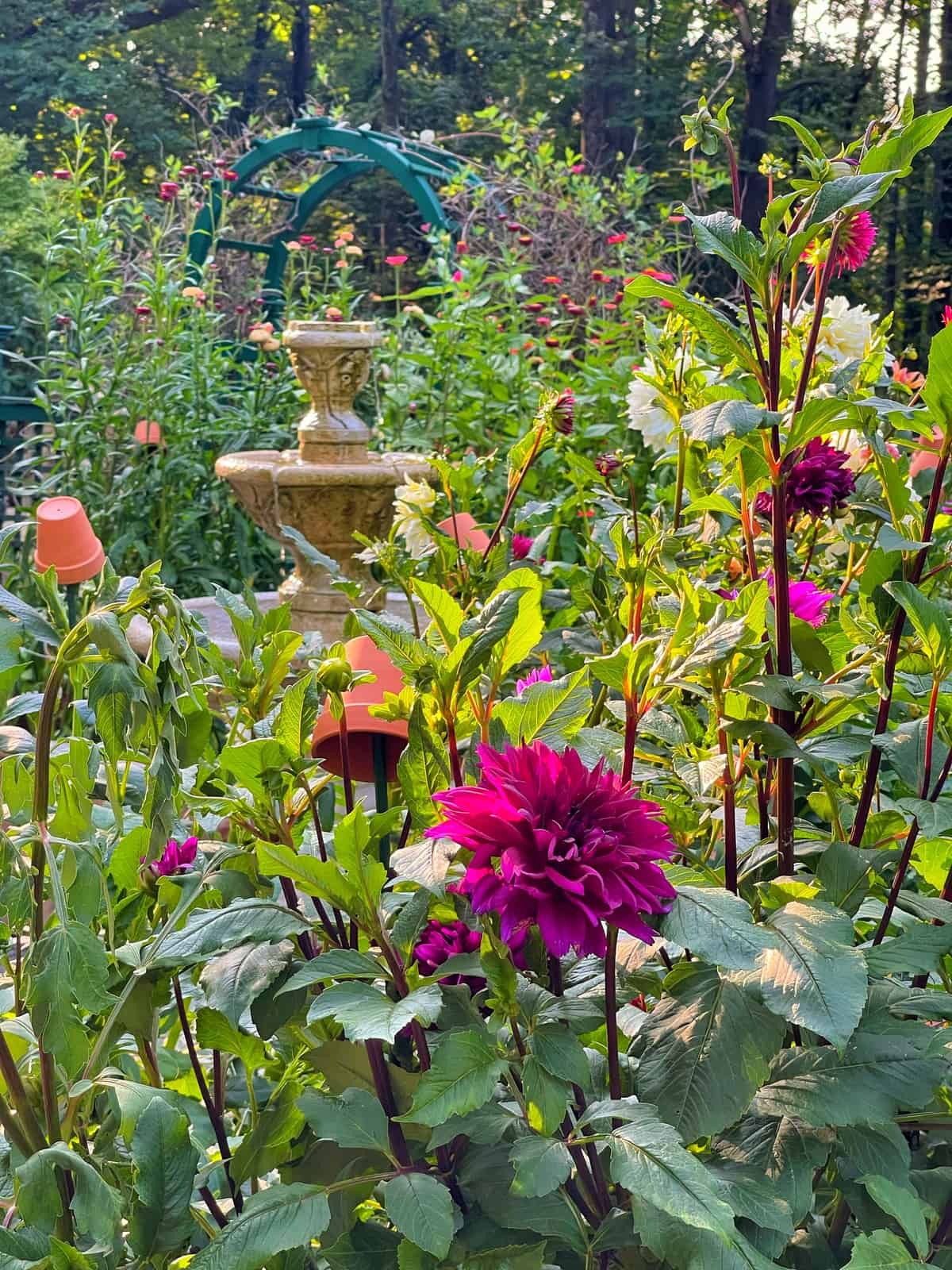
The first year, I paired a single layer of trellis netting with green garden stakes. Early on, it seemed promising. The plants grew through the netting, and everything stayed neat.
As the season went on, though, the limitations became clear. The weak green garden stakes leaned, the netting sagged under the weight of the plants, and I was back to adding extra twine and supports to keep blooms upright. I hadn’t eliminated the babysitting — I’d just delayed it.
Year two: more structure, better results
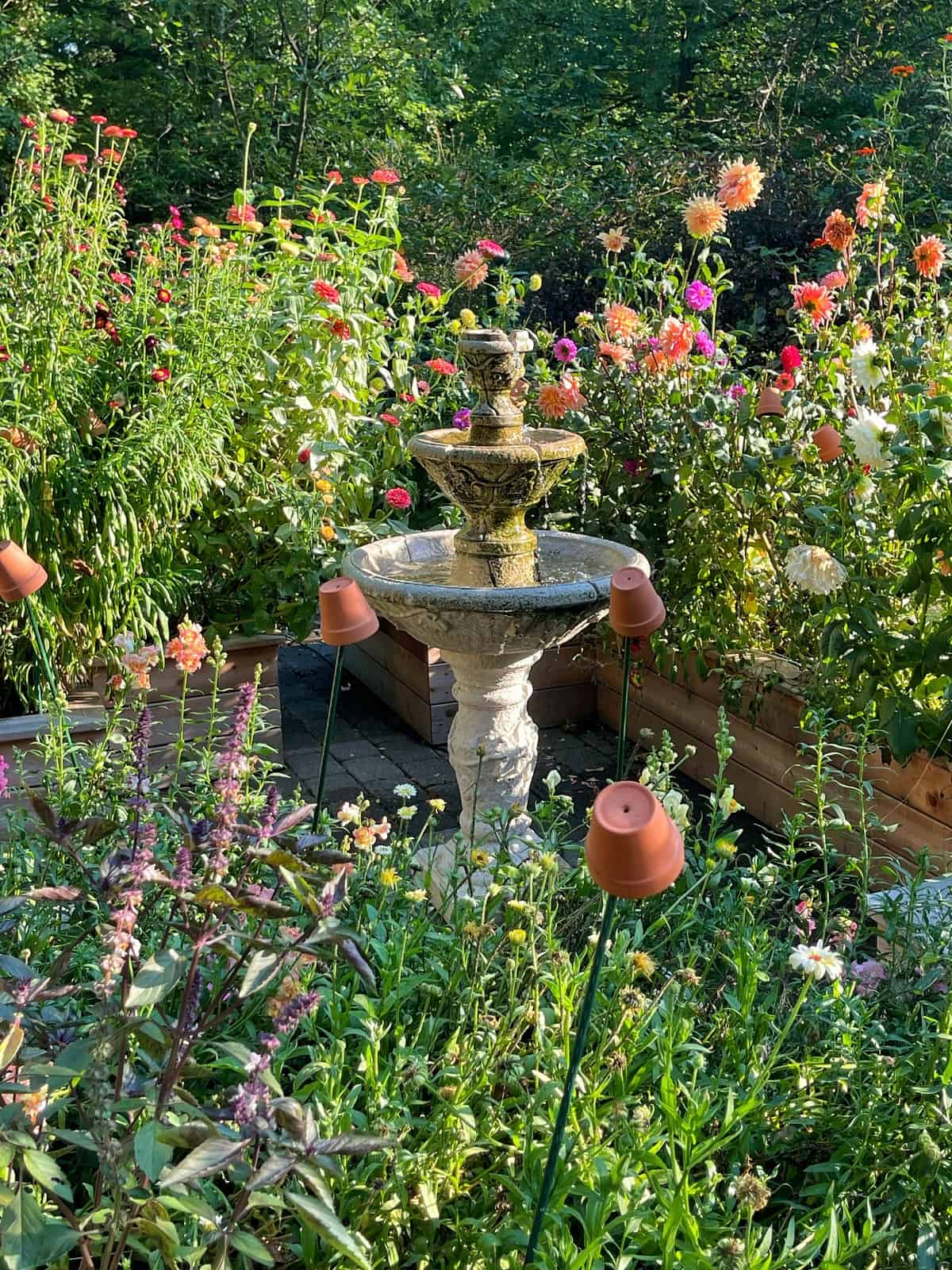
The following year, we added much more structural support. We installed 1×1 wooden posts at all four corners of the bed and spaced additional supports along the sides, then added two layers of trellis netting.
This worked significantly better. The plants stayed upright longer, and the netting held its shape as the dahlias grew taller and heavier. Still, I felt the system needed more reinforcement at the edges, so I added green garden stakes around the perimeter to help stabilize everything.
Functionally, it worked — and I wasn’t constantly fixing things — but I still felt like the setup could be improved.

An aesthetic experiment that didn’t hold up
Part of my hesitation with trellis netting has always been how visible it is. Wanting something that blended in more, I decided to experiment.
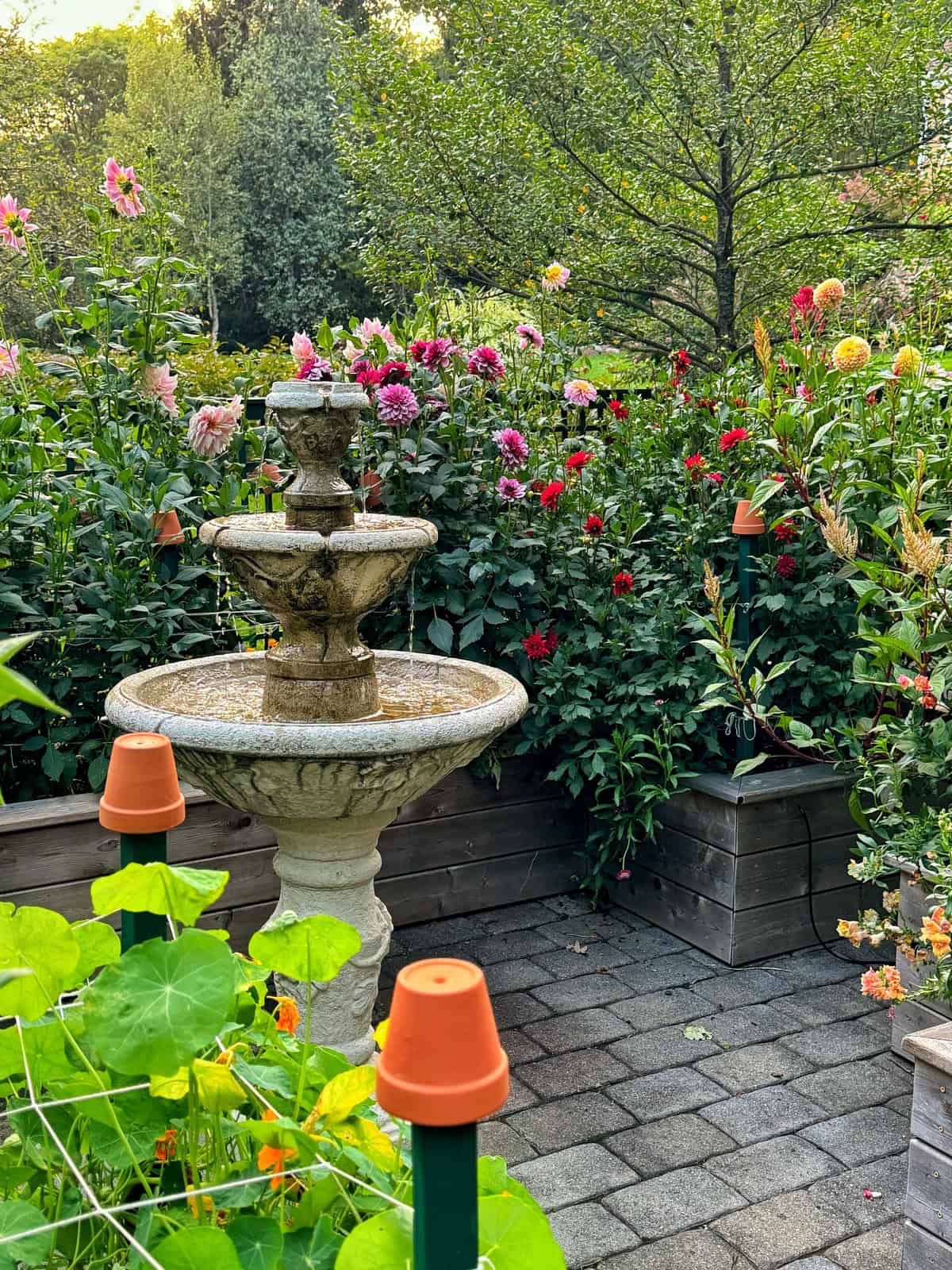
Last year, instead of using netting, I created a two-layer spider-web pattern with green twine, hoping it would provide the same support while being less noticeable.
It didn’t work. The twine stretched and broke under the weight of the blooms, and once again I was adding more twine and more supports as the season progressed. For large, heavy dahlias, it simply wasn’t strong enough.
At that point, it became clear that the issue wasn’t the idea — it was the reality of supporting tall flowers when plants reach this size and weight.
Planning for Better Dahlia Support Each Season
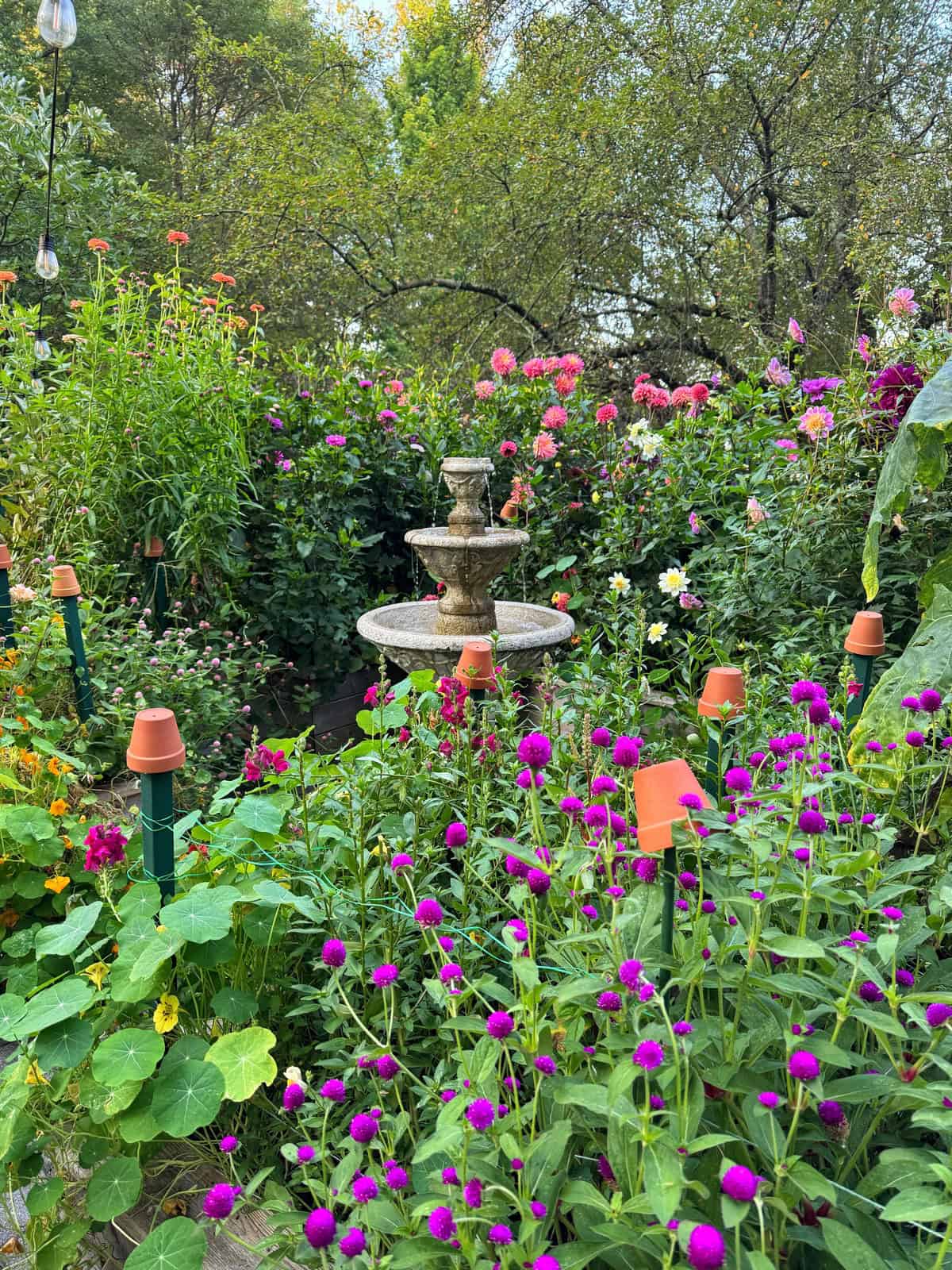
One thing I learned quickly is that dahlia support is not something you want to improvise in July when plants are already flopping. It is much easier to plan ahead, especially when you are growing multiple varieties with different heights and bloom sizes.
Over the years, I started tracking which dahlias needed the most support, which ones stayed more compact, and which areas of my garden were more exposed to wind. Writing it down helped me make better decisions the following season instead of repeating the same mistakes.
That is one of the reasons I created The Bricks ’n Blooms Beautiful and Easy-Care Flower Garden Planner. Even though I do not specifically teach dahlias in my first book, the planner is where I record bloom timing, plant height, staking needs, and seasonal notes. It has helped me see patterns year to year and prepare my beds properly before planting.
If you grow dahlias regularly, keeping track of which varieties need trellis netting, cages, or minimal support can save you time and frustration the next season.

Where I’ve Landed
fter several seasons of trial and error, I’ve accepted a few things. The dahlias I love need serious support, and the only systems that work are the ones that are built solidly from the beginning.
If you are just getting started with these flowers, my complete guide to growing dahlias walks through everything from planting to care so you can set them up for success from day one.
This year, I’m going back to two layers of trellis netting with even more 1×1 wooden supports throughout the bed. It may not be invisible, but it’s the system that requires the least intervention once the plants are growing and that matters more to me than how it looks early in the season.
And if you are experimenting with different staking methods, I share more detailed options in my guide to supporting tall flowers and preventing flopping.
What surprised me most wasn’t that trellis netting worked. It was how much mental space it freed up during the season. For the first time, I can walk past the dahlia bed without feeling like something needs fixing.
Thank you for visiting the blog today!
Enjoy your day! xo

Originally Published .

Hi Stacy
What heights do you set up your trellis netting for dahlias 36 plus inches tall?
Love all your gardening tips and tricks!
Thanks
Lori Kwasniewski
Hi Lori! Thank you! I usually set the bottom one (eyeballing it cause I haven’t actually measured) – 18-24″ and another around 36-48″. Some dahlias grow really tall with super heavy blooms – like penhill watermelon, so those are the ones I strive to keep more upright. I’d say that is the generally range though based on what I am growing.