
How I Transformed My Zen Garden with Low-Maintenance Evergreens

I transformed my backyard zen garden with low-maintenance evergreens for year-round structure, calm, and easier care. See the plant list!
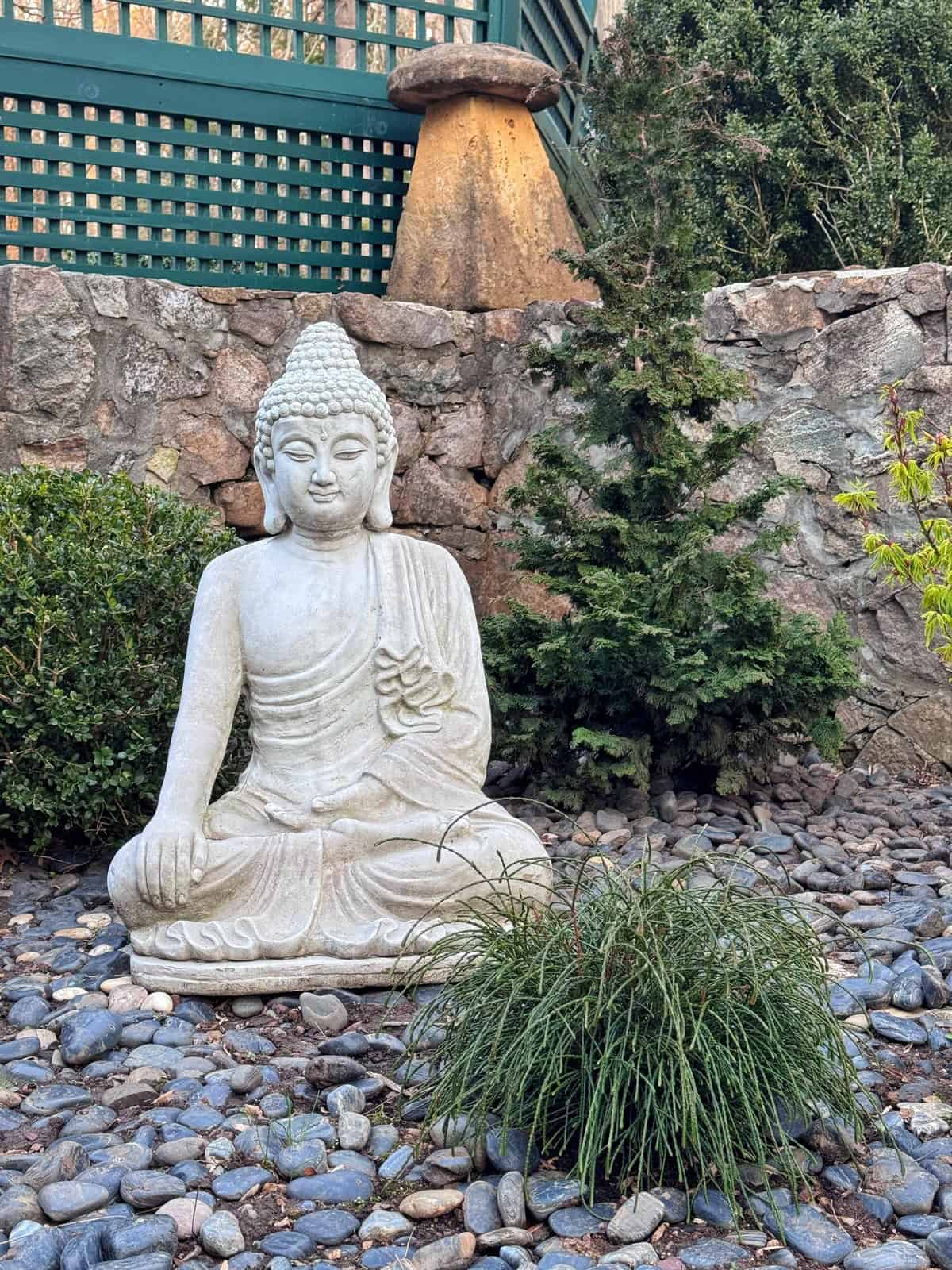
When we first moved into our home, I didn’t set out to create a low-maintenance zen garden, but that’s exactly what this space has become.
At the time, this area had all the elements of a peaceful backyard retreat, but it felt unfinished and lacked direction. I had never designed a zen garden before, so instead of rushing into it, I spent a few years living with the space and learning how it functioned throughout the seasons.
In those early years, I filled the area with seasonal flowers while I figured things out. But over time, I realized I wanted something much simpler here. I was craving a calm, structured space with more year-round interest and less ongoing work.
That’s when I began transforming this area using low-maintenance evergreen plants that bring structure, texture, and a more intentional feel to the garden.
If you’re looking for broader inspiration, I share more ideas in my backyard zen garden guide. In this post, I’m walking you through exactly how I redesigned my own space, the plants I chose, and what I learned along the way.
(Posts on stacyling.com may contain affiliate links. Click HERE for full disclosure.)
Watch the Full Zen Garden Transformation
This garden didn’t come together overnight.
What started as a collection of terracotta pots, seasonal flowers, and design experiments slowly evolved into one of my favorite spaces on the property. Over the last five years, I’ve learned that not every garden needs more plants, more flowers, or more color. Sometimes the most beautiful spaces come from slowing down, simplifying, and allowing the garden to reveal what it wants to become.
In this video, I’m sharing the complete evolution of this zen-inspired garden, including the mistakes I made, the changes that finally worked, and the garden design lessons I learned along the way.

Backyard Zen Garden Before the Evergreen Makeover
When we first moved here, the space had good bones, but it lacked the kind of planting that gives a garden depth and identity. It did not feel finished, and it definitely did not yet have the serene, collected feeling I wanted.
Because I was still learning the property and trying to manage a lot of other garden areas at the same time, I took a temporary approach. I added seasonal flowers in containers and tucked in annuals where I wanted color. That gave the space life and helped soften some of the harder edges, but it was never the long-term answer.
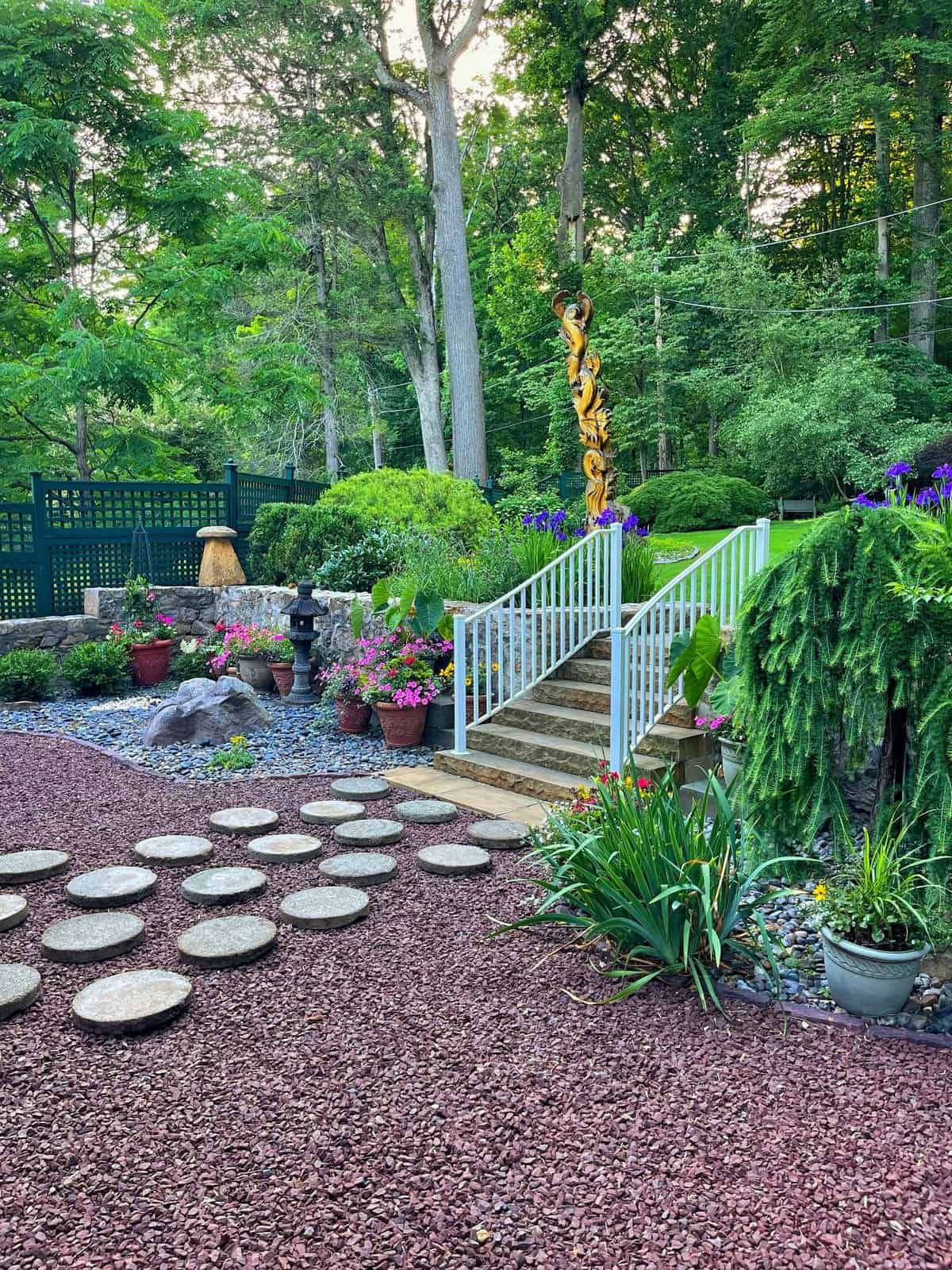
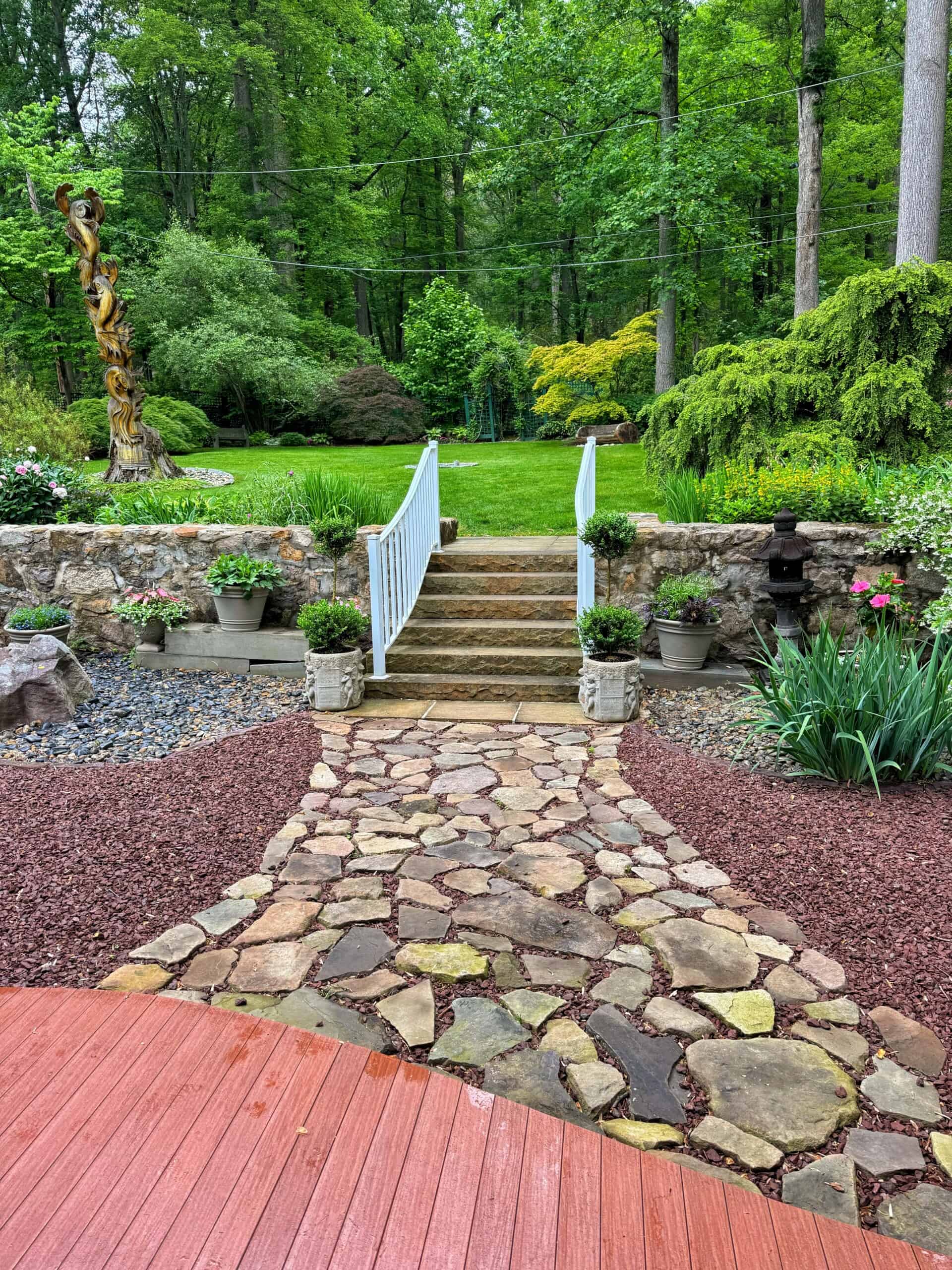
My dogs were also struggling on the rocks to get from the house to the backyard, so we needed to add stepping stones so they could more comfortably access the grass.
The problem was that annuals brought color, but not structure. Each year I had to start over. And because this garden already had such a strong hardscape presence with stone, gravel, and the pond nearby, I eventually realized it needed plants with more permanence and sculptural form. It needed a stronger framework that could carry the space through every season, not just summer.
That is really where this makeover began. I stopped thinking about filling empty spots and started thinking more about creating a calm planting composition.

The Turning Point in My Zen Garden Design
One of the biggest changes in this garden came from a loss.
When we first moved in, this area had a beautiful weeping eastern larch that acted as a major architectural focal point. It was dramatic, graceful, and exactly the kind of plant that draws your eye and anchors a space. I loved it.
But about a year after we moved in, we had an extremely hot, dry summer and I lost that tree.
At the time, I did not fully understand how challenging the conditions were in this part of the garden. With so much stone and gravel around it, the area dried out faster than I realized. I also had a large property and a lot of garden beds to care for, so keeping up with hand watering every single plant just was not realistic. By the time I understood how stressed it was, the tree was already in decline.
Looking back, I also discovered that the trunk had likely been compromised by rebar and heavy wire that had been left in place to hold it upright. I had no idea it was even there. Between the extreme heat, lack of water, and the constriction around the trunk, it was one of those situations where several factors worked against the plant at once.
Losing that tree was hard, but it also forced me to rethink the space in a much more intentional way. Instead of trying to recreate exactly what had been there, I started asking a better question: what kind of plant would truly thrive here and still give me that sculptural, calming focal point I loved?
That question changed everything.
What I Learned About Watering a Rock Garden in Hot Weather
One of the biggest lessons I learned in this garden is that stone can dramatically affect growing conditions.
All of the gravel and larger rocks in this space absorb heat during the day and release it back into the surrounding soil. That means plants growing in and around stone are often dealing with more heat stress and faster moisture loss than you might expect just by looking at the garden.
At first, I underestimated how much that mattered. The area looked tidy and controlled, but beneath the surface, it was drying out more quickly than a more traditional planting bed would. During hot, dry stretches, that makes a real difference.
Now I know that gardens like this need a more watchful eye during summer weather, especially when plants are getting established. Even if the overall design is low maintenance, that does not mean the plants are completely hands-off. It just means the maintenance is more thoughtful and focused.
That was a huge learning curve for me, and honestly, it made me a better gardener. I am much more aware now of how microclimates work on my property and how important it is to match the plant to the site, not just the look I want to create.
Choosing the Right Plants for a Low-Maintenance Zen Garden
Losing that tree also made me take a closer look at plant choice.
Part of the issue was weather and watering, but part of it was also that the plant was simply not the best fit for this exact location. That was an important realization. A plant can be beautiful and still not be the right choice for a hot, rocky, fast-draining area.
So when I started redesigning this part of the yard, I wanted plants that could give me strong form and year-round structure, but that would also better suit the conditions here. I began leaning much more heavily into evergreen specimen plants, especially those with interesting textures, layered branching, and sculptural habits.
That said, I also want to be clear that low maintenance does not mean no maintenance. Some of the plants I chose still prefer consistent moisture, especially while establishing or during very hot, dry weather. The difference now is that I understand the site better and I am committed to keeping an eye on them. I am no longer assuming the garden will take care of itself just because the plants are surrounded by stone.
That shift in awareness has made all the difference.
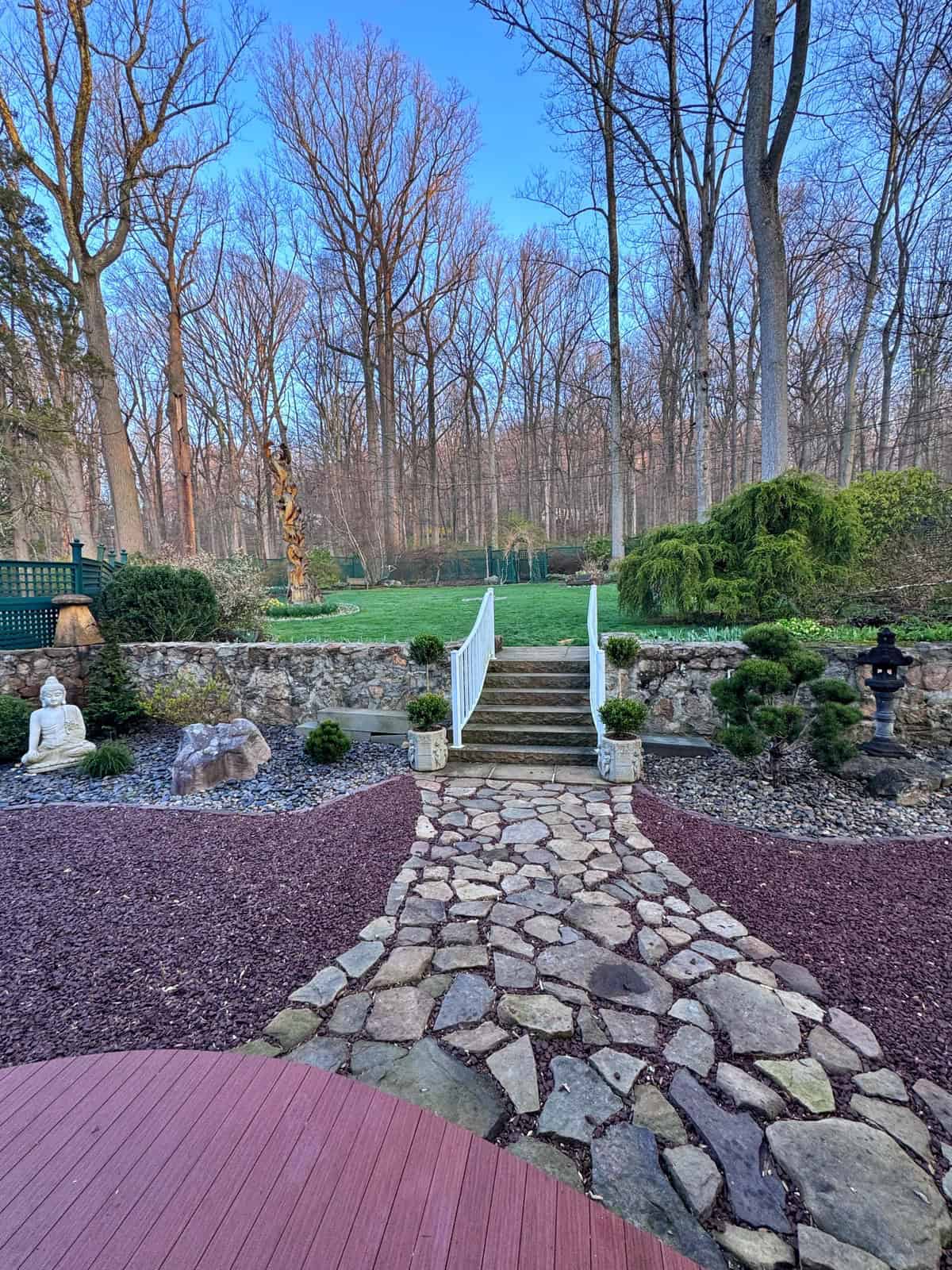
Zen Garden Design Ideas I Used in My Own Backyard
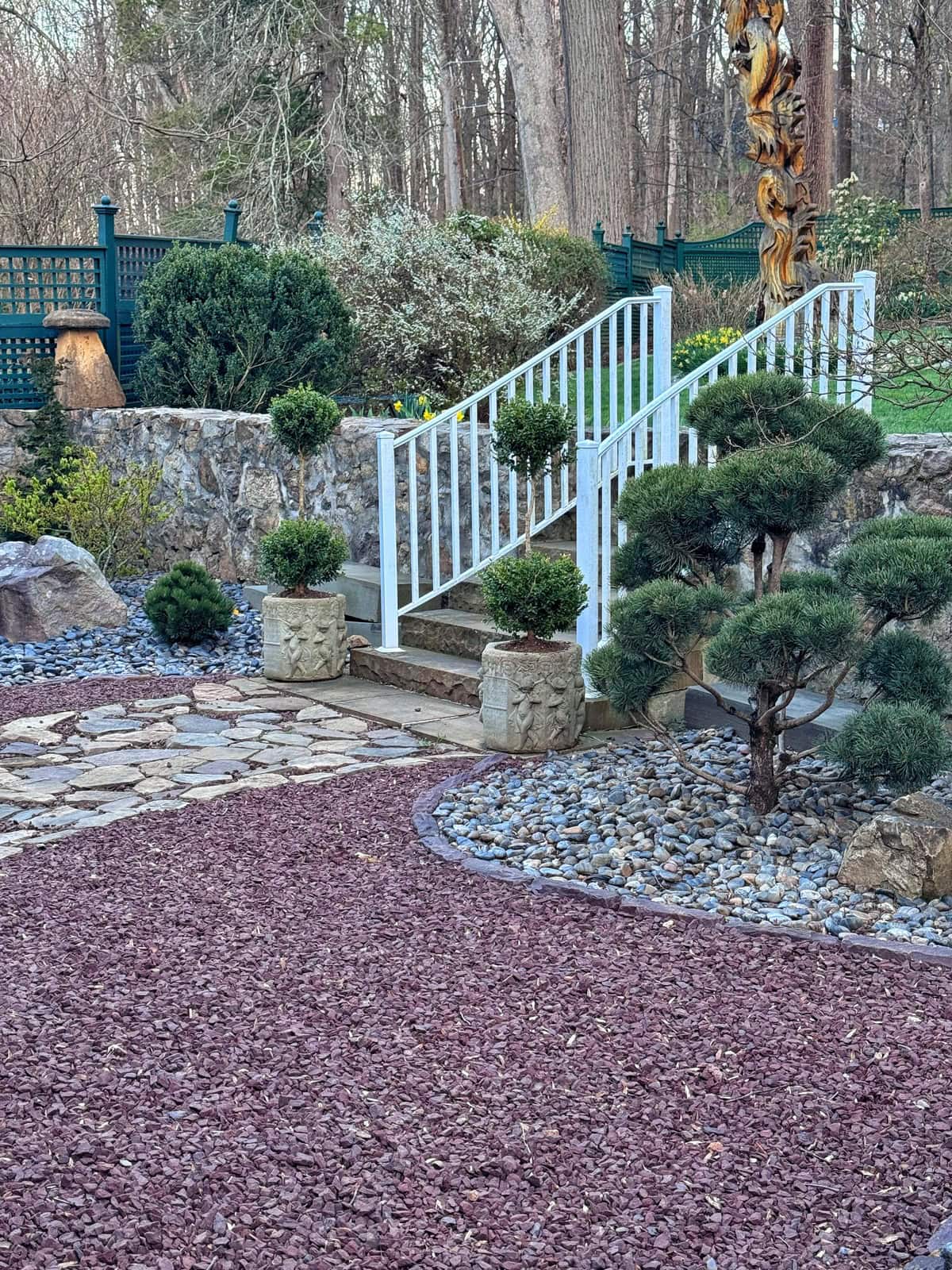
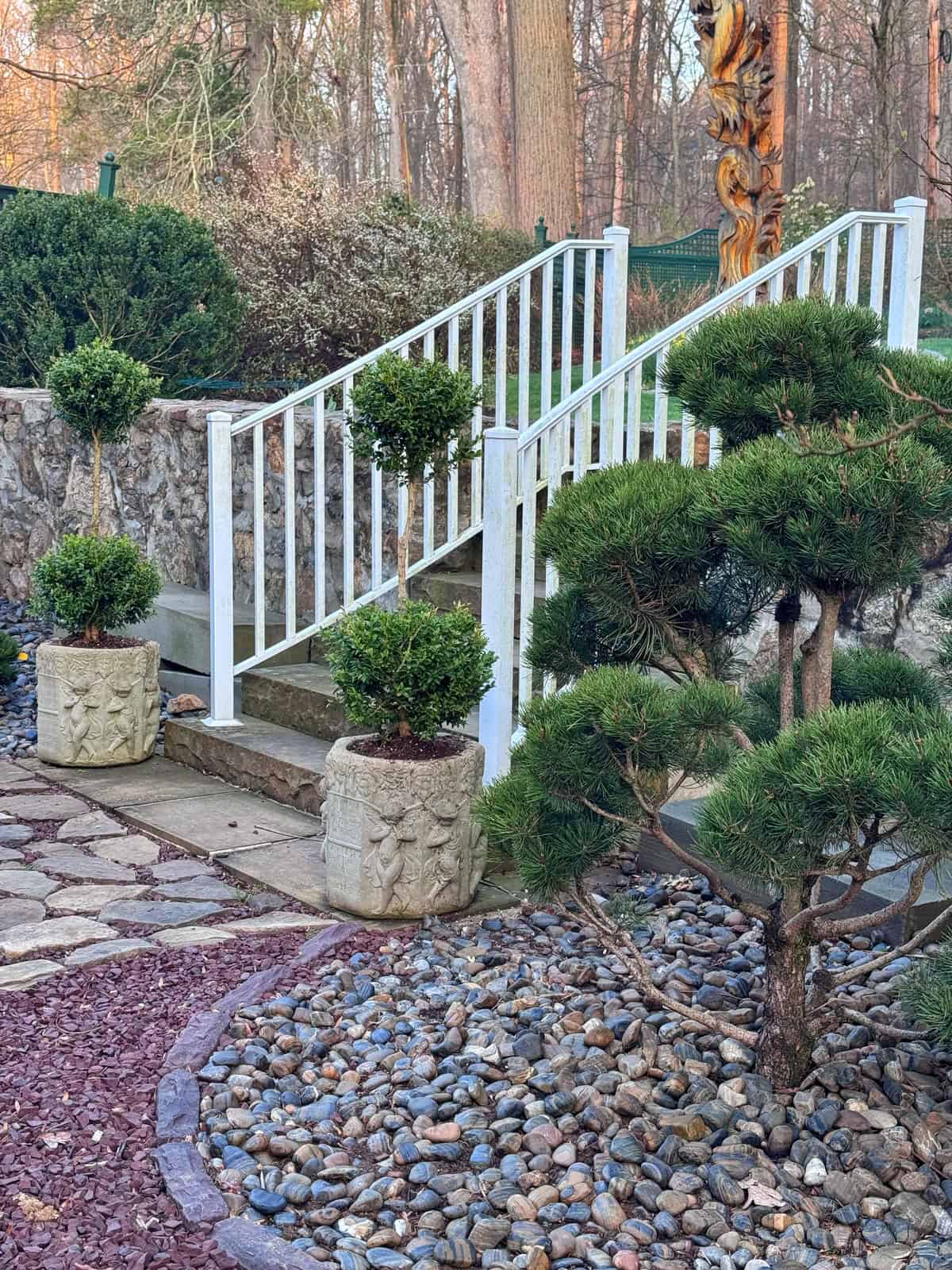
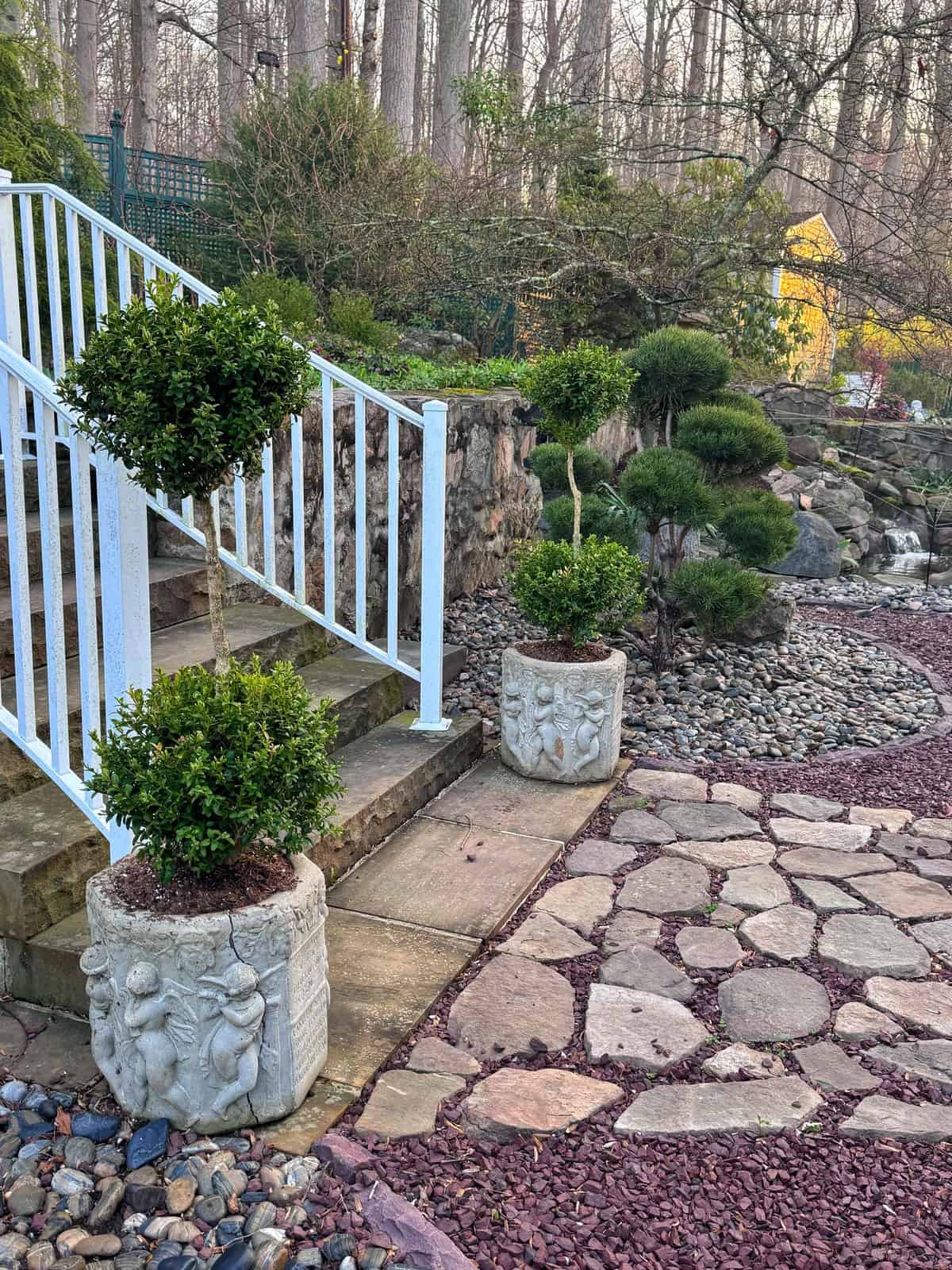
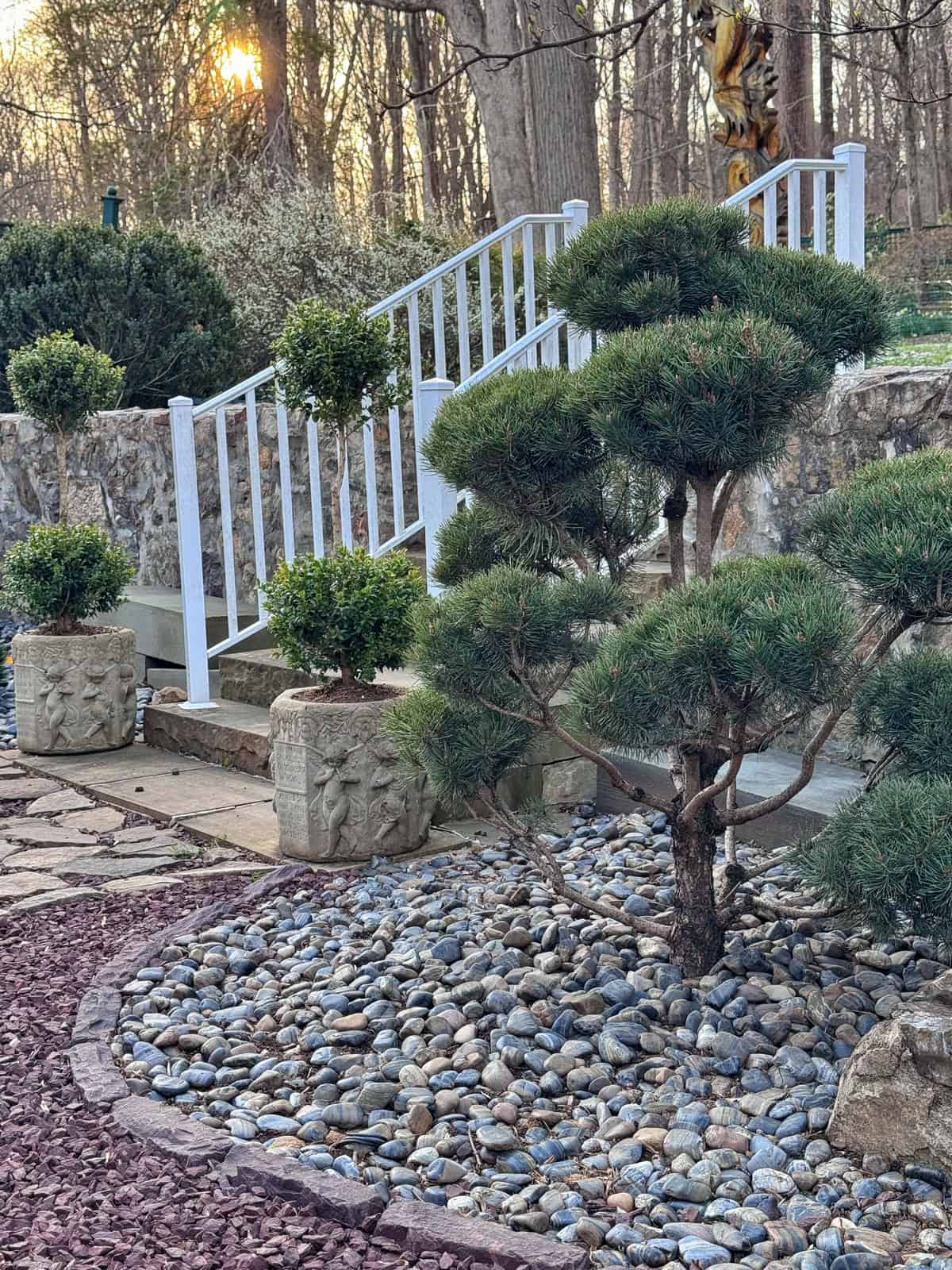
To play around with the idea, I added some boxwood topiaries to some concrete planters at the base of the stairs. I loved the look so much it inspired me to go all in this year on more architectural, manicured evergreens.
As I reworked this garden, I kept coming back to a few simple design ideas that helped the space feel calmer and more cohesive.
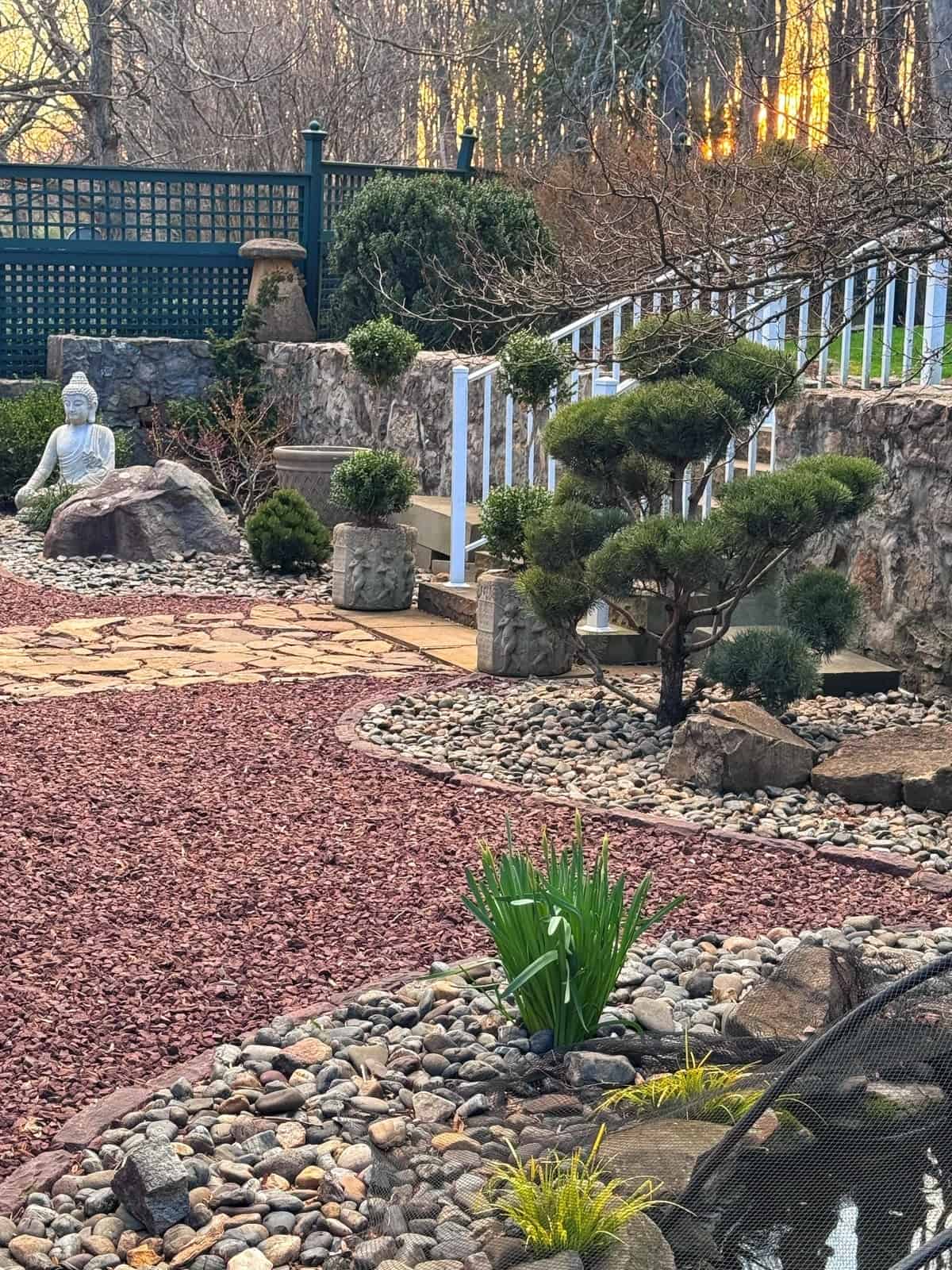
The first was restraint. I did not want to pack the garden with too many plant varieties, too many colors, or too much visual noise. This area already had strong hardscape elements, so the planting needed to complement that, not compete with it.
The second was form. Instead of relying on flowers to create interest, I started focusing on silhouette, branching structure, texture, and shape. That made it much easier to create a year-round composition that still feels interesting in winter, which matters a lot in a garden like this.
The third was spacing. In a zen-inspired garden, every plant needs room to breathe. I wanted each specimen to have space to stand out rather than blending into a crowded mass.
And finally, I focused on repetition and contrast. Repeating evergreen shapes and tones gives the space rhythm, while contrasting textures keep it from feeling flat. Fine needles, layered fans, weeping forms, and rounded mounds all work together in a way that feels calm but never boring.
If you want more inspiration for creating that kind of atmosphere, take a look at my backyard zen garden ideas post, where I share more of the design side behind this style of garden.
Best Evergreen Specimen Plants I Added to My Zen Garden
As I began rehabbing this space, I focused on adding specimen plants from The Farm at Green Village that would bring year-round structure, interesting texture, and a stronger sense of intention. Each one plays a different role in the design.
Chamaecyparis obtusa ‘Gracilis’ for soft upright structure
One of the plants I added is Chamaecyparis obtusa ‘Gracilis’, commonly known as Hinoki cypress. This is such a beautiful plant for a zen-inspired garden because it has an elegant upright habit, but the foliage still feels soft and refined.
I love how it adds vertical structure without feeling stiff or harsh. It has that layered, slightly irregular texture that works so well in a garden where you want calm, not rigidity. It also reads as substantial and grounding, which is helpful in a space with stone and strong lines.
For me, this was an easy choice because it adds height and presence while still feeling peaceful.
Thuja plicata ‘Whipcord’ for cascading texture
I also planted Thuja plicata ‘Whipcord’, which has such a different look from the Hinoki cypress that it instantly creates contrast.
This plant has a weeping, cord-like texture that softens the garden and adds movement. In a design that includes stone, lanterns, gravel, and evergreen forms, that kind of texture is incredibly valuable. It keeps the planting from feeling too heavy or static.
I especially like how it spills and drapes in contrast to more upright or mounded plants. That combination of control and looseness is part of what makes a zen-inspired garden feel collected rather than overly formal.
Pinus heldreichii ‘Banderica’ for compact evergreen structure
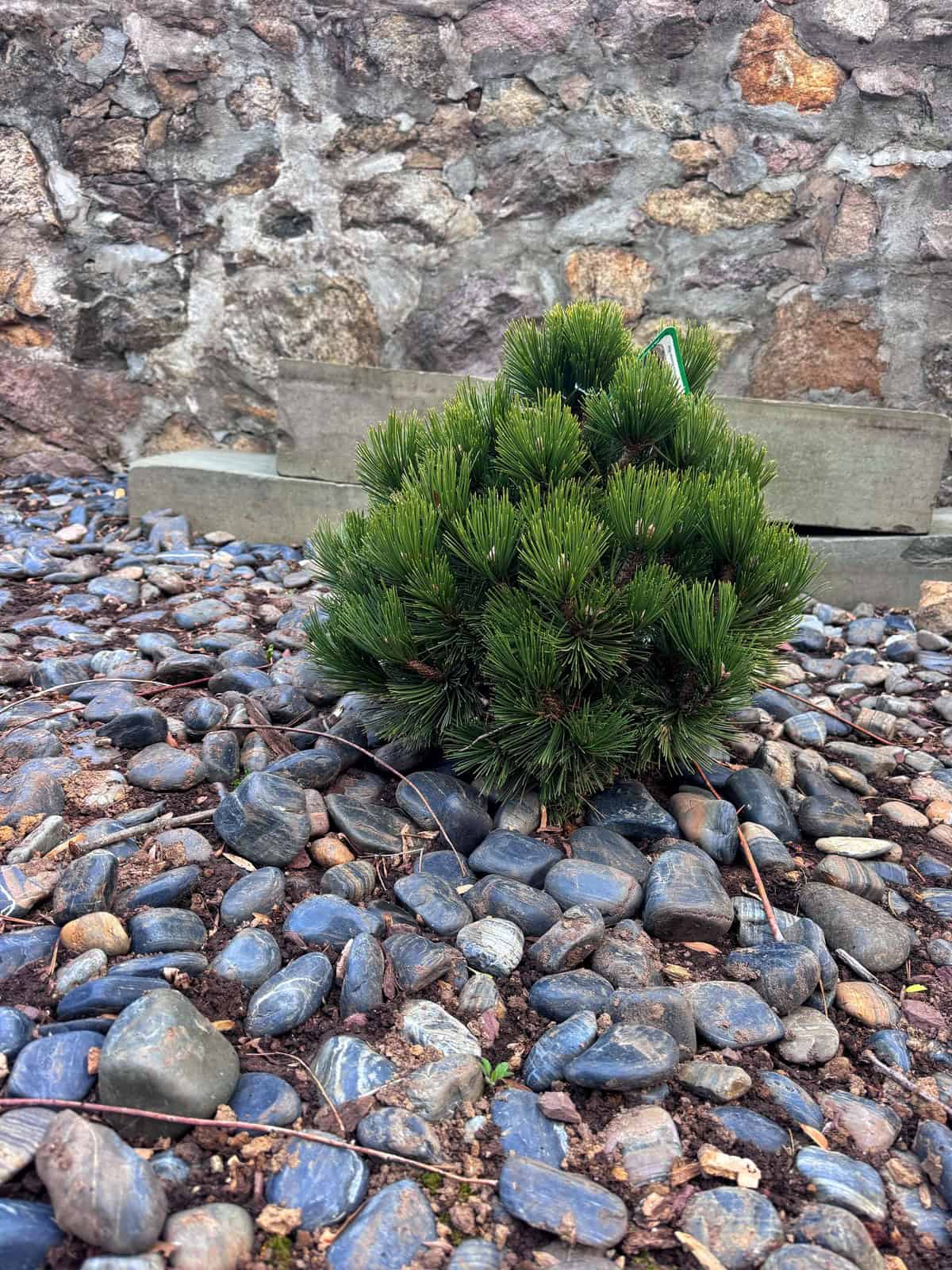
Another evergreen I added is Pinus heldreichii ‘Banderica’, a Bosnian pine with a bold, compact presence.
This one brings a denser, stronger structure to the garden. The needles are rich and substantial, and the overall habit feels architectural without being fussy. It gives the design more weight, which I think is important when you are trying to balance open gravel areas and substantial stone features.
This type of plant helps carry the garden visually in all four seasons. Even when everything else is quiet, it still holds the design together.
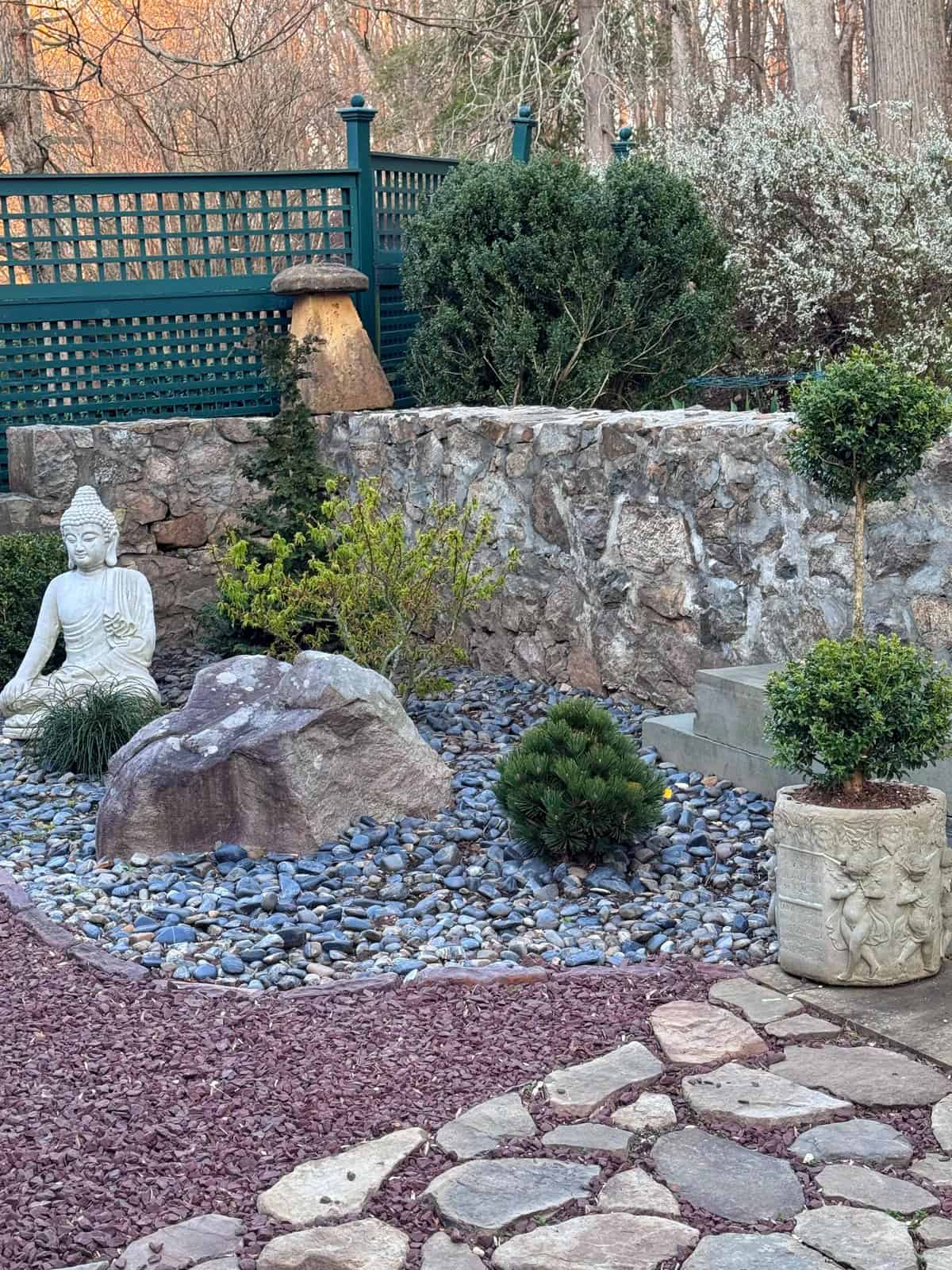
Pinus sylvestris ‘Pom Pom’ as the sculptural focal point
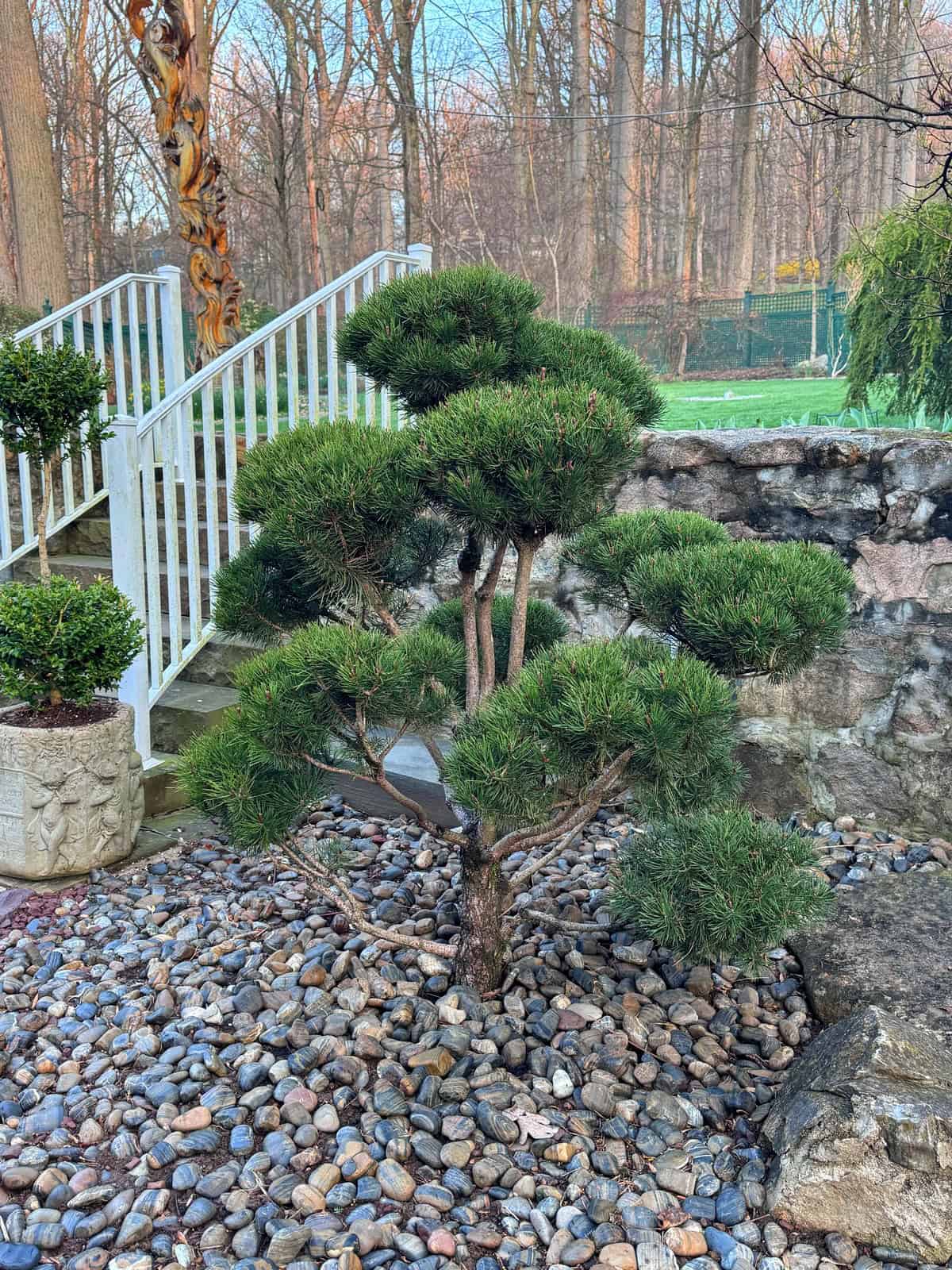
The plant that really changed the feel of this space is Pinus sylvestris ‘Pom Pom’.
This is the large architectural evergreen I chose to replace the weeping eastern larch, and I could not love it more. It has that sculptural, cloud-pruned feel that immediately gives the garden a stronger focal point. Even without flowers, it draws the eye and makes the whole space feel more intentional.
What I love most about this plant is the shape. The tiered, rounded pads give it a very curated look, but it still feels natural in the landscape. It has the kind of silhouette that works beautifully in a zen-inspired setting because it feels artistic, restrained, and calming all at once.
This is the plant that really helped me move the garden away from feeling bland and toward feeling designed. It gives the space a sense of maturity and presence that was missing before. If I had to name the plant that defines this phase of the makeover, this would be it.
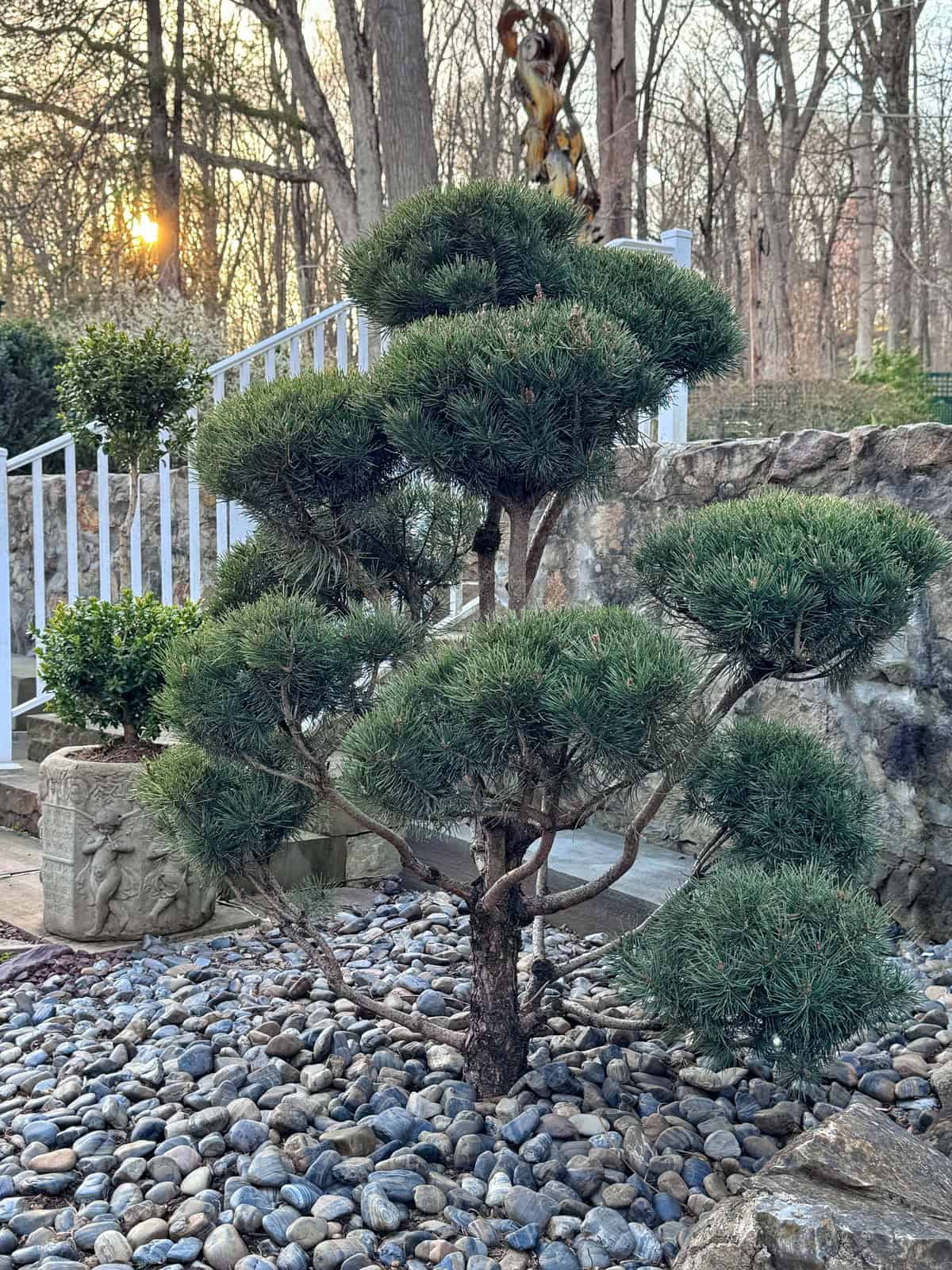
Adding Structure With Boxwood Topiaries
As I started reworking this space, one thing I knew I wanted was more structure that would carry the garden visually through every season.
That’s where the boxwood topiaries came in.
I added a pair of boxwood standards in containers near the steps to help frame the transition between spaces. They bring a sense of formality and balance without feeling too rigid, which works really well in a garden like this that blends natural elements with more intentional design.
What I love most about using boxwood here is how reliable and low maintenance they are. They hold their shape beautifully with minimal pruning, and because they’re evergreen, they provide that consistent structure even in winter when everything else fades back.
They also help anchor the space visually. With so much stone and open gravel, having something upright and defined gives your eye a place to land as you move through the garden.
Since I am growing them in concrete planters that would not hold up in my New Jersey winters, I dug them out and overwintered them in the ground, then replanted in the spring.
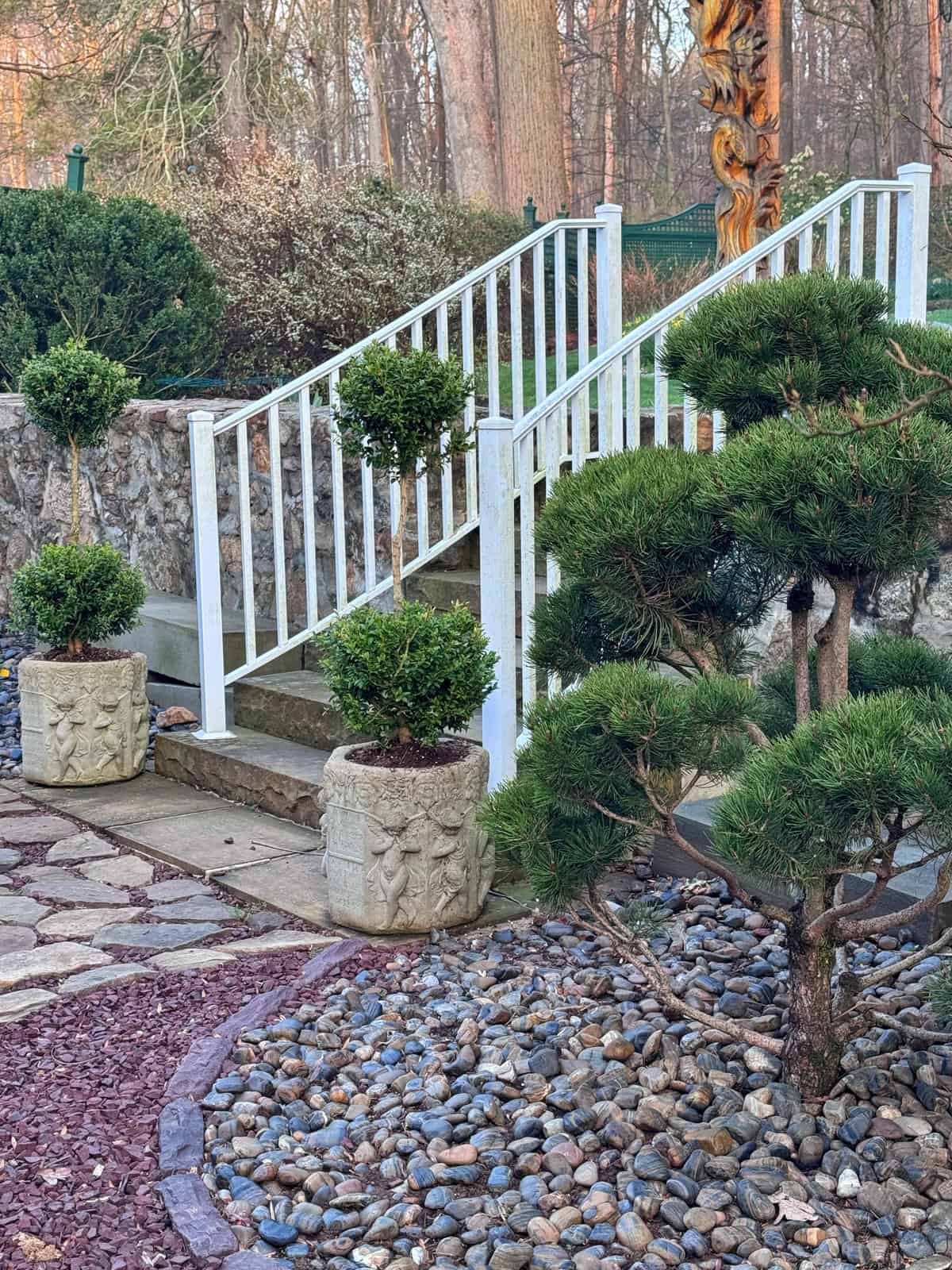
Acer palmatum ‘Mikawa Yatsubusa’ for layered form and seasonal beauty
I also added Acer palmatum ‘Mikawa Yatsubusa’, a Japanese maple known for its dense, layered branching and beautiful form.
Even though I am shifting much of the flower color toward the pond area, I still wanted some seasonal beauty and fine texture in this garden. This maple gives me that, but in a way that still feels aligned with the overall mood of the space.
Its layered habit is especially appealing in a zen-inspired design because it feels naturally sculptural. It offers delicacy and detail without becoming loud. And of course, a Japanese maple always brings that special sense of elegance that works so beautifully with stone and water.
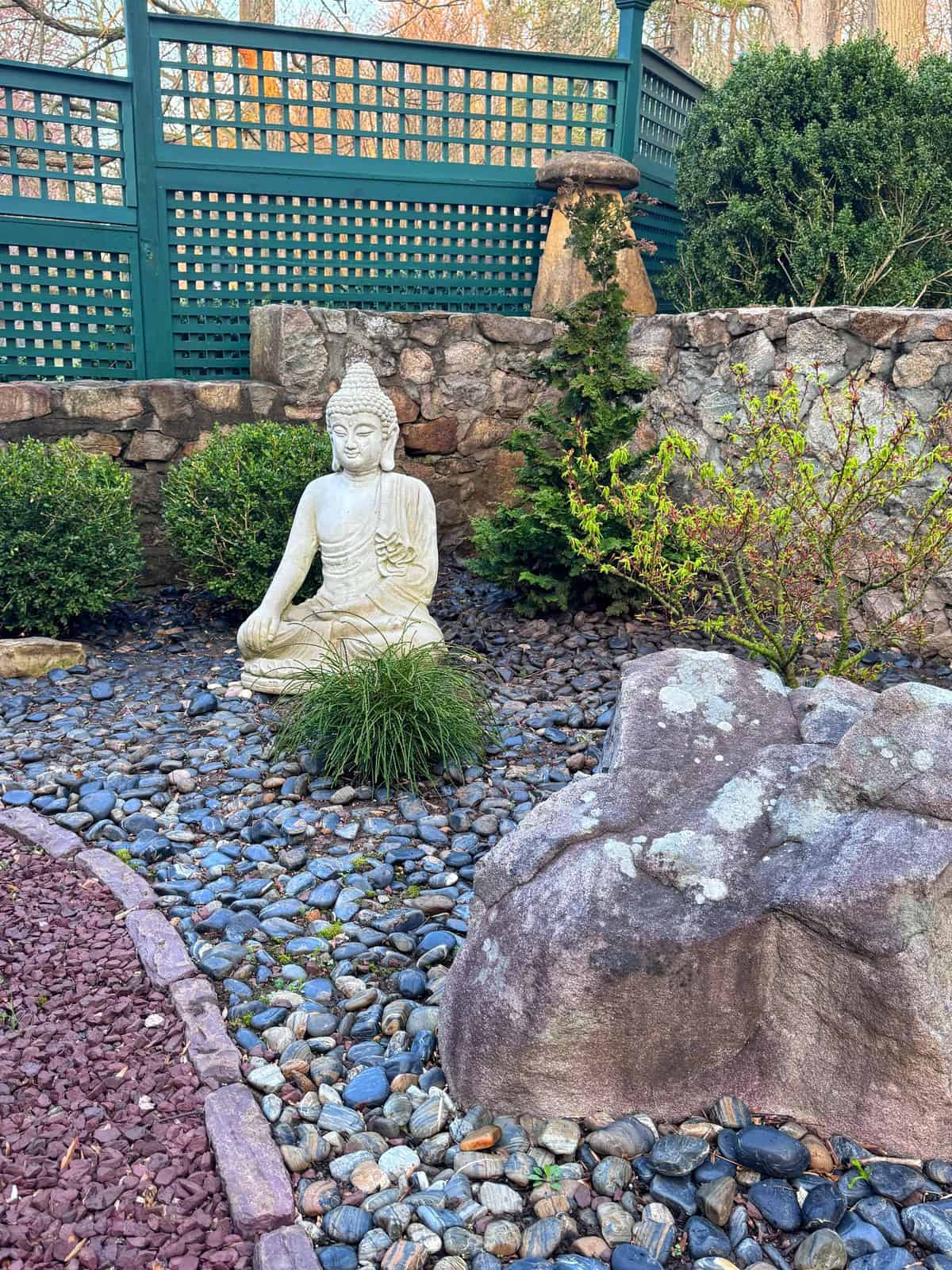
How the Pom Pom Pine Became the Focal Point in My Zen Garden
After losing the larch, I knew the replacement plant needed to do more than just fill space. It needed to restore the architecture of the garden.
That is exactly what the pom pom Scotch pine does.
Placed in the stone bed near the pond and surrounding hardscape, it creates a strong visual anchor. The rounded, cloud-like forms feel artistic and intentional, and they give the eye something to rest on. It reads almost like living sculpture, which is exactly the kind of feeling I wanted in this part of the yard.
What makes it especially effective is that it works with the garden’s existing materials. The shape contrasts beautifully with the rough stone, the gravel, and the broader forms around it. It stands out, but it still belongs.
This is one of those plants that proves you do not need masses of flowers to make a garden feel special. One well-placed specimen with a beautiful silhouette can completely elevate the design.
Balancing Zen Garden Evergreens With Flowers Near the Pond
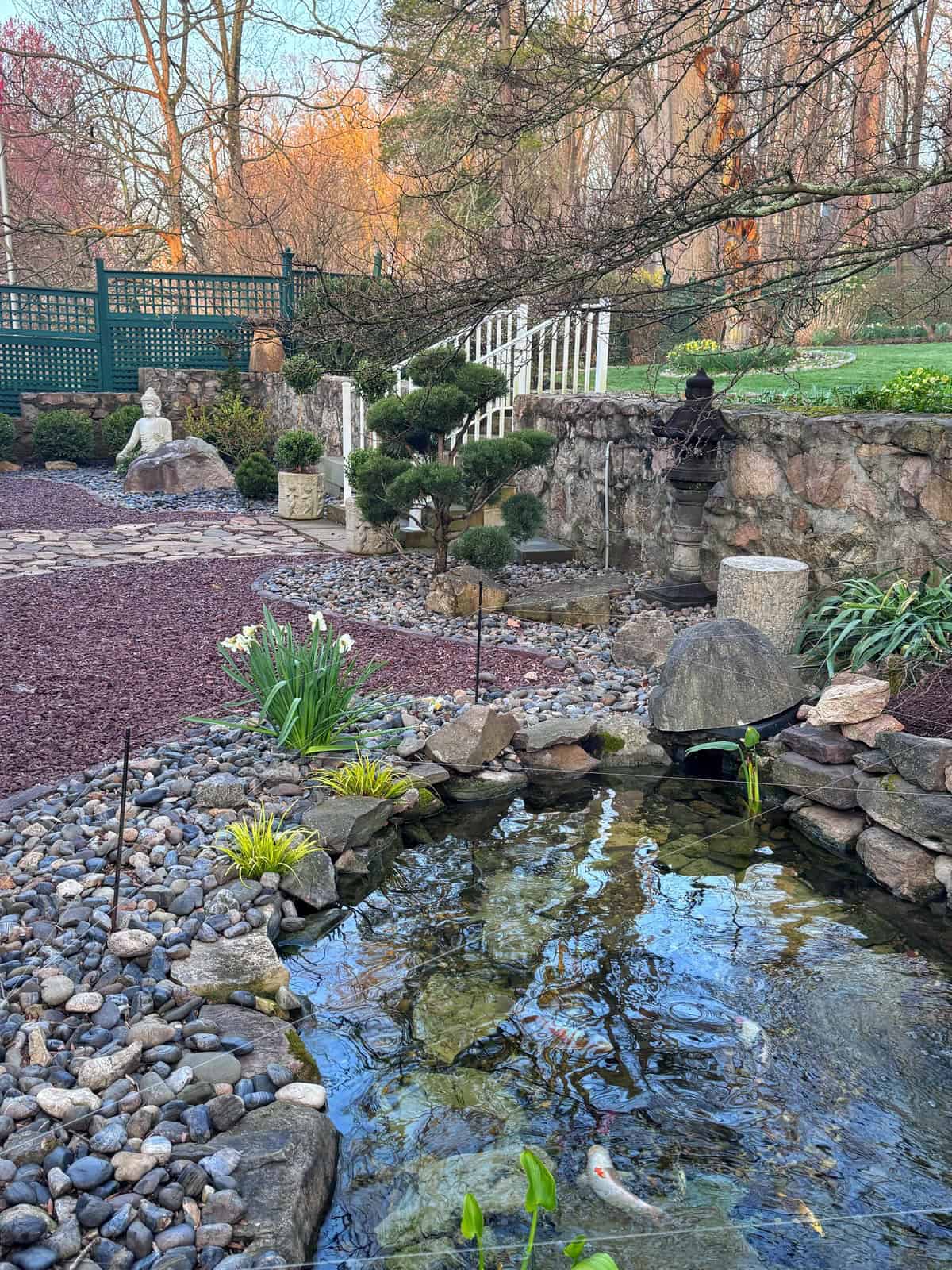
One of the bigger shifts I have made in recent years is deciding where I want flowers to live in this landscape.
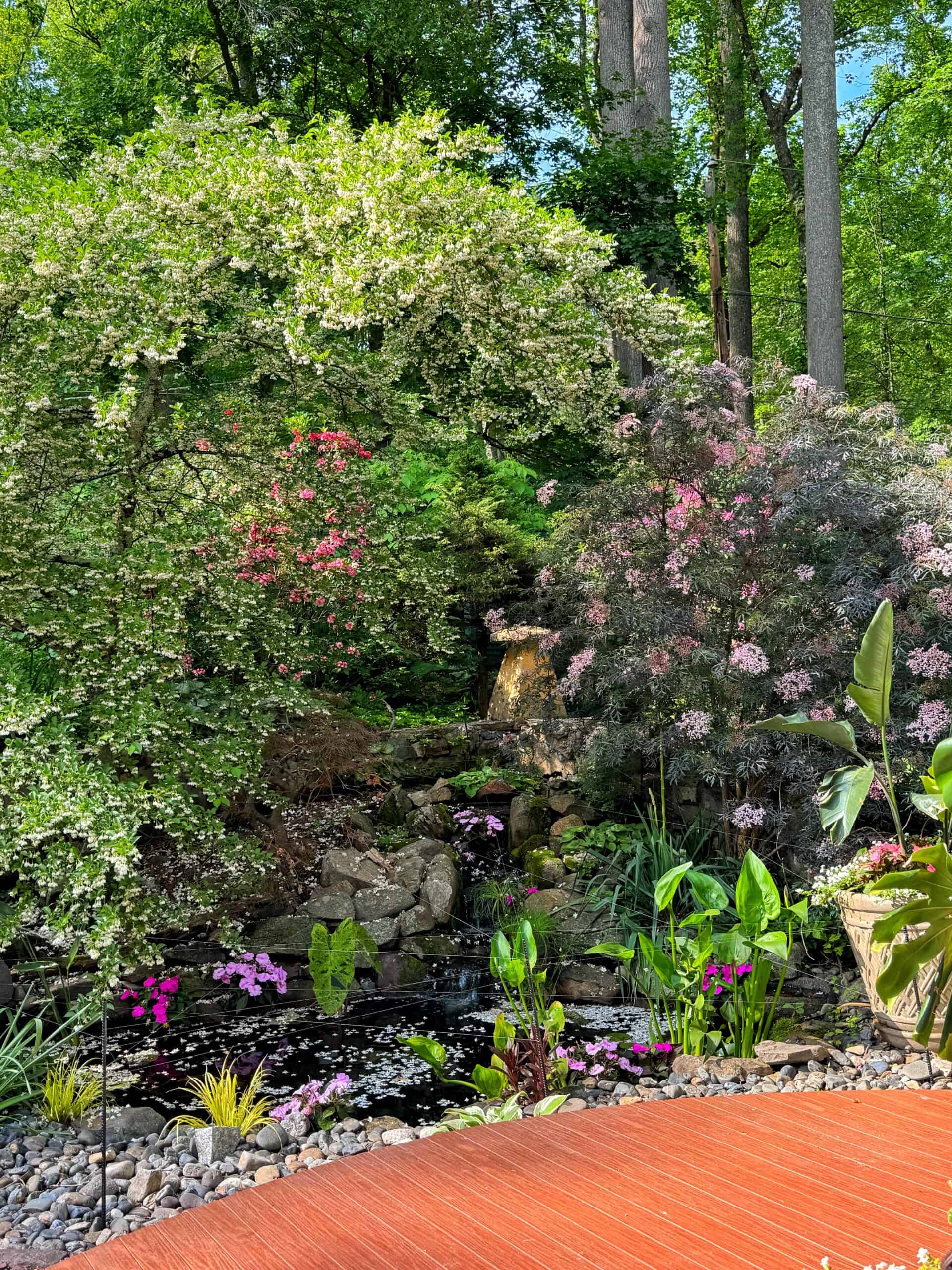
Instead of trying to make every area bloom-heavy, I have been concentrating more of the flowering plants in and around the pond, where they can create that lush, colorful moment. That area lends itself beautifully to a softer, more romantic planting style, and I love letting it carry more of the seasonal color.
In the rest of the zen garden, I am taking a different approach. Here, I want the focus to be on specimen plants, evergreens, texture, stone, and form. That balance feels much better to me now. It gives the garden distinct moods and makes each area more memorable.
I may still tuck in a few potted flowers here and there because I do love seasonal color, but for now, I am really happy with the direction this space is taking. It feels calmer, more grounded, and much more intentional than it did before.
Why This Zen Garden Makeover Feels Easier to Maintain
One of the main reasons I wanted to make this change was maintenance.
For years, the garden relied more heavily on annuals and seasonal refreshes to create interest. That meant more planting, more replacing, more watering, and more overall effort just to keep the space looking finished.
By shifting to evergreen specimen plants, I have created a stronger year-round framework. Now the garden has presence even when nothing is blooming. It has shape in winter, texture in early spring, and a more settled feel overall. That means I am no longer depending on constant seasonal changes to make it look good.
Of course, newly planted specimens still need care, and I am staying attentive to watering, especially with the heat-retaining stone in this garden. But overall, the maintenance feels more purposeful and less repetitive. I am investing in long-term structure instead of short-term fill.
That is exactly the kind of gardening I want more of at this stage. I still want beauty, but I want it in a way that supports the rest of my life rather than taking it over.
What This Backyard Zen Garden Taught Me About Garden Design
This garden has taught me a lot about patience.
When we first moved in, I did not have an immediate master plan for this area, and at the time that felt like uncertainty. But looking back, I think it was actually a gift. Living with the space helped me understand how the light moved, where the heat built up, what felt natural there, and what kind of mood I wanted the garden to create.
It also reminded me that gardens are not static. They evolve as we learn, as plants grow, and as our priorities change. What I wanted when I first moved here is not exactly what I want now, and that is okay. In fact, it is part of what makes a garden feel personal.
I also learned that structure matters just as much as flowers, maybe more. Flowers can be exciting, but structure is what gives a garden its backbone. In a space like this, where the goal is calm and serenity, structure is everything.
Final Thoughts on My Low-Maintenance Zen Garden Transformation
This backyard zen garden is still evolving, but it already feels so much more like the space I wanted it to be.
What started as a somewhat bland area with good bones has become a more thoughtful, evergreen-focused garden that feels calm, grounded, and easier to care for. It is not overloaded with plants, and it does not need to be. Every specimen has a role, and that alone has changed the entire mood of the space.
I still enjoy flowers and seasonal color, but in this part of the yard, I have found that less really is more. The combination of stone, water, sculptural evergreens, and intentional spacing creates a quieter kind of beauty, and honestly, that is exactly what I was hoping for.
If you are creating your own peaceful backyard retreat, let this be your reminder that you do not have to get it perfect right away. Sometimes the best garden decisions come after you have lived with a space, learned from a few mistakes, and figured out what truly works for your home and your lifestyle.
If you want more inspiration, design ideas, and ways to create a peaceful backyard retreat, visit my backyard zen garden ideas post
Thank you for visiting the blog today!
Enjoy your day! xo

Originally Published . Last Updated .

Looks really good, very Zen, very relaxing. Kim
thank you Kim! I am really happy with the progress so far! That pom pom is really something!