
How to Harden Off Seedlings (Without Damaging Your Plants)

Learn when and how to harden off seedlings so they adjust to outdoor conditions and grow strong, healthy plants.
Starting seeds indoors is only part of the process. Before those seedlings can thrive in the garden, they need to be gradually introduced to outdoor conditions through a process called hardening off.
When I first began growing from seed, I underestimated how important this step really was. After spending weeks nurturing seedlings indoors, it’s tempting to move them straight outside — but doing so too quickly can lead to stress, stunted growth, or even plant loss. Over time, I’ve learned that hardening off is just as critical as the seed-starting process itself.
For a full walkthrough on how to start seeds indoors before this stage, you can read my complete guide to starting seeds indoors without a greenhouse here.
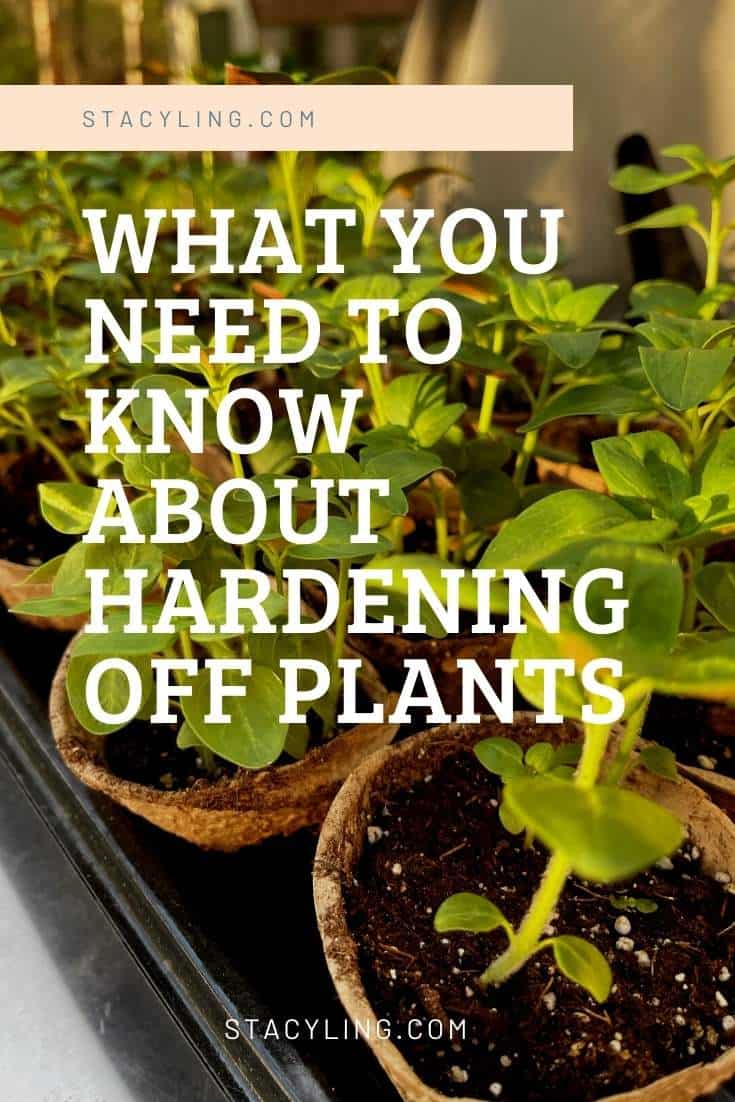
Hardening off is the process of gradually exposing seedlings to outdoor elements like sunlight, wind, and fluctuating temperatures. Plants grown indoors are accustomed to stable conditions, so this transition helps them adapt without shock.
As seedlings adjust, they develop stronger stems, thicker leaves, and greater resilience overall. Skipping this step or rushing it often leads to setbacks, even when plants look healthy at first.
Once you understand how to harden off seedlings properly, it becomes a simple routine that sets the stage for stronger, more successful growth in the garden.
(Posts on stacyling.com may contain affiliate links. Click HERE for full disclosure.)

When Should I Start Hardening Off Plants?
Hardening off typically begins about two weeks before your last expected frost date, since most seedlings are planted outdoors shortly after that point.
Cold-hardy plants — like sweet peas, snapdragons, larkspur, and Iceland poppies — can often be planted 2–4 weeks before the last frost, which means they can also be hardened off earlier.
I usually start with cold-hardy flowers first, especially when I’m growing a lot of seedlings and need to free up indoor space under lights. This also gives me a head start on the season without overwhelming my setup all at once.
Always check your seed packets for specific timing and temperature guidance, since different plants tolerate outdoor conditions differently.
If you’d rather skip hardening off altogether for certain plants, winter sowing is another option that allows seeds to adapt naturally outdoors from the beginning.
In my climate zone 6b, we can have wild temperature and weather changes, so it is important to look at your expected weather as well so you avoid rare events that could impact the process.
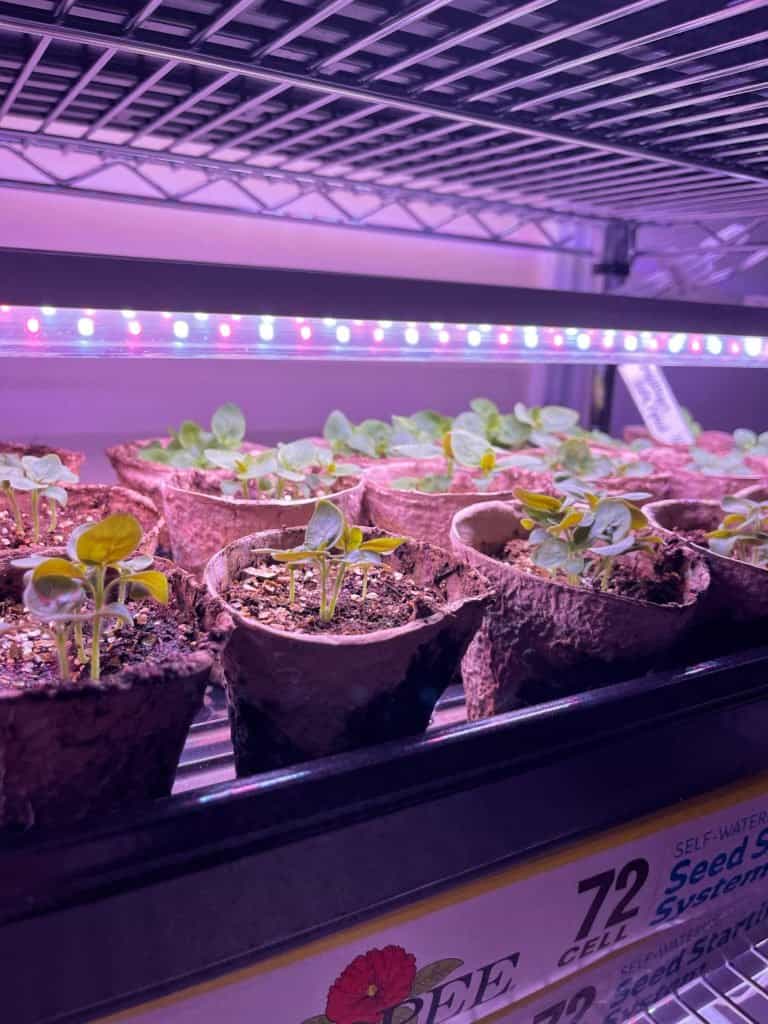
How Long Should I Harden Off Seedlings for?
Hardening off is typically a two-week process. It can feel tedious — especially when you’re moving trays in and out each day — but it makes a noticeable difference in how well seedlings establish outdoors.
Rushing this step often leads to transplant shock, slower growth, or even plant loss. After putting in the time to start seeds indoors, it’s worth giving seedlings the gradual transition they need.

How to Harden Off Seedlings
Hardening off doesn’t require any special supplies, but it does require consistency and a bit of daily effort moving seedlings in and out.
Start by placing seedlings outdoors in a protected, shady location for 2–3 hours when temperatures are around 45–50°F or higher. After that, bring them back indoors — I usually move mine into a garage or basement space overnight.
Over the next several days:
- Gradually increase the time seedlings spend outside
- Slowly introduce them to morning sun first, then more direct light
- Avoid strong wind or harsh midday sun early on
After a few days in shade, begin exposing seedlings to gentle morning sunlight. Increase their sun exposure gradually each day. Moving too quickly can cause leaf scorch, especially on tender seedlings.
By the end of the two-week period, seedlings should be able to:
- Remain outdoors full-time
- Tolerate normal fluctuations in sun, wind, and temperature
Keep an eye on the forecast. If temperatures drop below about 45°F, bring seedlings indoors or protect them with a cold frame or cover.
Avoid placing seedlings outside on very windy days. Young plants are not strong enough to handle heavy wind and can dry out or break easily.
The key to success is gradual exposure. Moving too quickly is one of the most common seed-starting mistakes I see (and have made myself). myself).

Can You Harden Off Seedlings Faster?
You can begin the process earlier during warm stretches of weather, but the gradual exposure is what allows plants to adapt. Trying to rush it often results in stressed or damaged seedlings.
Not really. Hardening off takes about two weeks, and shortening that timeline usually leads to problems.
How Big Should Seedlings Be Before Hardening Off?
Seedlings are ready to begin hardening off once they have developed their first set of true leaves and are a few inches tall.
At this stage, they’re strong enough to begin adjusting to outdoor conditions, as long as temperatures are appropriate.
When Can Seedlings Stay Outside Overnight?
I usually start by leaving mine outside in a protected area, like a covered porch, before fully transitioning them into the garden.
Seedlings can stay outdoors overnight once temperatures consistently remain above 45°F.

What Happens If You Skip Hardening Off?
Skipping this step can undo weeks of work.
Seedlings that are moved directly from indoor conditions into full sun, wind, and fluctuating temperatures often go into shock. I’ve seen healthy seedlings decline almost overnight when this step is rushed or skipped entirely.
This can lead to:
- Scorched leaves
- Stunted growth
- Weak, leggy plants
- Or complete plant loss
Some plants may recover over time, but many don’t fully bounce back. After putting in the effort to start seeds indoors and care for them early on, hardening off is what helps ensure they continue to grow strong once planted in the garden.
If taking the time to harden off seedlings doesn’t fit your schedule, it may be easier to focus on methods like direct sowing or winter sowing instead of starting seeds indoors under lights.
👉 For a complete guide to starting seeds indoors, including how this step fits into the overall process, see my post on starting seeds indoors without a greenhouse.
👉 And if you want to avoid the most common mistakes I’ve made over the years, read my guide to common seed-starting mistakes.
Common Hardening Off Mistakes to Avoid
Hardening off is simple, but small mistakes can cause big setbacks. Most issues come down to timing and rushing the process.
One of the most common questions is whether you can speed things up. In reality, hardening off takes about two weeks, and trying to shorten that timeline often leads to stressed or damaged seedlings. After putting in the time to start seeds indoors, it’s worth finishing the process properly.
Timing matters in both directions. Starting too early can expose seedlings to cold temperatures that slow growth or cause damage. Waiting too long can leave plants root-bound and stressed in their containers. Following seed packet guidance and watching local weather conditions helps you find the right window.
Skipping hardening off altogether is one of the biggest mistakes. Seedlings moved directly from indoor conditions into sun, wind, and fluctuating temperatures often struggle to recover. Gradual exposure is what allows them to adapt and continue growing successfully.
If hardening off doesn’t fit your schedule, it may be easier to focus on direct sowing or winter sowing instead of starting seeds indoors under lights.


Track Your Seed-Starting Success Year After Year
One thing that made a big difference for me with seed starting, especially hardening off, was actually keeping track of what worked and what didn’t from season to season. It’s easy to forget timing, weather patterns, or which plants handled the transition well once the season gets going.
That’s exactly why I created my Bricks ‘n Blooms Beautiful and Easy-Care Flower Garden Planner. It gives you a place to track your seed-starting schedule, hardening-off timing, and plant performance so you can build on what you learn each year instead of starting from scratch.
And if you’re still figuring out what to grow, how to design your space, or how all of these steps fit together, I go much deeper into my full approach in The Bricks ‘n Blooms Guide to a Beautiful and Easy-Care Flower Garden. It’s the resource I wish I had when I first started, with plant selection, garden planning, and my easy-care system all in one place.

Final Thoughts on Hardening Off Seedlings
Hardening off seedlings is one of those steps that can feel tedious at first, but it makes a noticeable difference in how plants perform once they’re in the garden. After starting seeds indoors for years using different methods, I’ve learned that this transition period is what helps turn fragile seedlings into strong, resilient plants.
It doesn’t have to be complicated. With a simple routine and a little consistency, seedlings gradually adapt to sunlight, wind, and temperature changes without stress. Taking the time to do this properly helps protect all the effort you’ve already put into starting seeds indoors.
If you’re new to seed starting or want to see how this step fits into the bigger picture, you can read my full guide on how to start seeds indoors without a greenhouse.
And if you want to avoid some of the most common issues that can come up along the way, I’ve shared the seed-starting mistakes I’ve made over the years and what I’ve learned from them.
Once you’ve gone through the process a few times, hardening off becomes part of your routine — and one of the easiest ways to set your garden up for a successful season.
Have you hardened your seedlings off yet? Do you have any tips you’d like to share? Let’s chat more in the comments below.
Thanks for stopping by the blog today!
Enjoy your day! xoxo






Originally Published .

Great information Stacy. I hope to get some planting done this week. Still working on a bed.
Thank you Rachel! I’m so excited to see your garden!
I’m so excited that we’re so close to transplanting our seedlings into the garden. Great information Stacy.
Thanks Kim! It’s so fun gardening with you! I wish I could tour your garden in person! xo
Hey there Stacy! This is a great post, I am planning to share it on my blog roundup tomorrow! Happy Weekend!
I appreciate that so much Jennifer! Thank you!!!!
I made a big mistake. I just took my wildflower seeds and scattered them all around. Needless to say only a few, which are in the shade, have started to grow.
I have more wildflower seeds so I’m going to do a better job with what is left.
I’d really like to secretly go to all my neighbors homes and sprinkle them in some nice warm, not hot, places. Would be so much fun to see some grow in all the neighborhood.
You are such an inspiration to so many people, and I’m on the list!!!!!!
Thank you so much Diana! I truly appreciate hearing that. Hopefully the next set will take for you! xo
When evaluating temperature do you consider the base temperature or the ‘feels like’ temperature. For the next week, our base temperature at night is about 45, the ‘feels like’ temperature is in the low 30s.
Hey Susan! No, I def go by the actual temps. That said, I do push it a little and keep them close to the house tucked under the porch if its a little cooler and don’t want to move them in and they’ve been ok…but generally I do stick to what the weather says. Spring can be so temperamental here in NJ so the swings tell me to be careful with this process. When I see consistency, I relax a little more.