
Growing Dahlias in Pots: The Complete Guide to Beautiful Container Plants

Learn how to grow dahlias in pots with this complete container guide. Get my proven tips for soil, watering, support, and care to grow beautiful summer blooms.
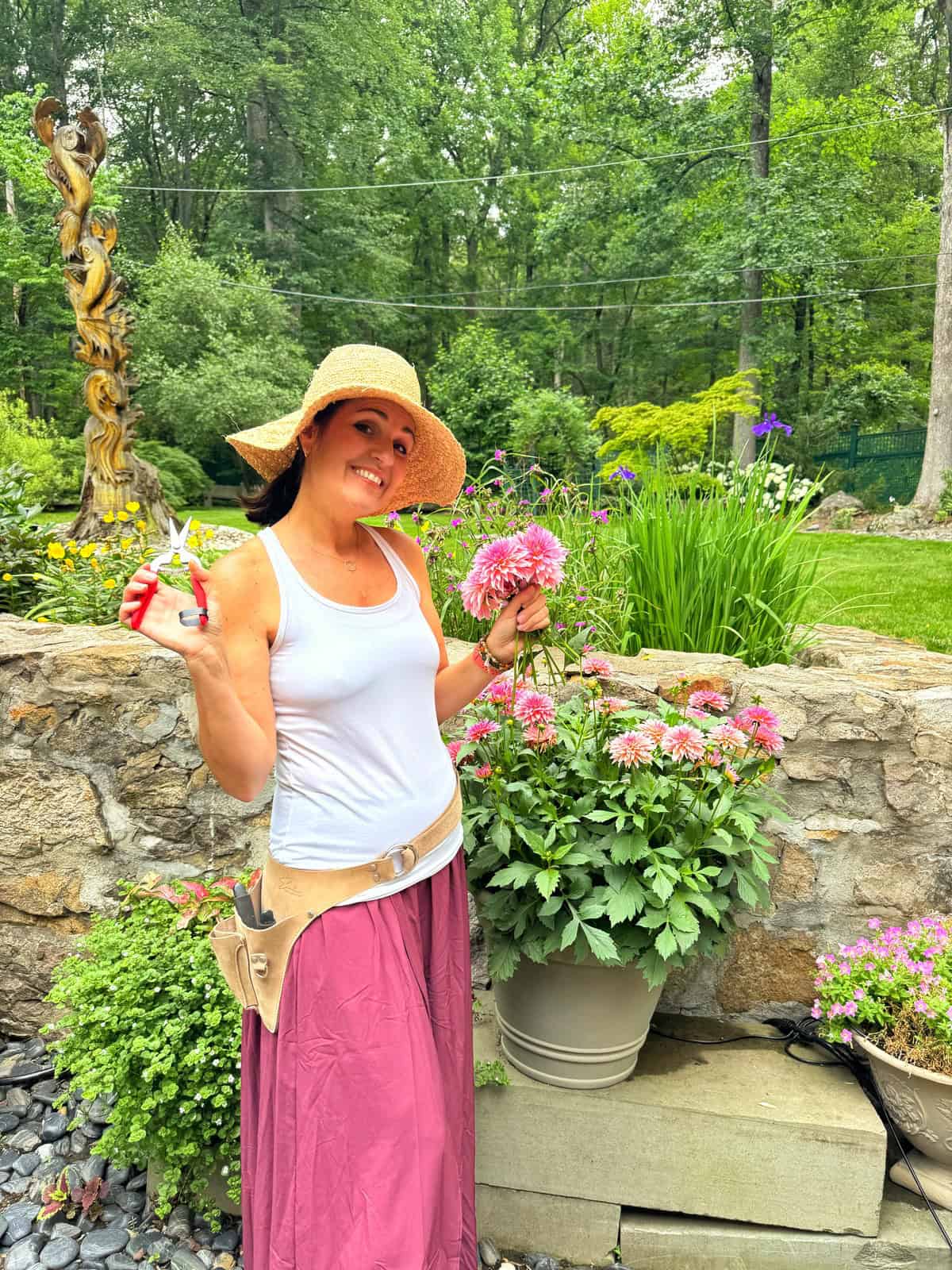
I’ve grown dahlias in just about every corner of my Zone 6b garden, from raised beds to my backyard zen garden, and some of my very favorite plants are the ones I grow in containers. Potted dahlias add incredible color against all the stonework in my garden, and because I usually choose compact varieties, they’re easy to manage and rarely need staking. Plus, I love being able to move the planters wherever I need a pop of color and snip a bouquet right out my back door.
If you have limited space or simply want the flexibility of growing dahlias on a deck, patio, balcony, or small garden area, pots are a fantastic way to enjoy these showstopping blooms. With the right container, soil mix, and care routine, dahlias grow beautifully in pots and will reward you with flowers from midsummer through fall.
If you need full-season care, troubleshooting tips, or help choosing varieties for garden beds, be sure to read my Complete Dahlia Growing Guide.
But if you’re here to learn exactly how to grow strong, healthy dahlias in containers, this guide will walk you through everything you need to get started.
(Posts on stacyling.com may contain affiliate links. Click HERE for full disclosure.)

Why Grow Dahlias in Pots?
I’ve grown dahlias in just about every way you can grow them—raised beds, in-ground borders, my cut flower garden, and yes, even in containers. Over the years, I’ve found that dahlias actually thrive in pots when you choose the right container, soil, and watering routine. They’re a great option if you garden in a small space, want more flexibility with sun exposure, or simply love the idea of dramatic blooms decorating your patio or outdoor living areas.
Container dahlias also offer a few unique advantages:
- You have complete control over soil drainage
- Pots warm up faster in spring, encouraging earlier growth
- You can easily move them to follow the sun
- They’re ideal for preventing issues like rot in heavy soils
If you’re new to growing dahlias or want full-season care—watering schedules, fertilizing, pinching, and troubleshooting—be sure to read my Complete Dahlia Growing Guide. Because this post focuses specifically on how to grow strong, beautiful dahlias in containers.

Choosing the Right Container
The right container can make or break a potted dahlia’s success — tuber health, drainage, stability, and root room all depend on it. Here’s exactly how I choose my containers and what works best in my Zone 6b garden.
Container Size & Depth
- For most dahlias, choose a pot at least 12–16 inches in diameter and 12–18 inches deep.
- For larger or taller varieties, size up to give the tuber more room and keep the pot stable.
If you want to explore container basics in more depth, you can also read my Container Gardening Guide.

Drainage Is Non-Negotiable
- Always use pots with multiple large drainage holes to prevent waterlogged soil and tuber rot.
- Plastic or resin pots work well, but lightweight containers can tip over in wind once plants grow tall.
To choose containers for any type of potted plant, see my post on how to choose the right container
Why Self-Watering Containers Are Worth Considering
Self-watering pots can be a game-changer for busy gardeners. They help maintain consistent moisture during hot stretches without daily watering. I’ve had great success with Aquapots from Proven Winners, but keep an eye on them during periods of heavy rain. Dahlia tubers rot easily if excess water can’t drain.
Choosing Varieties With Container Growth Habit in Mind
Compact or dwarf dahlias (18–24 inches tall) are the easiest to manage in pots and rarely need staking. Some of my favorites include:
- Dalina Grande Cancun
- Dalina Grande Mendoza
- Duet series
- My Love series
But you can grow taller dahlias in pots too. Just choose a larger, deeper pot and plan to add support early.

Best Dahlia Varieties for Containers
While you can grow almost any dahlia in a pot if the container is large enough, some varieties naturally perform better in confined spaces. After growing dahlias for years in both garden beds and containers here in my Zone 6b garden, I’ve found that choosing the right variety makes all the difference in how manageable (and beautiful!) your containers look by midsummer.
Compact & Dwarf Dahlias (Best for Low-Maintenance Containers)
These varieties stay smaller, need little to no staking, and bloom heavily—perfect if you want big impact without lots of fuss. Most grow 18–24 inches tall and thrive in pots as small as 12–15 inches.
Some excellent low-maintenance options include:
- Duet Series – Free-flowering, tidy habit
- My Love Series – Soft, romantic colors with compact growth
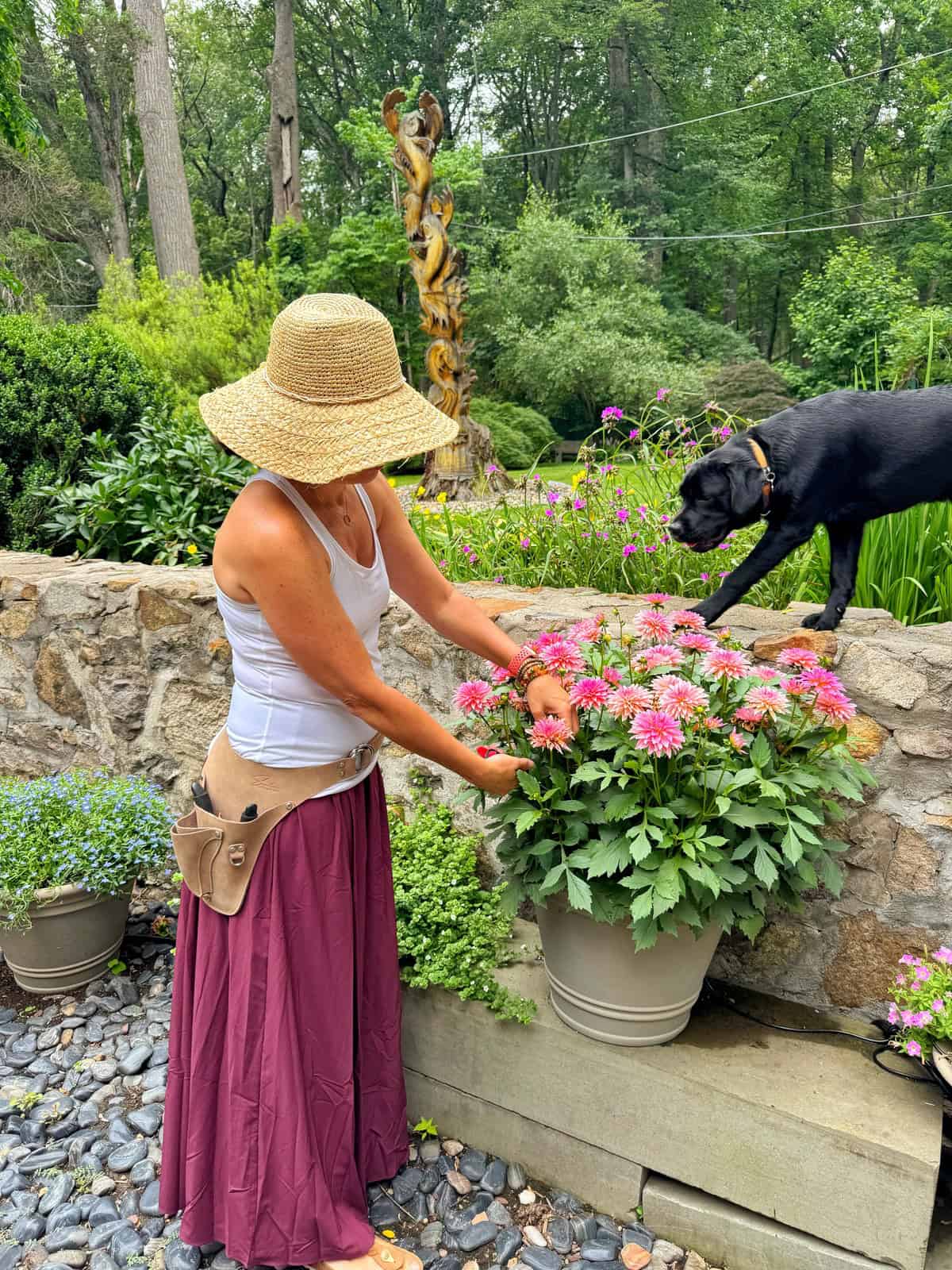
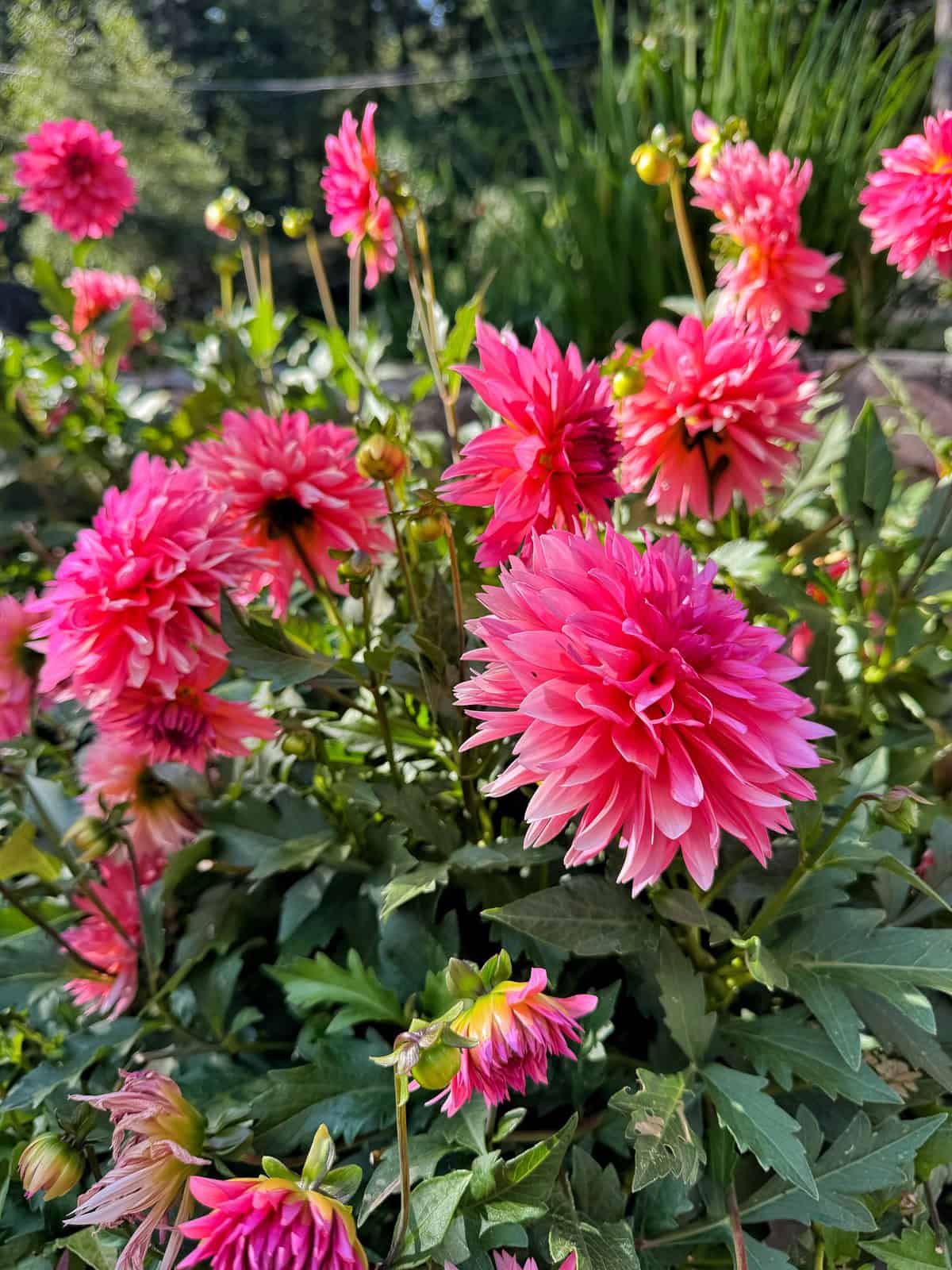
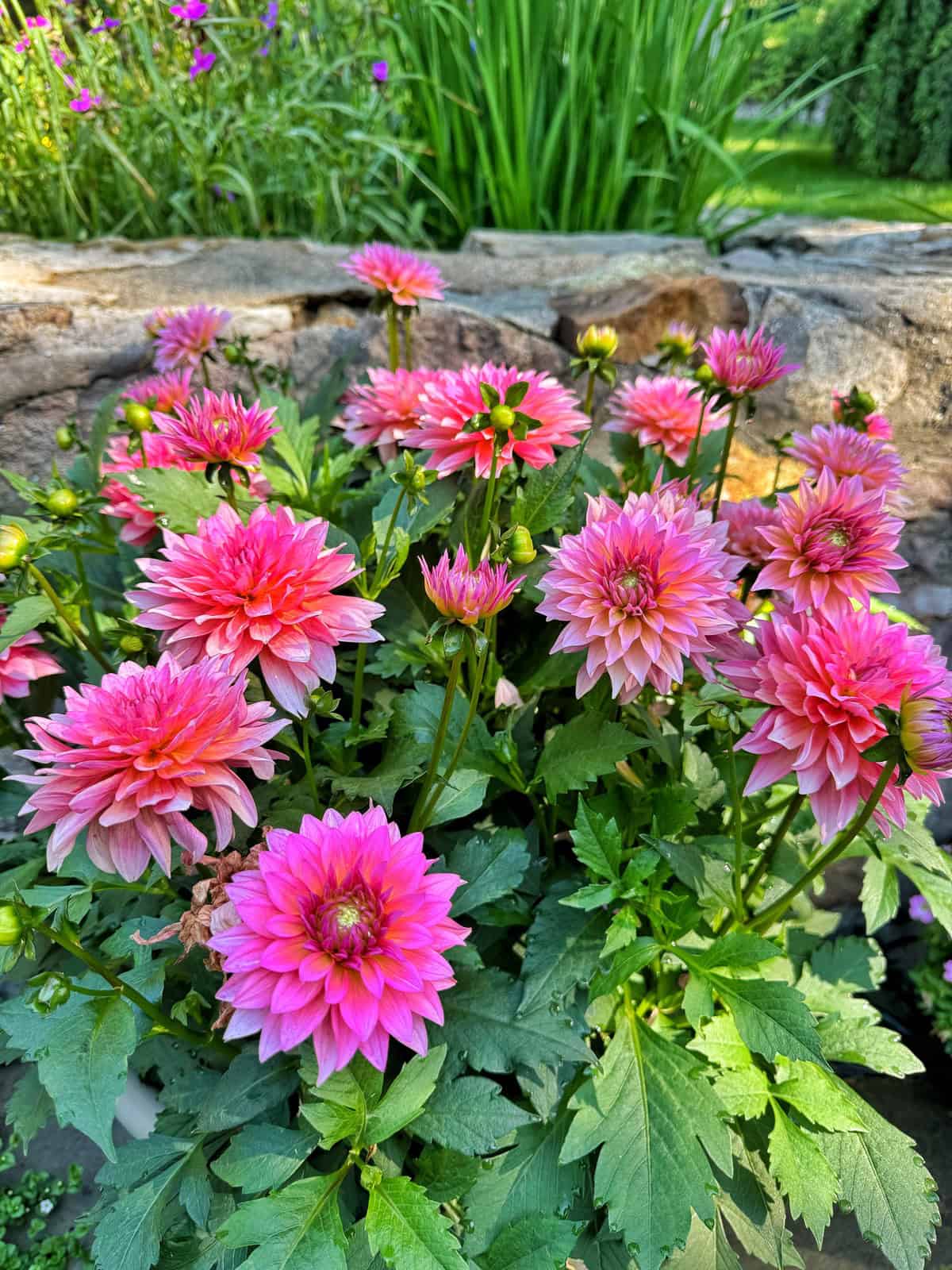
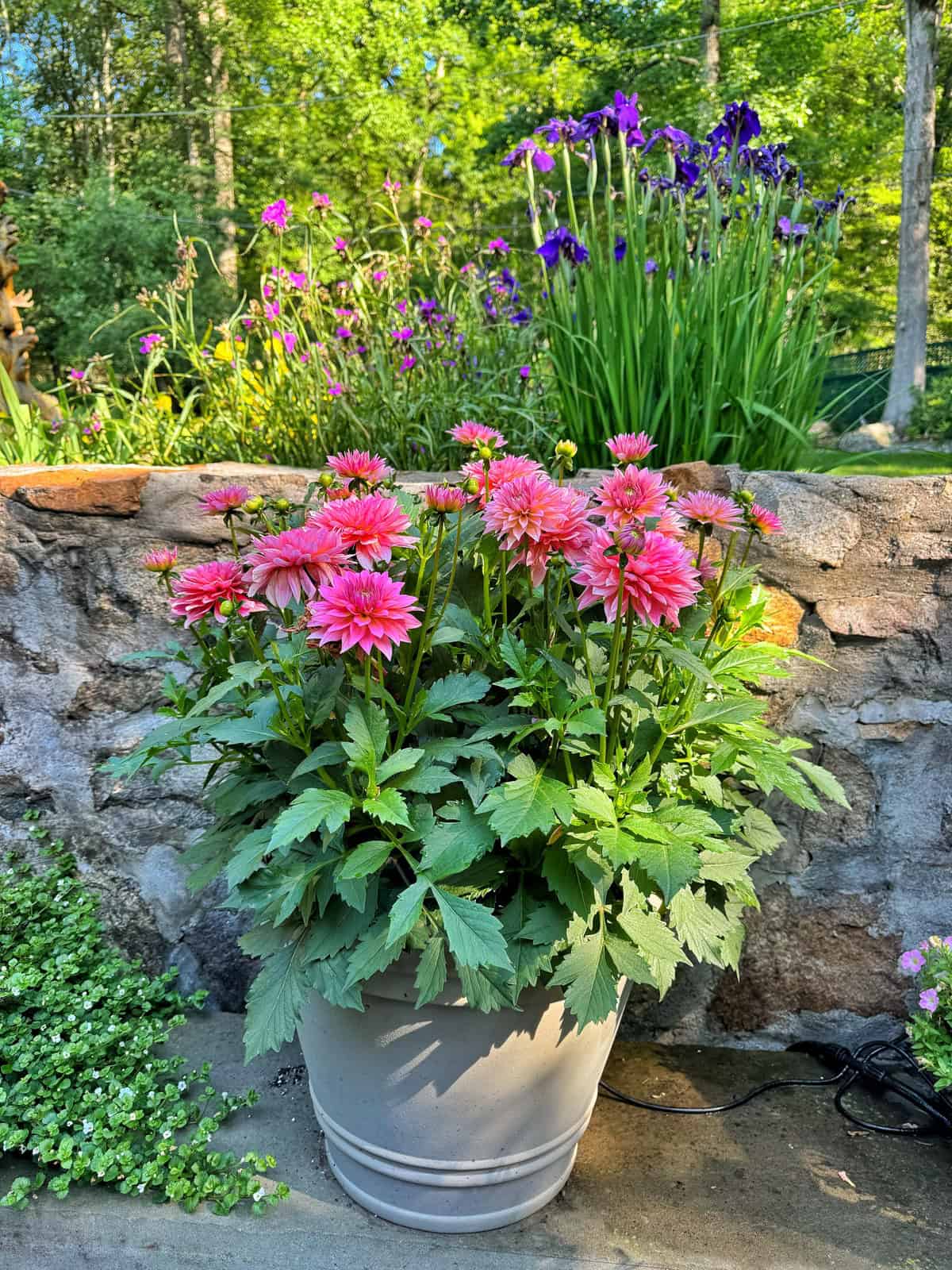
- Dalina Grande Cancun – A standout in my own containers, with vibrant pink blooms
- Dalina Grande Mendoza – Another personal favorite; looked stunning against my stone wall
Medium-Height Dahlias (For Larger Pots, More Drama)
If you want a fuller, more dramatic look, you can absolutely grow medium-sized varieties in pots, just size up your container and add support early.
Varieties I’ve grown successfully in pots include:
- Eveline
- Karma Lagoon
- Kogane Fubuki
- Jowey Winnie
- Thomas Edison
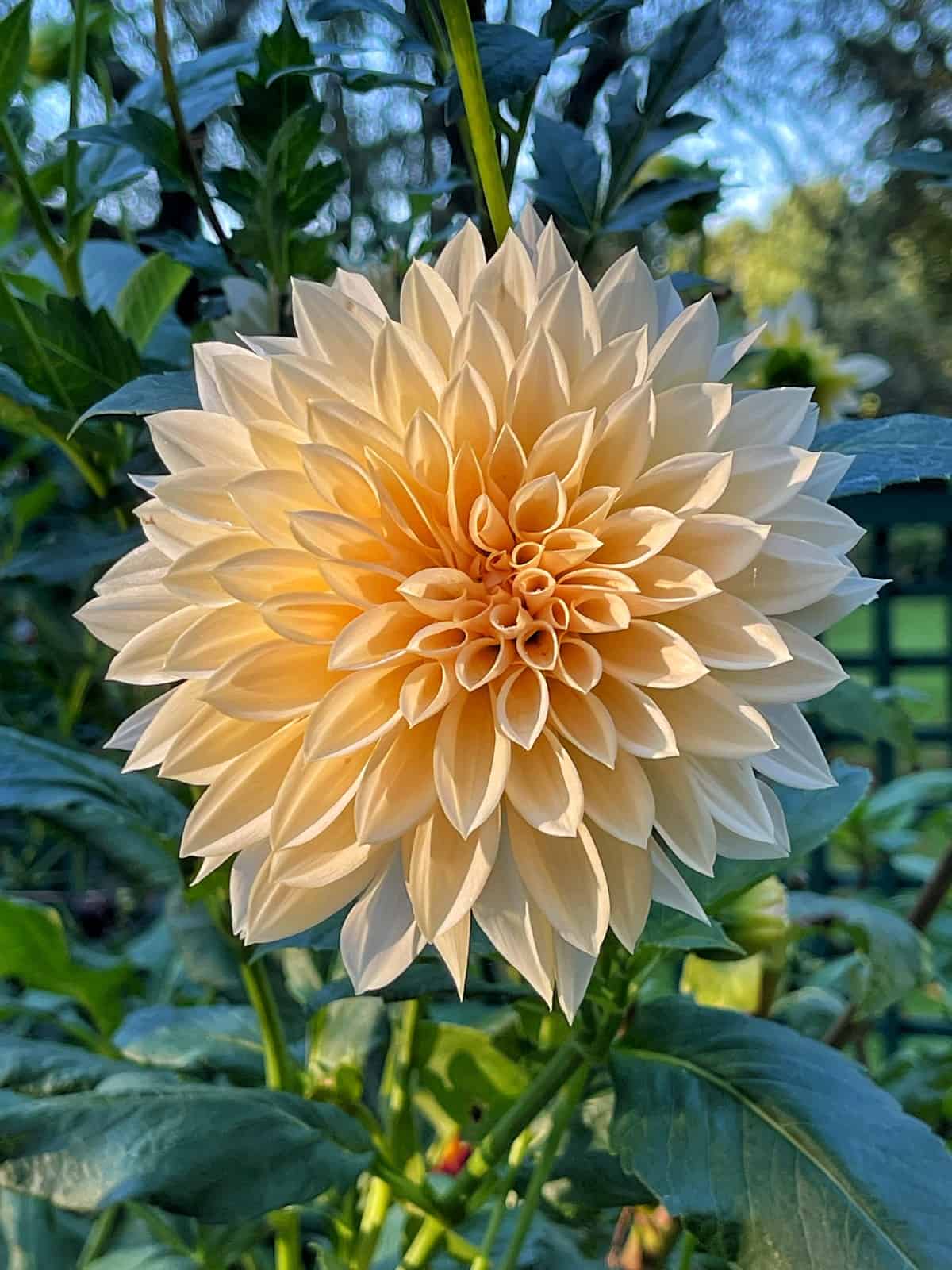
- Café au Lait (yes, you can grow it in a pot if the container is large enough—expect to stake!)
These varieties typically perform best in containers 15–20 inches wide or larger. Use a deeper pot for taller cultivars to help prevent tipping in heavy summer winds.
Want More Variety Inspiration?
If you’re choosing dahlias for cutting gardens or just want more variety ideas, check out my full guide to must-grow dahlias for cut flower gardens.


The Best Soil & Potting Mix for Dahlias in Containers
Dahlias grown in pots need a very different soil environment than dahlias grown in the ground. Container soil must drain quickly, hold enough moisture to support big blooms, and give tubers room to expand without becoming waterlogged. After growing dahlias in both large raised beds and containers for years, this is the mix that consistently gives me the healthiest plants and strongest blooms.
Use a High-Quality Potting Mix (Not Garden Soil)
Always start with a lightweight, well-draining potting mix. Garden soil is too dense for containers and can suffocate the tubers or lead to rot.
Look for mixes that contain:
- peat moss or coco coir (for moisture retention)
- perlite or vermiculite (for drainage)
- compost or aged bark fines (for structure and nutrients)
Improve Drainage With Add-Ins
If your potting mix tends to stay wet—or if you’re using self-watering containers—add one of the following to improve airflow around the tuber:
- Perlite or vermiculite
- Coarse sand
- aged bark fines
This helps prevent rot and encourages stronger root development.

Skip Fertilizer at Planting (Most of the Time)
If your mix contains compost or aged organic matter, you usually don’t need to fertilize at planting. Dahlias in pots tend to be more sensitive to overfertilizing, especially earlier in the season when tubers are waking up.
Later in the care section, we’ll cover how and when to fertilize because timing is different in pots.
Fill the Container Only 2/3 Full Before Planting
I’ve learned over time that filling the pot completely before planting makes it harder to position the tuber correctly and install support. Leaving space allows you to:
- position the tuber at the right depth
- add support stakes early
- top off with soil as shoots grow
You’ll fill the pot the rest of the way after planting.
Want More Container Soil Tips?
For broader container-gardening guidance—soil, watering, pot selection, and design—you can also read my Container Gardening Guide
How to Plant Dahlia Tubers in Pots
Planting dahlias in containers is simple, but the details really matter. Tubers are more prone to rot in pots than in garden beds, so proper soil depth, spacing, and moisture control are essential. After growing dahlias in pots for several seasons, here’s the method that consistently gives me strong, healthy plants.
1. Choose the Right Container Size
Use a pot that is at least 12–16 inches wide and 12–18 inches deep. Larger varieties need larger containers to support their growth and prevent the pot from tipping over.
2. Prepare the Soil
Fill the container about two-thirds full with a well-draining potting mix. Avoid garden soil—it’s too dense for containers.
If your mix tends to stay wet, add perlite or pine bark fines to improve drainage.
3. Position the Tuber Correctly
Place one tuber per container.
- Lay it horizontally with the “eye” or bud facing upward.
- Center the tuber rather than pushing it against one side of the pot.
This gives roots room to spread evenly.
4. Plant at the Right Depth
Cover the tuber with about 2 inches of potting mix.
Dahlias in containers should be planted slightly shallower than in the ground because potting mix retains moisture more efficiently.
5. Install Support at Planting Time (Important!)
If you’re growing anything taller than a dwarf variety, add a stake or tomato cage before the tuber sprouts. This prevents accidentally puncturing the tuber later.
If you need help choosing support structures, see my guide on how to support tall flowers.
6. Do NOT Water After Planting
This is the biggest mistake gardeners make when planting dahlias in pots.
Newly planted tubers rot easily if the soil is too wet.
Instead:
- Plant into slightly moist soil
- Wait to water until you see the first sprouts above the soil line
(If you want full planting-depth details, scroll to my Dahlia Planting Guide.)
7. Place the Pot in Full Sun
Dahlias need 6–8 hours of full sun daily for best blooming. Containers are easy to move, so rotate as needed to keep growth even.
Pre-Sprouting Dahlia Tubers in Containers (Optional Method)
If you want blooms earlier or simply enjoy getting a jump on the growing season, you can pre-sprout your dahlia tubers indoors before your last frost date. I use this method when I’m feeling impatient for color in the garden, and it truly does speed things up.
Here’s how to do it successfully without risking rot, which is the biggest challenge when pre-sprouting dahlias in pots.
1. Use a Clean Pot and Dry Potting Mix
Choose a small container (about 1–2 gallons) and fill it with dry or barely damp potting mix. Avoid watering at this stage—excess moisture is the #1 reason tubers rot indoors.
2. Place the Tuber Just Below the Soil Surface
Position the tuber horizontally with the eye facing up and cover it with 1–2 inches of potting mix.
3. Keep the Pot Warm and Bright (But Out of Direct Sunlight)
Place your container in a warm, bright location such as:
- a sunny windowsill
- a heated garage
- a basement with grow lights
Aim for temperatures around 60–70°F.
4. Do NOT Water Until Sprouts Emerge
This is the key to success.
The tuber has all the moisture it needs to begin waking up. Adding water too soon almost always leads to rot.
Once you see shoots emerge, you can begin lightly watering.
5. Harden Off Before Moving Outdoors
A week before planting, transition the pot outside gradually starting with 1–2 hours per day in shade and slowly increasing exposure.
6. Transplant Into Its Final Container
Once your outdoor soil has warmed and all danger of frost has passed, move your pre-sprouted dahlia into its larger container and follow the planting instructions in the previous section.
Caring for Dahlias in Pots
Dahlias grown in containers need a little more attention than those grown in the ground because pots dry out faster, heat up more quickly, and offer less soil volume to buffer moisture and nutrients. With the right care routine, container dahlias can be some of the most rewarding plants you grow. Here’s exactly how I keep mine thriving all summer in my Zone 6b garden.
Light Requirements
Dahlias need 6–8 hours of full sun every day for strong stems and abundant blooms. One advantage of container gardening is flexibility if a pot isn’t getting enough light, you can move it. I rotate mine a few times through the season to keep growth even, particularly when I grow them on one of my porches.
Watering Dahlias in Pots
Watering is the most important part of keeping potted dahlias healthy. Containers dry out much faster than in-ground beds, especially during heat waves.
- Water deeply whenever the top inch of soil feels dry.
- Avoid shallow, frequent watering as dahlias need moisture deep in the pot to build strong roots.
- In hot stretches, you may need to water once per day, depending on pot size and weather.
To simplify watering, I use drip irrigation on a timer, which gives dahlias a slow, consistent soak without wasting water. This has been a game-changer during the hottest parts of summer and saves me from hand-watering multiple large containers each day. To learn more about how I do this, please visit: Best Watering Practices for Flower Gardens
Avoid overwatering, as soggy soil leads quickly to tuber rot—especially early in the season or during cooler weather. Make sure excess water drains freely from the bottom of the pot. For full-season watering and troubleshooting tips, see my Complete Dahlia Growing Guide.
Fertilizing Dahlias in Containers
Because containers have limited nutrients, potted dahlias benefit from a consistent feeding routine—but timing and type matter.
- Skip fertilizer at planting unless your soil mix is very lean.
- Once plants reach 6–8 inches tall, apply a slow-release fertilizer formulated for flowering plants.
- As buds begin to form, switch to a bloom booster to encourage abundant blooms.
- Follow package directions carefully because too much nitrogen leads to leafy plants with fewer flowers.
If you amend your potting mix with compost, you may not need to feed as heavily. Trust what your plants show you throughout the season.
Temperature & Heat Management
Pots can heat up quickly in midsummer. If your dahlias show signs of stress—drooping, curling leaves, or stalled buds—try:
- Mulching the top of the soil with shredded leaves or bark to help retain moisture
- Moving the pot to a slightly shadier afternoon location
- Watering deeply in the morning

Supporting Dahlias in Pots
Most dahlias—especially medium or tall varieties—will need some form of support to keep stems upright and prevent the plant from toppling in strong winds. In containers, support is even more important because the root zone is smaller and pots can shift more easily. Here’s how I keep my potted dahlias standing tall all season.
Install Support at Planting Time
Supporting dahlias is easiest when done before the tuber sprouts. This prevents accidentally piercing the tuber later on. Good options for container-grown dahlias include:
- Tomato cages
- Grow-through support hoops
- Trellis netting (cut and adapted for pots)
- Bamboo stakes
In the garden, I don’t love bamboo stakes for dahlias, but in containers, where you’re supporting a single tuber, they work beautifully. Just insert them when planting so they stay secure as the plant grows.
Tie Stems Loosely as They Grow
Use soft plant ties or garden twine to secure stems without restricting growth. Leave room for the stems to thicken over time.
Support Is Especially Important for Taller Varieties
If you’re growing varieties like ‘Cafe au Lait,’ ‘Labyrinth,’ or other larger cultivars, a single stake is often not enough. Instead, use:
- A wider cage
- A heavier container for stability
- Multiple stakes placed around the tuber
For more detailed ideas and support methods, see my guide on how to support tall flowers and prevent flopping.

Pinching, Cutting & Deadheading Dahlias in Pots
Dahlias grown in containers benefit just as much from pinching and deadheading as those grown in the ground, sometimes even more. Because pots limit root space and overall plant size, these simple tasks help maximize blooms and keep your plants looking full and healthy all season long.
Pinching Dahlias for Bushier Growth
When your dahlias reach about 10–12 inches tall, pinch out the top set of growing tips.
This encourages:
- stronger branching
- more flower stems
- a fuller shape (especially important in pots, where plants can otherwise look leggy)
Pinching delays the first bloom slightly, but the payoff is more blooms over a longer period.
Cutting Blooms Encourages More Flowers
Dahlias are a “cut-and-come-again” flower. The more you cut them, the more they bloom.
When cutting flowers for arrangements:
- choose long stems
- cut just above a leaf node
- remove any foliage that will sit below the waterline
If you enjoy making bouquets, this is where dahlias in pots really shine—containers placed near patios or entryways make it easy to snip a few stems anytime. For arranging tips, see my guide on how to arrange flowers like a pro.
Deadheading Spent Blooms
If you aren’t cutting flowers regularly, you’ll want to deadhead once or twice a week.
Deadheading:
- prevents the plant from diverting energy into seed production
- keeps your containers looking tidy
- encourages continual blooming through frost
To deadhead, snip the stem back to the next set of leaves using garden snips or sharp pruners. To learn more about proper deadheading technique, please visit this post: How to Deadhead Flowers

Underplanting Ideas for Dahlias in Pots
Underplanting isn’t required when growing dahlias in containers, but it can make your pots look much prettier—especially early in the season before the dahlias fill out. I often add a few “spillers” to soften the edges of the container and bring some early color while the dahlias are still getting established.
Here are some easy, reliable annuals that pair beautifully with dahlias in pots:
- Bacopa
- Lantana
- Sweet Alyssum
- Scaevola
- Calibrachoa
- Petunias
- Trailing snapdragons
- Lobelia
- Nasturtium
These plants trail gracefully over the sides of containers and add movement, texture, and color without competing with the dahlias for space or nutrients.
How to Underplant Without Disturbing Tubers
Because dahlias sit close to the soil surface when planted in containers, take extra care when adding companion plants.
A few tips from my own experience:
- Plant spillers around the very edge of the pot.
- Use small starter plants rather than large root balls.
- Gently work them in without digging too deeply—this helps avoid nicking or disturbing the tuber.
- Don’t overcrowd; 2–4 spillers are usually enough depending on pot size.
I don’t underplant every dahlia container, but when I do, it adds instant charm and fills the pot beautifully while I wait for those big, bold blooms to appear.

Overwintering Dahlias in Pots
Because dahlias are tender perennials, they can’t survive freezing temperatures in containers. Pots expose the tubers to cold from all sides, so even gardeners in slightly warmer climates often need to lift and store them. Here’s how I handle overwintering my potted dahlias here in Zone 6b.
If You Garden in a Cold Climate (Zones 3–7)
You’ll need to dig up the tubers and store them indoors for winter.
Here’s the simple process:
- Wait for the first frost to blacken the foliage.
- Cut stems back to a few inches above the soil line.
- Gently remove the tuber from the pot and brush off excess soil.
- Let it dry for a day or two in a cool, dark, well-ventilated space.
- Store it in a breathable container (like a crate or cardboard box) packed with slightly damp peat moss, vermiculite, or wood shavings.
- Keep it in a cool, frost-free location (around 40–50°F).
For more detailed guidance, you can read my full post on how to overwinter dahlias and other tender bulbs.
If You Garden in a Mild or Frost-Free Climate (Zones 8–10)
Your tubers may survive winter in the container if temperatures stay above freezing, though success varies with:
- container size
- soil moisture
- winter rainfall
To improve your chances:
- Keep containers on the dry side during winter.
- Move them to a protected area (garage, shed, covered porch).
- Mulch the soil surface lightly to help insulate the tuber.
Replanting in Spring
Whether you stored your tubers indoors or kept the container protected, plant or repot them in fresh soil once all danger of frost has passed and the soil begins to warm.
Common Problems with Dahlias in Pots (and How to Fix Them)
Growing dahlias in containers comes with a unique set of challenges. Pots dry out faster, heat up more quickly, and limit root space, which can cause issues you may not see with in-ground plants. Here are the most common problems I’ve run into—and how to troubleshoot them.
Overwatering and Tuber Rot
This is the number one issue with potted dahlias. Containers hold moisture more tightly than garden beds, especially if the potting mix is dense.
Fix:
- Use a lightweight, well-draining mix.
- Ensure pots have multiple drainage holes.
- Water only when the top inch of soil dries out.
- Avoid watering until sprouts emerge.
Underwatering During Hot Weather
In midsummer, pots can dry out in a matter of hours—even large ones.
Fix:
- Water deeply and consistently.
- Use drip irrigation on a timer for reliable moisture.
- Consider adding mulch to help retain moisture.
- Move pots to afternoon shade during heatwaves.
Pot Tipping or Leaning Plants
Tall dahlias can act like sails in the wind, causing lightweight pots to tip over.
Fix:
- Choose heavier pots or add weight (bricks/rocks) to the bottom.
- Install support stakes or cages early.
- Orient the pot so taller stems face a wall or wind break.
Slow or Weak Growth
If your dahlias look small or appear stalled, the issue is often soil exhaustion, overcrowding, or low sunlight.
Fix:
- Ensure the plant gets 6–8 hours of direct sun.
- Fertilize regularly once the plant is established.
- Repot the following spring into fresh soil.
- Avoid letting plants become root-bound year after year.
For more reasons why dahlias might be slow to grow or bloom, please read my full guide here: Why Your Dahlias Aren’t Blooming
Yellowing Leaves
This can be caused by nutrient deficiencies, overwatering, or inconsistent watering.
Fix:
- Check soil moisture first then correct dryness or sogginess.
- Apply a balanced slow-release fertilizer.
- Ensure the pot drains freely after every watering.
Powdery Mildew
Container dahlias can suffer from mildew if airflow is poor or leaves stay damp.
Fix:
- Space pots so plants don’t crowd each other.
- Water at the soil level (never overhead).
- Remove affected leaves and improve airflow.
Pests (Aphids, Spider Mites, Slugs)
Potted dahlias tend to attract the same pests as in-ground plants, especially during dry spells or periods of rapid plant growth.
Fix:
- Add copper tape or slug bait around pot bases if needed. This is the slug bait I use.
- Rinse off aphids with a strong hose spray.
- Use insecticidal soap for mites.
Growing Dahlias in Pots Successfully Year After Year
Container-grown dahlias can be incredibly productive, but they’re also a little more dependent on consistent watering, feeding, and observation. Over time, I’ve learned that small adjustments — like planting dates, fertilizer timing, and pot size — can make a noticeable difference in how well they perform.
If you’re growing dahlias primarily for bouquets, 3 Easy Ways to Start a Cut Flower Garden walks through simple methods for planning and growing flowers with cutting in mind, even in smaller spaces.
And because container plants can vary so much from season to season, I keep notes inside The Bricks ’n Blooms Beautiful and Easy-Care Flower Garden Planner on what worked, what didn’t, and how each variety performed. Writing it down makes it much easier to replicate those “showstopping” results the following year.
Final Thoughts on Growing Potted Dahlias
Growing dahlias in containers has become one of my favorite ways to enjoy these gorgeous flowers. In my own Zone 6b backyard, especially in my zen garden where I grow mostly compact varieties in pots so I don’t have to worry about staking or heavy support. They add a beautiful pop of color against the stone and hardscape, and I love that I can move the planters around to fill gaps, highlight a focal point, or bring blooms closer to outdoor seating areas. And of course, having dahlias right outside my back door makes it incredibly easy to snip a few stems for a quick bouquet.
If you’re new to dahlias or want deeper guidance on care, pests, watering, or troubleshooting, be sure to read my Complete Dahlia Growing Guide. And if you’re choosing varieties for planters, don’t miss my list of must-grow dahlias for cut flower gardens—many of those perform beautifully in pots, too.
Because dahlias make such exceptional cut flowers, you might also enjoy my Cut Flower Gardening for Beginners guide for more inspiration on growing blooms for arrangements. And if container gardening is your passion, my Container Gardening Guide has even more tips for choosing pots, soil mixes, and plant combinations that thrive.
Growing dahlias in pots is flexible, rewarding, and surprisingly simple once you get the hang of it. A few containers can bring enormous beauty to a patio, porch, or garden room, and they might become one of your favorite ways to enjoy these long-lasting summer blooms.
If you have questions about your container setup or want help troubleshooting, feel free to ask in the comments. I’d love to hear what varieties you’re growing and how your potted dahlias are doing!
For more information about growing dahlias in pots, please check out:
If you have any questions, comments or suggestions, please let me know in the comments below. I’d love to hear! And feel free to share this post with anyone you think would find it helpful too.
Thank you for visiting the blog today!
Enjoy your day! xo


Originally Published . Last Updated .

Hi, I’m really struggling to find tall enough plastic pots to start my dahlia’s off in the green house in. I intend planting them out come May but to get the 12″ suggested pot height I am having to go with a 15 litre pot. Is this really the best I can do?
With thanks,
Victoria
Hi Victoria! When I start them early, I usually reuse large old nursery pots I have laying around that will fit the tubers. You need the 12″ minimum pot height if you plan to grow your dahlias in them all season long.
Hi Stacy I am currently using a pot for my Dahlias, I am not sure about the type, I do know that they are quite small even in bloom. Can you help me out with why I am not getting a larger bloom, or are there small varieties? Much smaller than 12 inch. Thank You.
Could you email me some photos? bricksnblooms@gmail.com and I’ll take a look at what you have – are they blooming? When did you plant them?