
Why I Put Terra Cotta Pots on My Garden Stakes (3 Smart Reasons)

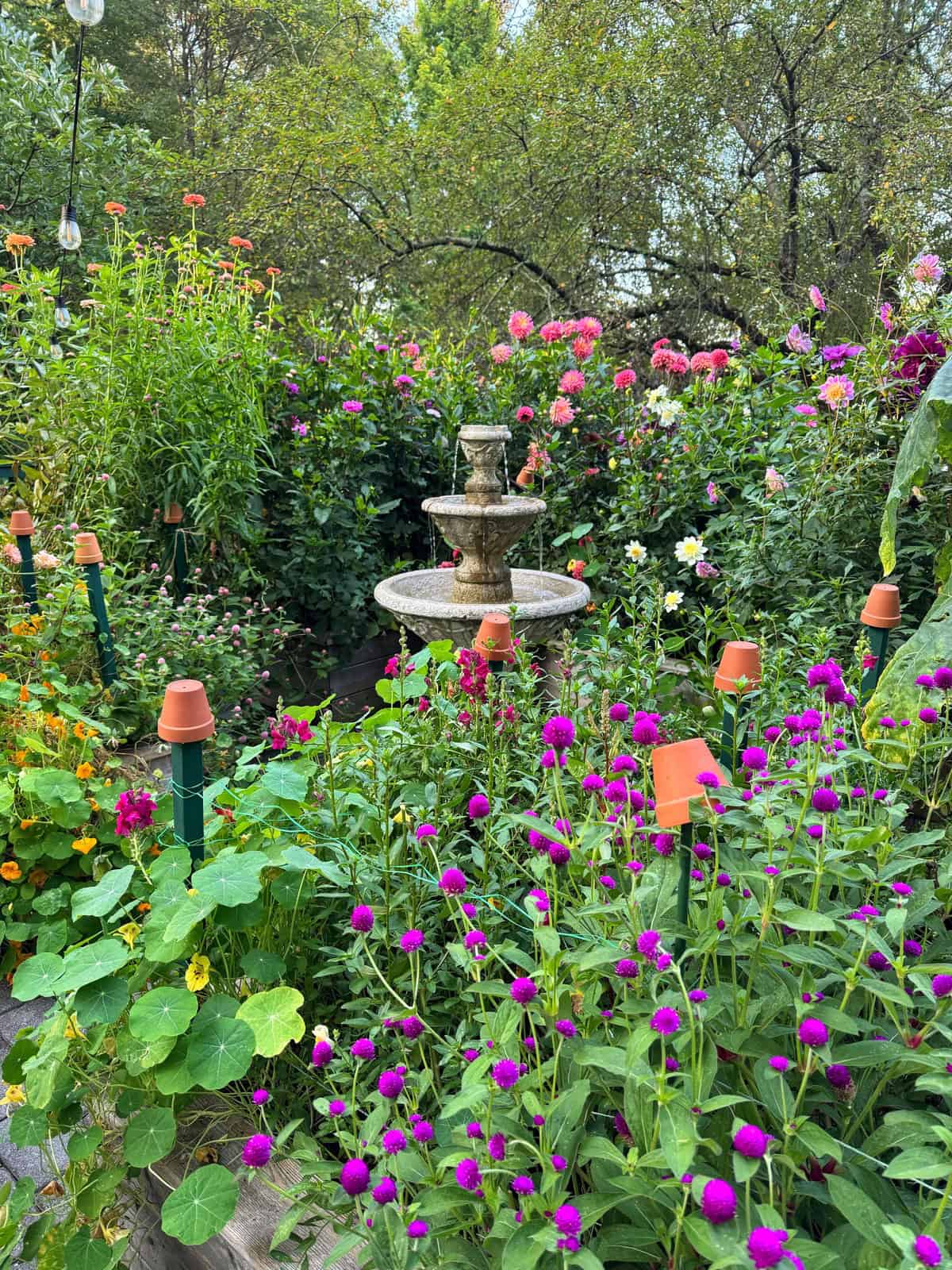
Wondering why there are terra cotta pots on my garden stakes? Here are the 3 smart reasons behind this garden hack.
The most asked question I get about my cut flower garden — on the blog, on YouTube, and across social media — is this:
“Why are there terra cotta pots on all your garden stakes?”
It may look like a quirky design choice, but I use terra cotta pots on my garden stakes for three very practical reasons: garden safety, organic earwig control, and adding intentional style to my cut flower beds.
After years of growing tall, heavy blooms like dahlias, zinnias, and sunflowers, I’ve learned that plant support systems need to do more than just hold stems upright. In a densely planted, heavily harvested cut flower garden like mine, stakes are everywhere and small improvements can make a big difference. I talk more about building a strong foundation in my cut flower gardening for beginners guide, but this simple modification is one of those next-level upgrades that improves safety, reduces pest damage, and enhances the overall look of the garden.
What started as a way to protect my eyes while harvesting quickly became one of my favorite organic pest control tricks, and eventually a design detail I now intentionally repeat throughout my beds.
Here’s exactly why I put terra cotta pots on my garden stakes — and why I won’t garden without them anymore.
(Posts on stacyling.com may contain affiliate links. Click HERE for full disclosure.)
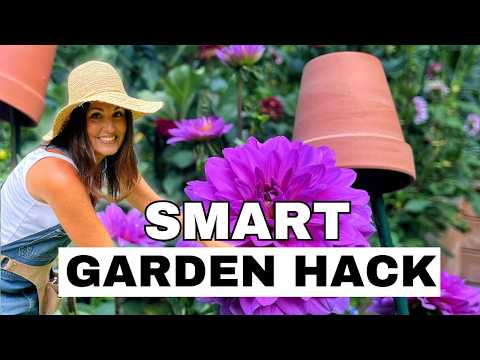
See This Simple Garden Trick in Action
This quick video shows how I use this method in my own garden and why it helps with visibility, safety, and more once plants start growing in.
Why I Use Garden Stakes in My Cut Flower Garden
If you grow tall flowers for cutting, staking is not optional. It is essential.
Plants like dahlias, zinnias, sunflowers, snapdragons, and even some cosmos varieties can become top heavy very quickly. One strong storm or heavy rain can flatten an entire section of the garden overnight.
In my cut flower beds, I plant densely so I can harvest as many stems as possible throughout the season. That means I rely on sturdy garden stakes to keep everything upright and producing strong, straight stems for bouquets. I go deeper into layout and structural planning in my cut flower garden design guide, but strong plant support is one of the foundations of a productive cutting garden.
Green stakes blend into the foliage, which I love visually. But that camouflage is also what led me to add terra cotta pots to the tops in the first place.
To learn more about how I support tall flowers, please visit my guide to keeping tall, heavy flowers upright.

1. They Protect My Eyes While I Work
This was the original reason.
When you are harvesting flowers daily, bending, reaching, and moving quickly through dense beds, garden stakes often sit right at eye level. Because most stakes are green, they disappear into the plants. More than once, I came dangerously close to hitting my face while cutting stems.
It only takes one close call to realize uncovered stakes are a real safety hazard.
Adding small terra cotta pots to the top instantly makes each stake more visible. The warm clay color stands out just enough that I can see it in my peripheral vision, even when the plants are full and lush. It is a simple modification that reduces the risk of eye injury while gardening.
If you are just getting started growing flowers, this is one of those small improvements that makes your garden safer and more enjoyable to work in. I cover more foundational tips in my cut flower gardening for beginners guide, but this is a practical upgrade I recommend to anyone using tall plant supports.

2. They Create an Organic Earwig Trap
This is where the terra cotta pots really shine.
If you grow dahlias or zinnias, you have probably seen earwig damage. Ragged holes in leaves, chewed petals, and shredded edges are common signs. Earwigs feed at night and hide during the day, which makes them frustrating to manage.
Instead of reaching for chemical sprays, I use the terra cotta pots as simple earwig traps.
Why This Works
Earwigs are drawn to dark, cool, protected spaces during the day. An upside down clay pot filled with straw or shredded newspaper creates the perfect hiding spot. The natural clay material helps regulate temperature and moisture, which makes it even more attractive to them.
By morning, many of the earwigs in the area will have crawled inside.

How to Make an Earwig Trap with Terra Cotta Pots
You will need:
- 3 or 4 inch terra cotta pots
- Straw or shredded newspaper
- Garden stakes
Steps:
- Stuff the pot loosely with straw or shredded newspaper.
- Turn the pot upside down.
- Slide it onto the top of your garden stake so it hangs securely.
- Check the pots early in the morning.
- Shake the contents into a bucket of soapy water to dispose of the earwigs.
It takes only a few minutes to check them, and over time it can significantly reduce damage, especially on plants like dahlias. I use this method alongside other strategies I share in my organic pest control for your flower garden guide, where I talk about building a balanced garden ecosystem without relying on harsh chemicals.
This approach allows me to protect my blooms while keeping my garden pollinator friendly and chemical free.

3. They Make My Garden Stakes Look Intentional
Practical solutions are great, but I also care deeply about how my garden looks.
Plant supports are necessary, but they can feel harsh and utilitarian. A row of exposed metal or fiberglass stakes sticking up through the beds is not exactly charming.
The terra cotta pots soften that look.
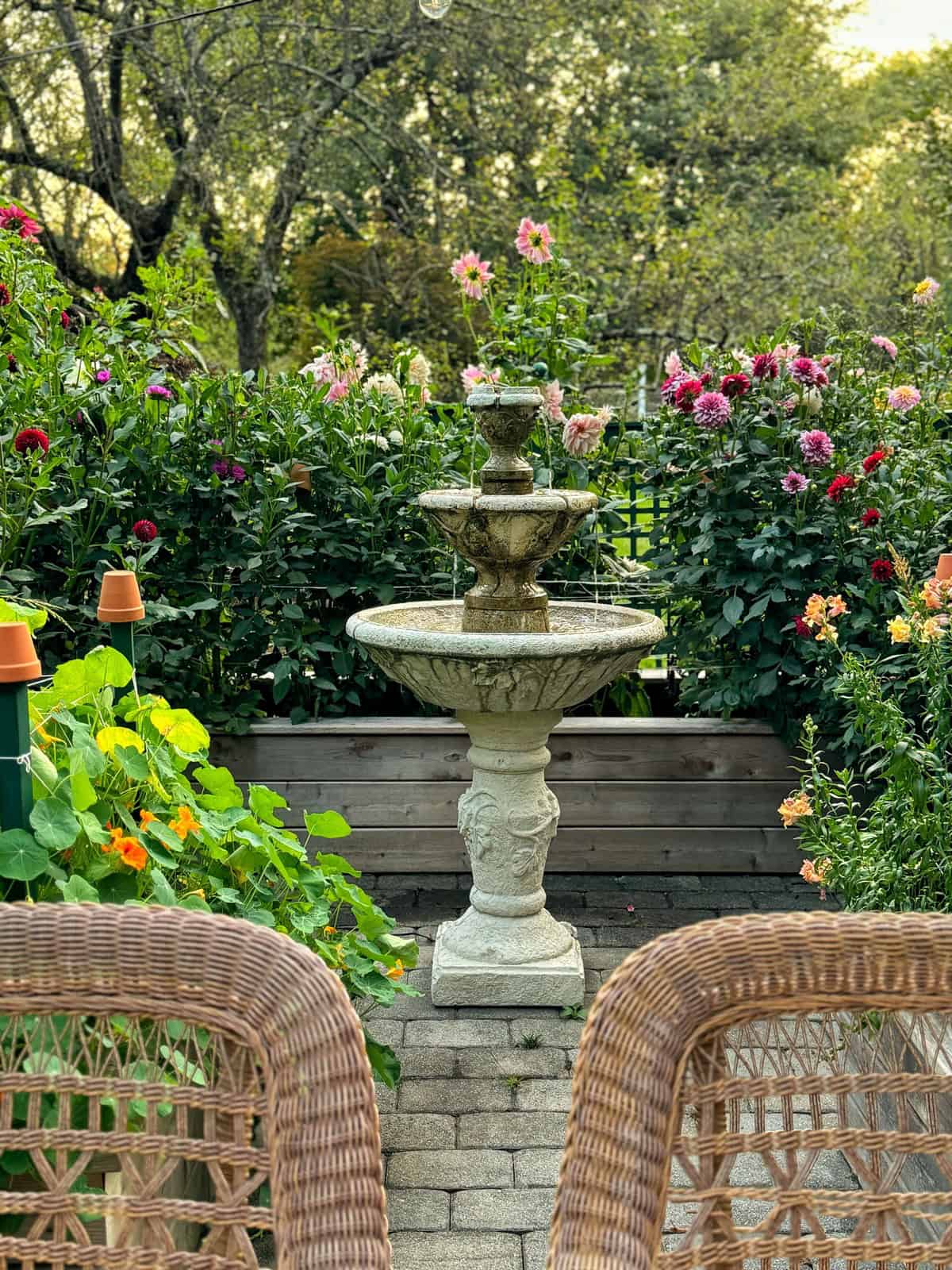
The warm clay color repeats throughout the garden, especially near pathways, containers, and other pottery. That repetition creates rhythm and cohesion. Instead of looking like temporary supports, the stakes start to feel like part of the design.
In a cottage style cutting garden, those small details matter. They add dimension and interest before the plants fully fill in. Once everything is in bloom, the pots quietly blend into the background while still doing their job.
It is one of those simple changes that turns something purely functional into something thoughtful and beautiful.

Frequently Asked Questions About Terra Cotta Pots on Garden Stakes
What size terra cotta pots work best?
I typically use 3 or 4 inch pots. They are large enough to be visible and to trap earwigs effectively, but small enough that they do not feel bulky at the top of the stake.
Do the pots blow off in wind?
If they fit snugly over the stake, they stay in place well. In very windy areas, you can secure them more tightly or choose slightly heavier clay pots.
The only time I have an issue with the little terra cotta pots falling off is when someone knocks into them. That has happened a few times but easy enough to replace.
How often should I empty earwig traps?
During peak earwig season, I check them every morning. Regular emptying is what makes this method effective.
Can I use plastic caps instead?
You can use plastic for safety visibility, but clay works better for earwig control because it creates a more natural, temperature regulated hiding environment.
I also don’t love the way they look as much as the charming clay terra cotta pots. So in that regard, it’s more of a personal design choice as well.
Do they help with other pests?
They are most effective for earwigs. For broader pest management, I recommend combining this method with the natural strategies outlined in my organic pest control guide.

Ready to Build a Stronger, More Productive Cut Flower Garden?
If you love practical strategies like this that improve both the health and performance of your flowers, my 3 Easy Ways to Start a Cut Flower Garden guide walks you through building a productive cutting garden from the ground up. It covers planning your beds, starting seeds, choosing high-performing flowers, and creating a system that supports strong, straight stems all season long.
And if you are experimenting with organic pest control methods like this earwig trap, my Beautiful and Easy-Care Flower Garden Planner helps you track bloom timing, pest patterns, and seasonal adjustments so you can improve your results year after year.
Both are designed to help you garden with more confidence and intention.


Why I Will Always Use Terra Cotta Pots on My Garden Stakes
What started as a simple way to protect my eyes while harvesting has become one of the most practical systems in my cut flower garden.
Those small terra cotta pots improve safety, reduce earwig damage without chemicals, and turn ordinary plant supports into an intentional design detail. It is a small change that solves multiple problems at once, which is exactly the kind of efficiency I look for in the garden.
If you are building your own cutting garden this season, I share more foundational strategies in my cut flower gardening for beginners guide so you can start with strong systems from day one.
Simple adjustments like this are what make a garden easier to manage and more enjoyable to grow in year after year.
Have you tried using terra cotta pots on your garden stakes? I would love to hear how it works in your garden.
Thank you for visiting the blog today!
Enjoy your day! xo

Originally Published . Last Updated .

What garden stakes do you use?
Hi Jan! Here you go! (affiliate) https://urlgeni.us/amzn/4ftgreengardenstakes