
Growing Nepeta (Catmint) for a Low-Maintenance Cottage Garden


Learn how to grow nepeta (catmint) for a beautiful low-maintenance garden that attracts pollinators and may help repel mosquitoes.
Nepeta is one of those easy-care perennials that earns its place in the garden year after year. Also known as catmint, this long-blooming perennial is beloved for its soft billowing habit, lavender-blue flowers, silvery foliage, and ability to provide months of color with very little effort. It’s also a magnet for pollinators and one of the most reliable low-maintenance plants for cottage garden planting.
I’ve been growing nepeta in my New Jersey gardens since I first started flower gardening nearly 30 years ago, and honestly, it remains one of my favorite perennials to this day. There’s just something magical about the way it softens hard edges, spills onto pathways, and billows around neighboring plants in the garden. The color is hard to beat, especially paired with roses, salvia, alliums, peonies, and other classic cottage garden flowers.
Over the years, I’ve grown nepeta in mixed borders, pollinator gardens, rose beds, and even some of the toughest dry spots in my landscape. It’s one of those dependable plants that asks for very little while giving back for months with continuous blooms and nonstop pollinator activity.
For more inspiration designing a relaxed flower garden with easy-care plants, explore my low-maintenance cottage garden ideas and favorite cottage garden plants.
Whether you’re growing nepeta for the first time or looking for ways to keep it fuller and blooming longer, this guide covers everything I’ve learned about planting, pruning, dividing, and caring for this incredibly versatile perennial.
(Posts on stacyling.com may contain affiliate links. Click HERE for full disclosure.)

About Nepeta
Nepeta, commonly known as catmint, is one of the longest-blooming and easiest-care perennials you can grow in a flower garden. Beloved for its soft lavender-blue flower spikes, silvery-green aromatic foliage, and relaxed billowing habit, nepeta adds months of color and texture to sunny garden beds with very little maintenance.
As a member of the mint family, nepeta is drought tolerant once established and thrives in full sun with well-drained soil. It’s especially popular in cottage gardens, pollinator gardens, and mixed perennial borders because it pairs beautifully with roses, salvia, peonies, alliums, and other classic garden plants.
One of the things I love most about nepeta is how versatile it is in the landscape. It looks just as beautiful spilling over pathways and stone walls as it does softening the edges of formal borders. Plus, pollinators absolutely adore it. Bees, butterflies, and hummingbirds visit the flowers constantly throughout the growing season in my garden.
Another huge bonus? Nepeta blooms for an incredibly long time, especially when sheared back after its first flush of flowers. In my New Jersey garden, it often flowers from late spring well into summer and sometimes beyond with a light trim.
- Genus: Nepeta
- Common Name: Catmint
- Plant Type: Herbaceous Perennial
- Hardiness Zone: Typically USDA Zones 3-8 depending on variety
- Light: Full sun
- Soil Requirements: Well-drained soil; tolerant of sandy, rocky, and average garden soils
- Height: Typically 1-3 feet tall depending on variety
- Width: Typically 2-3 feet wide
- Flower Color: Lavender-blue, purple, pink, or white depending on cultivar
- Foliage Color: Gray-green to silvery green
- Bloom Time: Late spring through summer, often reblooming after shearing
- Special Features: Long blooming, drought tolerant, deer resistant, pollinator friendly, aromatic foliage
Catmint thrives with at least 6 hours of direct sunlight daily and performs best in soils that drain well.

Why Nepeta Earns a Spot in My Garden Every Year
Nepeta is one of those hardworking perennials that quietly does it all. It flowers for months, attracts pollinators nonstop, handles heat and dry conditions with ease, and asks for very little maintenance in return. After growing it in my gardens for decades, it’s become one of those plants I reach for again and again when designing borders and cottage garden beds.
Here’s why I love growing nepeta so much:
- Long Bloom Season: Nepeta flowers for months, especially when trimmed back after its first flush of blooms.
- Low Maintenance: Once established, it tolerates heat, drought, and average soil beautifully with very little care.
- Pollinator Friendly: Bees, butterflies, and hummingbirds constantly visit the flowers in my garden throughout the growing season.
- Deer and Rabbit Resistant: Its aromatic foliage tends to be less appealing to deer and rabbits than many other perennials.
- Beautiful Cottage Garden Plant: Nepeta’s soft billowing habit pairs beautifully with roses, salvia, peonies, alliums, and other cottage garden favorites.
- Versatile in the Landscape: It works beautifully in borders, pollinator gardens, along pathways, and even spilling over retaining walls.
- Fragrant Foliage: The gray-green foliage releases a pleasant minty fragrance when brushed against.
- May Help Deter Mosquitoes: Like other aromatic plants in the mint family, nepeta may help discourage mosquitoes near outdoor spaces.


How to Grow Nepeta
Light Requirements for Nepeta
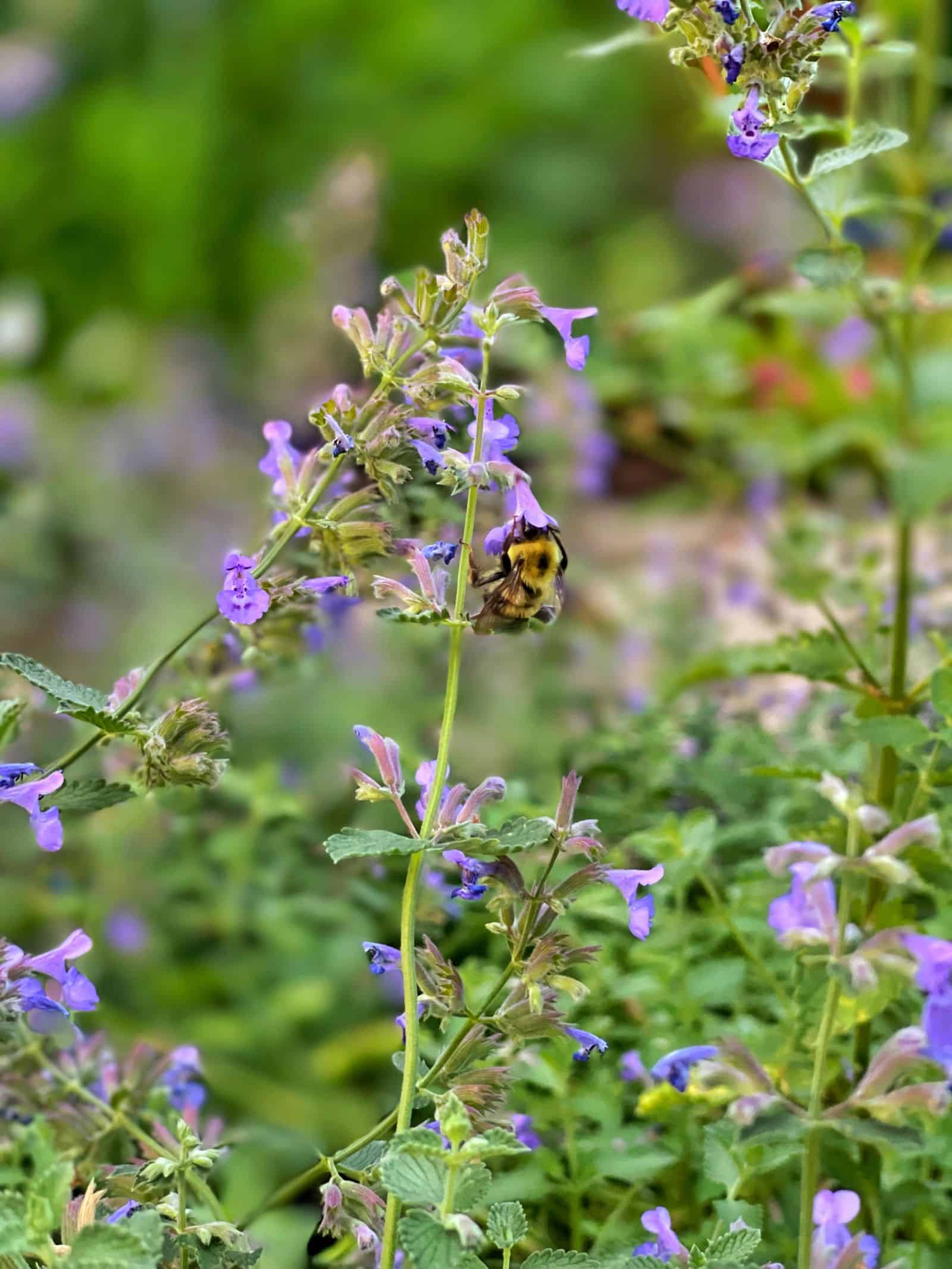
Nepeta grows best in full sun, where it receives at least 6 hours of direct sunlight daily. Full sun helps plants produce more blooms while maintaining that beautiful compact, billowy shape gardeners love.
That said, nepeta can tolerate light shade, especially in hotter climates. In areas with intense summer heat, a little afternoon protection can actually help plants look fresher longer.
In my own garden, the nepeta planted in full sun blooms far heavier and stays much fuller than the plants growing in shadier beds.
Soil Requirements
Nepeta prefers well-draining soil and generally likes things on the drier side once established. It adapts surprisingly well to sandy, rocky, loamy, and even clay soils as long as drainage is good.
From experience, I can tell you catmint does not love wet feet. I have one garden bed that naturally holds more moisture, and the nepeta there never performs quite as well as the plants growing in my drier borders. They tend to get looser, flop more, and slow down flowering faster too.
Nepeta also tolerates a wide range of soil pH, though it grows best in slightly acidic to neutral soil.

Planting Nepeta
Plant nepeta in spring or fall in a sunny location with good air circulation.
To plant:
- Dig a hole about twice the width of the root ball
- Amend the soil with compost if needed
- Plant at the same depth it was growing in the container
- Backfill with soil and water thoroughly
Depending on the variety, space plants about 12-24 inches apart. Always check the plant tag for mature sizing recommendations because some varieties stay much more compact than others.
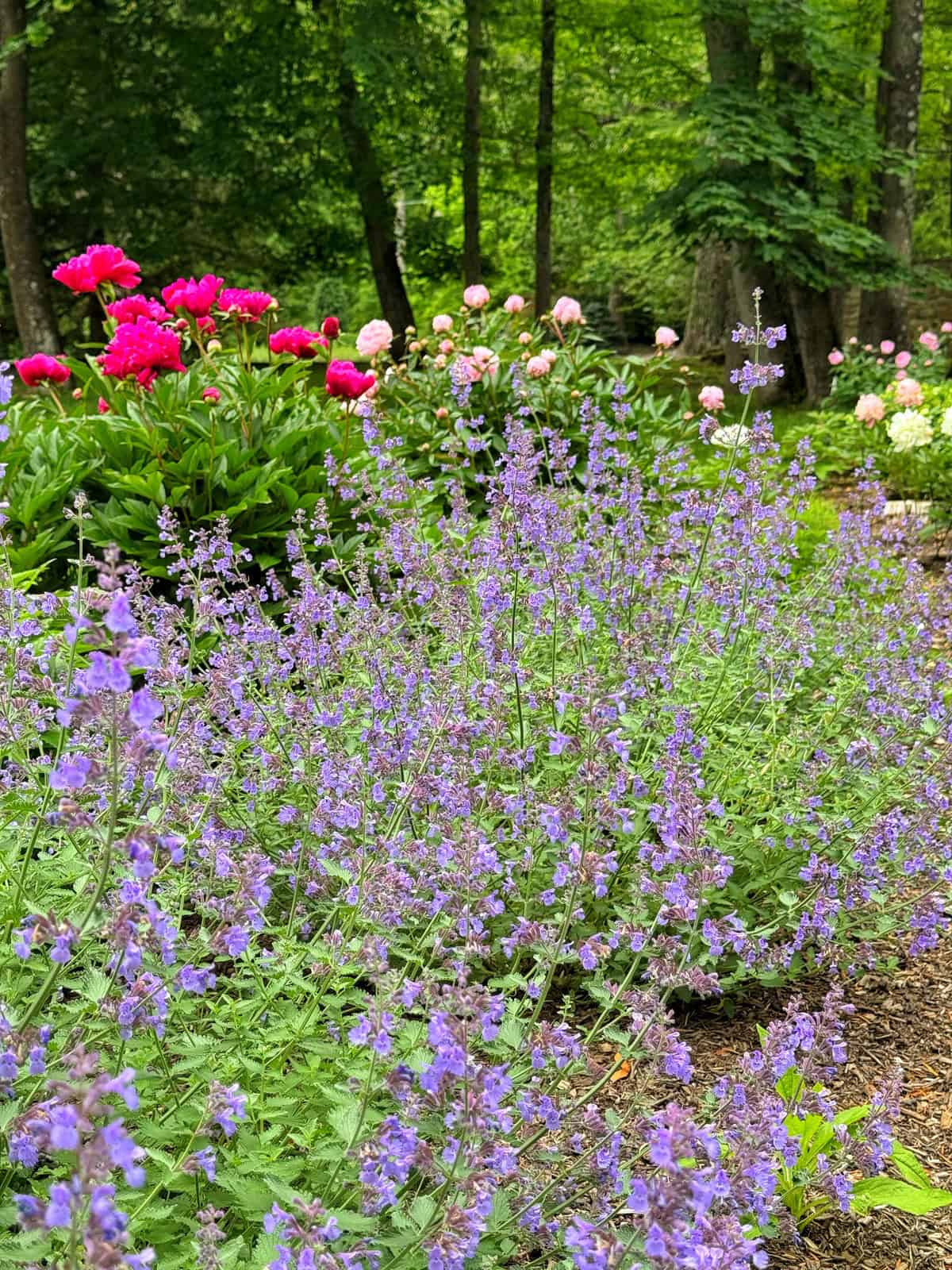
One of my favorite ways to use nepeta is near pathways and garden borders where the soft foliage can spill naturally onto the walkway. It creates that relaxed cottage garden look I love so much.
Watering Nepeta
Newly planted nepeta should be watered regularly while it establishes roots. But once established, it becomes impressively drought tolerant and typically needs very little supplemental watering.
In my New Jersey zone 6b garden, I usually let nature handle most of the watering and only step in during prolonged periods of extreme heat or drought. Honestly, nepeta performs better for me when I leave it alone a bit instead of fussing over it too much.
A few watering tips:
- Water at the base of the plant to help prevent disease
- Water in the morning whenever possible
- Allow the soil to dry slightly between waterings
If watering flower gardens feels confusing sometimes, I share exactly how I water my flower garden throughout the growing season here.
Nepeta Maintenance Tips
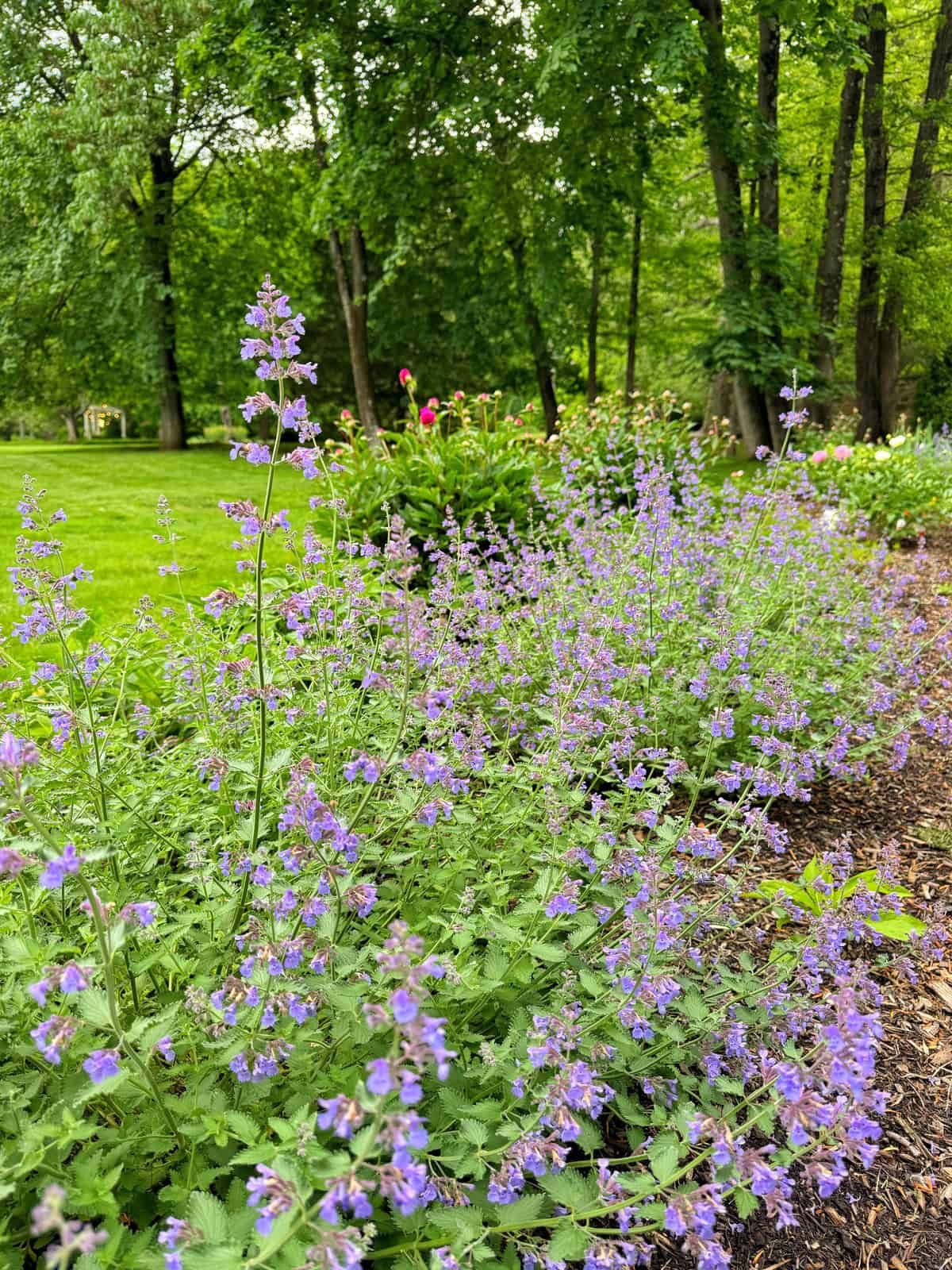
Nepeta is one of the easiest perennials I grow, but a little maintenance helps keep plants looking fresh and blooming longer.
Fertilizing
In general, nepeta does not require fertilizer. In fact, overly rich soil can sometimes lead to floppy growth. I focus more on improving soil naturally with compost and organic matter instead.
Mulching
Apply a light layer of mulch around plants to help suppress weeds and regulate soil moisture, but avoid piling mulch directly against the crown.
Pruning and Deadheading
After the first major flush of blooms fades, shear plants back by about one-third. This encourages fresh foliage and often another beautiful round of flowers later in the season.
I rarely deadhead individual flowers. Instead, I give the whole plant one big haircut after blooming, and it responds beautifully every time.
Dividing Nepeta
Divide nepeta every few years to maintain vigor and prevent overcrowding. If you’ve never divided perennials before, I share my simple step-by-step process for dividing perennials here.

Growing Nepeta in Pots
Nepeta grows beautifully in containers and is a great option for patios, balconies, and outdoor seating areas where you can enjoy both the long blooms and fragrant foliage up close. I especially love growing catmint near seating spaces because it’s often considered one of the plants that may help deter mosquitoes and flies outdoors.
When growing nepeta in containers long term, drainage is everything. Choose a pot with drainage holes and use a high-quality well-draining potting mix. Since containers dry out faster than garden beds, potted plants typically need more frequent watering during hot summer weather.
One thing I’ve learned from experience is that nepeta usually performs best in containers for a year or two before it benefits from refreshing. At that point, I either:
- plant it in the ground, or
- repot it with fresh potting soil
If repotting, gently loosen and remove some of the old soil around the roots before replanting. You can reuse the same container or size up slightly depending on how large the plant has become.
For gardeners in colder climates, overwintering perennial containers can be tricky. If you want nepeta to survive outdoors year-round in pots, choose varieties hardy at least two zones colder than your growing zone and use durable all-weather planters that can handle freeze-thaw cycles.
If you love growing flowers in containers, check out my favorite container gardening ideas and tips for creating long-lasting seasonal planters.

Dividing Nepeta Plants
Nepeta is one of the easiest perennials to divide, which is one more reason I love growing it so much. While catmint can technically be propagated from seed or cuttings, I almost always divide established plants instead because it’s faster, easier, and part of regular garden maintenance anyway.
Honestly, I’d rather save my seed-starting space for flowers like zinnias, snapdragons, and calendula that aren’t always easy to find at local nurseries. Nepeta varieties are widely available, so division simply makes the most sense for me.
I usually divide nepeta in early spring or fall every few years when plants start getting crowded or less vigorous.
A few quick tips:
- Choose a cool or overcast day if possible
- Water plants well beforehand or divide after rain when soil is easier to work
- Dig around the outer edge of the clump first before lifting
- Use a sharp spade or garden knife to separate healthy sections
- Replant divisions at the same depth and water thoroughly
Fresh divisions establish quickly and often look even better the following growing season.
If you want the full step-by-step process, check out my guide to dividing perennials.

Favorite Nepeta Varieties
I’ve grown several different nepeta varieties over the years, and honestly, it’s hard to pick a favorite because they each bring something a little different to the garden. Some stay compact and tidy while others create those big soft billowing mounds that cottage gardens are known for.
Here are a few of my favorite varieties to grow:
Walker’s Low
One of the most popular nepeta varieties for good reason. Despite the name, it isn’t actually low growing. It forms large graceful mounds covered in lavender-blue flowers for months. This is one of my favorite varieties for softening pathways and mixing with roses.
Six Hills Giant
This variety grows larger and looser than many other catmints, creating that relaxed cottage garden look. The flowers are slightly lighter in color, and the plants can get quite wide when happy.
Cat’s Meow
One of the tidiest and most upright varieties I grow. It holds its shape beautifully without flopping and blooms heavily from late spring into summer.
Blue Wonder
A more compact variety with deep blue-purple flowers and a dense habit that works especially well near the front of garden borders.
Purrsian Blue
This newer variety has slightly softer blue flowers and a rounded growth habit. I’ve found it flowers heavily and stays looking fresh for a long time during the growing season.
Cat’s Pajamas
A compact nepeta variety that blooms earlier than many others and flowers nearly from the soil line to the tips of the stems. Great for smaller gardens and border edges.
Summer Magic
A beautiful long-blooming variety with soft lavender-blue flowers and excellent heat tolerance. It blends beautifully into mixed perennial plantings.
What to Plant With Nepeta
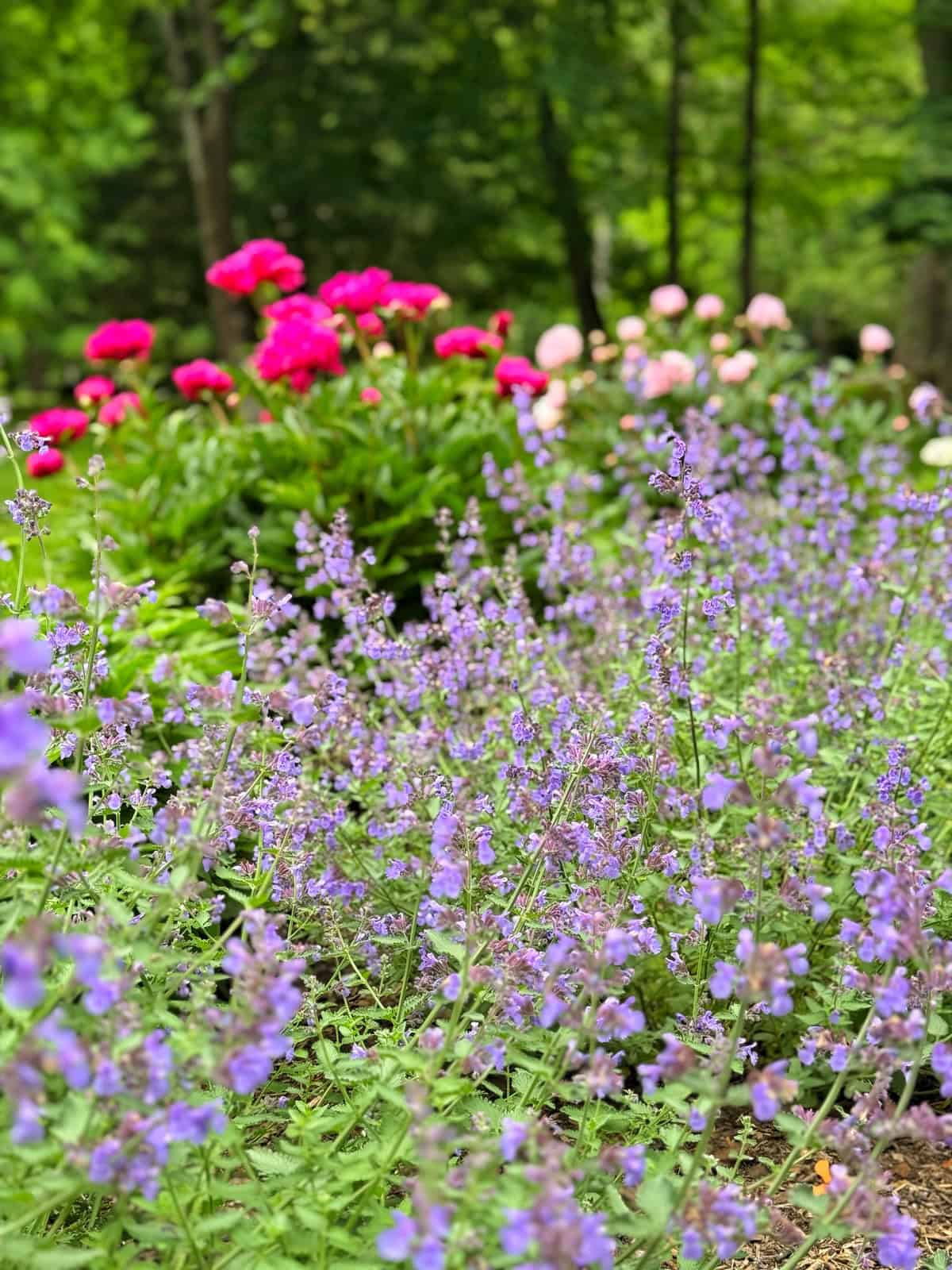
One of the reasons I grow so much nepeta is how effortlessly it blends with other perennials in the garden. The soft lavender-blue flowers and billowing habit help soften stronger shapes while tying color palettes together beautifully.
Some of my favorite plants to pair with nepeta include:
Roses
Nepeta is classic planted alongside roses because it softens the structure of rose bushes while helping create that romantic cottage garden feel. To learn more about how I grow and care for roses, please visit the following guides:
Salvia
Salvia and nepeta bloom around the same time and create beautiful layers of purple and blue tones while attracting tons of pollinators. To learn more about how I grow salvia, please visite my complete guide to growing salvia plant here.
Alliums
The rounded blooms of ornamental alliums contrast beautifully with nepeta’s airy flower spikes.
Peonies
Nepeta helps hide fading peony foliage later in the season while extending color in the garden bed after peonies finish blooming. To learn more about how I grow and care for peonies in my gardens, please visit the following guides:
- How to Grow Peonies
- How to Get Your Peonies to Bloom Longer
- Peony Care: Keeping Peonies Upright and Off the Ground
Foxgloves
Tall foxglove spires rising above mounds of nepeta create one of my favorite cottage garden combinations. To learn more about how I grow foxgloves in my garden, please visit my complete growing foxgloves guide here.
Lavender
Both plants thrive in sunny, well-draining conditions and pair beautifully in drought-tolerant garden designs. To learn more about how I grow lavender, please visit my complete guide to growing lavender here.
Common Pest and Disease Problems
Nepeta is generally one of the easiest and most trouble-free perennials I grow. In nearly 30 years of gardening, I’ve found it to be remarkably resilient compared to many other flowering plants in my borders. Most problems usually come down to overly wet conditions, poor air circulation, or plants growing in more shade than they prefer.
Here are the most common issues you may occasionally see:
Root Rot
Poor drainage is probably the biggest issue nepeta faces. Like many Mediterranean-style perennials, catmint prefers drier conditions and can struggle in heavy or consistently wet soil.
In my own garden, I’ve noticed nepeta starts declining quickly in beds that hold too much moisture. The plants become floppy, growth weakens, and the foliage can start looking stressed or discolored. When this happens, I usually dig and relocate them to a drier area where they recover much better.
Powdery Mildew
Nepeta can occasionally develop powdery mildew, especially in crowded plantings with poor airflow or periods of high humidity. You’ll notice a white or gray powdery coating on the leaves and stems.
Fortunately, I rarely see severe powdery mildew on nepeta in my garden compared to plants like bee balm or phlox. Giving plants enough spacing, avoiding overhead watering, and growing them in full sun helps prevent most issues.
Floppy Growth
While technically not a disease, floppy nepeta is one of the most common complaints gardeners have.
This usually happens when:
- plants receive too much shade
- soil is overly rich
- plants are overwatered
- growth becomes too heavy after flowering
I’ve found nepeta stays much fuller and more upright in full sun and average soil. Shearing plants back after the first flush of blooms also helps refresh growth and keeps plants looking tidier for the rest of the season.

Building a Lower-Maintenance Garden With Nepeta That Gets Better Every Year
One of the things I love most about nepeta is that it proves beautiful gardens do not have to be high maintenance to feel full, layered, and colorful. Plants like this are exactly what shifted my gardening style over the years away from constant upkeep and toward choosing dependable perennials that thrive with less work.
That whole mindset is really the foundation of my book, The Bricks ‘n Blooms Guide to a Beautiful and Easy-Care Flower Garden. If you’ve ever felt overwhelmed trying to figure out what to plant, how to combine it, or why some plants thrive while others struggle, this book walks you through my real-life approach to creating a beautiful flower garden that actually fits your lifestyle.
And nepeta is also one of those plants that taught me the value of tracking what works in the garden year after year. I’ve learned where it blooms best, which beds stay too wet for it, when I like to shear it back, and which varieties perform the strongest in my New Jersey garden because I keep notes as I garden.
That’s exactly why I created The Bricks ‘n Blooms Beautiful and Easy-Care Flower Garden Planner. It’s not just a pretty notebook. It’s the system I use to track plant performance, garden layouts, bloom timing, maintenance tasks, and seasonal changes so my garden keeps improving instead of starting from scratch every year.

Final Thoughts on Growing Nepeta
After growing nepeta in my gardens for nearly 30 years, it’s still one of the first perennials I recommend to gardeners who want reliable color without constant maintenance. Few plants work as hard in the garden while asking for so little in return.
I’ve grown it everywhere from formal rose beds to relaxed cottage garden borders, and it consistently earns its place season after season. The long bloom time, soft billowing habit, pollinator activity, drought tolerance, and deer resistance make it one of the most versatile perennials I grow.
Honestly, some of my favorite moments in the garden happen when nepeta is in full bloom. Bees cover the flowers nonstop, the foliage spills naturally onto pathways, and the cool lavender-blue tones tie so many different plants together beautifully. It’s one of those plants that helps gardens feel softer, fuller, and more established without requiring endless upkeep.
And the more I garden, the more I appreciate dependable plants like this that thrive in real-world conditions instead of demanding perfect care.
If you love this relaxed layered look too, be sure to explore my low-maintenance cottage garden ideas and favorite cottage garden plants for even more inspiration.
Whether you’re planting your very first perennial border or refining an established garden, nepeta is one of those plants that’s easy to grow, easy to love, and incredibly rewarding season after season.
Are you growing nepeta in your garden yet? If so, what’s your favorite variety? If you’ve never planted it before, will you include it in your garden this year? Tell me about it in the comments below so we can chat more!
For more information about growing nepeta, please read this article from North Carolina State Cooperative Extension.
Thanks for dropping by the blog today! Enjoy your day!



I wonder how in the world I have never heard of this plant! It sounds perfect for my backyard. Thanks for sharing!
I’m so glad you love it! It’s a gorgeous perennial that blooms long in the gardens.
Stacy,
I’ve never planted this but I need to start. Thanks for the tips.
Thank you – oh you’ll love this one. It’s so easy to grow and looks so pretty for a LONG time in the gardens!
You have solved a deer problem! I had a dogwood with hostas planted beneath that died…the crepe Myrtle that replaced the dogwood doesn’t give enough shade for the hostas AND they are deer buffet. This solves the sun and deer issue! Love it!
Leslie you will LOVE this one if you’ve not grown it before. It billows and looks so pretty in the landscape. Deer totally leave it alone – I’ve never sprayed it once. And it blooms for so long. Cutting it back when the first set of blooms fade will get you a second set – but if you don’t do it, the plant still looks good. I can’t wait to hear what you think! xo
I live in Western North Carolina and have a small bed of Catmint beside my front porch. I love it!
LOVE catmint! It’s such a gorgeous perennial and so easy to grow right?
Hello Stacy,
Thank you for sharing so much information! I love catmint but have been struggling the last few years because they have been decimated by spidermites. So much so,that even the flowering has been weak…. I live in zone 6a in Germany and our summers have been really wet the last 2 years. Last year I sprayed with neem oil every week but it did absolutely nothing to help the problem. This year I want to try using nematodes. It is not cheap so I would like to know if you have any experience you could share. I am new to your blog after having ordered your flower garden planner. Greetings from Germany
Susanne
Hey Susanne!!!! THANK YOU and it is so nice to meet you!!!! I have not done nematodes but have you tried insecticidal soap at all? Where are they located in your garden? (ie full sun) And have you tested your soil at all?